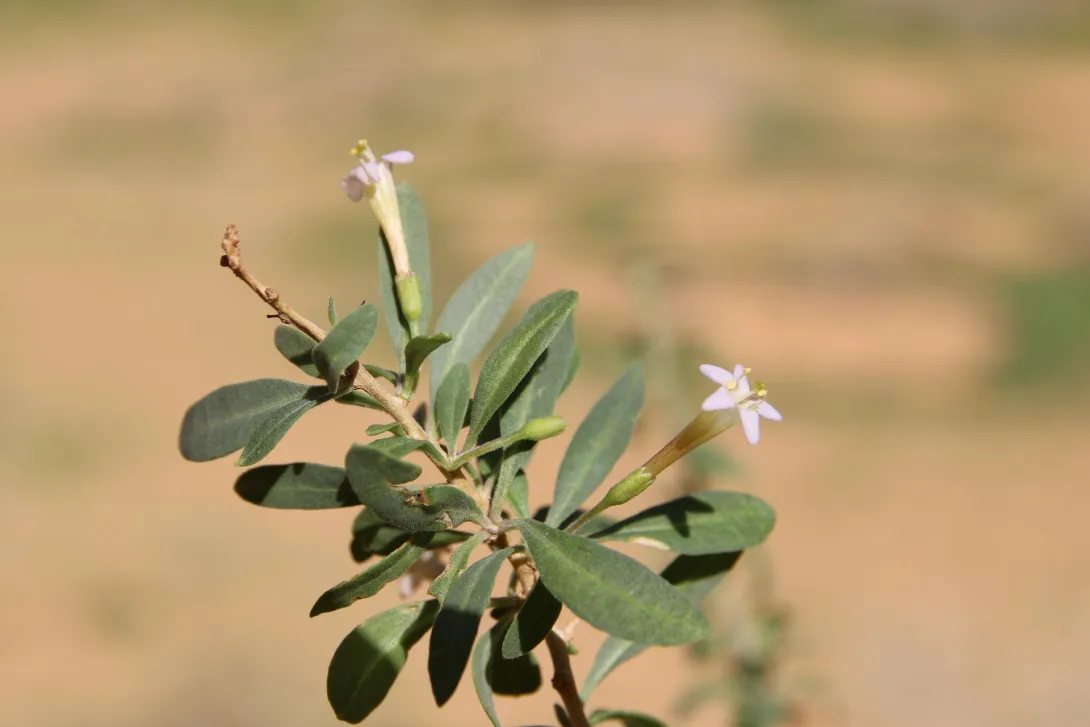
Lycium shawii Roem. & Schult.
عوسج
Syn. Lycium arabicum Schweinf. ex Boiss. (1879)
Desert Thorn, Boxthorn, Arabian Boxthorn
Solanaceae
1 / 8



-
Morphological Description
-
Description
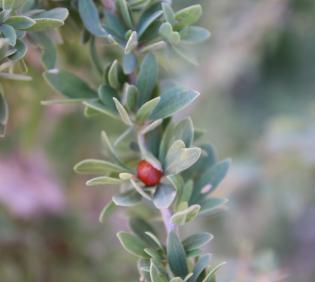
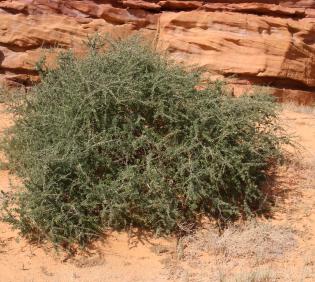
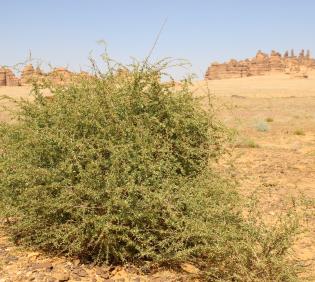
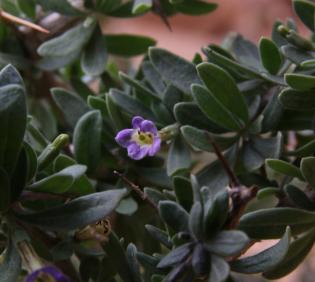
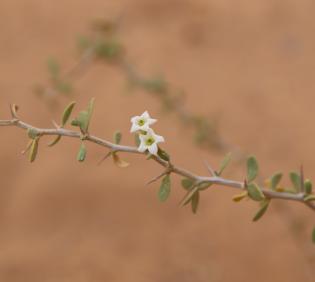
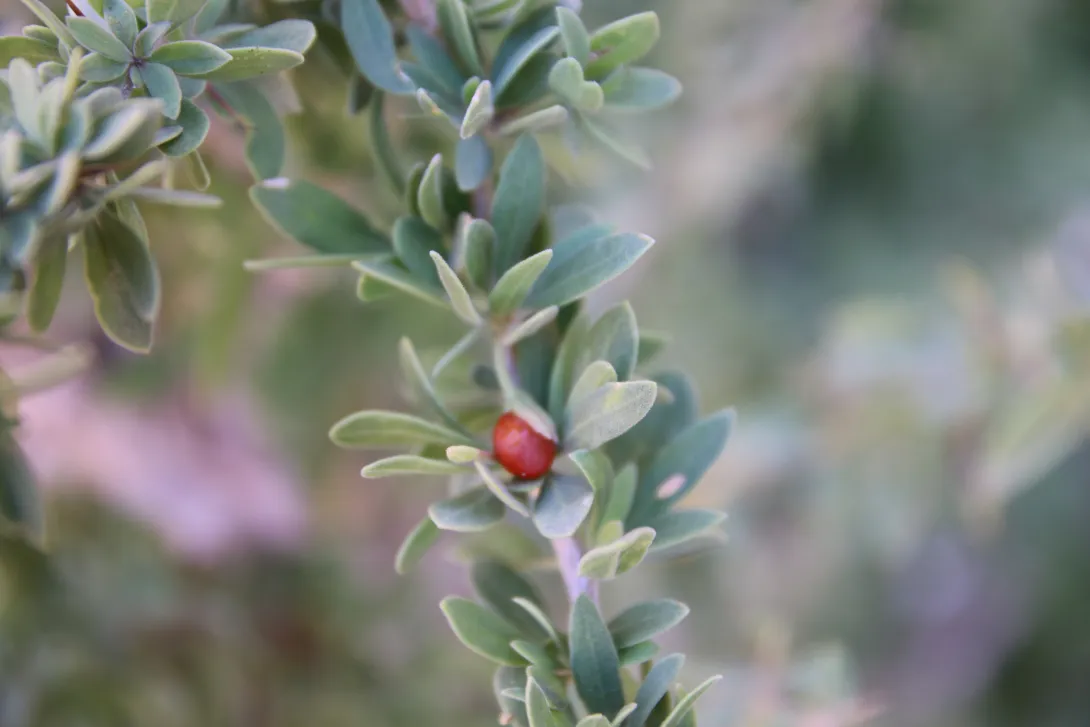
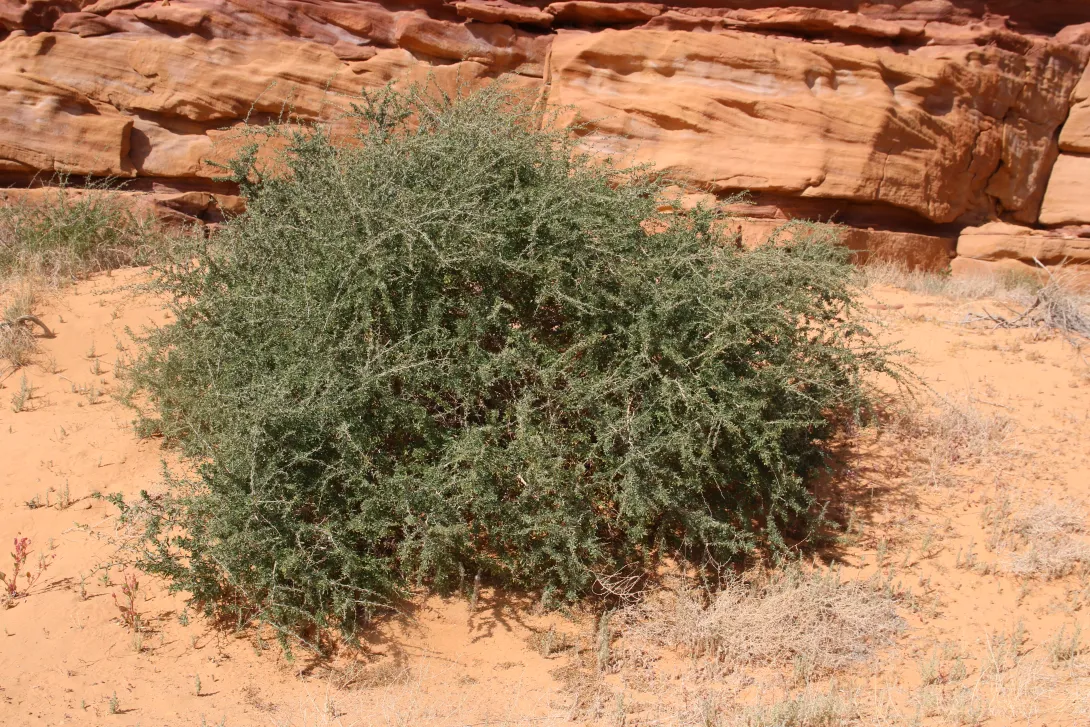
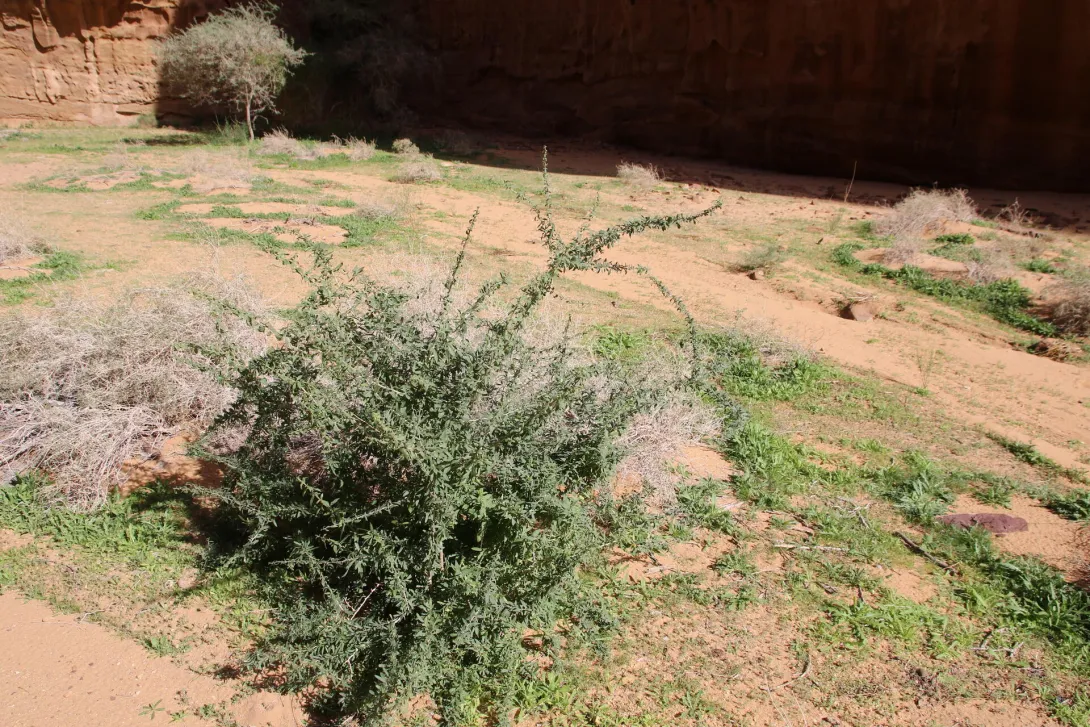
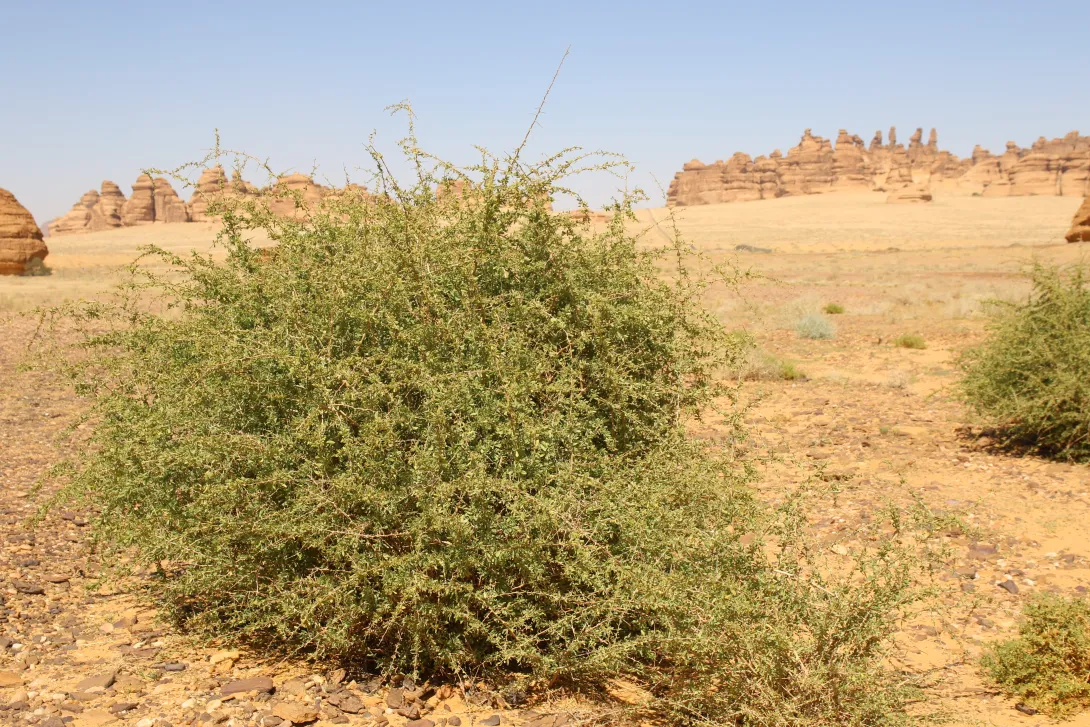
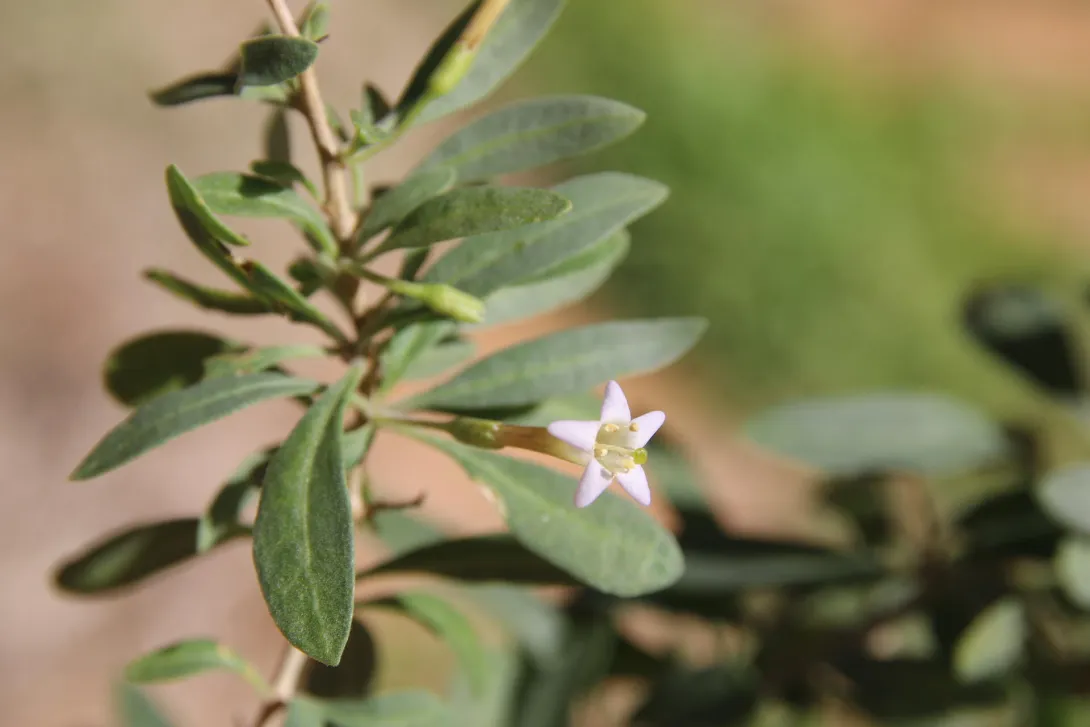
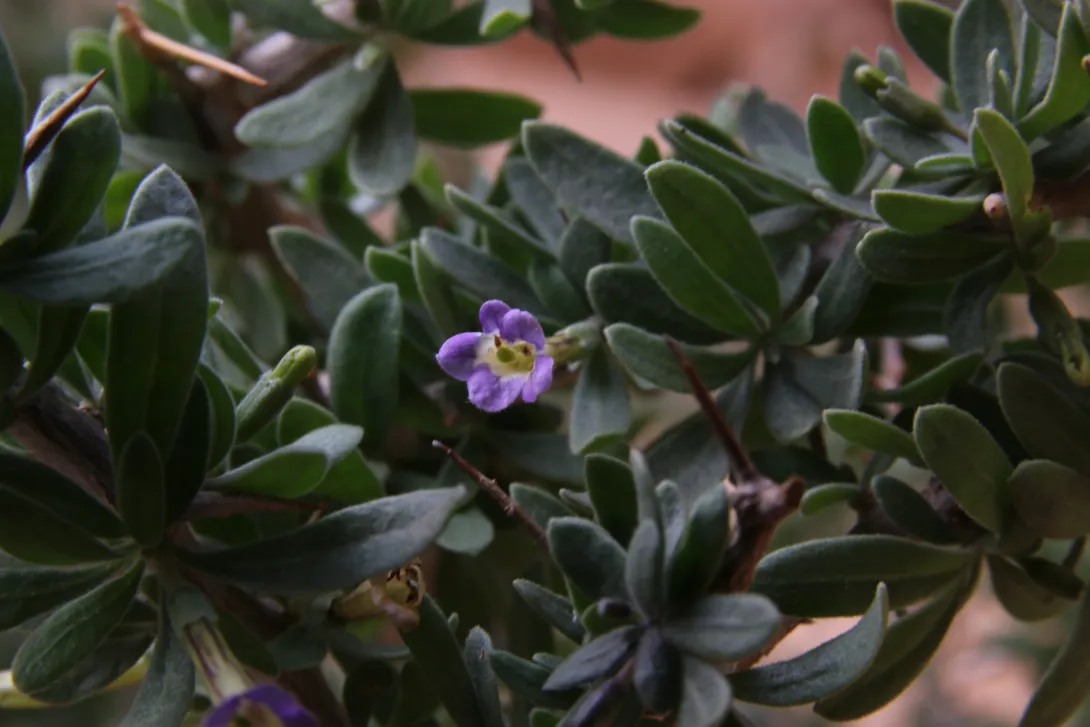
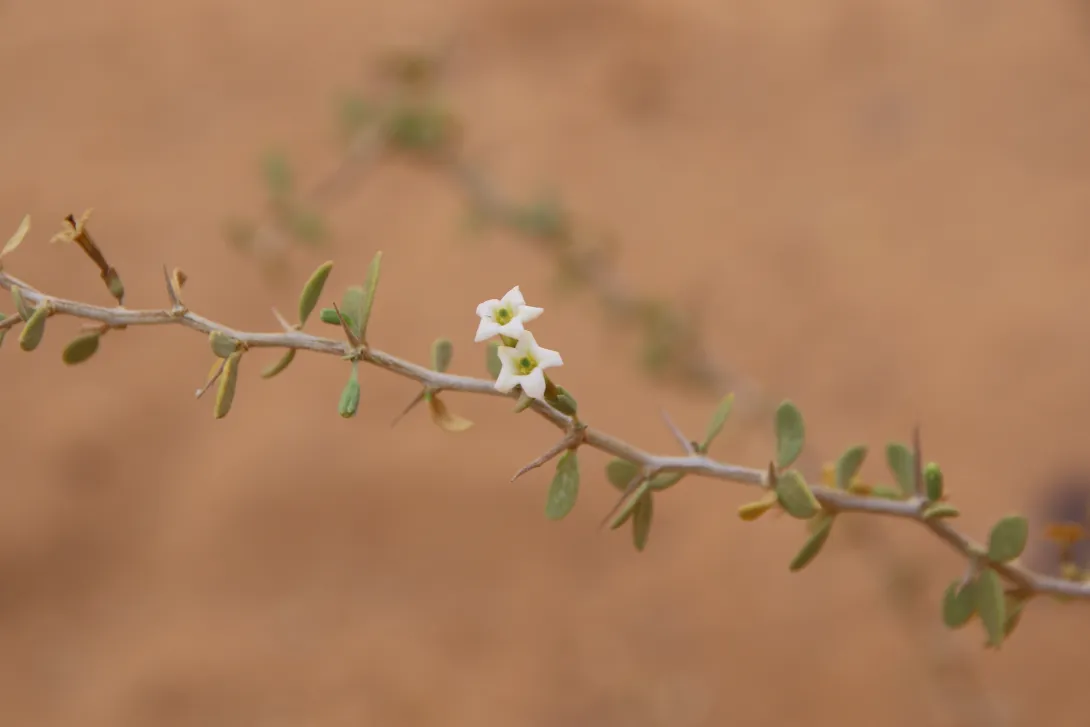
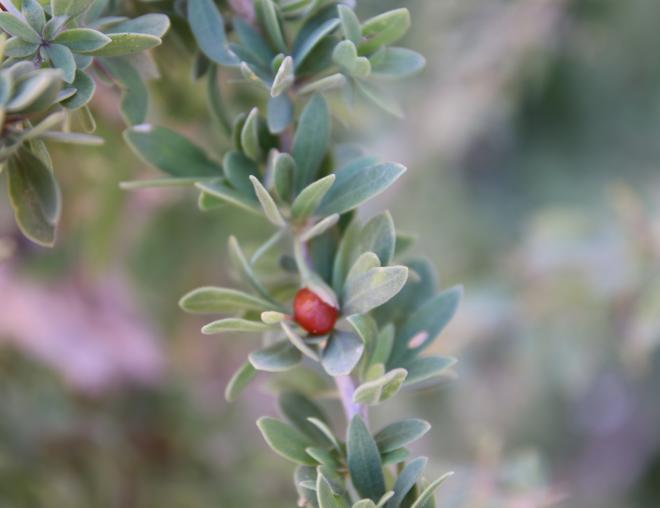
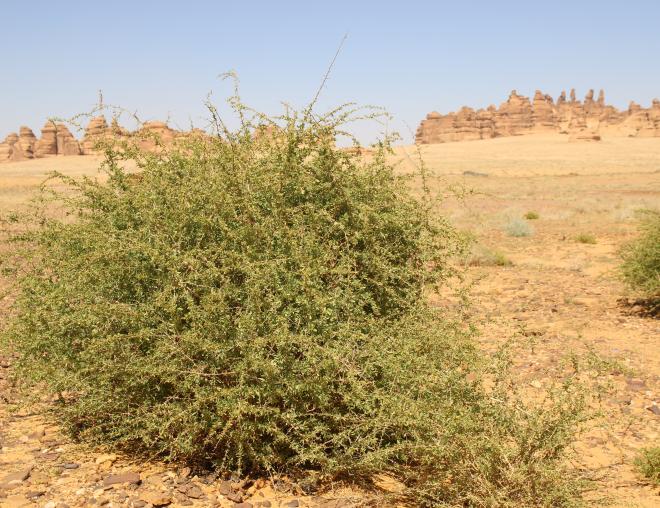
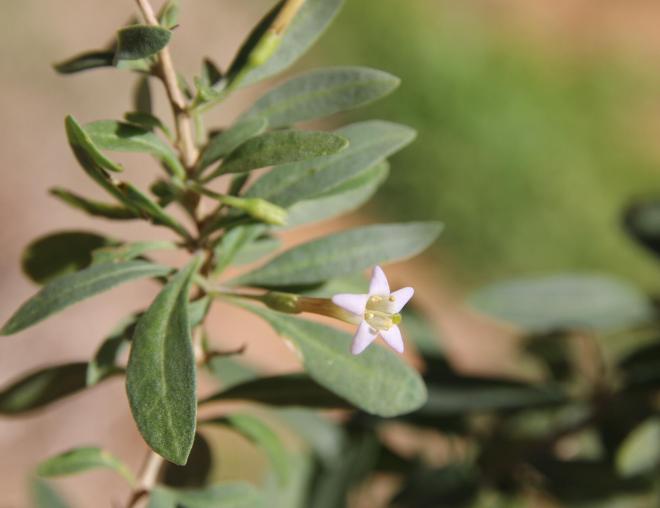
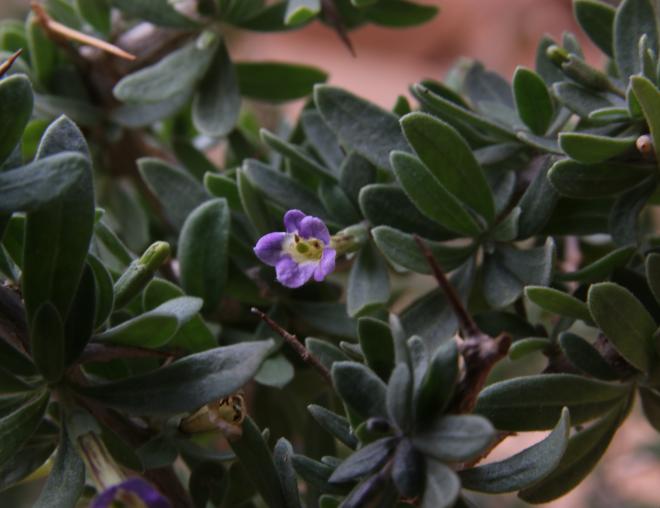
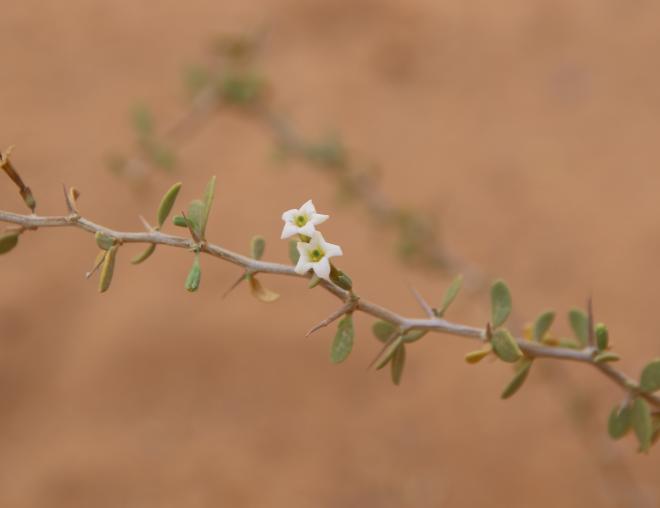
Rounded, profusely branched, spiny shrub reaching up to 3 m in height. This species is typically deciduous, shedding its leaves in response to climatic conditions, and often appears leafless or sparsely foliated with thick, subsessile leaves grey-tomentose, ovate to oblong (0.5–4 × 0.2–0.9 cm), with an obtuse apex and cuneate base. Flowers are solitary or paired, axillary and clustered along the spines with leaves. The corolla is whithe, pale violet, pink red or bluish-purple, densely villosous, glabrous inside, ciliate at the margins, with a tube about 1.5 cm long and ovate-oblong lobes ca. 2 mm. It bears five unequal stamens inserted just above the middle of the corolla tube; anthers dehisce longitudinally, and filaments are filiform, glabrous, and about 5 mm long. The calyx is tubular (1–1.5 mm long) with five equal triangular teeth (ca. 0.5 mm), and the pedicel is 0.3–1 cm long. The ovary is ovoid (1–1.5 mm), subtended by a disc; the style is filiform with a capitate stigma. The fruit is a small, edible, globose berry (ca. 5 mm), orange-red to scarlet at maturity.
- Growth Form
-
Description
-
Habitat and Distribution
- Habitat
-
Geographical Distribution Range
This Saharo-Arabian and Sudanian species is distributed from Sicilia to Kriti, Libya to South Africa and West India. Within the Arabian Peninsula, it is native to Jordan, Saudi Arabia, Gulf States, Oman and Yemen.
-
Ecology
-
Phenology
JanFebMarAprMayJunJulAugSepOctNovDecFloweringFructification
- Origin
-
IUCN Red List Category
 Least Concern
-
Remarks
When overgrazed, this species can appear as little more than a mass of thorny, leafless branches, forming a dense, impenetrable silvery-grey bush. Its striking, almost forbidding appearance makes it unique among arid-land plant species. Traditionally, local beliefs associate the bush with snakes, many of them venomous in desert environments, leading to its frequent removal near inhabited areas. The edible fruit is locally called Masie (مصع). Previously, it was divided into two varieties, now considered part of the same species: Lycium shawii Roem. & Schult. and Lycium shawii var. leptophyllum (Dunal) Täckh. & Boulos ex A.Baytop.
-
Phenology
-
Uses and Values
-
Aromatic and Medicinal Use
Medicinal use
-
Other Usages
Palatable
-
Description of Traditional Uses
Traditionally used for its edible berries and as a medicinal plant, with parts of the shrub utilized in traditional remedies for skin ailments and internal health. It also serves as important forage for livestock.
-
Aromatic and Medicinal Use
Gallery