Habitats › Wadis and Ephemeral Flooded Depressions
Habitat Group
Wadis and Ephemeral Flooded Depressions
- 3 habitats
- 151 species recorded
Wadis comprise the network of ephemeral drainage systems across AlUla, ranging from small incised channels and tributaries to broad valley floors. They are shaped by episodic surface water flow following rainfall and act as major conduits for sediment, water, nutrients, and biological connectivity across the landscape.
Characteristic Species
All species in Wadis and Ephemeral Flooded Depressions →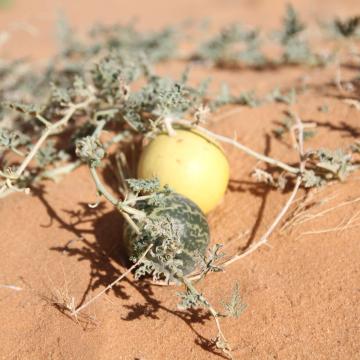

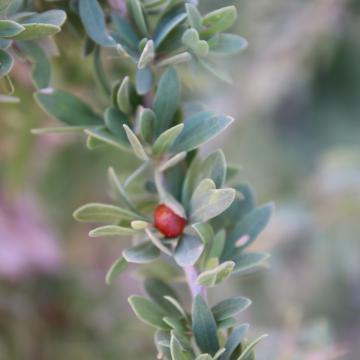


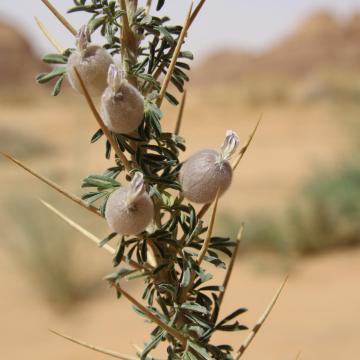

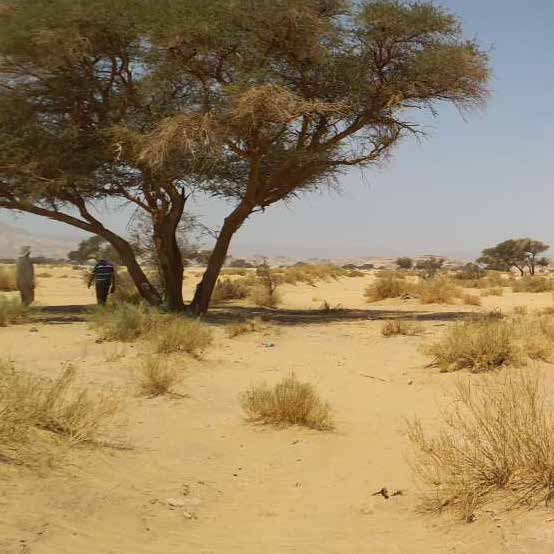
Sandy Wadis
Dry ephemeral riverbed characterised by aeolian and alluvial sand deposits, supporting a woody vegetation denser than that of the surrounding sandy plains.
Open Vachellia woodland.
Typically dominated by Vachellia tortilis subsp. raddiana at lower altitudes and Vachellia gerrardi var. najdensis at over 1000m. With a shrubland dominated by Retama raetam and Haloxylon salicornicum.
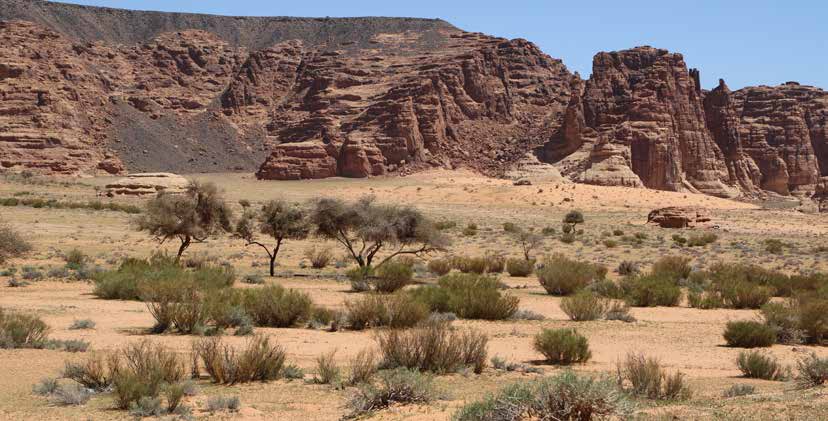
Gravel Wadis
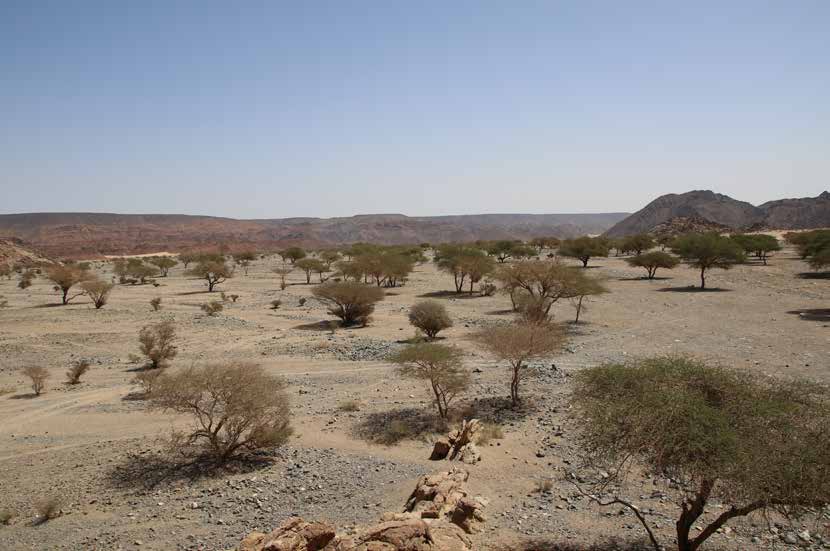
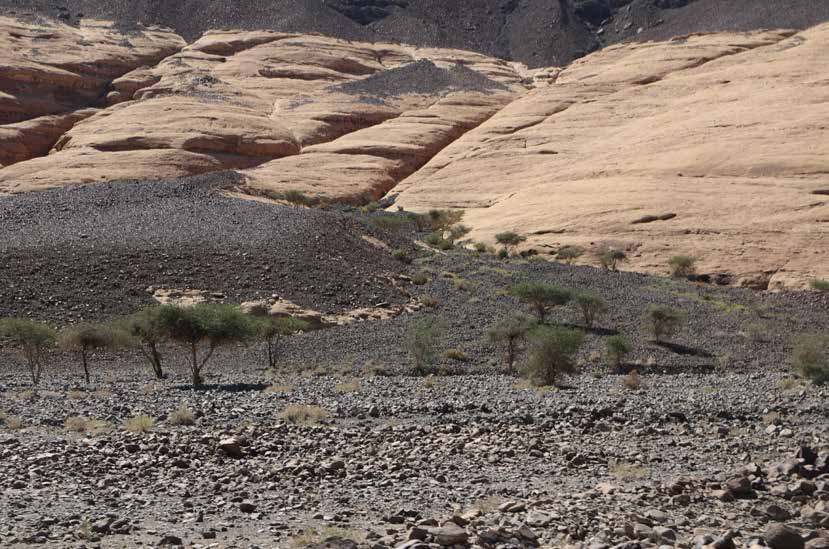
Dry, ephemeral riverbeds characterised by coarse alluvial substrates, including boulders, cobbles, pebbles, and gravel. This habitat also includes alluvial fans.
Vegetation is variable depending on factors such as degradation.
It ranges from very open Vachellia tortilis subsp. raddiana and Vachellia tortilis subsp. tortilis woodland with an understory of Haloxylon salicornicum, Ochradenus baccatus, Lycium shawii, Panicum turgidum, through to a sparse shrubland of Vachellia spp. with very occasional Haloxylon salicornicum, through to wadis which are completely denuded.
Ephemeral Flooded Depressions
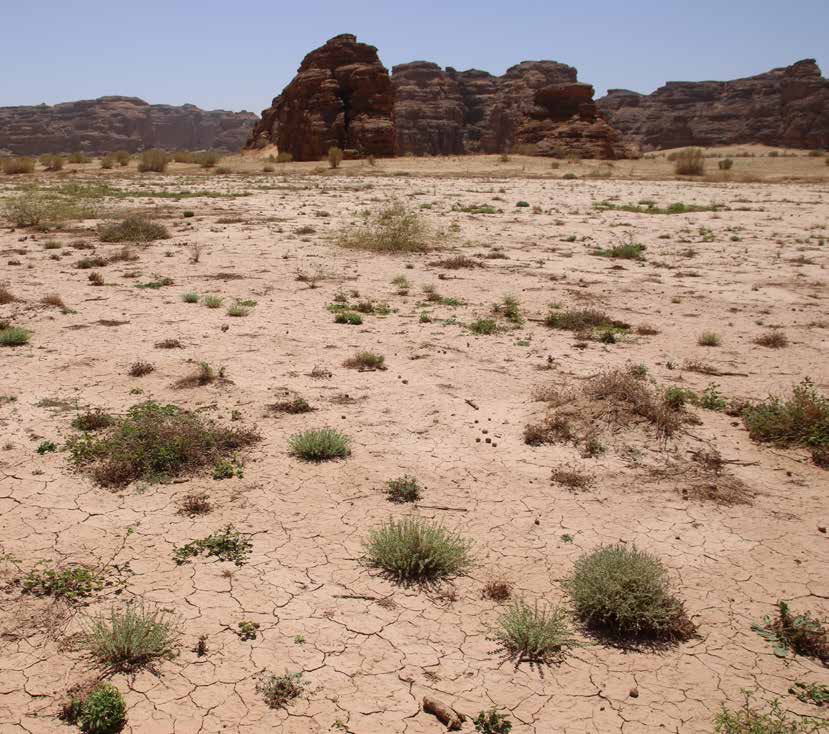
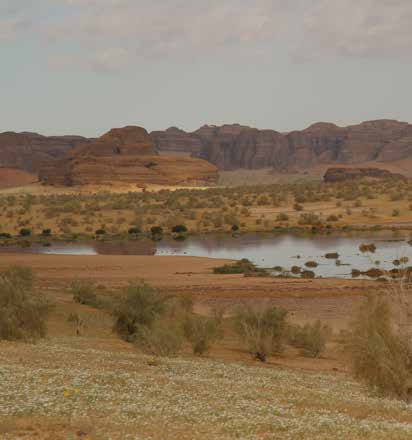
Ephemeral flooded depressions are shallow basins that temporarily hold water following rainfall. As the water recedes, these microsites support short-lived but diverse annual growth, often including halophytic species adapted to saline, fine-textured soils. During the driest months, vegetation cover is minimal and the exposed silty-clay surfaces are highly vulnerable to wind erosion. Despite their limited extent and brief hydroperiod, larger depressions function as important ecological hotspots, providing seasonal foraging habitat for a range of bird species that utilise the vegetation flush and temporary moisture.
Variable depending on the location of the depressions, seasonality and levels of degradation. Frequently dominated by halophytic species.
Adapted from The Habitats of AlUla – Technical Manual (AFALULA, 2026).