The Volcanics habitats encompass the range of landforms associated with the volcanic features of AlUla. These harrat systems form some of the largest continuous volcanic fields in Arabia and define much of the regional landscape character. Their varied topography and generally higher elevations create in places cooler, more sheltered microenvironments that act as important refugia for specialised plant and animal communities.
Characteristic Species
All species in Volcanics →

Harrat Plateau and Slopes
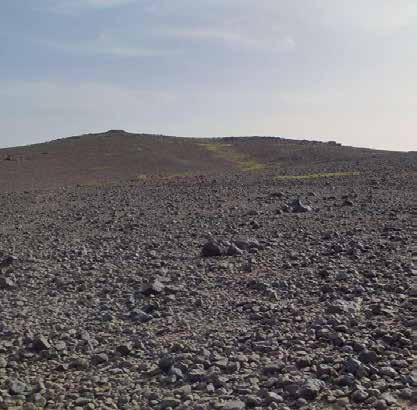
The Harrat plateau and slopes habitat comprises broad volcanic uplands and gentle sloping terrain formed from extensively weathered basaltic lava flows. Over time, these flows have broken down into a complex mosaic of rough, rubbly pavements, often interspersed with shallow depressions and pockets of finer sediments. The terrain is characteristically dark, rocky, and uneven, shaped by repeated volcanic episodes and long-term physical weathering.
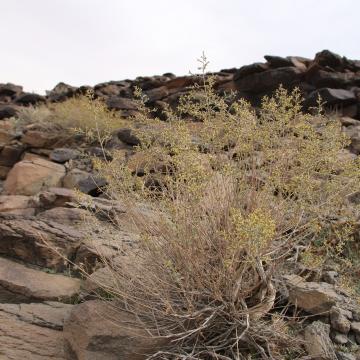
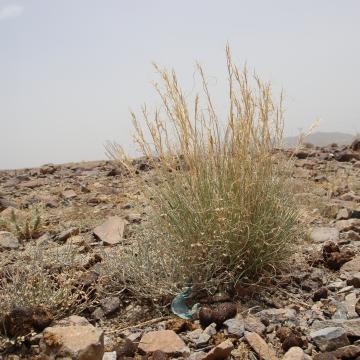
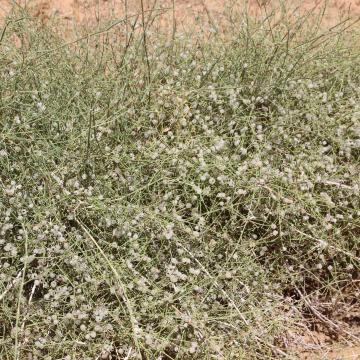
Absent or very sparse degraded dwarf shrubland typically dominated by Fagonia bruguieri and Morettia parviflora.
Vegetation is restricted to sandy pockets between rocks and in distinctive shallow depressions where an annual flush forms.
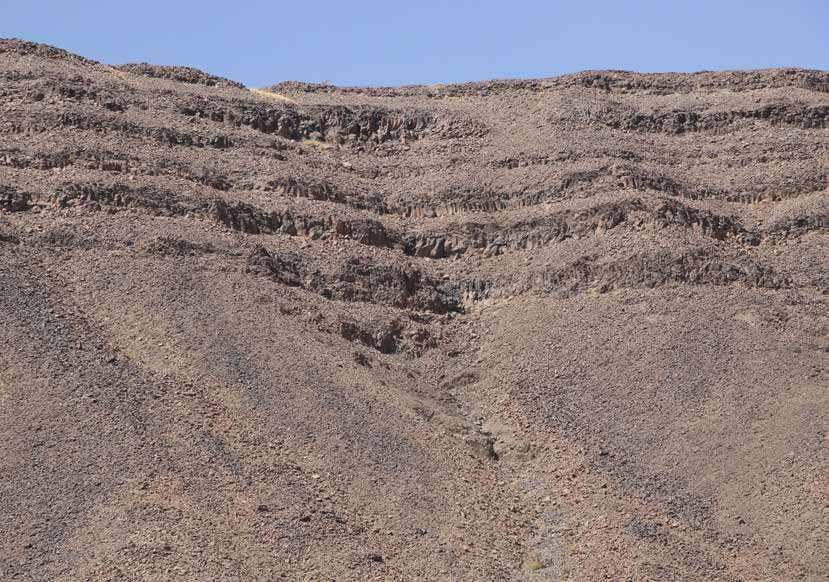
Harrat Cliffs and Steep Slopes
Steep rocky boulder strewn slopes and cliffs of the higher altitude harrat.
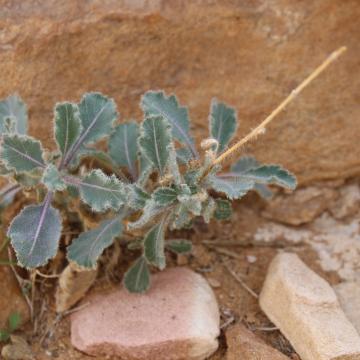
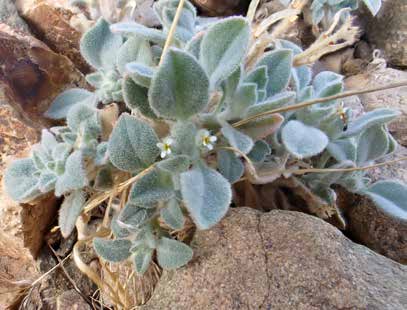
These areas are characterised by sharp relief, exposed rock faces, and accumulations of angular basalt blocks derived from collapse and erosion of cliff edges. Slopes range from near-vertical rock faces to steep rocky slopes. In places the basalt boulders are mixed with boulders from the underlying sandstone. The smooth basaltic rock faces on small cliffs create refugia in these habitats for a number of range-restricted plant species only found in the NW of the country such as Roemeria hybrida, Ballota undulata and Echinops glaberrimus.
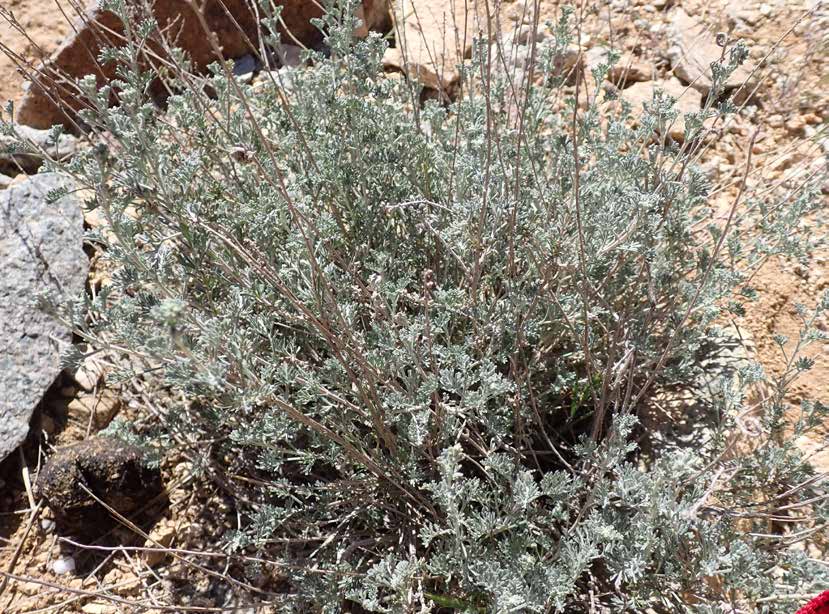
Open mixed dwarf shrubland.
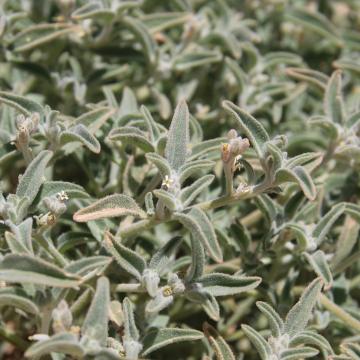
Typically dominated by species such as Helianthemum lippii and Cymbopogon schoenanthus with Diplotaxis harra.
Harrat Drainage Lines and Wadis
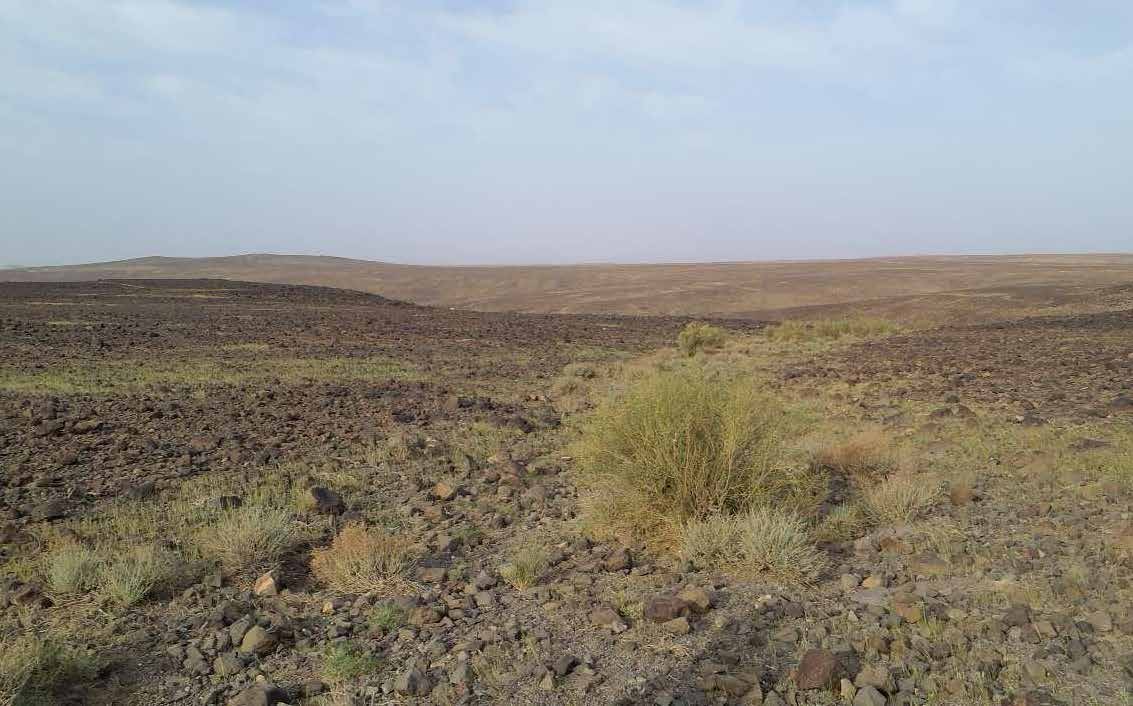
Harrat drainage lines and wadis comprise the network of narrow channels and upper wadi systems that dissect volcanic plateaus and slopes within the harrat.
Drainage lines range from small, rock-lined runnels with sparse vegetation to broader channels forming well-defined upper wadis, where deeper soils and more continuous plant cover develop. Together, they form linear features that link the volcanic uplands with downslope wadi systems, occupying a transitional position within the broader harrat landscape mosaic.
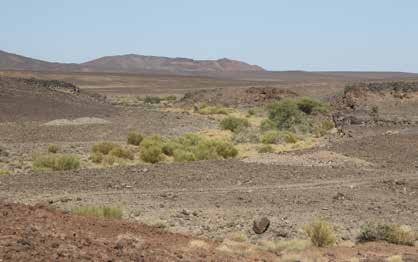
Open mixed dwarf shrubland developing into a sparse woodland in larger channels.
Typically dominated by species such as Retama raetam, Lycium shawii, Anvillea garcinii, Helianthemum lippii, Ephedra ciliata and Cymbopogon schoenanthus. Forming a very open Vachellia woodland in larger wadis, primarily Vachellia gerrardi var. najdensis on Harrat Uwayrid with Vachellia oerfota on Harrat AlZabin.
Un-Weathered Lava Flow
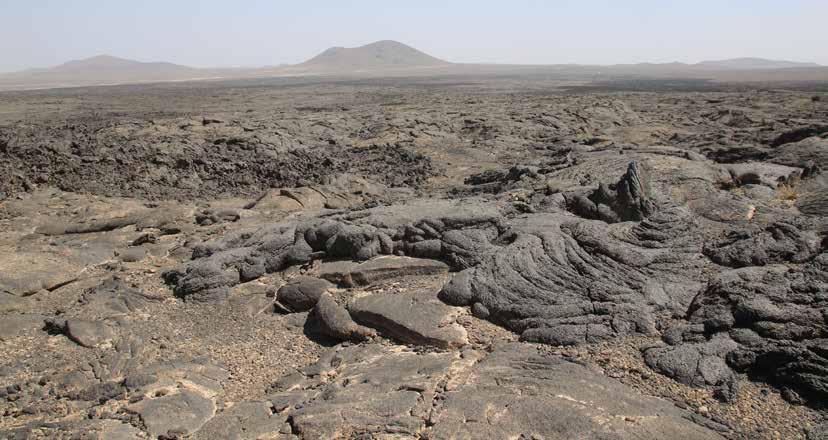
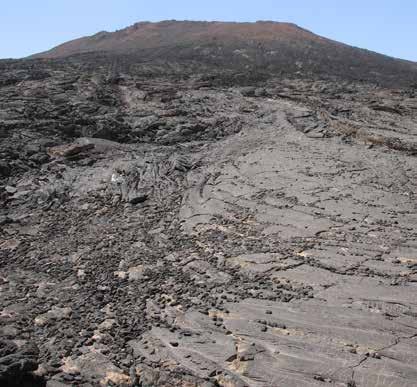
Un-weathered lava flows consisting of relatively fresh basaltic surfaces where original volcanic textures remain clearly expressed. Distinct features such as a’a lava are visible, forming sharp, blocky surfaces or the smooth, ropy pahoehoe lava forms with minimal breakdown. These flows are structurally young, with limited soil development and high surface roughness, creating an environment dominated by exposed basalt and angular lava blocks. Despite being relatively young, the lava contains lots of cracks as the surface crust is separated by air. There are numerous pyroducts varying from 1 meter to several meters in length, creating areas of refugia for small mammals and reptiles.
Vegetation is extremely sparse and confined to small pockets where sand and soil accumulate in fractures, or between lava blocks.
Volcanic Cones
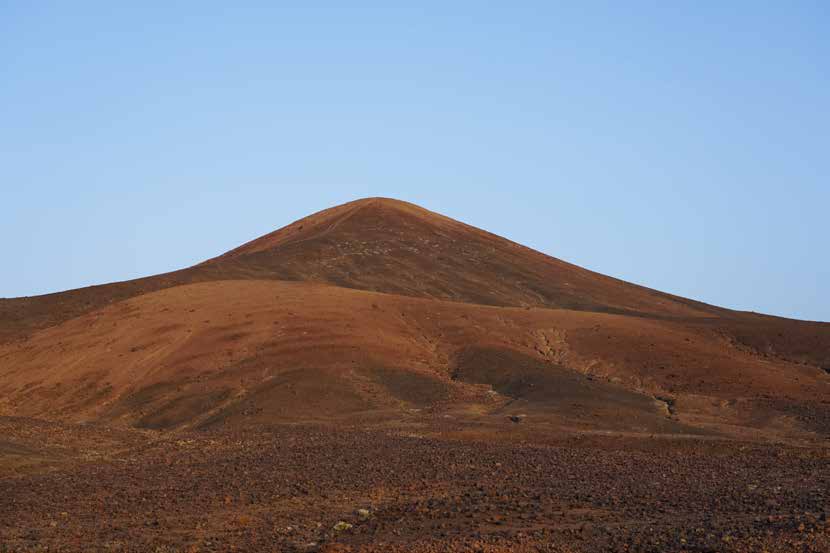
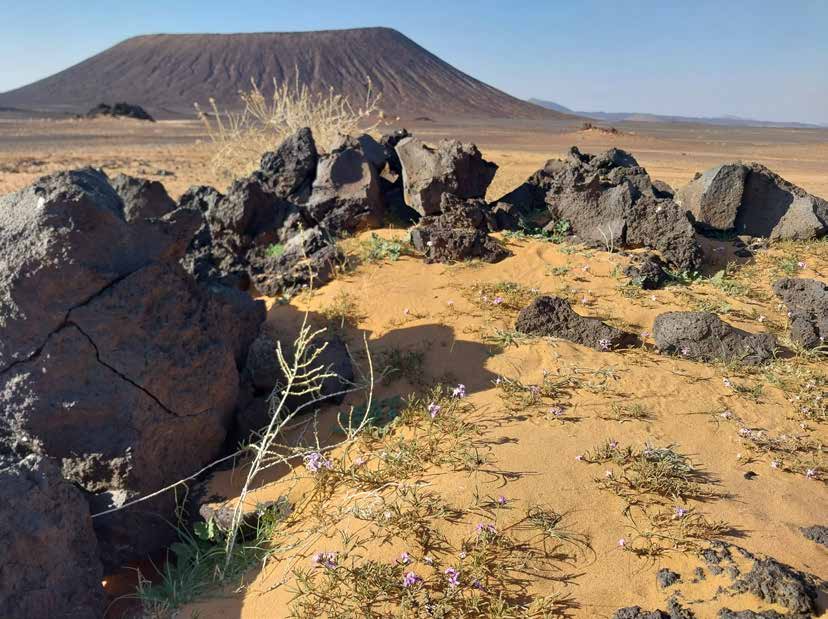
Volcanic cones form steep, well-defined landforms built around central vents, with slopes composed of loose scoria, ash, and fragmented weathered basalt. These cones transition from highly exposed upper slopes to more sheltered lower flanks, creating strong microtopographic and microclimatic gradients. In the AlUla harrat system, they occur as a spectrum of forms, from well-preserved cinder cones with intact crater rims, to highly eroded remnants where only degraded flanks or partial ridges remain.
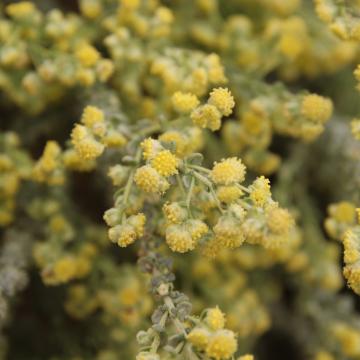
The vegetation is usually composed of species such as Artemisia judaica, Gypsophila capillaris, Noaea mucronata and Ducrosia flabellifolia.
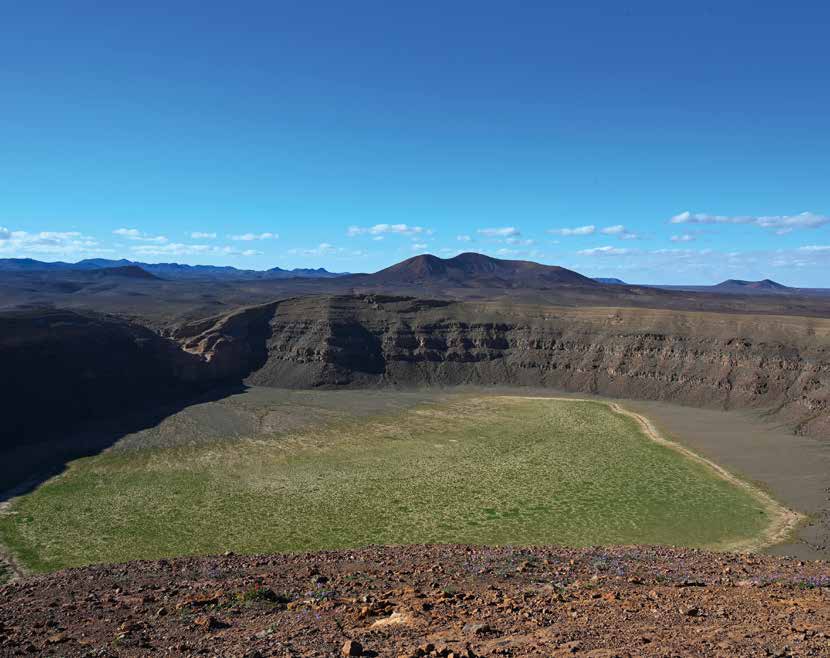
Ephemeral Flooded Depressions in Volcanic Craters
Bowl shaped depression within a volcanic cone.
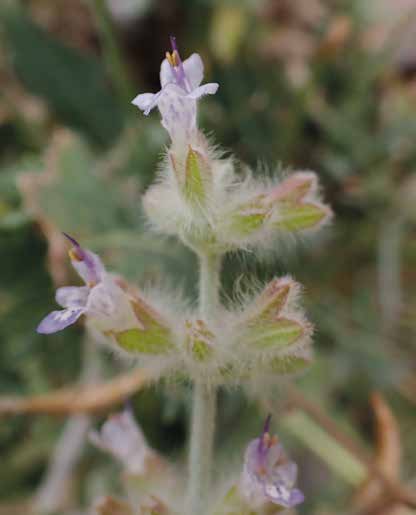
Vegetation in this unique habitat typically includes Ducrosia flabellifolia, Noaea mucronata, Gypsophila capillaris, Helianthemum lippii, Farsetia aegyptia, Ballota undulata, Salvia deserti, Diplotaxis acris and Artemisia judaica.
Adapted from The Habitats of AlUla – Technical Manual (AFALULA, 2026).