Ochradenus baccatus Delile
قرضي
Syn. Ochradenus baccatus var. rigidus Ghahr. & Mozaff.
Taily Weed, Pearl Plant
Resedaceae
1 / 13






-
Morphological Description
-
Description
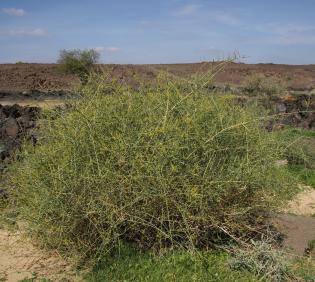
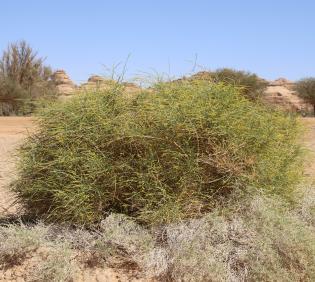
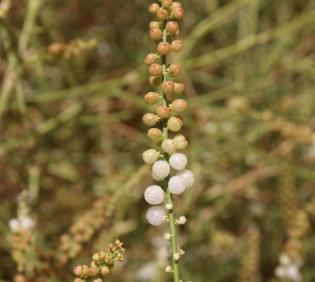
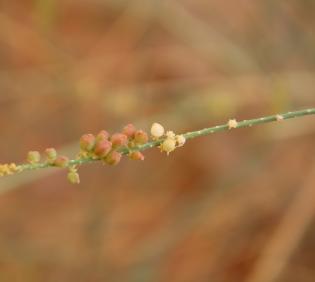
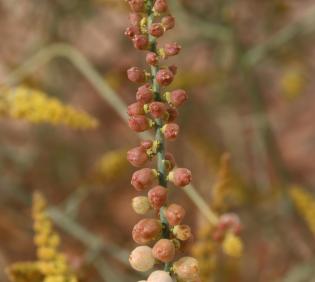
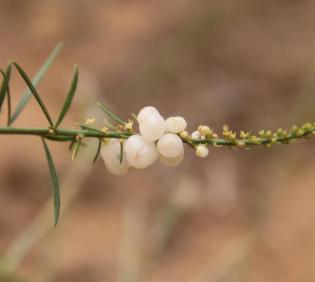
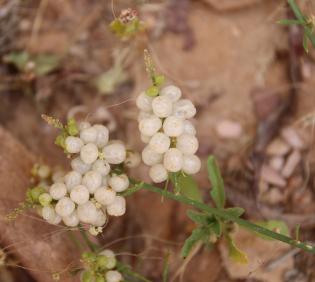
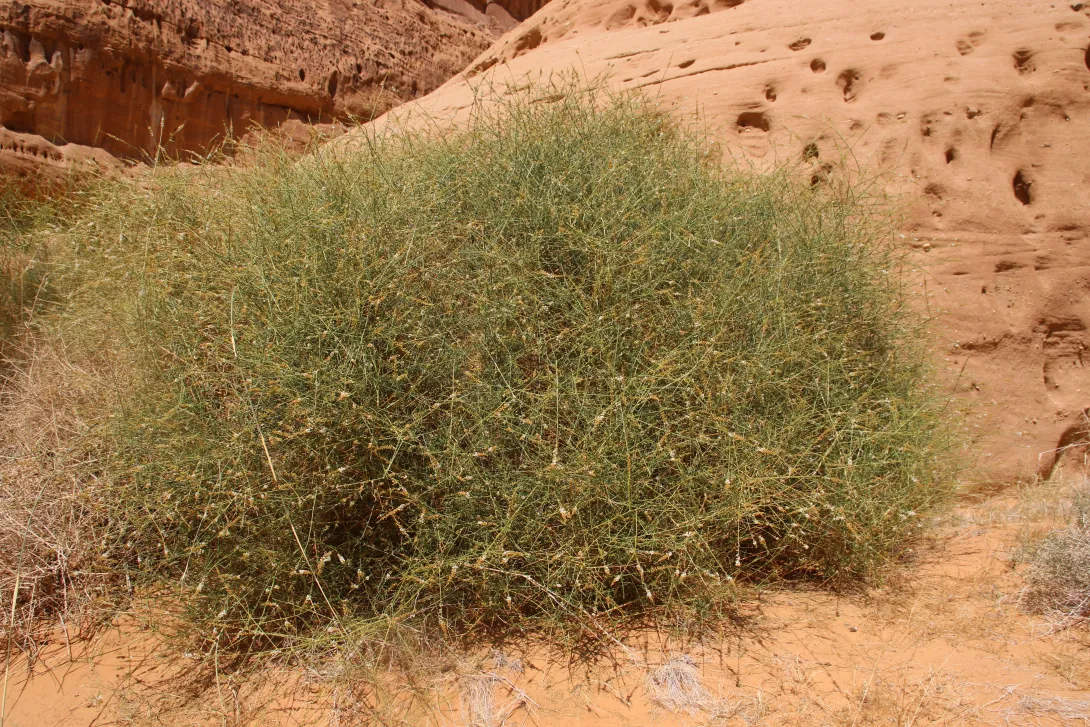
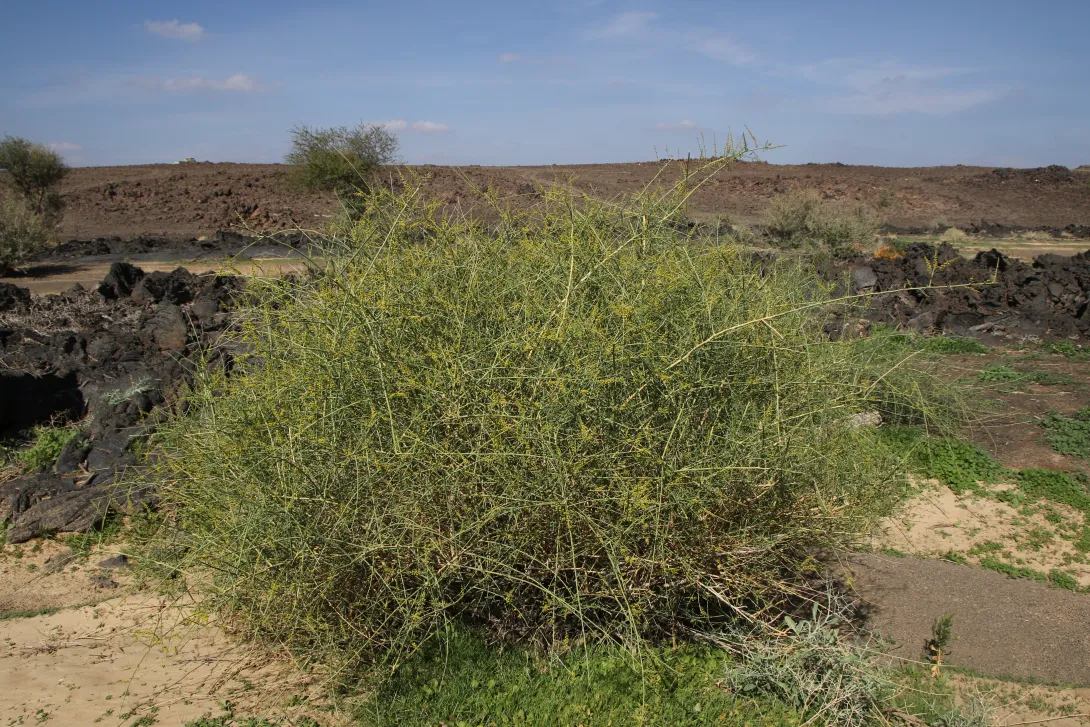
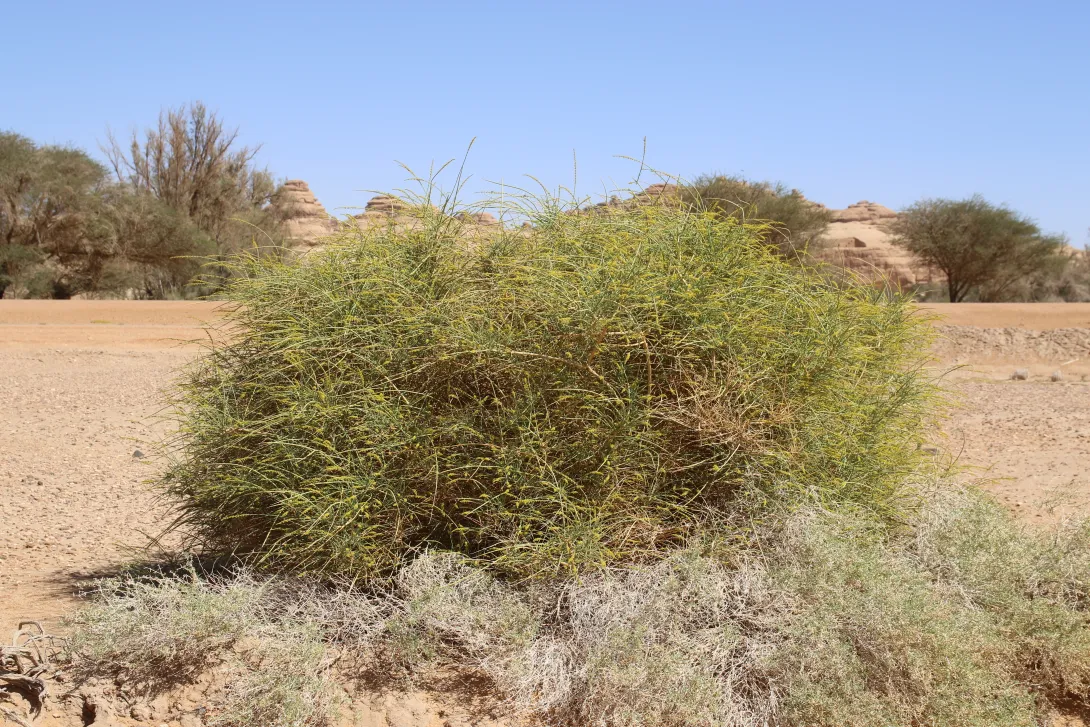
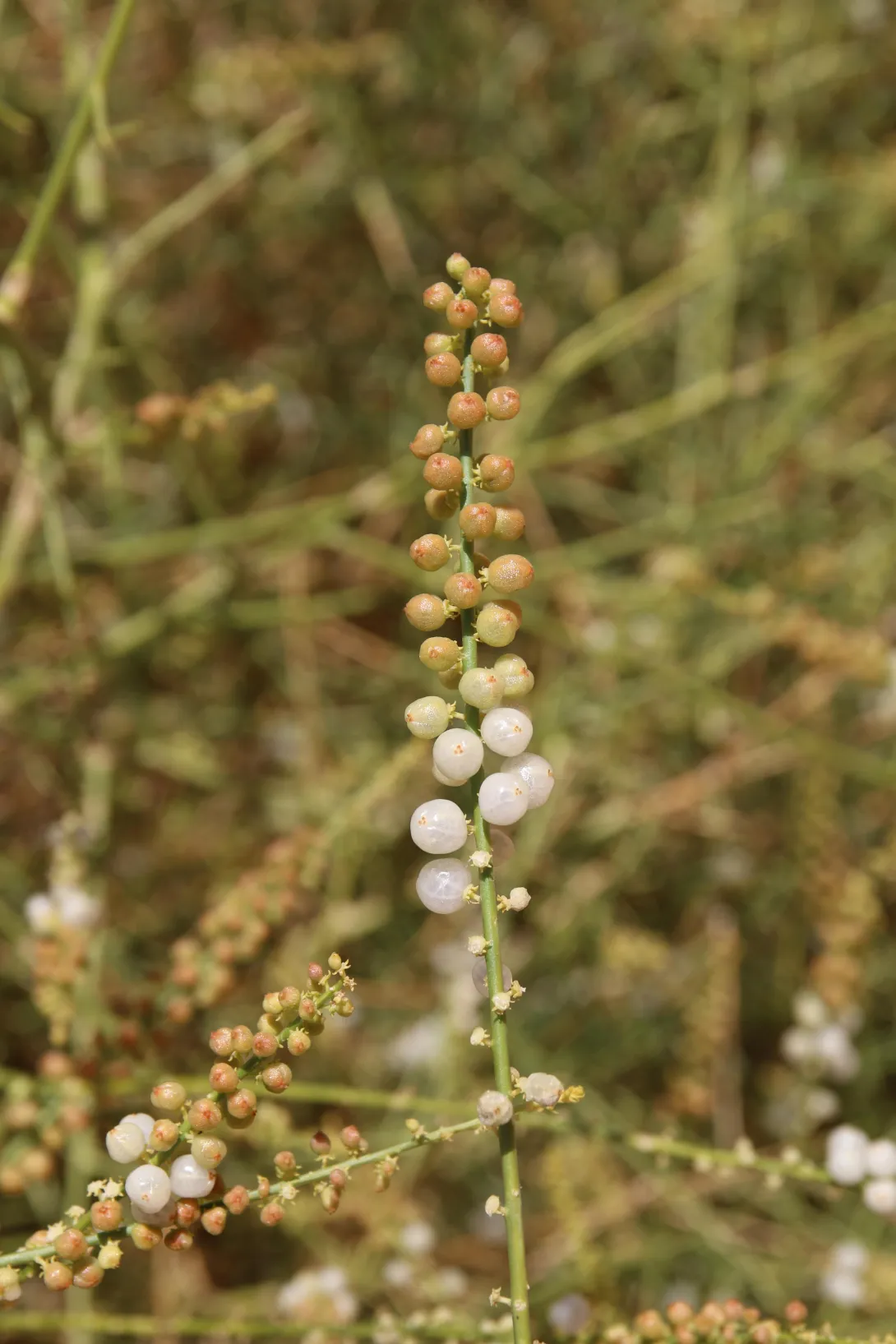
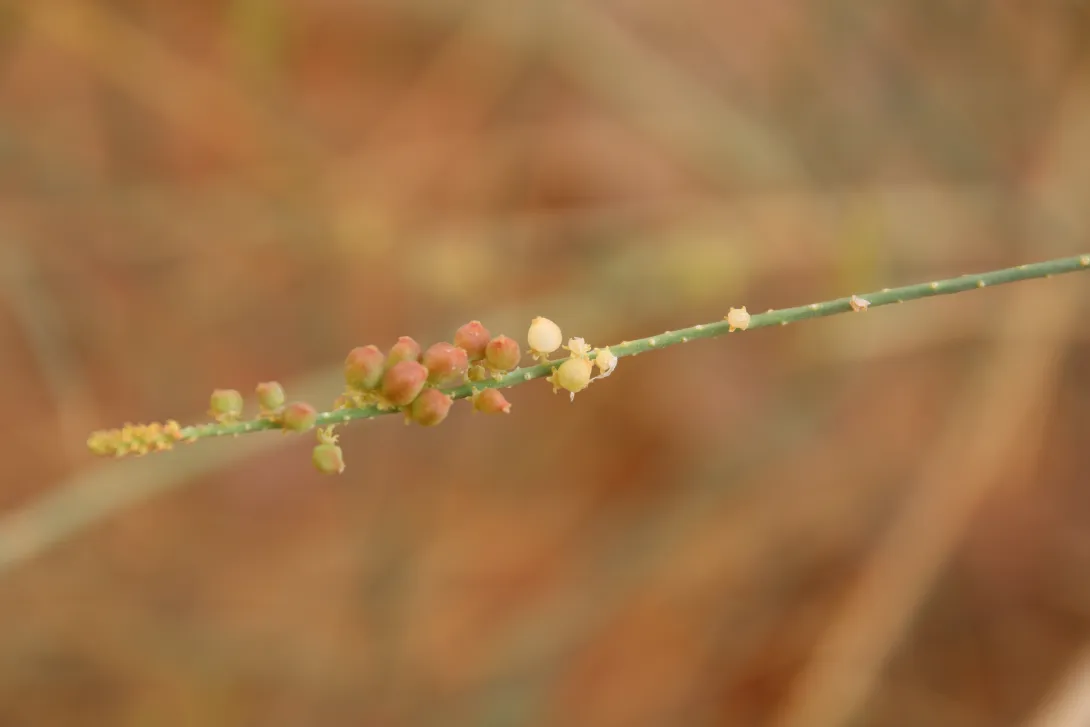
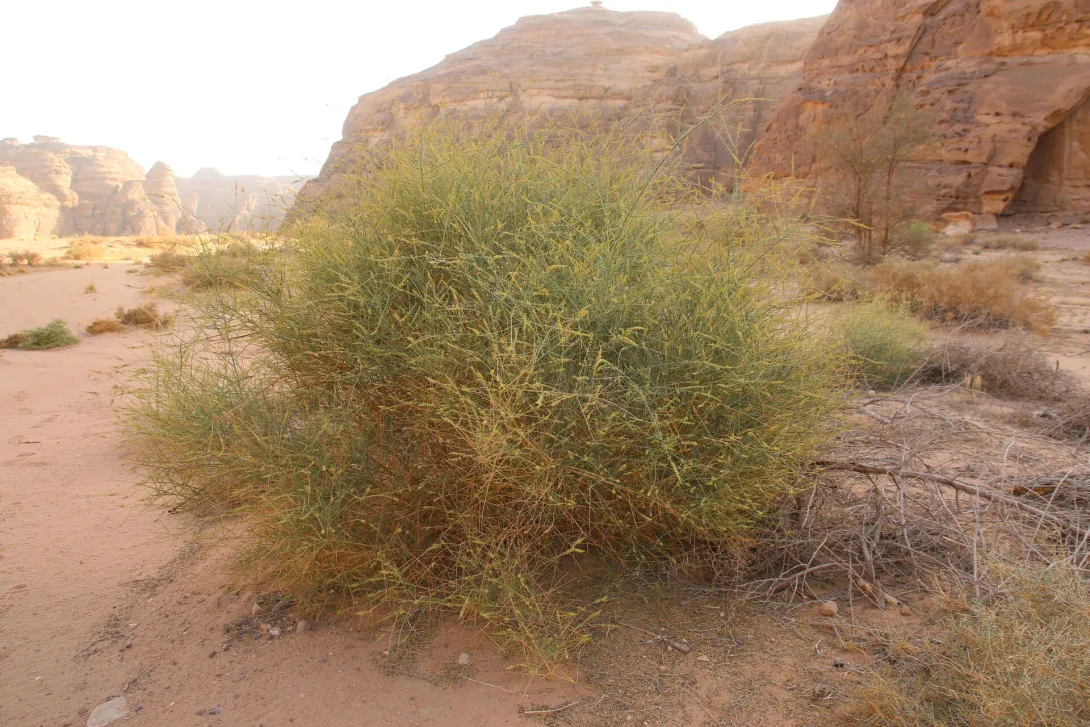
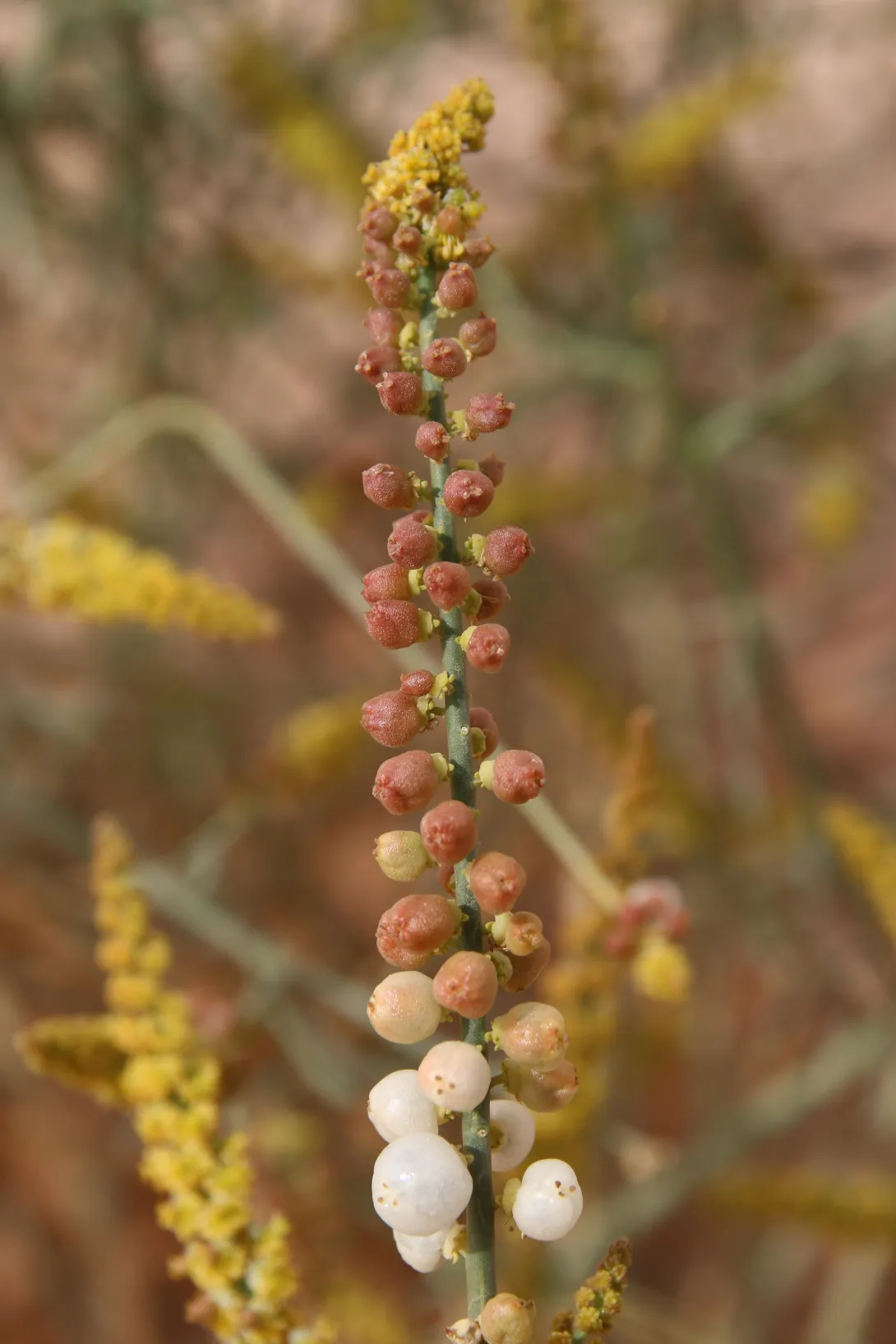
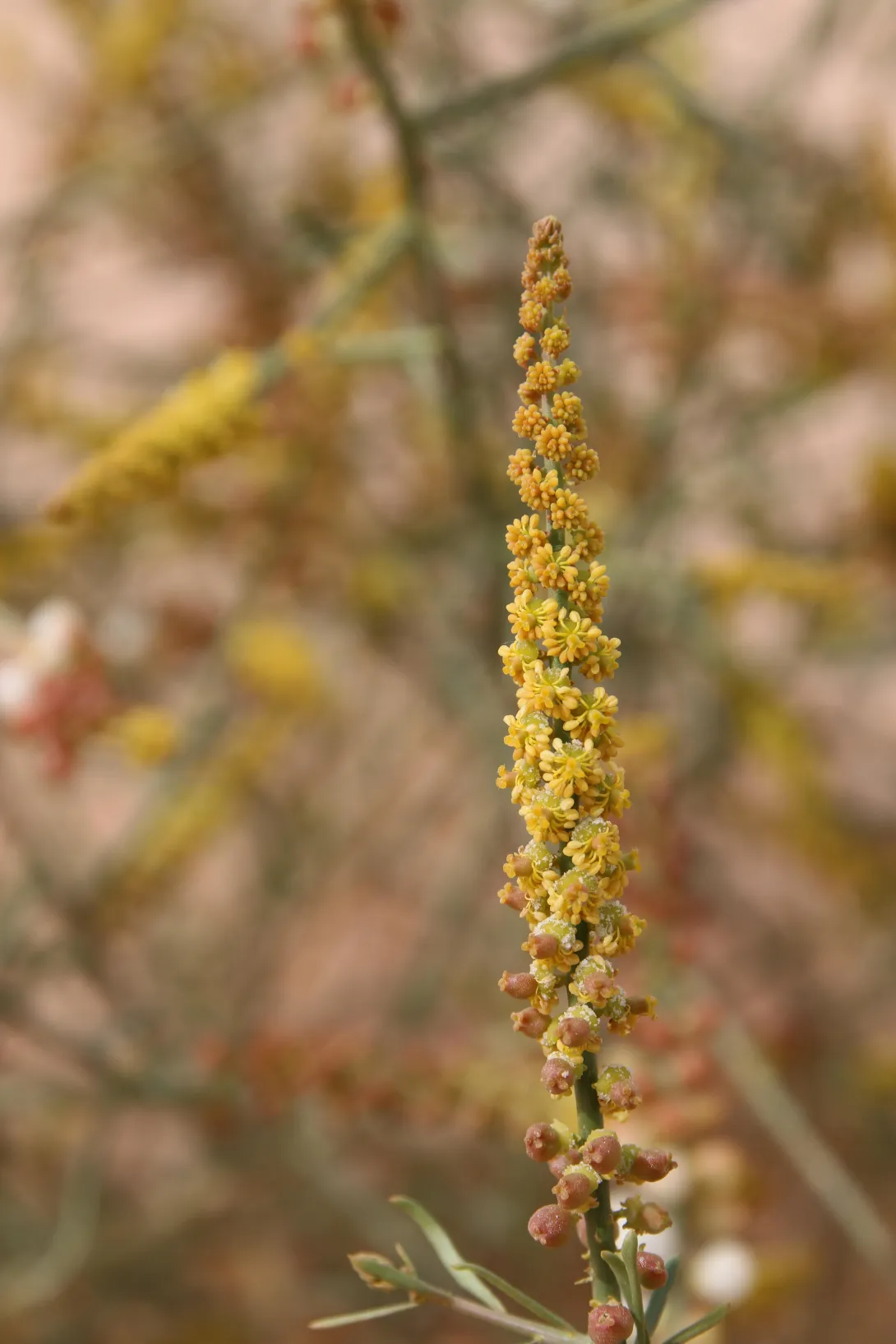
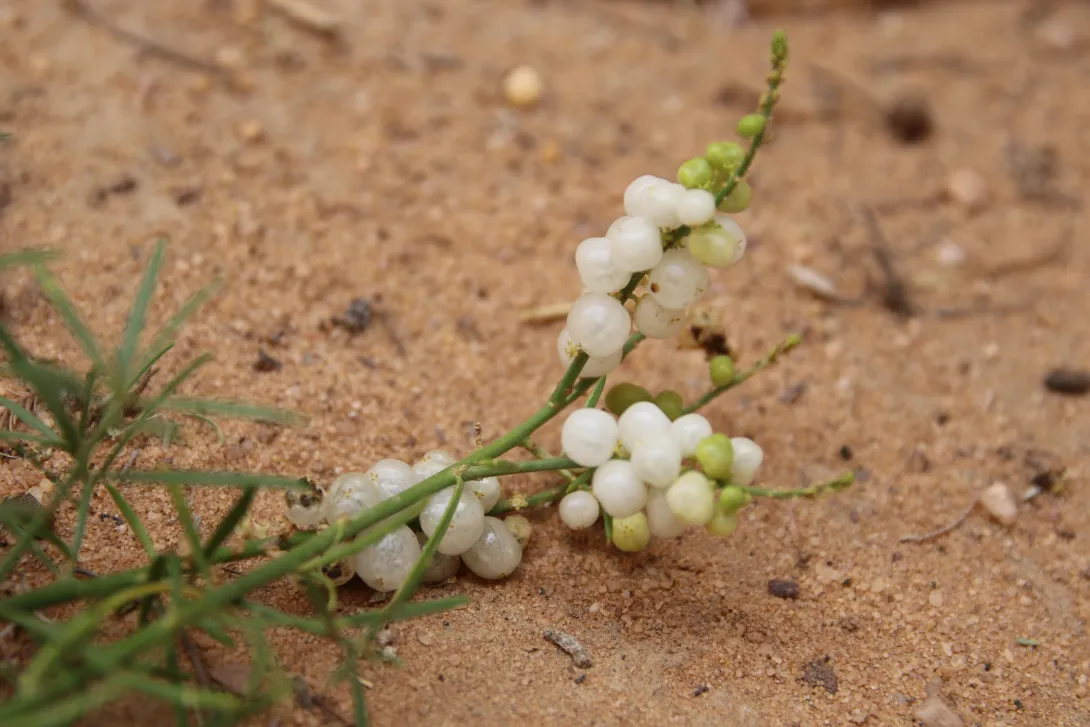
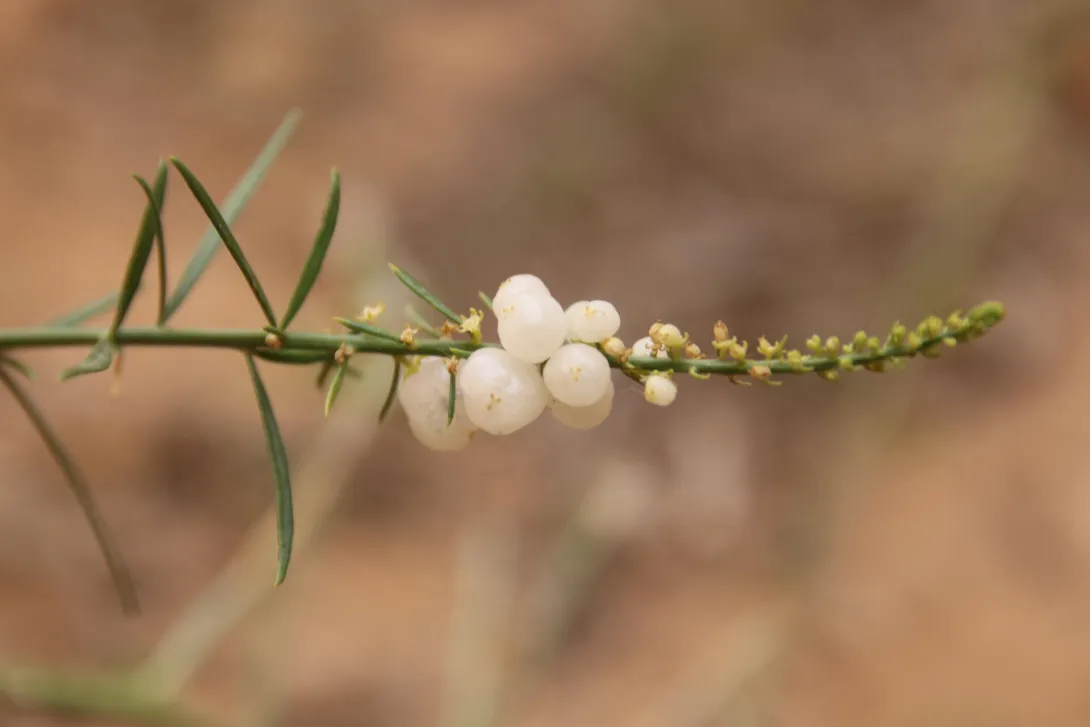
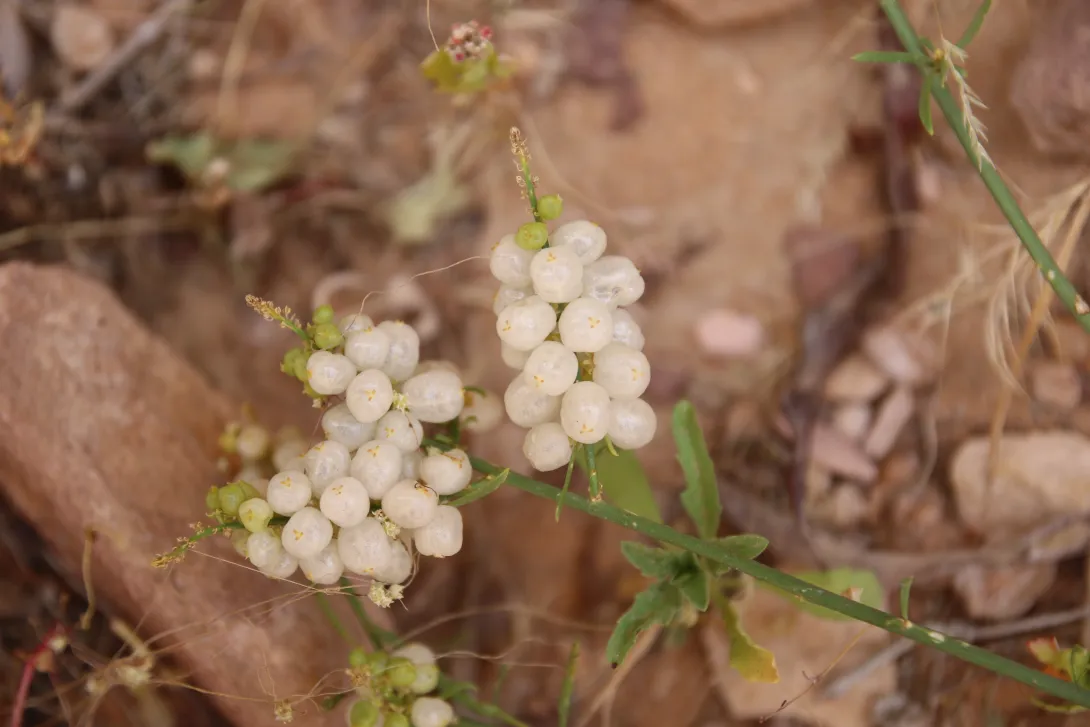
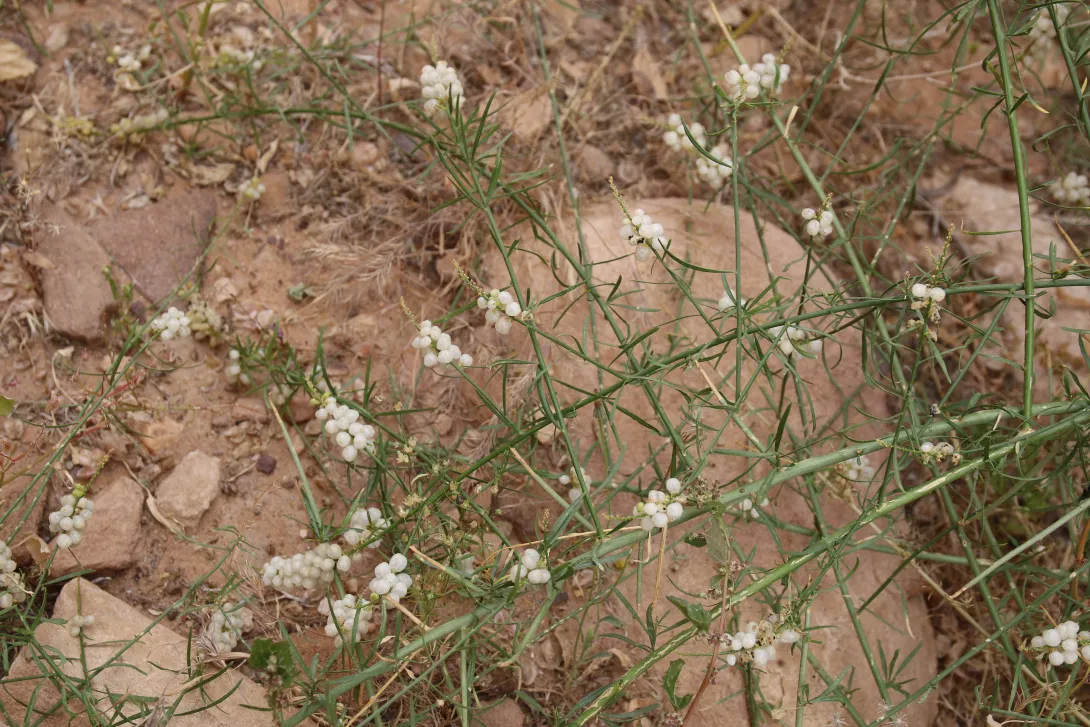
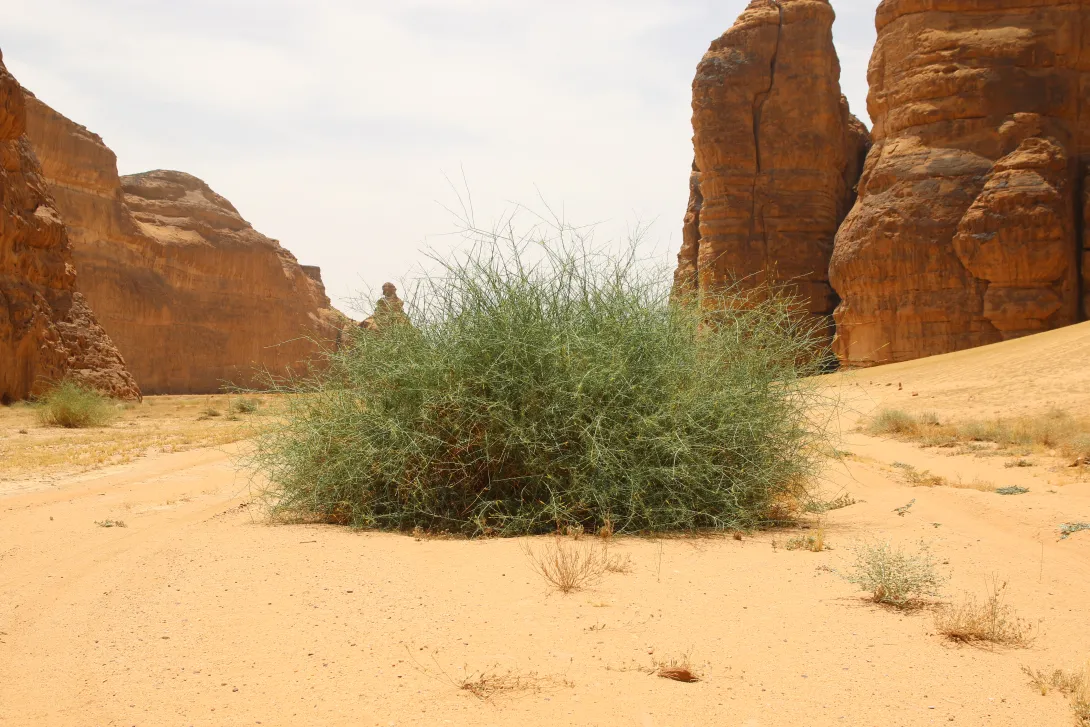
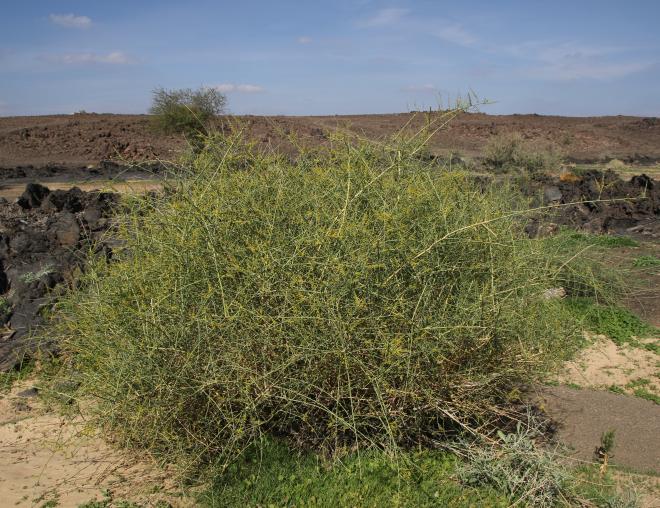
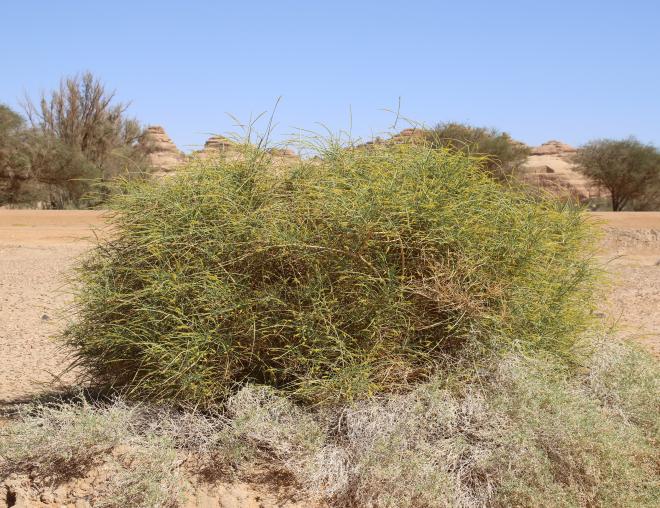
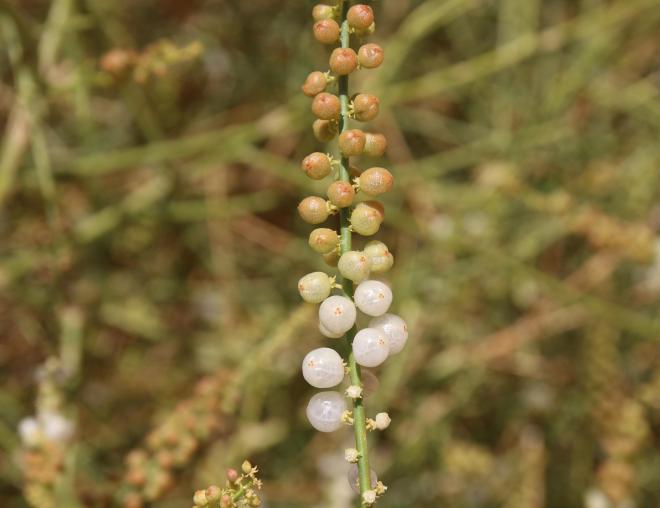
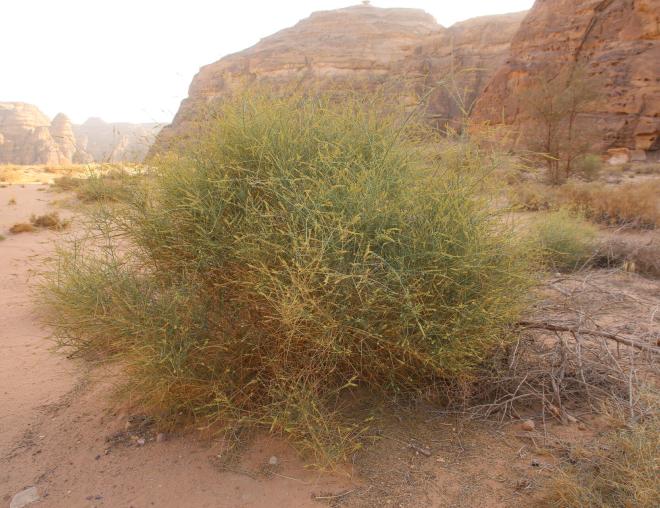
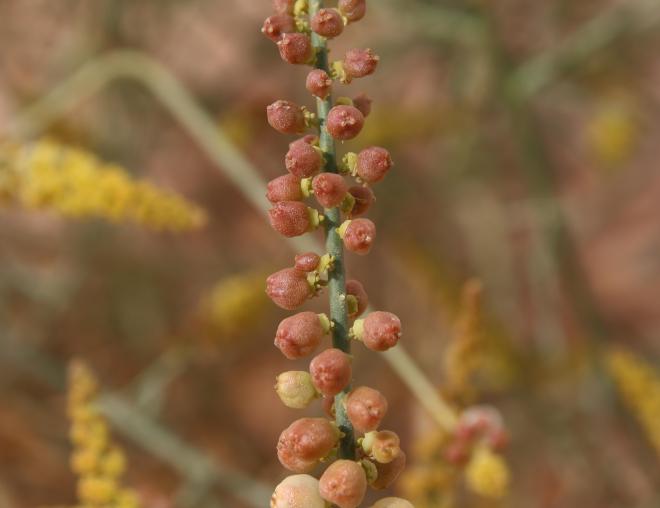
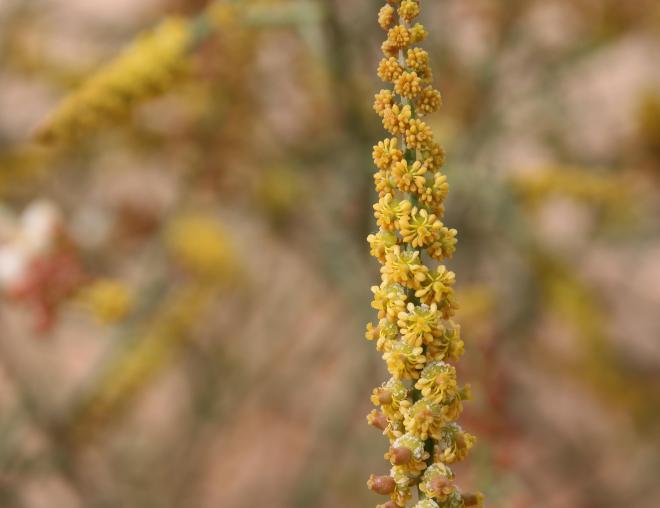
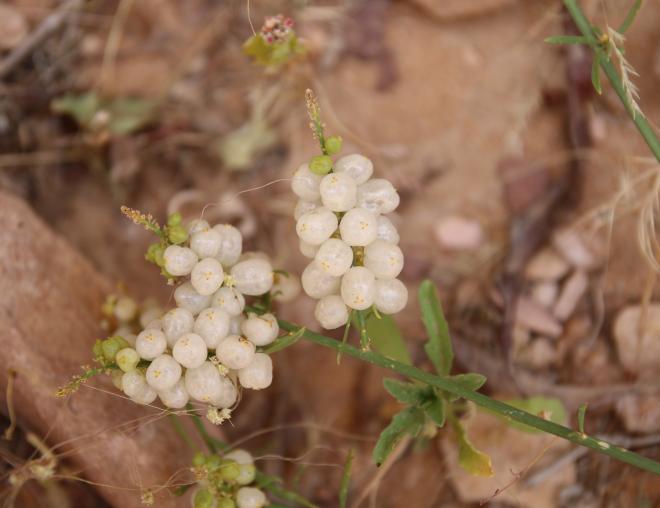
Dioecious woody shrub, typically 1–2.5 meters tall, glabrous throughout, with numerous slender, divaricate branches. It is often scandent, growing along rocks or climbing over other shrubs. This species is deciduous, shedding its leaves in response to climatic conditions, and often appears leafless or sparsely foliated. Leaves are up to 4 cm long, linear to narrowly ovate, entire, sessile, and generally clustered in fascicles; older, spine-like branches are thicker than younger ones. The yellow flowers are zygomorphic (bilaterally symmetrical), usually unisexual (though occasionally bisexual), and arranged in many-flowered racemose spikes. Sepals are oblong-ovate, 1–1.5 mm long, and petals are usually absent. The fruit is a small, globose, subsessile, translucent berry that turns white at maturity, with black seeds often visible through the flesh. As it dries, the berry becomes red. Each fruit contains several dark brown, tuberculate seeds (up to 1.8 mm).
- Growth Form
-
Description
-
Habitat and Distribution
- Habitat
-
Geographical Distribution Range
This Sudanian and African species is distributed from Northeast Africa to India, occuring in Libya, Chad, Sudan, South-Sudan,Ethiopia, Somalia, Djibouti, Eritrea, Egypt, Sinai, Jordan, Iran, and Pakistan. Within the Arabian Peninsula, it is native to Saudi Arabia, Jordan, Kuwait, the Gulf States, Yemen and Oman.
-
Ecology
-
Phenology
JanFebMarAprMayJunJulAugSepOctNovDecFloweringFructification
- Origin
-
IUCN Red List Category
 Not Evaluated
-
Remarks
Taily Weed produces abundant berries that serve as an important food source for birds, reptiles, and mammals. The plant often droops under the weight of its abundant fruit, which densely covers the branches. As it is widespread in AlUla County and thrives in a variety of habitats-including degraded areas such as urban environments-it is considered a promising species for ecological restoration.
-
Phenology
-
Uses and Values
-
Aromatic and Medicinal Use
Medicinal use
-
Other Usages
Palatable; Edible for birds
-
Description of Traditional Uses
The plant is traditionally used in medicinal poultices for skin conditions and pain.
-
Aromatic and Medicinal Use
Gallery