Plantago ciliata Desf.
القريطا/قرينة
Syn. Plantago ciliata var. lanata Boiss. (1879)
Ciliate plantain
Plantaginaceae
1 / 8

-
Morphological Description
-
Description
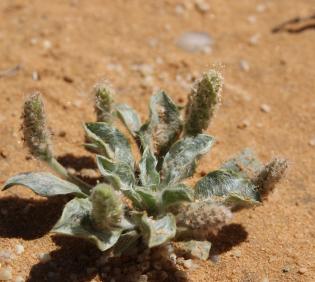
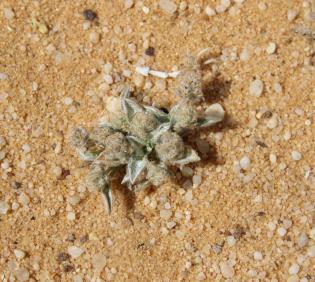
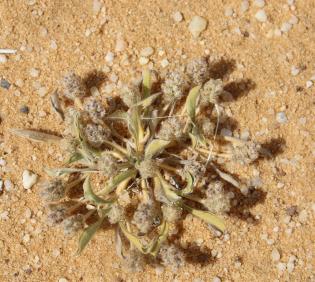
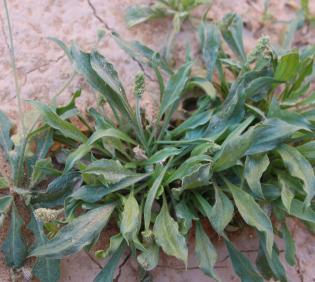
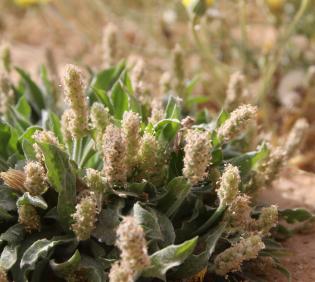
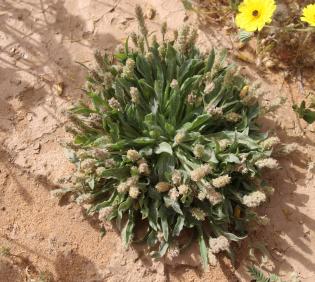
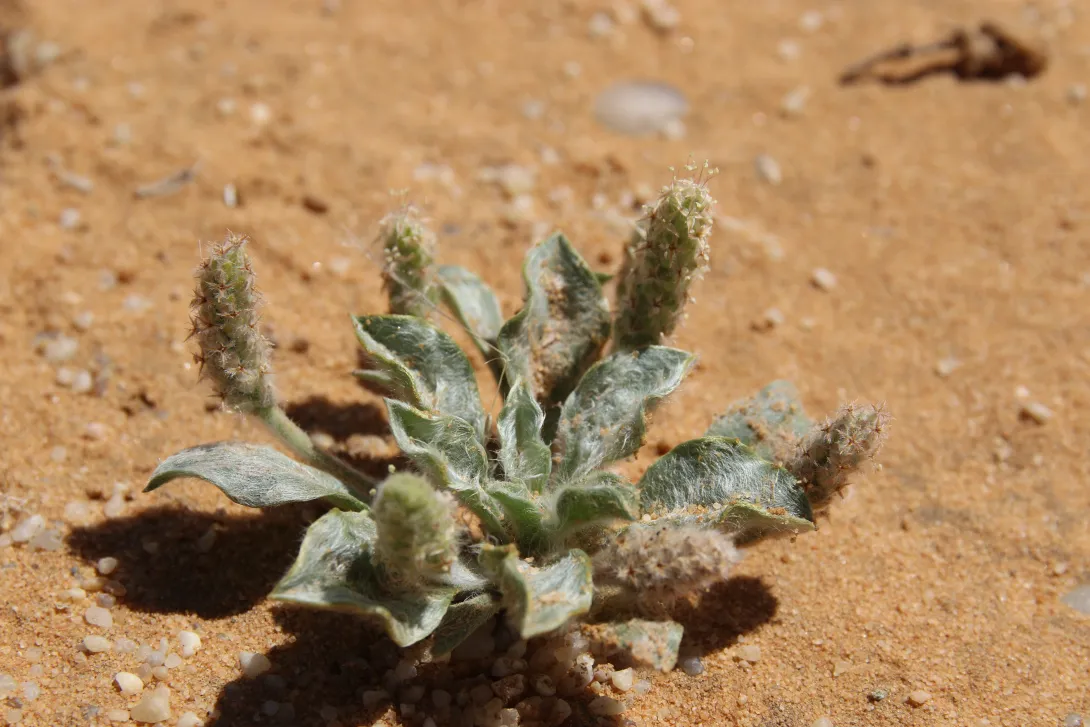
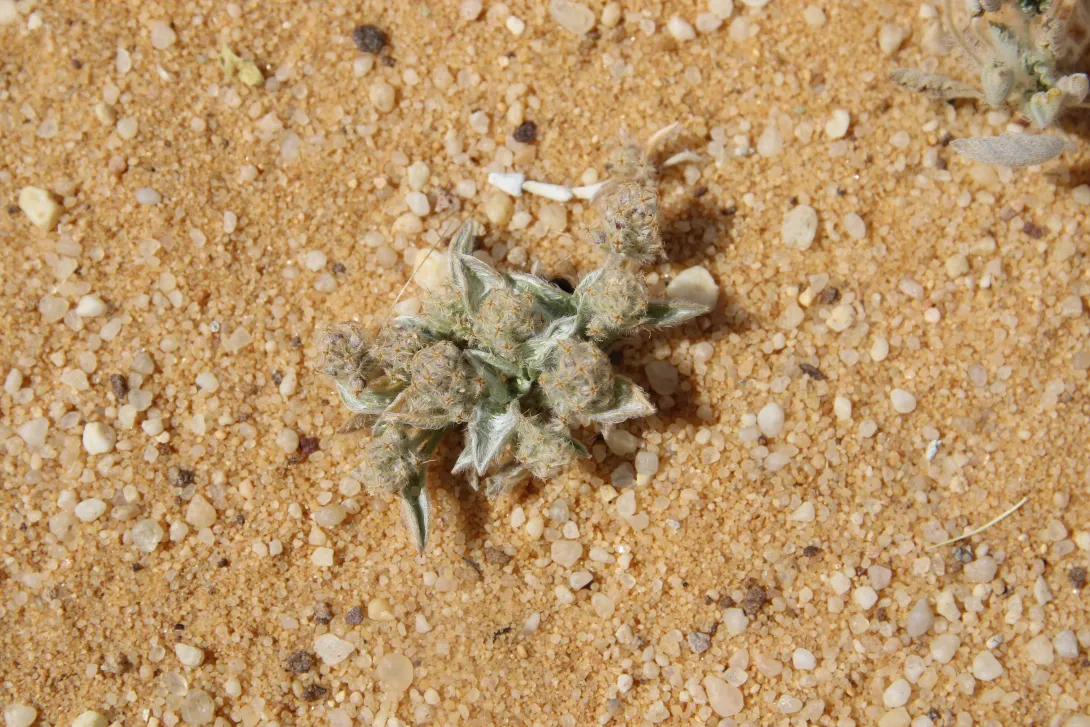
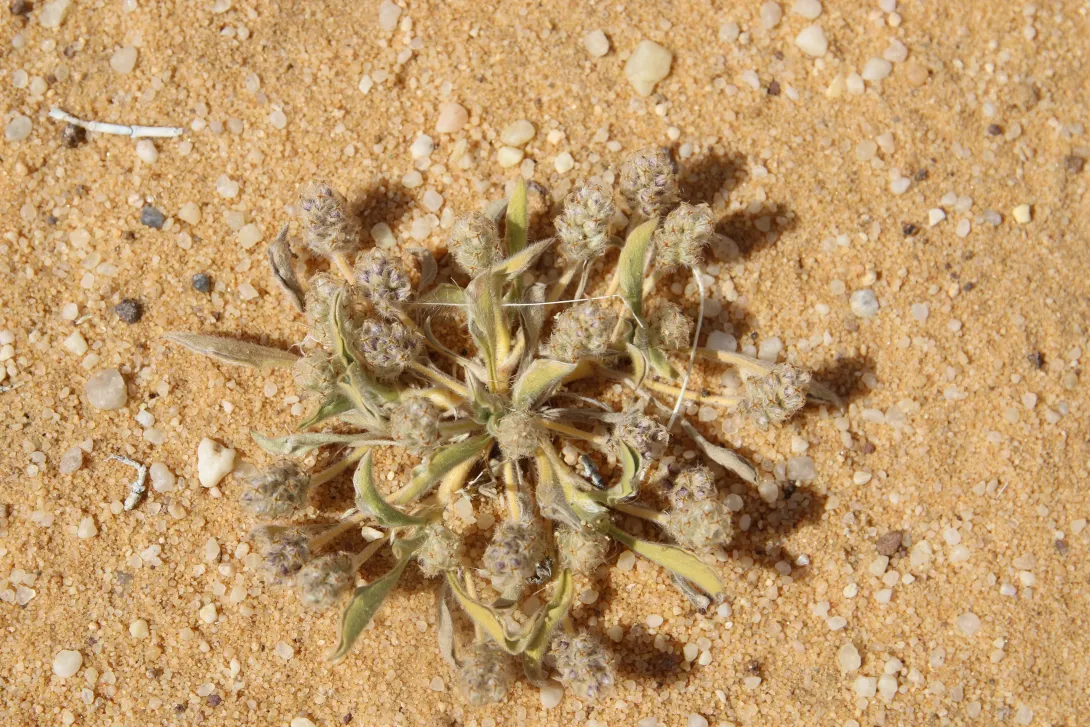
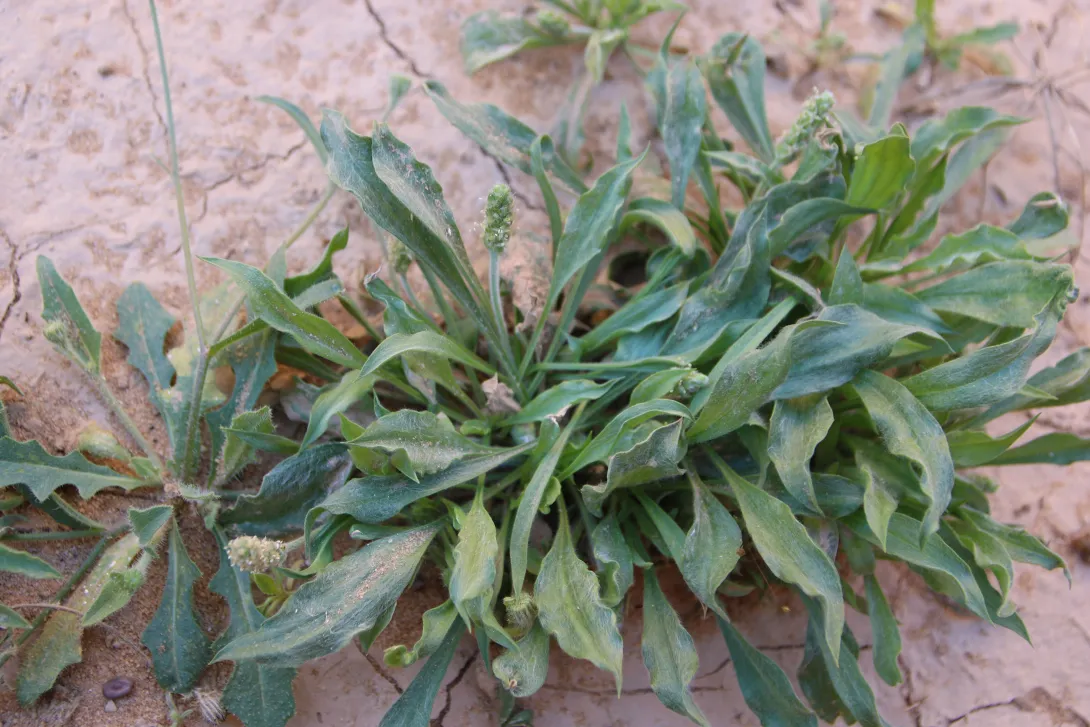
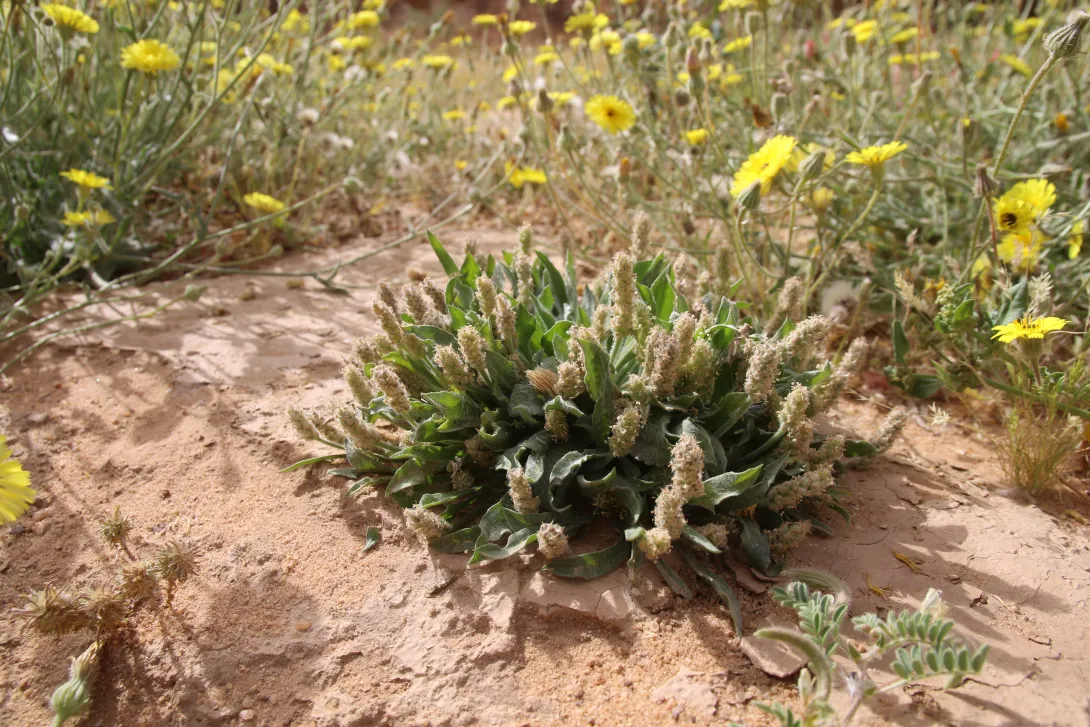
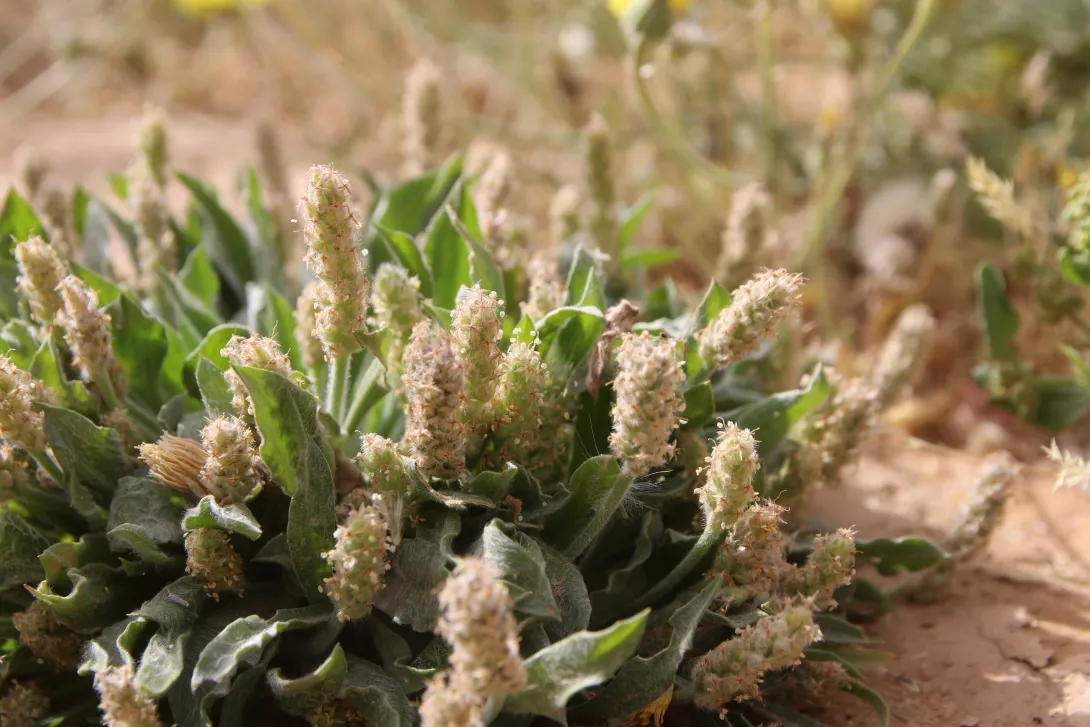
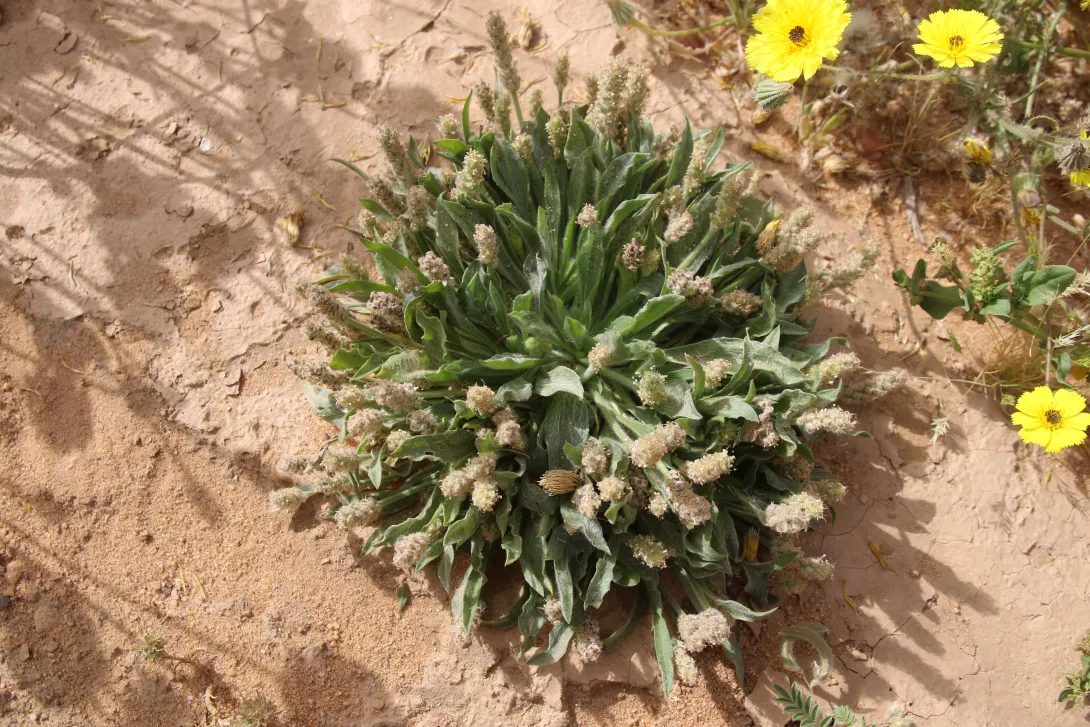
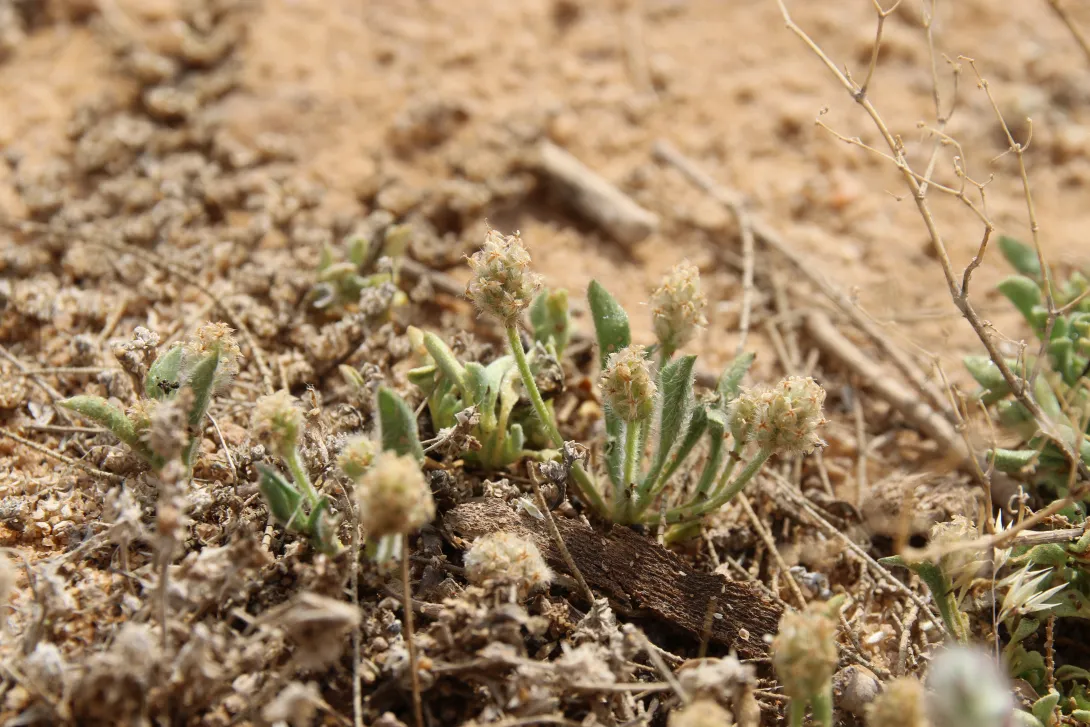
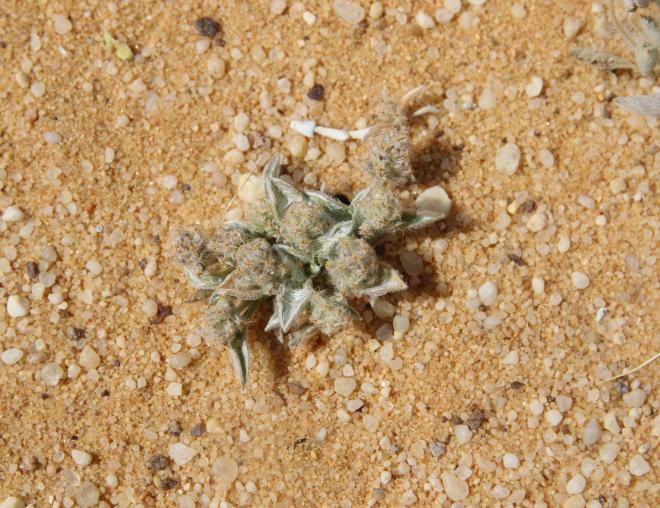
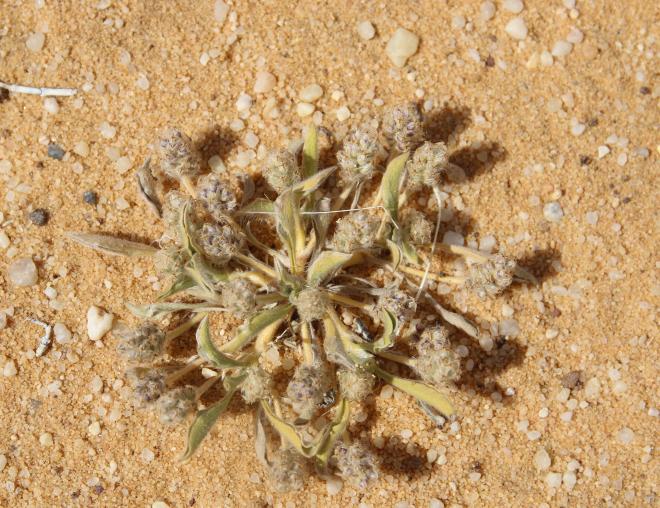
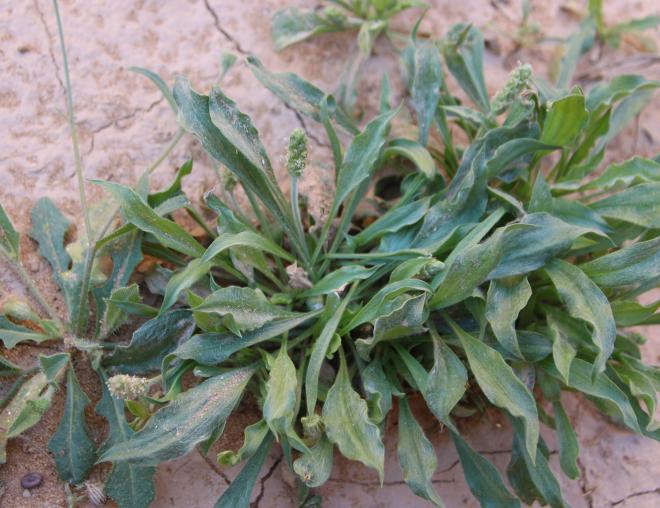
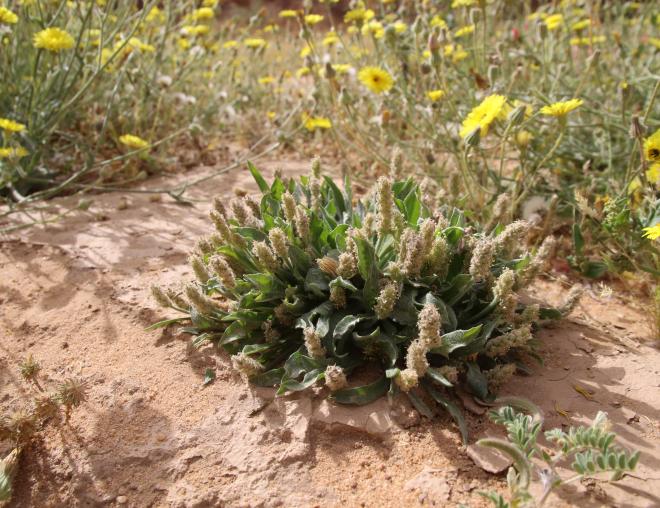
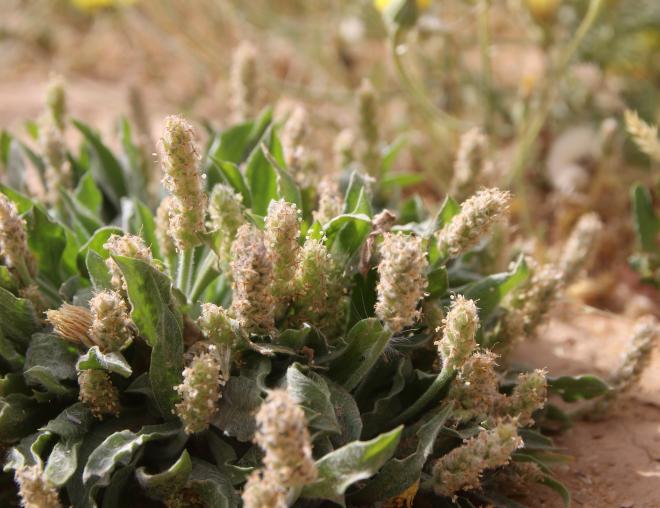
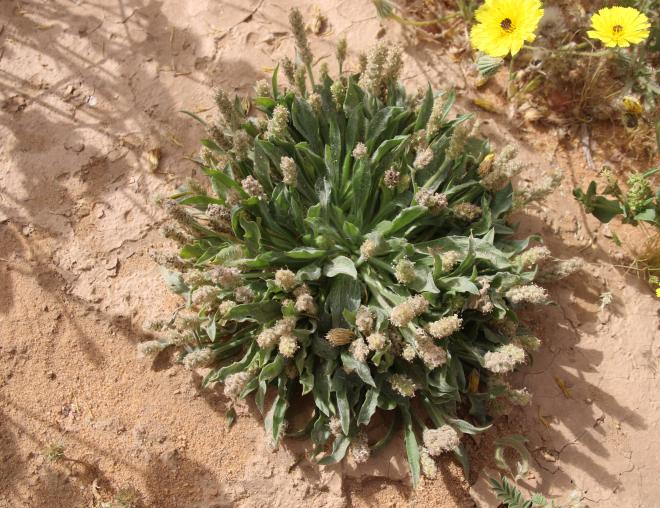
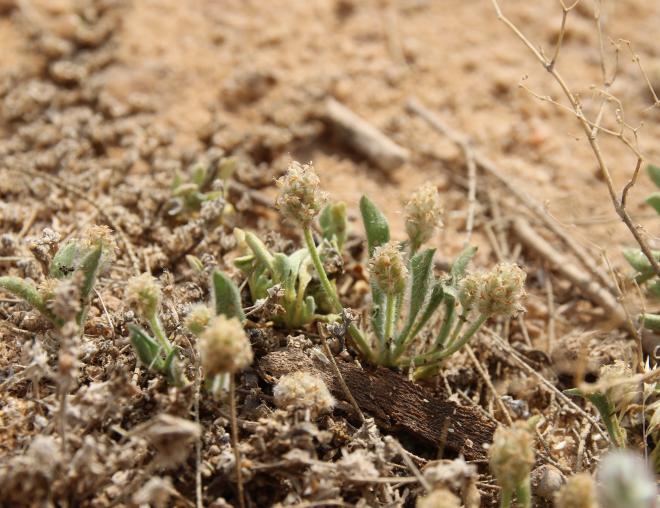
Annual, small, long-villous herb, stemless or with a short stem, 5–15 cm tall. Leaves are obovate to oblanceolate, 4 cm long (up to 8 cm) and 1.5 cm wide, with densely appressed long hairs, rarely appearing pubescent. Scapes are up to 4 cm long. Spikes are cylindric to oblong, short, and rarely exceeding 3 cm. Bracts are ovate-oblong, up to 3 mm long and 2 mm wide, with a prominent median green band usually fading to straw-colored at maturity, and with wide, scarious, densely long-hairy margins extending up to the apical region of the median band. Anterior sepals are free to the base, about 3 mm long, asymmetric, with glabrous scarious margins on one side and a green band ending in long, dense hairs on the other. Corolla tube is glabrous, about 4 mm long, with very narrow lobes 2 mm long, densely long-hairy on the back. Stigmas are long, up to 2.5 times the length of the corolla lobes. Seeds are borne in pairs in capsules, elliptical, shallowly concave, 2.5 mm long and 1.5 mm wide.
- Growth Form
-
Description
-
Habitat and Distribution
- Habitat
-
Geographical Distribution Range
This Saharo-Arabian species is widely distributed, occuring from Morocco, Mauritania and the Canary Islands extending to Iran, Afghanistan and Pakistan. For the Arabian Peninsula, it is native to Jordan, Saudi Arabia, Kuwait, Gulf States, Qatar and Oman.
-
Ecology
-
Phenology
JanFebMarAprMayJunJulAugSepOctNovDecFloweringFructification
- Origin
-
IUCN Red List Category
 Not Evaluated
-
Phenology
-
Uses and Values
-
Description of Traditional Uses
No specific documented uses were identified in accessible literature.
-
Description of Traditional Uses
Gallery