Artemisia sieberi Besser
شيح
Syn. Seriphidium sieberi (Besser) K.Bremer & Humphries ex Y.R.Ling
White Wormwood, Herba Alba
Asteraceae
1 / 6
-
Morphological Description
-
Description
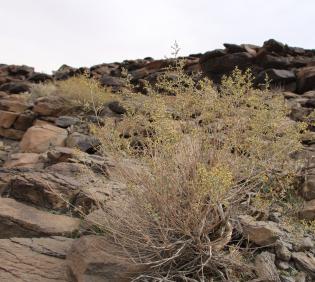
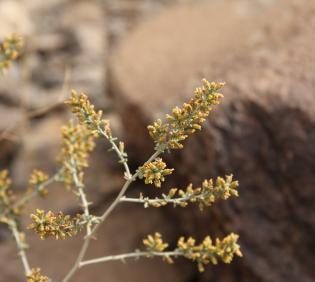
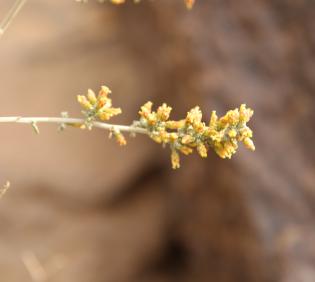
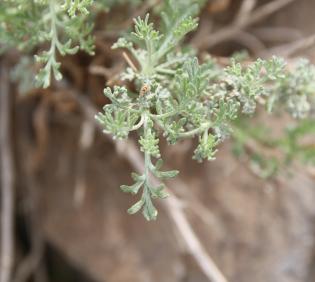
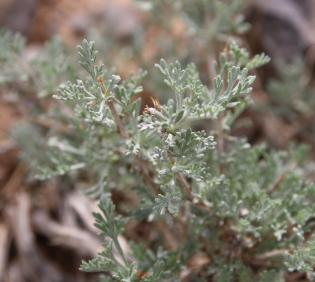
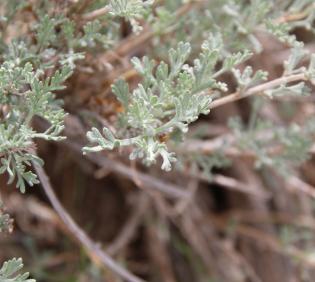
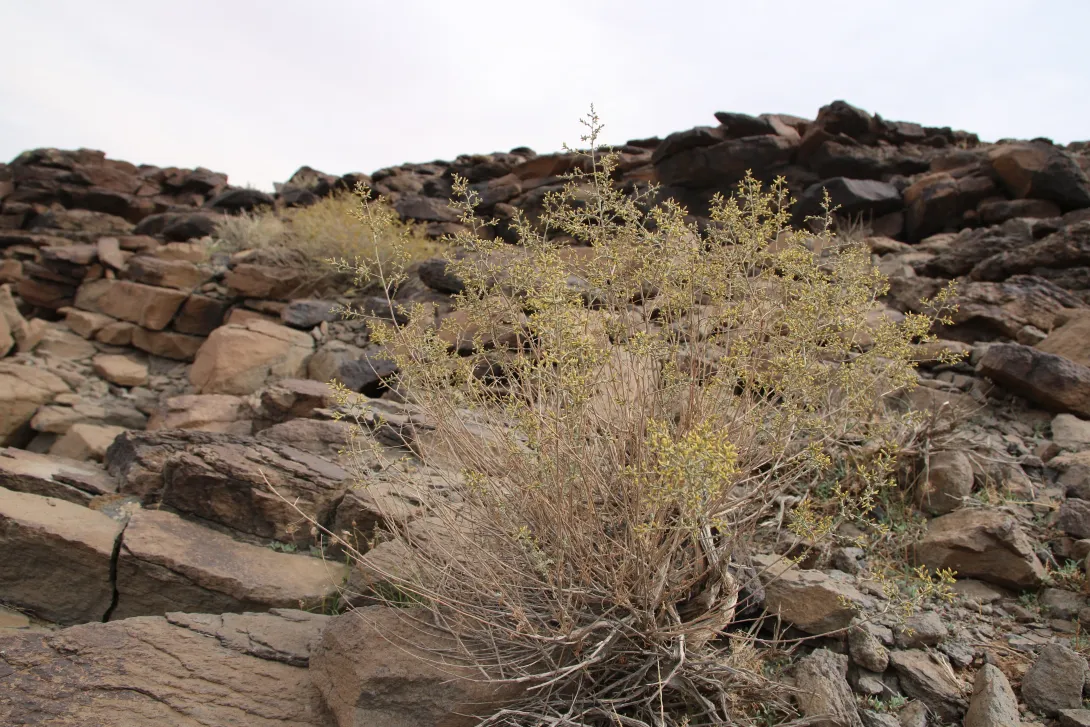
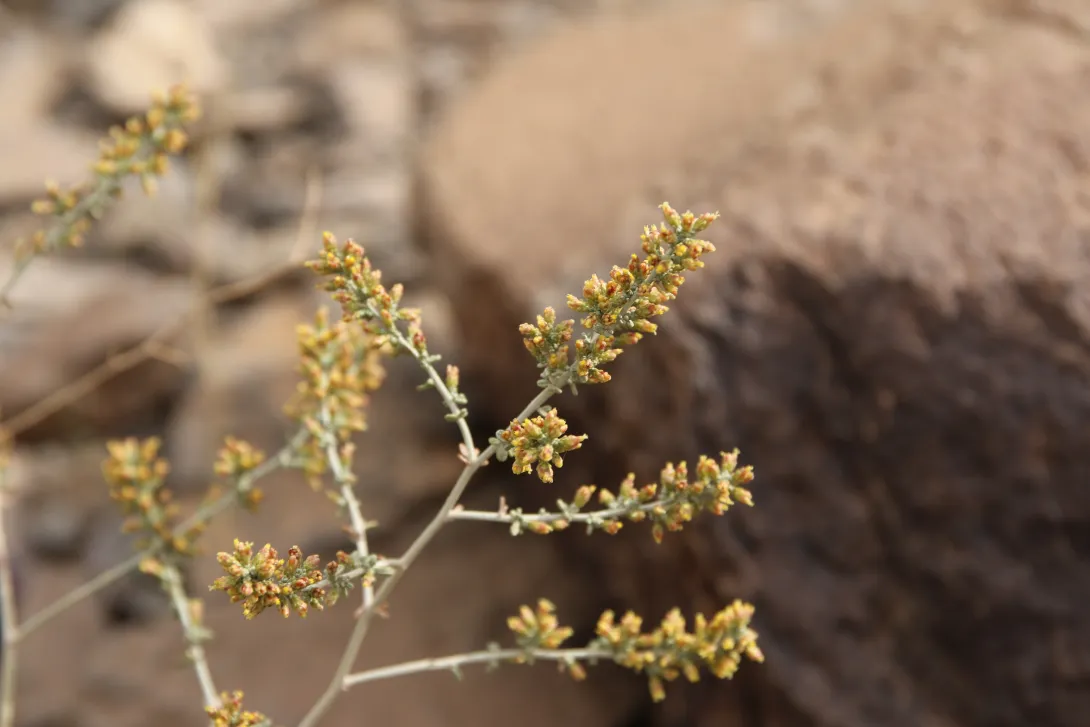
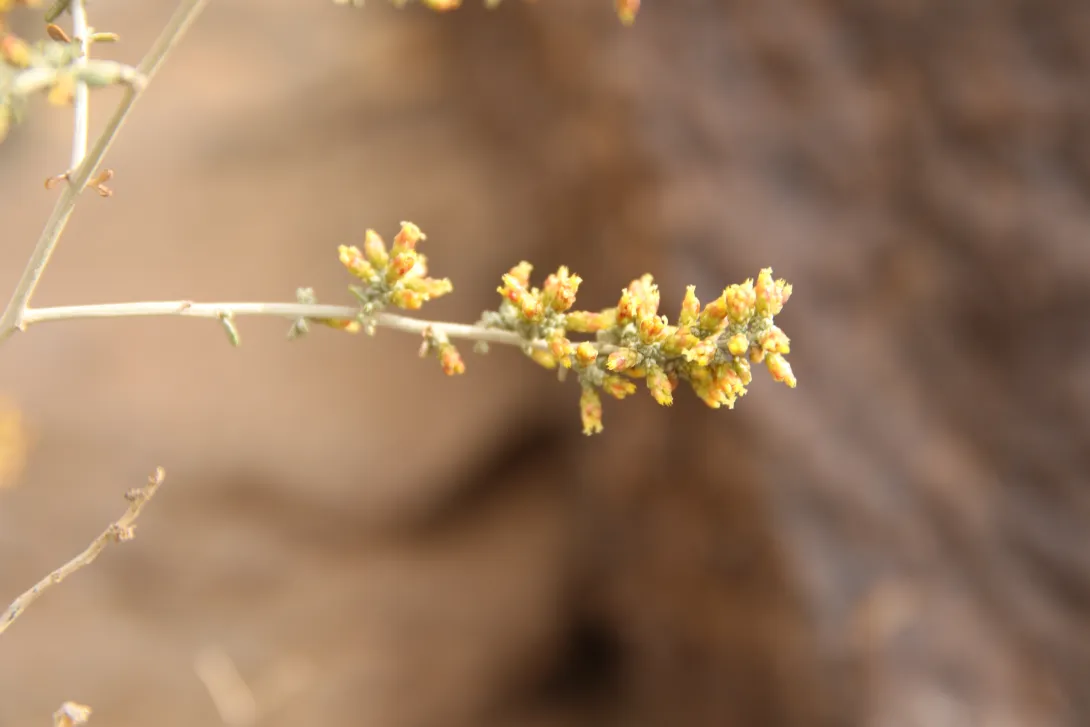
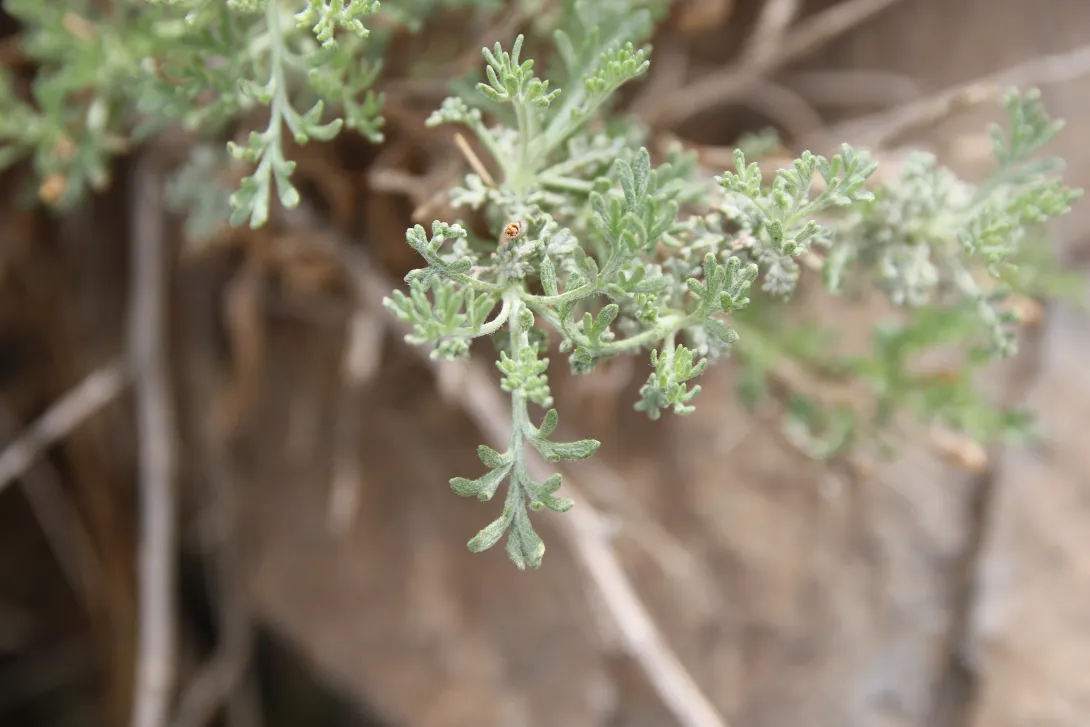
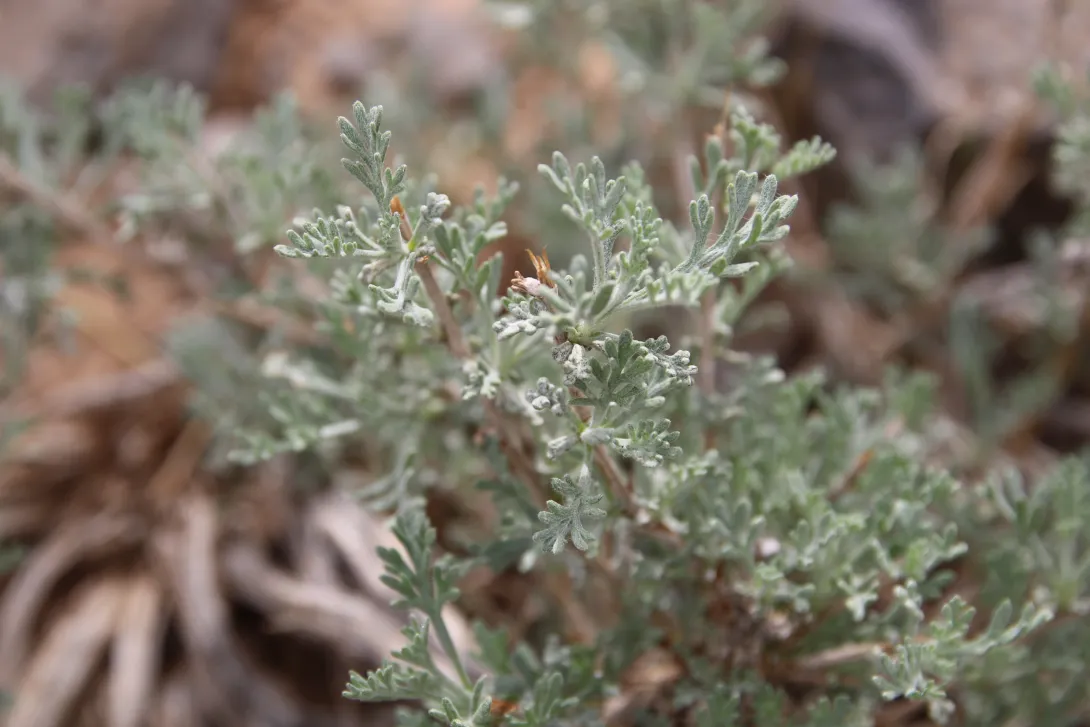
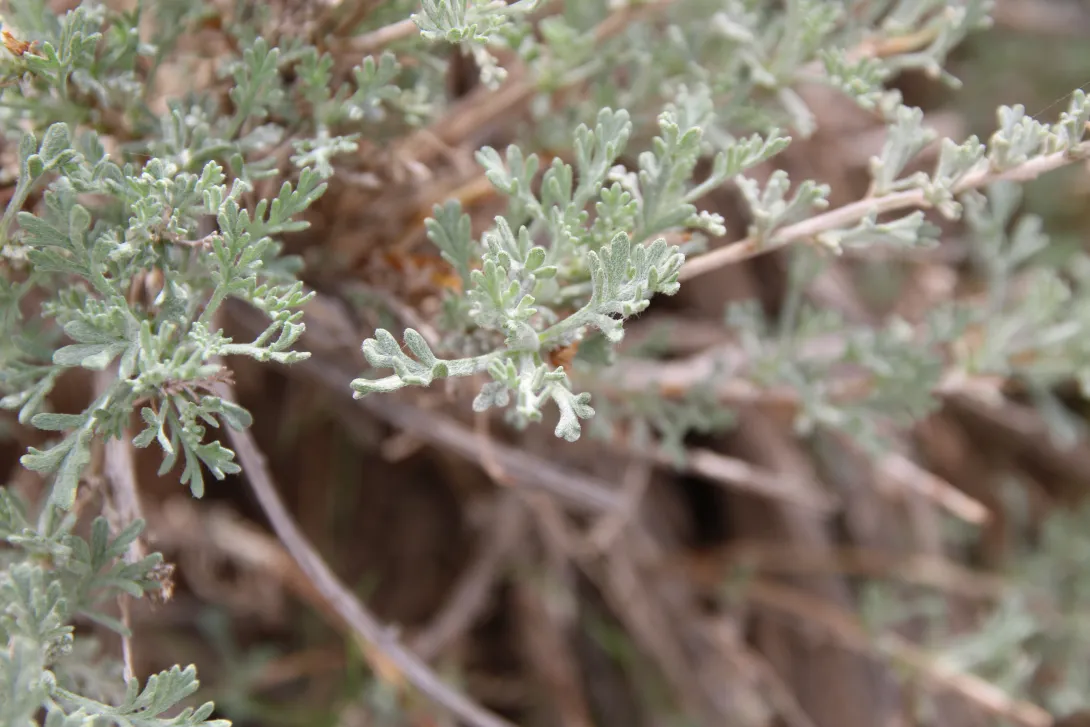
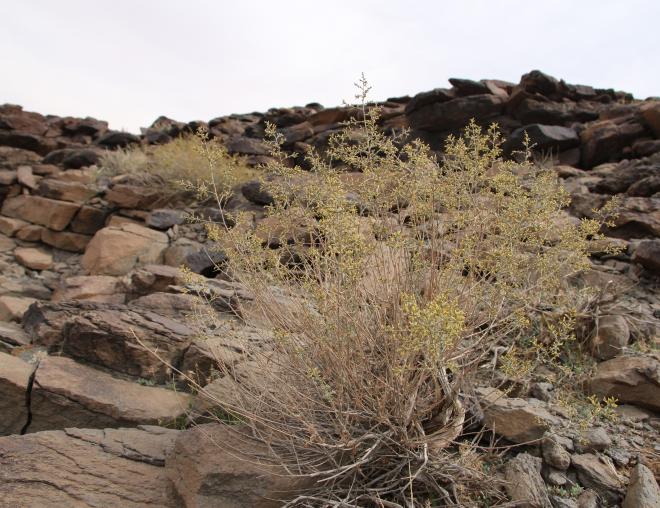
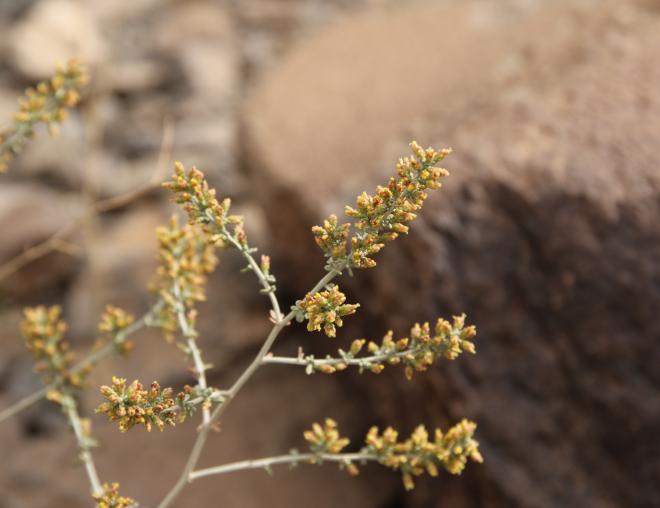
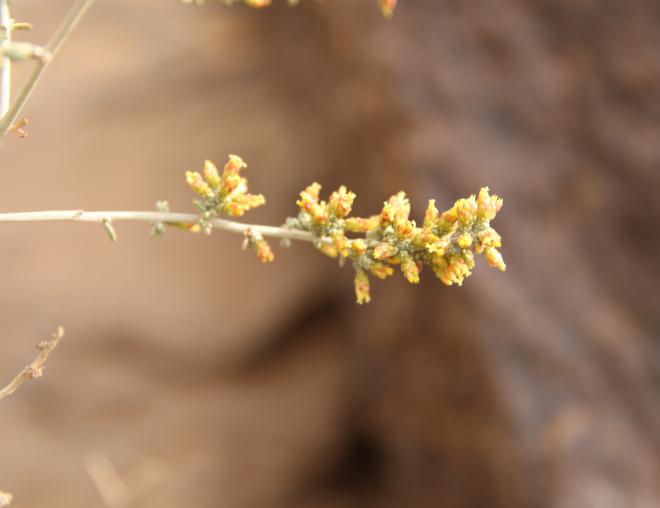
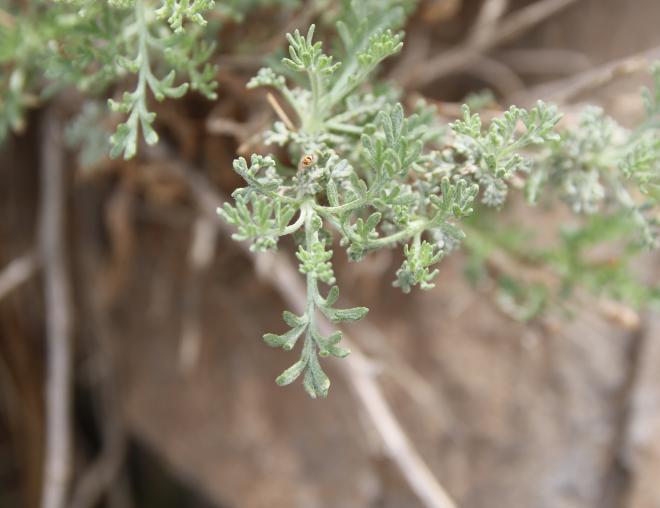
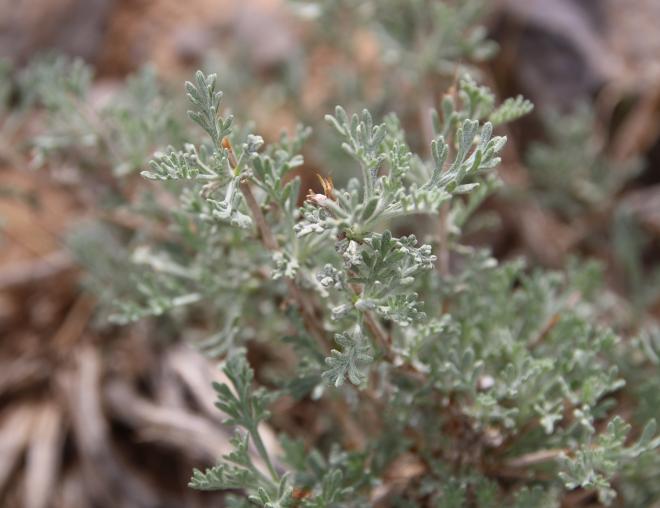
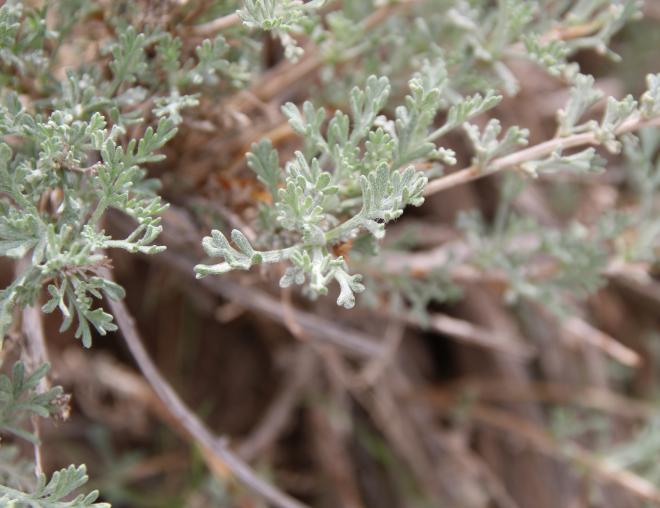
Perennial aromatic shrub, 30–70 cm, woody at base, with grayish tomentose stems. Leaves alternate, bipinnatisect to tripinnatisect, segments linear-filiform, covered with fine hairs. Inflorescence loose panicle of many small globular capitula, yellowish to brown. Strongly aromatic, traditionally used medicinally. Achenes small, smooth, lacking pappus.
- Growth Form
-
Description
-
Habitat and Distribution
- Habitat
-
Geographical Distribution Range
This Irano-Turanian species is distributed from Egypt to Pakistan and Afghanistan, including Arabian Peninsula where it is native to Jordan, Saudi Arabia, Gulf States and Oman.
-
Ecology
-
Phenology
JanFebMarAprMayJunJulAugSepOctNovDecFloweringFructification
- Origin
-
IUCN Red List Category
 Not Evaluated
-
Remarks
The small autumnal inflorescences are wind pollinated
-
Phenology
-
Uses and Values
-
Aromatic and Medicinal Use
Aromatic usages; Medicinal use
-
Description of Traditional Uses
Artemisia sieberi is widely recognized in traditional ethnobotanical practices for its use in treating gastrointestinal disorders, including diarrhea and as a carminative. It is also traditionally employed for pain relief, managing diabetes, and addressing common respiratory conditions such as coughs and colds. Other documented traditional applications include the treatment of inflammation, rheumatic conditions, circulatory issues, and skin ailments such as wounds and abscesses. Additionally, the plant biomass has historically been utilized for local economic purposes, including as a source of aromatic essential oils.
-
Aromatic and Medicinal Use
Gallery