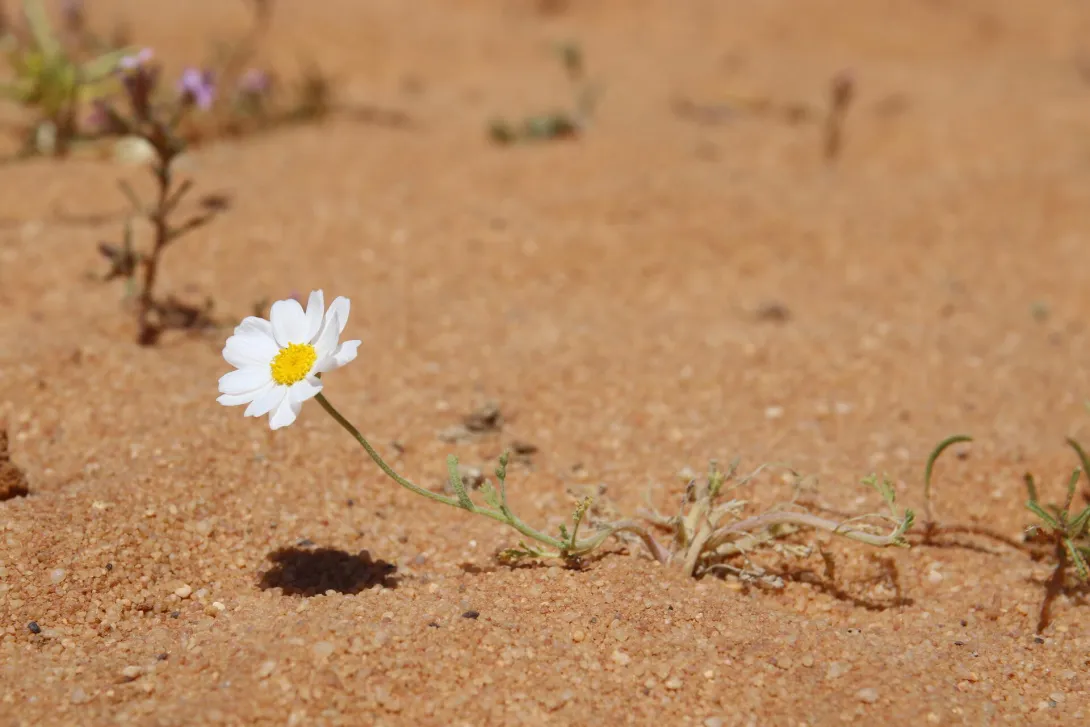
Anthemis deserti Boiss.
الأقحوان
Syn. Anthemis melampodina subsp. deserti (Boiss.) Eig
Desert Chamomile
Asteraceae
1 / 7

-
Morphological Description
-
Description
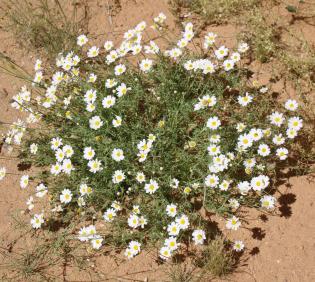
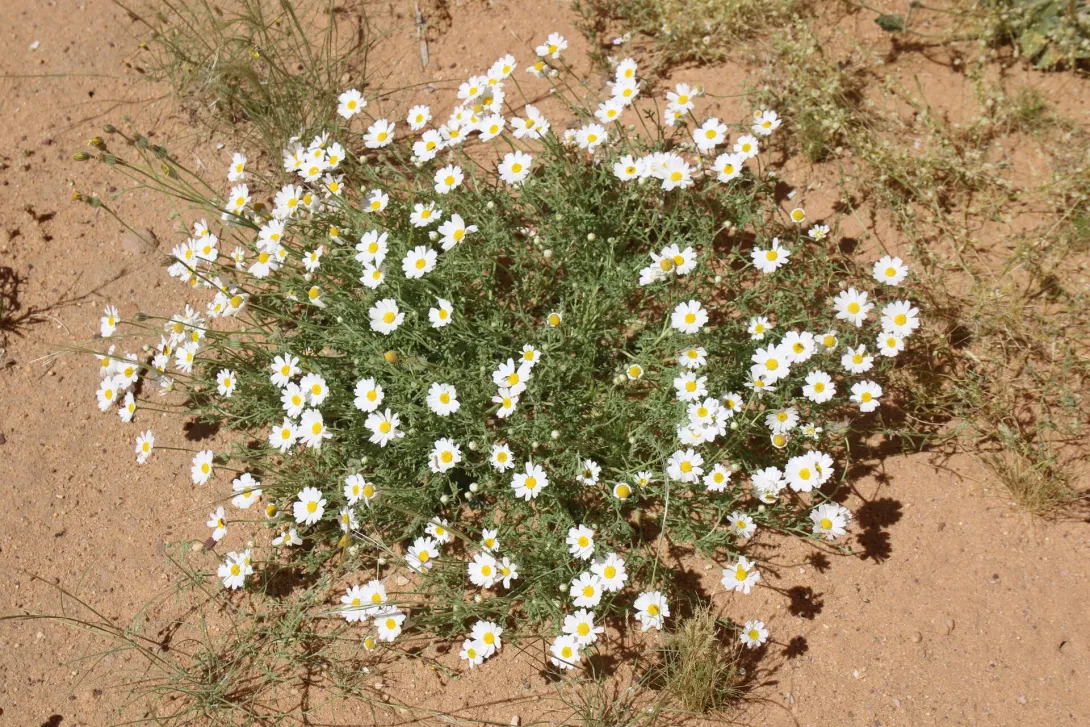
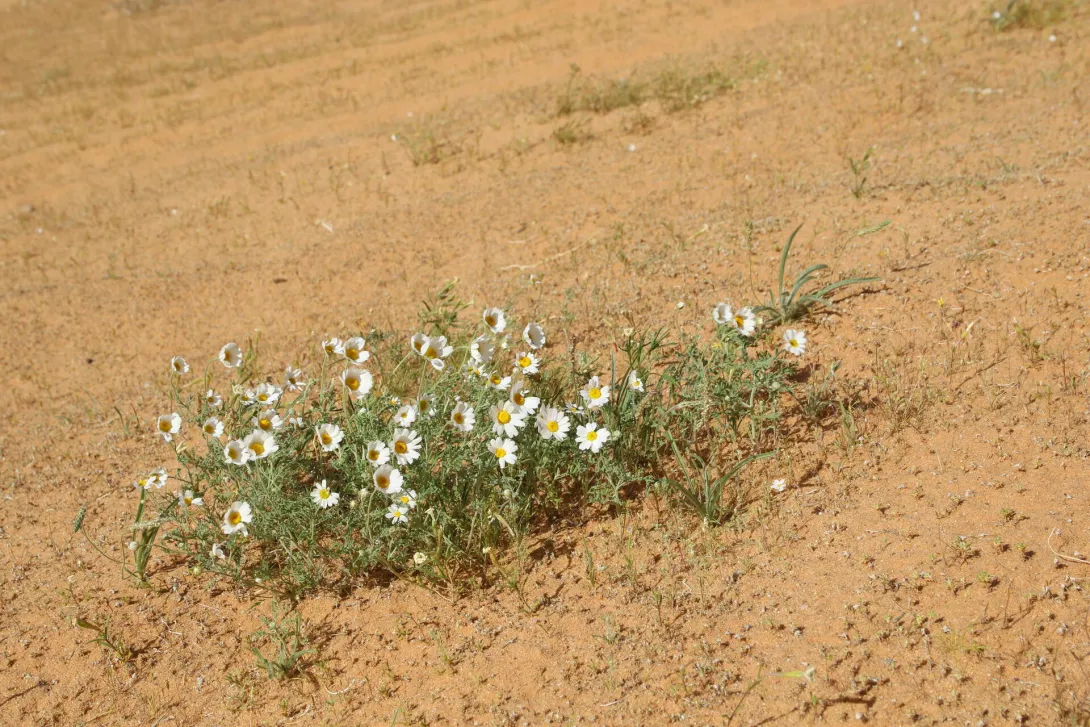
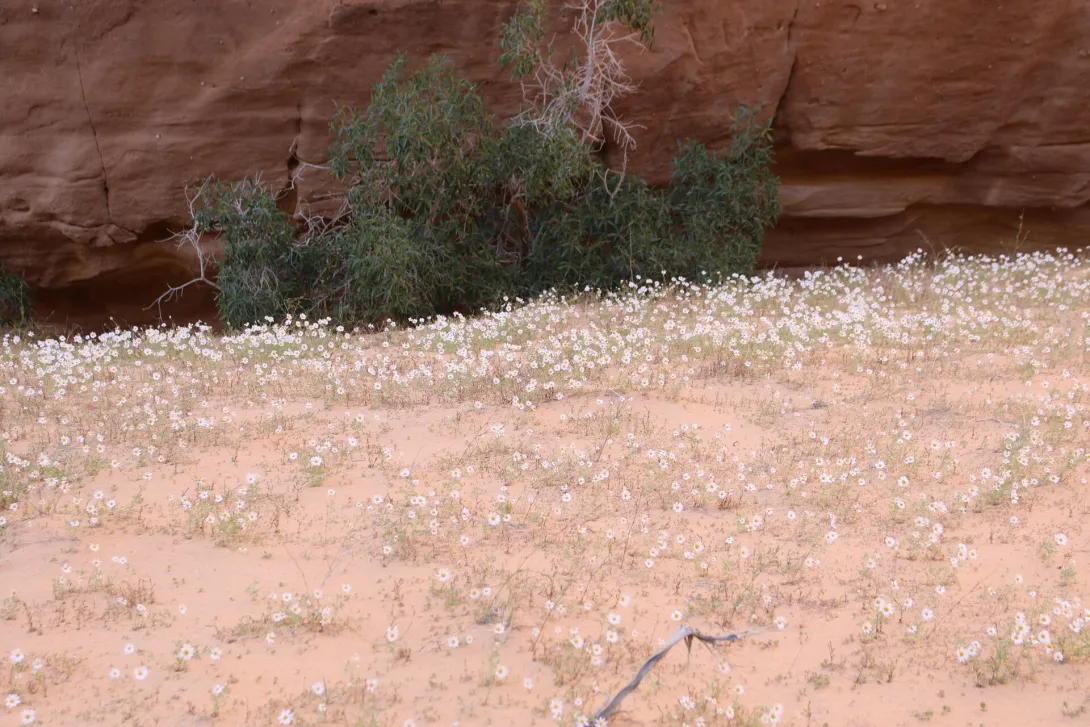
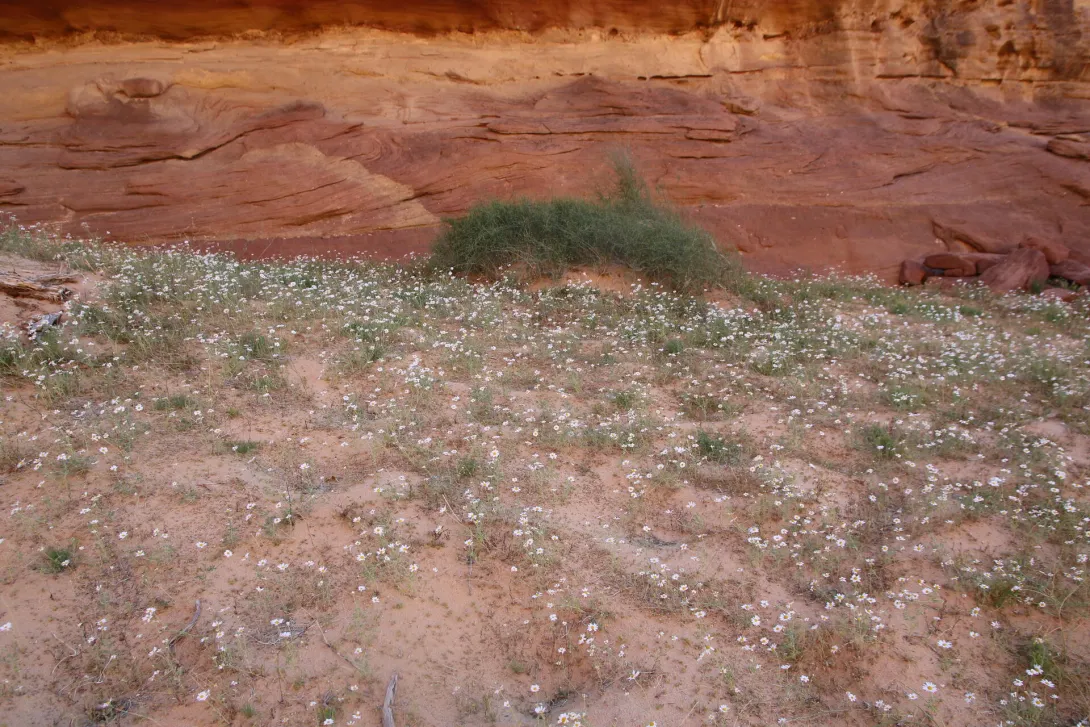
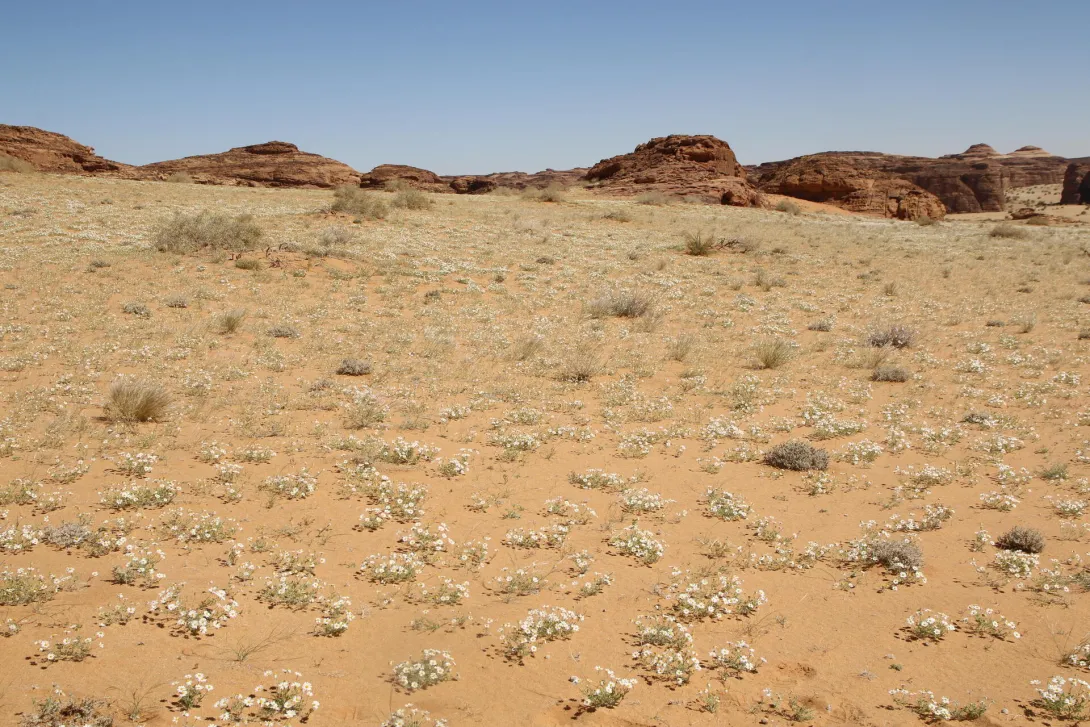
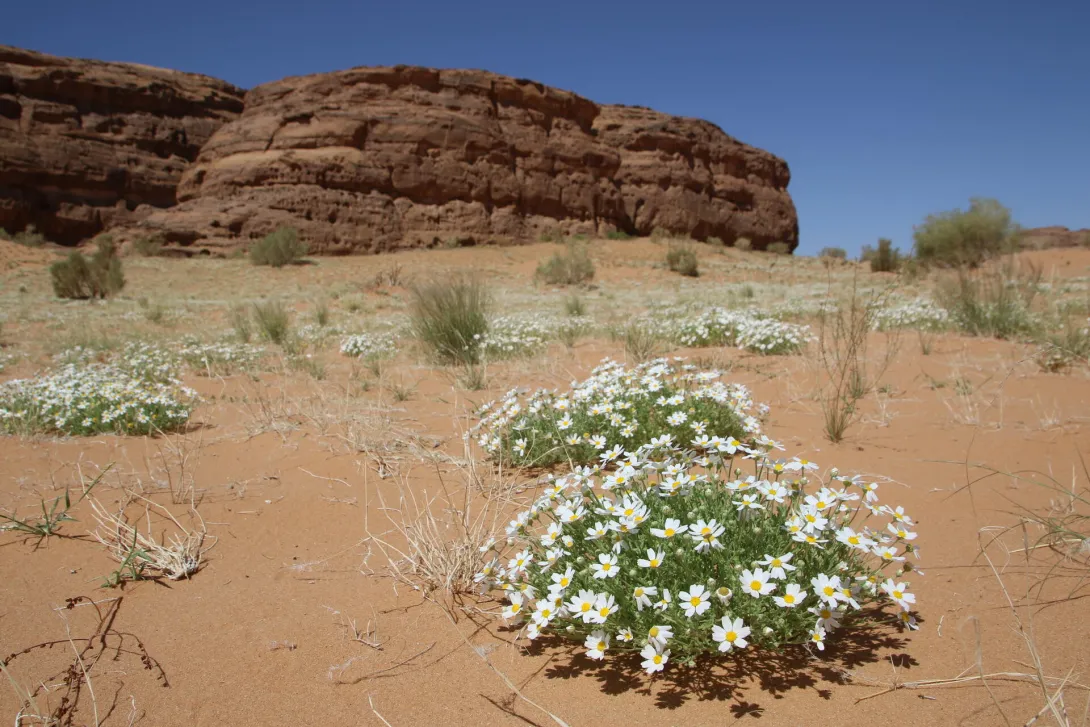
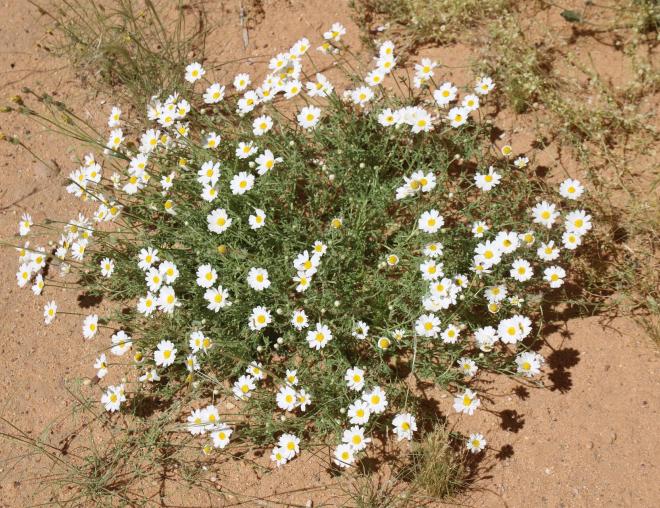
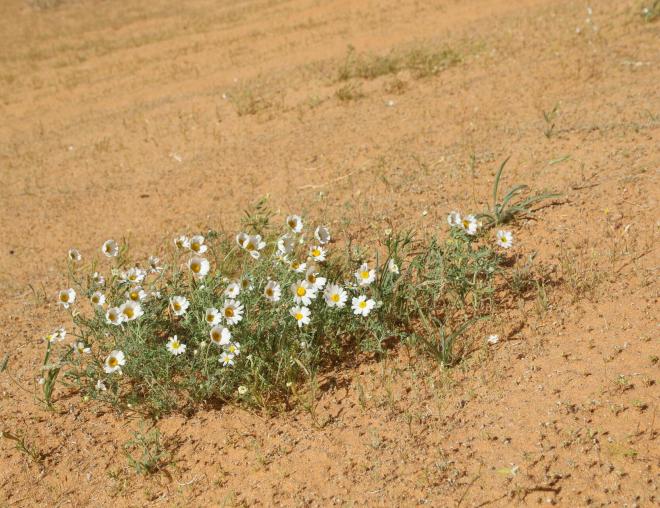
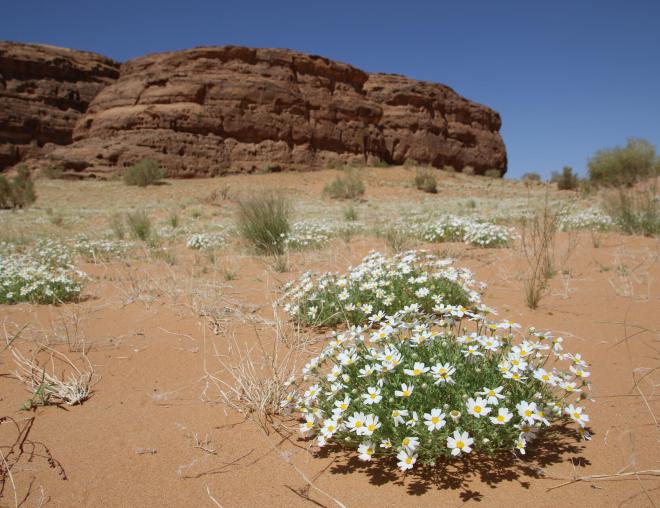
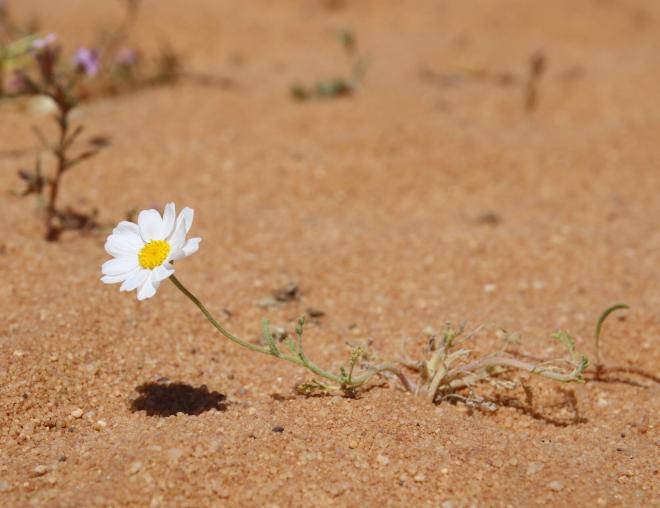
Densely grey, appressed-canescent annual herb, 5–25 cm tall, with ascending stems branching from the base. Leaves are petiolate, 2–3 × 1–1.5 mm, deeply divided in a single plane (unipinnatipartite), divided two times (1–2-pinnatisect), with an oblong to obovate outline and a small pointed tip (mucronate). The daisy-like capitula are 2–3 cm in diameter, featuring white fertile female ray florets and yellow, glabrous disc florets. Achenes are obpyramidal, 1.5–1.75 mm long, with longitudinally tuberculate ridges; the base of the disc floret’s corolla is swollen in fruit.
- Growth Form
-
Description
-
Habitat and Distribution
- Habitat
-
Geographical Distribution Range
This Saharo-Arabian species is distributed in the Arabian Peninsula and adjacent areas, occuring in Egypt, Lebanon, Syria, Jordan, Saudi Arabia and Iraq.
-
Ecology
-
Phenology
JanFebMarAprMayJunJulAugSepOctNovDecFloweringFructification
- Origin
-
IUCN Red List Category
 Not Evaluated
-
Remarks
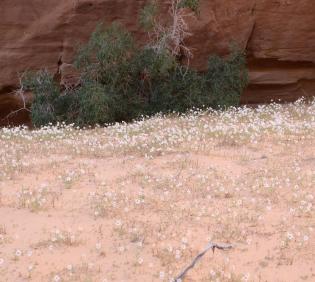
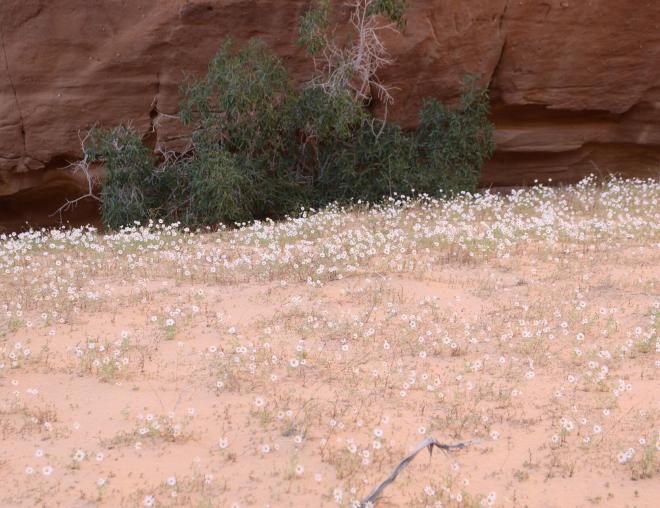
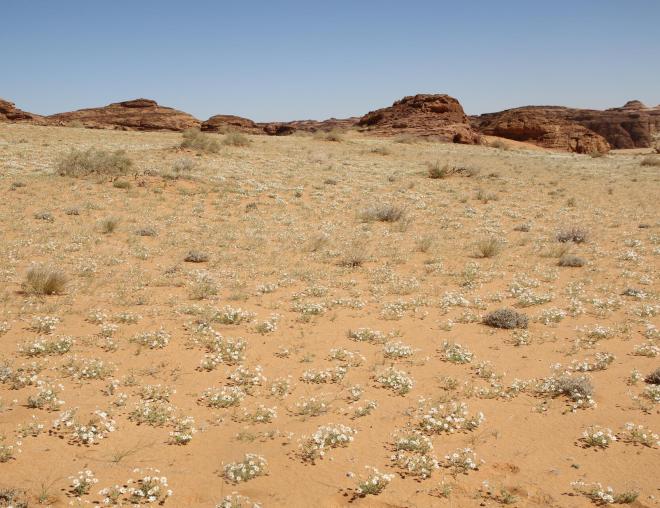
Desert Chamomile is the most common ephemeral flower found on the dunes and is easily recognizable and widely known in AlUla County for its striking blooms and brief but vibrant presence. It appreciates deep sands of desert environment. This species is drought tolerant and present a very extensive root system. This species has also been reffered to Anthemis melampodina subsp. deserti (Boiss.) Eig.
-
Phenology
-
Uses and Values
-
Description of Traditional Uses
No specific documented uses were identified in accessible literature.
-
Description of Traditional Uses
Gallery