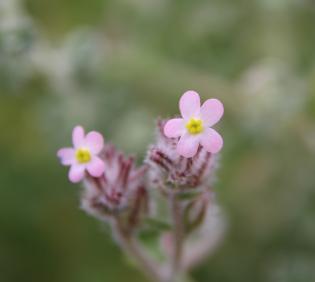
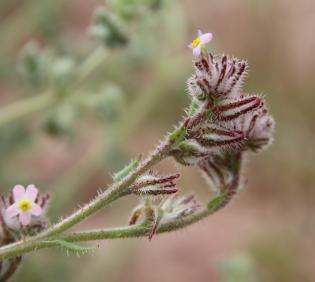
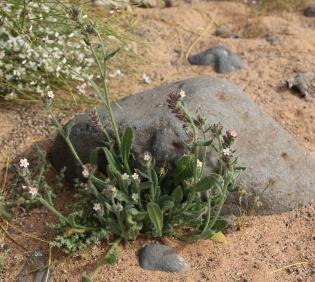
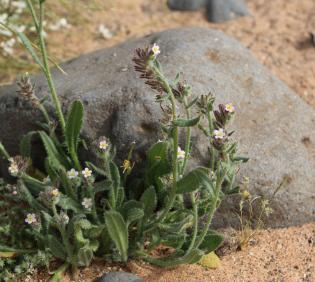
Anchusa milleri Lam. ex Spreng.
الكحلاء / الاكحيل / كحيل
Syn. Lycopsis milleri (Lam. ex Spreng.) Hornem.
Miller's Alkanet, Desert Alkanet
Boraginaceae
1 / 6
-
Morphological Description
-
Description
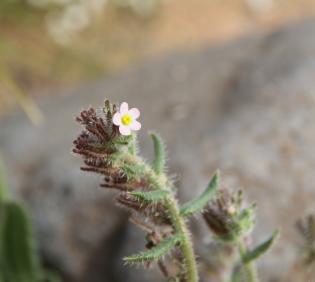
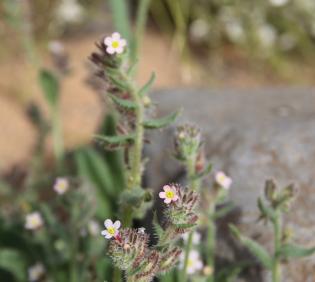
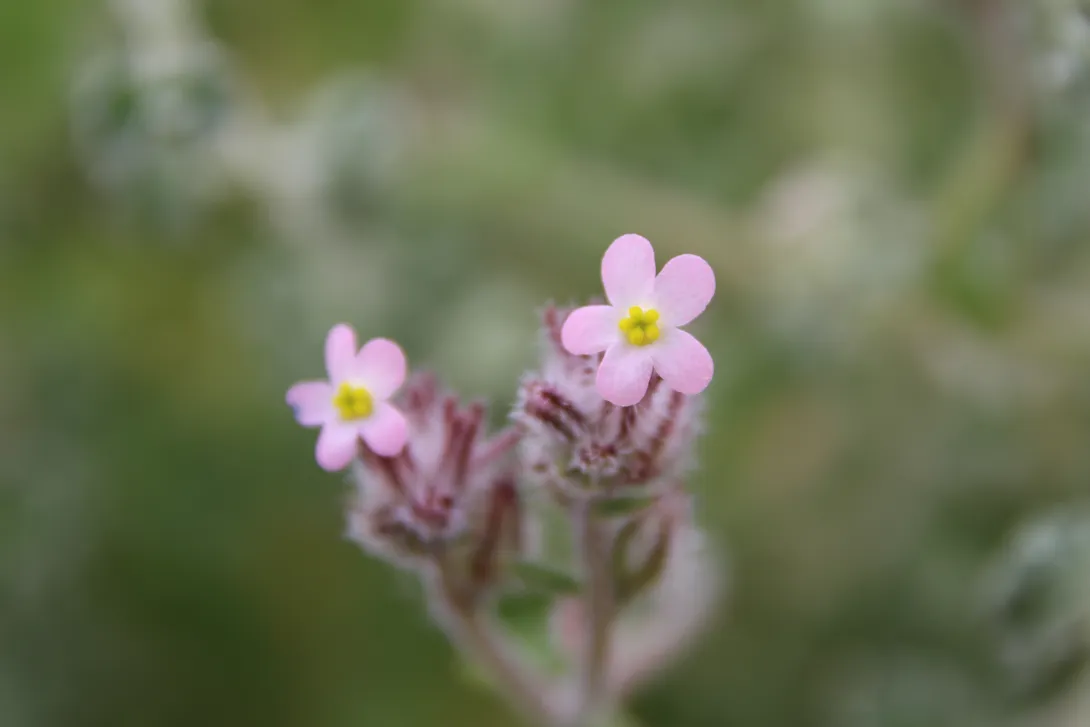
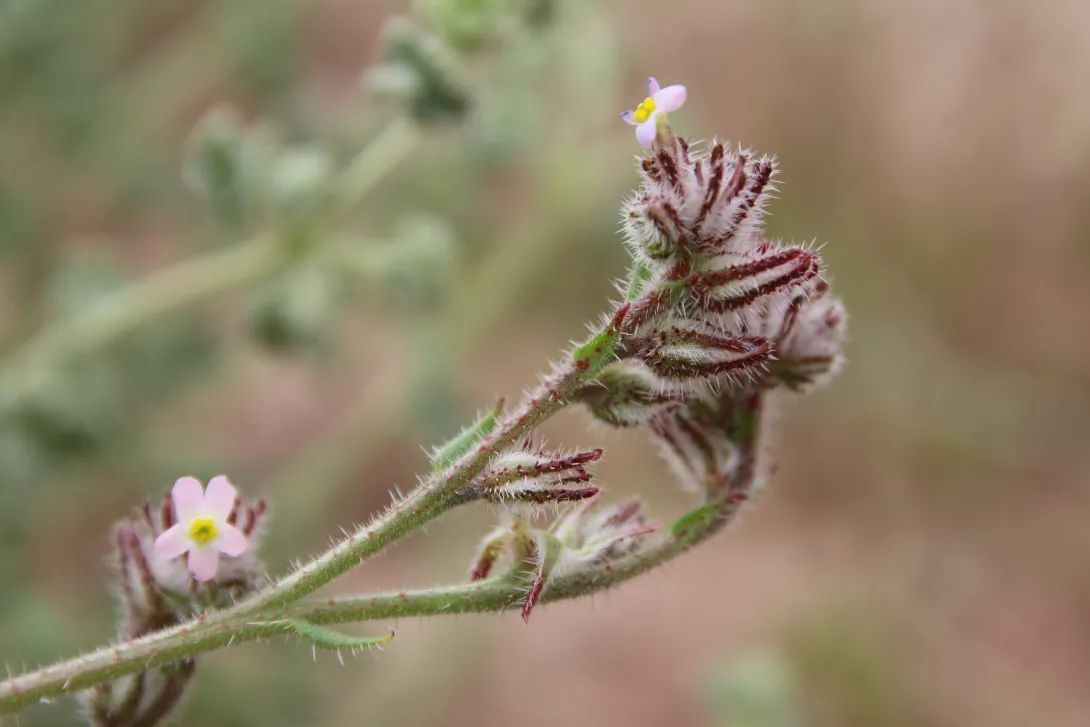
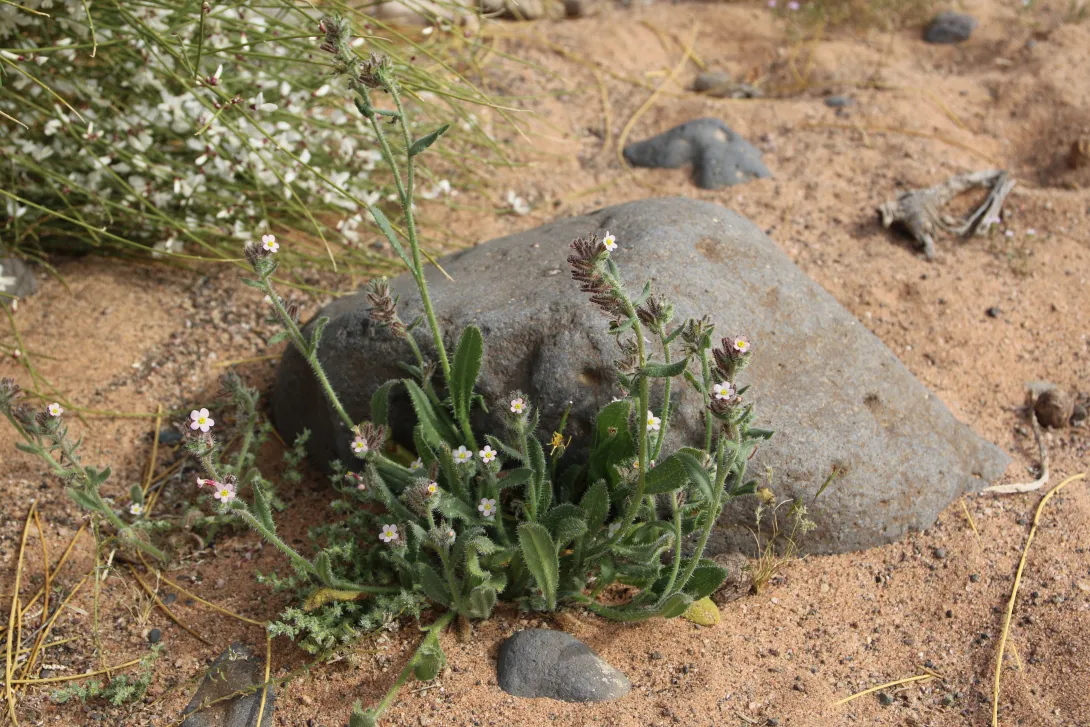
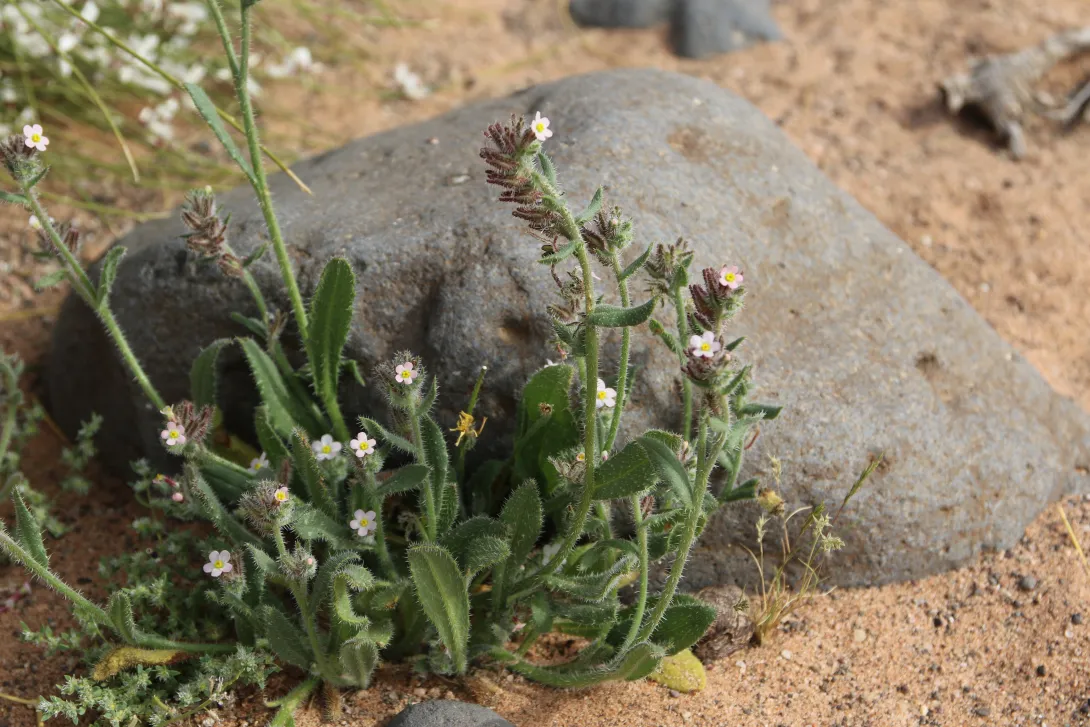
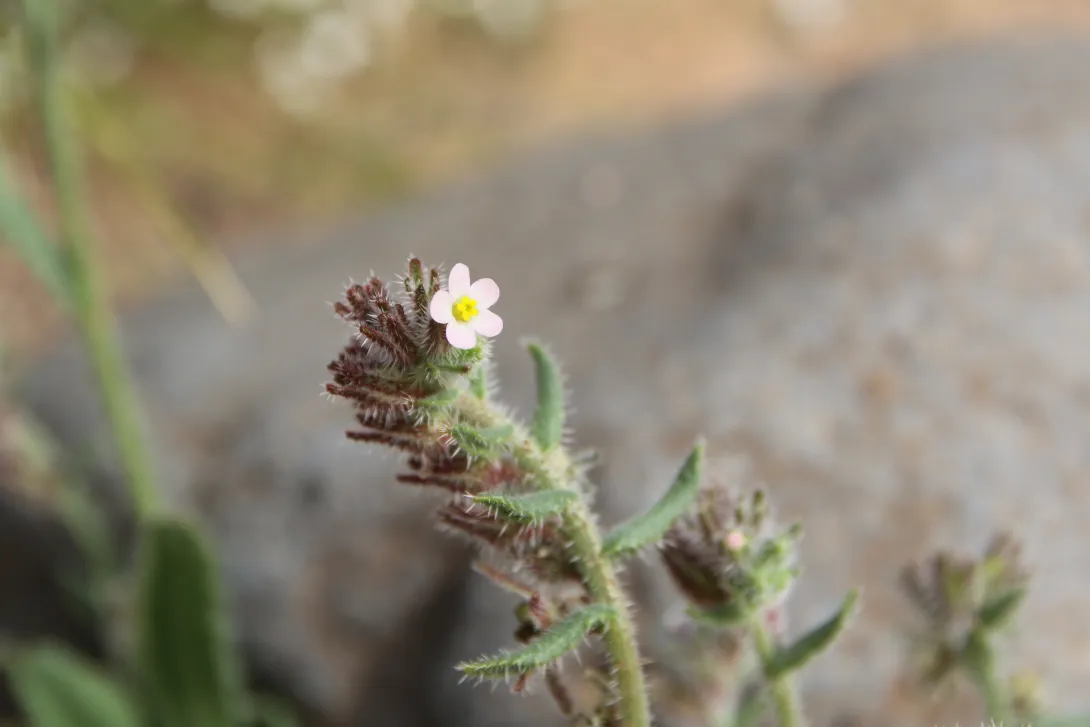
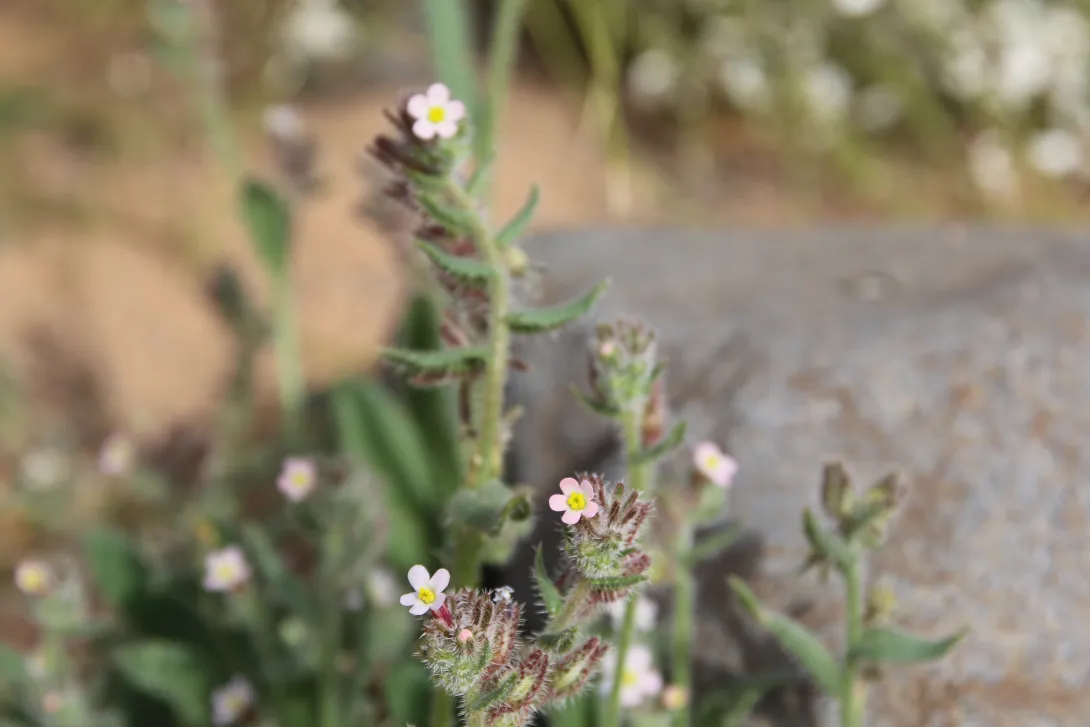
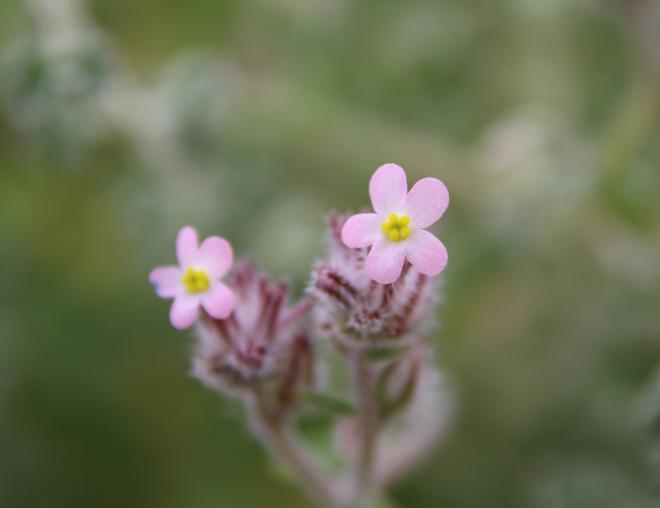
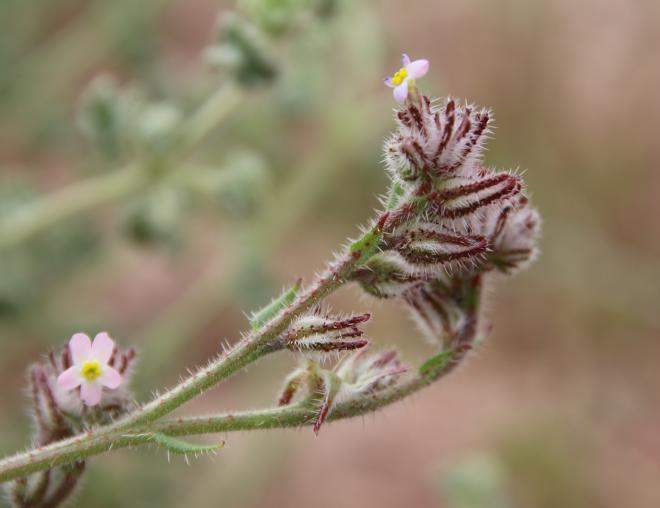
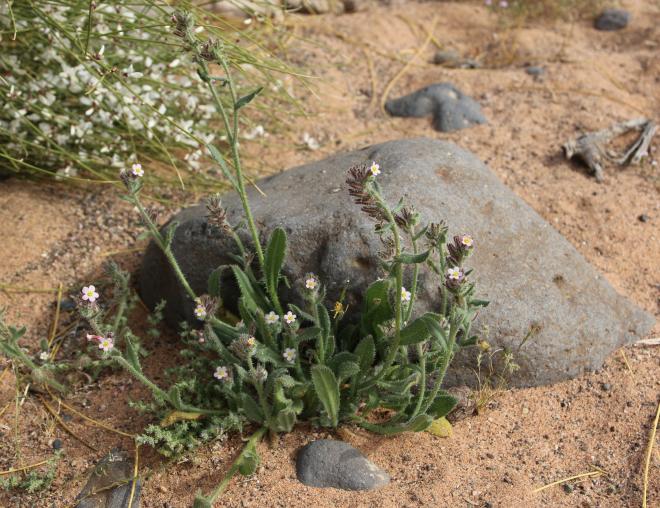
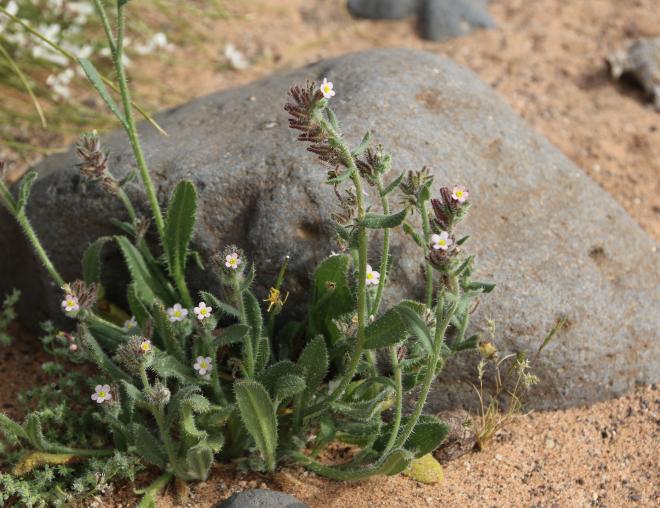
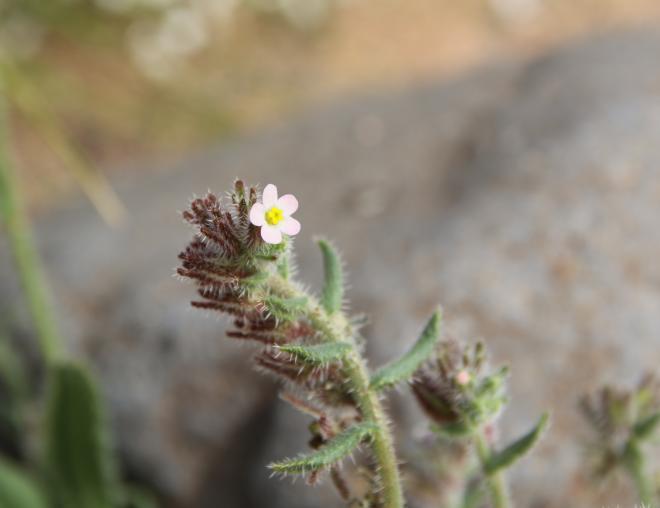
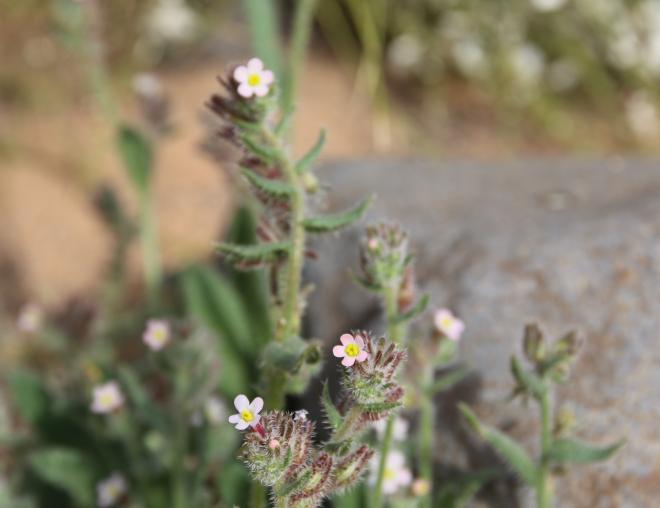
Annual or biennial herb, up to 50 cm, covered with coarse, stiff hairs (strigose). Stems branched, erect to spreading. Leaves alternate, lanceolate to oblong, entire, sessile. Inflorescence a scorpioid cyme. Flowers blue to violet, funnel-shaped, with a narrow tube and spreading lobes. Calyx deeply divided, persisting in fruit. Nutlets 4, ovoid, rough.
- Growth Form
-
Description
-
Habitat and Distribution
- Habitat
-
Geographical Distribution Range
Miller's Alkanet is native to the Irano-Turanian and Saharo-Arabian regions, with its distribution spanning Egypt, Lebanon-Syria, Jordan, Saudi Arabia, Sinai, and Pakistan.
-
Ecology
-
Phenology
JanFebMarAprMayJunJulAugSepOctNovDecFloweringFructification
- Origin
-
IUCN Red List Category
 Not Evaluated
-
Remarks
A recent study by Hammad et al. (2024) identified antioxidant, antiviral, antimicrobial, and anticancer properties in this species, highlighting its potential for innovative pharmaceutical and medical applications.
-
Phenology
-
Uses and Values
-
Aromatic and Medicinal Use
Aromatic usages; Medicinal use
-
Description of Traditional Uses
Anchusa milleri is recognized as a significant medicinal plant within its range, with various parts of the plant historically used to treat conditions such as coughs, fever, and issues related to the central nervous system, and it has been historically documented for its use in treating syphilis.
-
Aromatic and Medicinal Use
Gallery