Retama raetam (Forssk.) Webb & Berthel.
رتم
Syn. Genista raetam Forssk.
White Weeping Broom, Ratam
Fabaceae
1 / 8



-
Morphological Description
-
Description
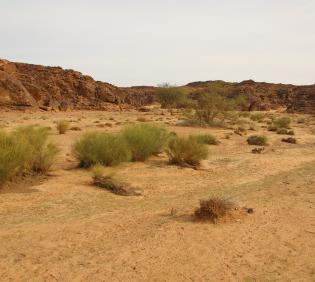
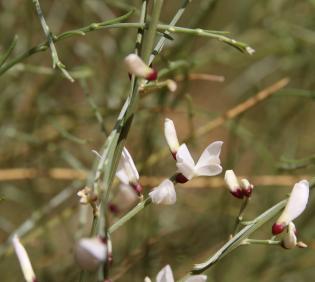
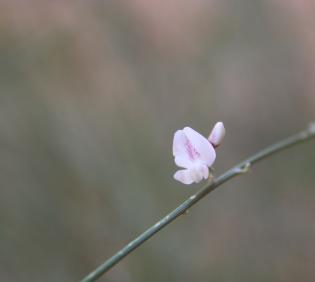
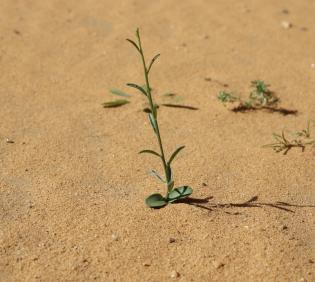
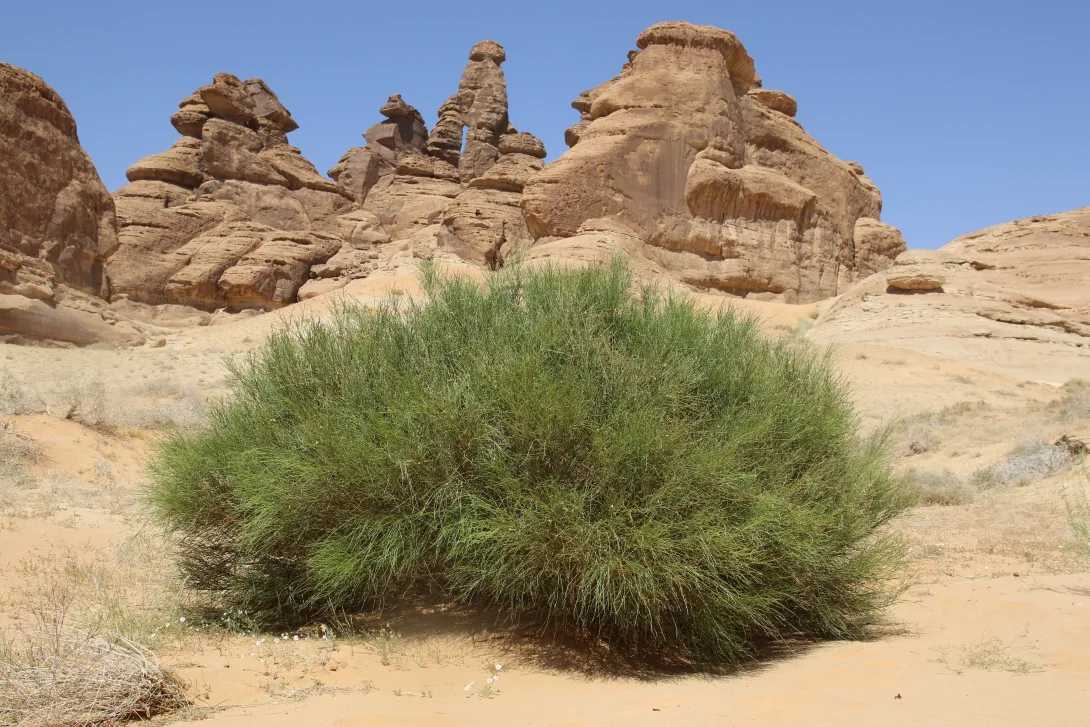
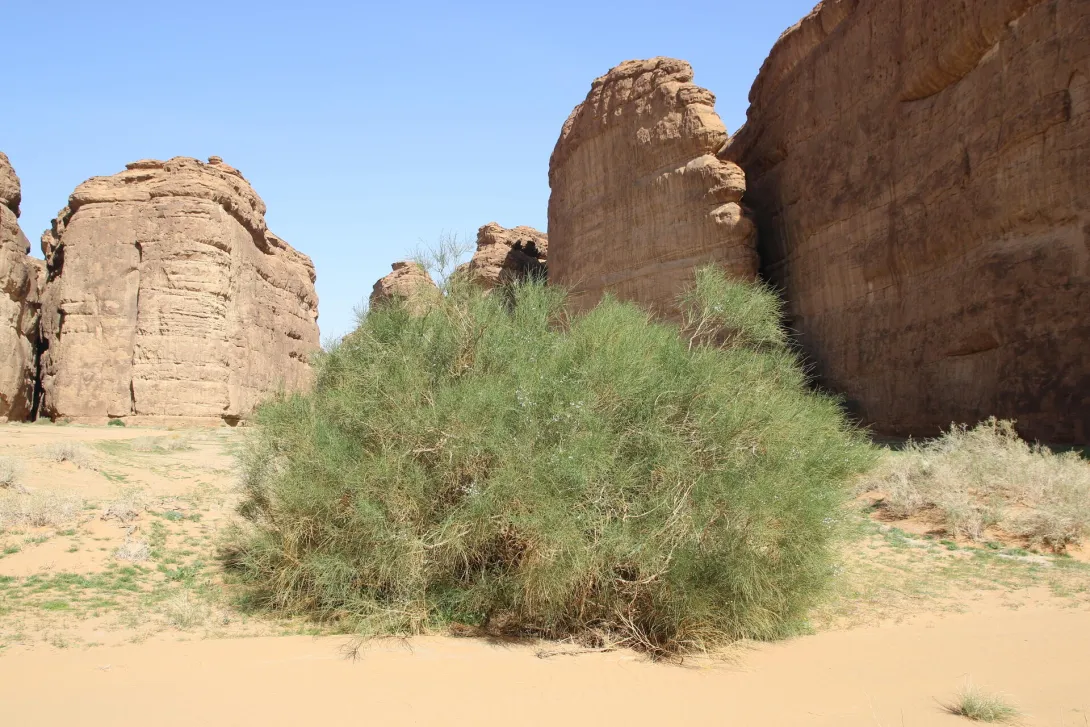
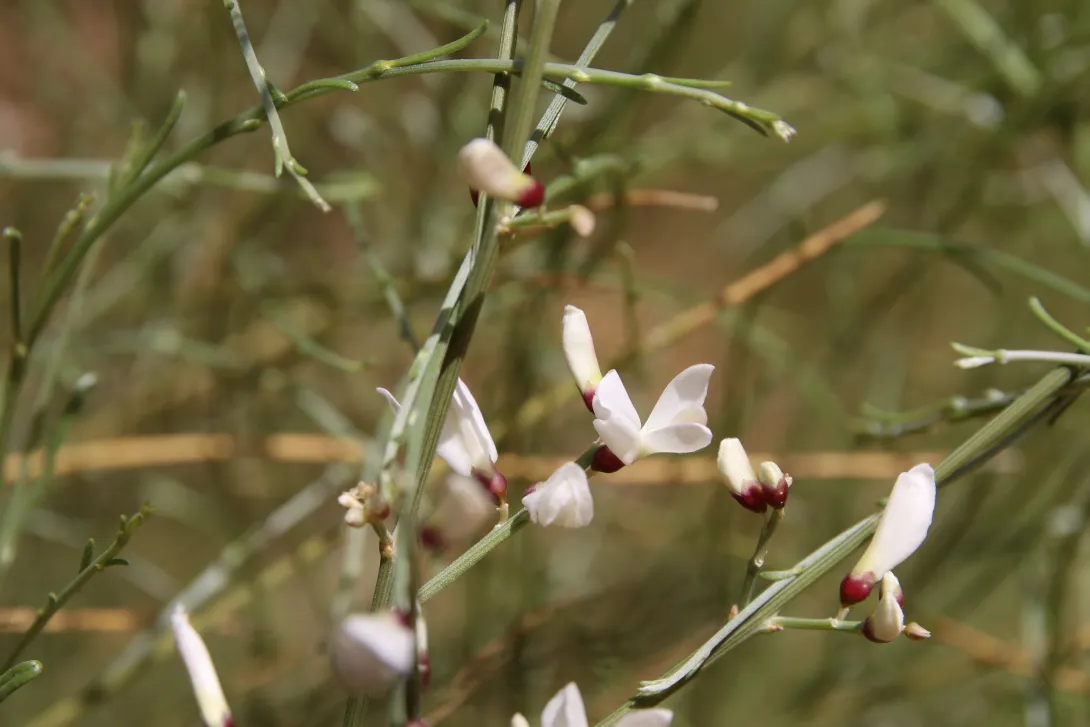
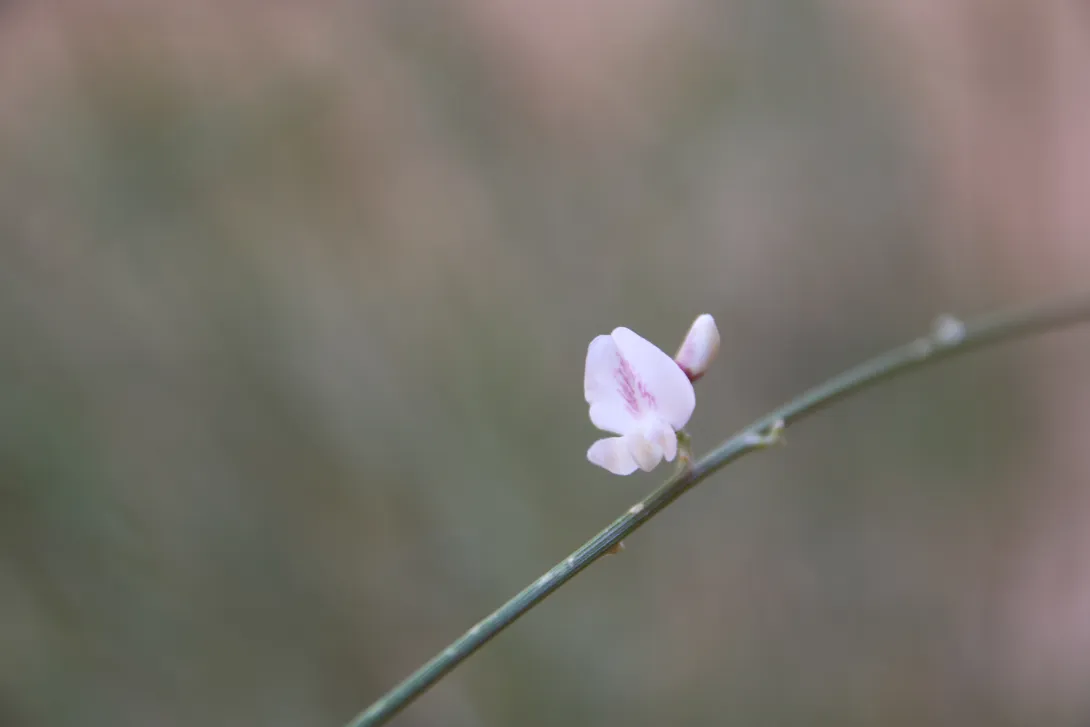
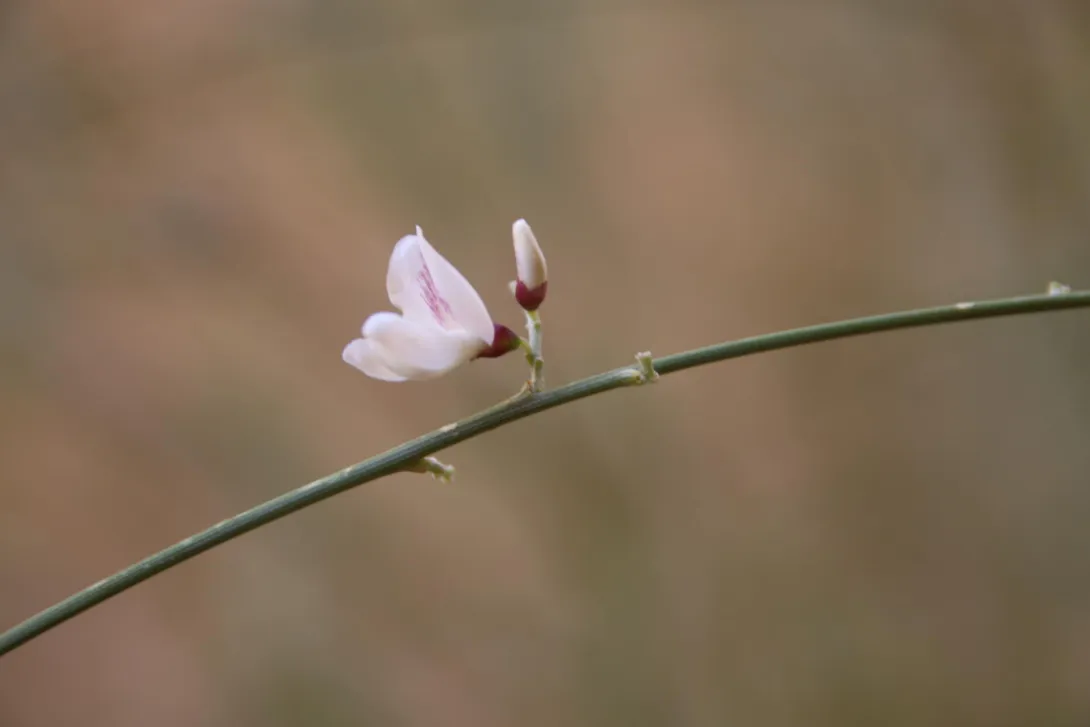
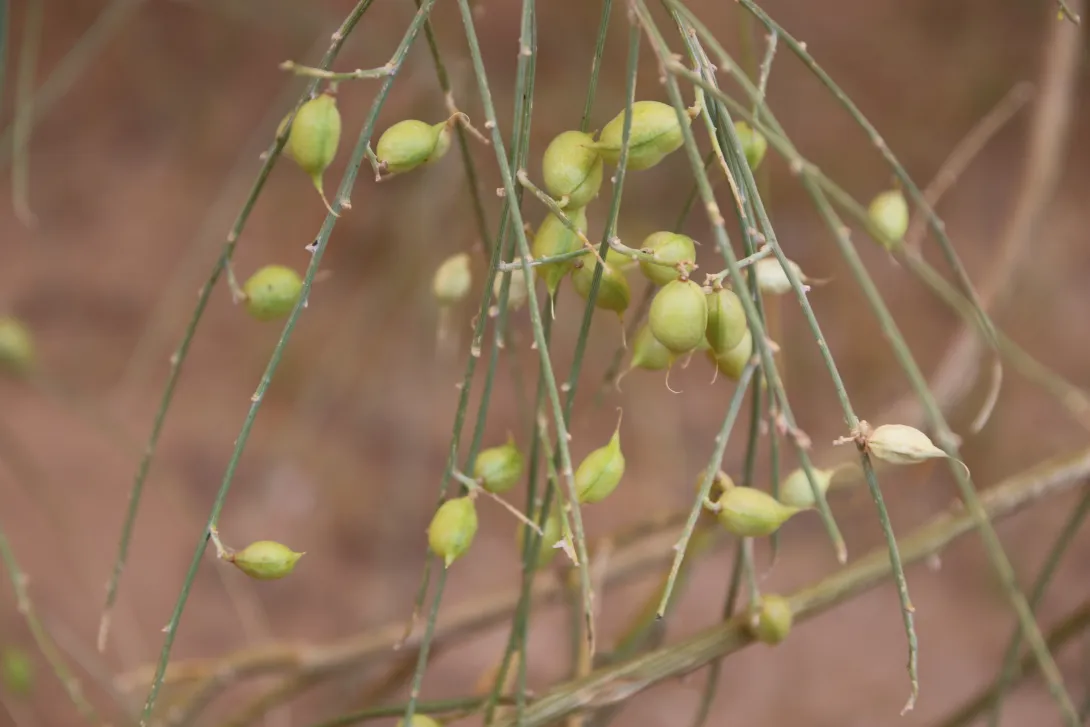
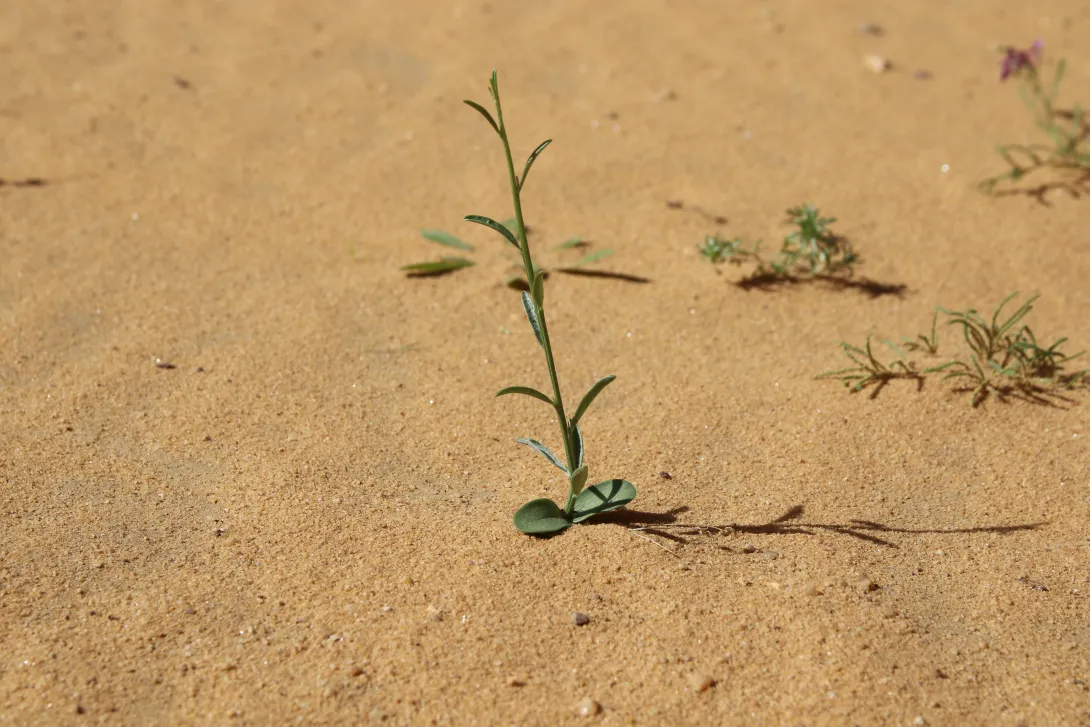
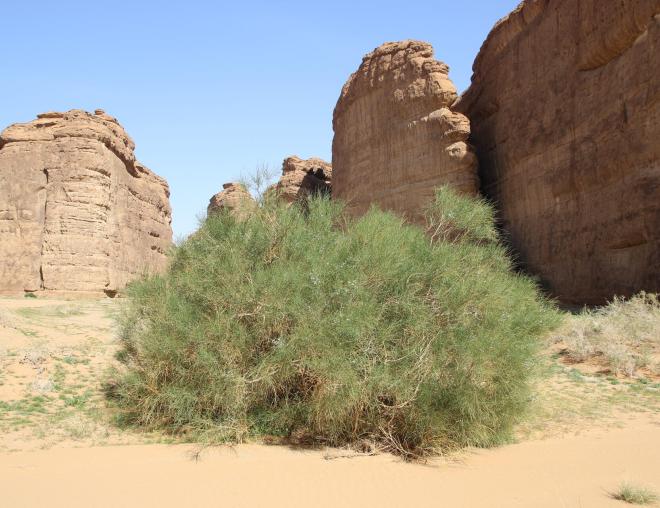
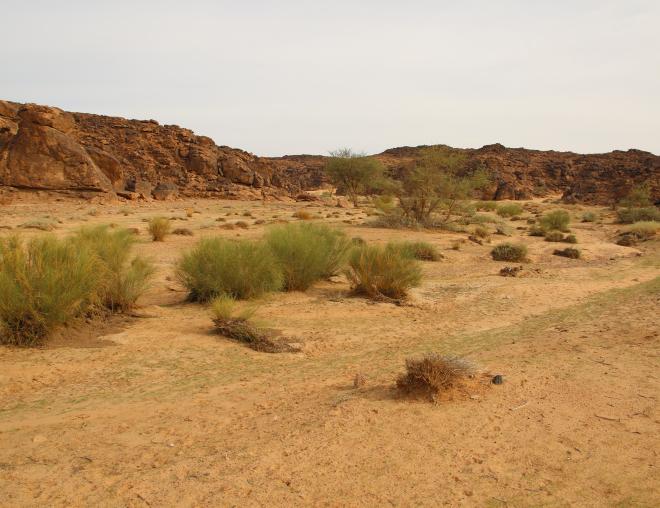
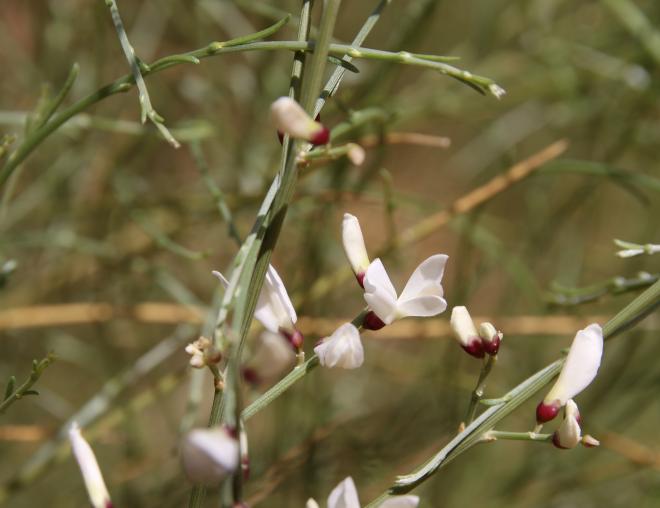
Much-branched, unarmed, spartioid shrub growing up to 2 m tall. This species is typically deciduous, shedding its leaves in response to climatic conditions, and often appears leafless or sparsely foliated. Leaves are small, linear, up to 20 mm long, borne on slender, green, erect, grooved shoots that are wand-like, appressed, and silky-hairy. Flowers are white, 1–1.5 cm long, arranged in 1–5-flowered racemes along the branches. The calyx is spathe-like, white with purplish tones, campanulate with short, broad lobes. The pod is ovoid-globose, up to 20 mm long, attenuated into a beak, leathery and indehiscent, containing 1–2 ovoid brownish seeds.
- Growth Form
-
Description
-
Habitat and Distribution
- Habitat
-
Geographical Distribution Range
This Saharo-Arabian species is distributed from North Africa to Arabian Peninsula, occuring in Western Sahara, Morocco, Tunisia, Algeria,-Libya, Sudan, South Sudan, Egypt, Sinai, Jordan Saudi Arabia, Jordan, Lebanon and Syria.
-
Ecology
-
Phenology
JanFebMarAprMayJunJulAugSepOctNovDecFloweringFructification
- Origin
-
IUCN Red List Category
 Not Evaluated
-
Remarks
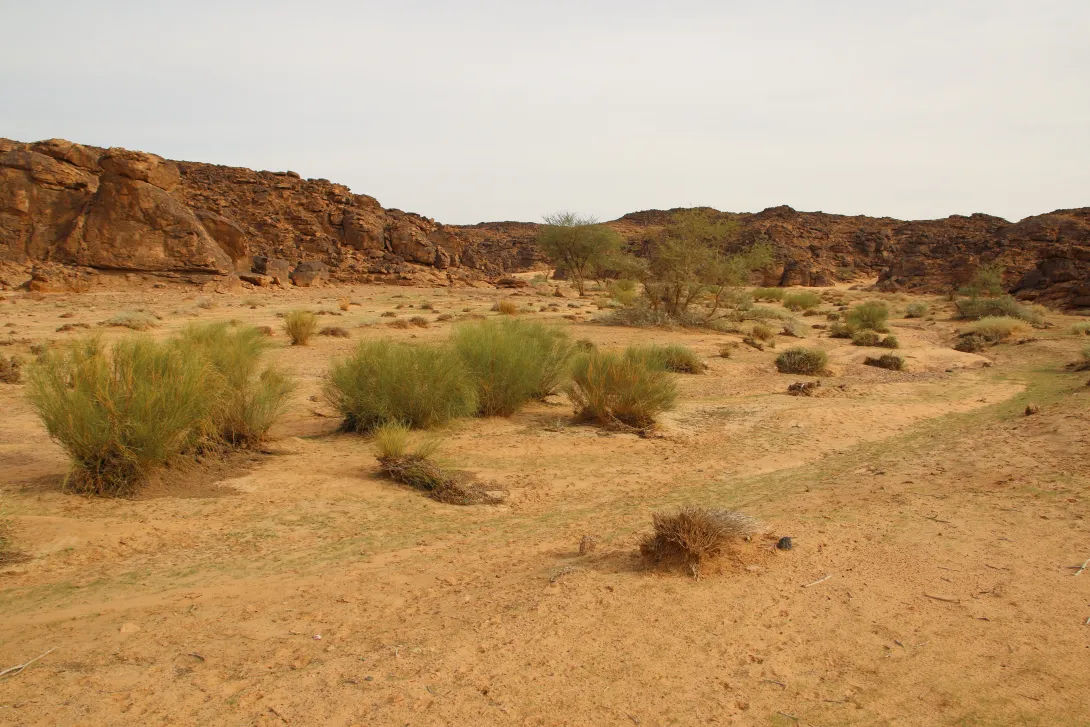
White Weeping Broom is the only species of the genus Retama found in Saudi Arabia. As a member of the Fabaceae family, it has the ability to fix atmospheric nitrogen, enriching the soil. This makes it a valuable species for ecological restoration and regeneration, where it can act as a nurse plant that supports the establishment of some species. High monospecific densities of White Weeping Broom may indicate past or ongoing overgrazing. In favorable years, the plant may become densely covered in flowers, sometimes appearing almost entirely white.
-
Phenology
-
Uses and Values
-
Aromatic and Medicinal Use
Medicinal use
-
Description of Traditional Uses
Historically significant for sand dune stabilization, traditional medicinal uses for skin and digestive conditions, and as a source of fuel.
-
Aromatic and Medicinal Use
Gallery