Asteriscus graveolens (Forssk.) Less.
النُقُد
Syn. Buphthalmum graveolens Forssk.
Fragrent Oxeye
Asteraceae
1 / 8


-
Morphological Description
-
Description
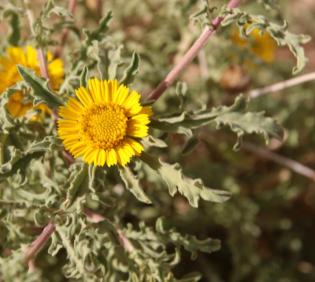
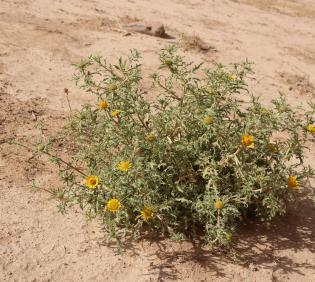
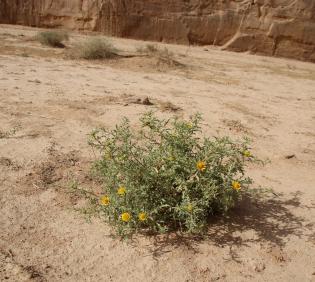
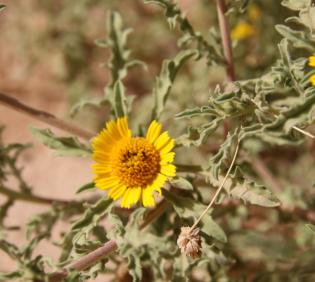
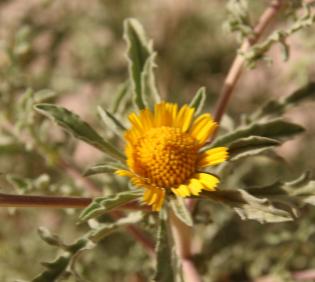
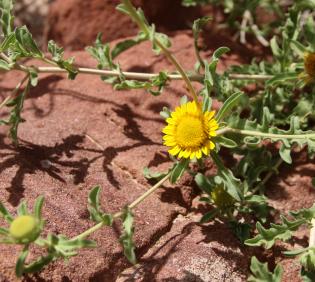
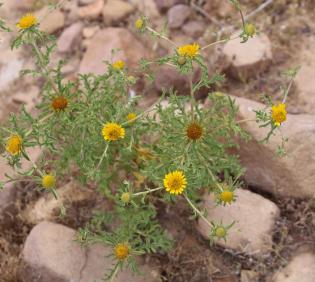
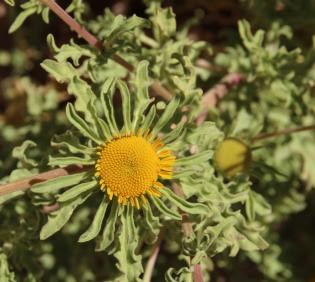
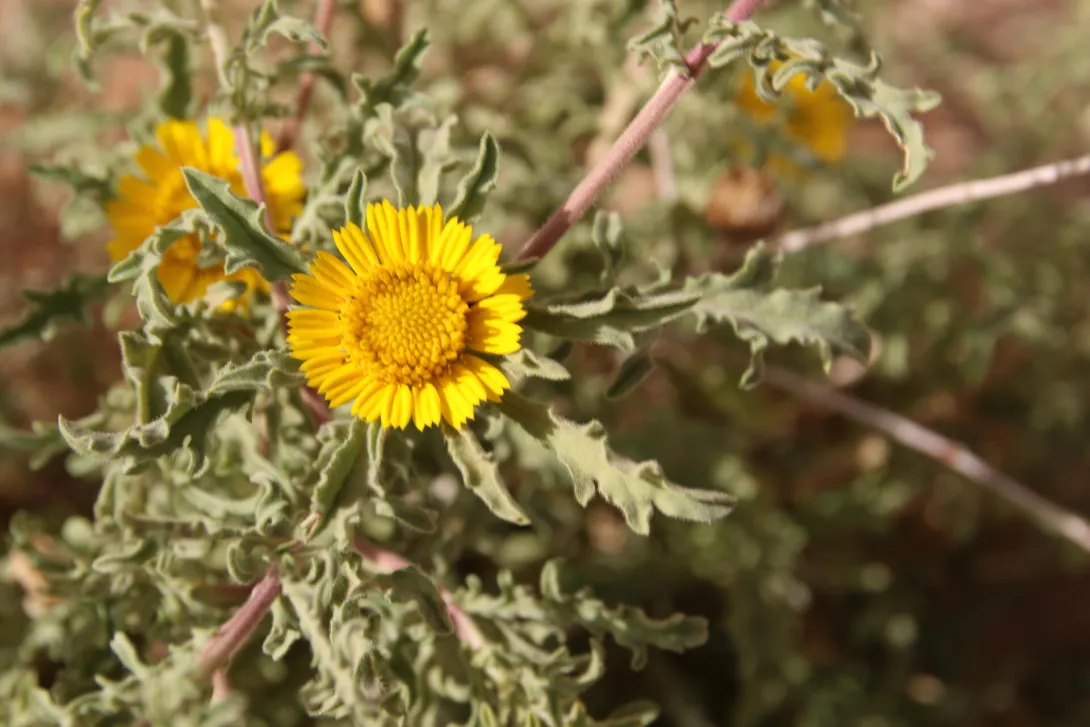
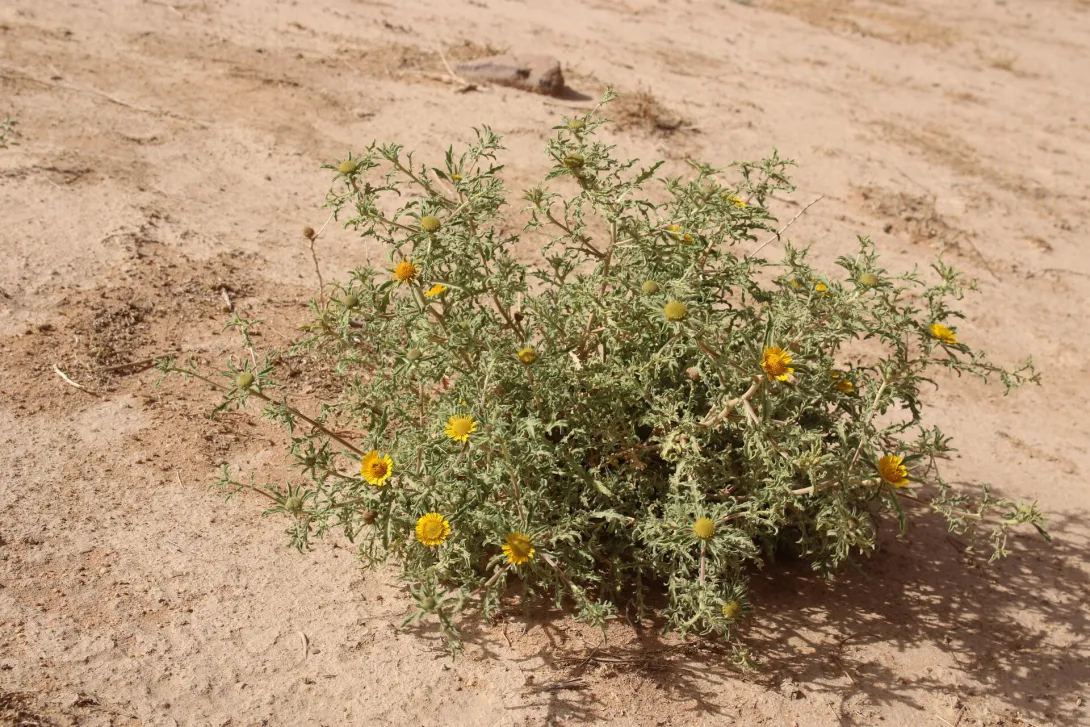
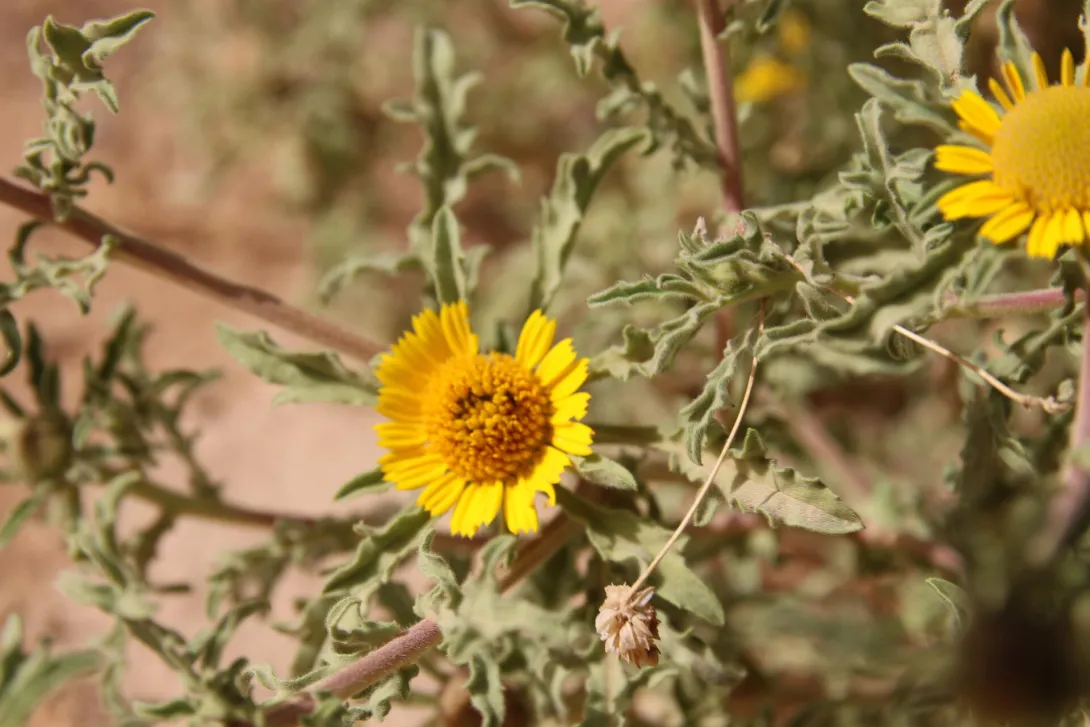
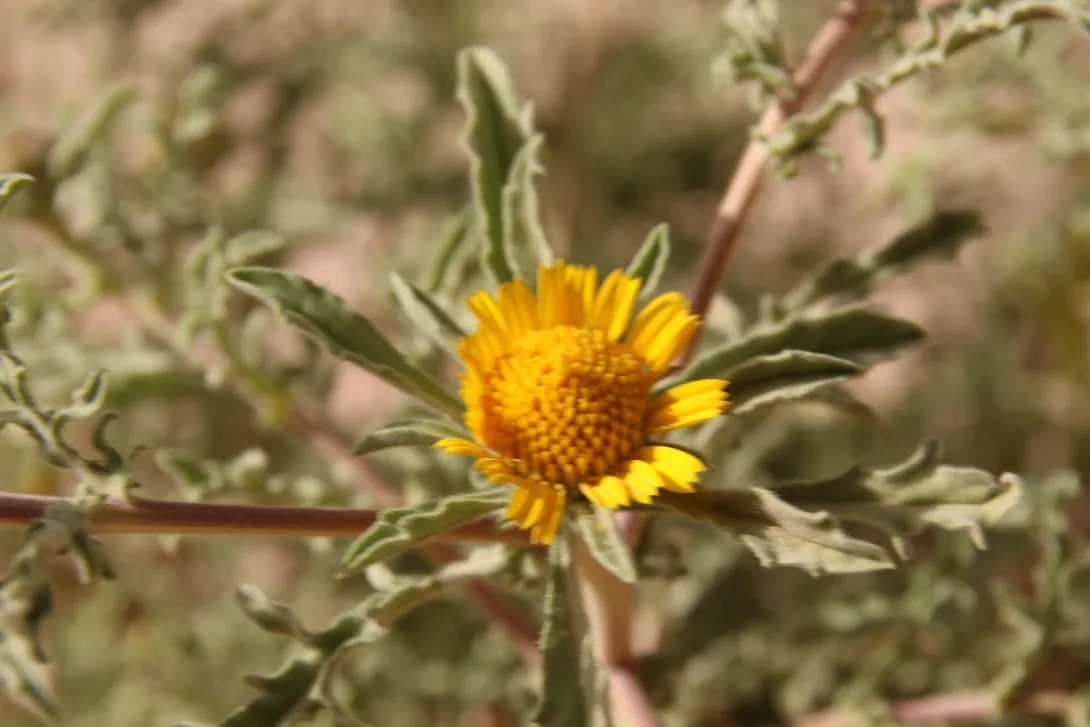
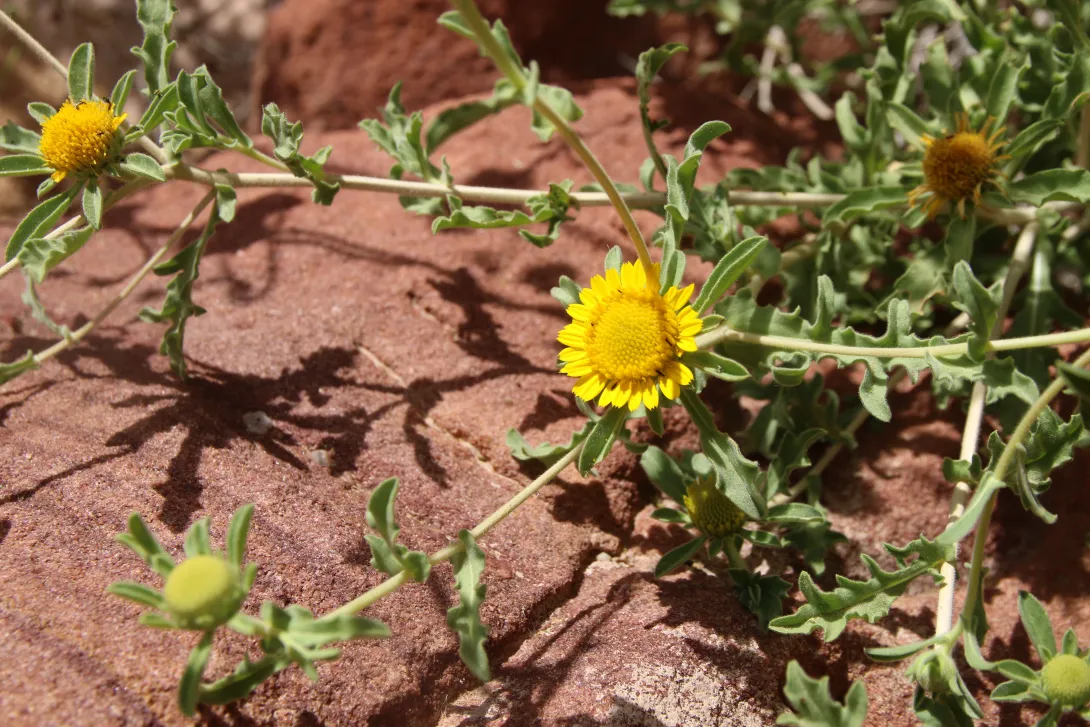
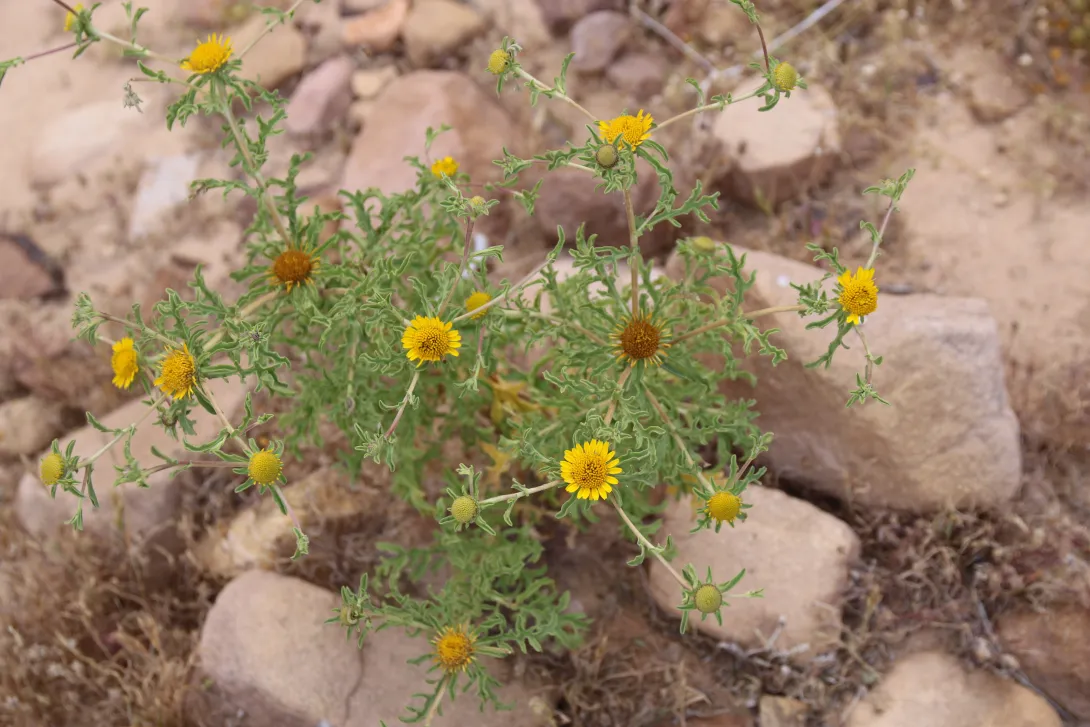
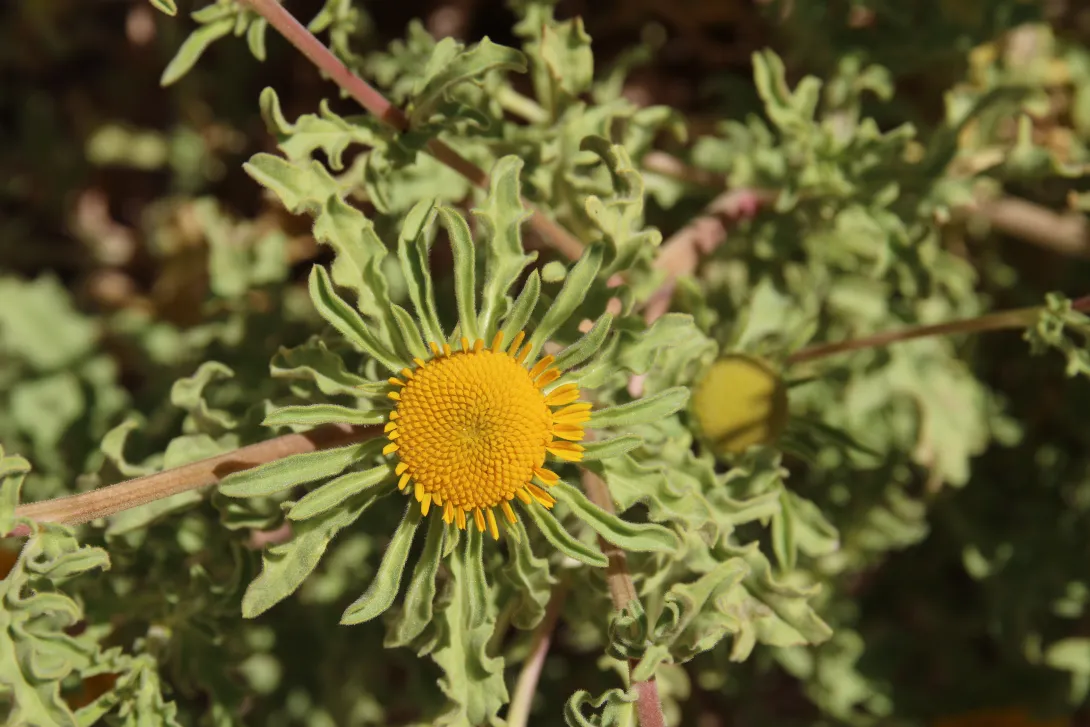
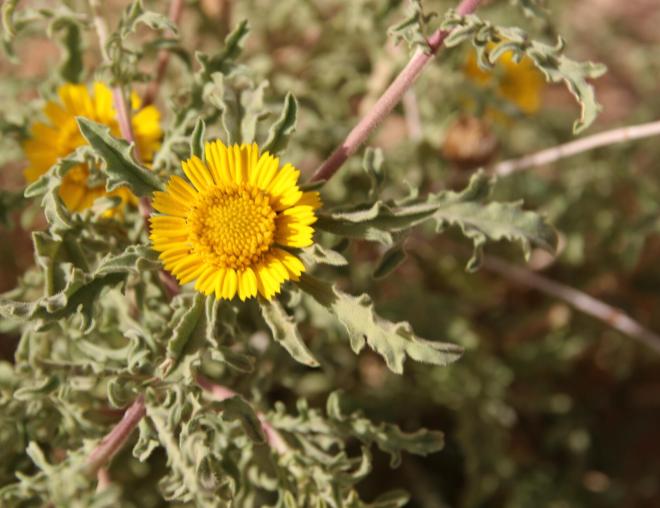
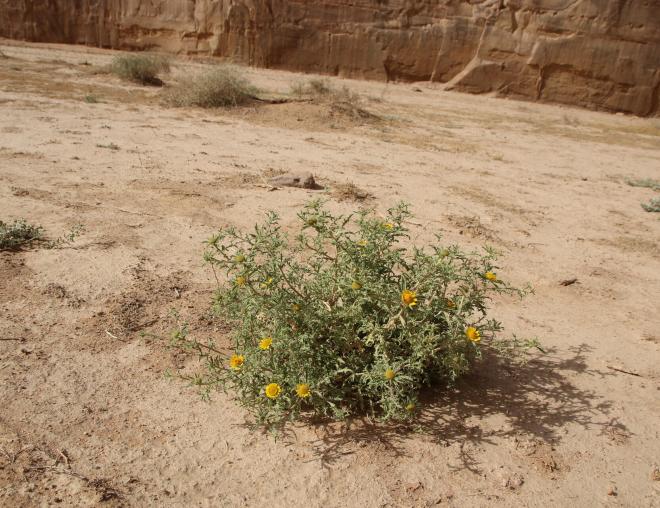
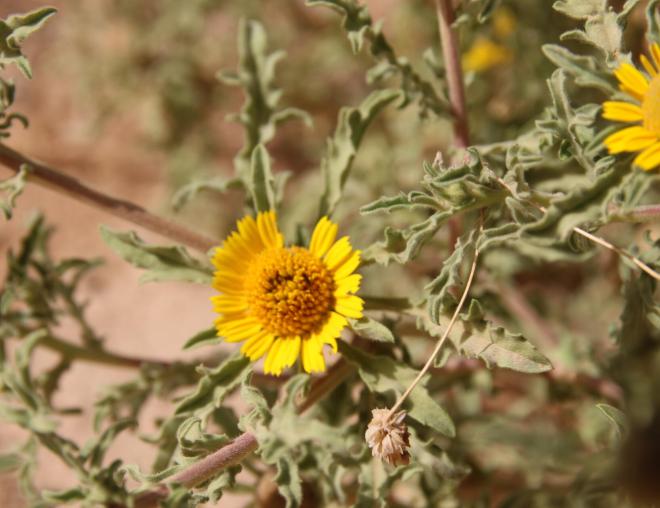
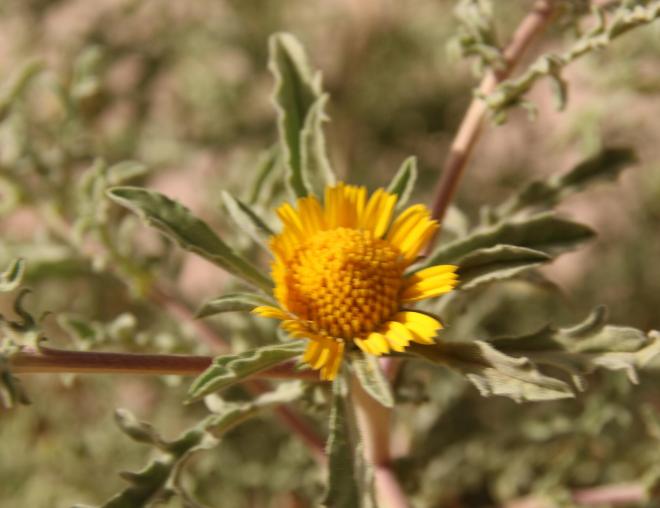
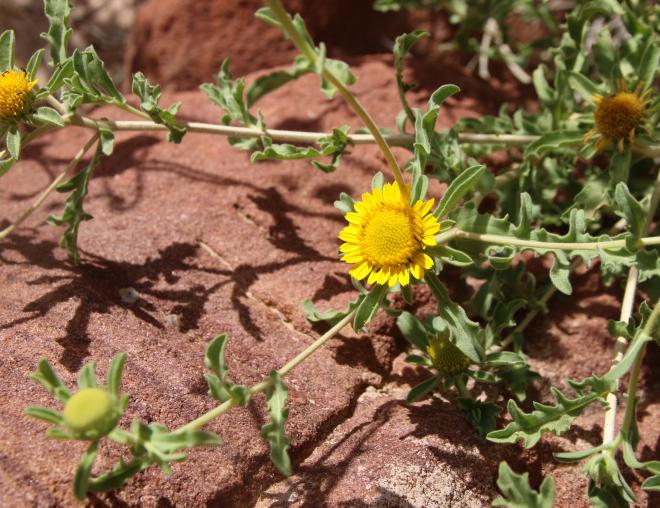
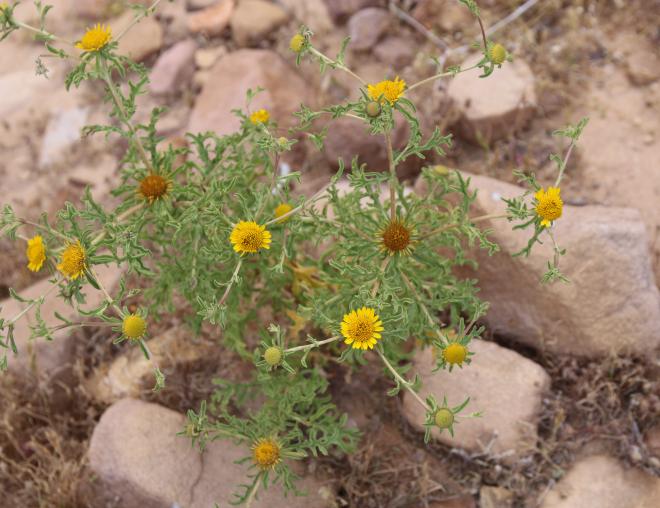
Perennial aromatic subshrub, up to 50 cm tall, with sticky glandular pubescence. Leaves alternate, oblong to lanceolate, amplexicaul except for the lowest, entire to remotely dentate to lobed. The leaves have a strong resinous pineapple-like scent (graveolens = strong smell). Capitula solitary, terminal, radiate, with yellow ligulate ray florets and tubular disc florets. Involucre hemispherical, bracts glandular.
- Growth Form
-
Description
-
Habitat and Distribution
- Habitat
-
Geographical Distribution Range
This Saharo-Arabian species is distributed in Sahara and Middle East, from Canaries Island to Iraq. Within the Arabian Peninsula, it is native to Jordan and Saudi Arabia.
-
Ecology
-
Phenology
JanFebMarAprMayJunJulAugSepOctNovDecFloweringFructification
- Origin
-
IUCN Red List Category
 Not Evaluated
-
Remarks
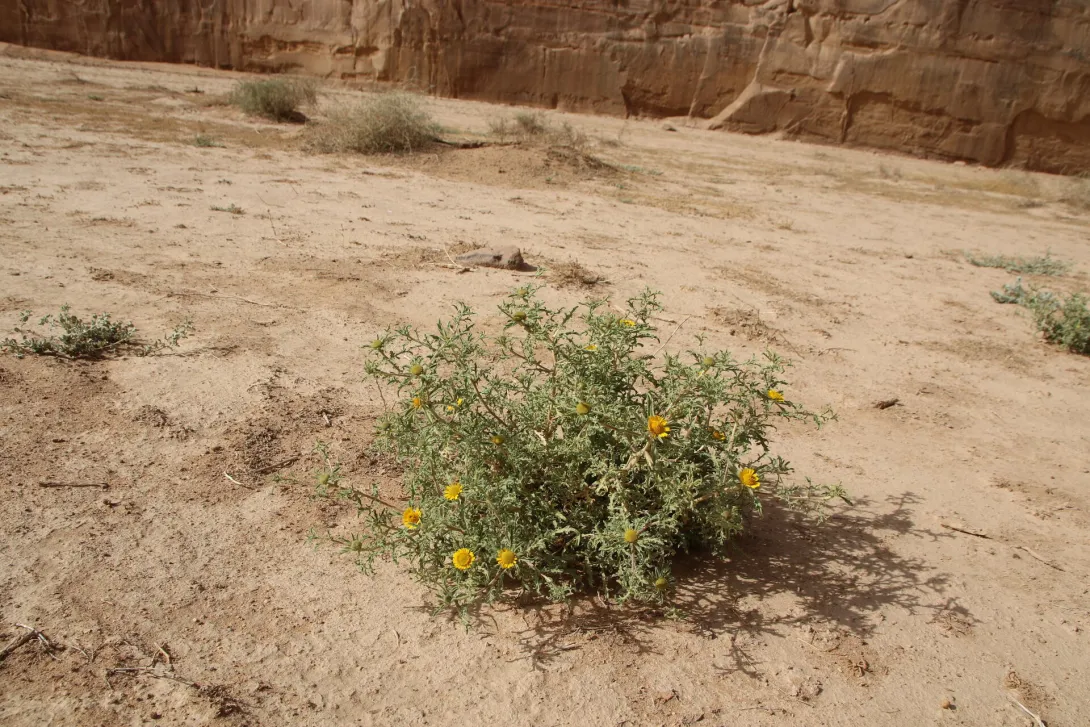
Anvillea garcini is close to Asteriscus graveolens, but differs from it in its small, greyish and odorless leaves and with length of the peripheral ray florets much greater than the diameter of the central disc florets, whereas Asteriscus graveolens has characteristic ananas sent and peripheral ray florets much shorter than the diameter of the central disc florets. This species develops in rocky slopes and ephemeral flooded microsites, in both these habitats that plant enjoys the water availability, and is active only in rainy years. The dried plant can remain on foot several years.
-
Phenology
-
Uses and Values
-
Aromatic and Medicinal Use
Aromatic usages; Medicinal use
-
Description of Traditional Uses
Widely utilized in traditional medicine for the management of diabetes, inflammation, pain, fever, hypertension, and digestive problems.
-
Aromatic and Medicinal Use
Gallery