Zygophyllum arabicum (L.) Christenh. & Byng
جنيبة
Syn. Fagonia arabica L.
Arabian Fagonbush, Dhamasa
Zygophyllaceae
1 / 8


-
Morphological Description
-
Description
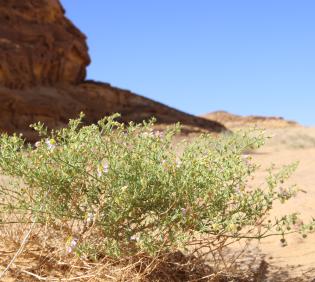
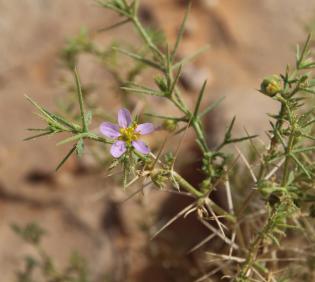
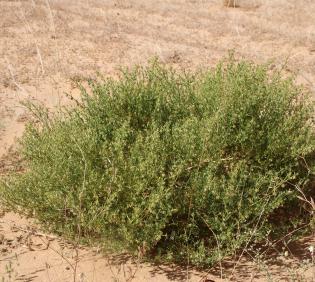
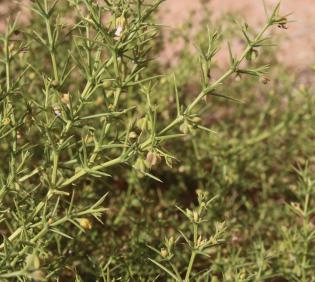
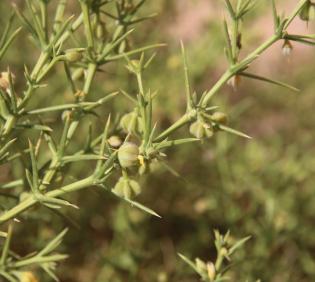
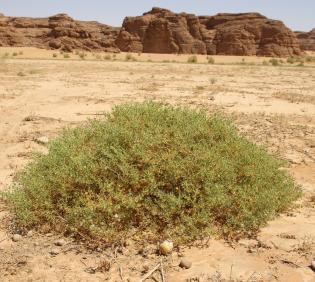
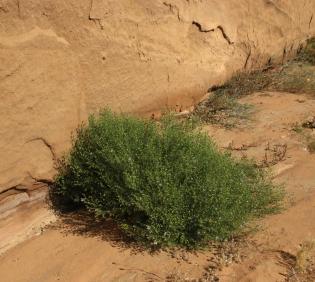
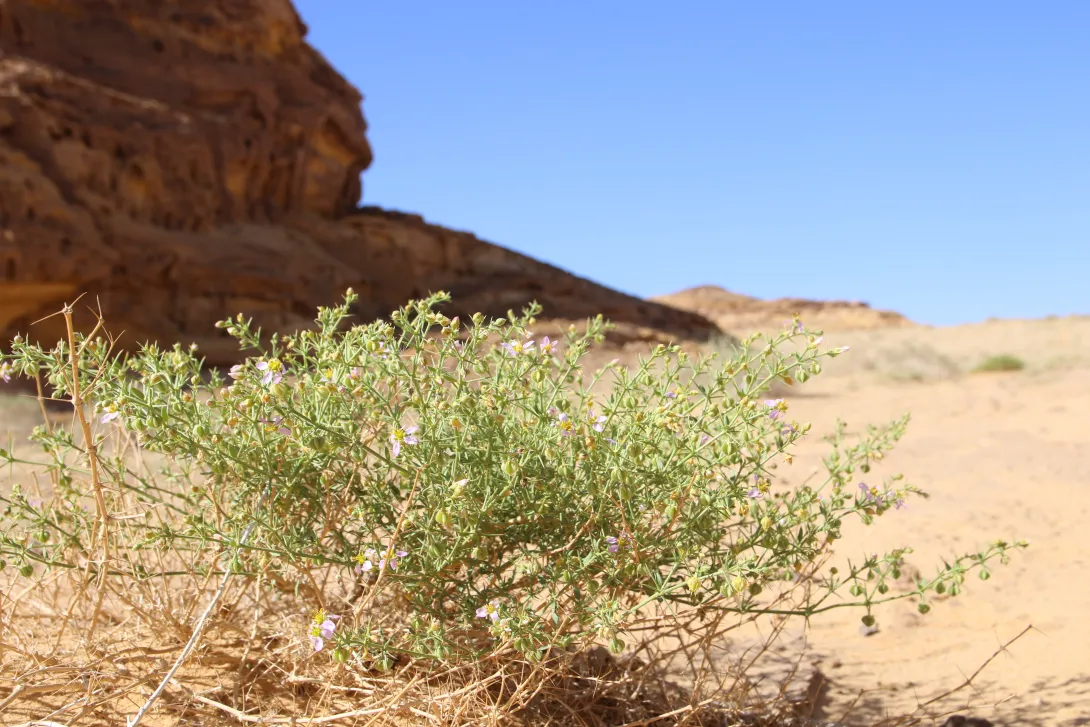
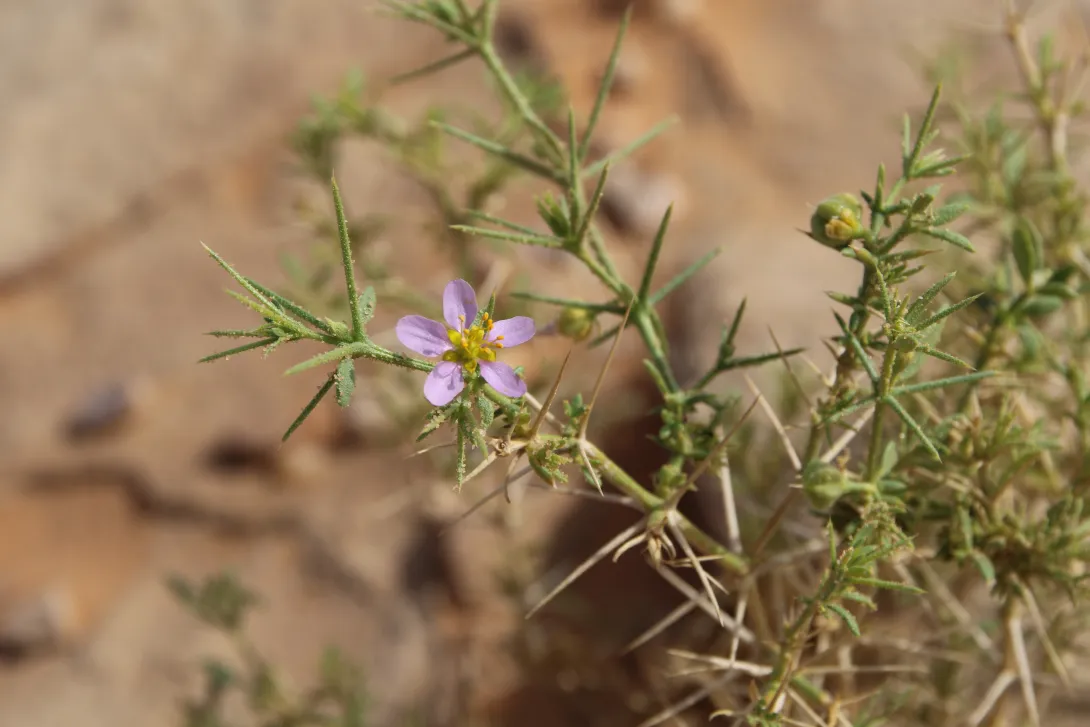
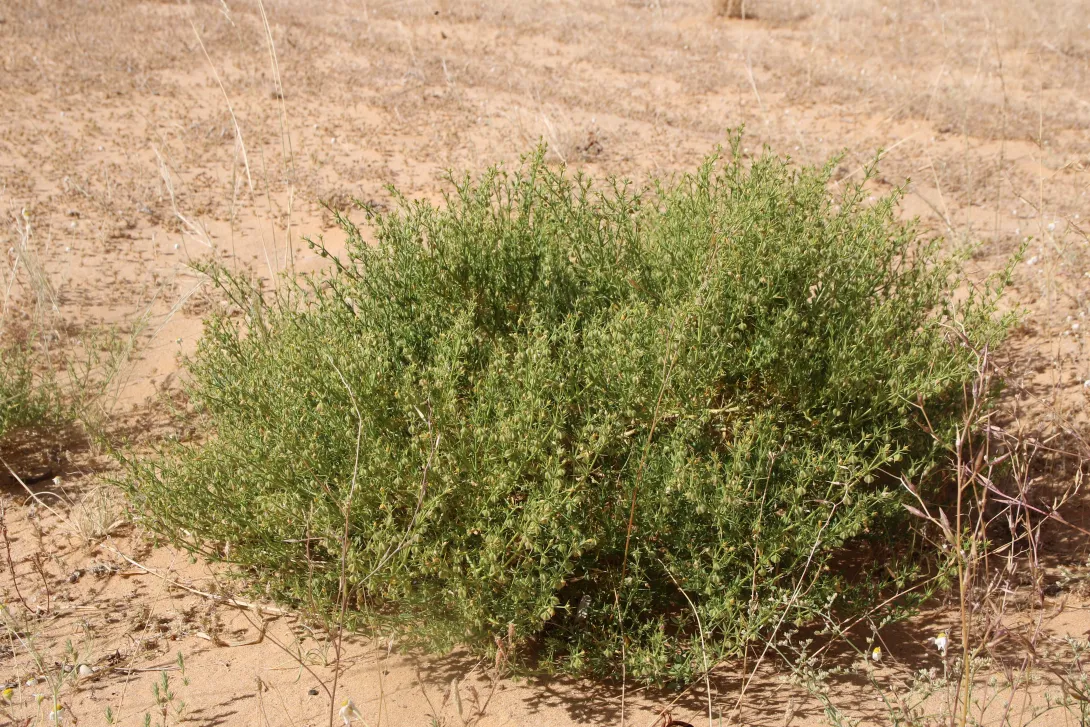
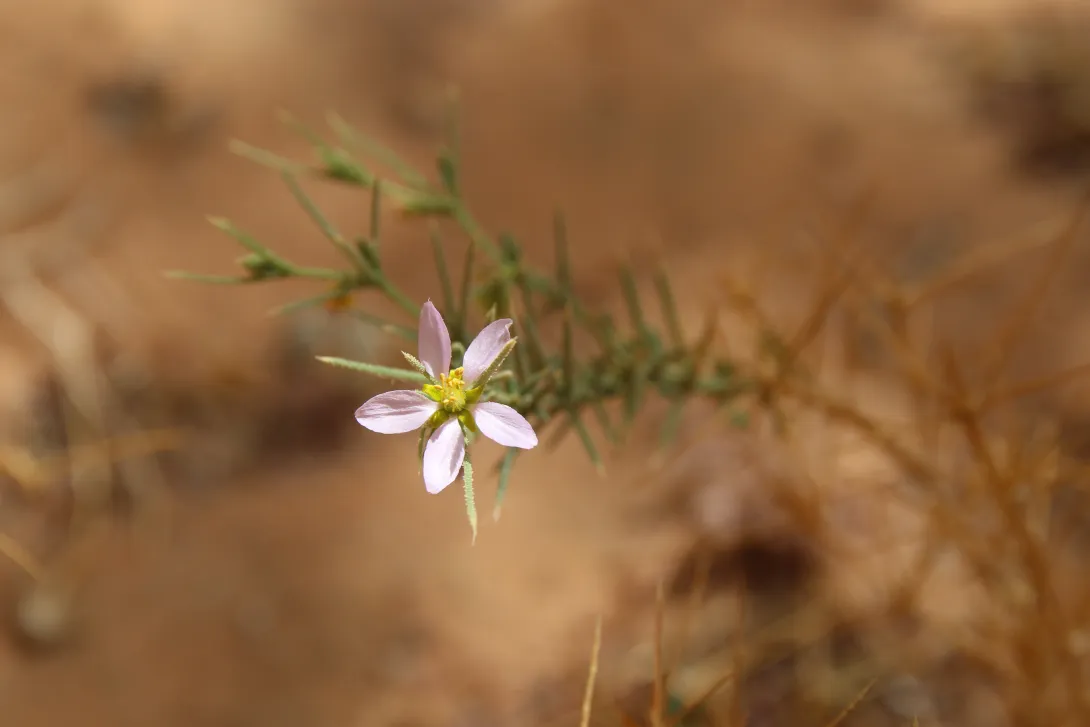
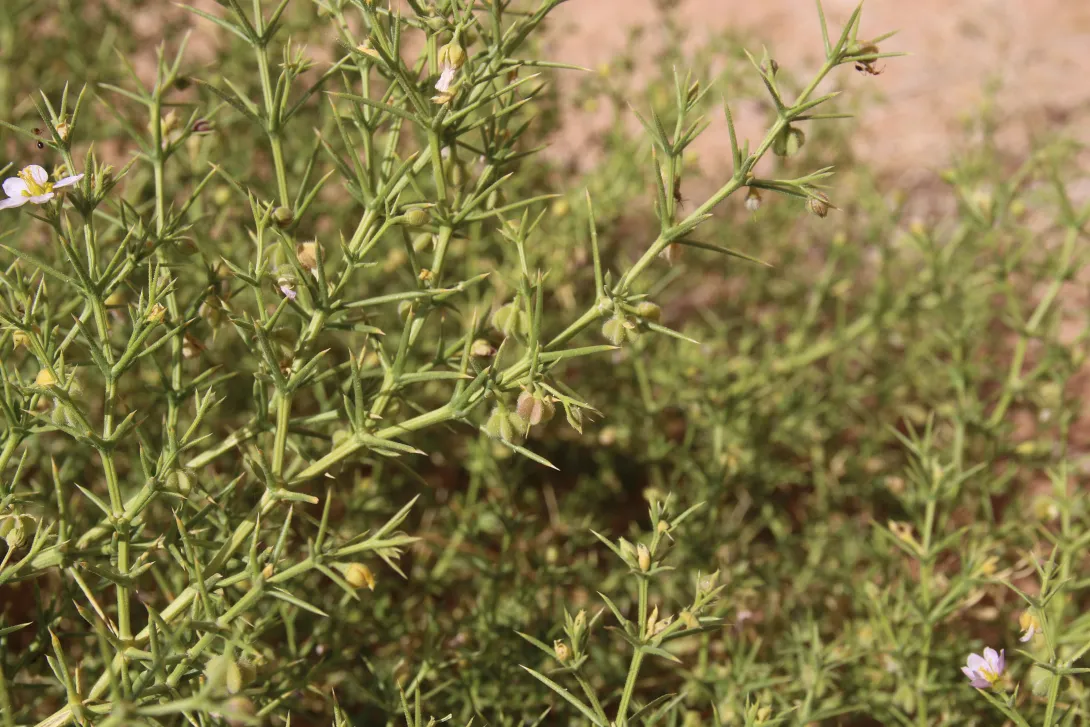
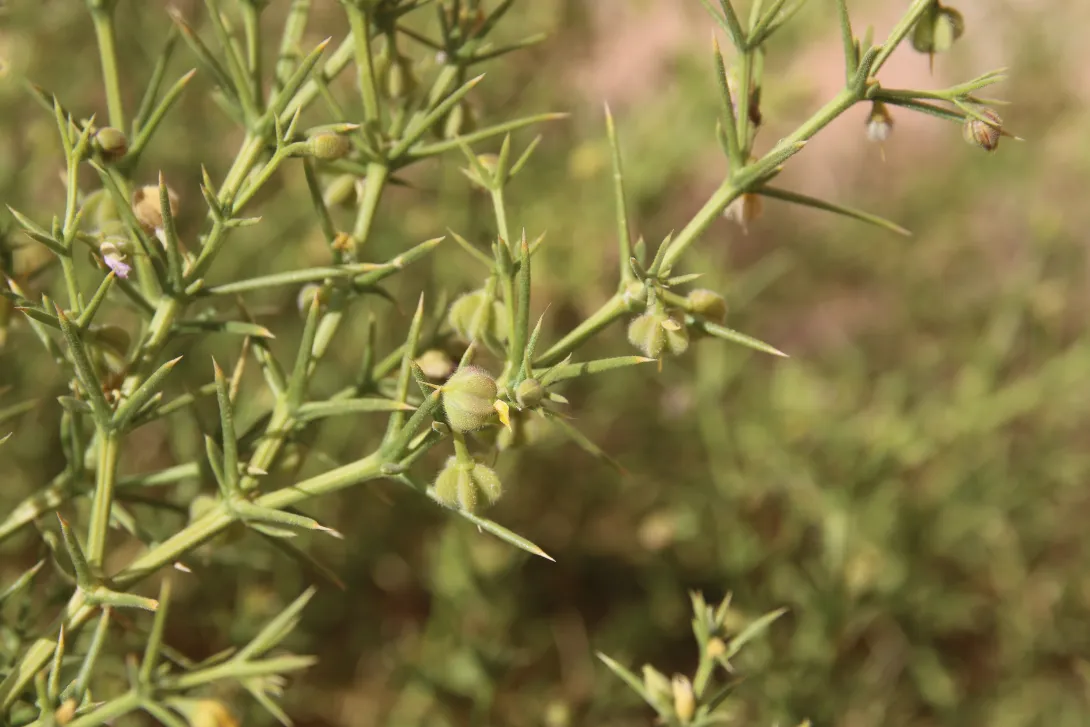
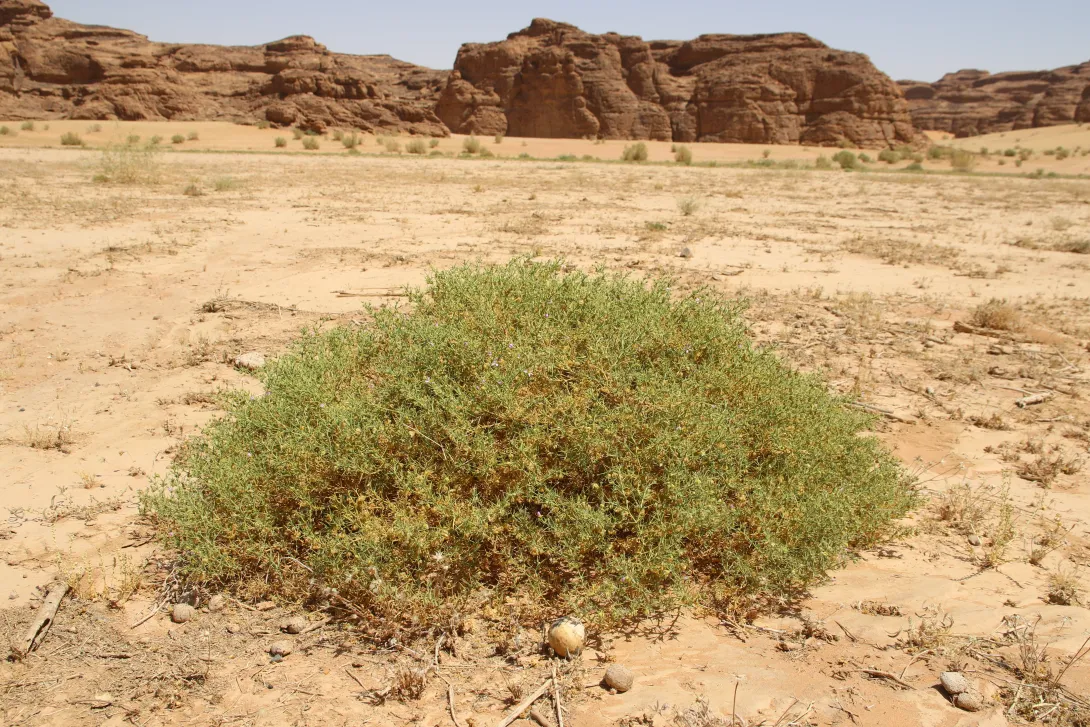
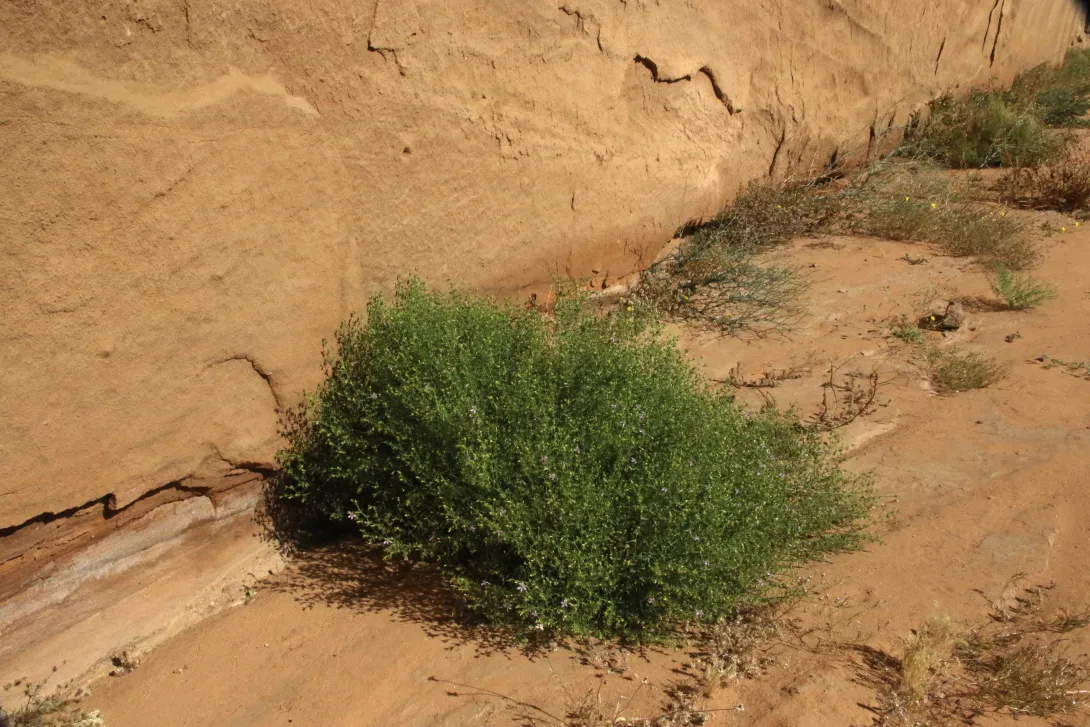
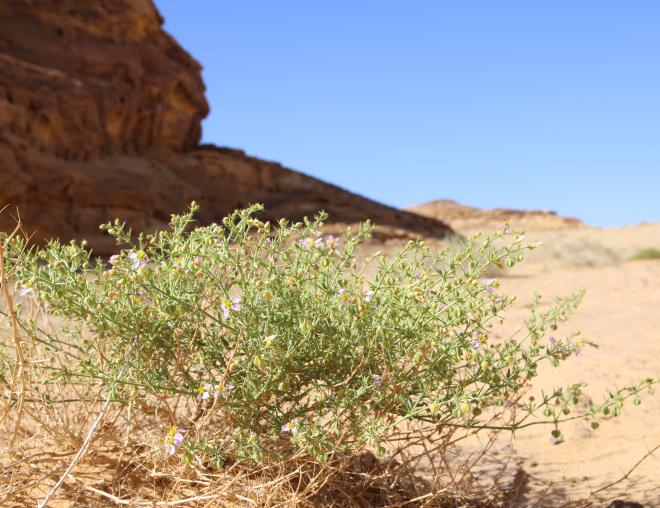
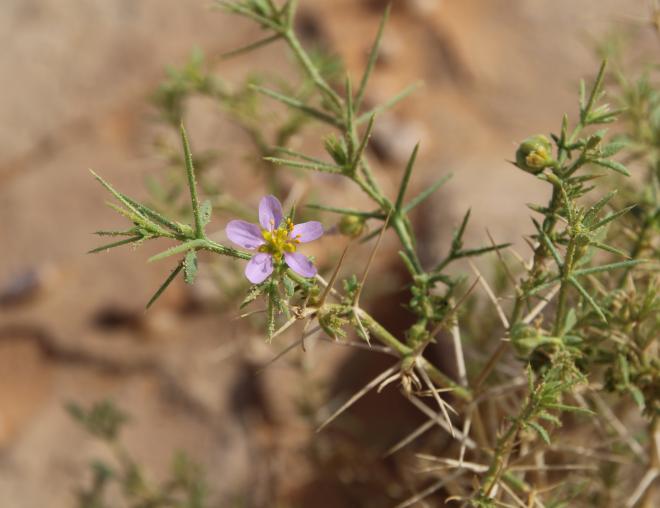
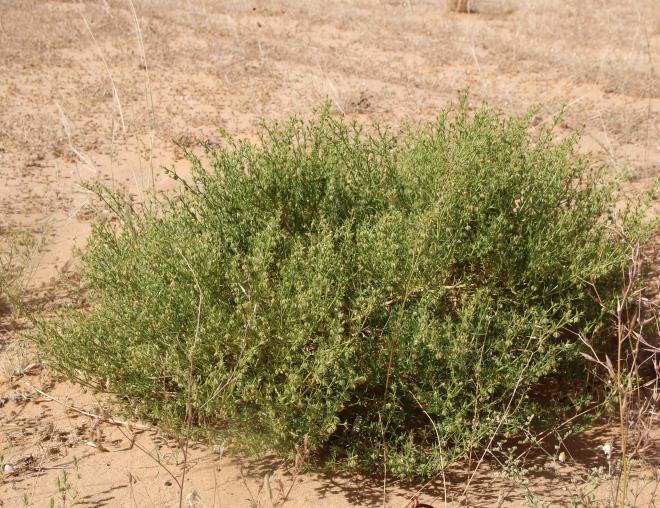
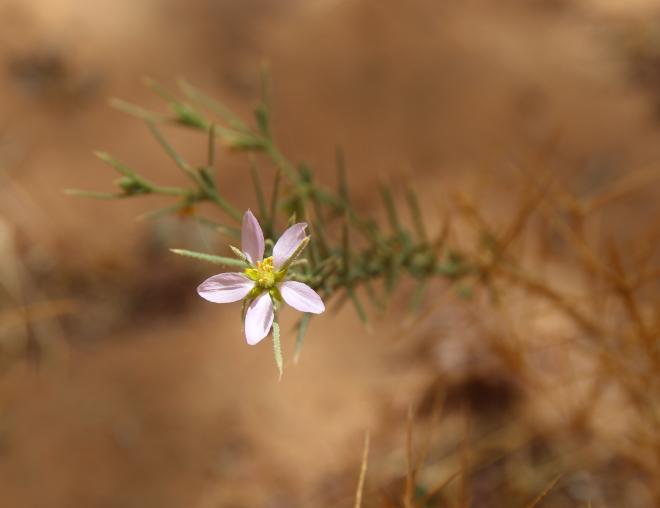
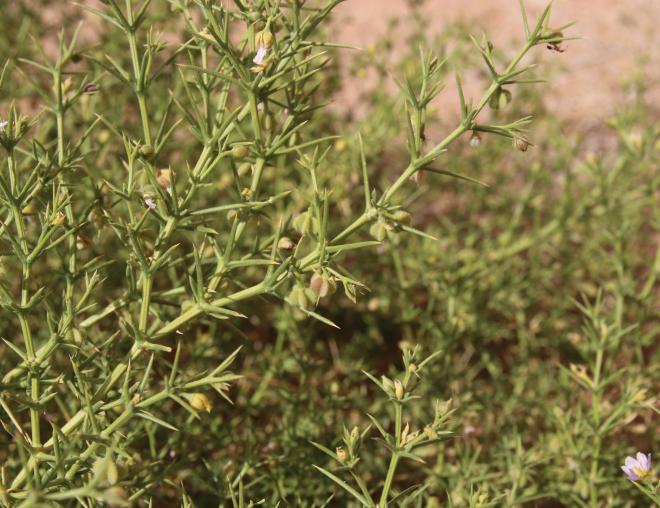
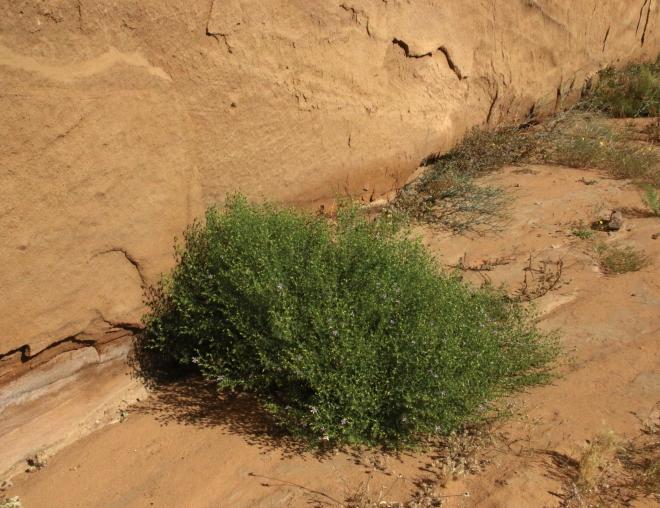
Stipitate glandular, dark green shrublet, 20-50 cm tall. Branches terete, striate; internodes 1-3 cm long. Leaves 1-foliolate above and 3-foliolate below; petiole 4-6 mm long; leaflets linear, about 6-10 x 1-1.5 mm, glandular hairy; stipular spines 1-2.5 cm long. Flowers lilac-pink, 12-15 mm across; pedicel short. Sepals linear-lanceolate, glandular, deciduous. Petals obovate. Capsule 5-7 x 3-5 mm, reflexed, longer than fruiting pedicel.
- Growth Form
-
Description
-
Habitat and Distribution
- Habitat
-
Geographical Distribution Range
This Saharo-Arabian species is distributed from Sahara to Middle East from Mauritania to Syria. Within the Arabian Peninsula, it is native to Jordan and Saudi Arabia.
-
Ecology
-
Phenology
JanFebMarAprMayJunJulAugSepOctNovDecFloweringFructification
- Origin
-
IUCN Red List Category
 Not Evaluated
-
Remarks
Irregular galls often develop on shrubs under extreme desert conditions
-
Phenology
-
Uses and Values
-
Aromatic and Medicinal Use
Medicinal use
-
Other Usages
Palatable
-
Description of Traditional Uses
Used traditionally as a medicinal plant, often for topical applications; it also serves as forage for camels.
-
Aromatic and Medicinal Use
Gallery