Stipagrostis plumosa Munro ex T.Anderson
نصي
Syn. Aristida plumosa L.
Desert Grass
Poaceae
1 / 6

-
Morphological Description
-
Description
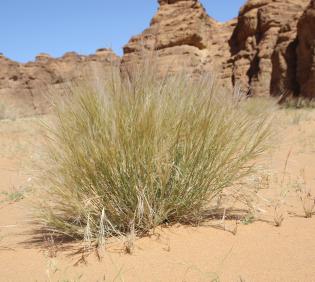
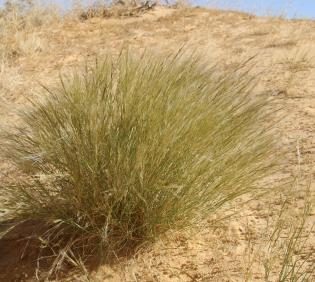
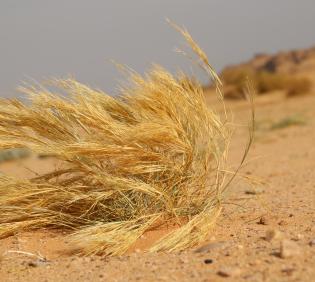
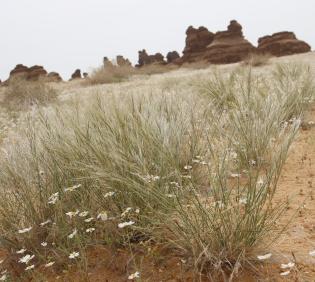
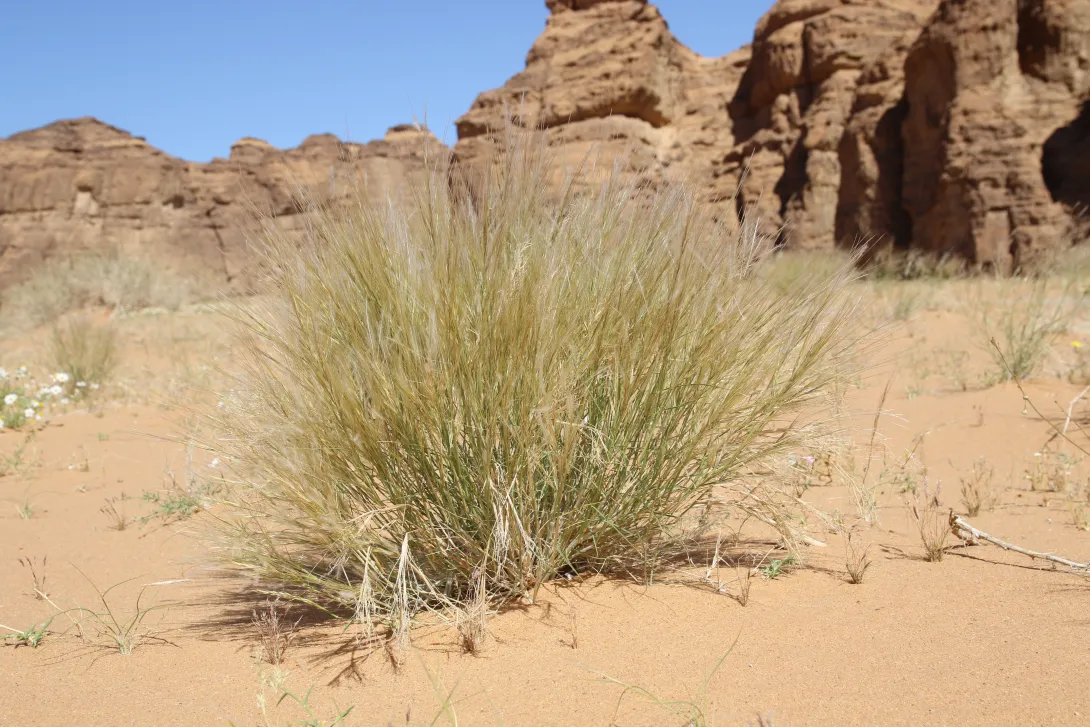
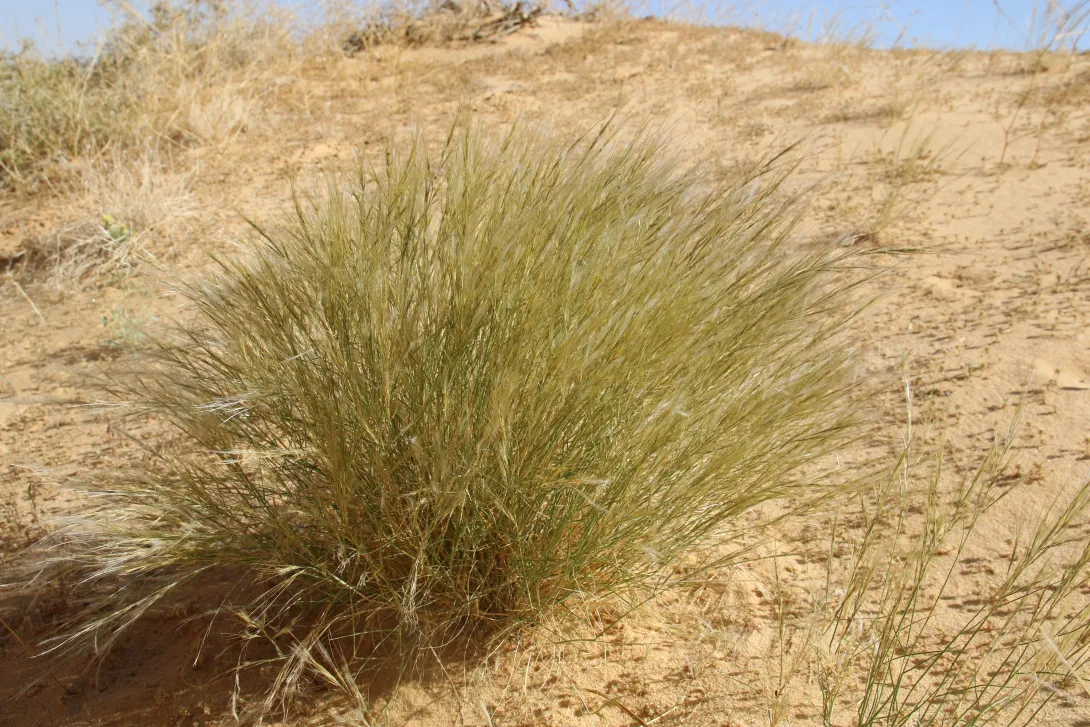
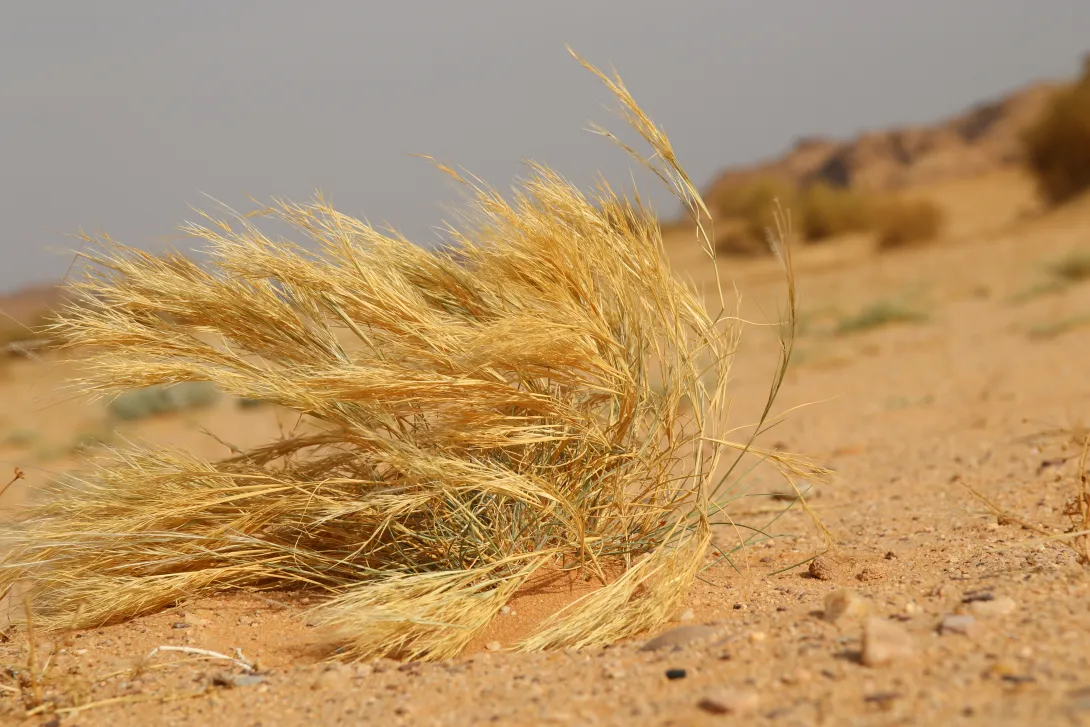
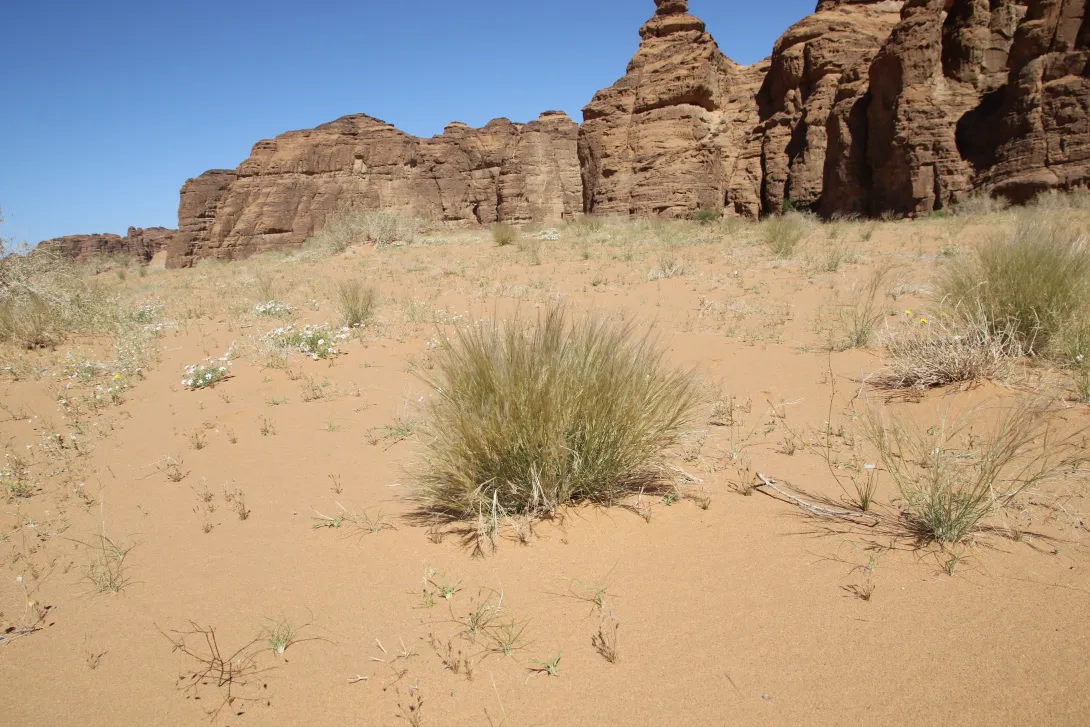
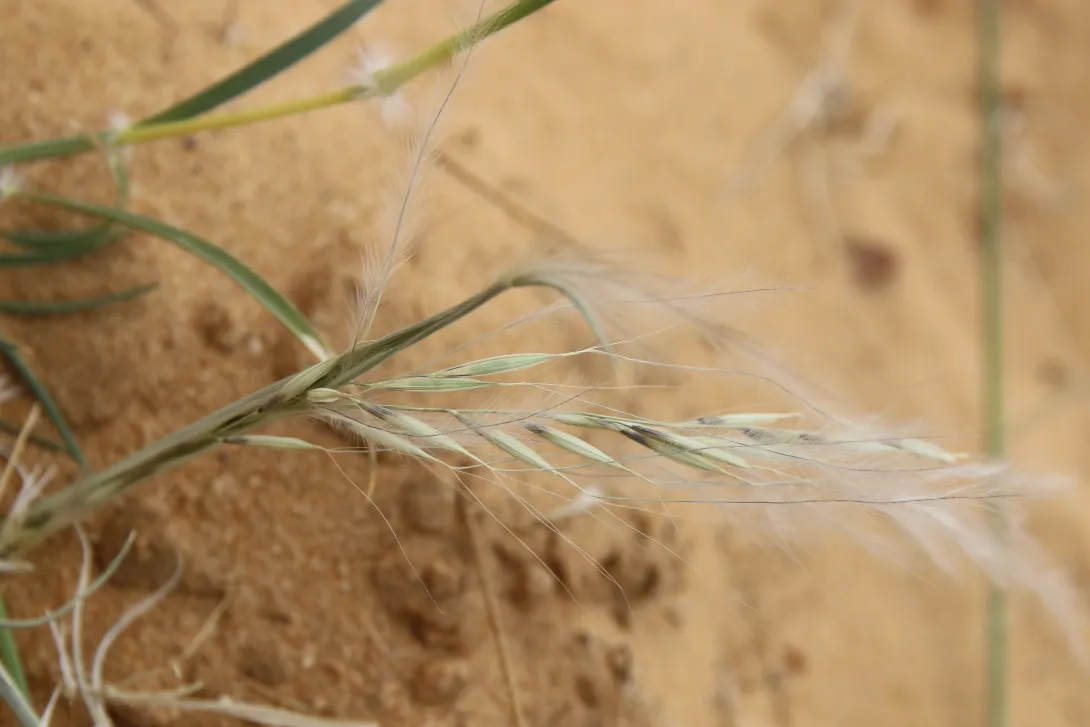
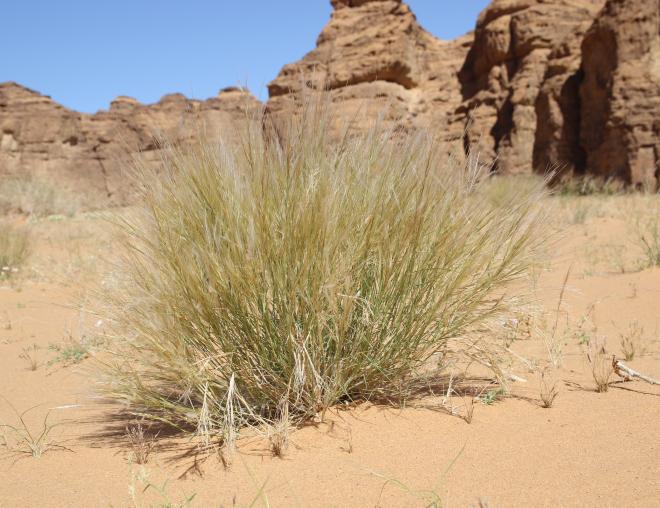
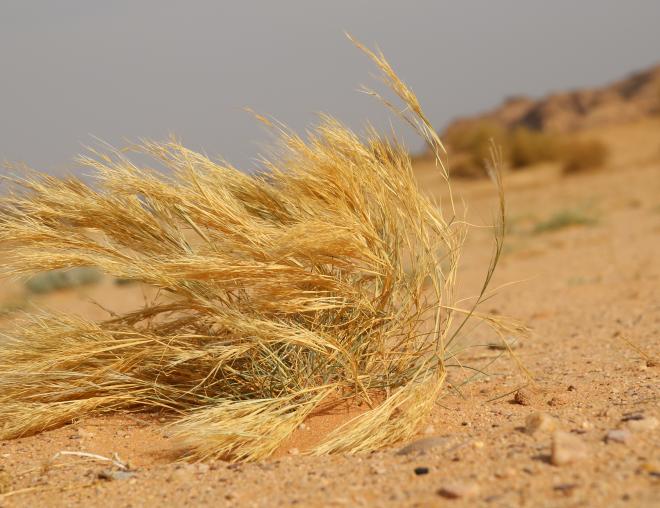
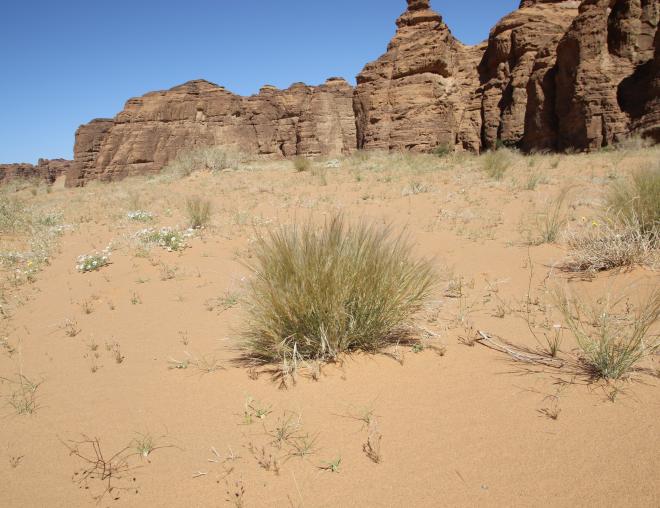
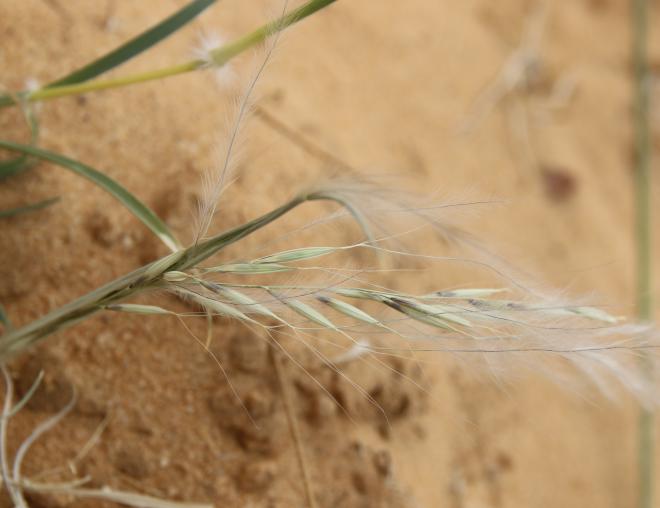
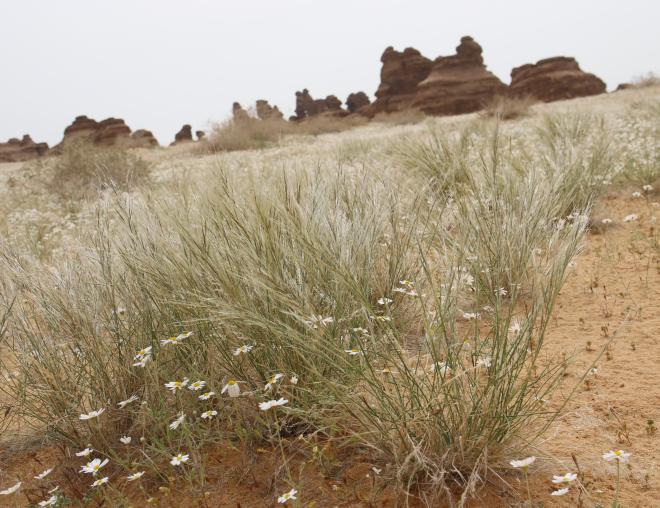
Tuffed perennial grass (up to 30 cm). Leaf blade rolled, curved-filliform, flexuous measuring 1 mm wide and up to 15 cm long, lower leaf-sheaths and internodes woolly. Inflorescence are narrow dense contracted panicles up to 15 cm. Panicles up to 15 cm long, dense and narrow. Spikelet are pale yellow, glumes 3-nerved measuring less than 2 cm, column up to 1 cm bearing sparse long hair at the margin with awn column naked thoughout and plumose silvery-white central awn up to 25 mm, which explain the species name.
- Growth Form
-
Description
-
Habitat and Distribution
- Habitat
-
Geographical Distribution Range
This Irano-Turanian and Saharo-Arabian species is distributed from North Africa, through Middle East and to India. Within the Arabian Peninsula, it is native to Saudi Arabia, Kuwait, Gulf States, Oman and Yemen.
-
Ecology
-
Phenology
JanFebMarAprMayJunJulAugSepOctNovDecFloweringFructification
- Origin
-
IUCN Red List Category
 Not Evaluated
-
Remarks
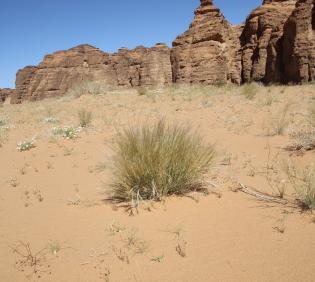
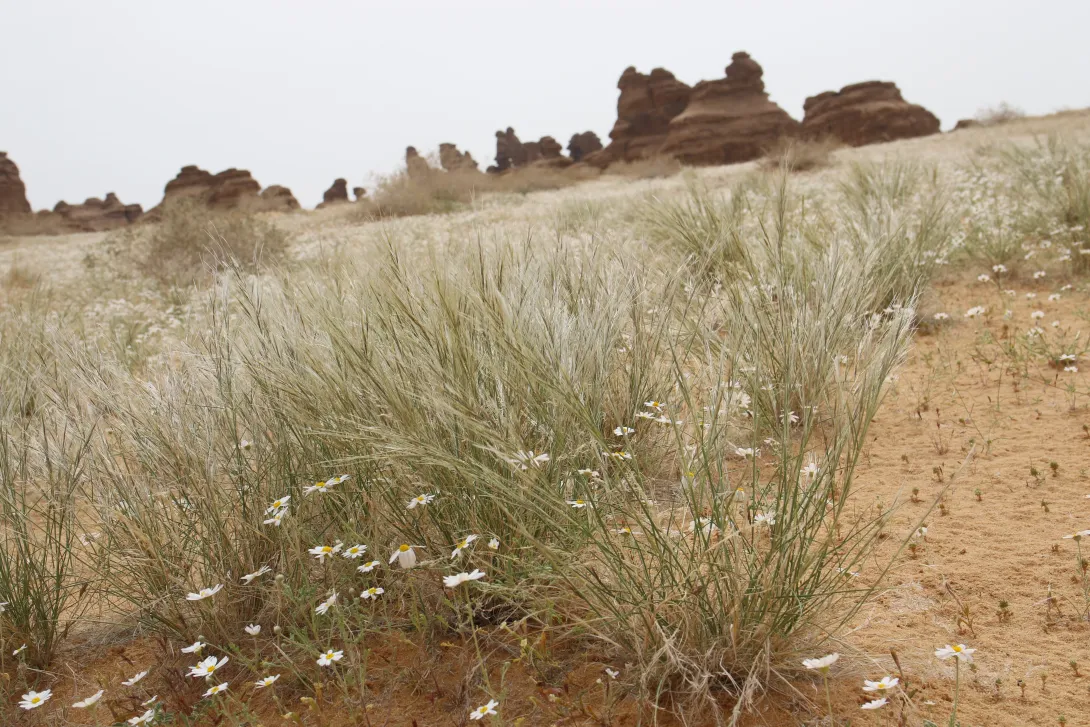
Desert Grass is one of the most common grasses of sandy habitats in AlUla County and plays important role as fodder ressource and as a sand dune stabilizer. Its plumose inflorescence has a unique beautiful habit, especially when waving in the wind. Identifying the different species of Stipagrostis is often challenging in the field, as morphological characteristic used for identification can be variable between individuals, not always visible, and the species may be confused with close species such as Stipagrostis shawii (H.Scholz) H.Scholz.
-
Phenology
-
Uses and Values
-
Other Usages
Palatable
-
Description of Traditional Uses
No specific documented uses were identified in accessible literature.
-
Other Usages
Gallery