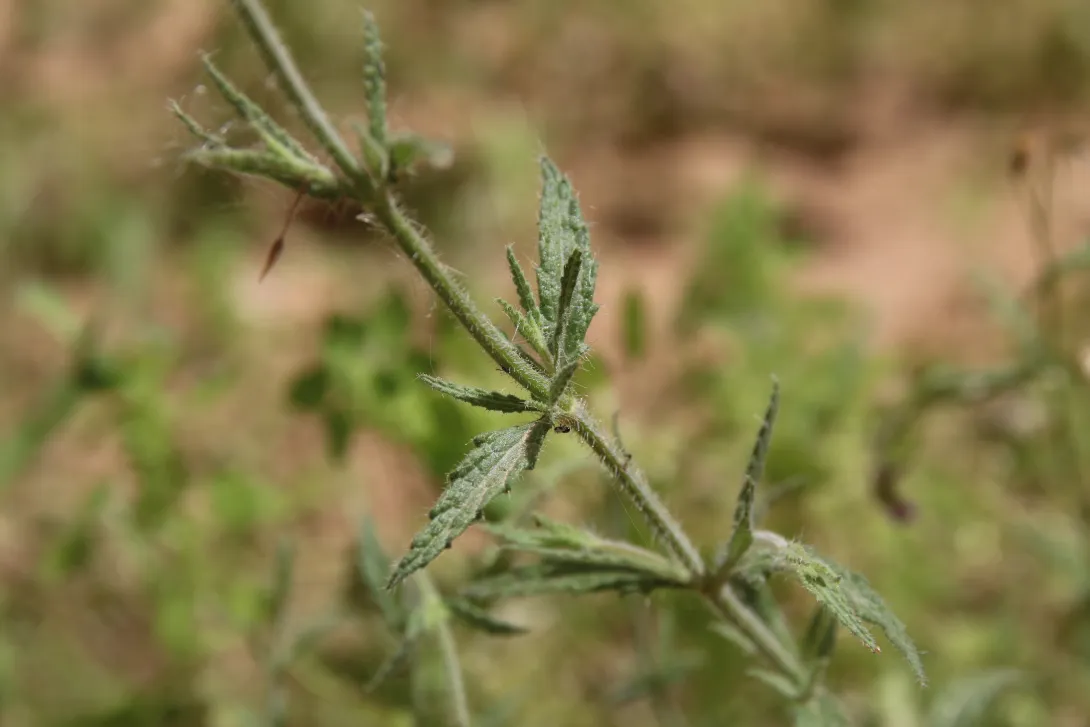
Salvia aegyptiaca L.
شجيرة الغزال
Syn. Pleudia aegyptiaca (L.) M.Will, N.Schmalz & Class.-Bockh.
Egyptian Sage
Lamiaceae
1 / 6


-
Morphological Description
-
Description
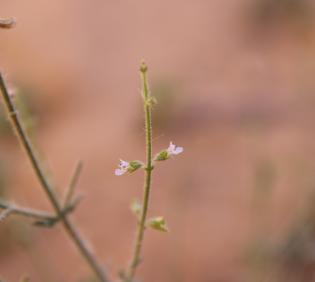
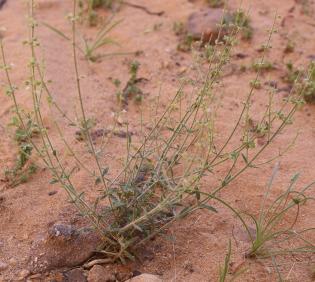
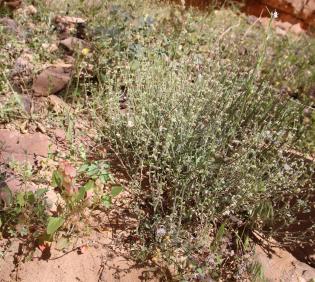
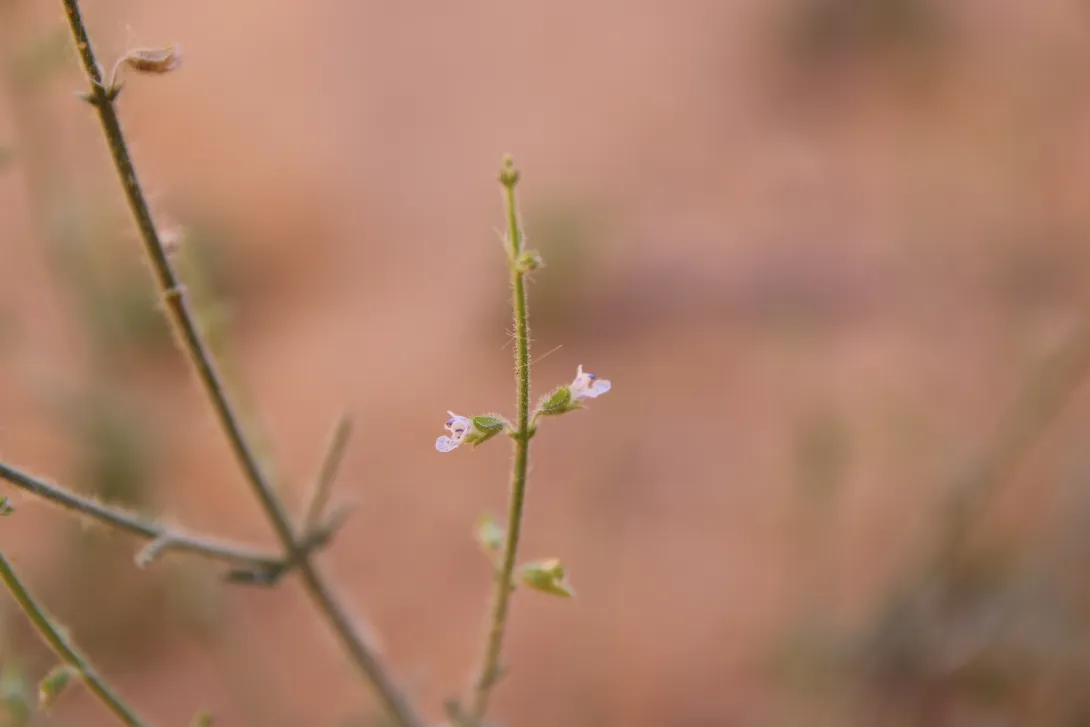
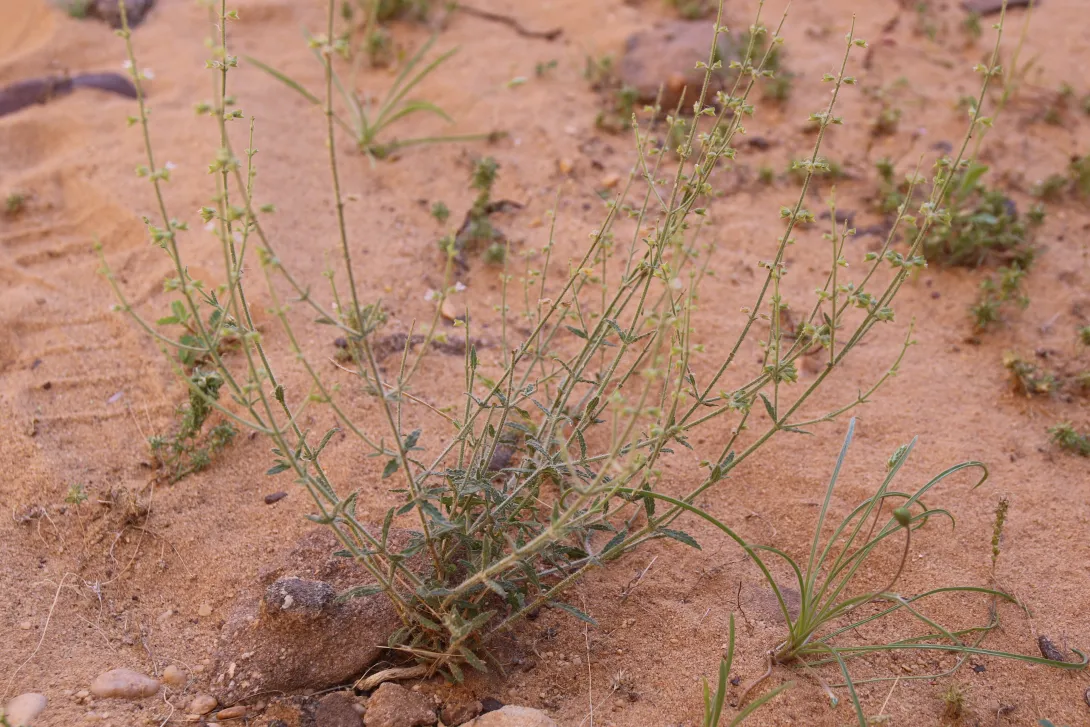
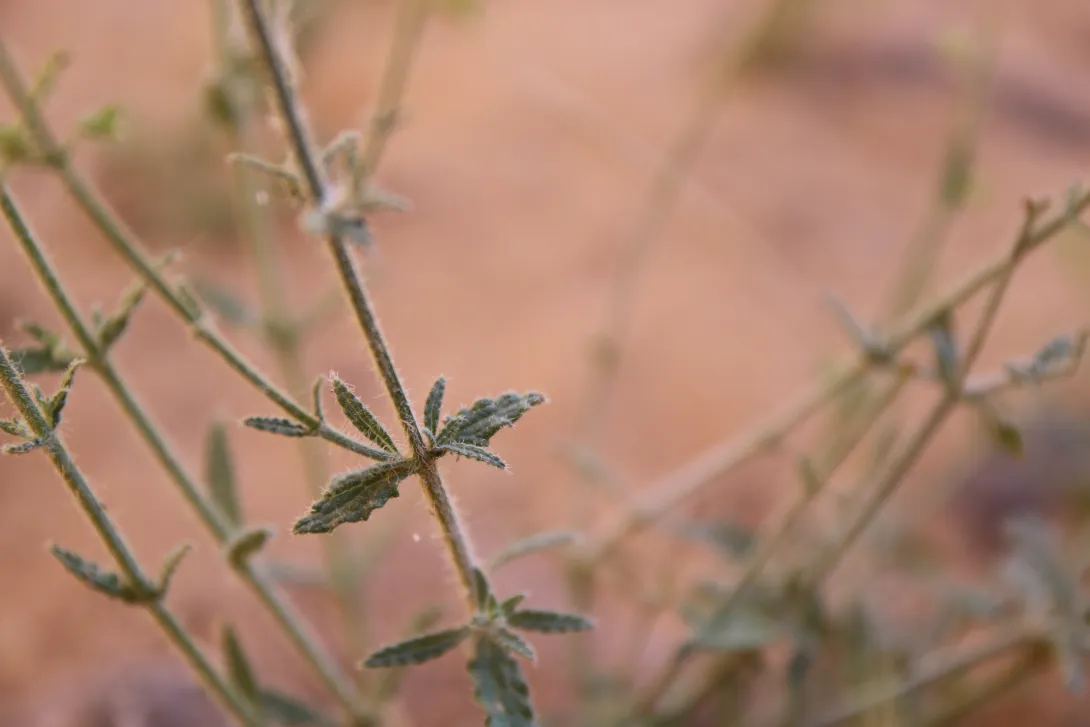
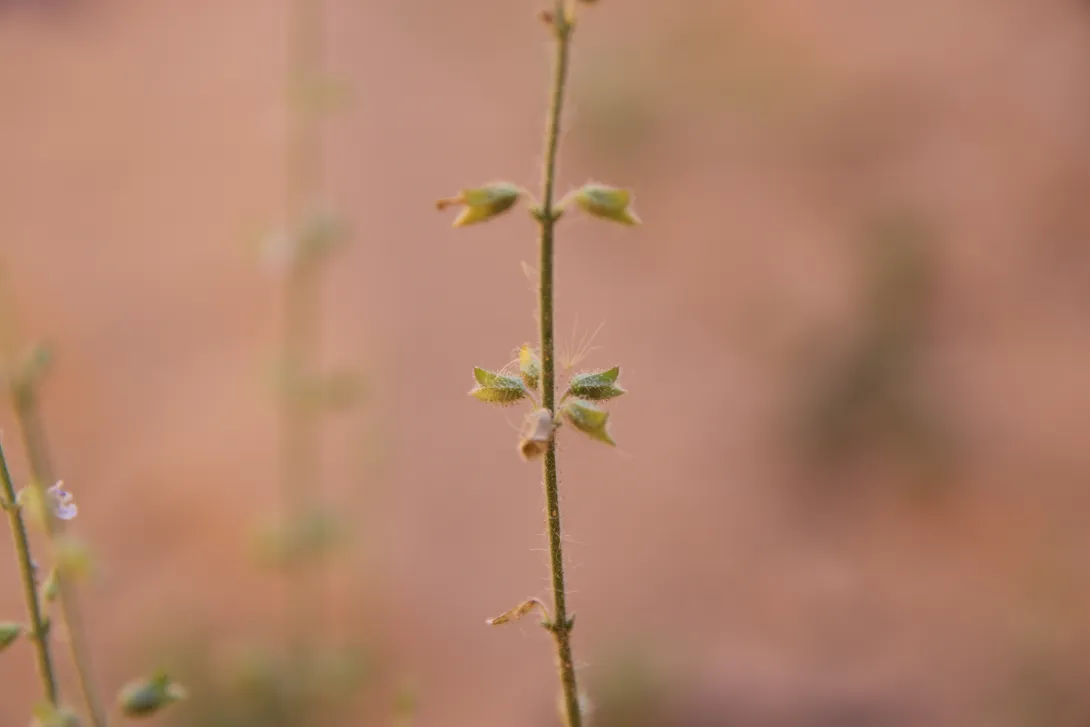
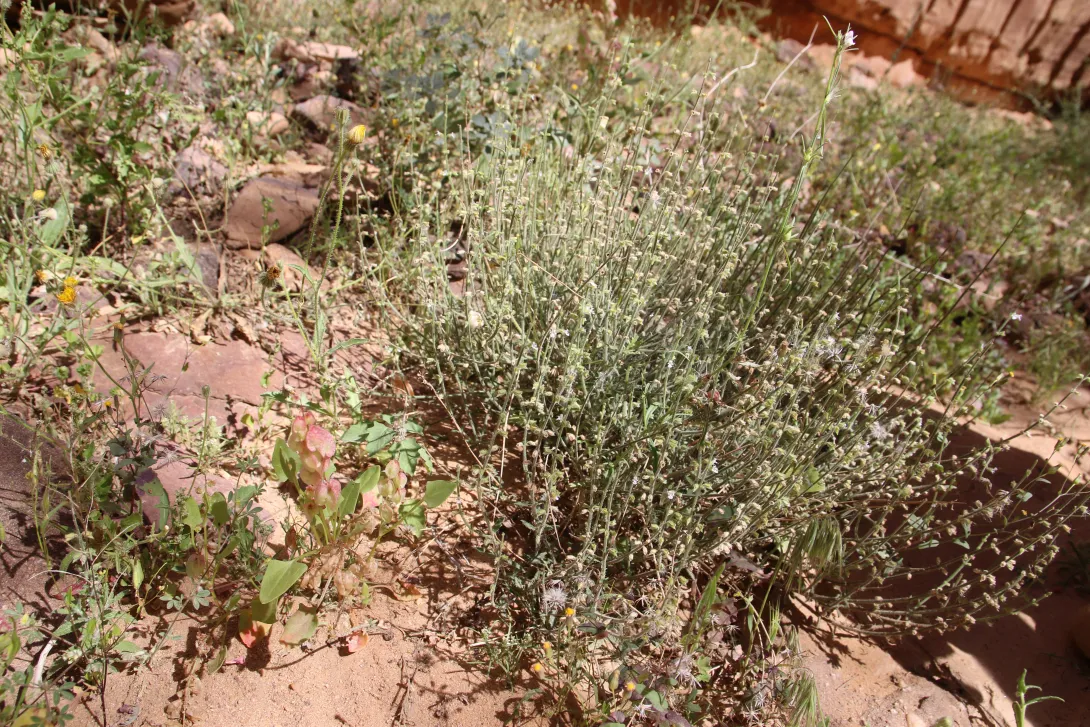
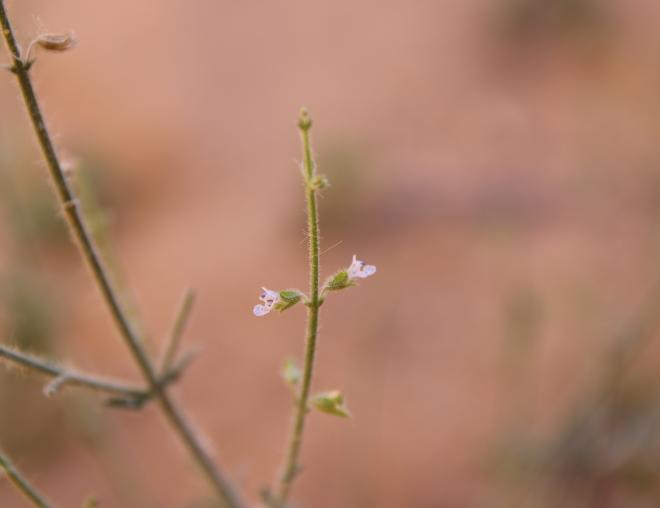
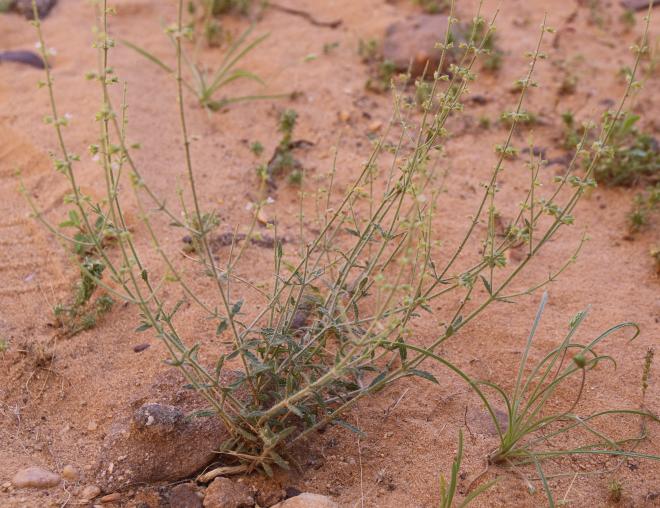
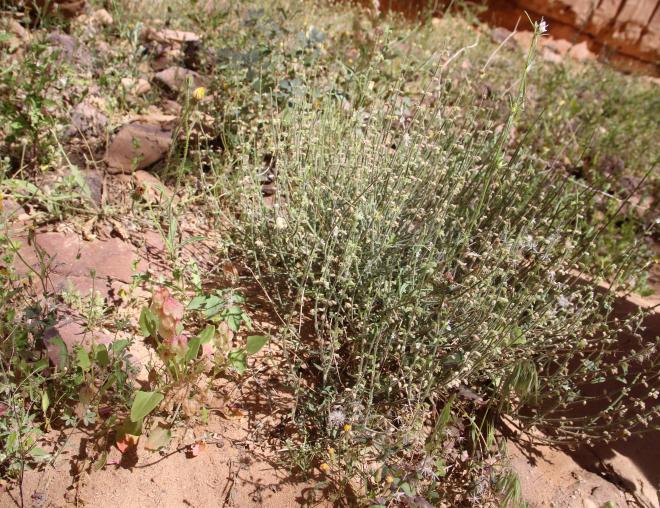
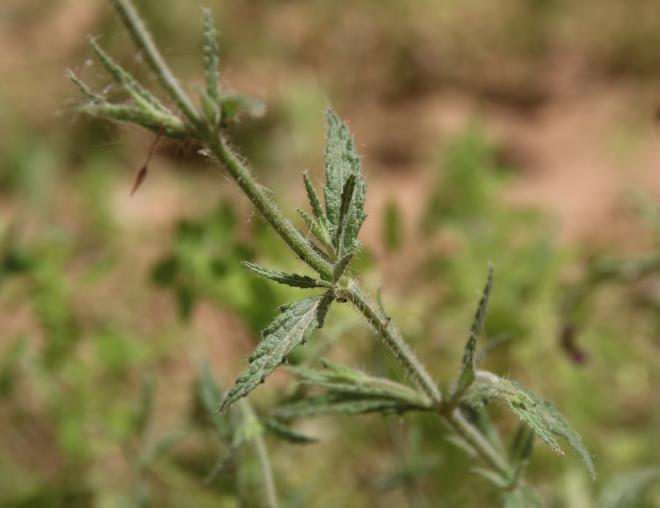
Small, perennial herb, up to 25 cm tall. Branches slender, rigid, often leafless later in summer. Leaves shortly-petiolate to sessile, small, oblong to linear, up to 25 x 5 mm, crenate, often revolute-margined. Verticillasters (whorle-like dichasial cyme) 2-6-flowered, distant and arranged in terminal racemose inflorescences; floral leaves and bracteoles minute. Flowers very small, pedicellate. Calyx 3-4 mm in flower, up to 7 mm in fruit; upper lip with 3 closely connivent minute teeth, becoming upwardly concave in fruit; lower lip with 2 acuminate-subulate teeth. Corolla whitish to violet-blue, small, rarely exceeding 5 mm; upper lip straight or reflexed, shorter than the lower lip. Nutlets black, oblong, 2 x 1.25 mm.
- Growth Form
-
Description
-
Habitat and Distribution
- Habitat
-
Geographical Distribution Range
This Saharo-Arabian species is distributed from Sahara to and across Middle East. Within the Arabian Peninsula, it is native to Jordan, Saudi Arabia, the Gulf States, Oman and Yemen.
-
Ecology
-
Phenology
JanFebMarAprMayJunJulAugSepOctNovDecFloweringFructification
- Origin
-
IUCN Red List Category
 Not Evaluated
-
Phenology
-
Uses and Values
-
Aromatic and Medicinal Use
Aromatic usages; Medicinal use
-
Description of Traditional Uses
Valued for its aromatic and medicinal properties, frequently used in traditional teas for digestive health.
-
Aromatic and Medicinal Use
Gallery