Achillea fragrantissima (Forssk.) Sch.Bip.
قيصوم
Syn. Santolina fragrantissima Forssk.
Fragrant Lavender Cotton
Asteraceae
1 / 4


-
Morphological Description
-
Description
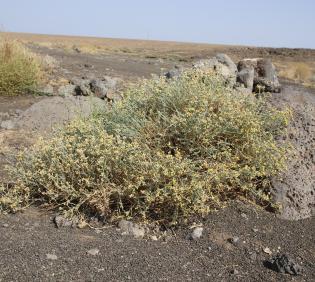
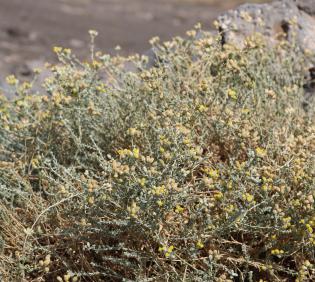
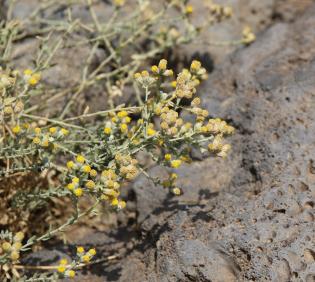
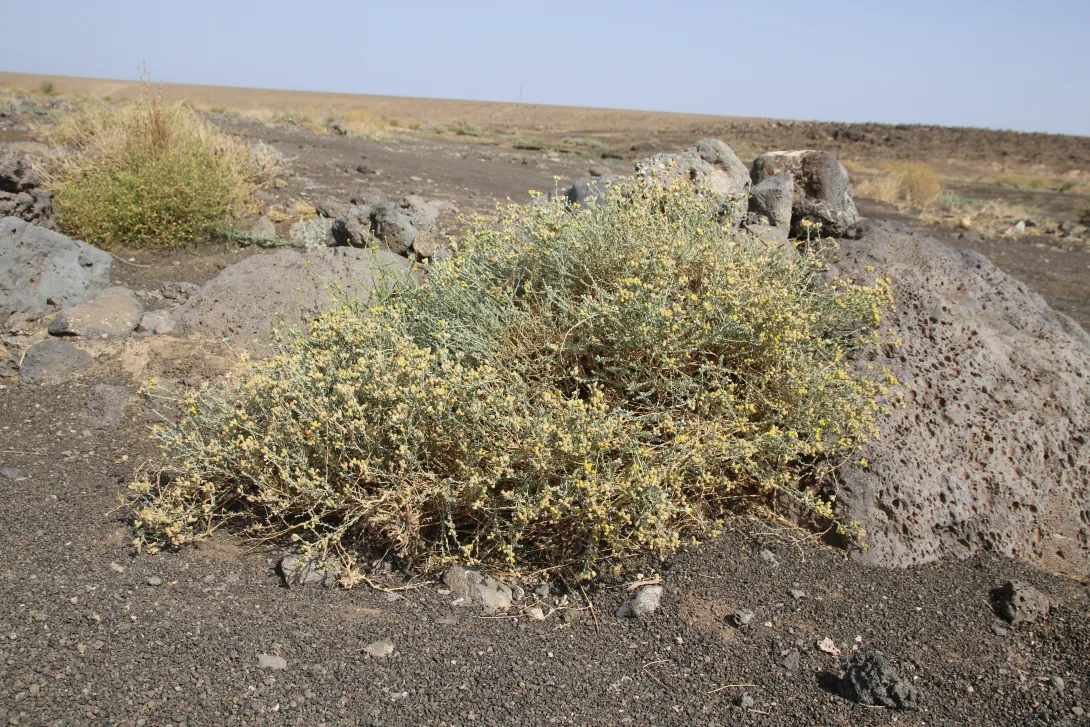
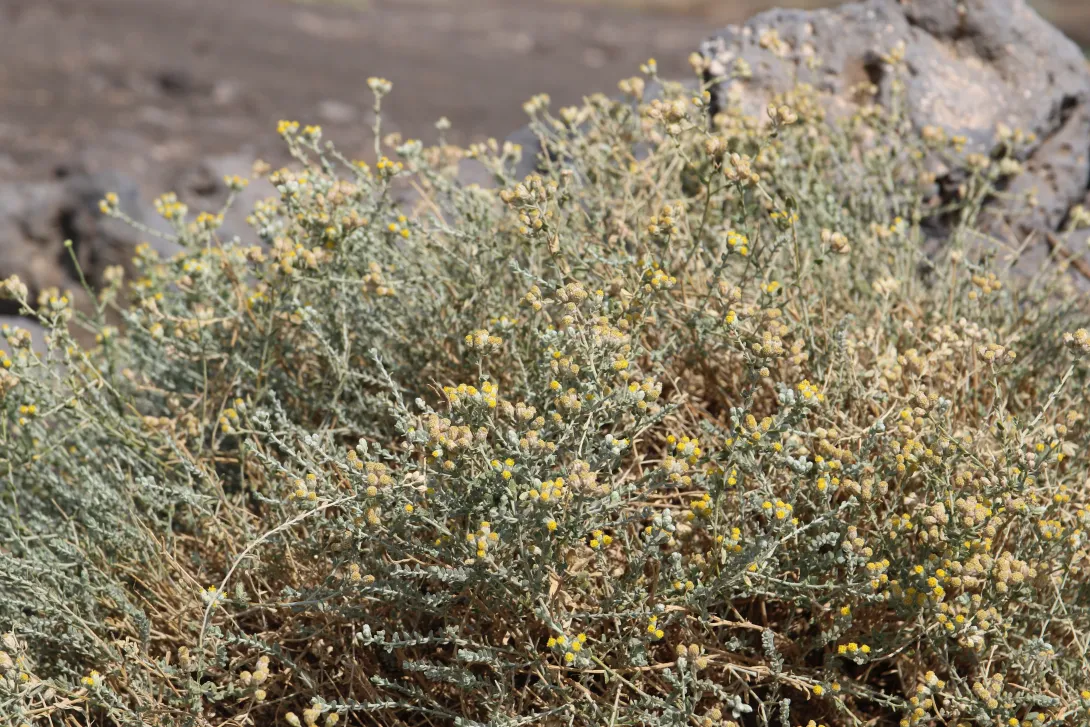
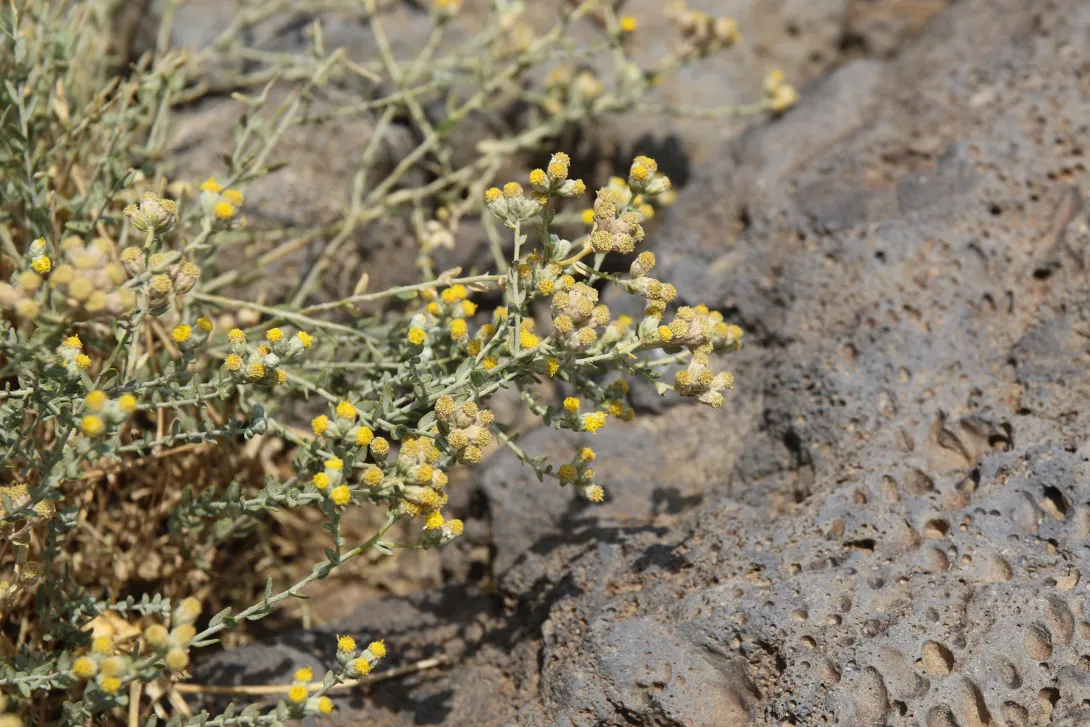
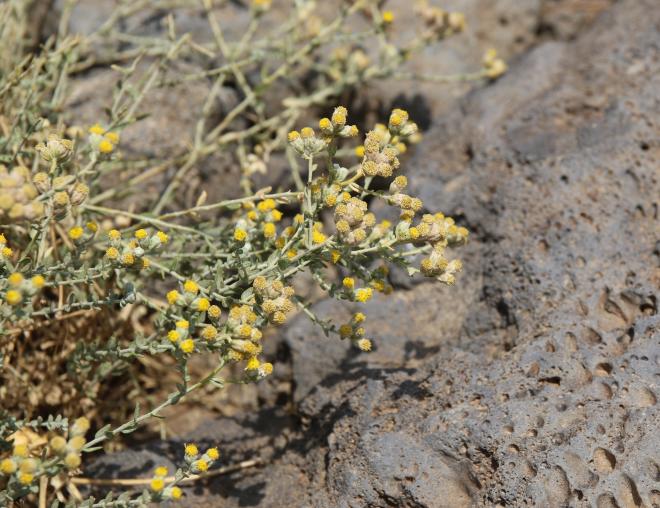
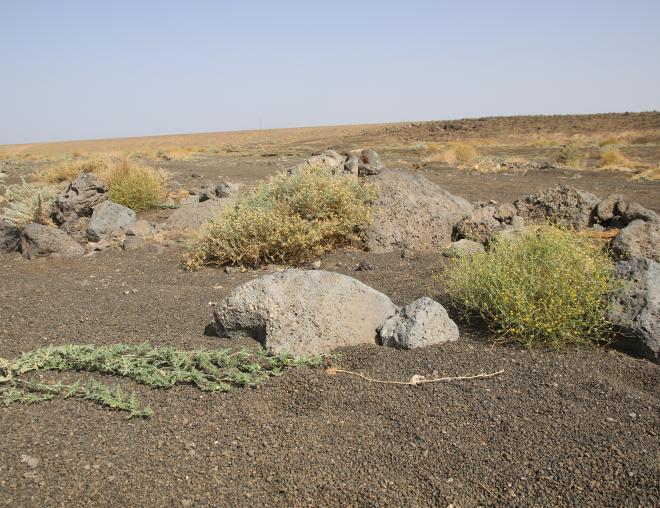
Perennial, erect, low shrub (less than 1 m tall), white and woolly, strongly aromatic, and much-branched from a woody rootstock, with older stems becoming woody. Leaves are small (10 × 3 mm), thick, alternate, shallowly dentate, mucronate, and densely hairy, with slightly undulate margins. Numerous flowering branches bear fragrant, small yellow flowers arranged in capitula without ray florets, aggregated into short, dense corymbs on peduncles (1–4 mm) that remain erect at maturity. Bracts and corolla are often coated with golden-yellow resin. The fruit is a glabrous, compressed achene (2 mm long), narrowed at the base.
- Growth Form
-
Description
-
Habitat and Distribution
- Habitat
-
Geographical Distribution Range
This Irano-Turanian and Saharo-Arabian species is distributed across the Middle East and neighboring regions, including Egypt, Sinai, Jordan, Lebanon, Syria, and Iraq. Within the Arabian Peninsula, it is native to Saudi Arabia, Jordan, and Kuwait.
-
Ecology
-
Phenology
JanFebMarAprMayJunJulAugSepOctNovDecFloweringFructification
- Origin
-
IUCN Red List Category
 Not Evaluated
-
Remarks
Fragrant Lavender Cotton is a strongly aromatic plant traditionally used as a medicinal tea and still valued today for its health benefits. Despite its common name, it is not a true lavender, and its scent is distinct from that of Lavandula species.
-
Phenology
-
Uses and Values
-
Aromatic and Medicinal Use
Aromatic usages; Medicinal use
-
Other Usages
Melliferous
-
Description of Traditional Uses
A. fragrantissima is used for the preparation of medicinal teas for the prevention and treatment of various health problems, including the treatment of common health problems such as respiratory disease, urinary and reproductive disease, eye infections, small pox, fever, gastrointestinal disturbances, diabetes, dysmenorrhea, headache or fatigue, Musculoskeletal and Joint disorders and diabetes therapy.
-
Aromatic and Medicinal Use
Gallery