Heliotropium arbainense Fresen.
رمرام
Flaxleaf Heliotrope
Boraginaceae
1 / 6


-
Morphological Description
-
Description
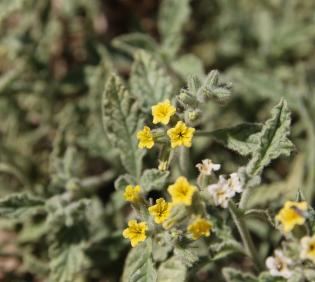
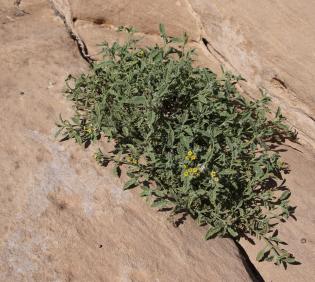
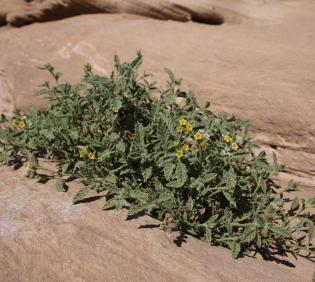
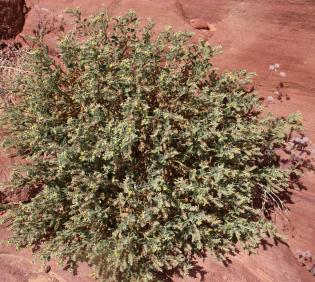
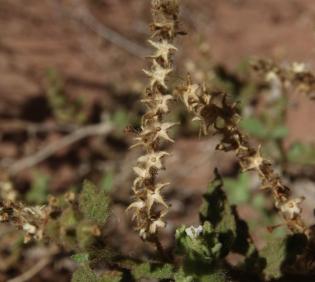
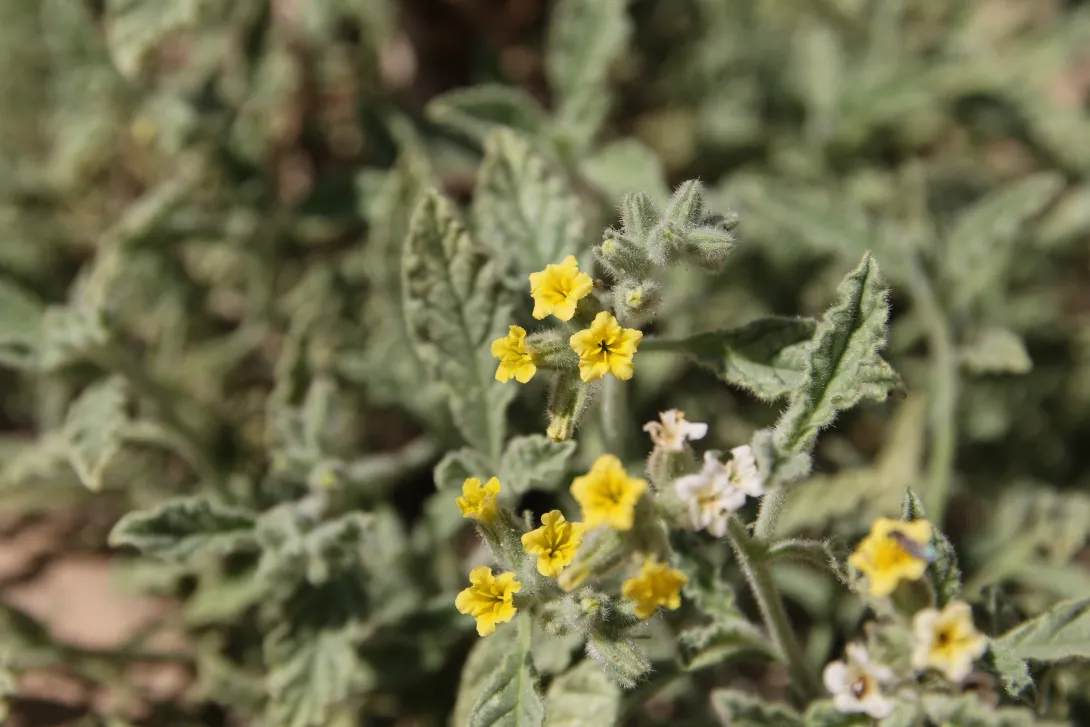
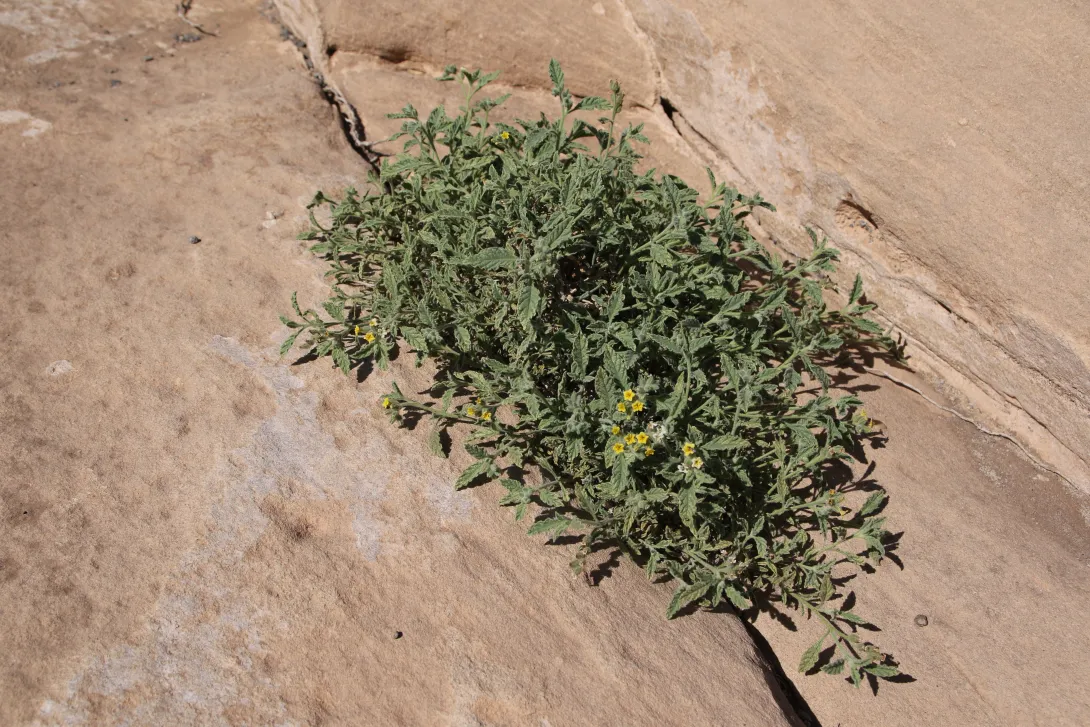
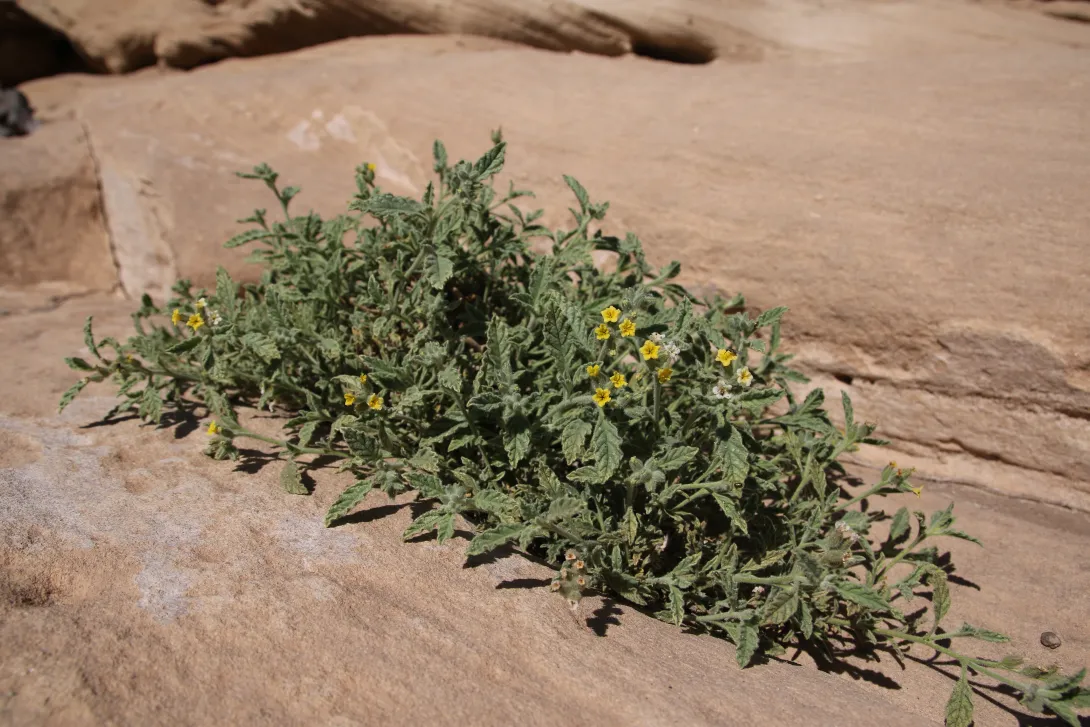
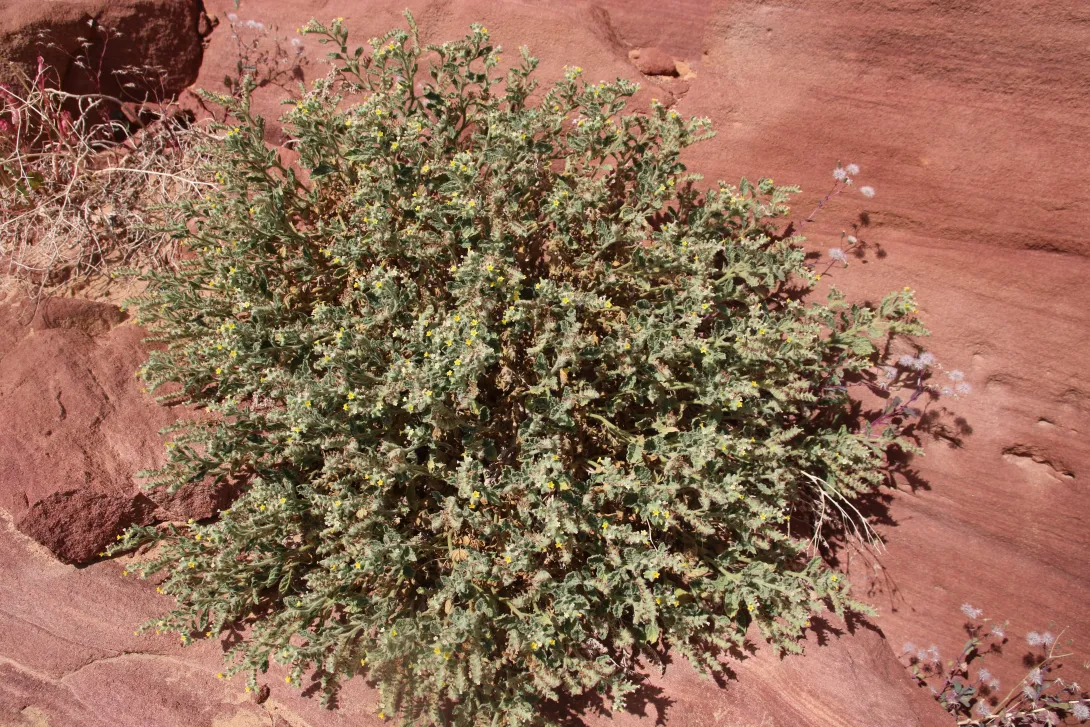
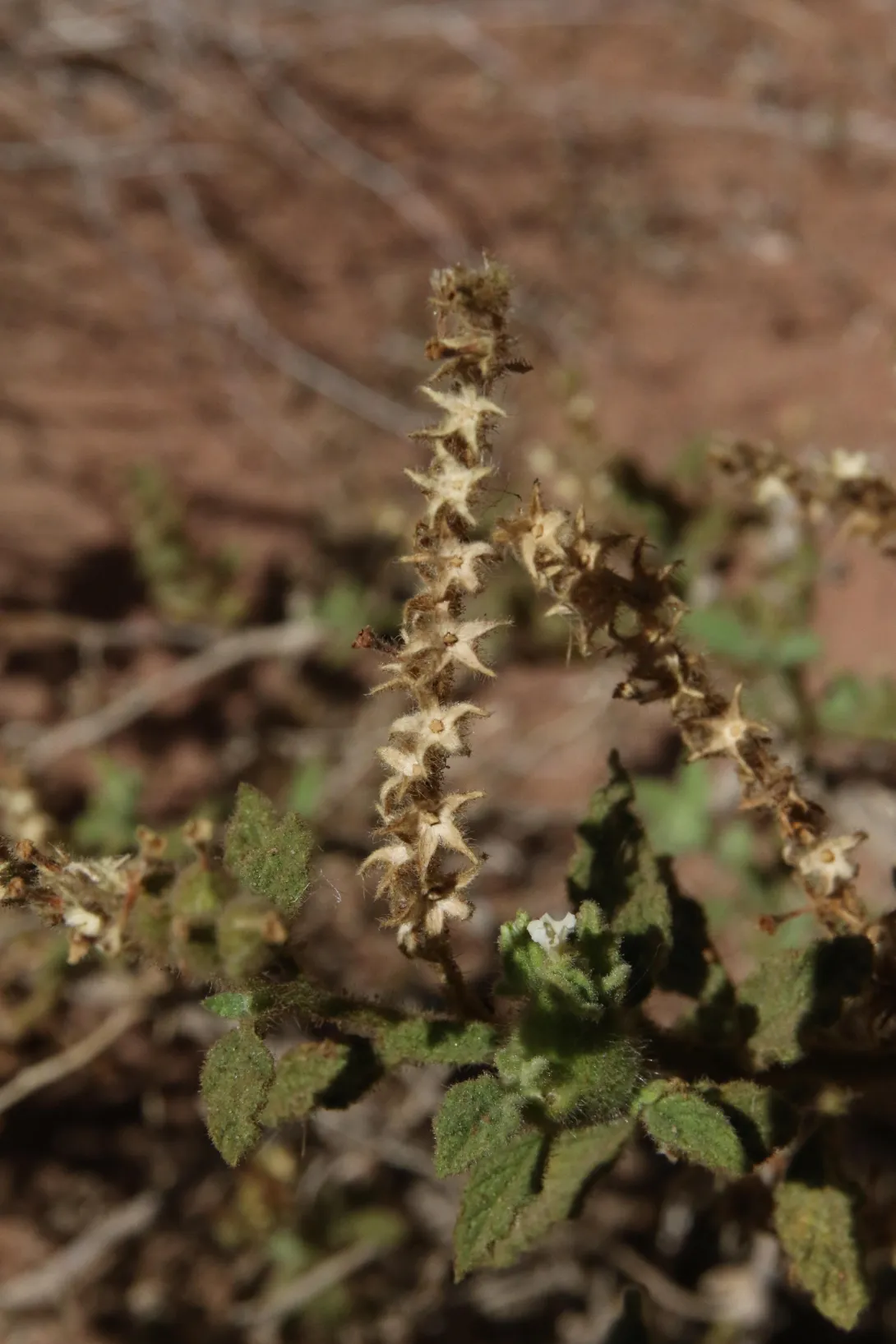
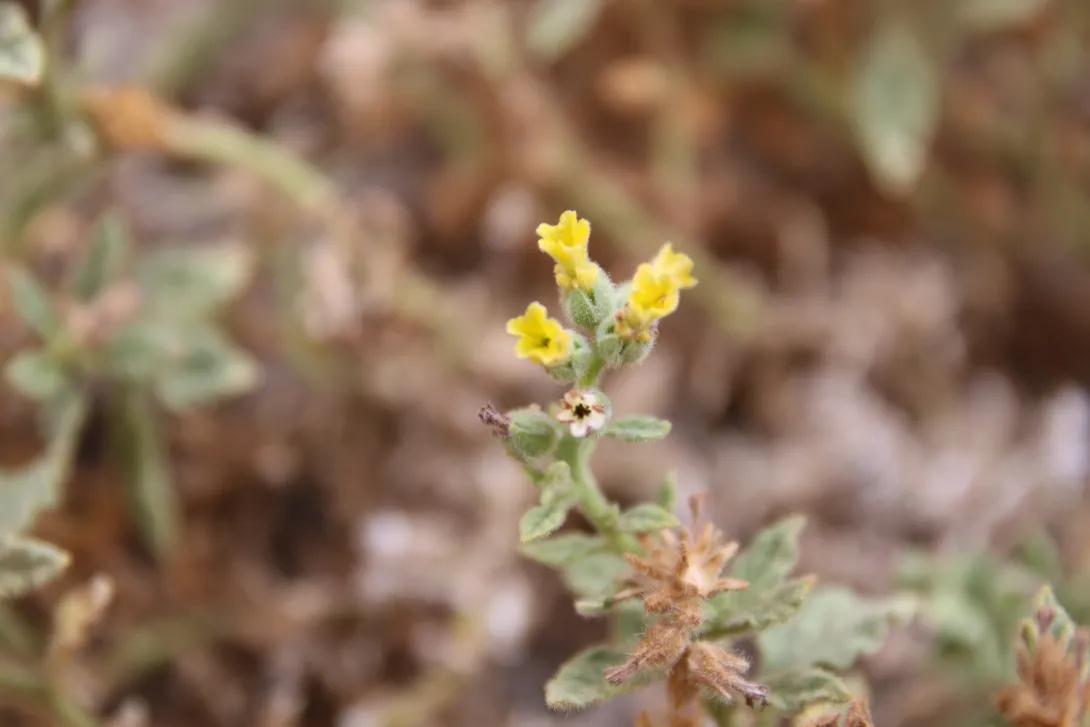
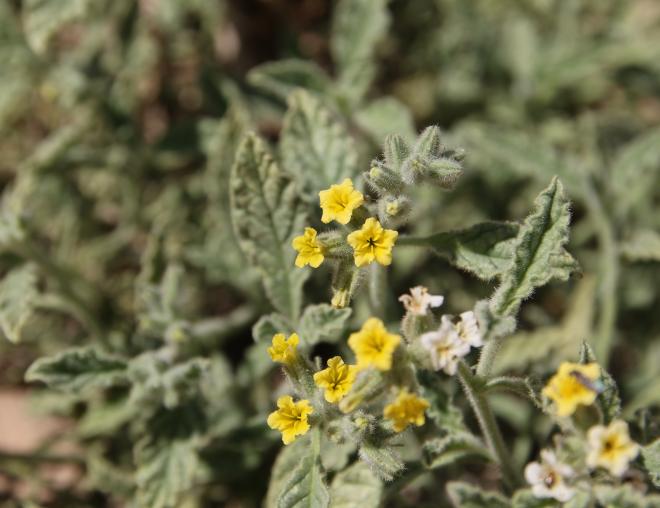
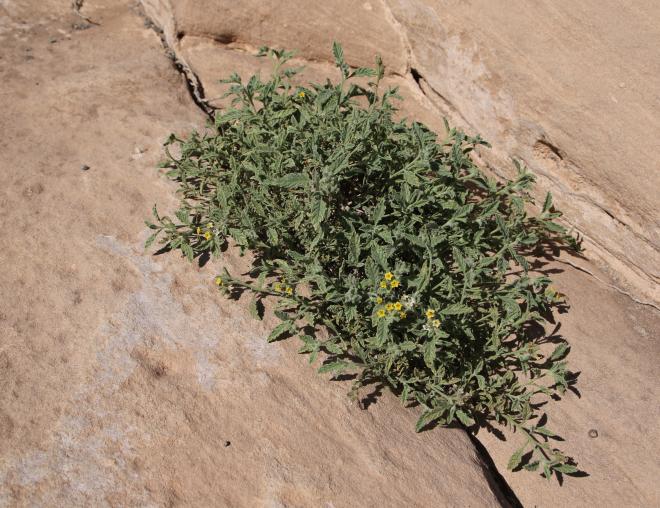
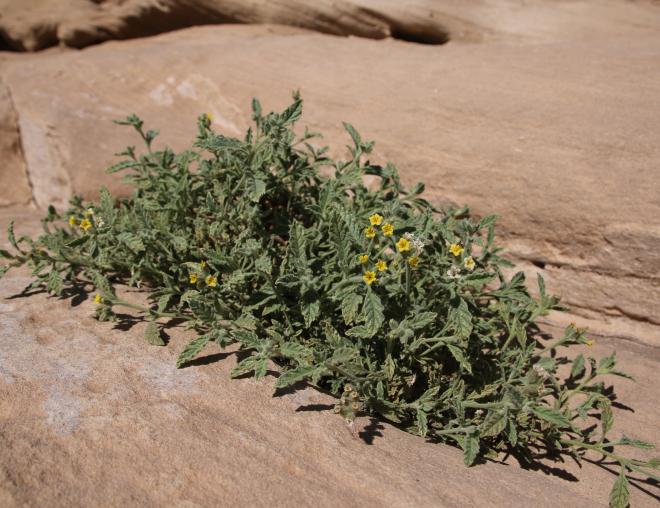
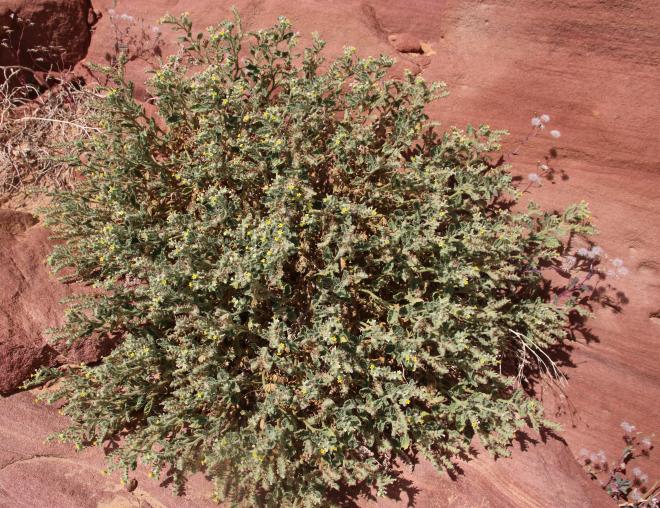
Perennial, densely hairy, yellowish-green, low herb. Leaves petiolate, ovate to lanceolate, up to 3.5 x 1 cm, prominently veined on the ventral face, the veins sunken on the dorsal face, undulate, acute. Inflorescence of short, spicate, scorpioid cymes; the spikes usually about 2.5 cm long, dense. Flowers yellow. Calyx 5-lobed, densely hairy. Corolla up to 7 mm long, densely hairy outside; tube 5-ribbed, wider near the top, with 5 undulate lobes. Anthers inserted nearer the base of corolla-tube. Stigma almost sessile on the ovary, flattened-conical. Nutlets four, glabrous, tubercled, as long as or shorter than the calyx lobes.
- Growth Form
-
Description
-
Habitat and Distribution
- Habitat
-
Geographical Distribution Range
This Saharo-Arabian species is distributed from Soudan, Ethiopia and Egypt to Iran. For the Arabian Peninsula, it is native to Jordan and Saudi Arabia.
-
Ecology
-
Phenology
JanFebMarAprMayJunJulAugSepOctNovDecFloweringFructification
- Origin
-
IUCN Red List Category
 Not Evaluated
-
Phenology
-
Uses and Values
-
Aromatic and Medicinal Use
Medicinal use
-
Description of Traditional Uses
As with many Heliotropium species, it is historically cited in traditional medicine for the treatment of skin ailments and inflammations.
-
Aromatic and Medicinal Use
Gallery