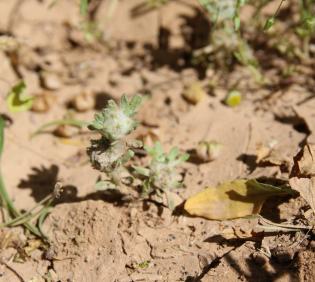
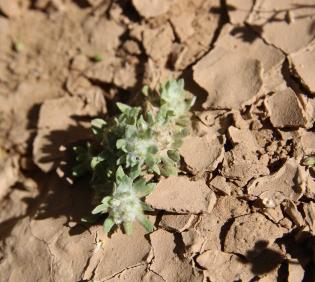
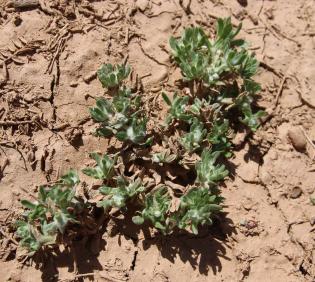
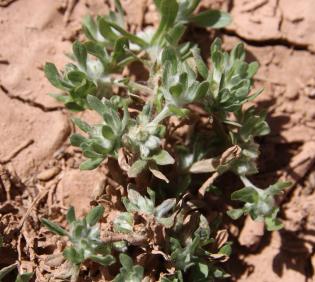
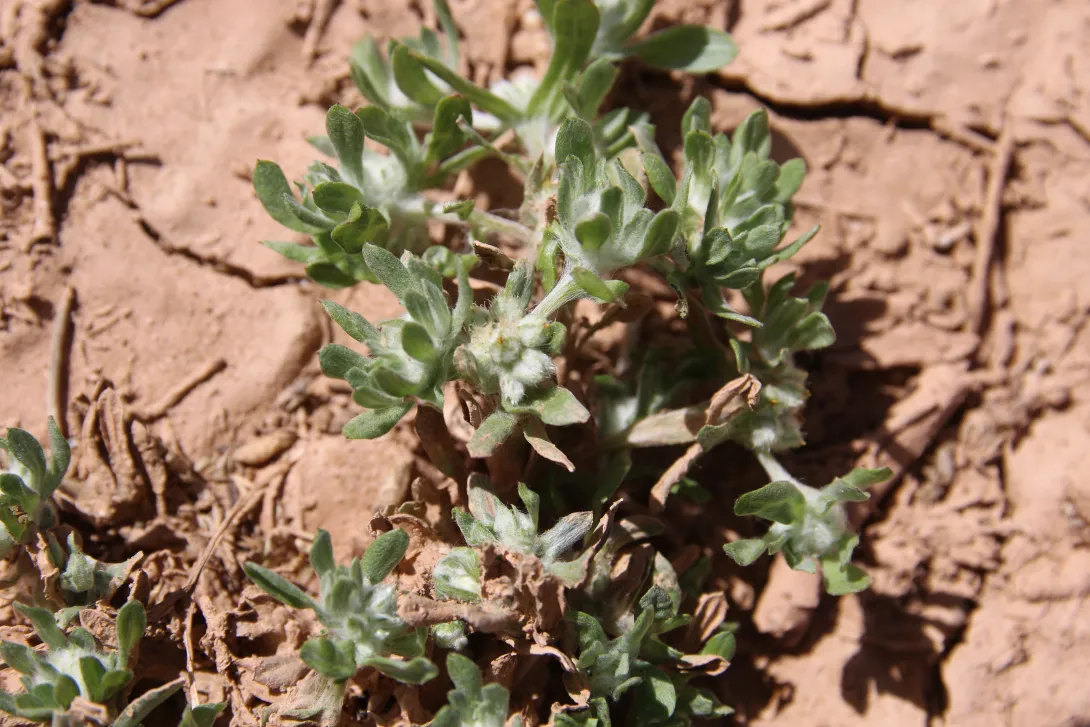
Filago desertorum Pomel
علك الأرنب
Syn. Filago germanica var. desertorum (Pomel) Batt.
Desert Cotton-rose
Asteraceae
1 / 5


-
Morphological Description
-
Description
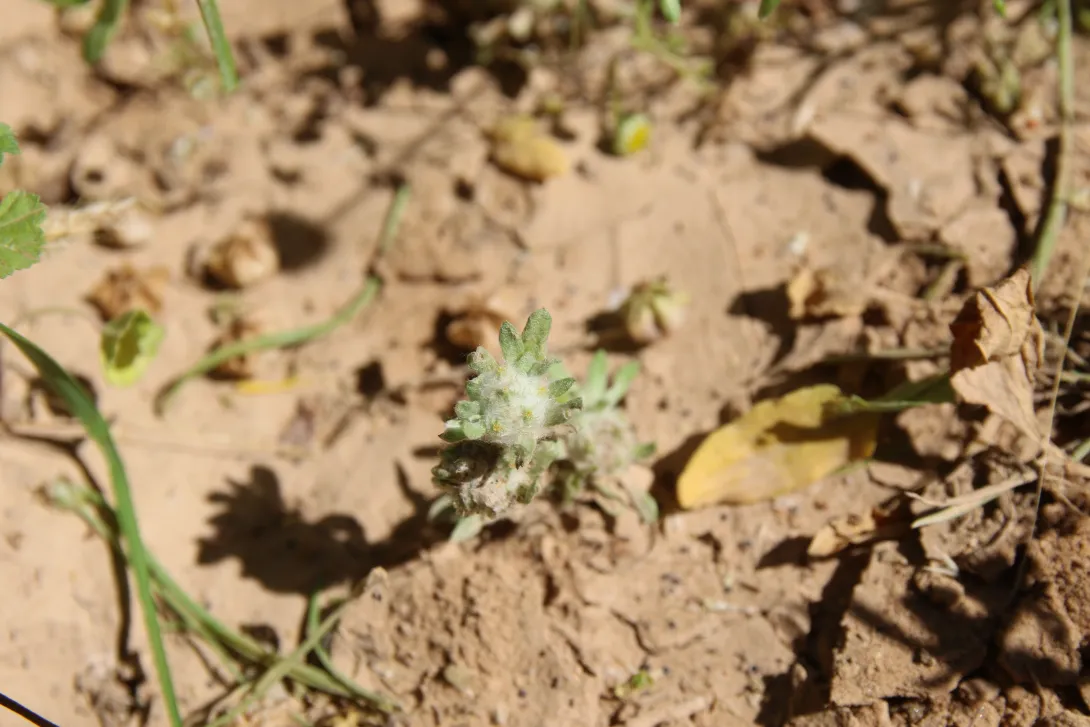
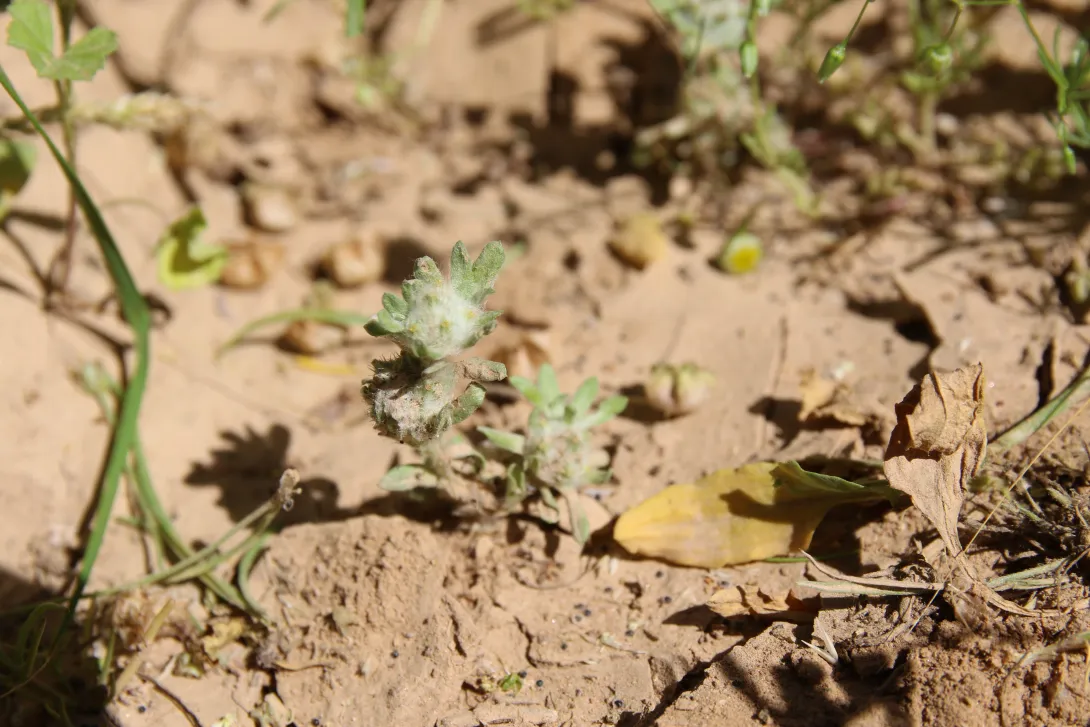
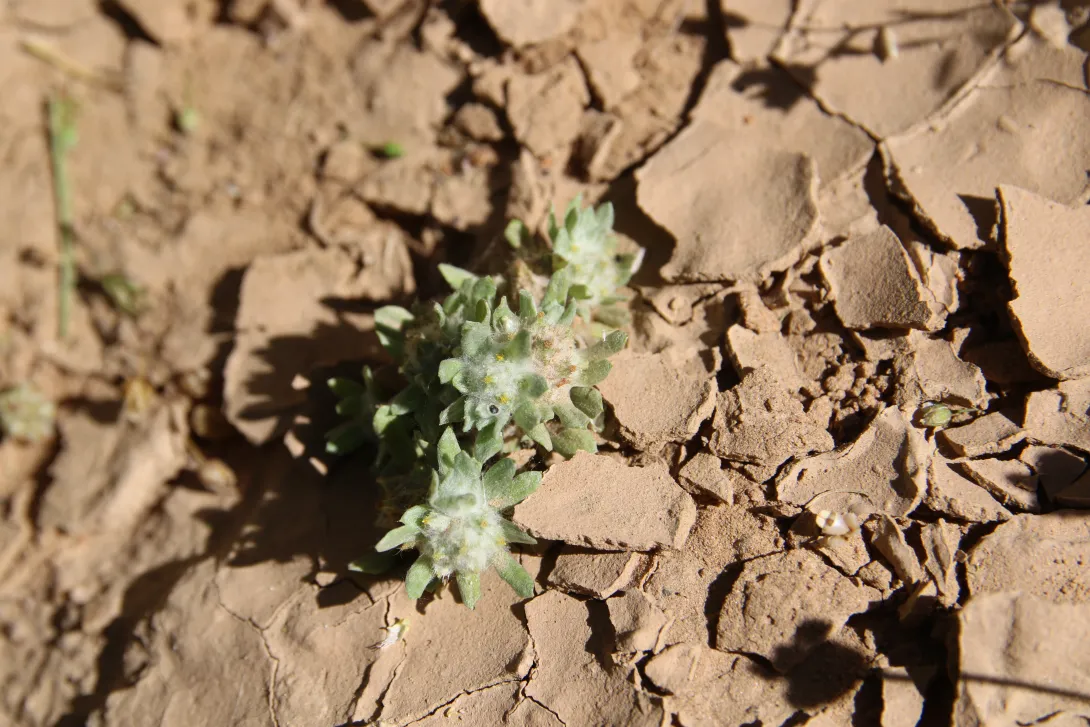
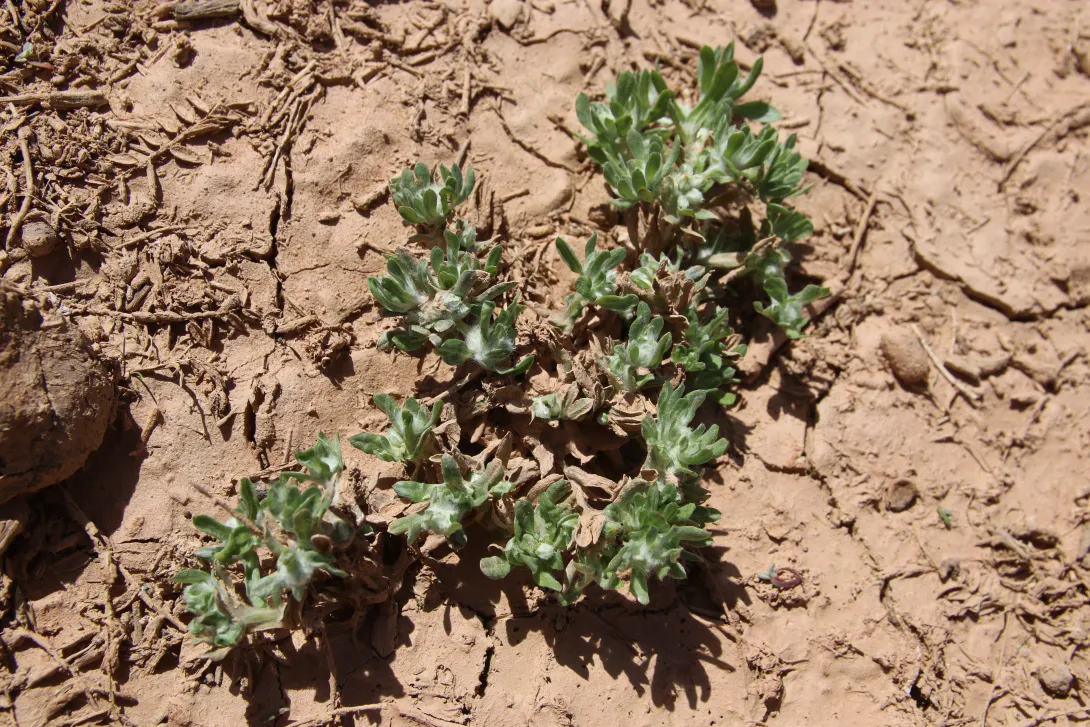
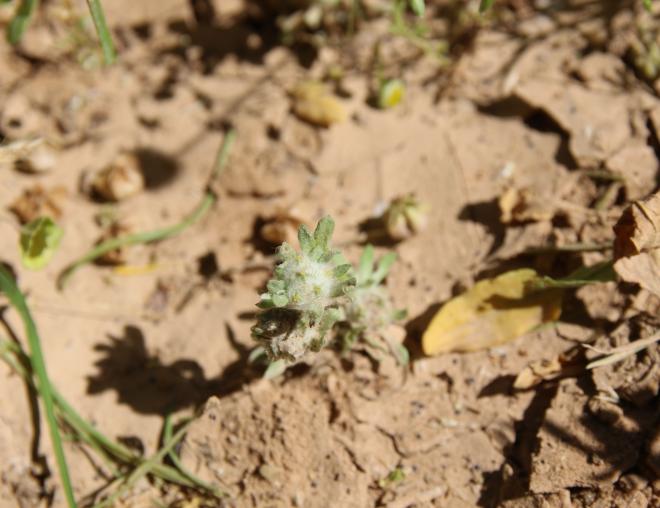
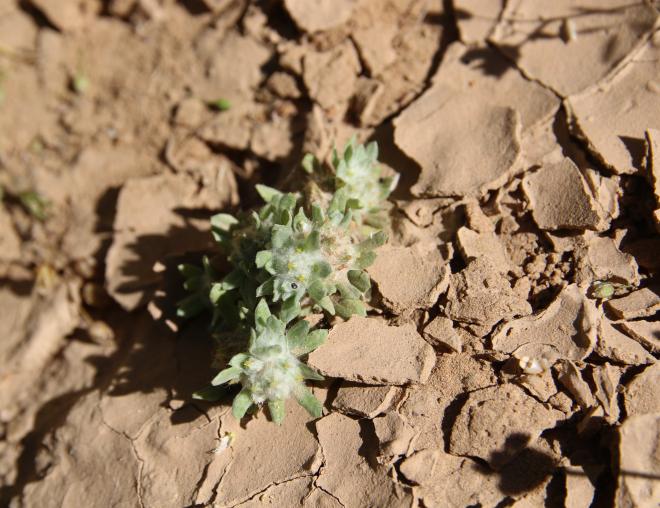
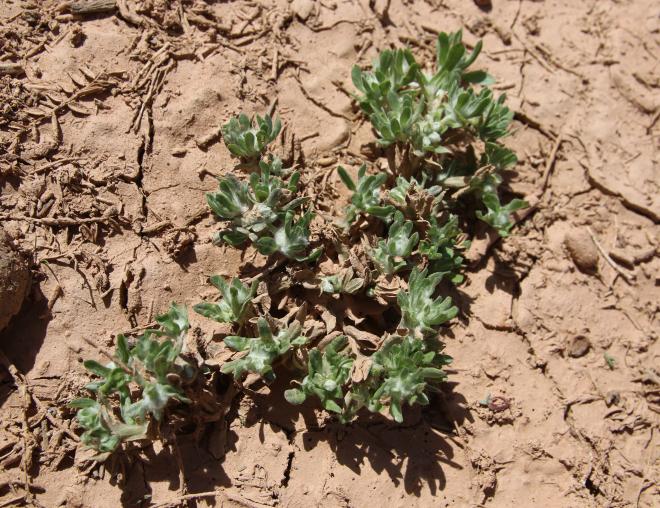
The typical inflorescence is a compound capitula composed of small capitululs. Each capitulul has several bracts with green and hairy lower part and upper scarious part which become narrow and pointed. The upper five phyllaries are not tapering into a long tip and have scarious margins; these bracts have a dark upper face and when opened look like a flower. These apical bracts of the capitulul protect 5-10 florets armed with a pappus; the peripheral ones are female florets whereas the inner are hermaphrodite and have corolla with 4-5 teeth. In addition there is a third kind of florets – each is female, without pappus or corolla and protected at the axile of the scarious bract. Achenes are covered with minute papilae. When a capitulul ripes the pappose florets are dispersed by wind and the 5 dark bracts are revealed.The small capitululs are packed in the compound capitules. Each plant produces first one terminal compound capitula and if there are sufficient resources, a second order and third order capituls may develop.Many achenes remain in the site of their mother plant and fewer become dispersed by wind.
- Growth Form
-
Description
-
Habitat and Distribution
- Habitat
-
Geographical Distribution Range
This Irano-Turanian - Saharo-Arabian species is distributed in Sahara and Middle East to Indian subcontinent from Western Sahara to Pakistan. Within the Arabian Peninsula, it is native to Jordan, Saudi Arabia, Gulf States and Oman.
-
Ecology
-
Phenology
JanFebMarAprMayJunJulAugSepOctNovDecFloweringFructification
- Origin
-
IUCN Red List Category
 Not Evaluated
-
Phenology
-
Uses and Values
-
Description of Traditional Uses
No specific documented uses were identified in accessible literature.
-
Description of Traditional Uses
Gallery