Citrullus colocynthis (L.) Schrad.
حنظل
Syn. Cucumis colocynthis L.
Bitter Gourd, Colocynth, Desert Squash, Desert Melon
Cucurbitaceae
1 / 7

-
Morphological Description
-
Description
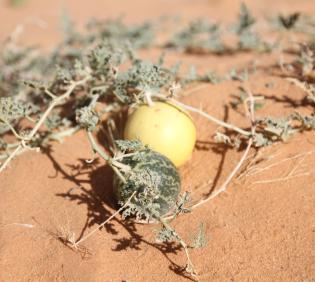
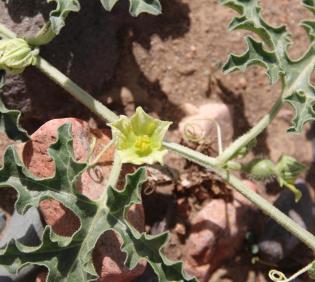
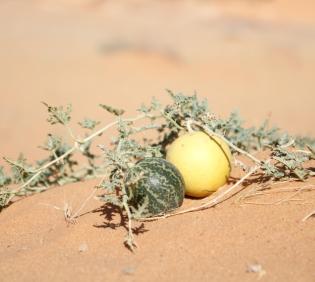
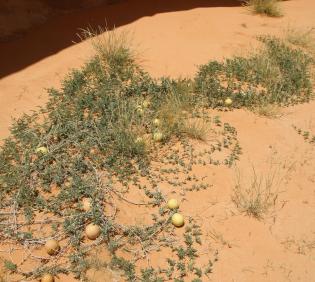
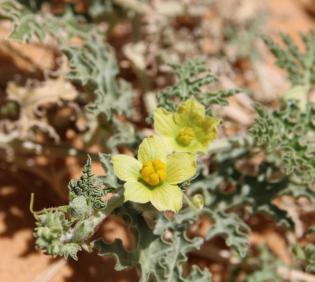
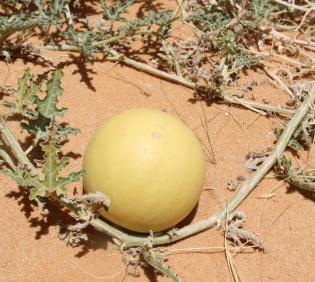
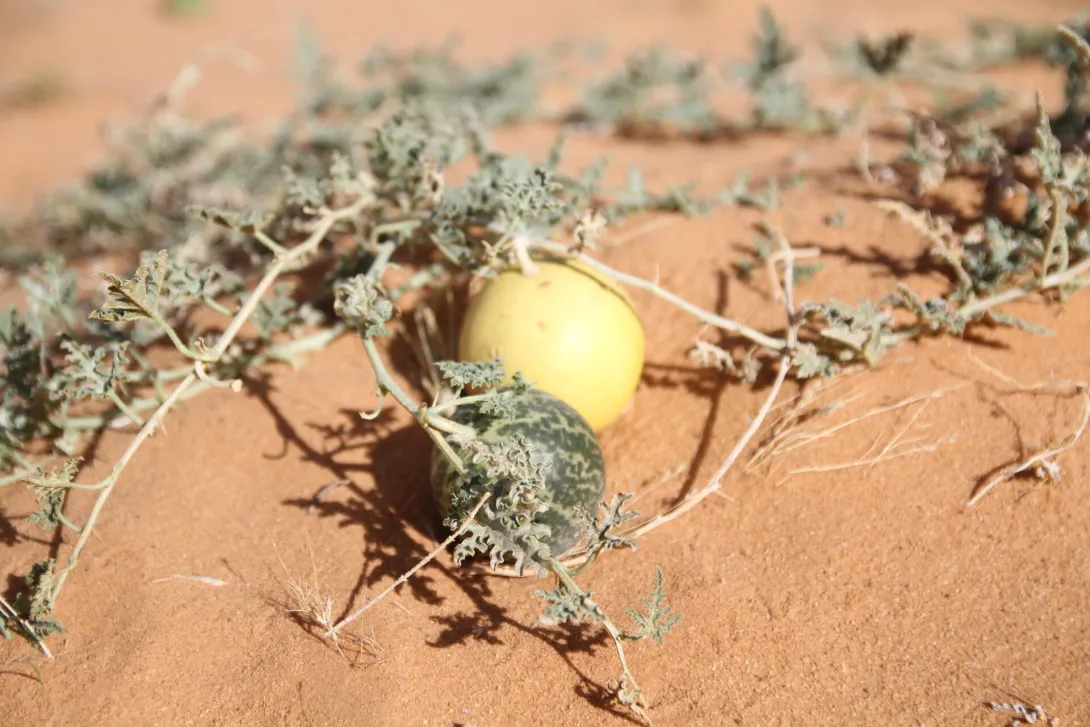
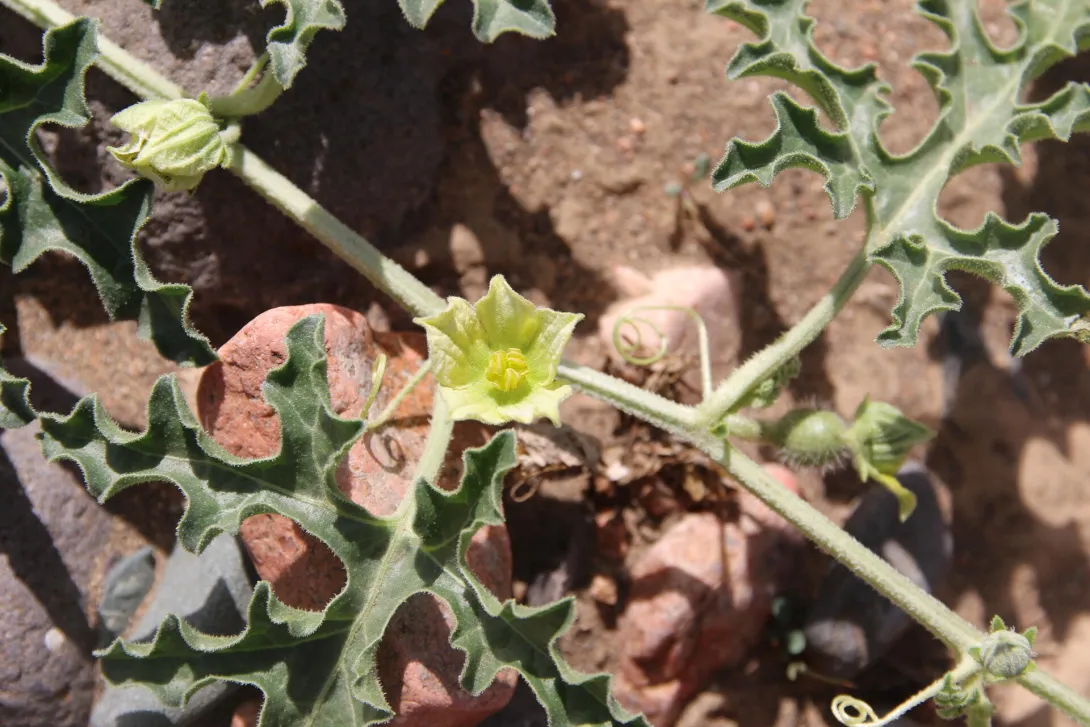
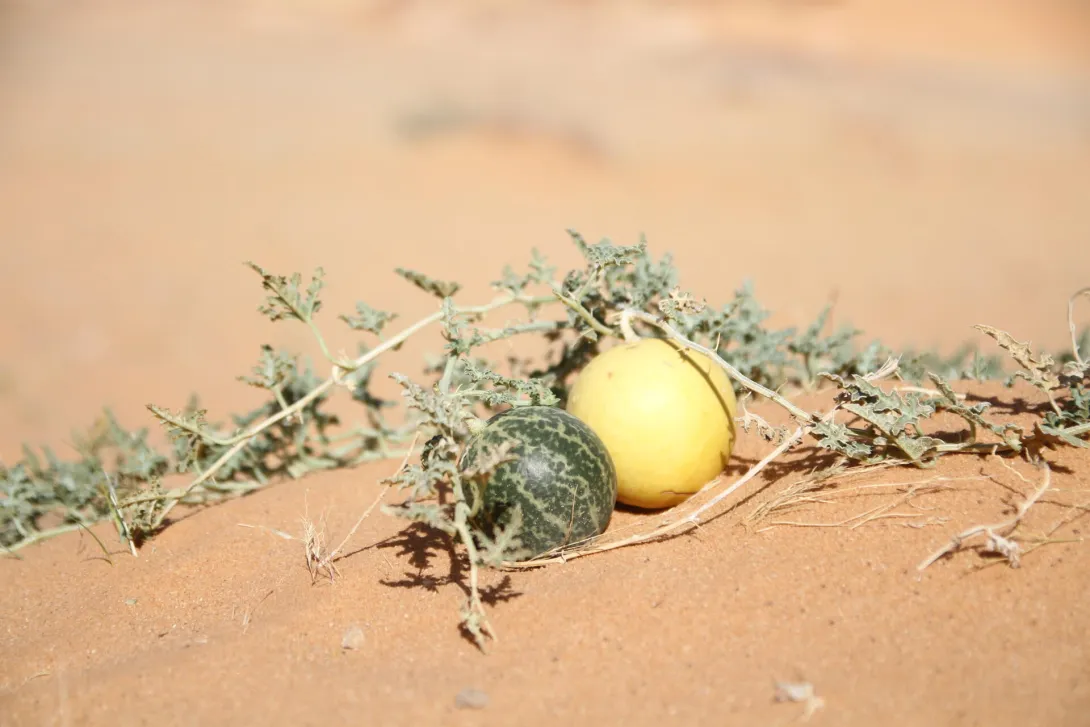
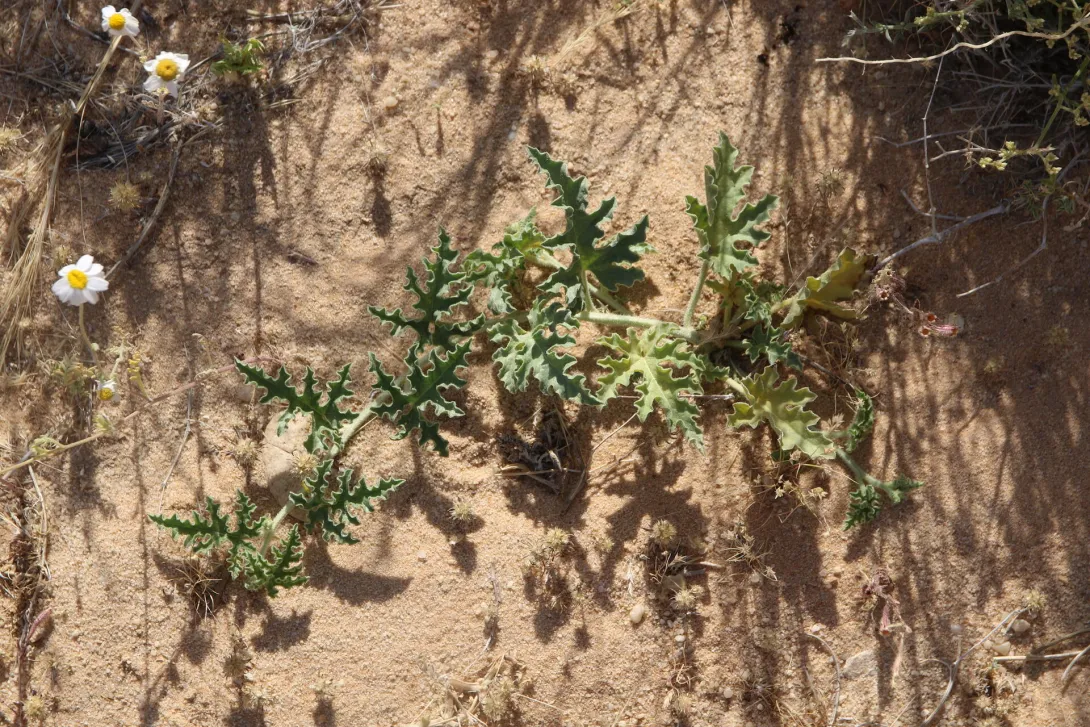
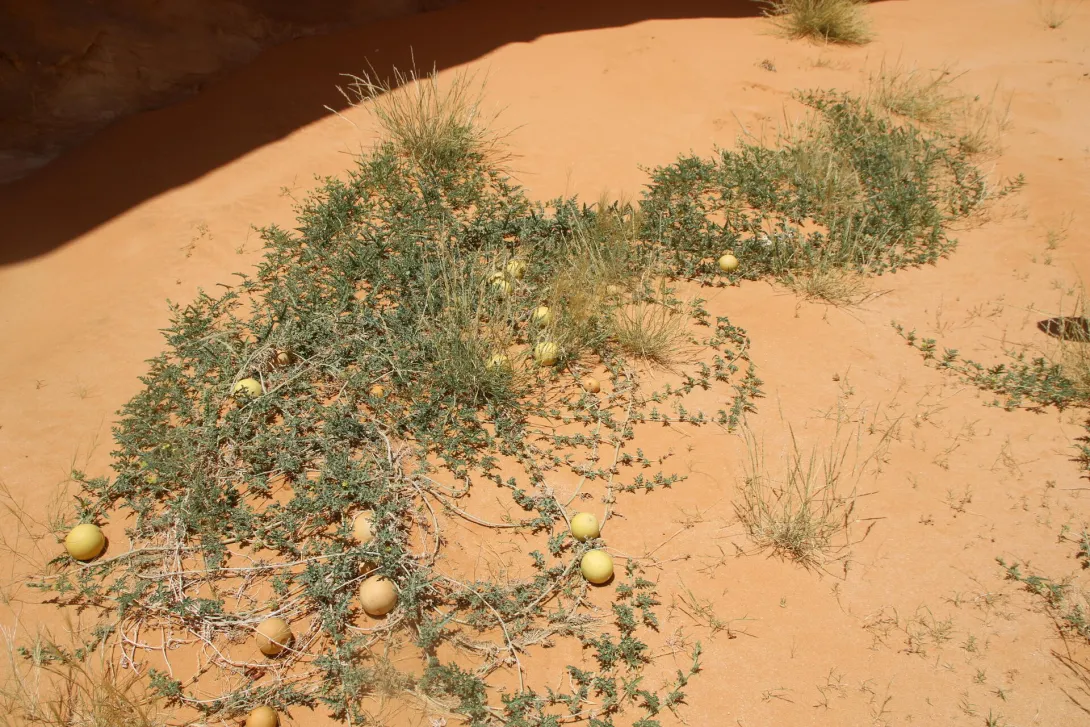
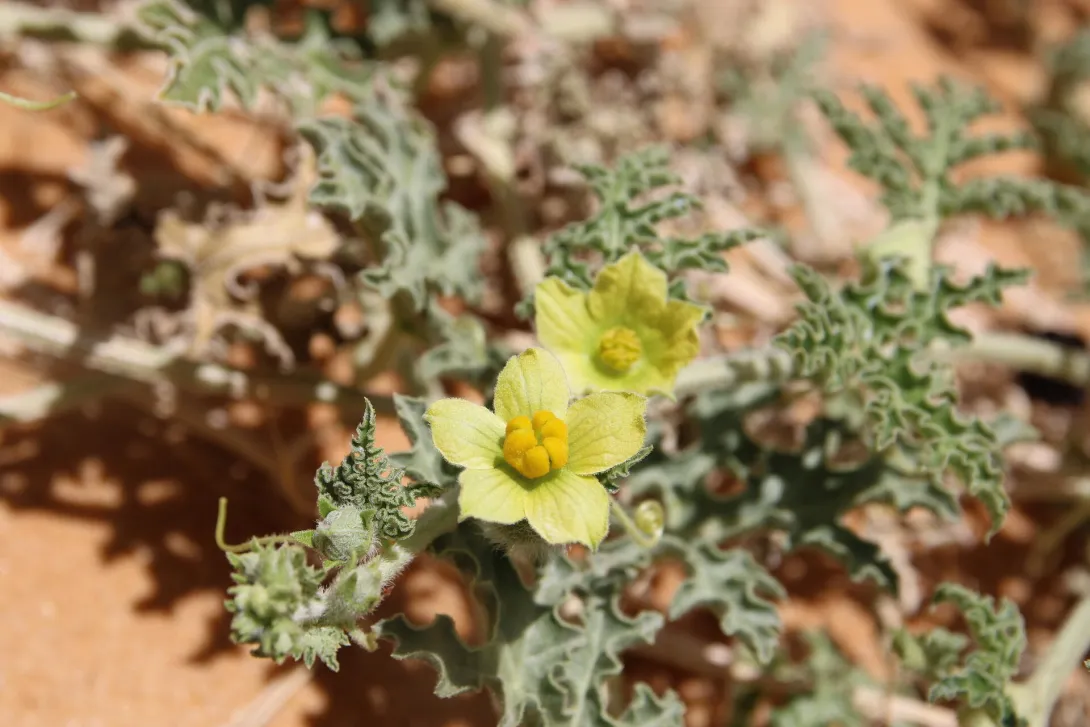
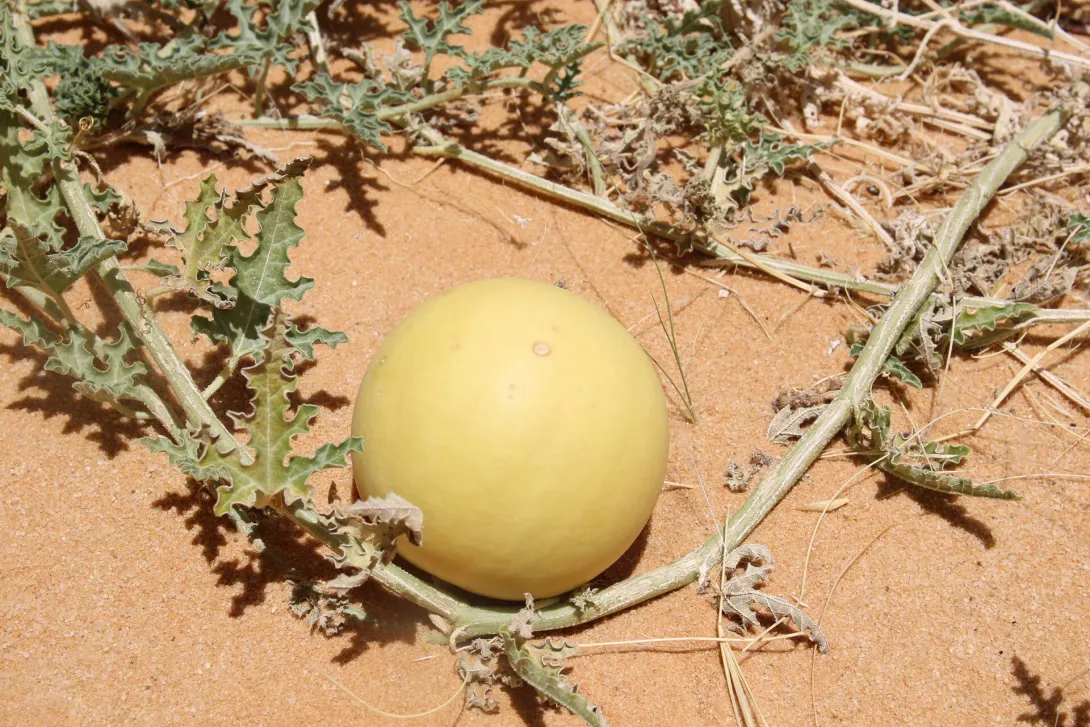
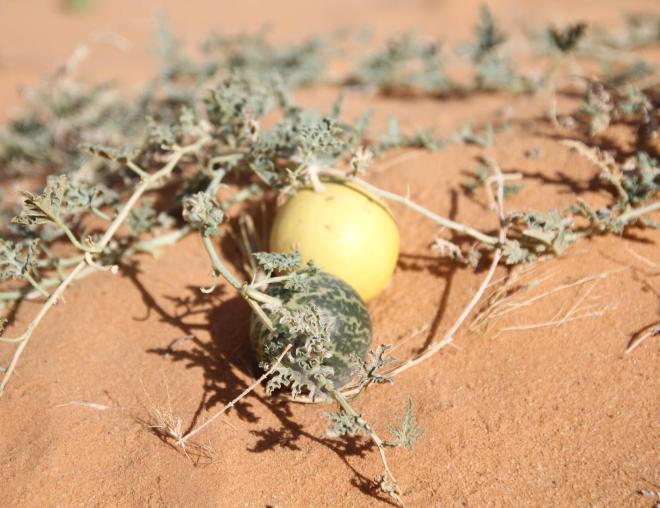
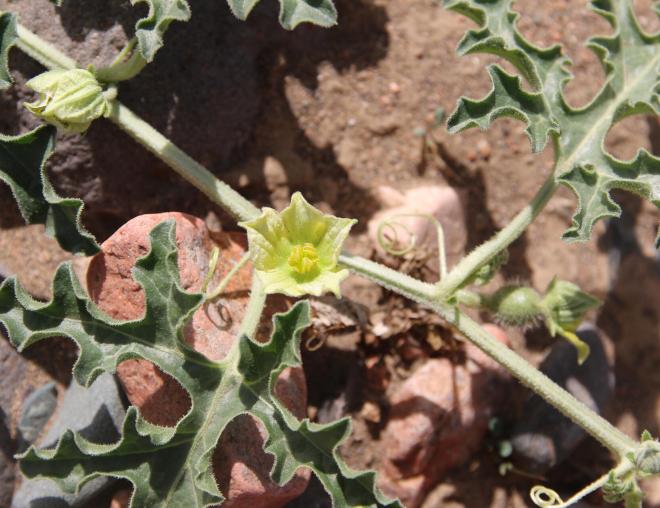
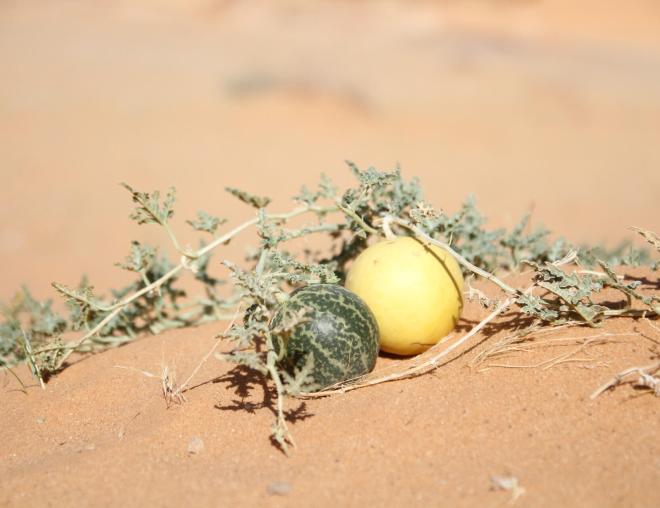
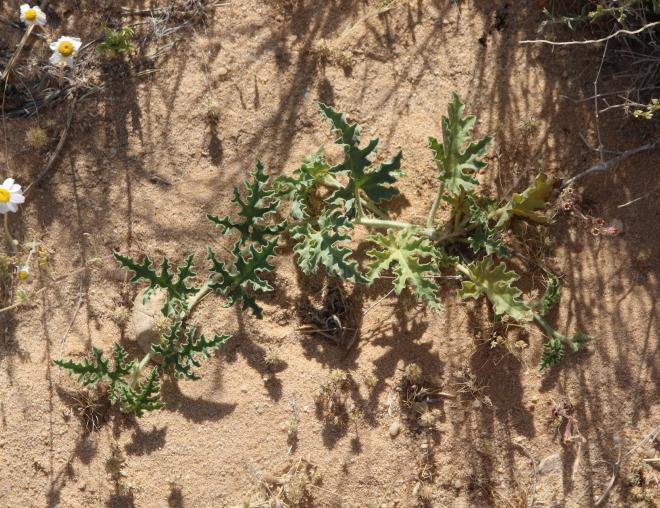
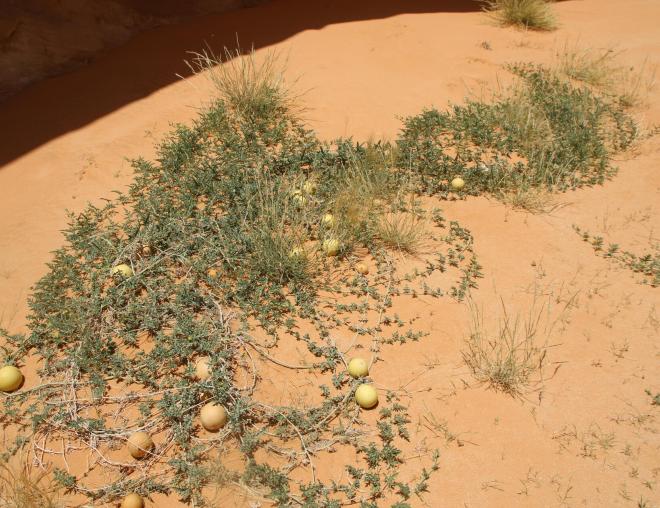
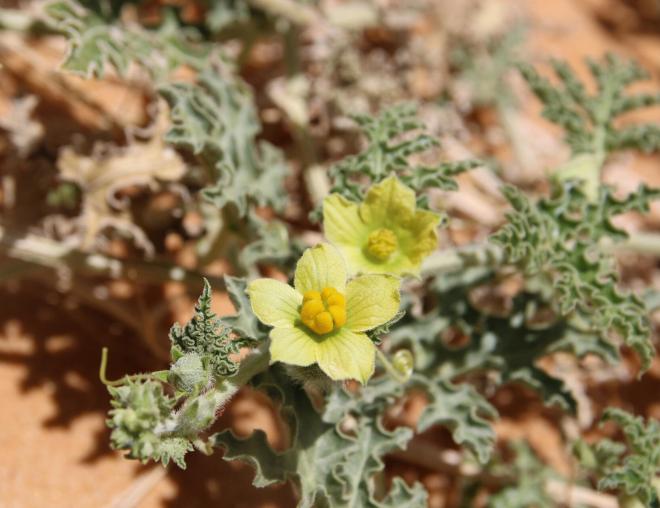
Perennial, spreadinggly branched herb with usually rigid scabrid-raspy branches and leaves. Tendrils simple, usually unbranched. Leaves petiolate, lamina up to 12 x 6 cm, pinnately 3-5-lobed lobulate with somewhat involute margins, base deeply cordate. Female flowers on up to 3.5 cm long pedicels, ovary hairy. Fruit globose, up to 10 cm across, longitudinally green-striped when young, smooth and uniformly pale yellow at maturity. On drying up, these become very light rattling balls rolling around on the ground or carried away by water.
- Growth Form
-
Description
-
Habitat and Distribution
- Habitat
-
Geographical Distribution Range
This Saharo-Arabian is distributed across Sahara, Middle East and Indian subcontinent. Within the Arabian Peninsula, it is native to Jordan, Saudi Arabia, Kuwait, Gulf States, Oman, Yemen, and Socotra.
-
Ecology
-
Phenology
JanFebMarAprMayJunJulAugSepOctNovDecFloweringFructification
- Origin
-
IUCN Red List Category
 Not Evaluated
-
Remarks
Colocynth is widespread in arid regions, particularly in degraded or overgrazed areas as t is not aappreciated by livestock. Its large ball-like, rolling fruits disperse numerous seeds, allowing the species to spread easily across desert landscapes. One plant can produce between 40 to 60 fruit per season.
-
Phenology
-
Uses and Values
-
Aromatic and Medicinal Use
Medicinal use
-
Other Usages
Palatable; Edible for birds
-
Description of Traditional Uses
A well-known ethnobotanical species used for centuries in traditional medicine as a purgative and to treat various ailments, including rheumatism and skin infections. The seeds are sometimes consumed, and the plant serves as a source of fodder for camels and livestock.
-
Aromatic and Medicinal Use
Gallery