Vachellia tortilis subsp. raddiana (Savi) Kyal. & Boatwr.
سمر
Syn. Acacia raddiana Savi (1830)
Twisted Acacia
Fabaceae
1 / 3
-
Morphological Description
-
Description
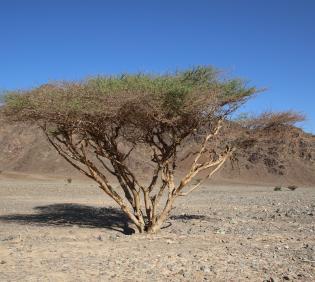
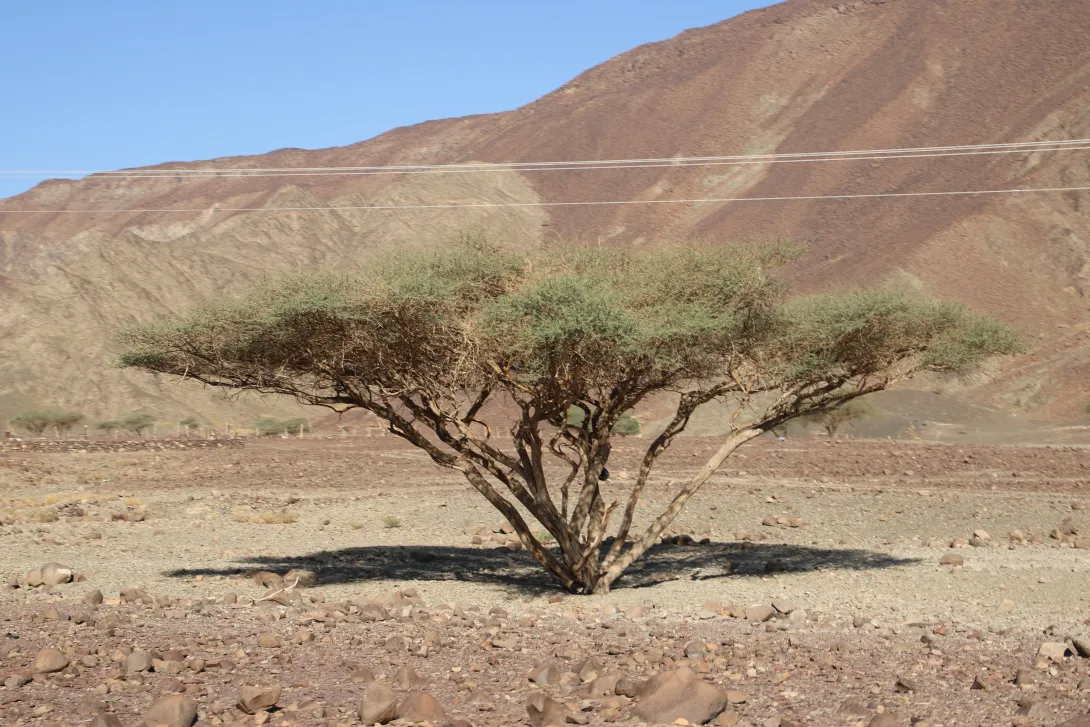
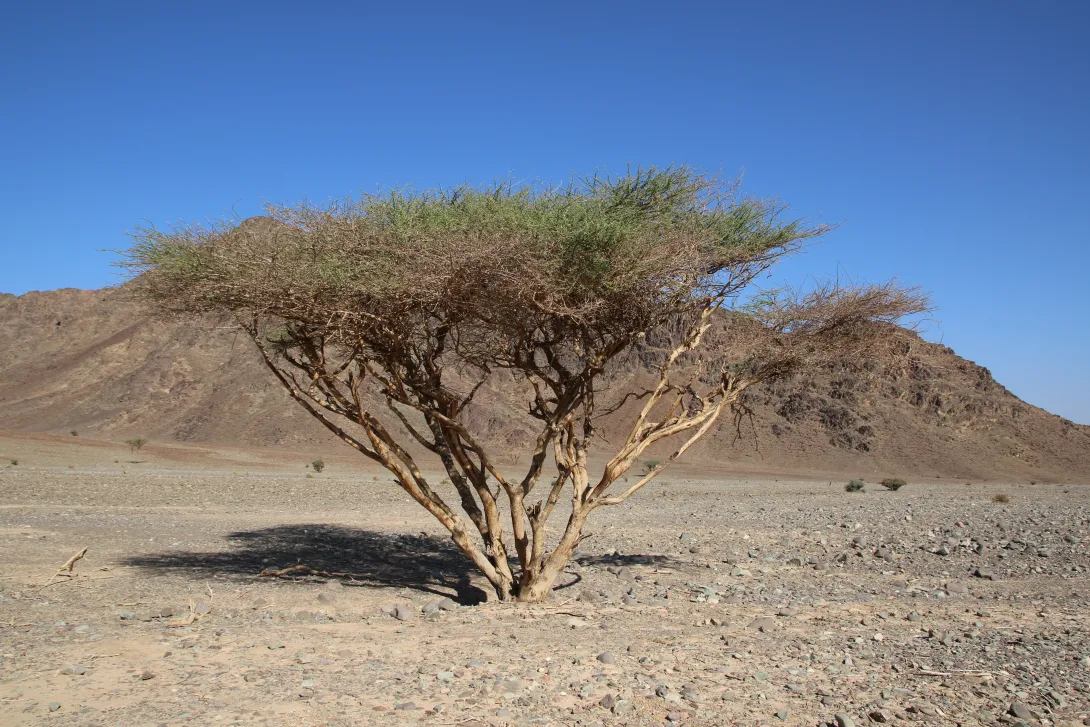
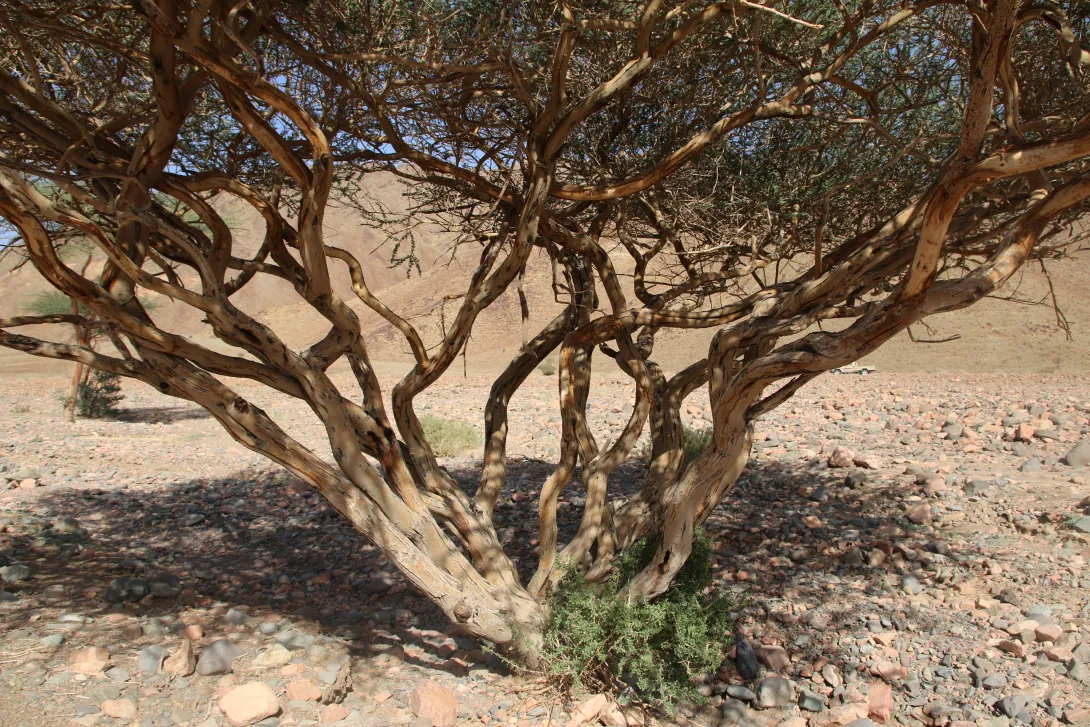
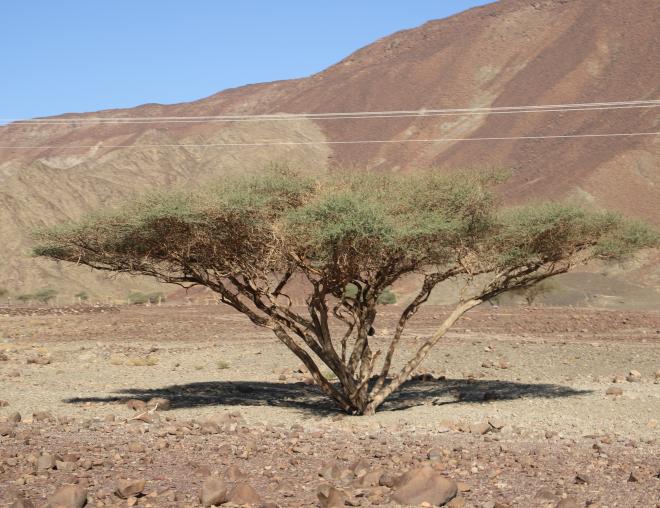
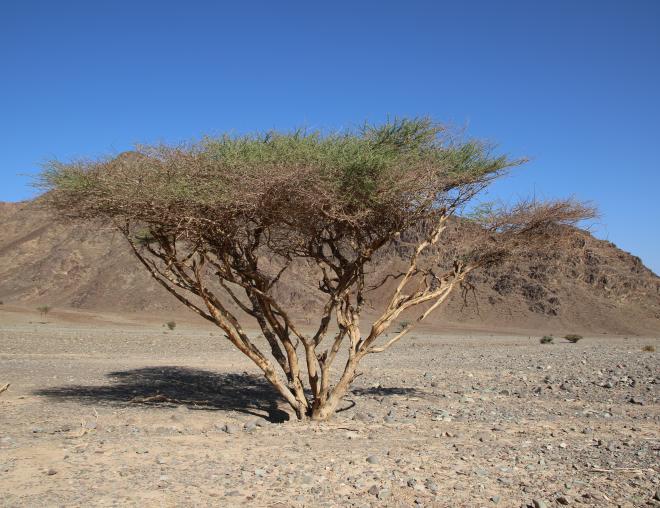
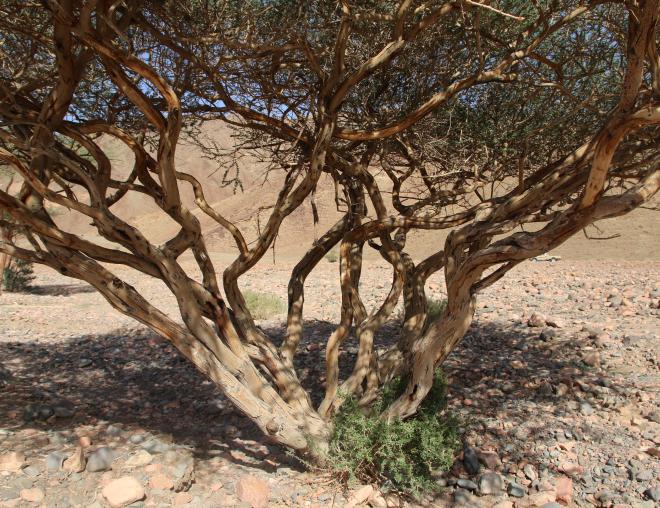
Small to tall tree with rounded canopy. Bark reddish brown to red. Stipular spines of two kinds, large straigth and small hooked. Leaves glabrous with 2-6 pinna pairs with a small gland under each pair, leaflets 5-12 pairs, glabrous to almost so. Flowers heads pale yellow, about 8 mm accross, clustered; peduncles up to 12 mm long with the involucel near the base. Pods spirally contorted or twisted, glabrous, prominently veined, more or less torulose, up to 12 cm x 8 mm.
- Growth Form
-
Description
-
Habitat and Distribution
- Habitat
-
Geographical Distribution Range
This Sudanian sub-species is widely distributed. It occurs throughout the North of Africa to the Arabian Peninsula where it is recorded as native in Jordan and Saudi Arabia. The species has also been introduced to India, Madagascar, Pakistan.
-
Ecology
-
Phenology
JanFebMarAprMayJunJulAugSepOctNovDecFloweringFructification
- Origin
-
IUCN Red List Category
 Least Concern
-
Remarks
Identifying the different species of Vachellia is often challenging in the field, as morphological characteristic used for identification can be variable between individuals, not always visible, and the species may be confused—especially since AlUla County lies in a contact zone where the ranges of several species overlap. Habitat characteristics and field experience can help identification, but these taxa remain difficult to distinguish (one single local species name can refer to several species).
-
Phenology
-
Uses and Values
-
Aromatic and Medicinal Use
Medicinal use
-
Other Usages
Palatable; Edible for birds; Melliferous
-
Description of Traditional Uses
Highly valued for shade, fuelwood, charcoal, and as a source of fodder (pods/foliage) for livestock. Various parts (gum, bark, leaves) are utilized in traditional medicine for digestive and inflammatory conditions.
-
Aromatic and Medicinal Use
Gallery