Cymbopogon schoenanthus (L.) Spreng.
صخرا، ادخر،ـ حمره
Syn. Andropogon schoenanthus L.
Camel Grass
Poaceae
1 / 8

-
Morphological Description
-
Description
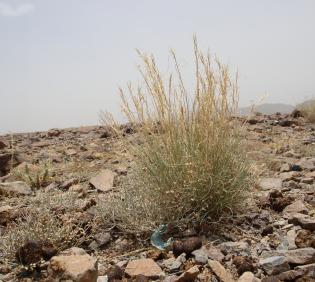
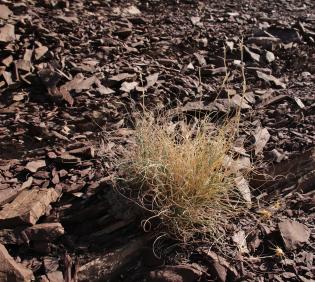
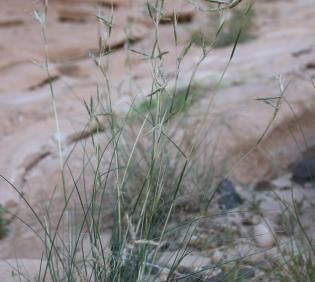
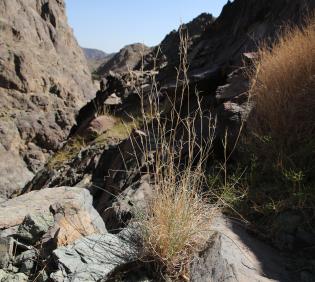
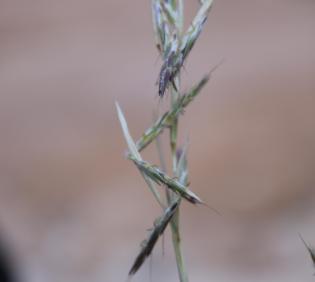
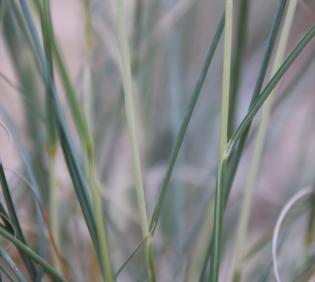
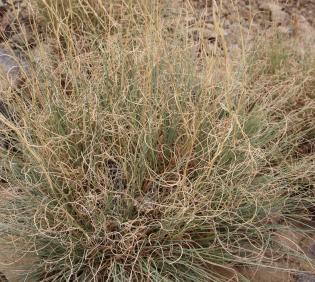
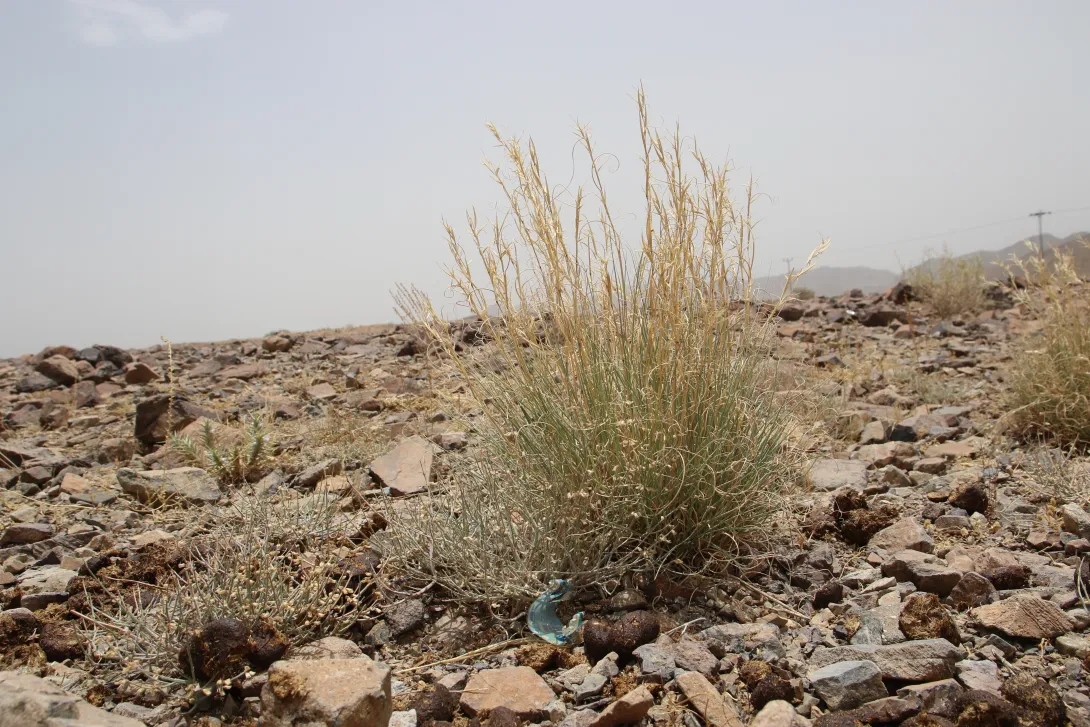
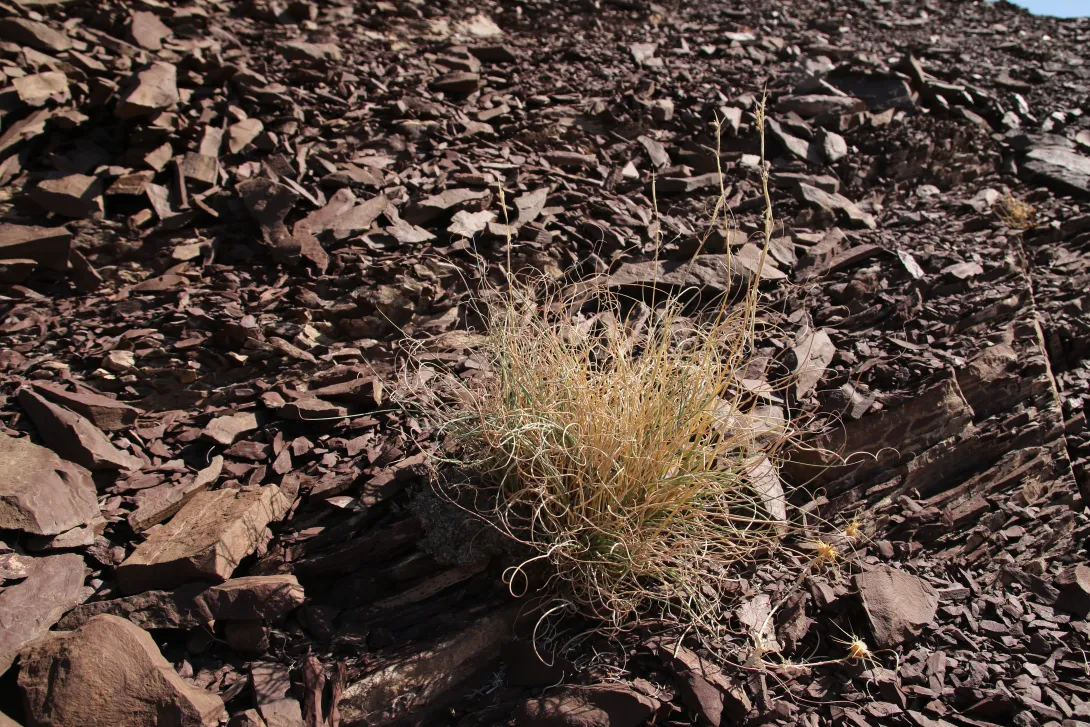
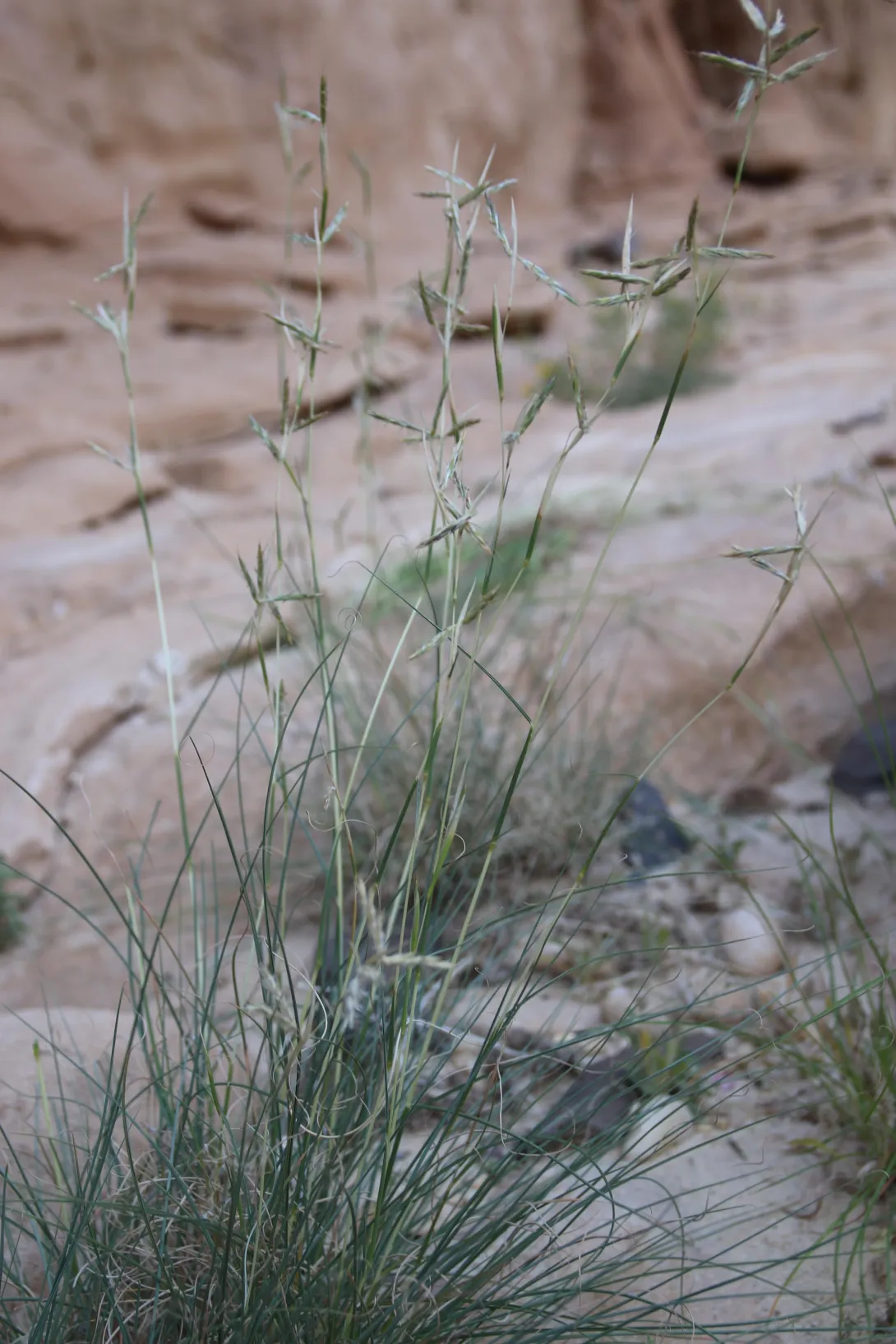
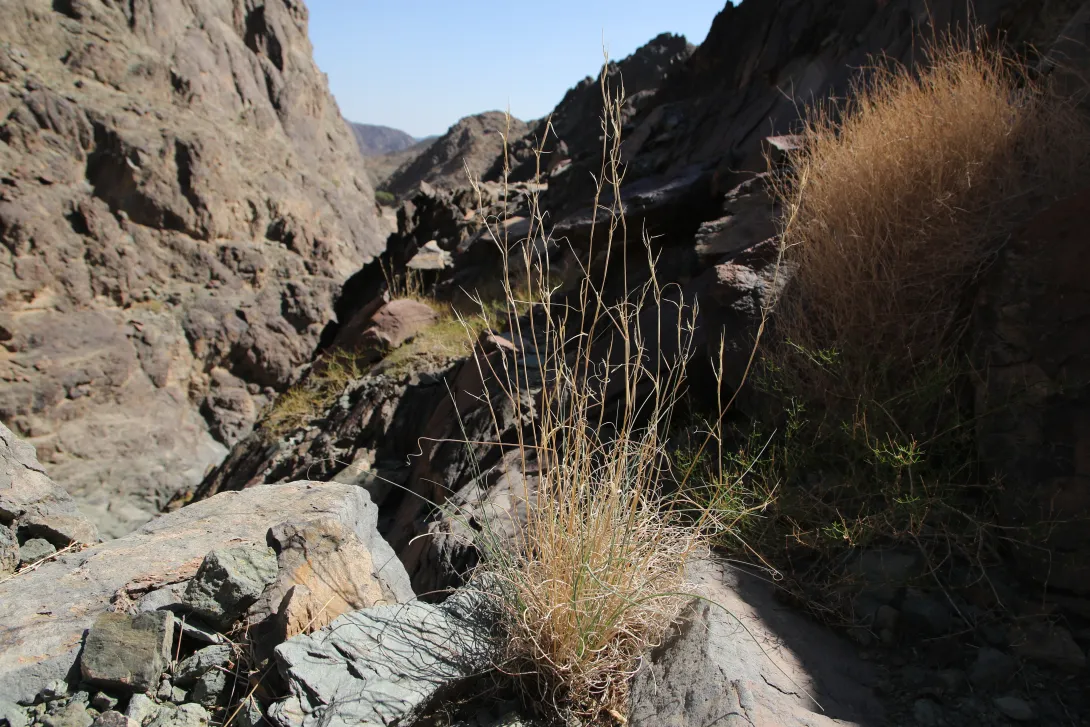
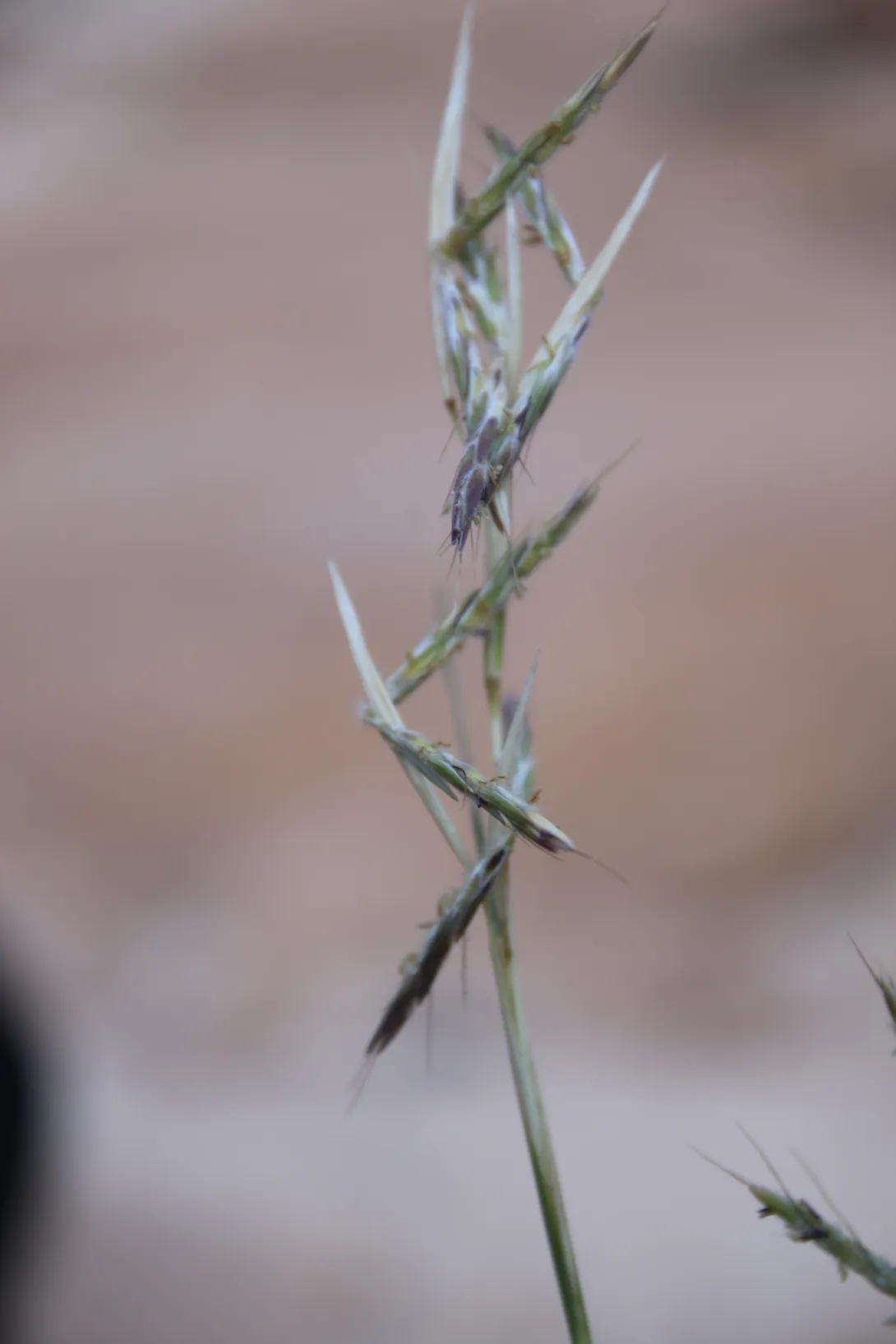
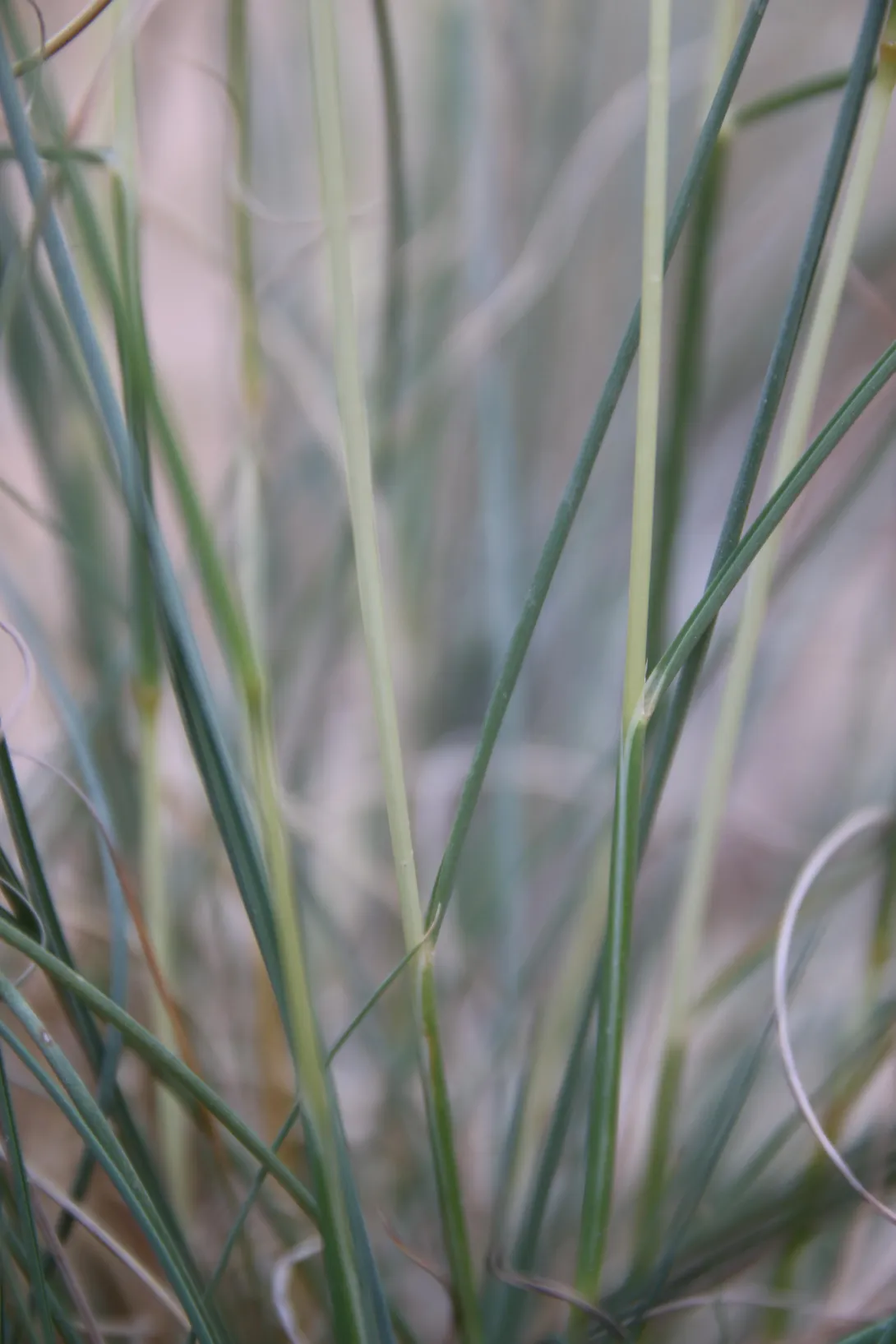
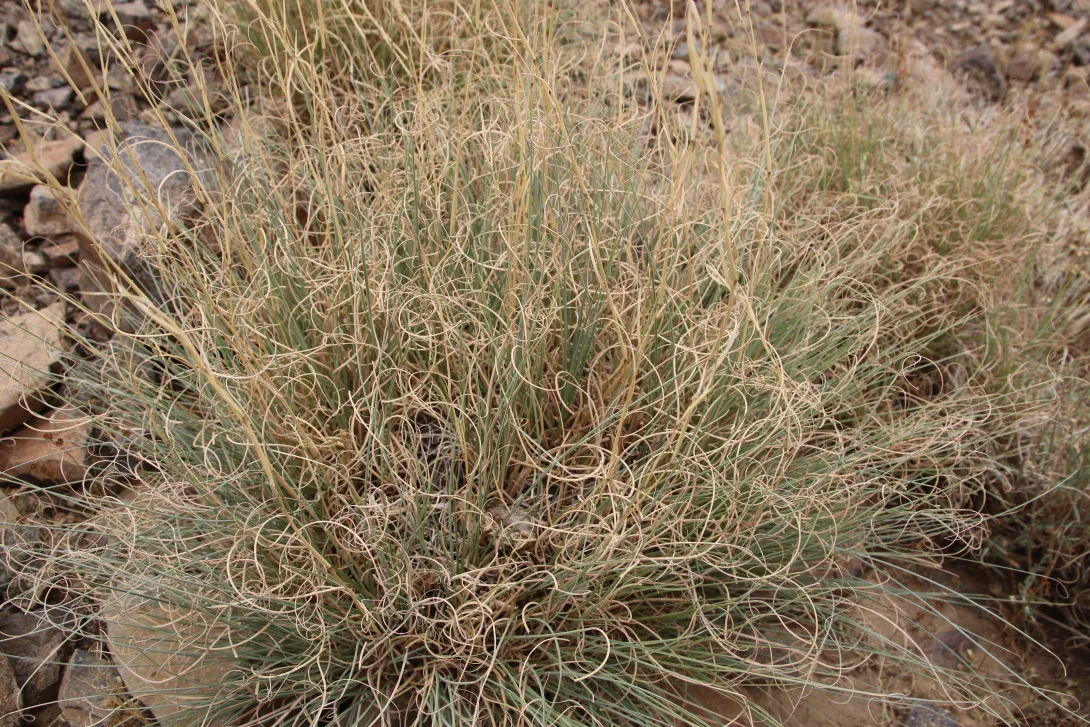
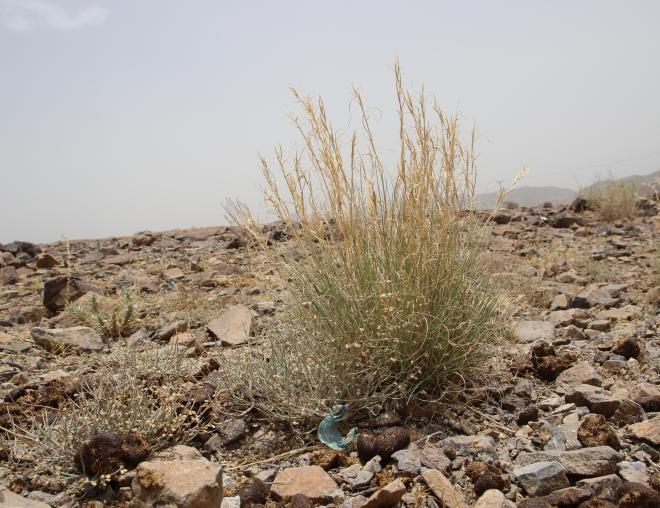
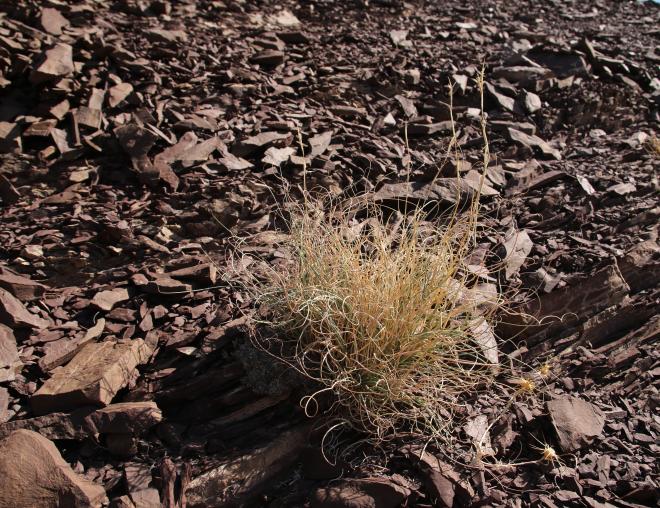
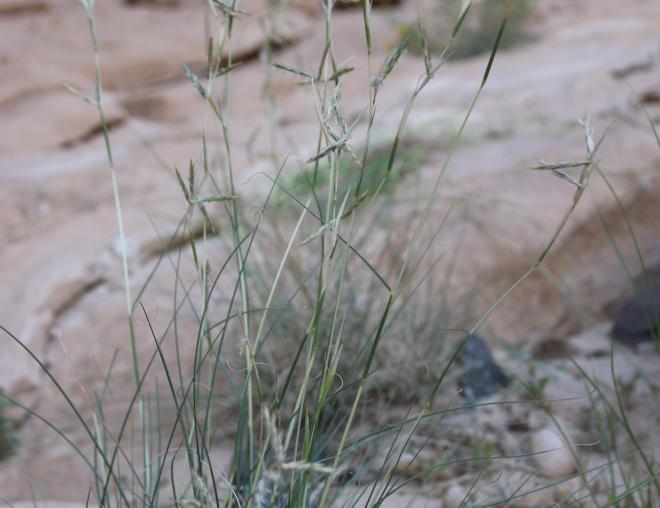
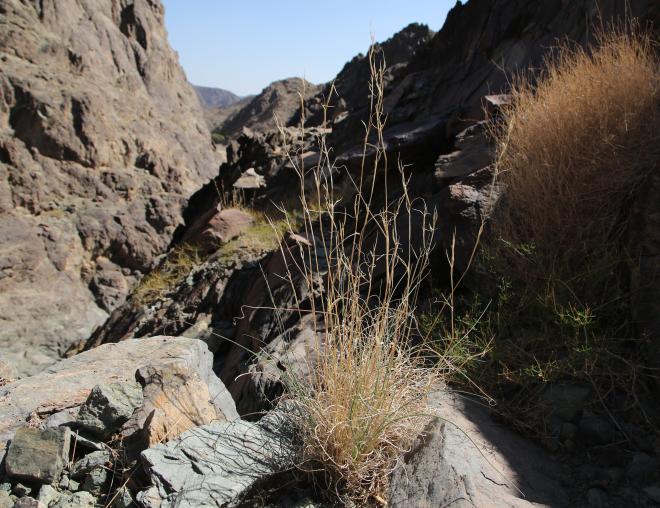
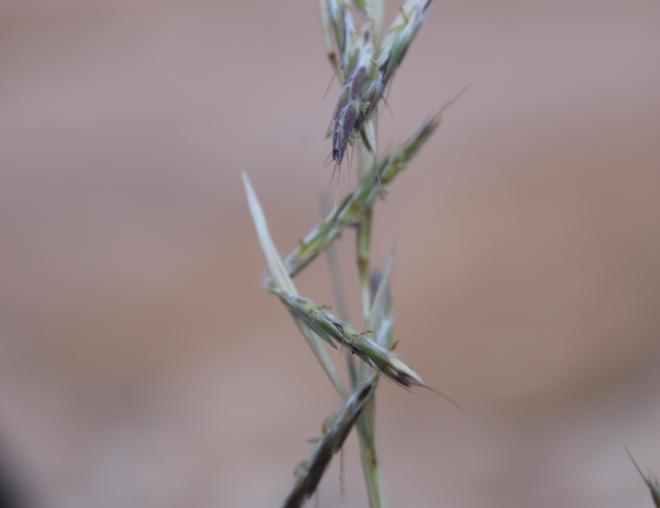
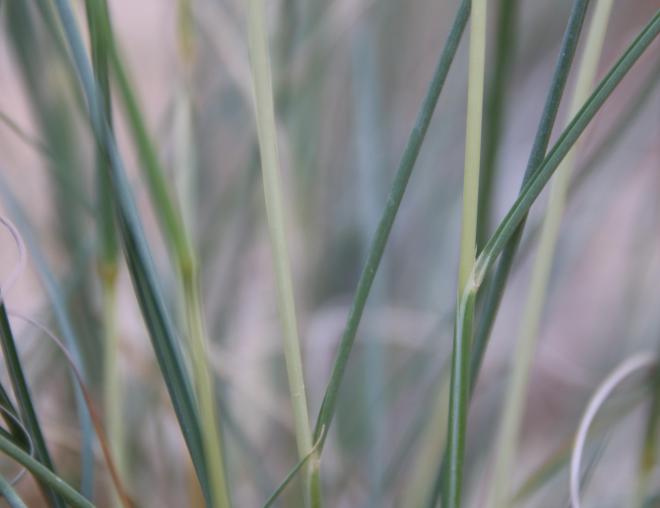
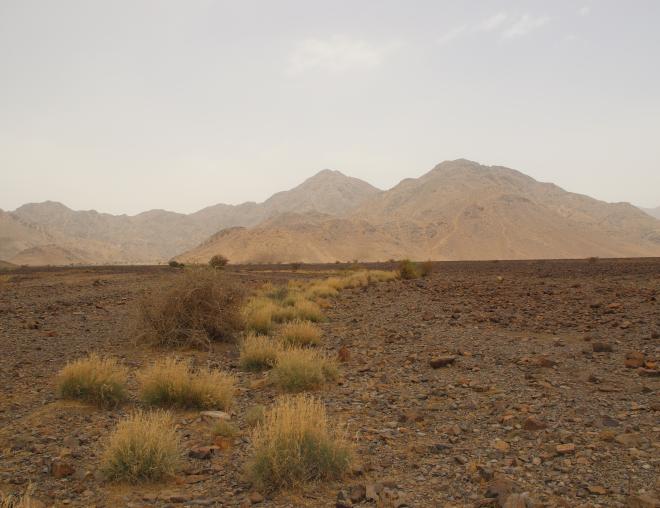
Perennial, tufted, robust, and erect aromatic grass reaching up to 1 m in height. Leaves are narrow, filiform to flat, slightly twisted, up to 35 cm long and 1–4 mm wide, with a triangular, membranous ligule and an attenuate base. When crushed, the green leaves and stems emit a mild lemony scent. The inflorescence is a loose, open false panicle, consisting of pairs of widely spaced, spikelet-like clusters arranged in a distinctive V-shape, emerging from the axils of spathe-like sheaths. The lowermost pedicel is swollen and barrel-shaped, with racemes typically deflexed at maturity and borne on subequal, flattened raceme-bases. Spikes are densely woolly, with hairs measuring 2–4 mm in length. At maturity, each fertile spikelet detaches along with a segment of the rachis beneath it, which is enclosed in long, bristly hairs that aid in wind dispersal.
- Growth Form
-
Description
-
Habitat and Distribution
- Habitat
-
Geographical Distribution Range
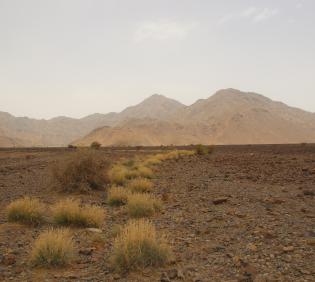
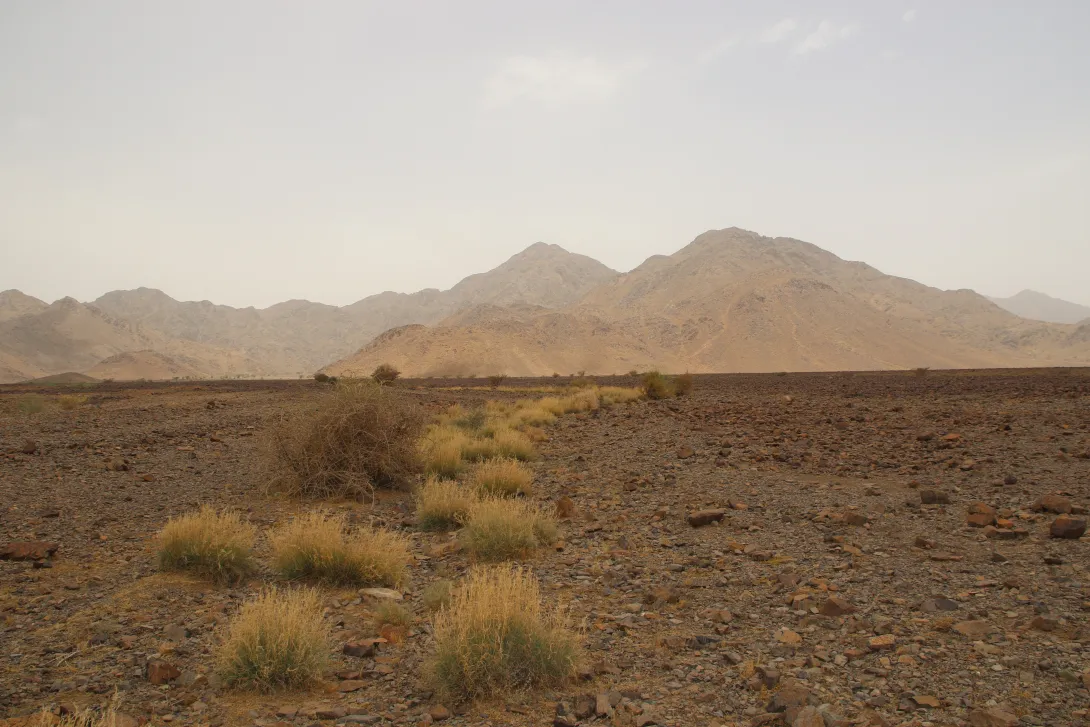
This Saharo-Arabian species is distributed from Sahara, Middle East and to Kenya and Iran to the East. For Arabian Peninsula, it is native to Jordan, Saudi Arabia, Gulf States, Oman and Yemen.
-
Ecology
-
Phenology
JanFebMarAprMayJunJulAugSepOctNovDecFloweringFructification
- Origin
-
IUCN Red List Category
 Not Evaluated
-
Remarks
Camel Grass is characterized by its fragrant, lemongrass-scented foliage. Phytochemical studies have been conducted on this species to identify aromatic compounds with potential applications in perfumery. It is known as Camel Grass because it is rarely grazed by dromedaries, allowing it to become abundant in overgrazed areas. This species is divided into two subspecies seprarated by the Sahara: Cymbopogon schoenanthus subsp. schoenanthus (L.) Spreng., which is the only subspecies found in Saudi Arabia, and Cymbopogon schoenanthus subsp. proximus (Hochst. ex A.Rich.) Maire & Weiller, which occurs exclusively on the African continent.
-
Phenology
-
Uses and Values
-
Aromatic and Medicinal Use
Aromatic usages; Medicinal use
-
Other Usages
Palatable
-
Description of Traditional Uses
Highly valued for its strong aromatic properties. It is used traditionally in teas, as an infusion to treat digestive issues, and for its scent in household applications.
-
Aromatic and Medicinal Use
Gallery