Euphorbia retusa Forssk.
الأمطي / الغزال
Syn. Euphorbia kahirensis Raeusch.
Cairo Spurge
Euphorbiaceae
1 / 7

-
Morphological Description
-
Description
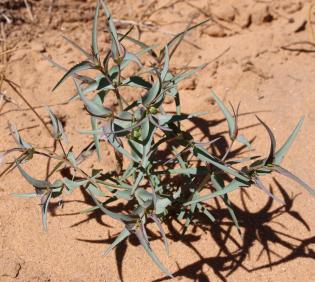
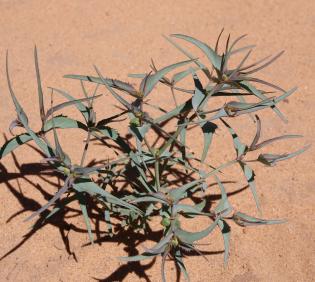
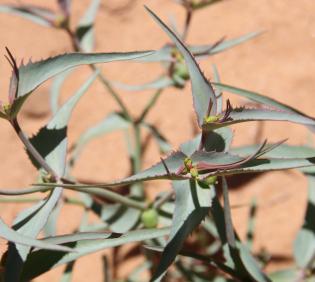
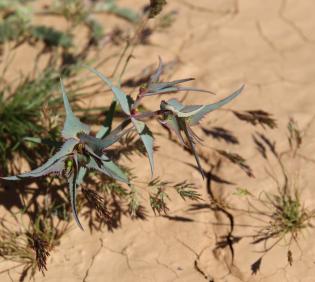
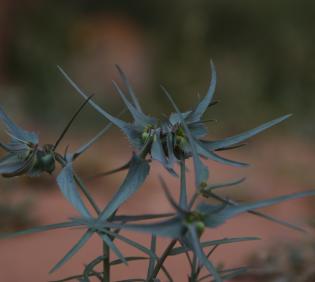
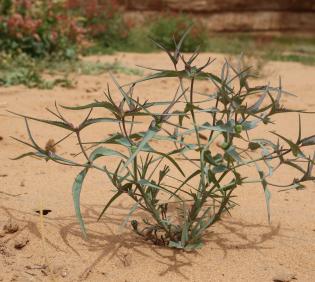
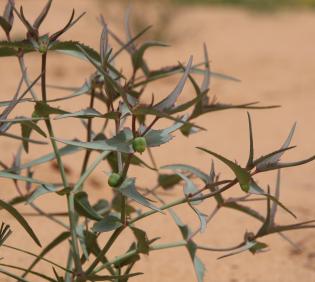
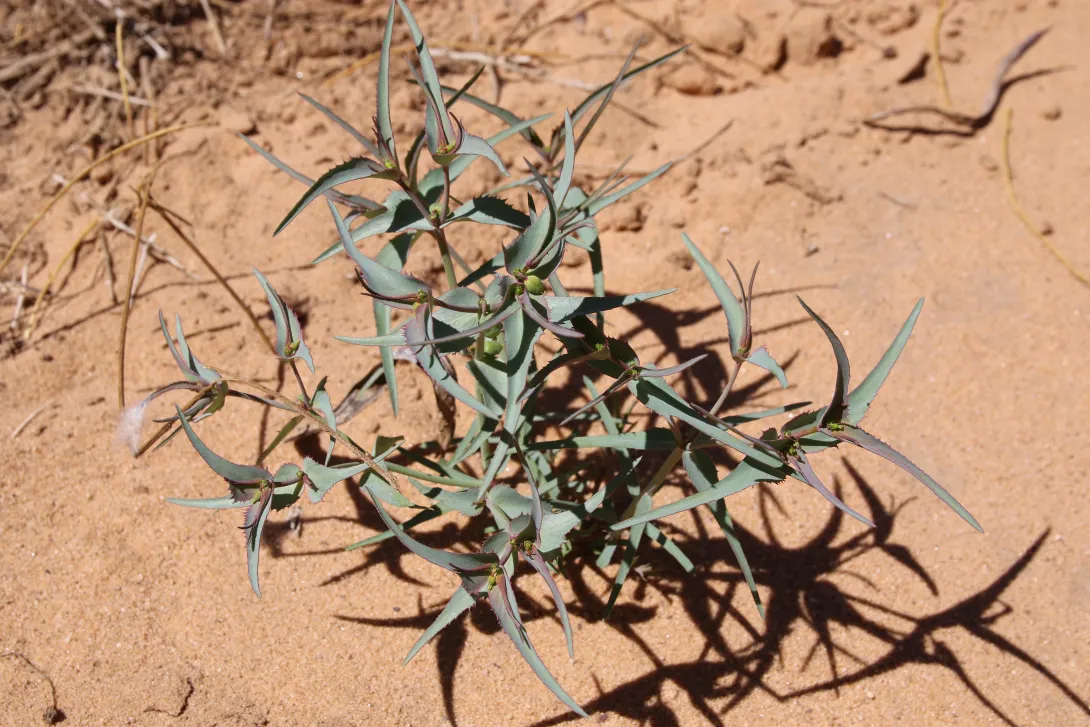
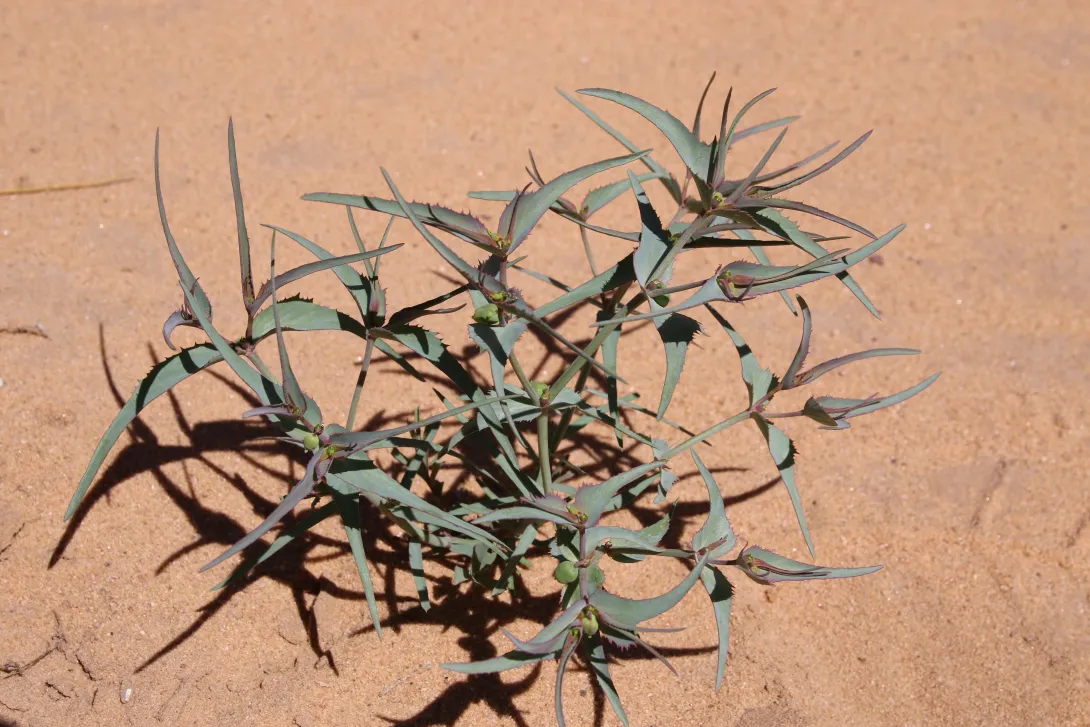
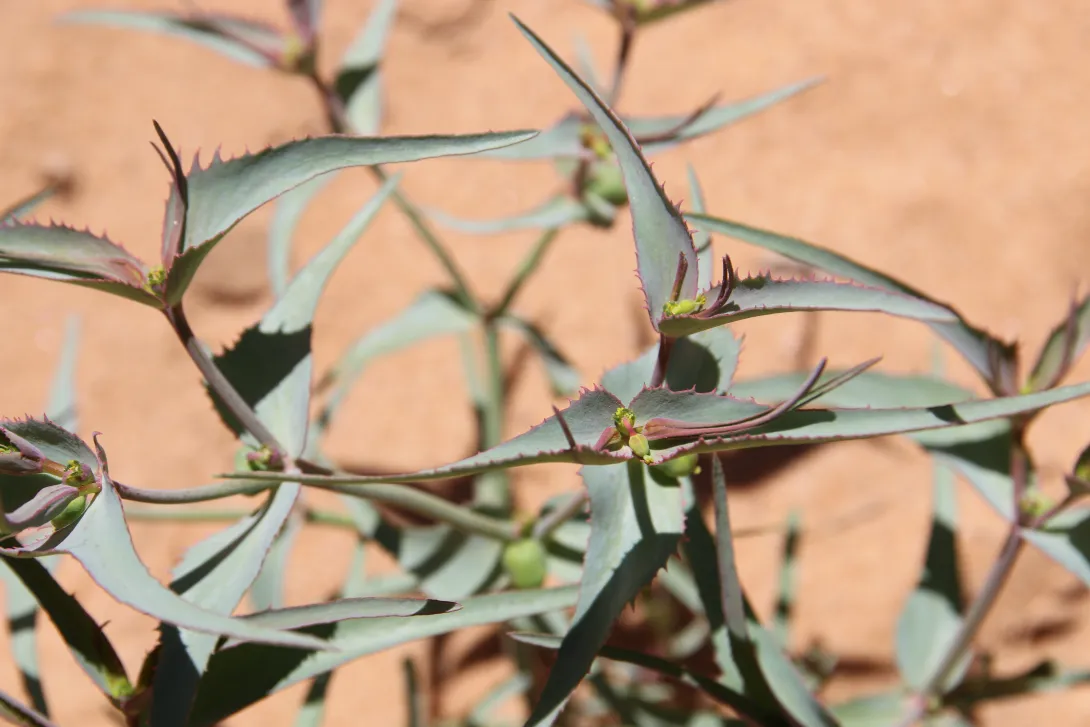
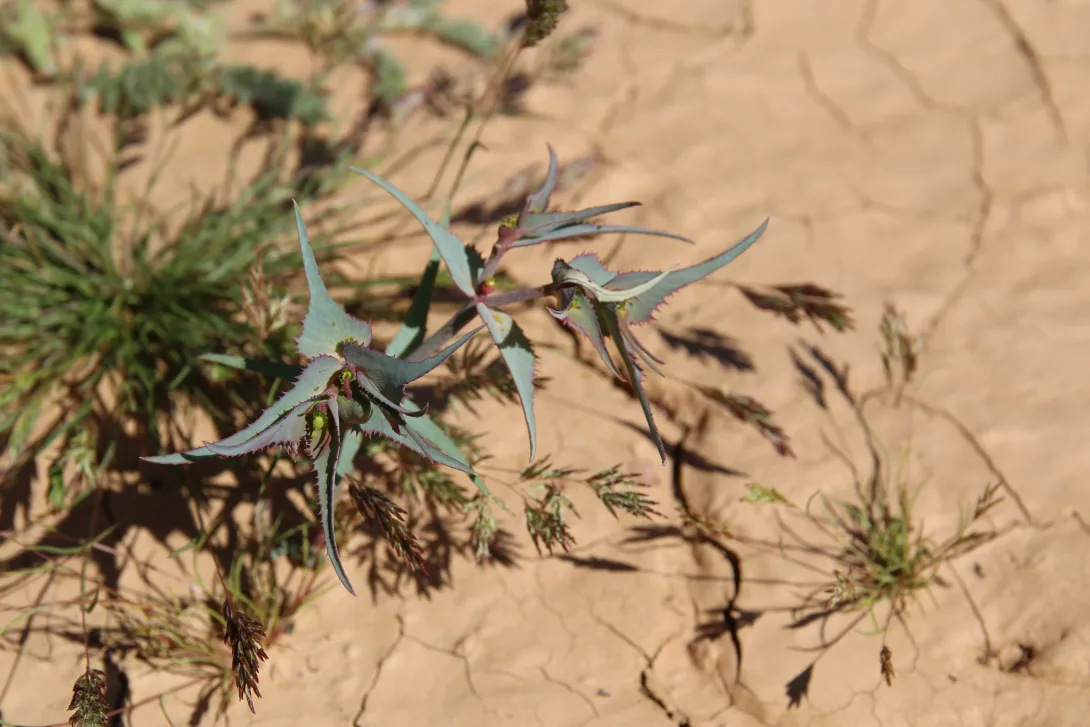
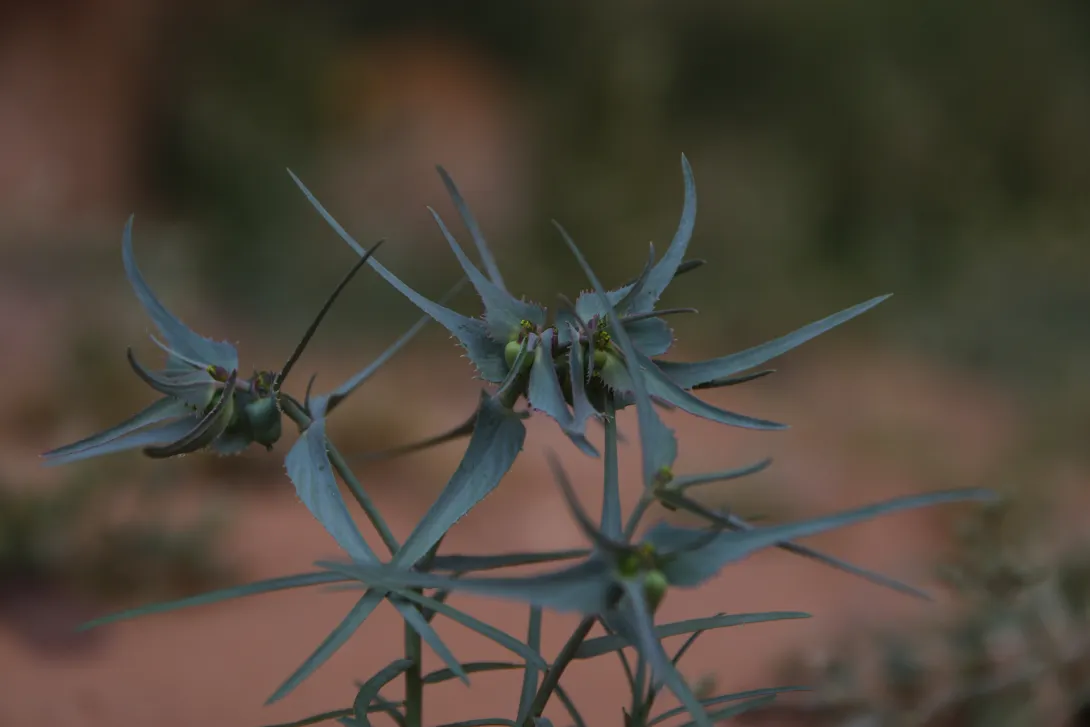
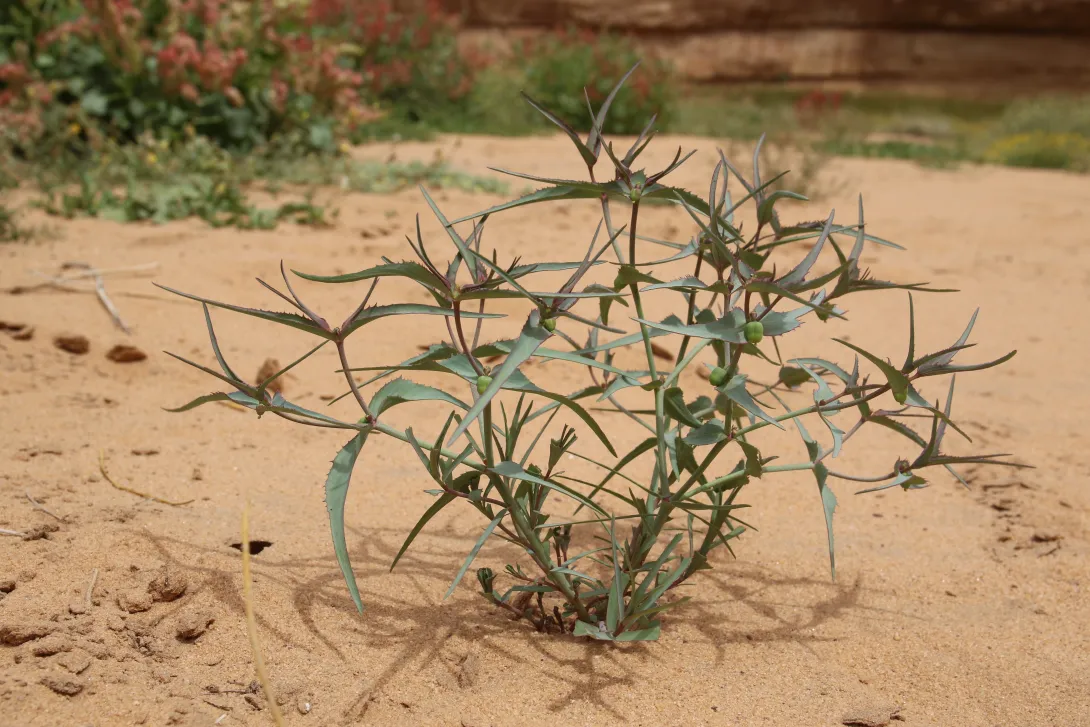
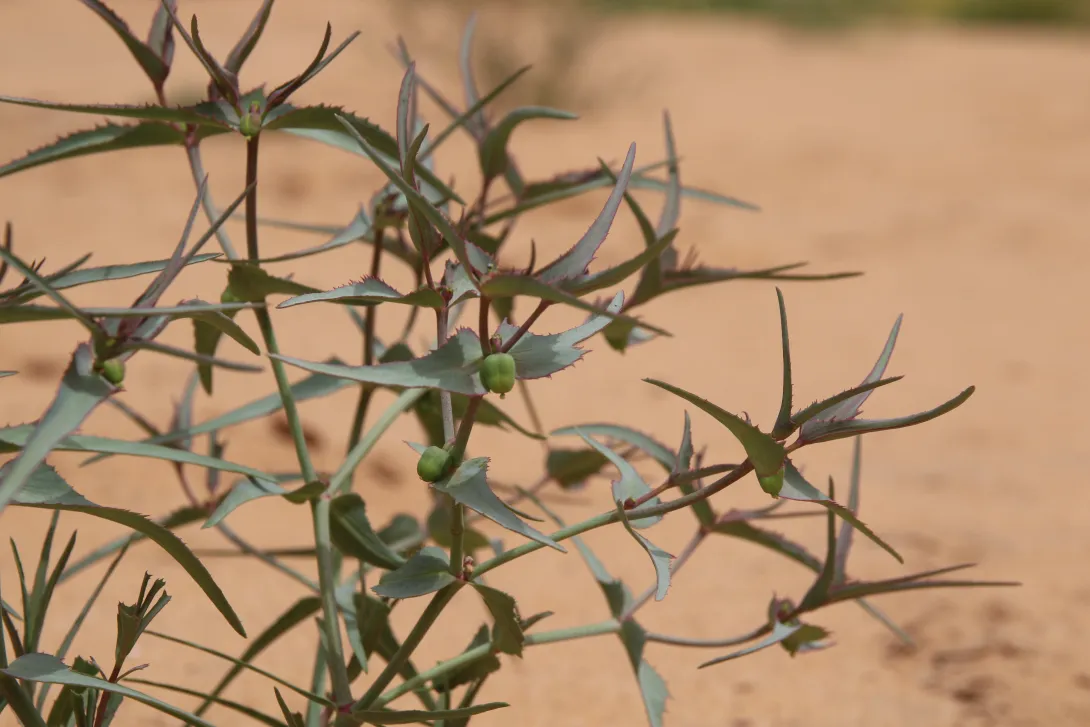
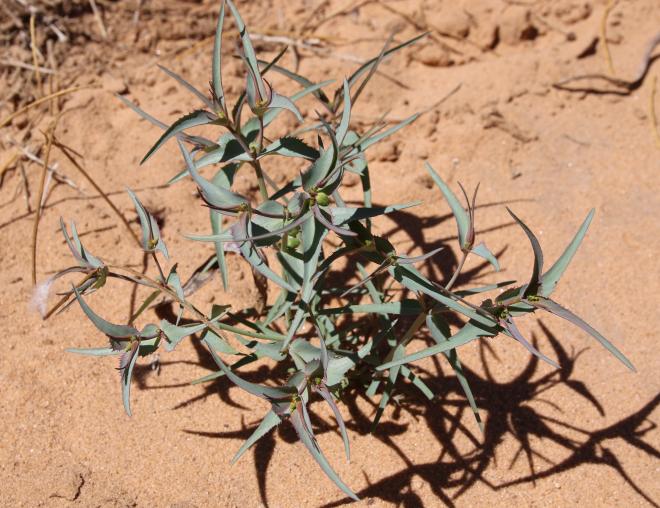
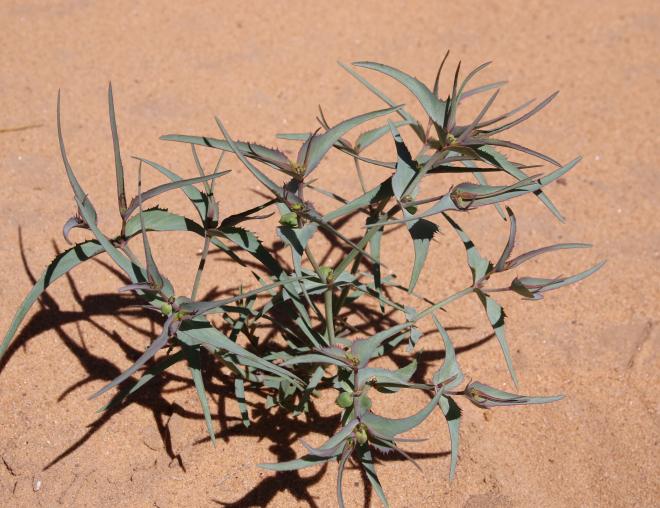
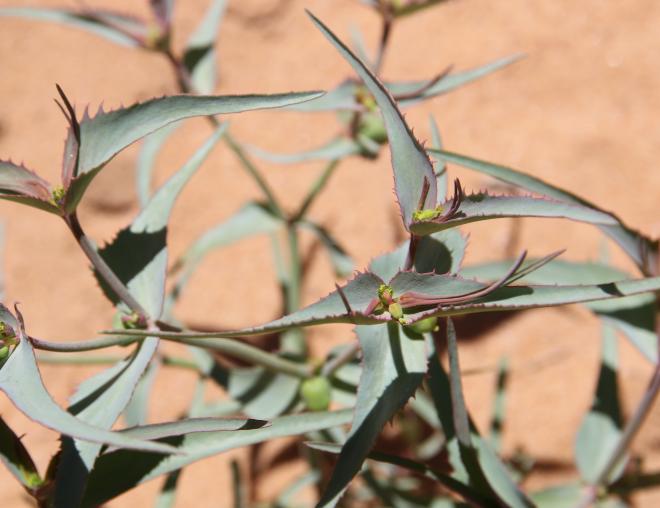
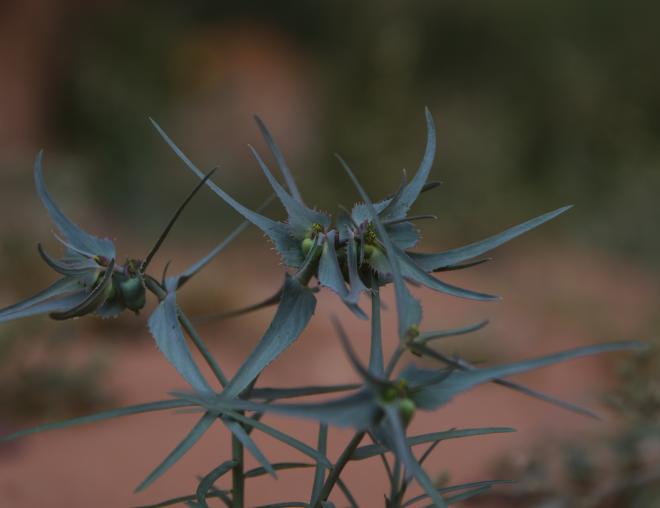
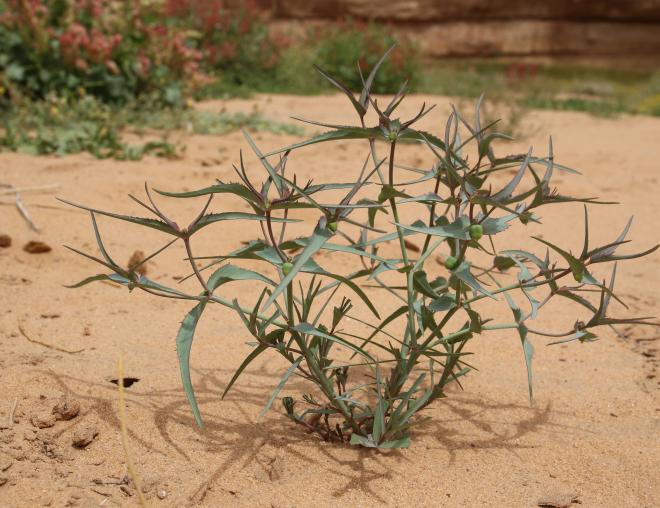
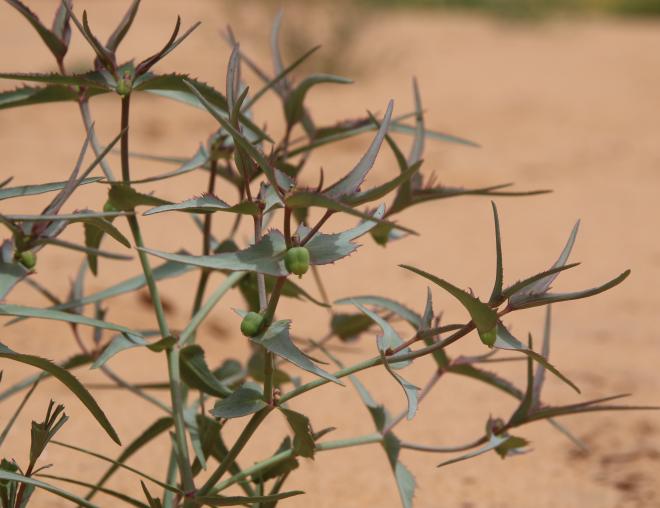
Annual, glabrous, glaucous, herb, 10-60 cm tall with. Branches often reddish. Leaves sessile, exstipulate, bluish-green; cauline leaves alternate, linear-oblong, rounded or a little clasping at base, acute or truncate, 2-3-dentate at apex, usually entire, 1-5 x 0.5 cm; umbel and floral leaves opposite, broad and cordate at base, long acuminate and usually recurved at apex, pectinate-serrate, broadly ovate, 1-2 x 0.5-1.5 cm. Cymes forked, pseudoumbels 3-rayed; cyathia pedicellate, glands 2-4, entire or weakly 2-horned; bracts fringed. Capsule ovoid, obscurely 3-lobed, smooth, 5-6 mm long. Seeds smooth, ovoid, with fluted caruncle shorter than the seed or sometimes ecarunculate.
- Growth Form
-
Description
-
Habitat and Distribution
- Habitat
-
Geographical Distribution Range
This Saharo-Arabian species is distributed in Sahara and Middle East from Mauritania to Syria. Within the Arabian Peninsula, it is native to Jordan, Saudi Arabia, Kuwait and Gulf States.
-
Ecology
-
Phenology
JanFebMarAprMayJunJulAugSepOctNovDecFloweringFructification
- Origin
-
IUCN Red List Category
 Not Evaluated
-
Phenology
-
Uses and Values
-
Description of Traditional Uses
No specific documented uses were identified in accessible literature.
-
Description of Traditional Uses
Gallery