Cucumis prophetarum L.
مشط الذئب
Syn. Cucumis foetidus Salisb.
Wild cucumber, Globe Cucumber, Cypress
Cucurbitaceae
1 / 6

-
Morphological Description
-
Description
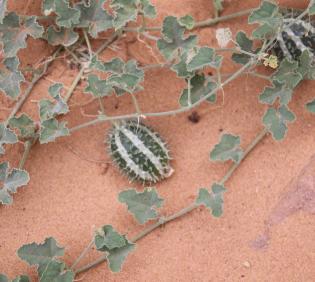
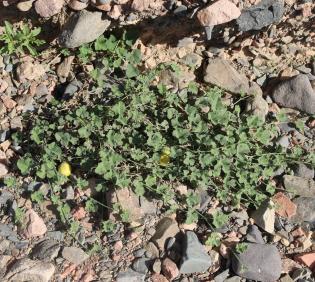
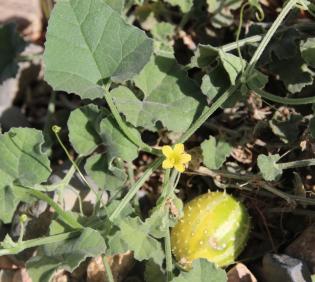
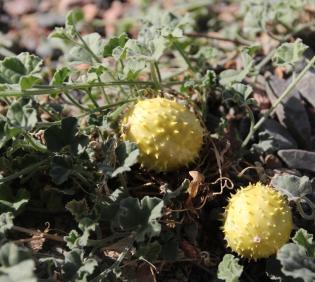
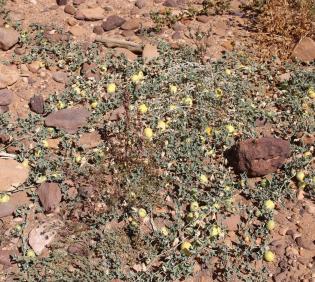
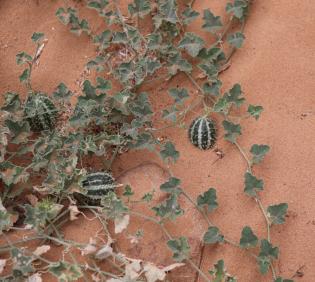
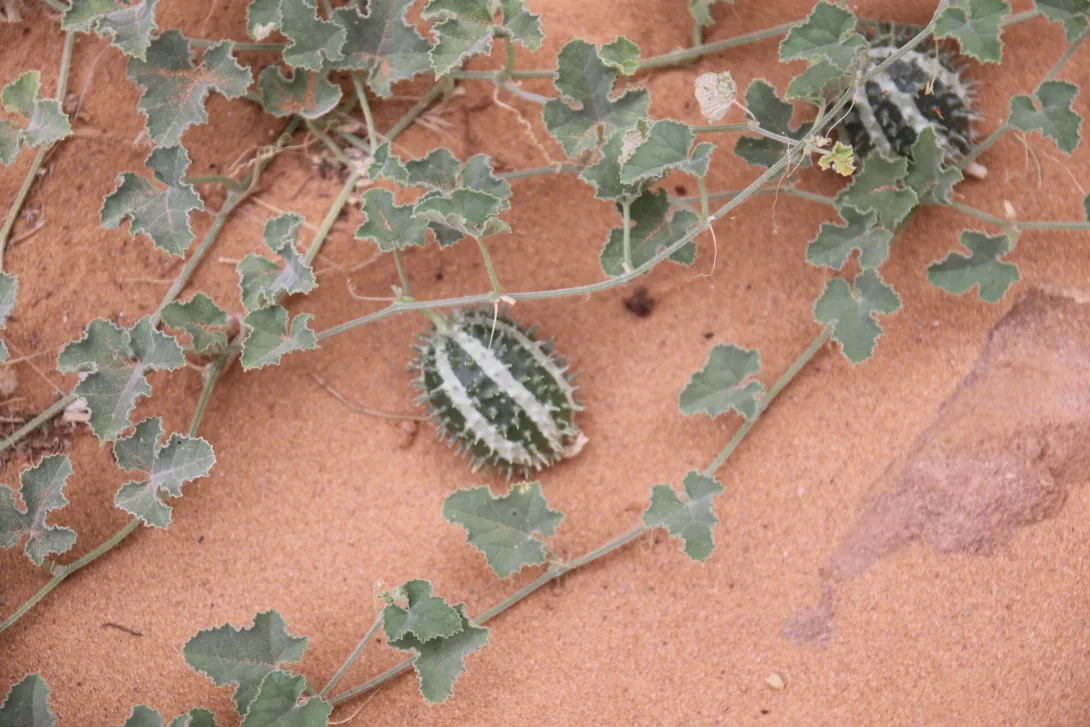
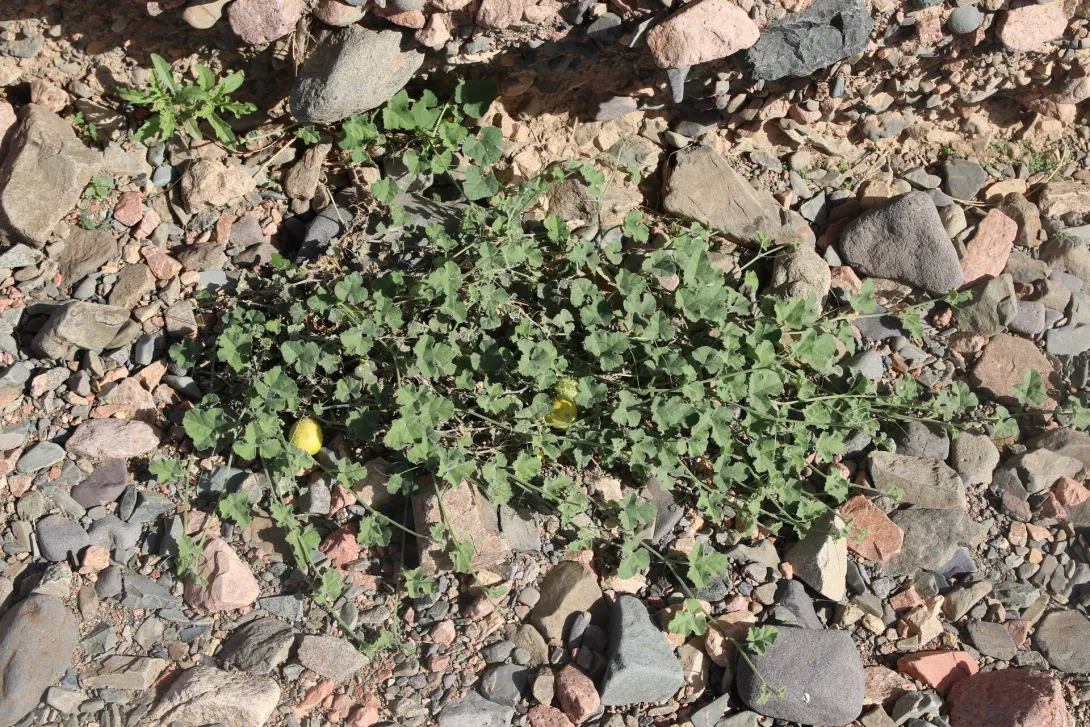
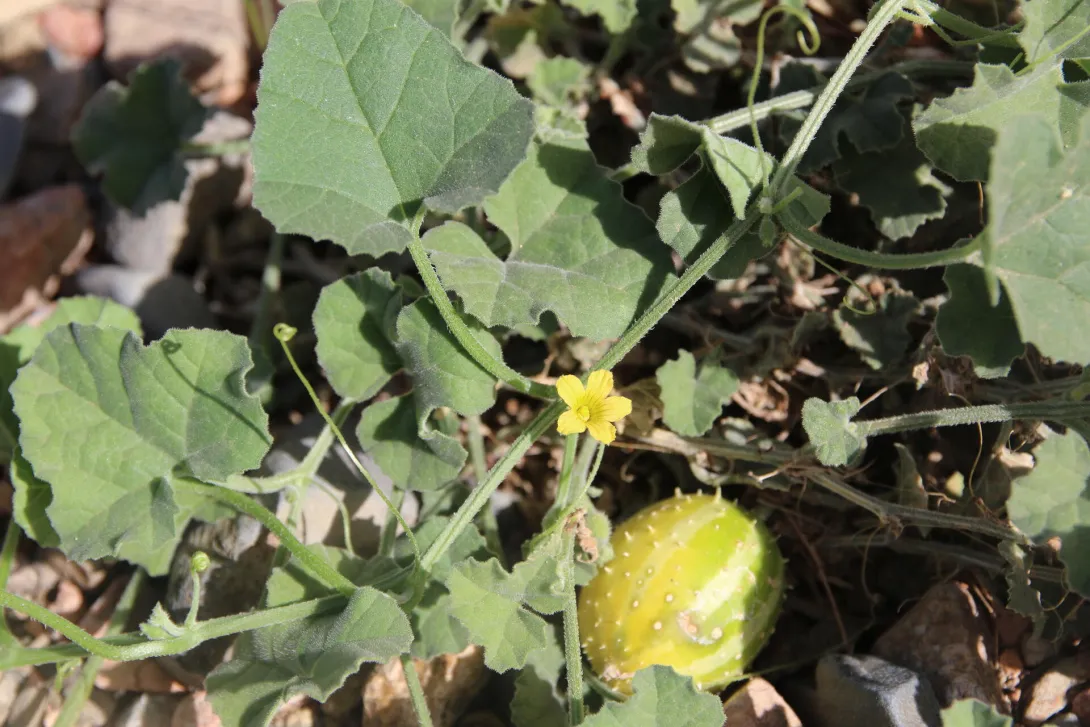
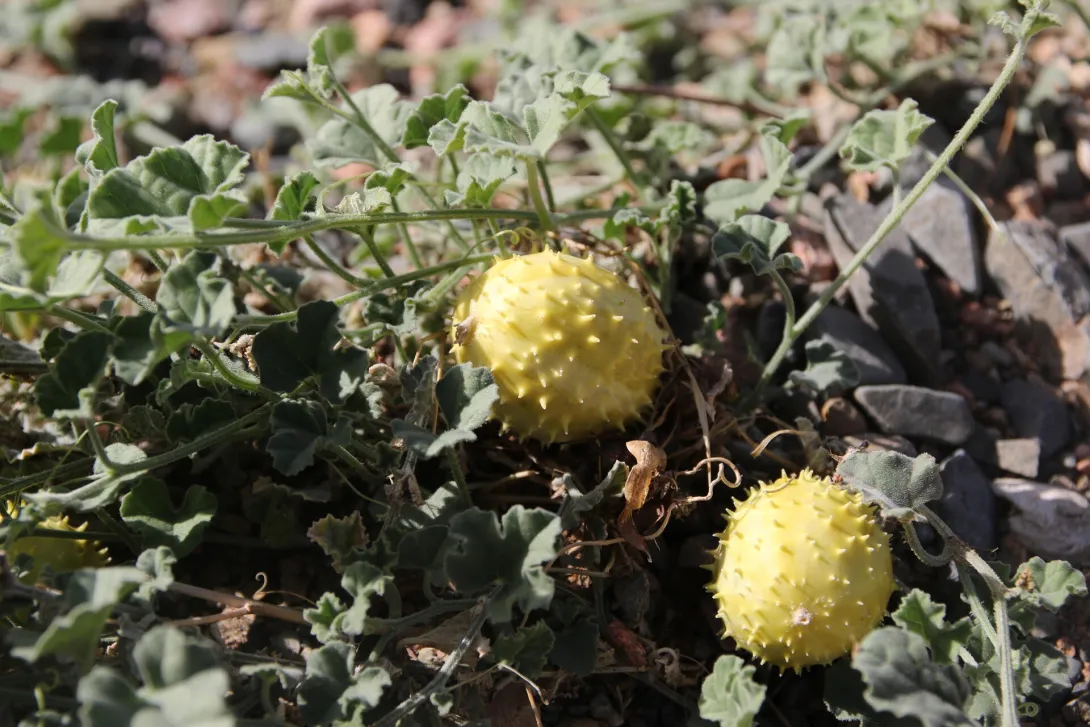
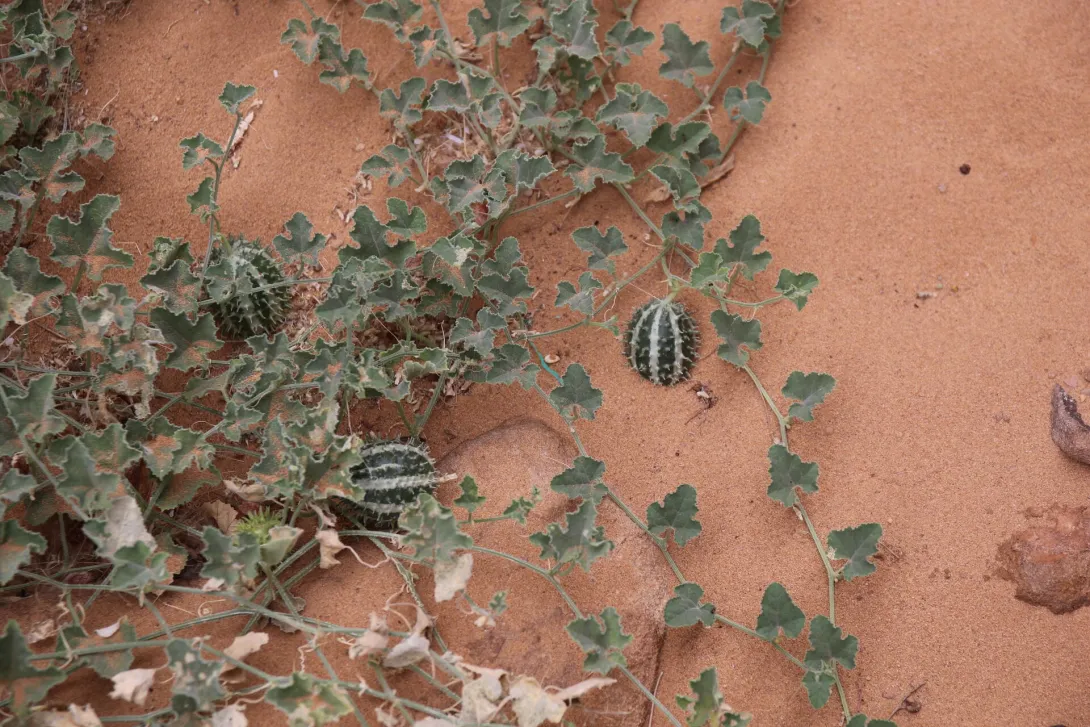
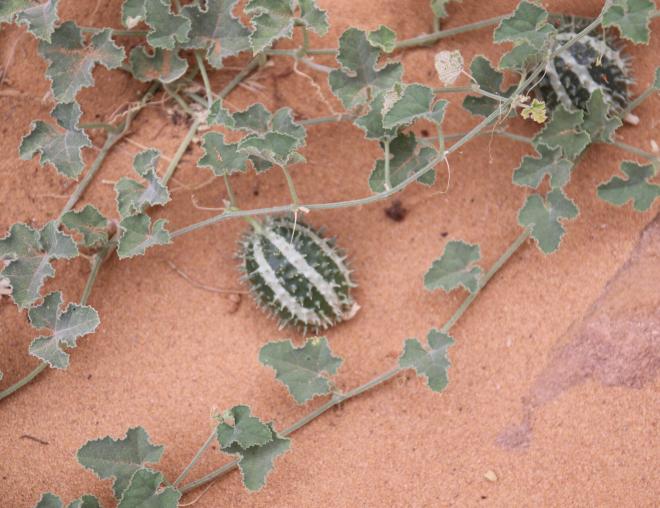
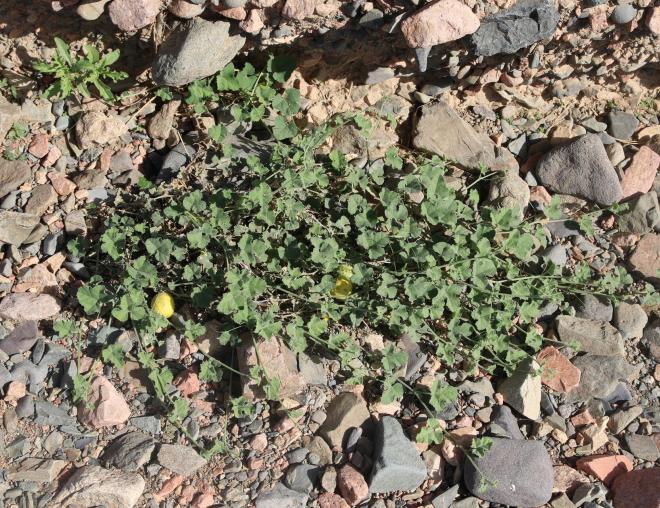
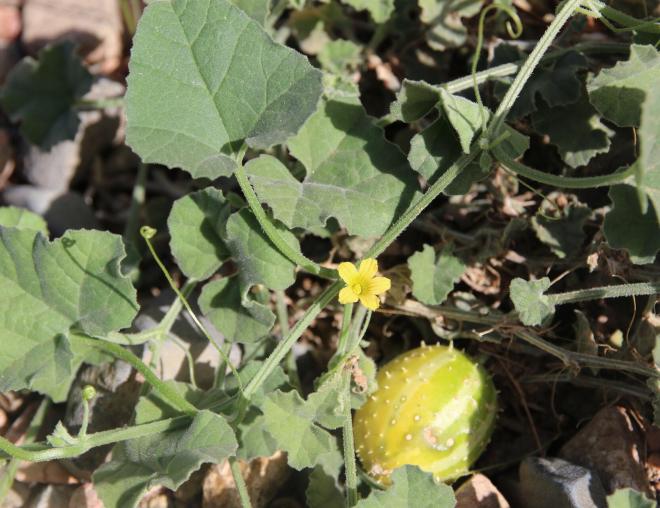
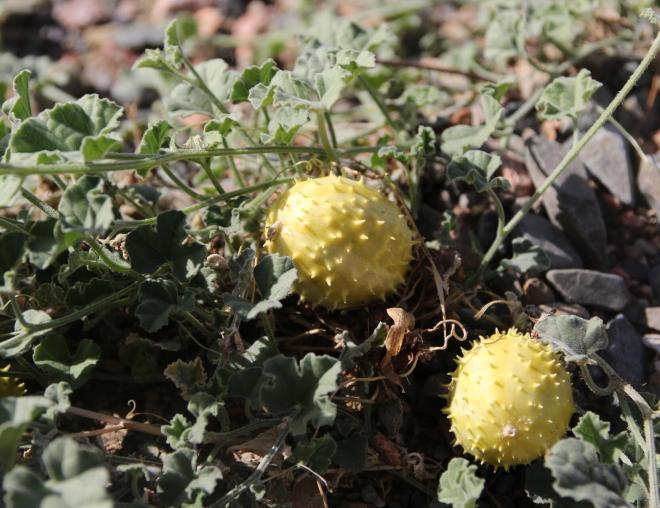
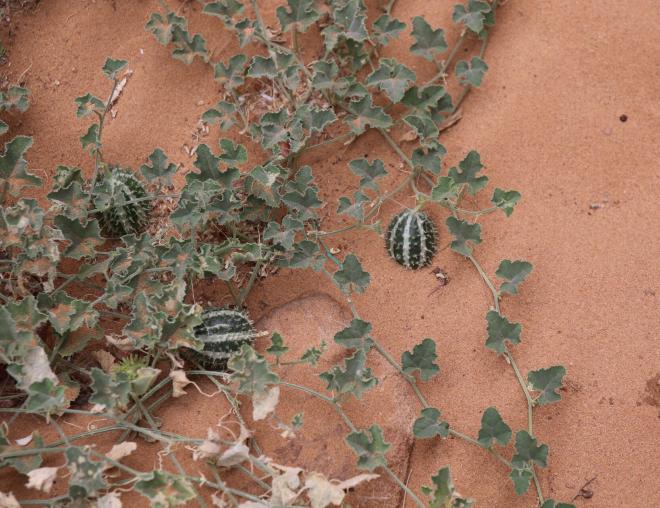
Perennial trailing or climbing, densely scabrid-pubescent herb. Leaves usually crisp and densely pubescent; lamina variable, usually 3-5-lobed, sometimes unlobed, 1-5 cm x 1-4 cm. Male flowers relativly long pedicelled, solitary or in fascicles of 2-3. Female flowers solitary on up to 15 mm long pedicels; ovary papillate with each papilla ending in a short bristle. Fruit subglobose to ellipsoid, striped green when young, ripening yellow, up to 5 cm long, with scattered, slender, peg-like soft spines each tripped with a hyaline bristle.
- Growth Form
-
Description
-
Habitat and Distribution
- Habitat
-
Geographical Distribution Range
This Saharo-Arabian species is distributed in Africa, Middle East and Indian subcontinent, from Senegal to India. Within the Arabian Peninsula, it is native to Jordan, Saudi Arabia, Gulf States, Oman, Yemen, and Socotra.
-
Ecology
-
Phenology
JanFebMarAprMayJunJulAugSepOctNovDecFloweringFructification
- Origin
-
IUCN Red List Category
 Not Evaluated
-
Remarks
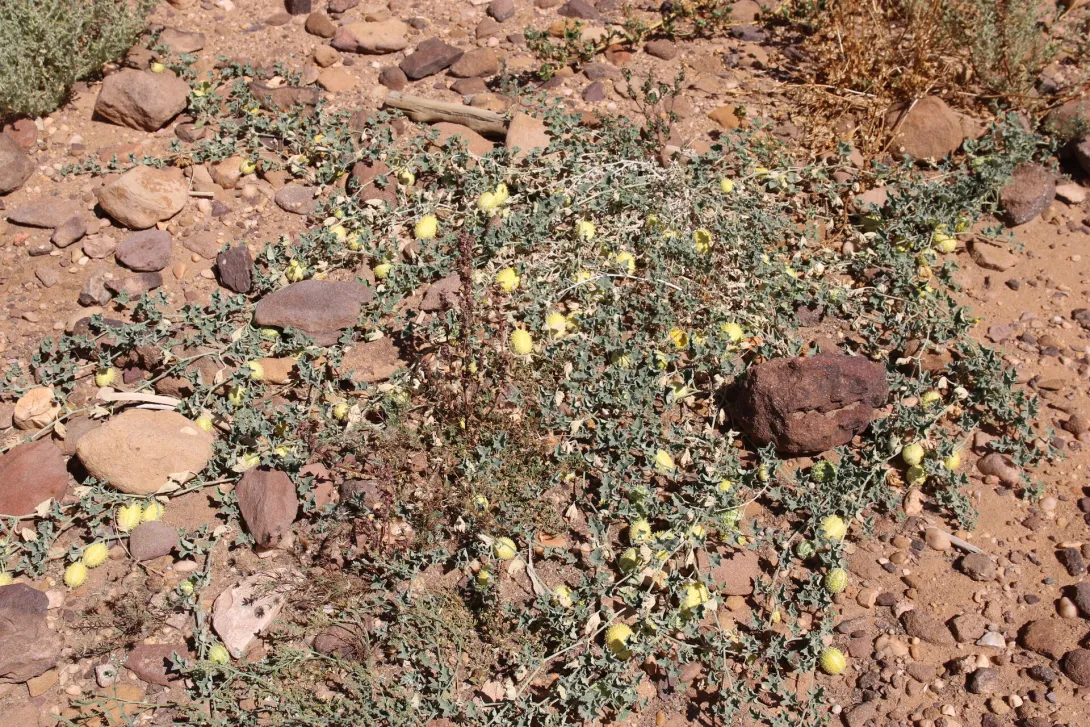
It is a scrambling species car create large individual with many fruits, becoming bright yellow as the ripe. It is less common than its cousin from the same Cucurbitaceae family Citrullus colocynthis (L.) Schrad. This species has two accepted subspecies, with the one commonly found in AlUla being Cucumis prophetarum subsp. prophetarum L.
-
Phenology
-
Uses and Values
-
Aromatic and Medicinal Use
Medicinal use
-
Description of Traditional Uses
Traditionally used in some folk medicine practices for treating skin ailments and occasionally as an emetic or purgative, though use is limited due to the plant's toxicity.
-
Aromatic and Medicinal Use
Gallery