Caudanthera sinaica (Decne.) Plowes
Syn. Boucerosia sinaica Decne.
-
Morphological Description
-
Description
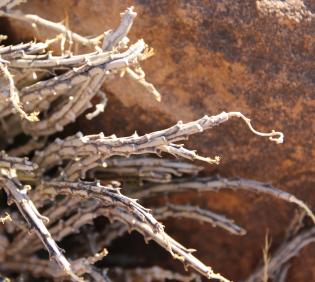
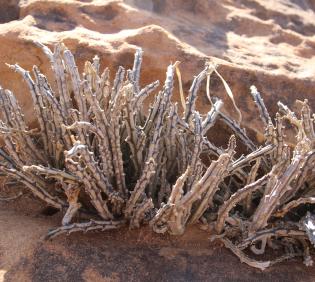
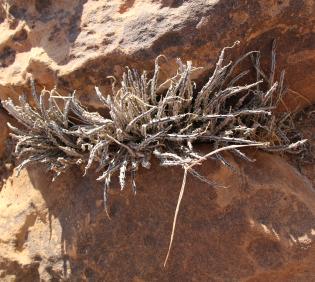
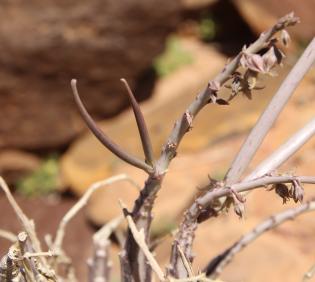
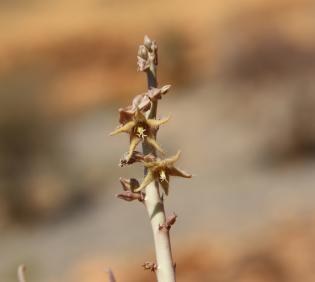
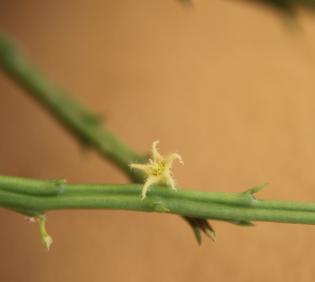
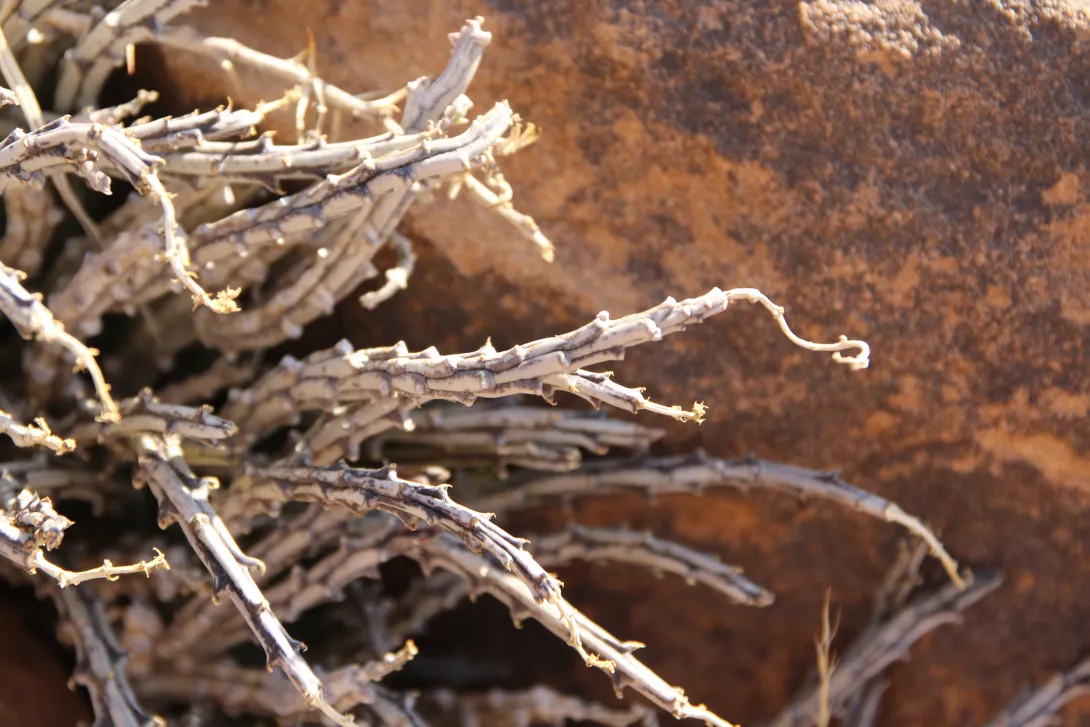
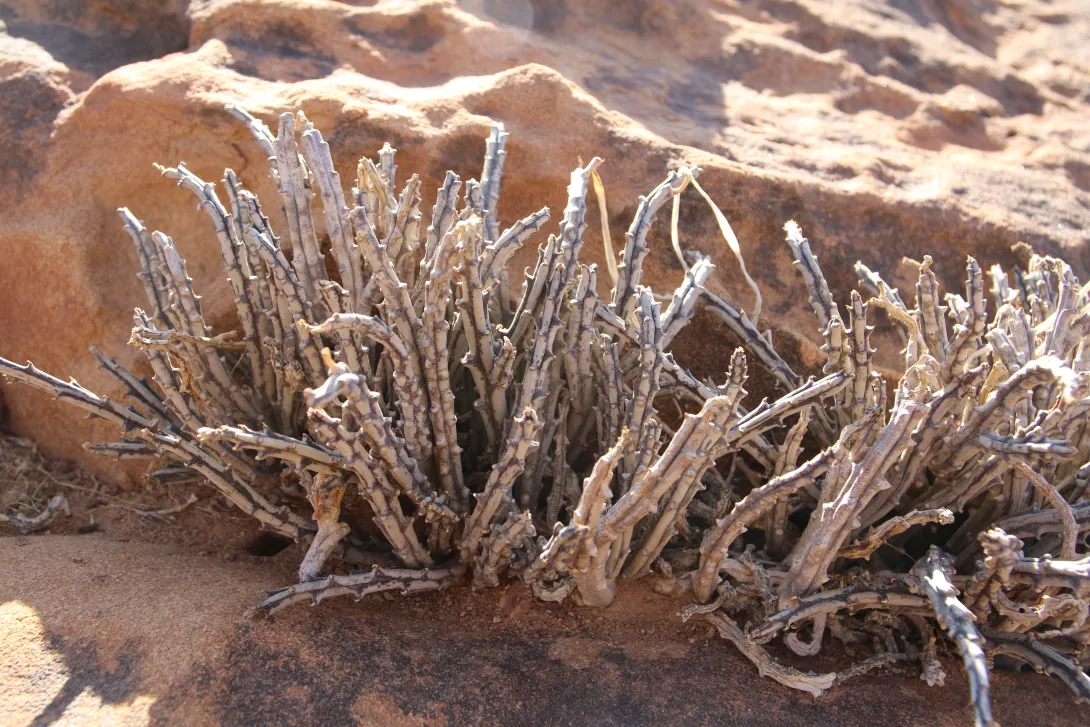
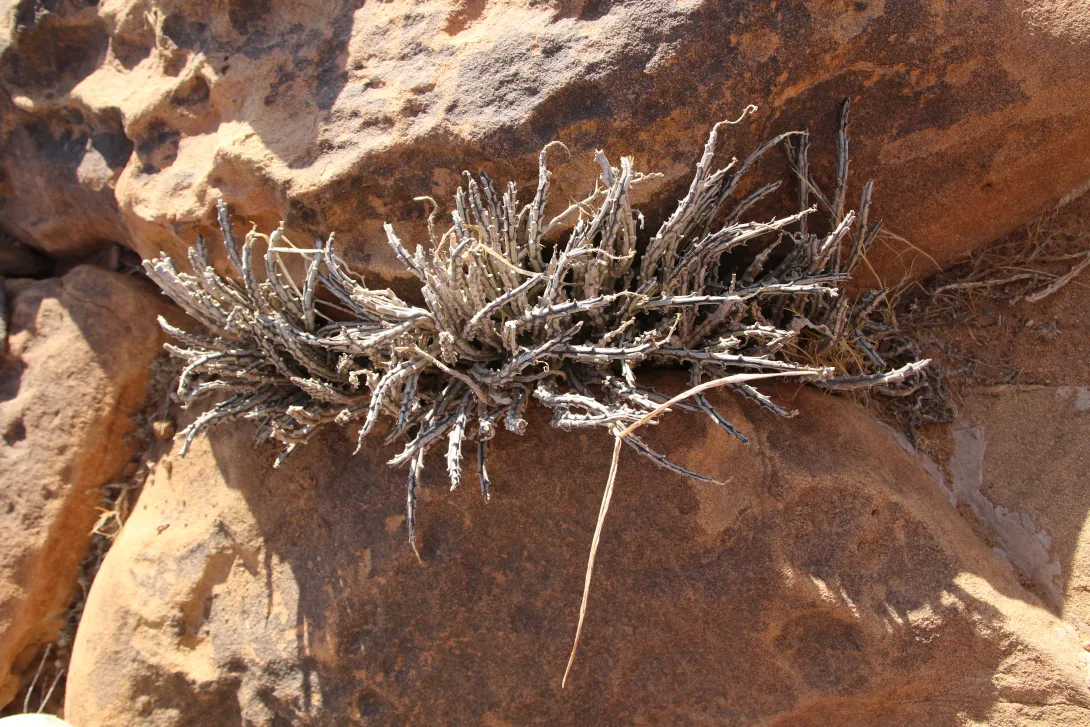
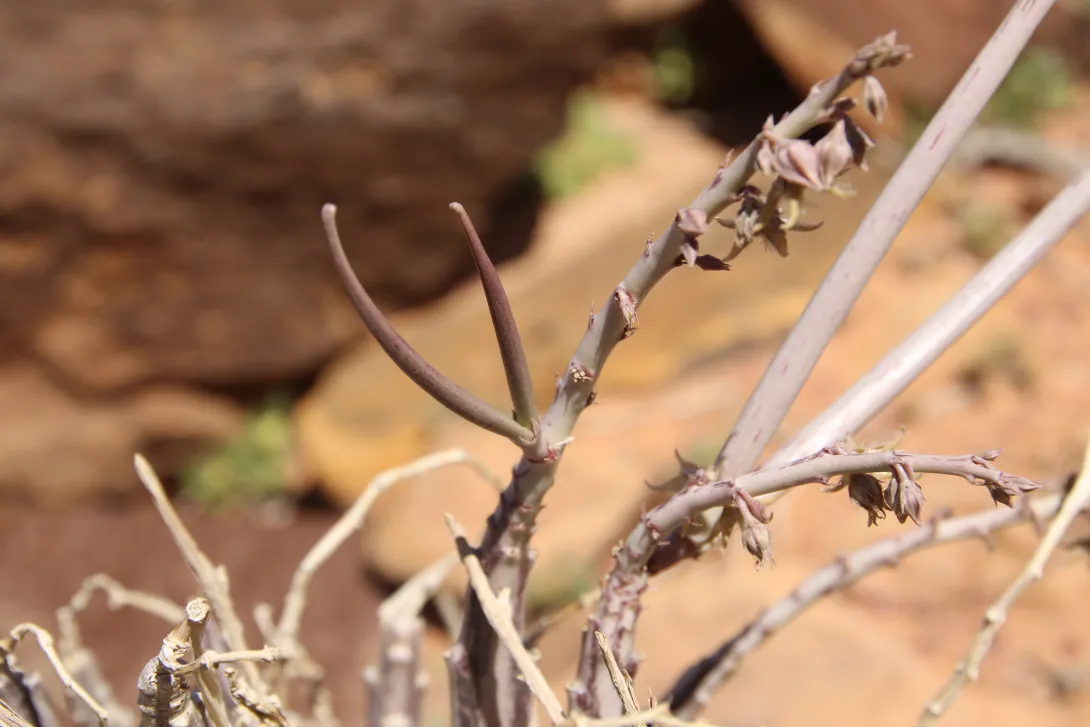
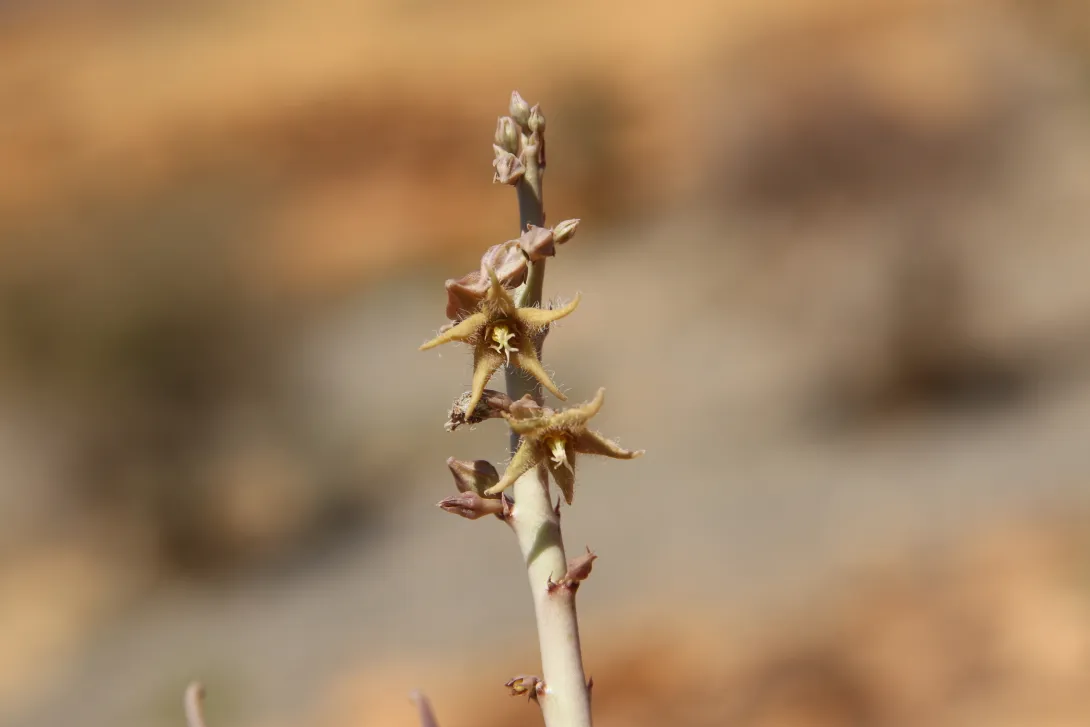
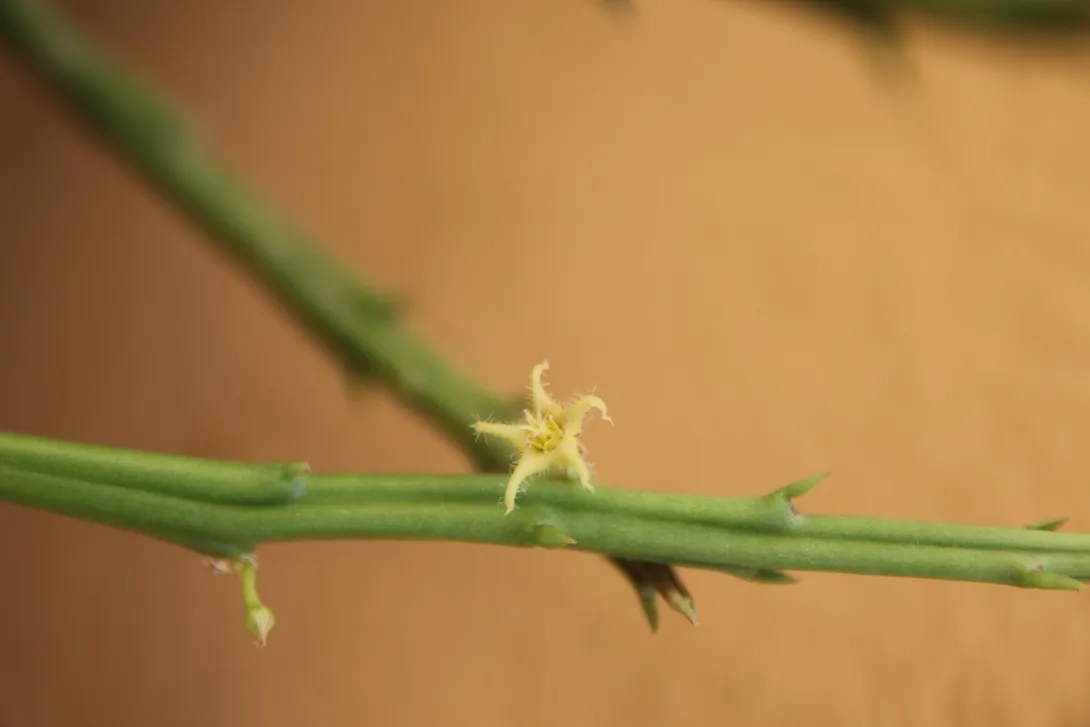
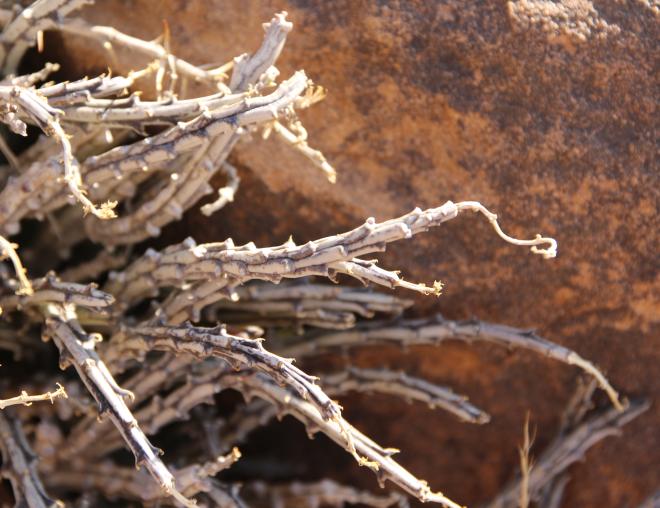
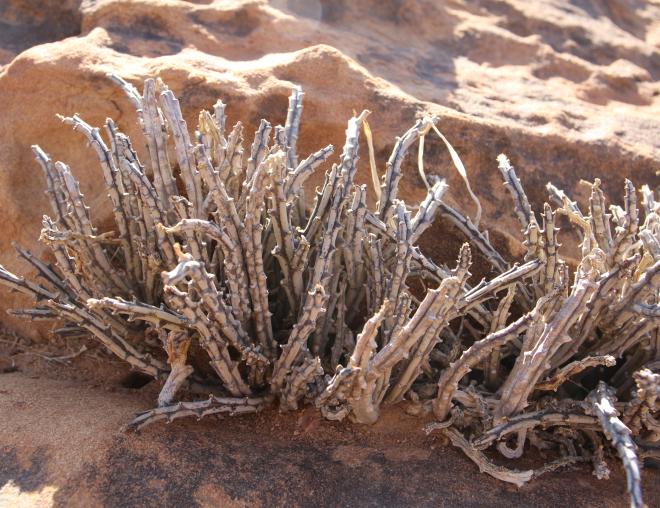
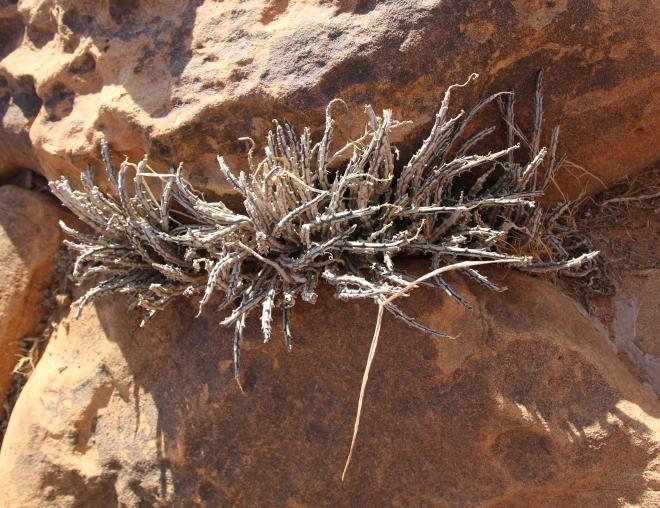
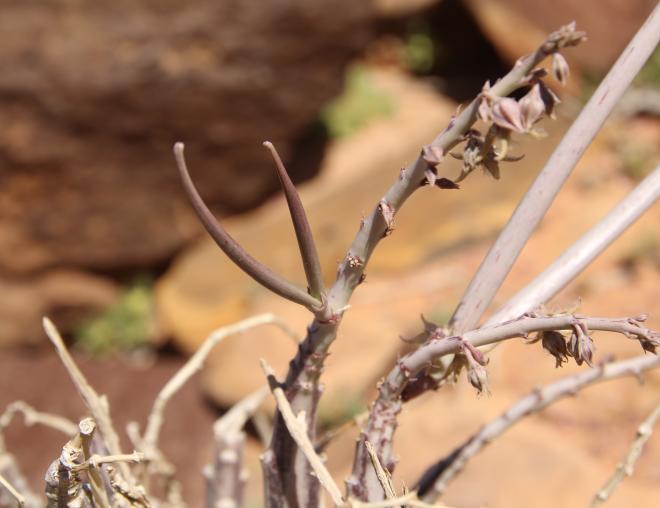
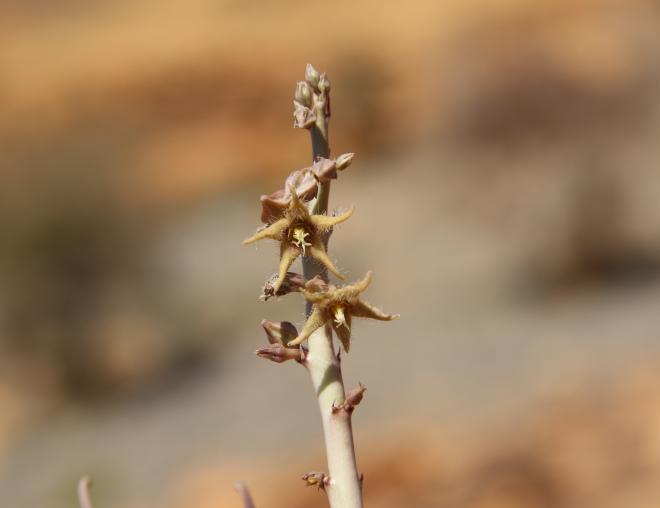
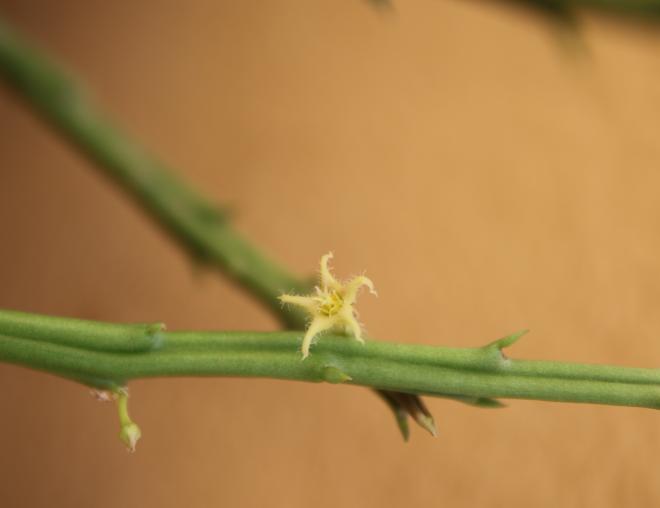
Description a perennial, herbaceous plant, with fleshy, square leafless bluish-silvery stems, resembling thick fingers. Flowering stems are elongated, and their upper section is very narrow, ending with a dense inflorescence made up of several flowers. The flower is star-like, with five hairy and narrowing corolla lobes. Its flower is flesh coloured to greenish-yellow, and it is 5-8 mm across. The fruit is divided into two elongated sections (follicles) which contains many tufted seeds that are wind-dispersed.
- Growth Form
-
Description
-
Habitat and Distribution
- Habitat
-
Geographical Distribution Range
This Saharo-Arabian species is distributed across African horn and Middle East from Sudan to Saudi Arabia.
-
Ecology
-
Phenology
JanFebMarAprMayJunJulAugSepOctNovDecFloweringFructification
- Origin
-
IUCN Red List Category
 Not Evaluated
-
Remarks
Habitat cliffs and rocky slopes in the hot desert. The stems of the Dead Sea Caralluma break off, and role away from the mother plant, root and develop into new plants. This is an asexual reproduction, which occurs in addition to sexual reproduction in flowers and fruit. In the past the Caralluma sinaica was considered a species endemic to Jordan, and was named Caralluma maris-mortui, but was then found to be identical to the Caralluma which appears along the coastal ridges of the Red Sea and is known as Caralluma sinaica. In the Negev Highlands to the Judean mountains grows an addition species – Caralluma eurapaea, which is characterized by striped triangulat petals, and stems that are not narrow on top.
-
Phenology
-
Uses and Values
-
Other Usages
Palatable
-
Description of Traditional Uses
No specific documented uses were identified in accessible literature.
-
Other Usages