Blepharis ciliaris (L.) B.L.Burtt
نقيع، السّحاء
Syn. Ruellia ciliaris L.
Eyelash Plant
Acanthaceae
1 / 7


-
Morphological Description
-
Description
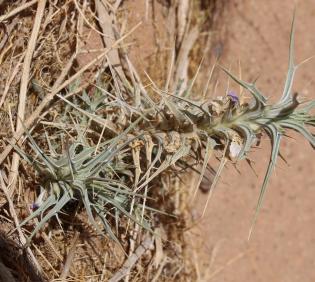
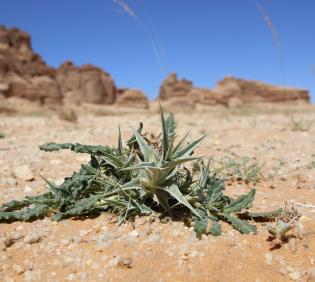
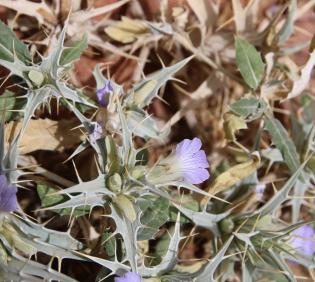
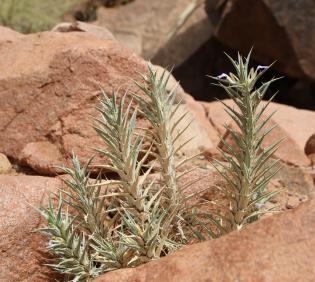
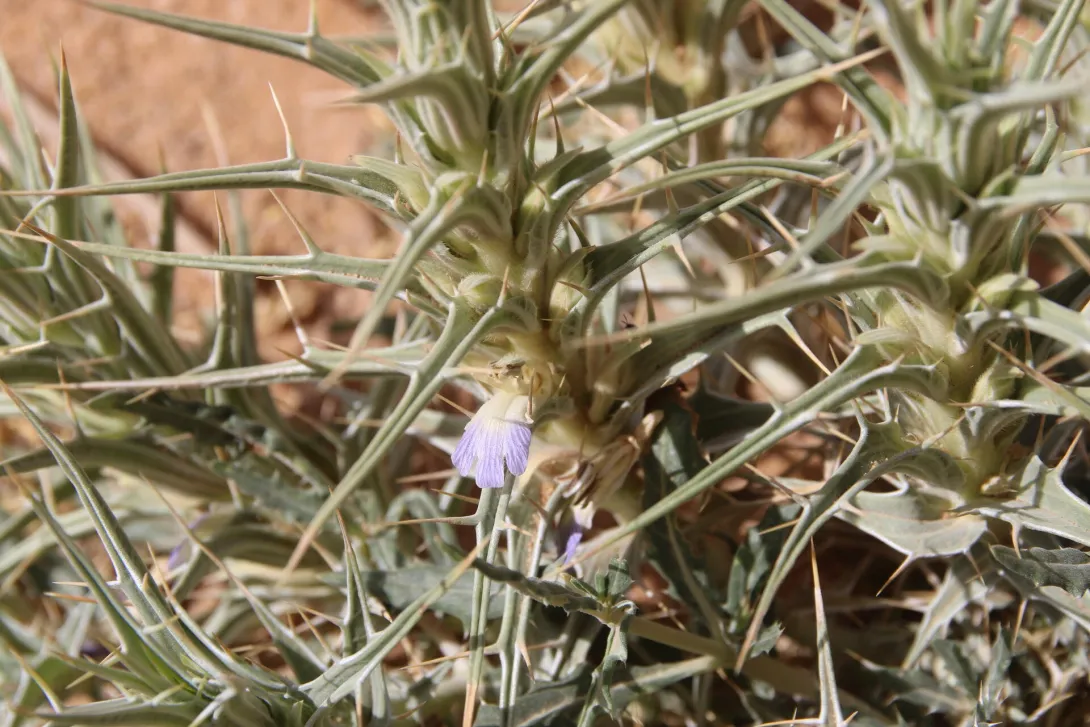
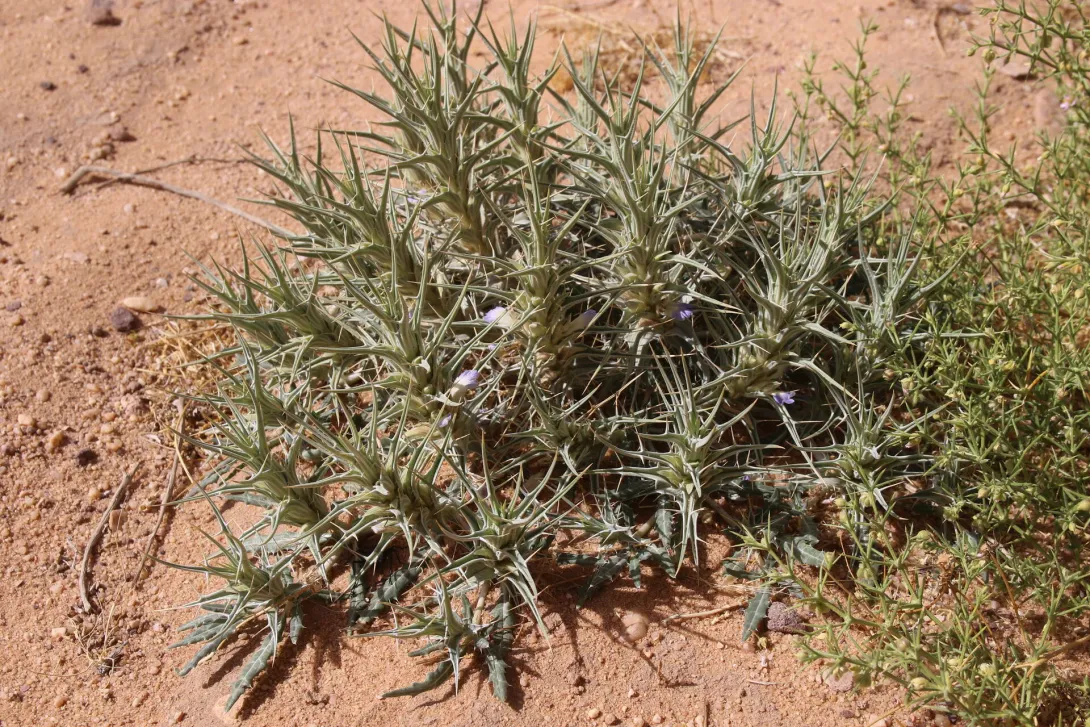
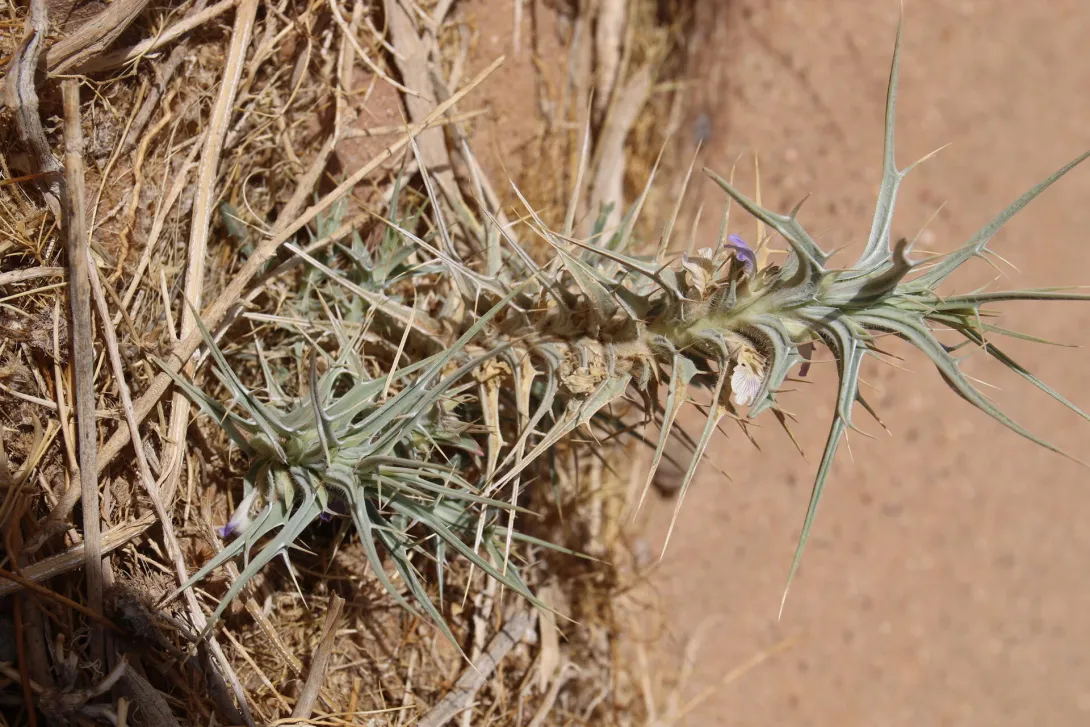
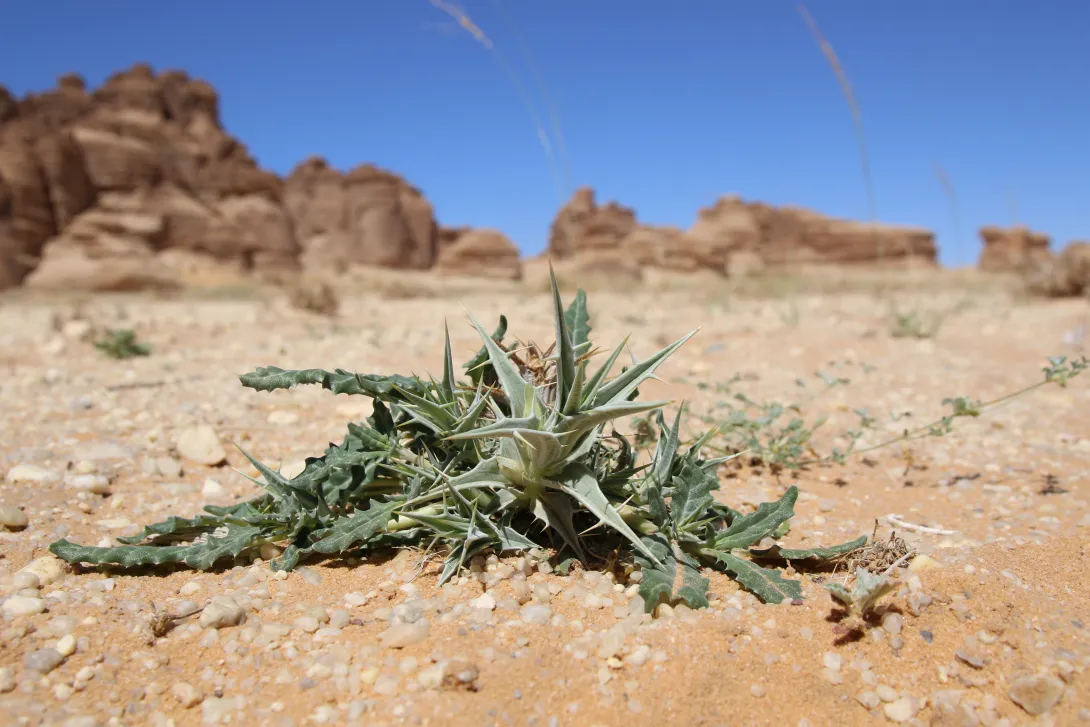
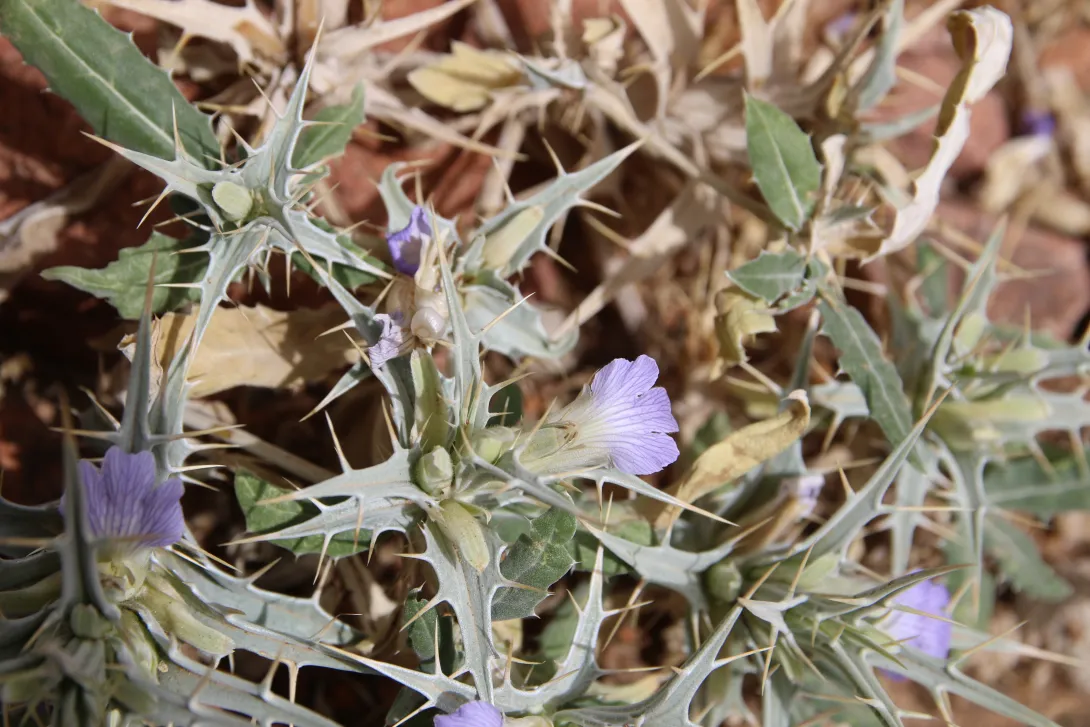
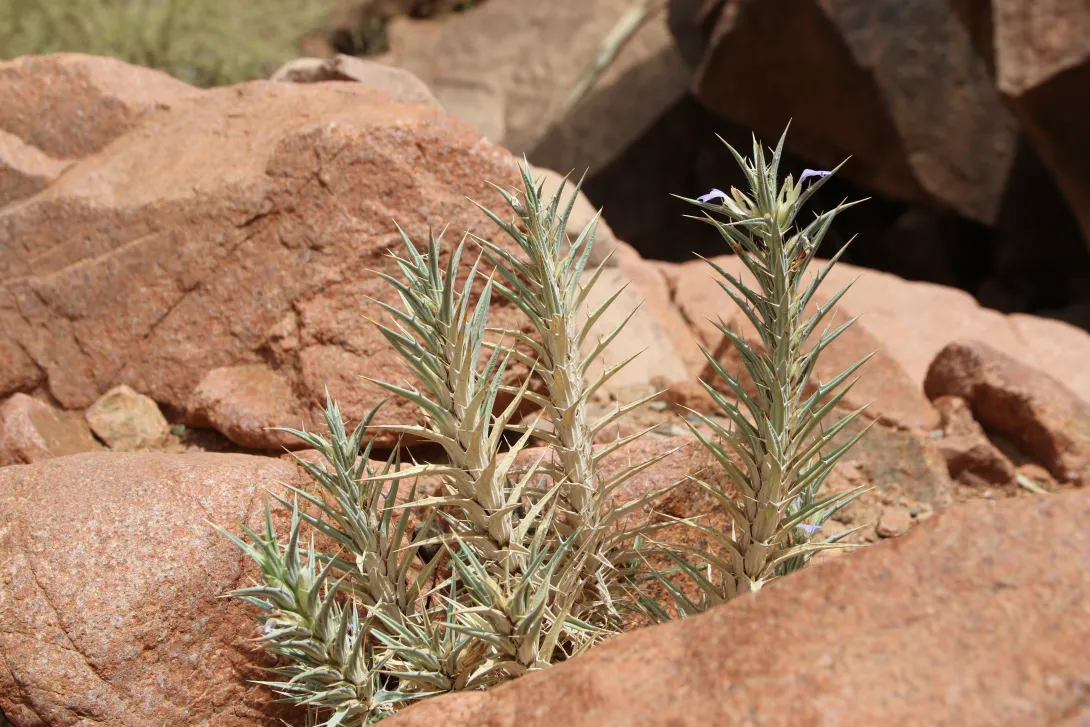
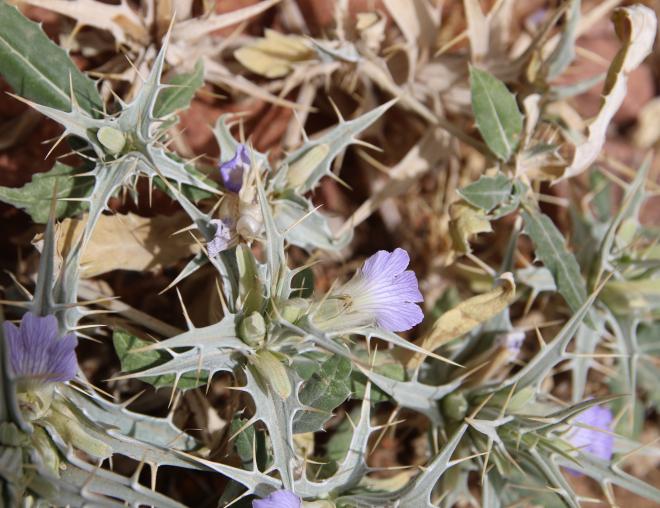
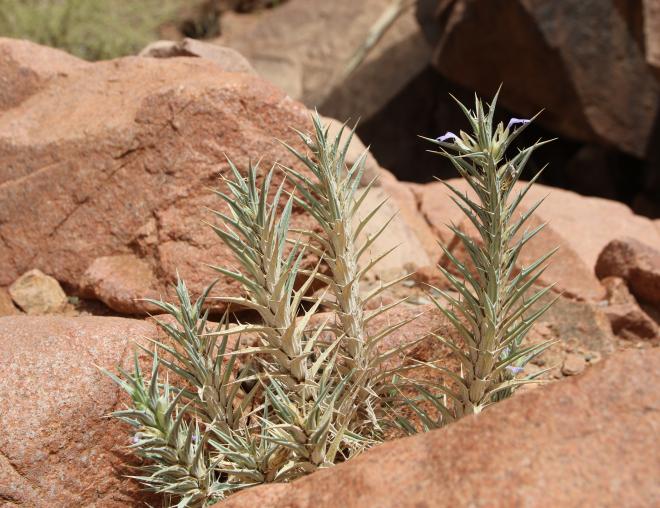
Perennial herb, up to 30 cm tall, grey-pubescent and spiny, with rigid, erect stems often branched at the base. Leaves are canescent (2–6 × 0.5–2 cm), lanceolate, coriaceous, with spinulose margins, and arranged in whorls of four at each node. The inflorescence is a dense, strobilate spike (3–30 cm long), with channeled bracts bearing long pilose hairs and marked by 3 to 5 pairs of strong marginal spines. The blue, one-labiate corolla is dark-veined and fades to white, with a three-lobed lower lip and is hairy on the outside. The capsule is narrowly ovate, brown, shiny (6–9 mm long), containing two seeds. Seeds are ovate (4–5 mm), densely covered in hairs.
- Growth Form
-
Description
-
Habitat and Distribution
- Habitat
-
Geographical Distribution Range
This Irano-Turanian and Saharo-Arabian species is distributed in the Arabian Peninsula and adjacent regions, occurring in Saudi Arabia, Yemen, Oman, Iran and Pakistan.
-
Ecology
-
Phenology
JanFebMarAprMayJunJulAugSepOctNovDecFloweringFructification
- Origin
-
IUCN Red List Category
 Not Evaluated
-
Remarks
Eyelash Plant typically grows in rocky outcrops and stony terrain, thriving in mountainous areas with poor soil and harsh conditions. Even after death, the plant often remains dry and upright for several years, its structure persisting in the arid landscape allowing it identification even dead. The bilabiate flower features an upper and lower lip formed by the petals, a shape that helps guide pollinators and is characteristic of the species. Sometimes called shok-e-dhab in arabic, meaning "spikes of the dabb lizard".
-
Phenology
-
Uses and Values
-
Aromatic and Medicinal Use
Medicinal use
-
Other Usages
Melliferous
-
Description of Traditional Uses
B. Ciliaris is used as fodder for sheep and camel. The whole plant hasantibacterial, expectorant, aphrodisiac, and diuretic.Potential remedies in the treatment of male erectile dysfunction. Its leaves and whole plants are used for the treatment of sores, cough, inflammations, skin wounds, cold, toothache, lung diseases, and renal disorder. It is employed as astringent, appetizer, diuretic, and anti-asthmatic.
-
Aromatic and Medicinal Use
Gallery