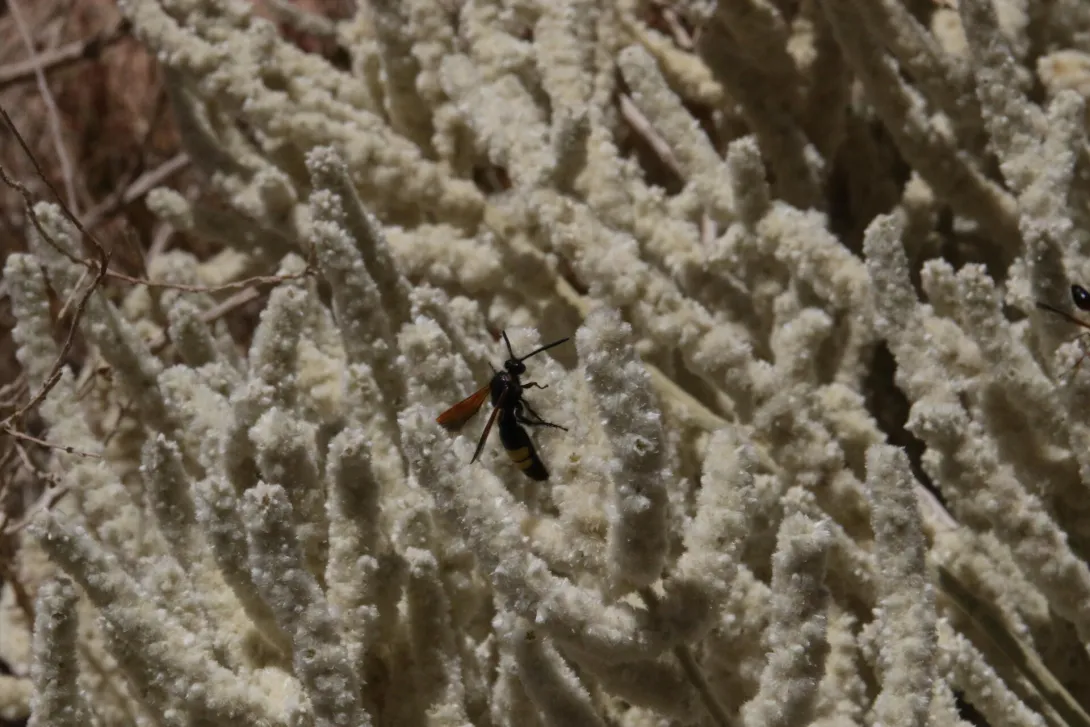
Aerva javanica (Burm.f.) Juss. ex Schult.
طِرف، ريل، الراء
Syn. Iresine javanica Burm.f.
Desert Cotton, Java Aerva
Amaranthaceae
1 / 6



-
Morphological Description
-
Description
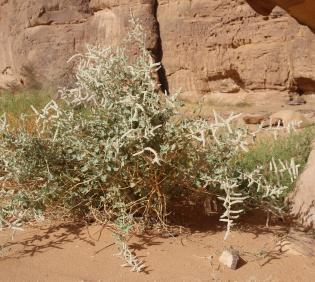
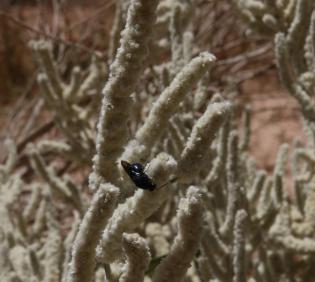
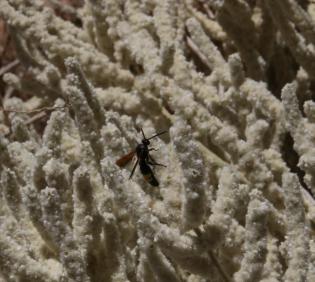
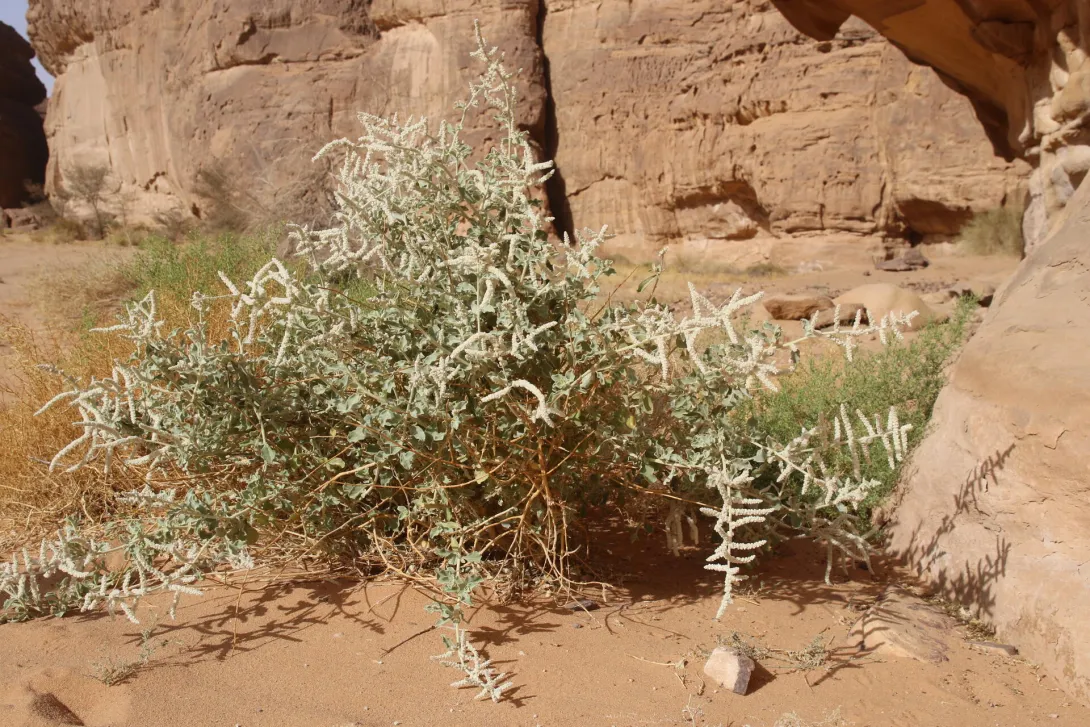
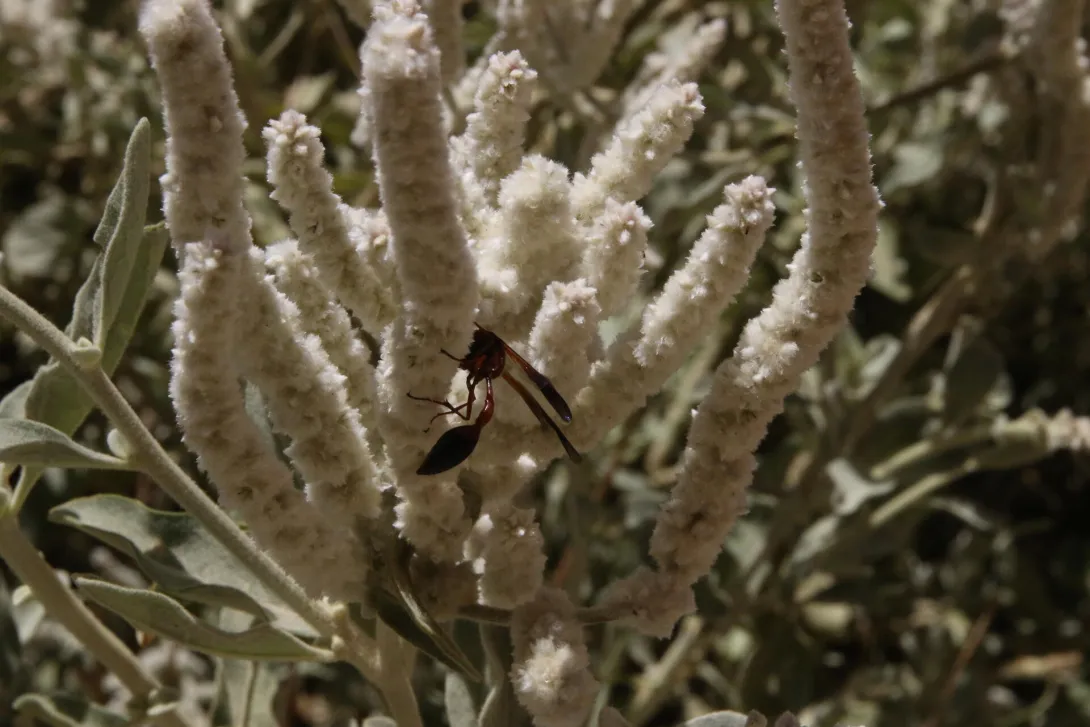
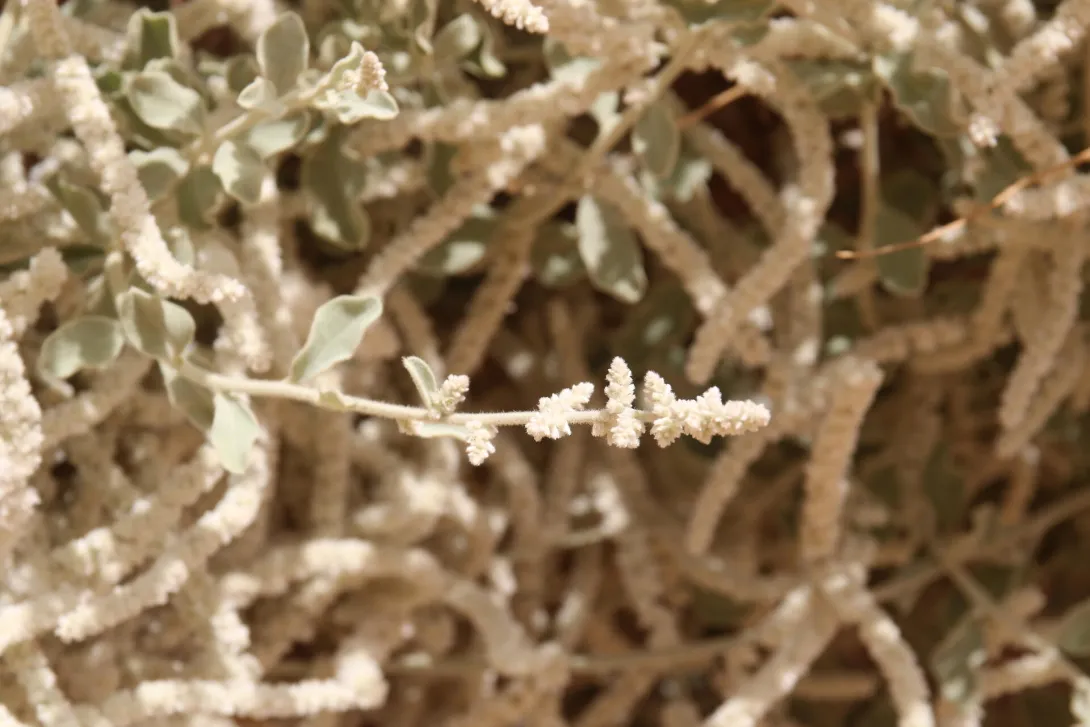
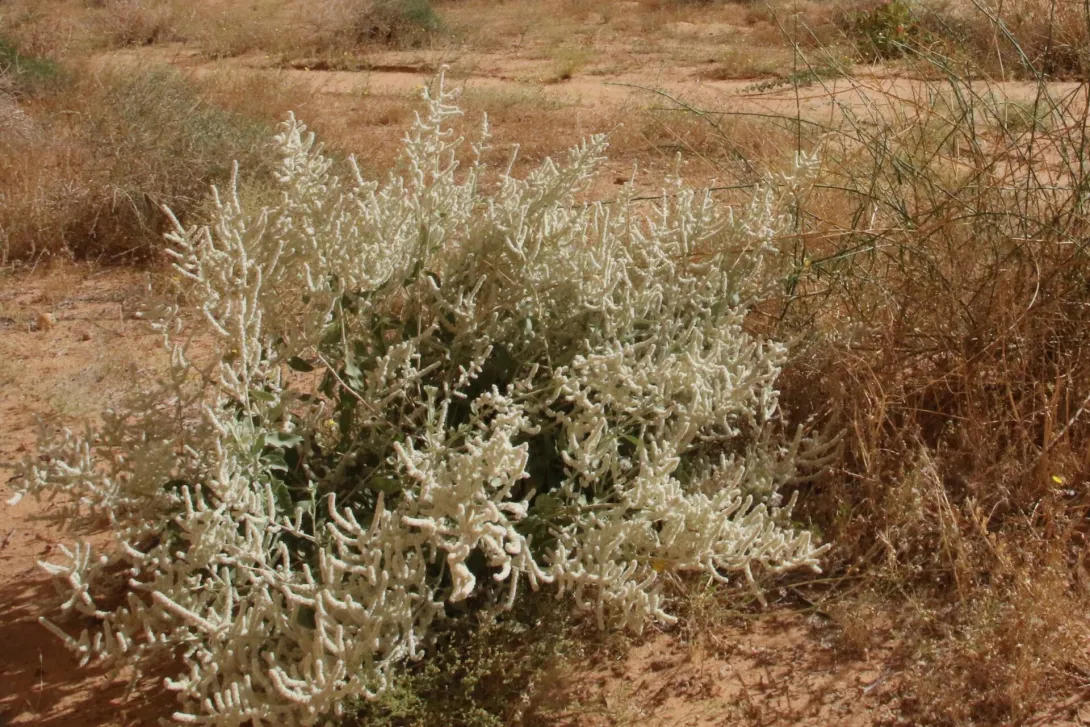
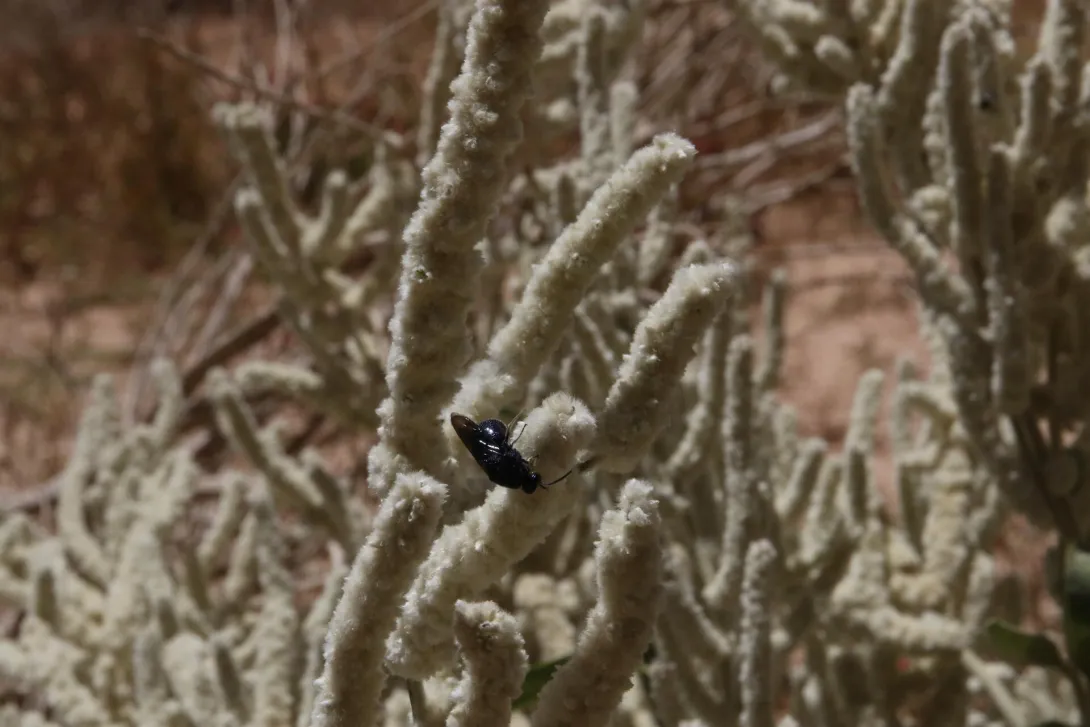
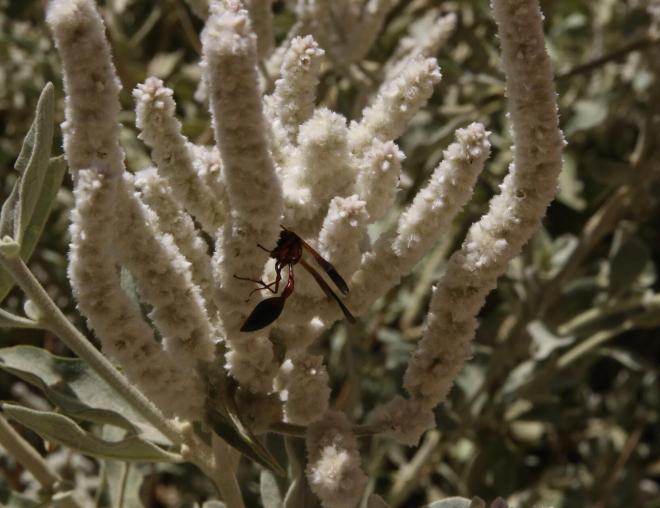
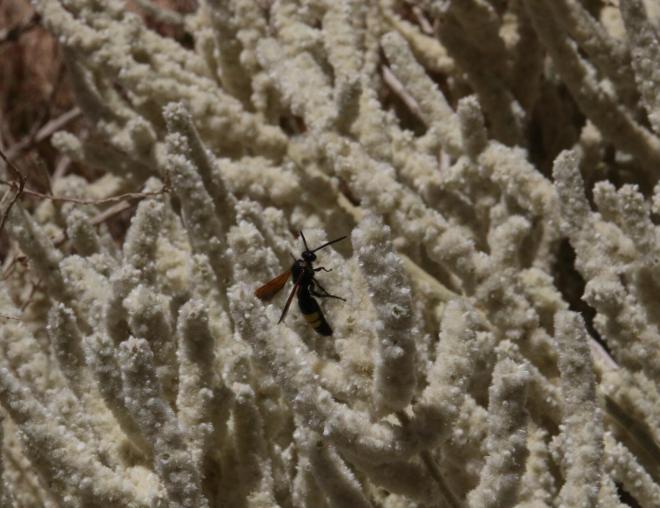
Perennial erected subshrub (less than 1.5 m), entirely white and densely tomentose (woolly), branching from the woody base and forming dense massifs. Leaves alternate, sessiles to shortly petiolate, with variable size and shapes, that often look folded in half. Flowers are dioceous (male and female flowers on separate individuals) organised in long leafless sessiles cylindrical spikes, densely wooly up to 10 cm. Male flowers are smaller compared to female flowers with 5 stamins. The capsules are compressed (1-1.5 mm) with circular dehiscence, the seeds (1-1.2 mm) are black or brown, ovoid, shiny.
- Growth Form
-
Description
-
Habitat and Distribution
- Habitat
-
Geographical Distribution Range
This Tropical species is widely distributed across tropical and subtropical regions of Africa to South Asia throughout Middle East and North Africa. Within the Arabian Peninsula, it is native to Jordan, Saudi Arabia, Oman, Yemen, and Socotra.
-
Ecology
-
Phenology
JanFebMarAprMayJunJulAugSepOctNovDecFloweringFructification
- Origin
-
IUCN Red List Category
 Not Evaluated
-
Remarks
Desert Cotton is easily recognizable by its dense covering of woolly or silvery hairs, which give the plant a distinctive, soft grayish appearance. It is commonly found across AlUla County, even in the urban areas of AlUla city center. In the past, two varieties of this plant, Aerva javanica var. javanica (Burm.f.) Juss. ex Schult. and Aerva javanica var. bovei Webb, were recorded in the Middle East. These are now considered separate species: Aerva javanica (Burm.f.) Juss. ex Schult., with dense, cylindrical flower spikes, and Aerva tomentosa Forssk., with more slender and often interrupted spikes bearing side clusters. A related species also found in Saudi Arabia is Ouret lanata (L.) Kuntze, which differs in having both male and female flowers on the same plant, arranged in short, leafy axillary spikes.
-
Phenology
-
Uses and Values
-
Aromatic and Medicinal Use
Medicinal use
-
Other Usages
Melliferous
-
Description of Traditional Uses
The plant is diuretic and demulcent and is effective in lithiasis. The flowers and seeds are externally applied as paste to inflamed parts of body and face acne. The roots are used for headache and wooly seeds are also used for stuffing pillows to relieve headache and protect rheumatic pains. The plant is used as a fuel and leaves used for fodder to goats.
-
Aromatic and Medicinal Use
Gallery