Astragalus spinosus (Forssk.) Muschl.
قتاد – كثاد
Syn. Colutea spinosa Forssk.
Spiny Milk-vetch
Fabaceae
1 / 7
-
Morphological Description
-
Description
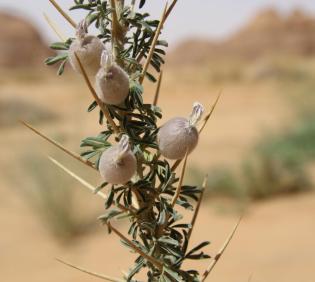
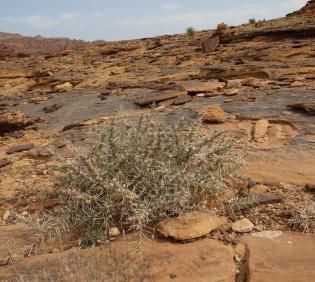
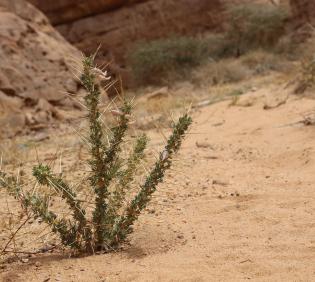
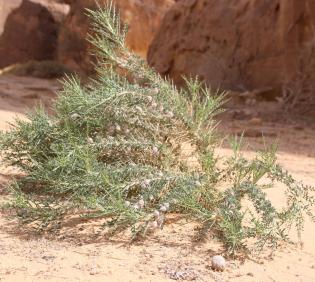
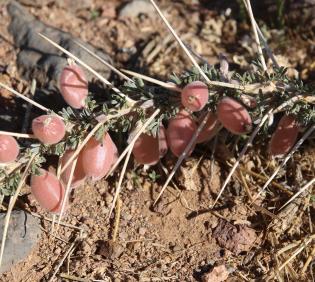
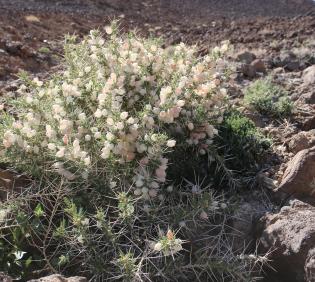
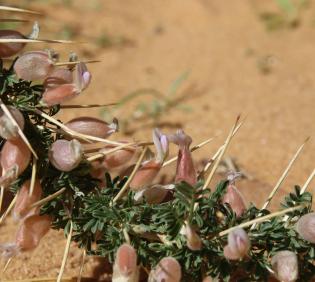
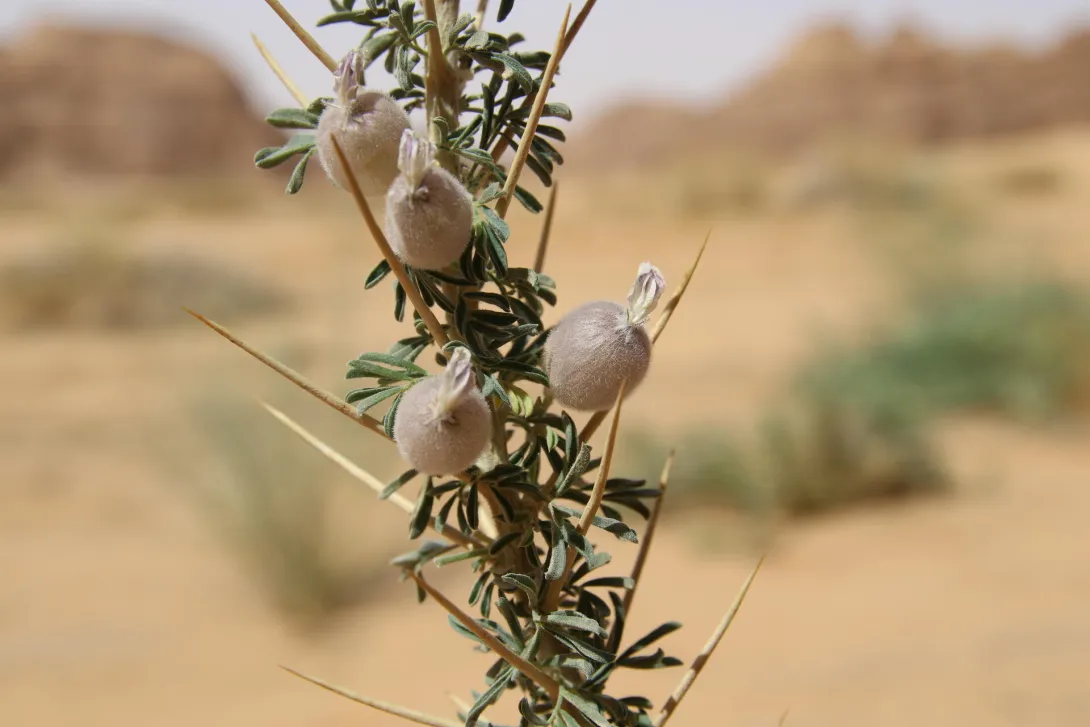
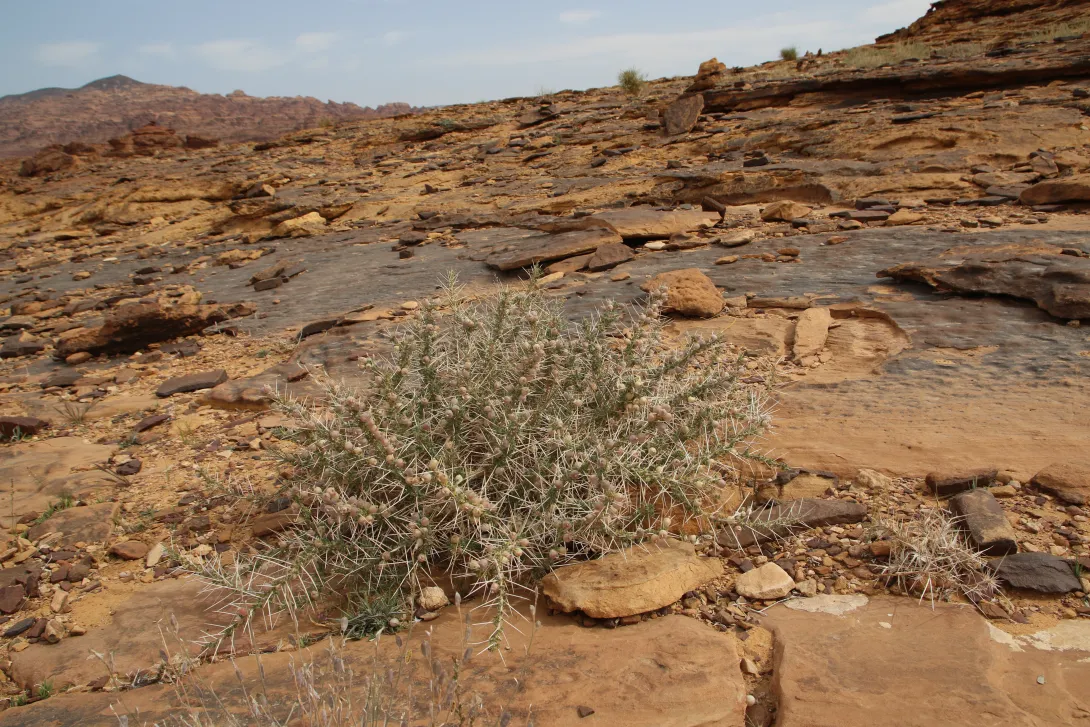
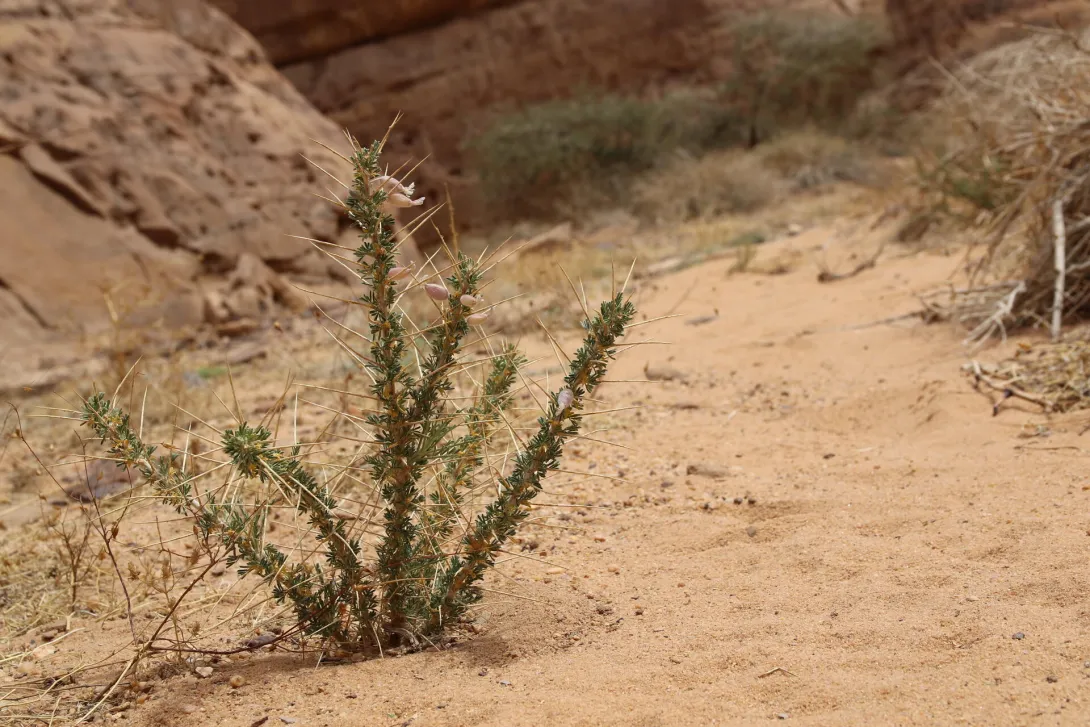
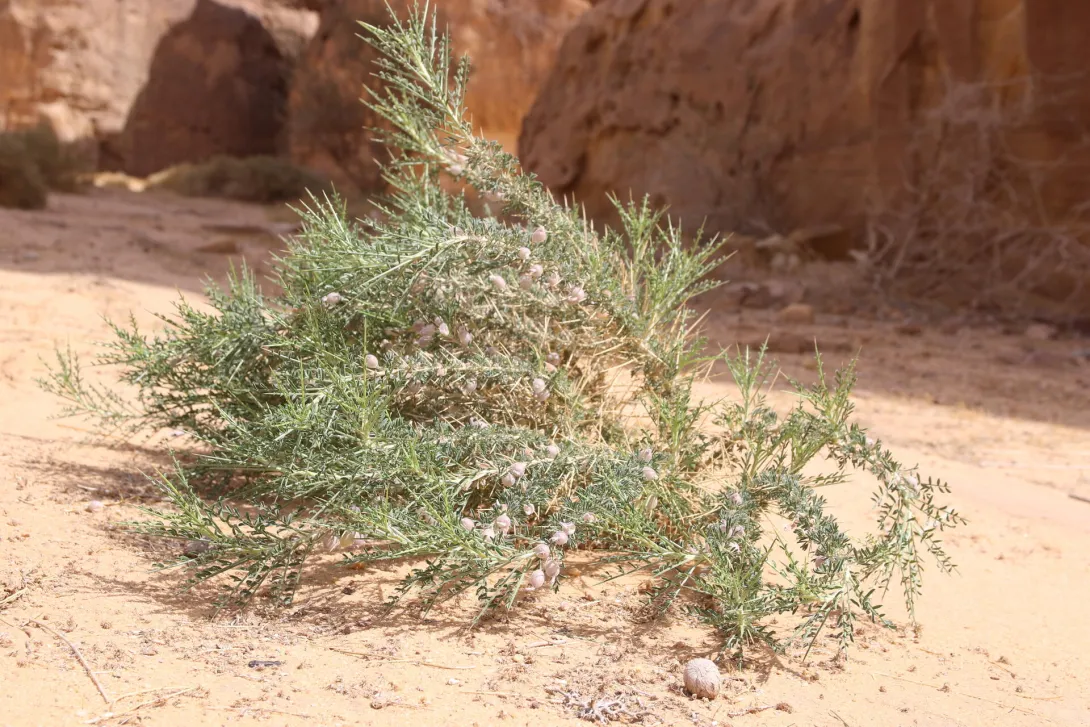
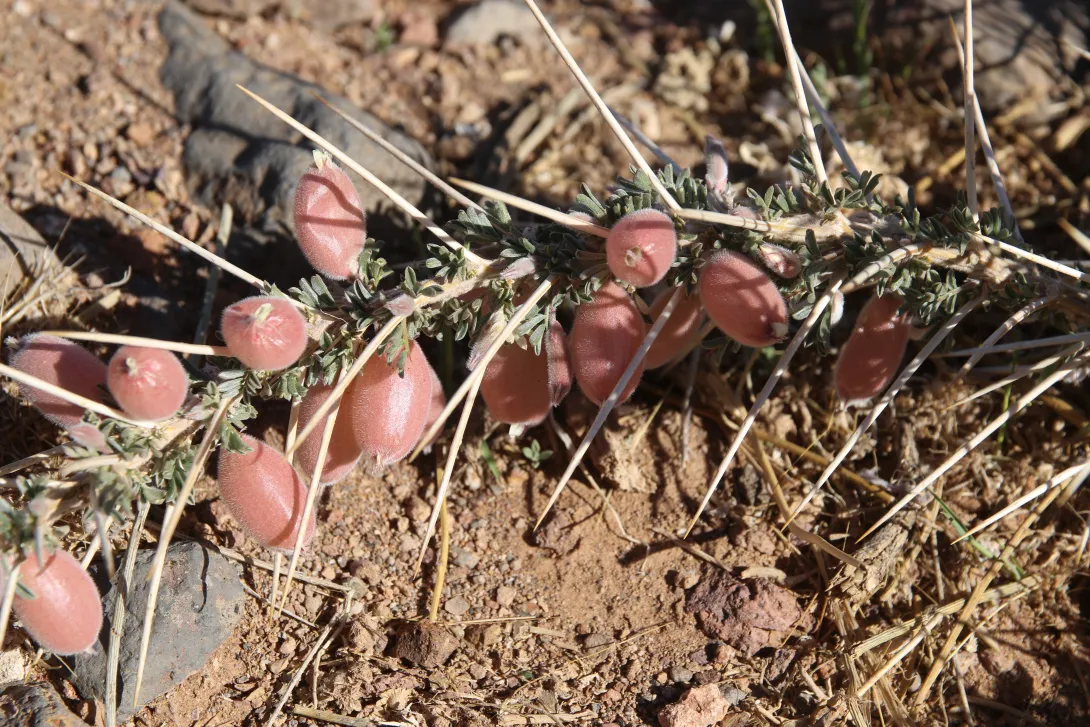
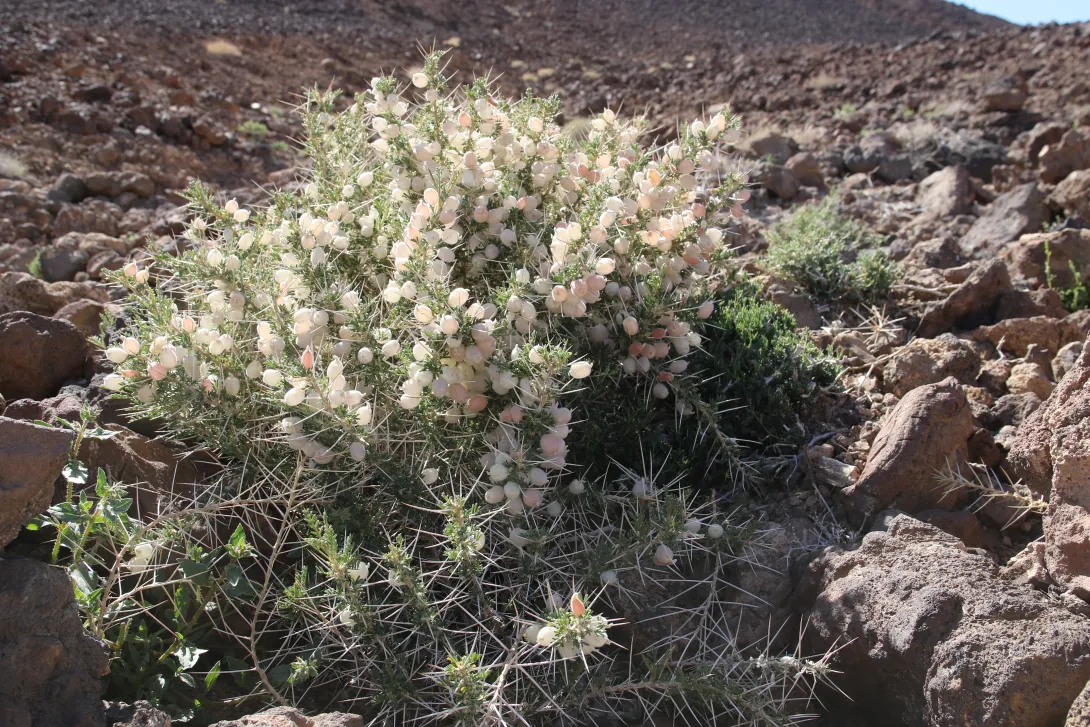
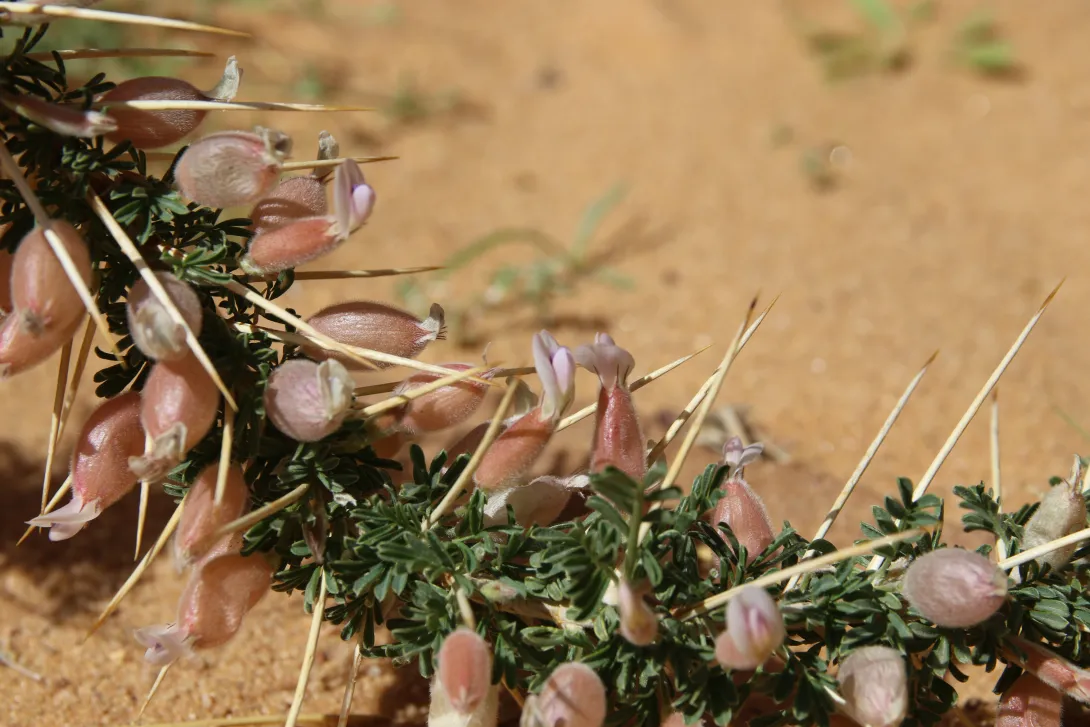
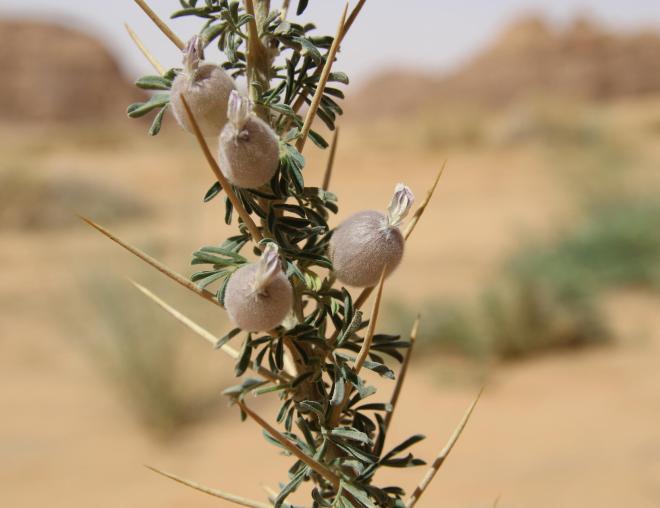
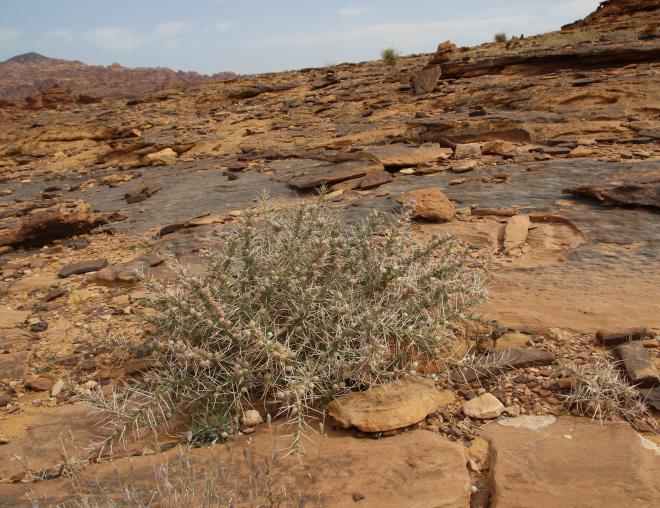
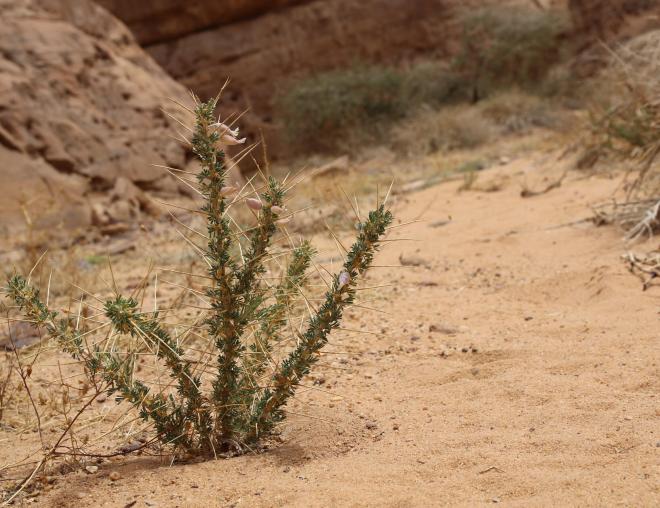
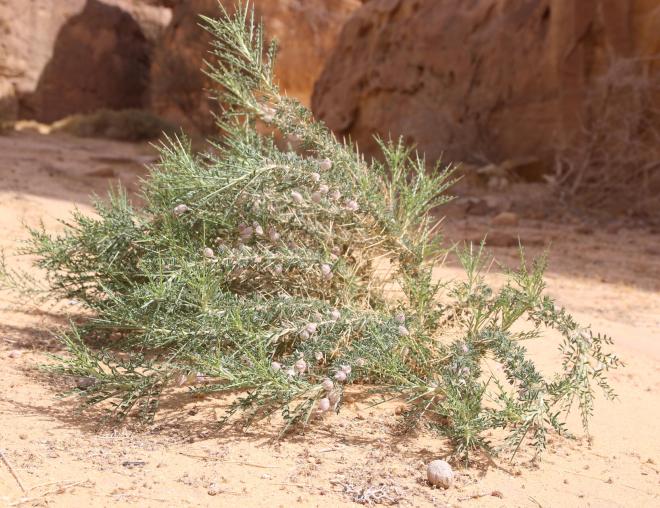
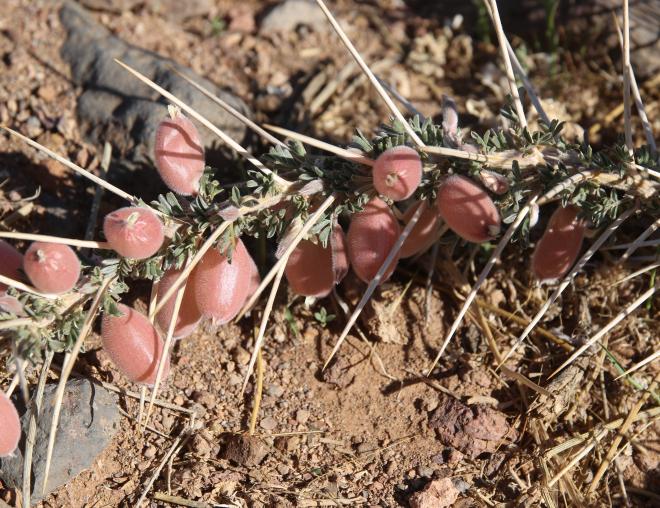
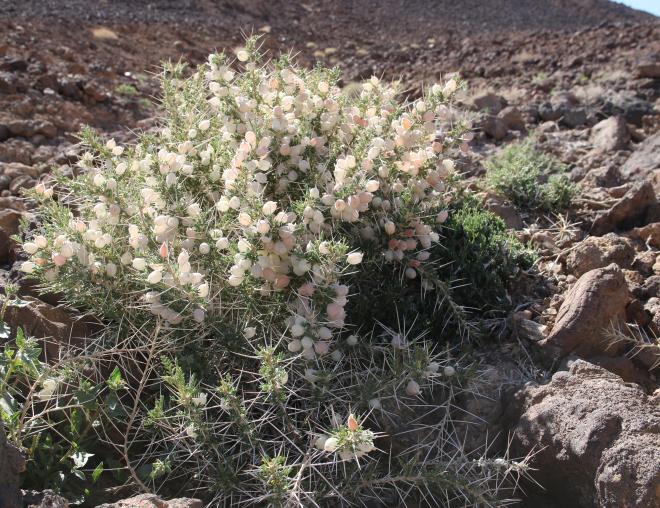
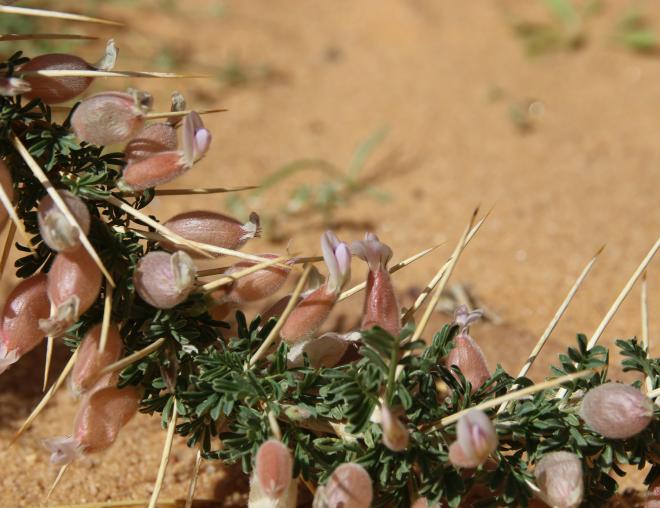
Perennial, much-branched, spiny shrublet, up to 40 cm. Old branches rigid, spine-tipped; younger shoots pubescent. Leaves pinnate, with a few pairs of small oval leaflets, often caducous leaving spiny rachises. Flowers whitish to yellowish, in small axillary clusters. Pods ovoid, inflated, leathery, densely hairy, usually 1–2 seeded.
- Growth Form
-
Description
-
Habitat and Distribution
- Habitat
-
Geographical Distribution Range
This Saharo-Arabian species is distributed in Sahara and Middle east from Libya to Iraq. Within the Arabian Peninsula, it is native to Jordan, Saudi Arabia and Kuwait.
-
Ecology
-
Phenology
JanFebMarAprMayJunJulAugSepOctNovDecFloweringFructification
- Origin
-
IUCN Red List Category
 Not Evaluated
-
Phenology
-
Uses and Values
-
Aromatic and Medicinal Use
Medicinal use
-
Other Usages
Palatable
-
Description of Traditional Uses
Astragalus spinosus has been used traditionally for wound healing, throat infections, inflammatory conditions, and scorpion bites, and is also collected as wild-harvested herbage for teas and macerations.
-
Aromatic and Medicinal Use
Gallery