Astragalus eremophilus Boiss.
القفعاء
Syn. Tragacantha eremophila (Boiss.) Kuntze
Desert Milk-vetch
Fabaceae
1 / 5

-
Morphological Description
-
Description
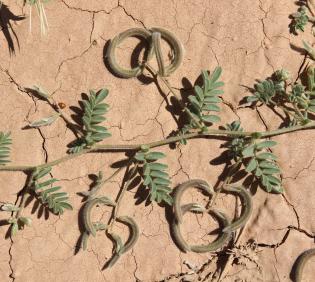
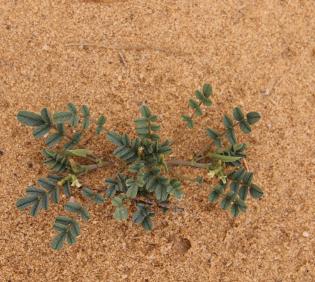
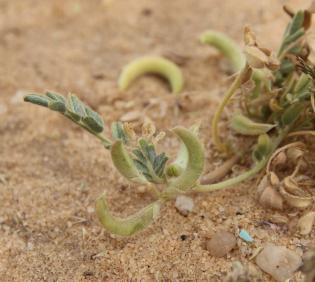
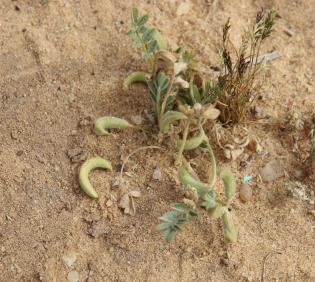
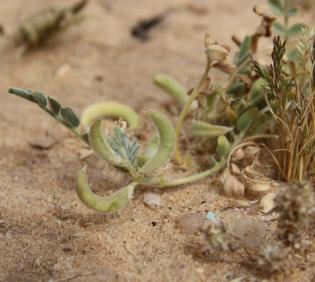
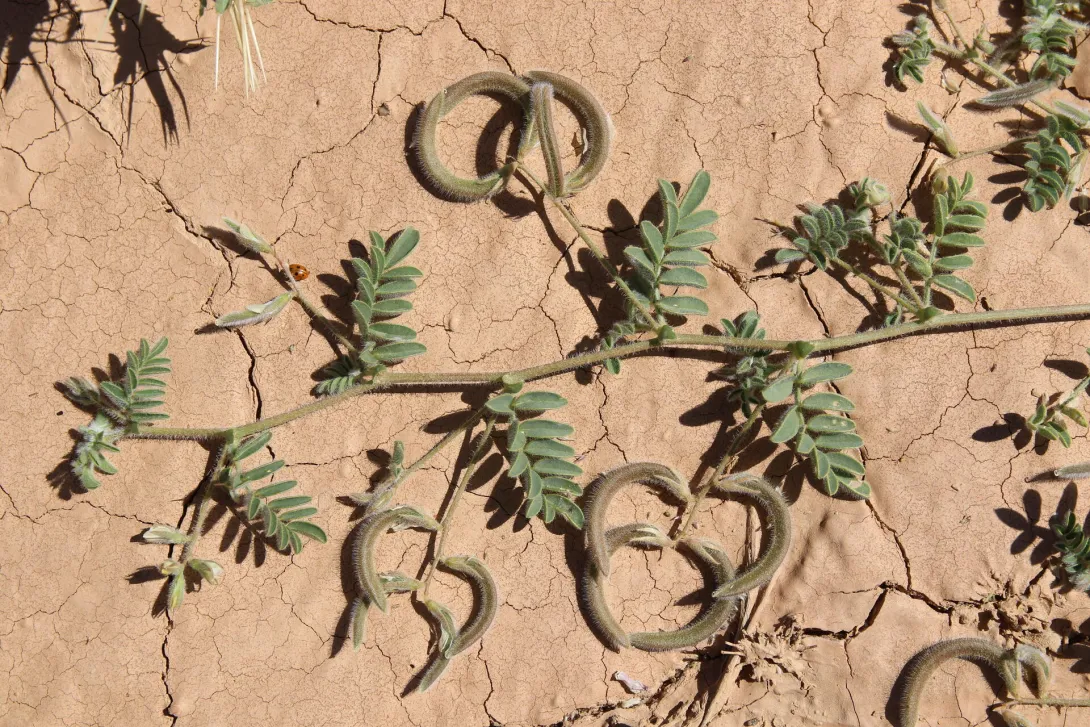
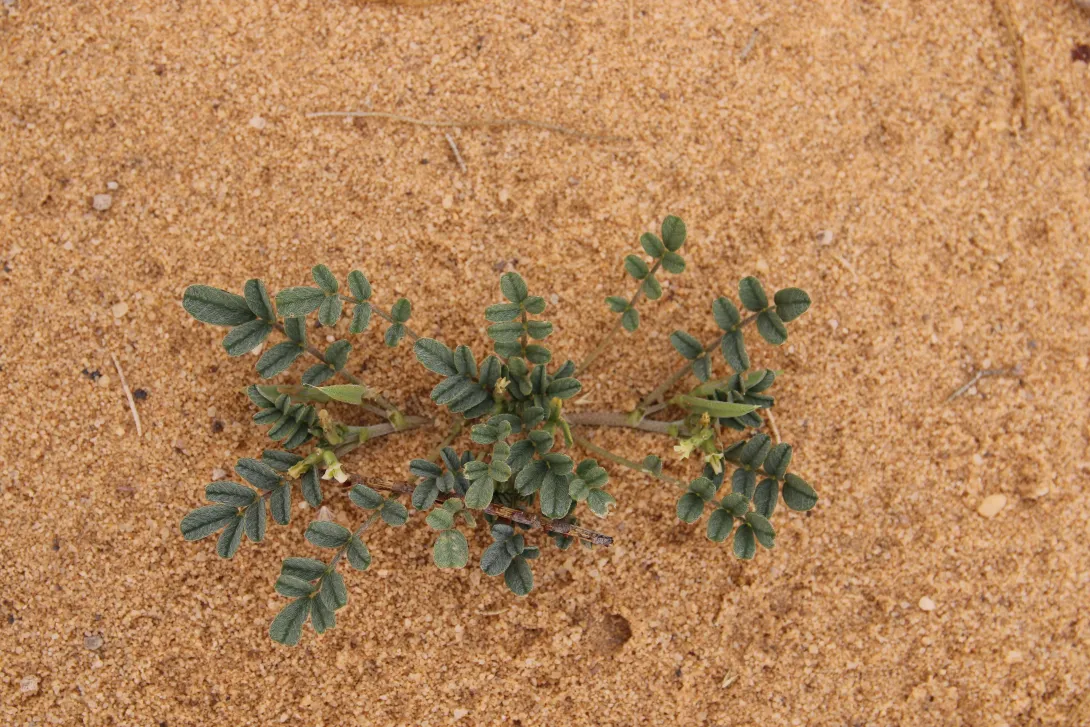
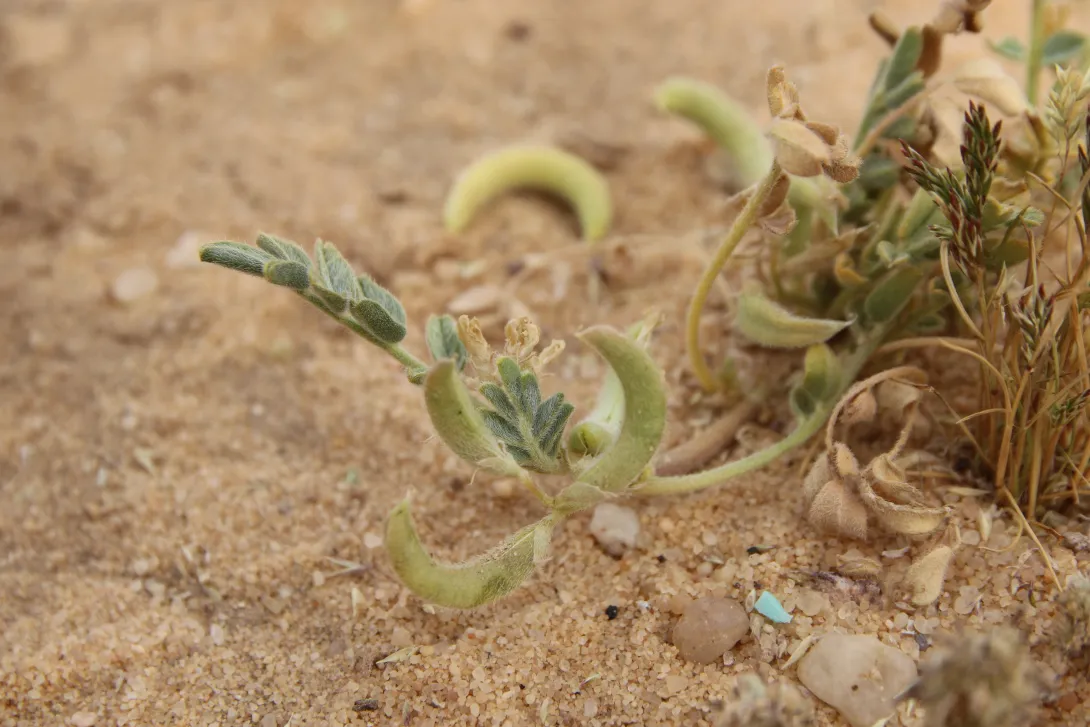
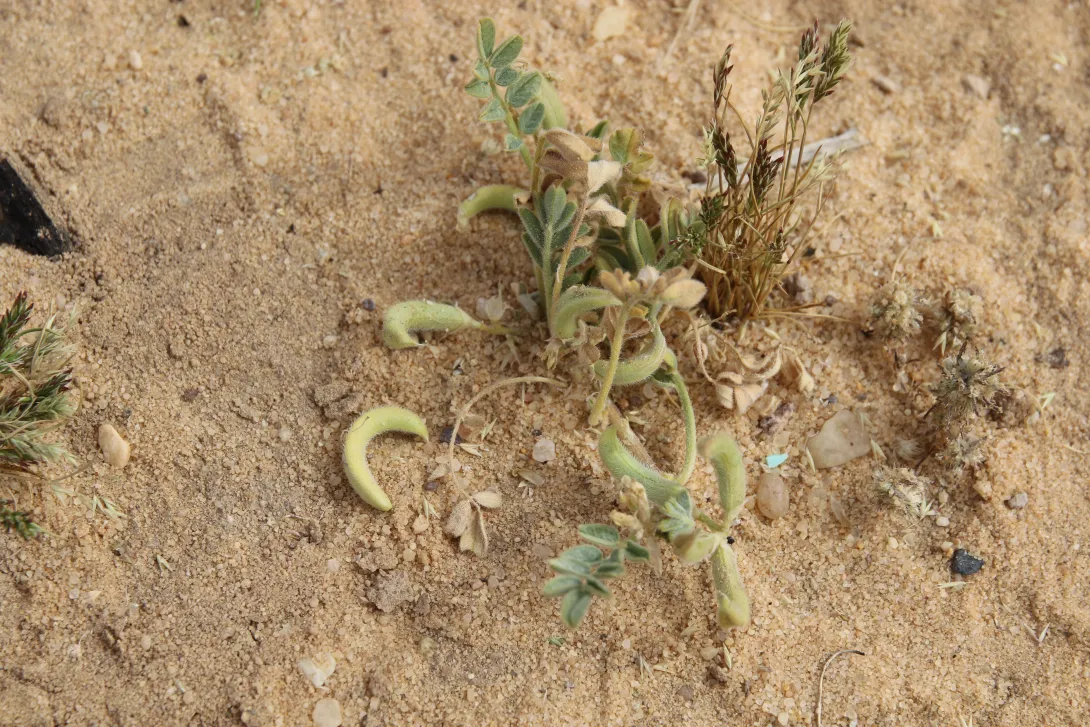
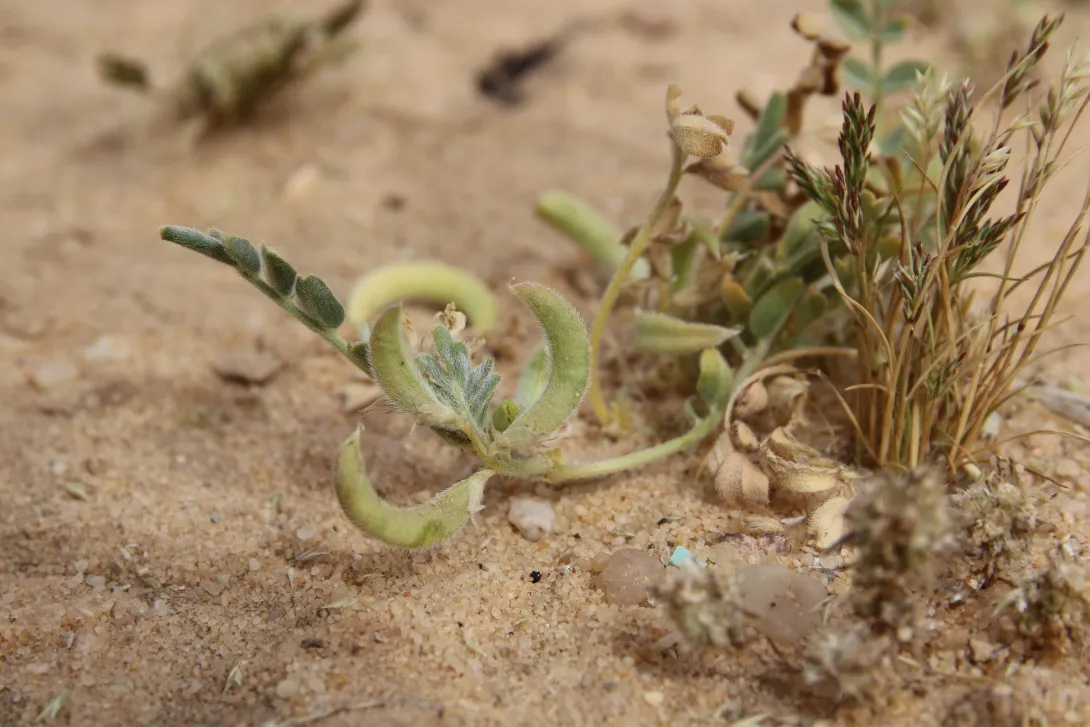
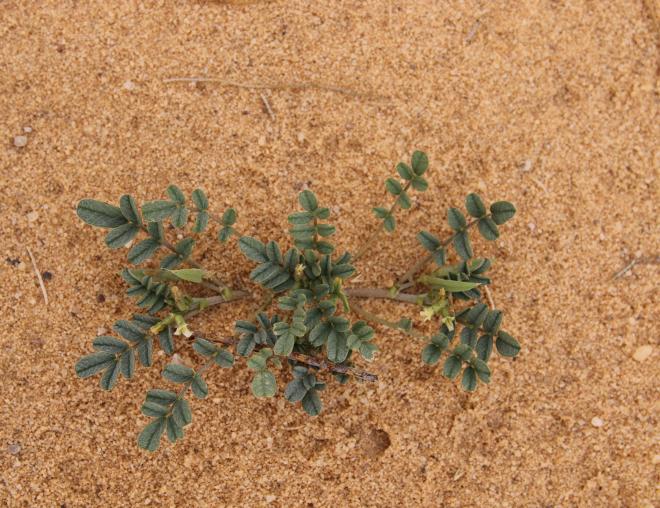
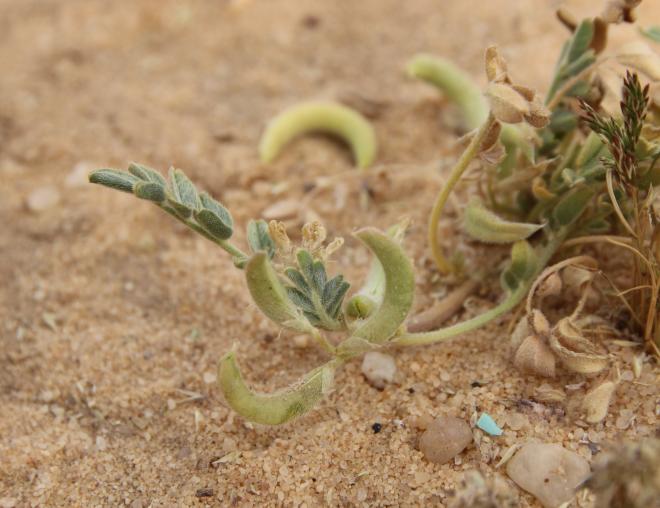
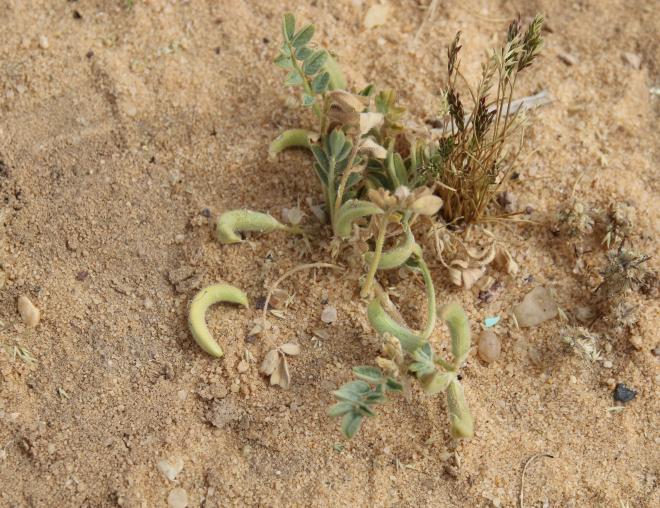
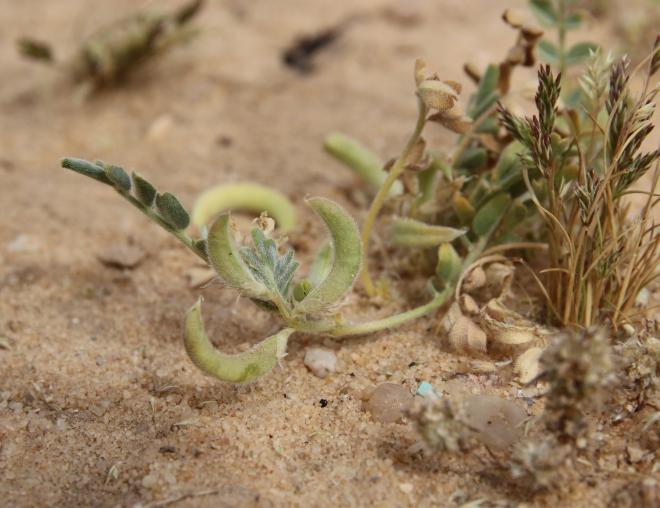
Annual herb, up to 30 cm, with decumbent to ascending stems covered in silky hairs. Leaves imparipinnate, 3–7 pairs of oblong to elliptic leaflets, densely pubescent. Inflorescence a short, dense raceme of purple to violet papilionaceous flowers. Calyx tubular, hairy; corolla up to 12 mm. Pod oblong, inflated, softly pubescent, containing several seeds.
- Growth Form
-
Description
-
Habitat and Distribution
- Habitat
-
Geographical Distribution Range
This Saharo-Arabian - Sudanian species is distributed in Sahara and Middle east until Indian subcontinent from Mauritania to Pakistan. Within the Arabian Peninsula, it is native to Jordan, Saudi Arabia, Gulf States and Oman.
-
Ecology
-
Phenology
JanFebMarAprMayJunJulAugSepOctNovDecFloweringFructification
- Origin
-
IUCN Red List Category
 Not Evaluated
-
Remarks
This species includes two accepted varieties, but only one present in Saudi Arabia: Astragalus eremophilus subsp. eremophilus.
-
Phenology
-
Uses and Values
-
Aromatic and Medicinal Use
Medicinal use
-
Description of Traditional Uses
Astragalus eremophilus is documented in ethnobotanical surveys as a traditional medicinal plant. Its traditional applications include use as an antiperspirant, a tonic, an expectorant, and a treatment for asthma. Additionally, it has been recorded for use in reinforcing sexual desire and in practices related to the management of blood coagulation
-
Aromatic and Medicinal Use
Gallery