Rhanterium epapposum Oliv.
العَرْفَج
Asteraceae
1 / 7

-
Morphological Description
-
Description
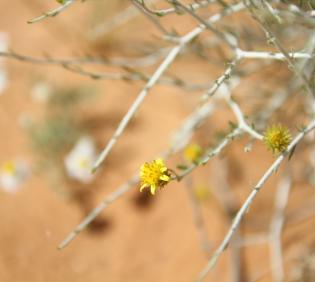
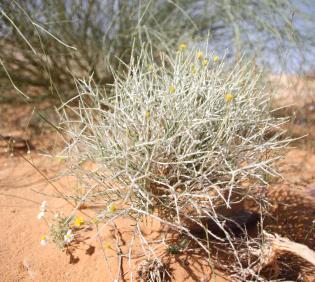
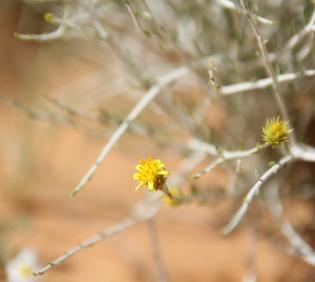
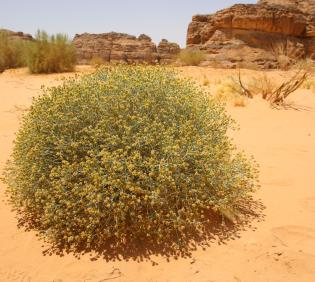
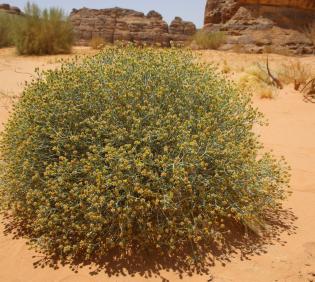
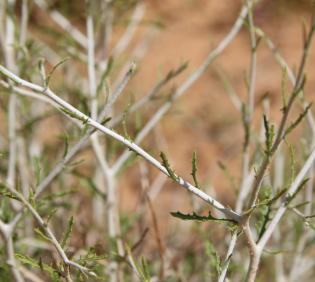
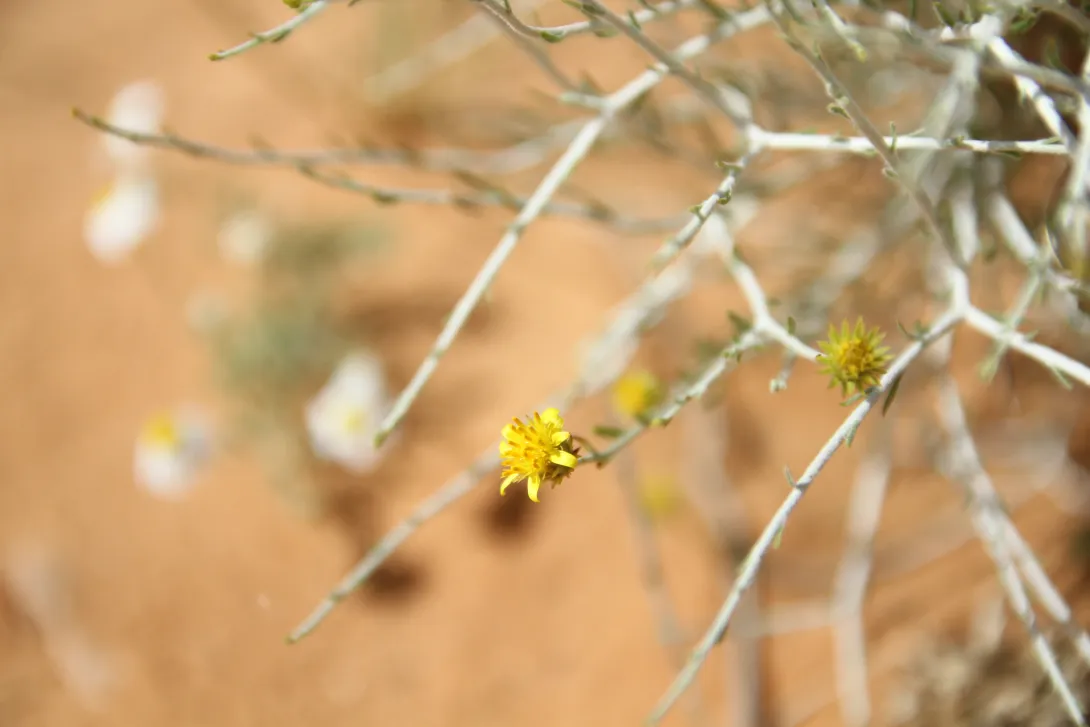
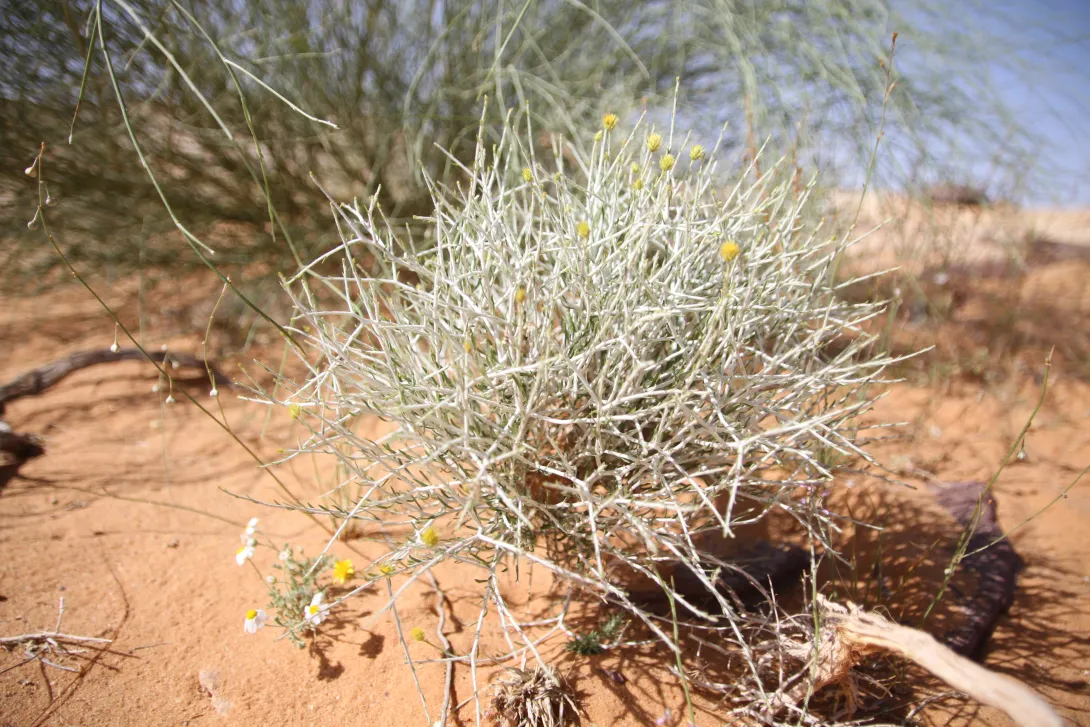
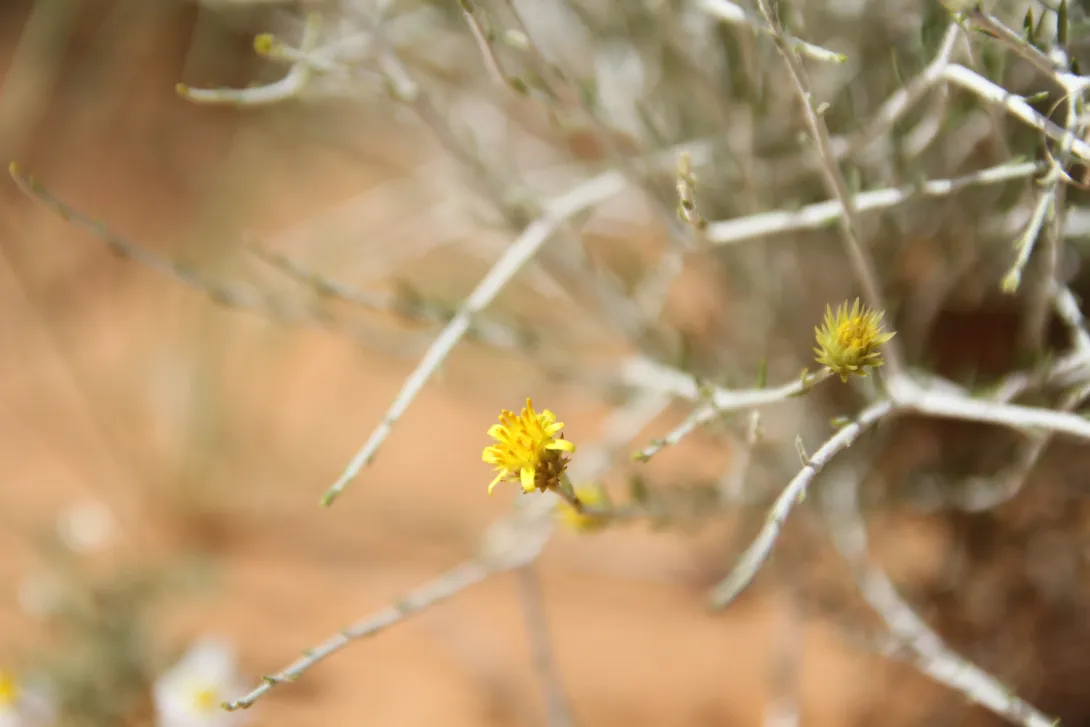
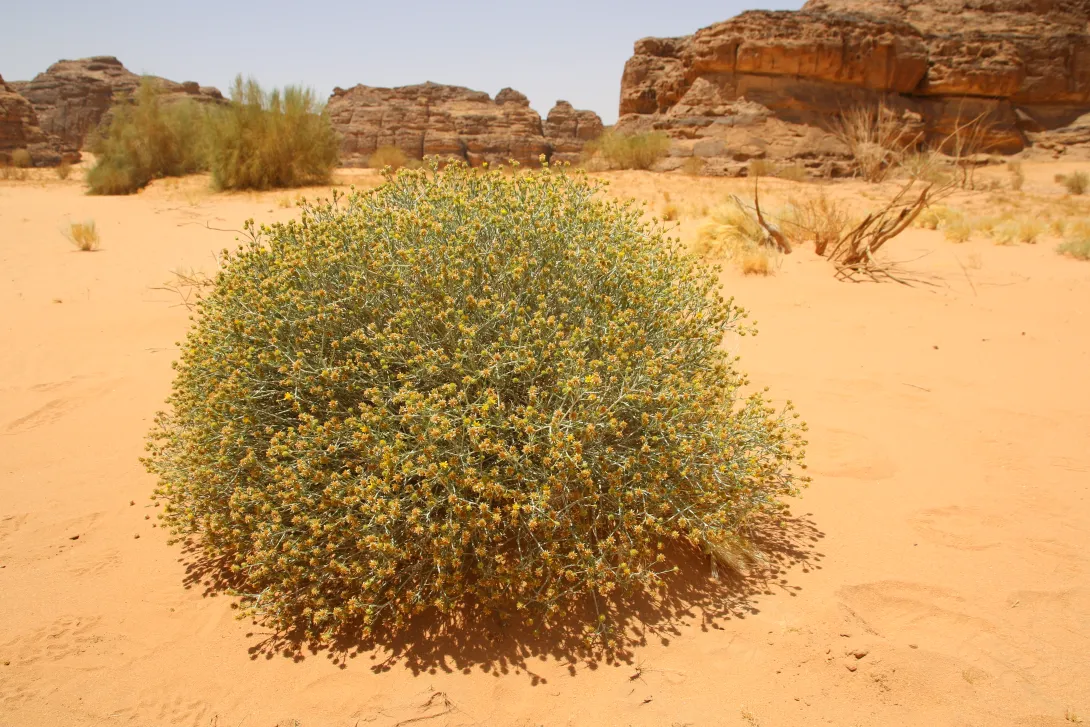
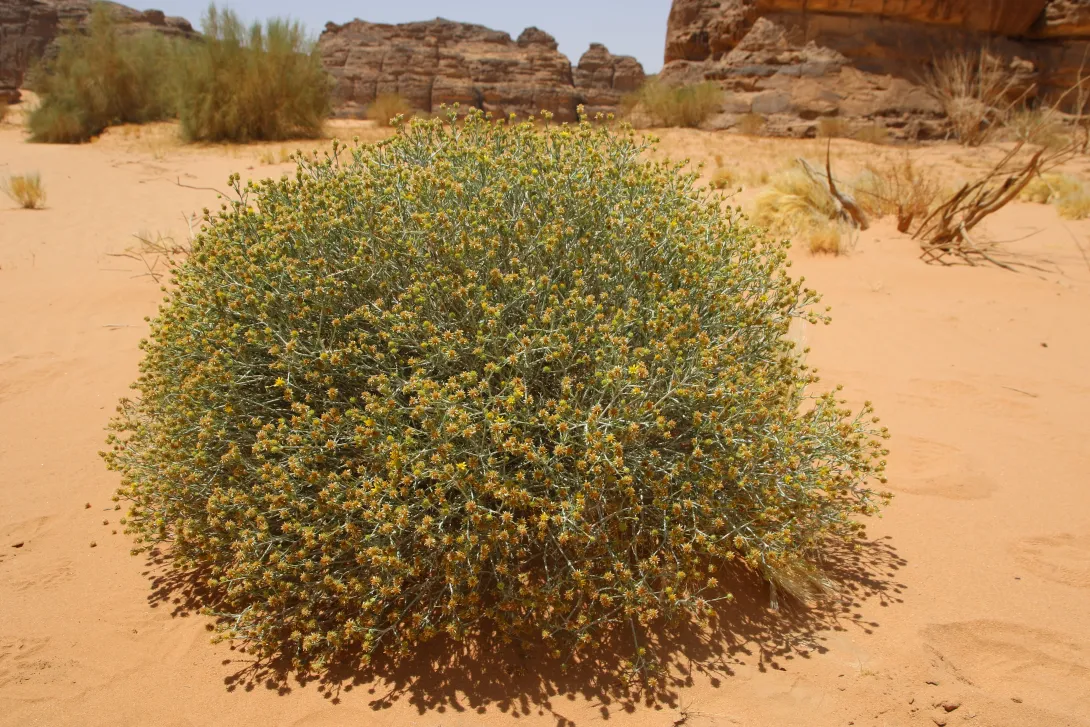
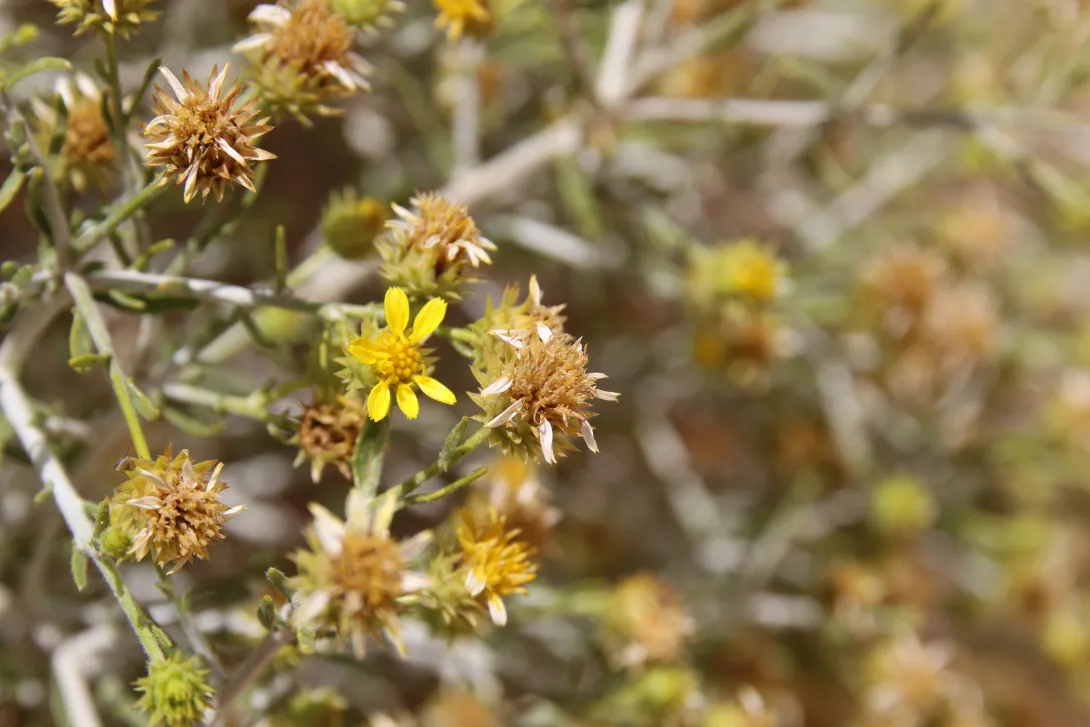
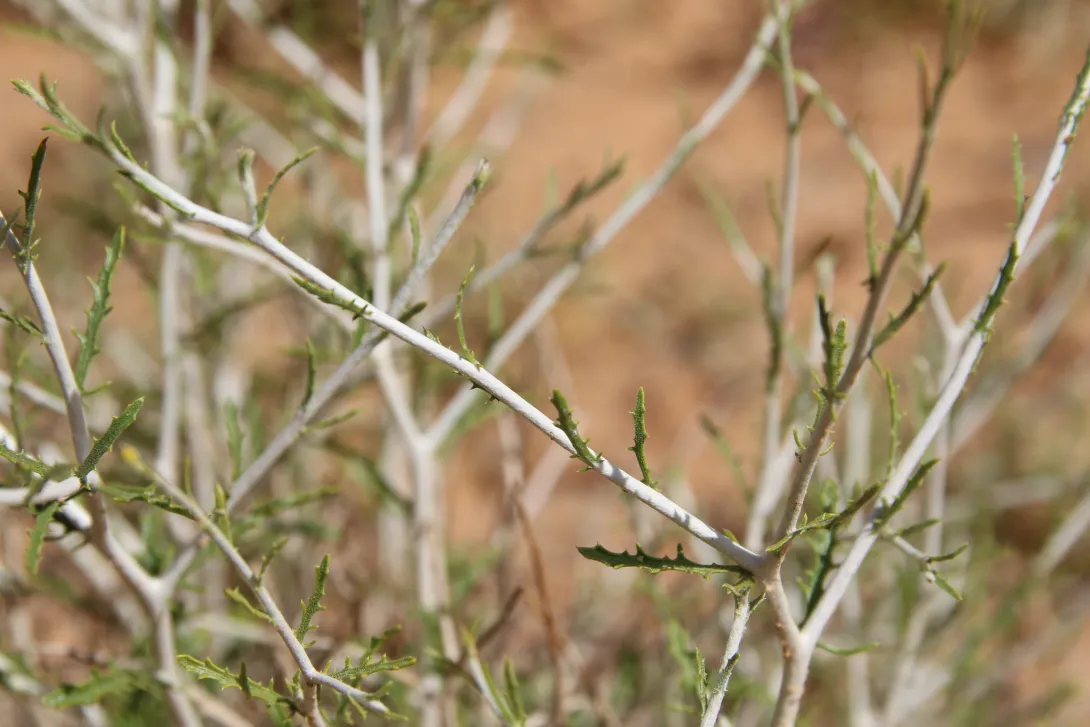
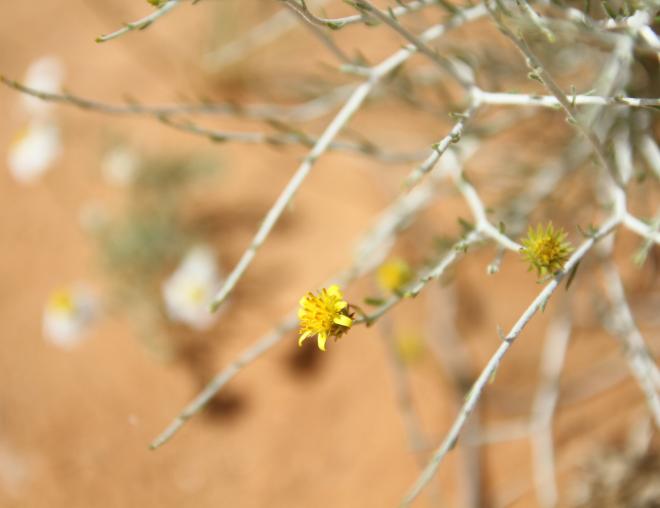
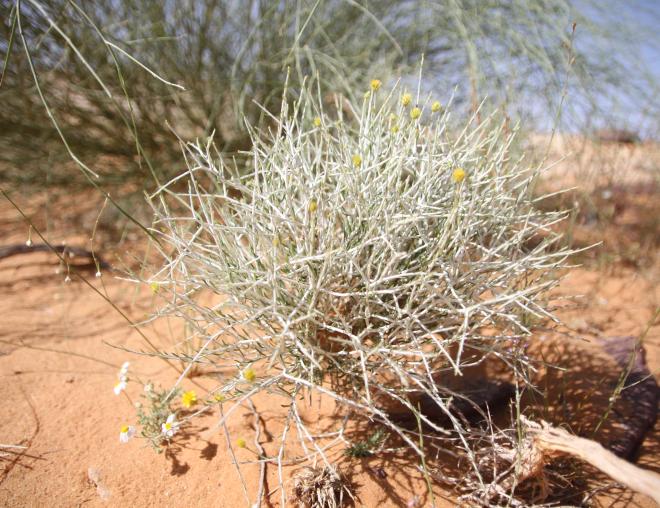
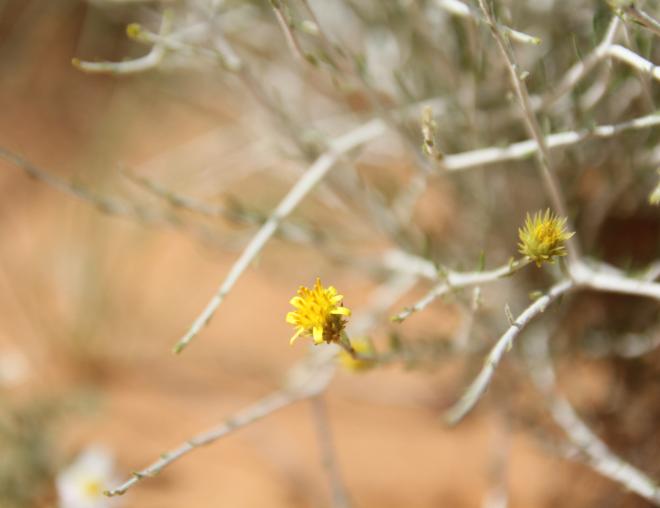
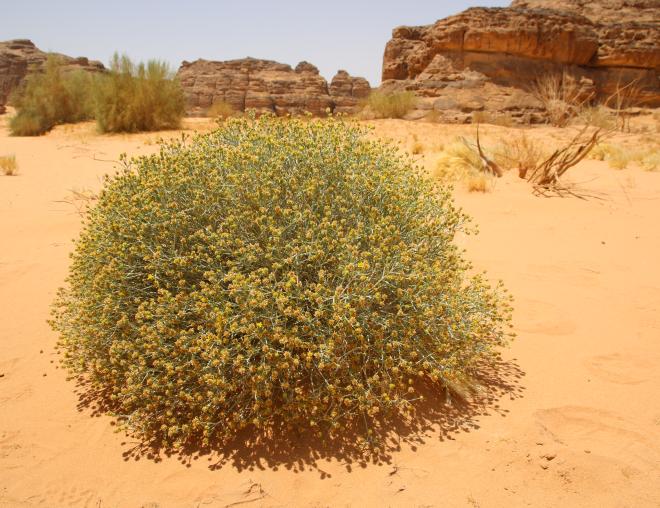
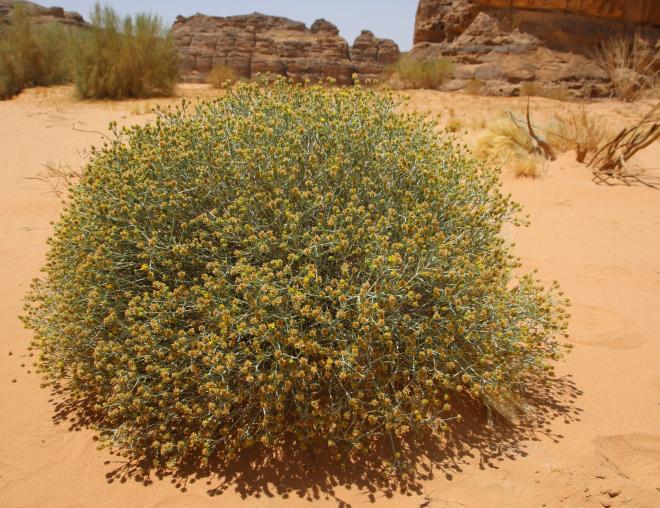
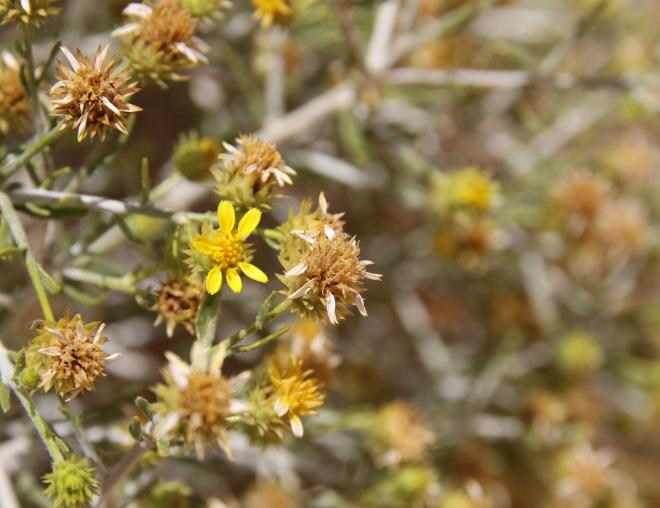
Perennial, much and intricately branched, clumped shrublet, usually up to 75 cm in height but sometimes taller, with young branches fleecy, white-tomentose. Leaves are alternate and sessile, narrow-linear to narrow-ovate, glabrous or sparsely pubescent, remotely dentate to entire and summer-deciduous, up to 30 × 2.3 mm. Heads are heterogamous, solitary, yellow, and terminal on many branches, measuring up to 2.5 mm across. Involucral bracts are hard, glabrous, and lanceolate. Fruits are glabrous, four-ribbed achenes about 2.5 mm long, partially enclosed by individual bracts.
- Growth Form
-
Description
-
Habitat and Distribution
- Habitat
-
Geographical Distribution Range
This Saharo-Arabian species is restricted to the Gulf States, Iran, Iraq, Kuwait, Oman and Saudi Arabia.
-
Ecology
- Origin
-
IUCN Red List Category
 Not Evaluated
-
Uses and Values
-
Aromatic and Medicinal Use
Aromatic usages; Medicinal use
-
Other Usages
Palatable; Melliferous
-
Description of Traditional Uses
Highly valued for traditional medicinal preparations. It is also recognized as an aromatic plant and a source of nectar.
-
Aromatic and Medicinal Use
Gallery