Senna italica Mill.
سَنا / العِشرق
Syn. Cassia italica (Mill.) Lancry (1792)
Dog senna, Mecca senna, Spanish senna
Fabaceae
1 / 10


-
Morphological Description
-
Description
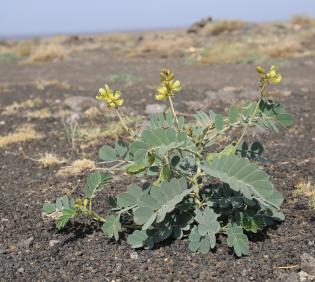
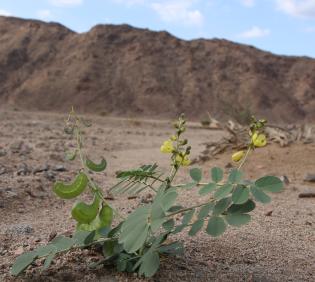
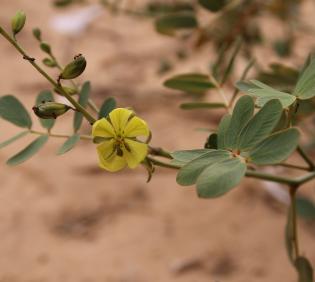
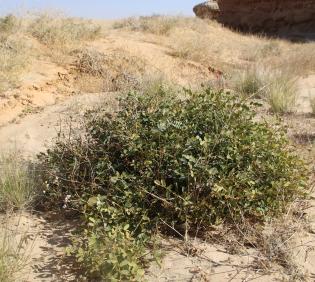
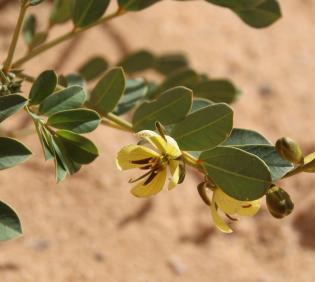
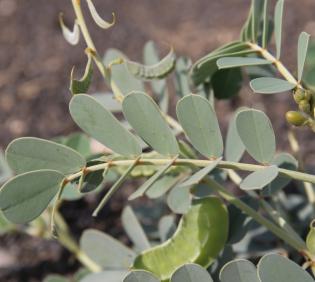
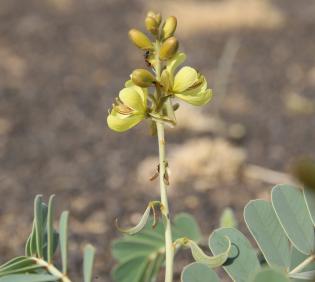
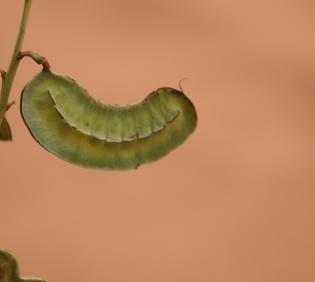
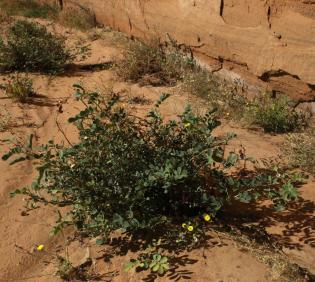
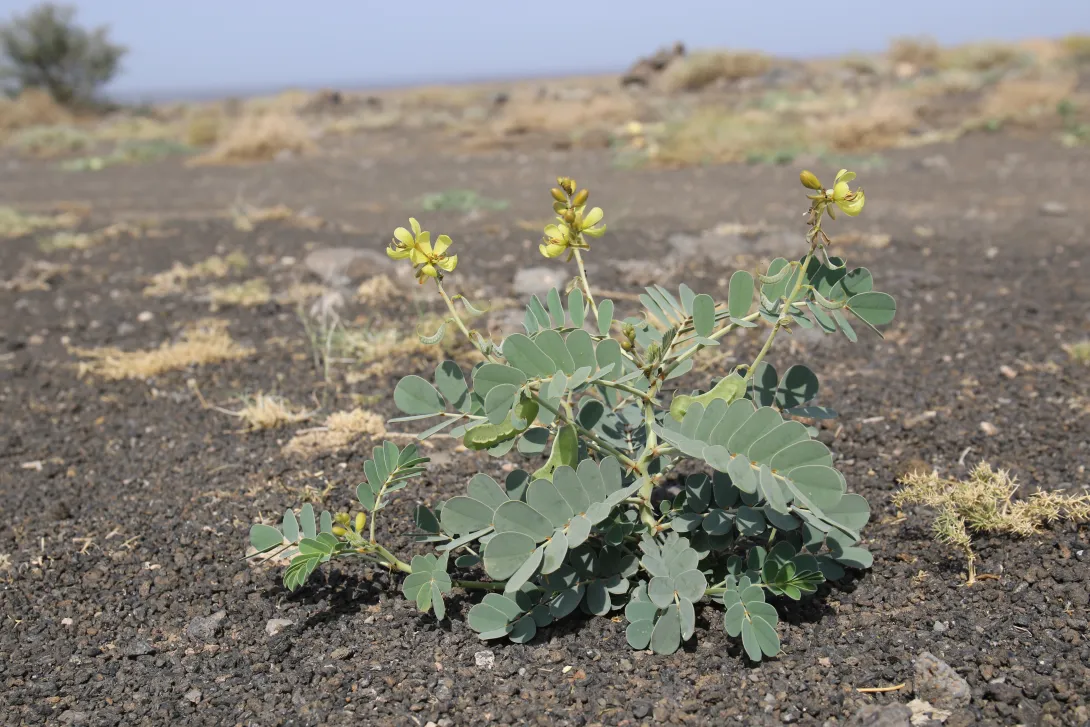
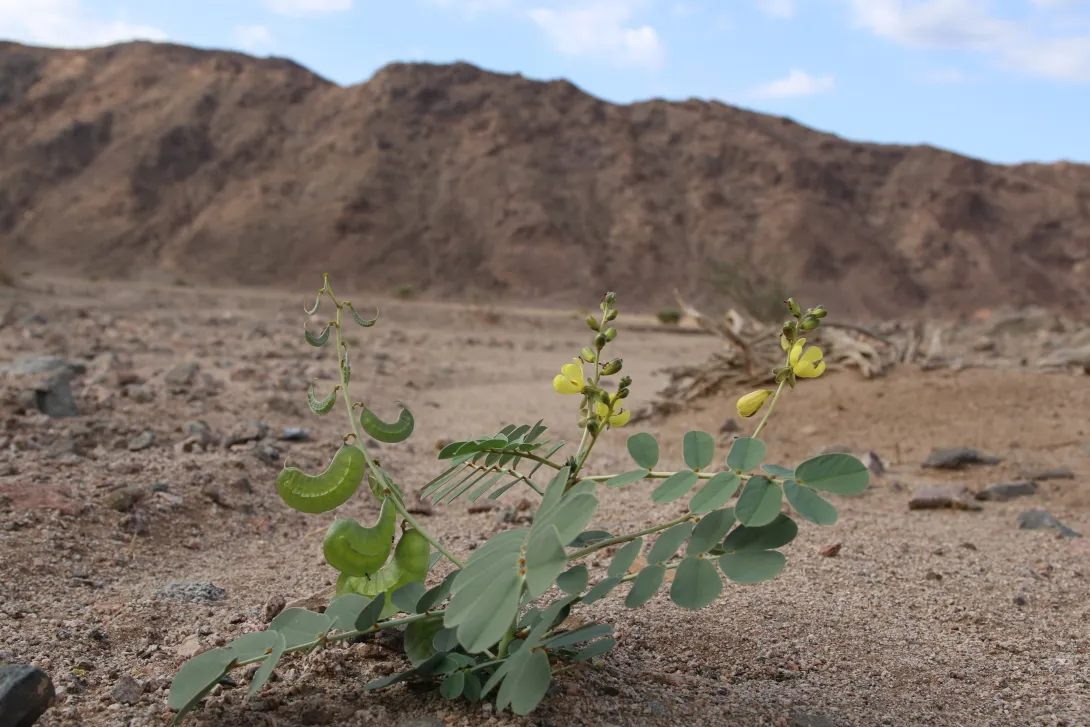
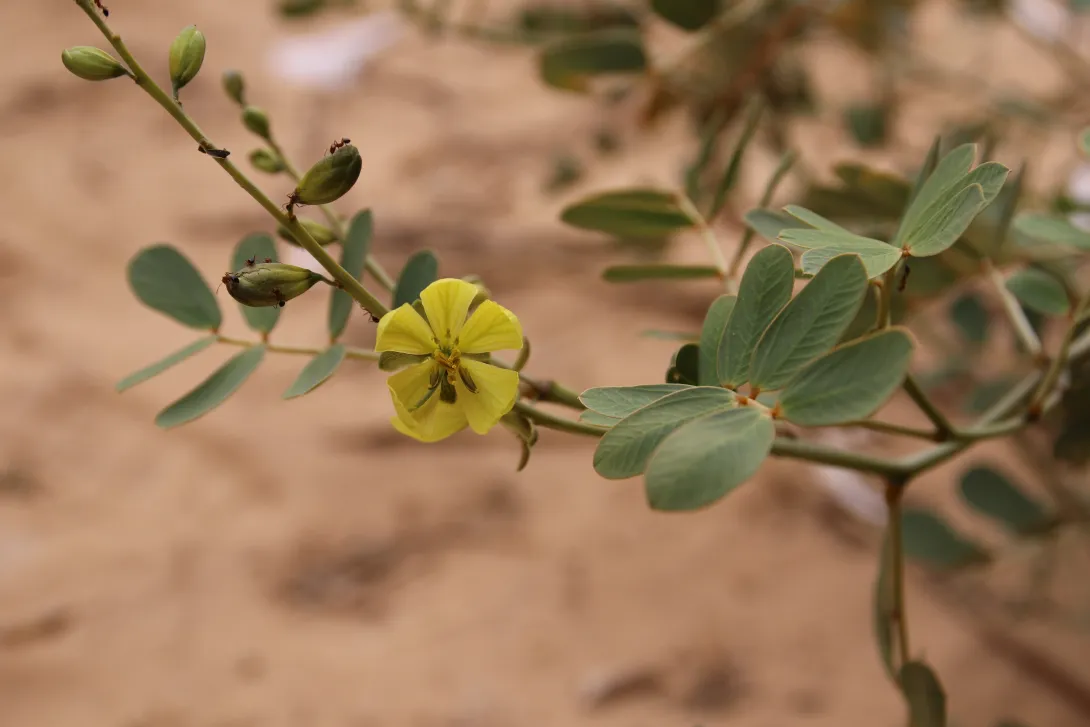
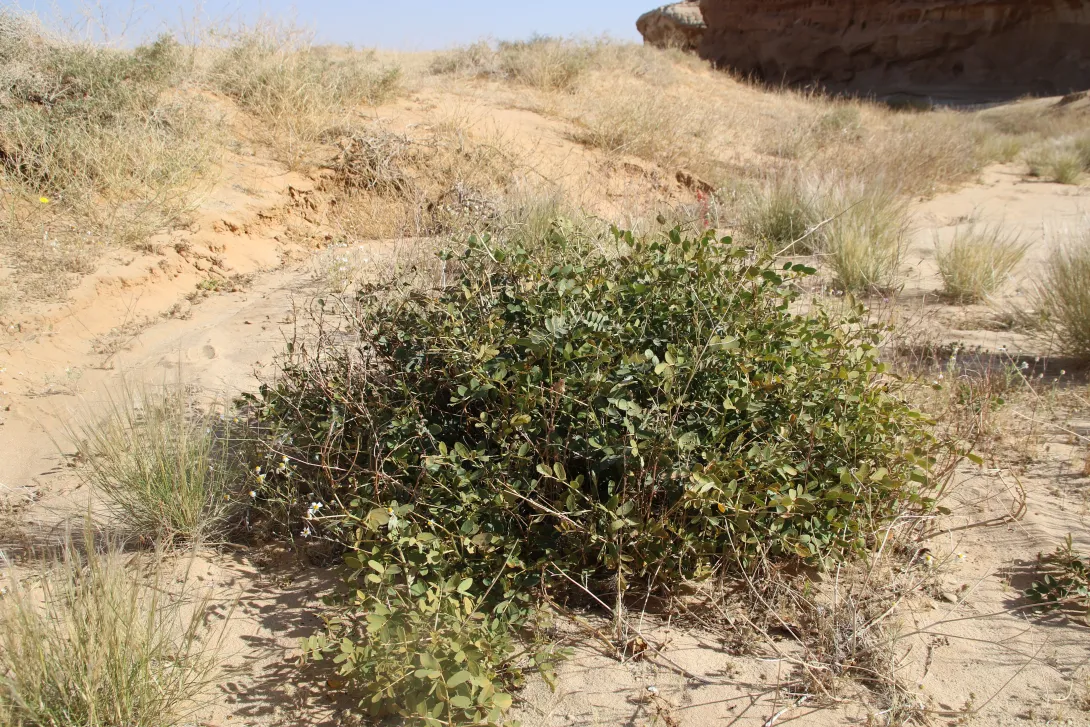
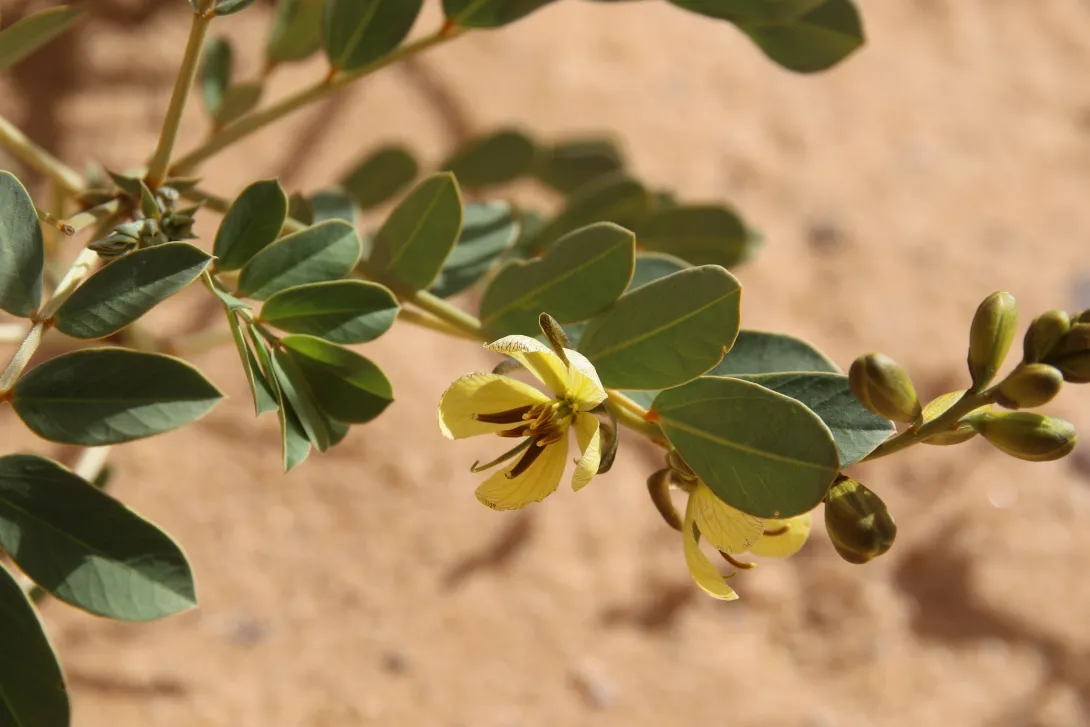
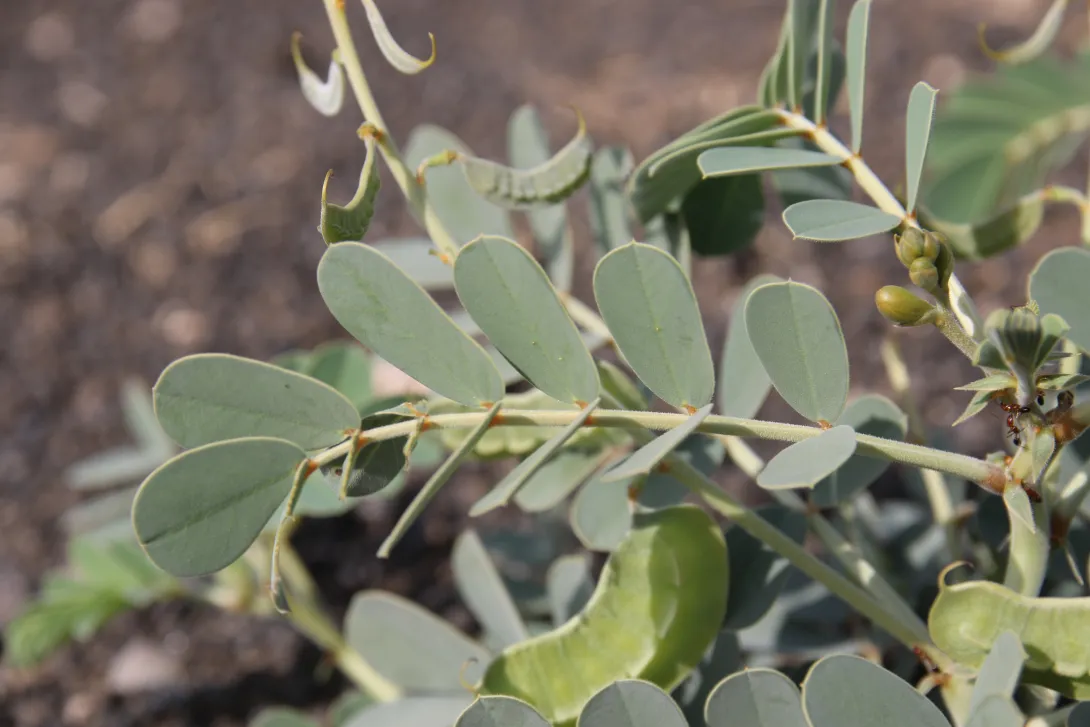
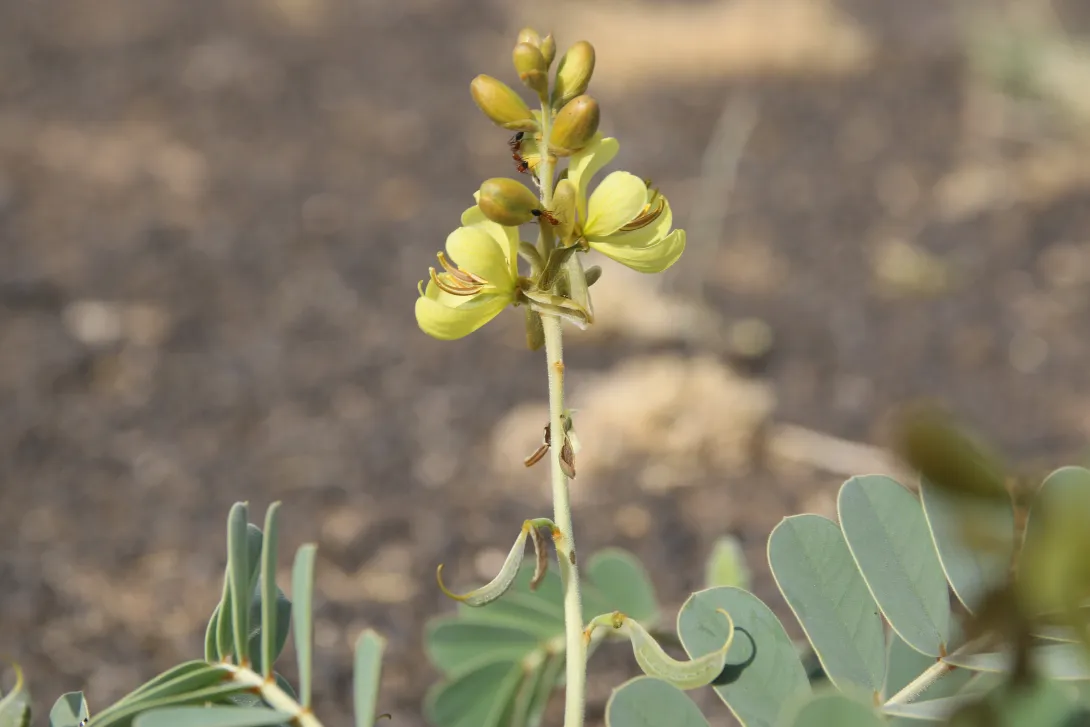
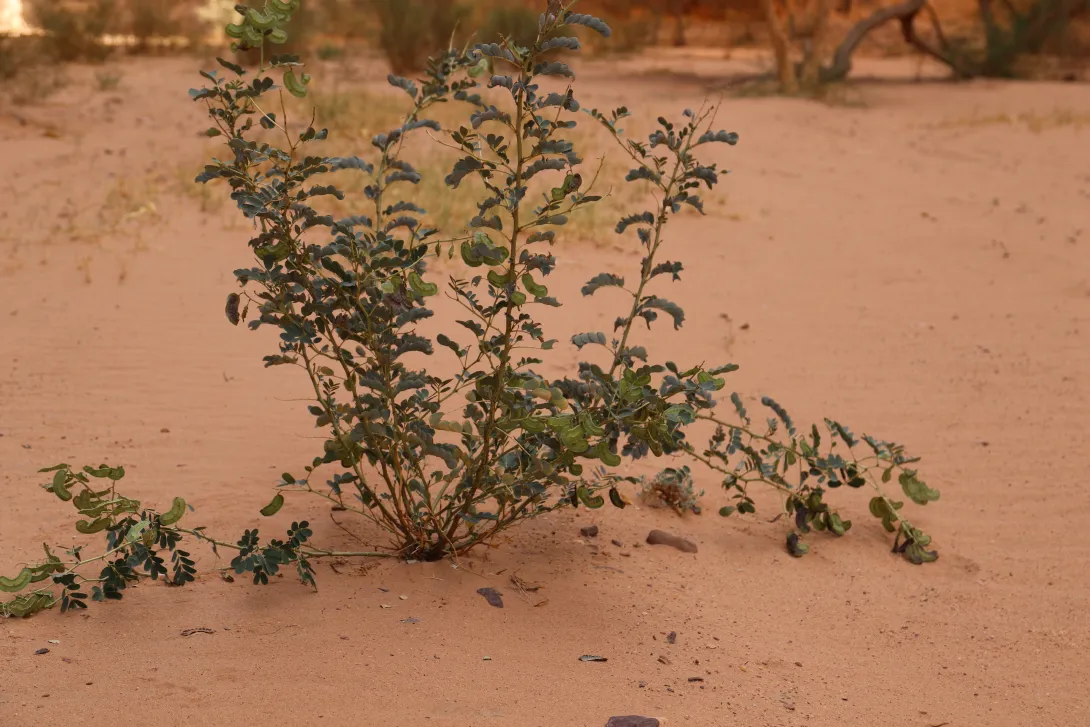
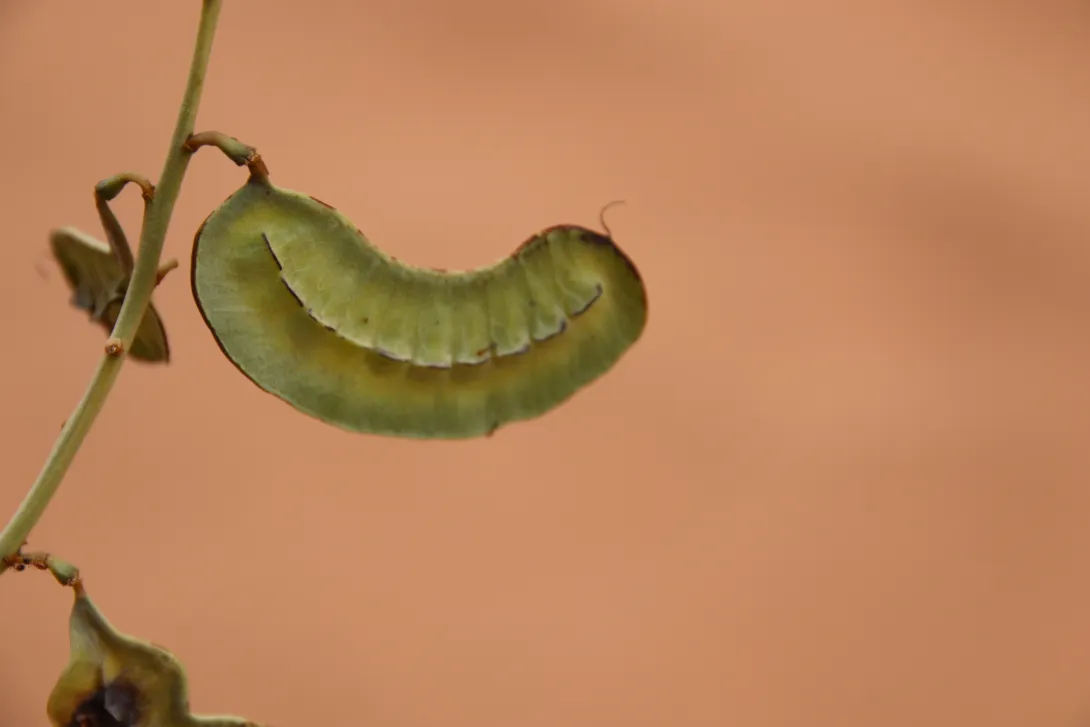
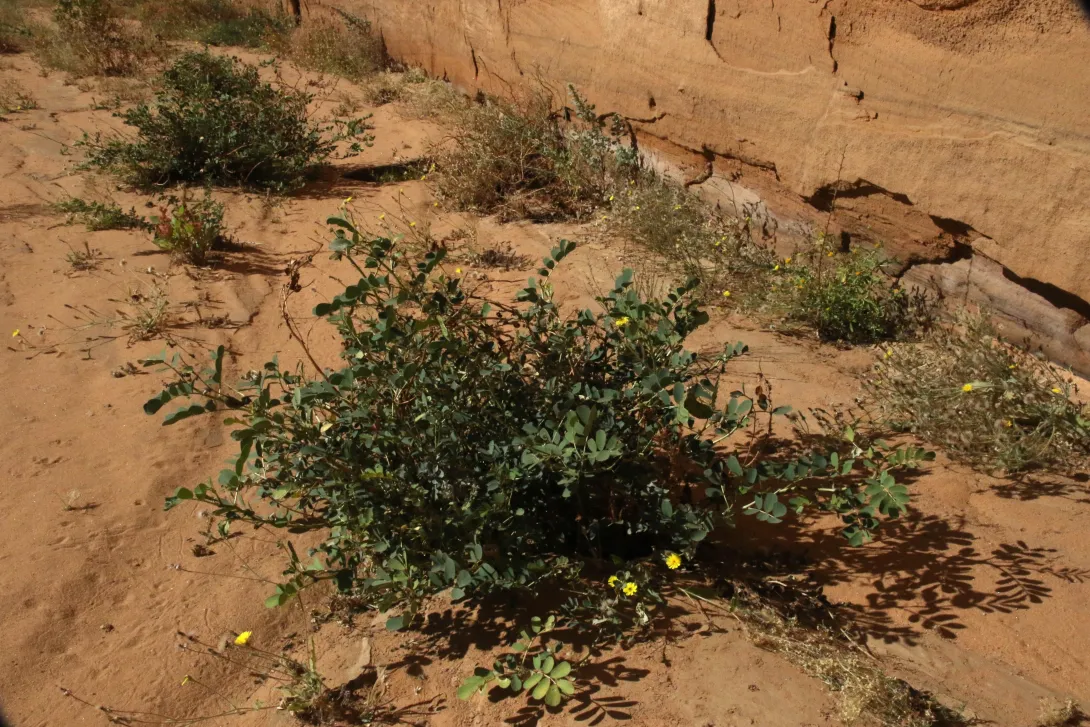
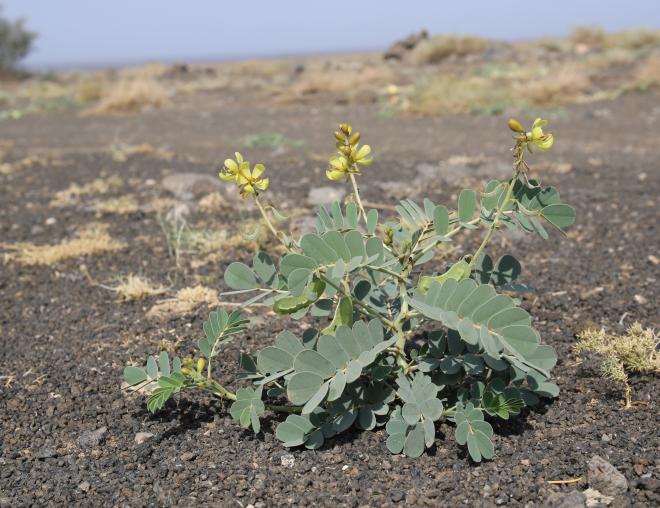
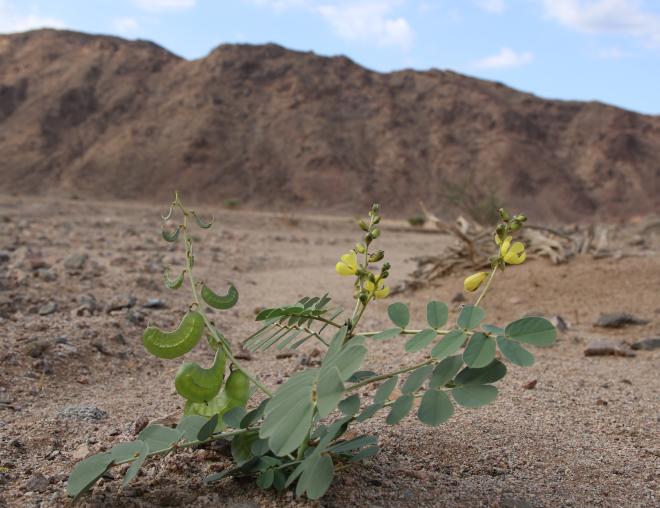
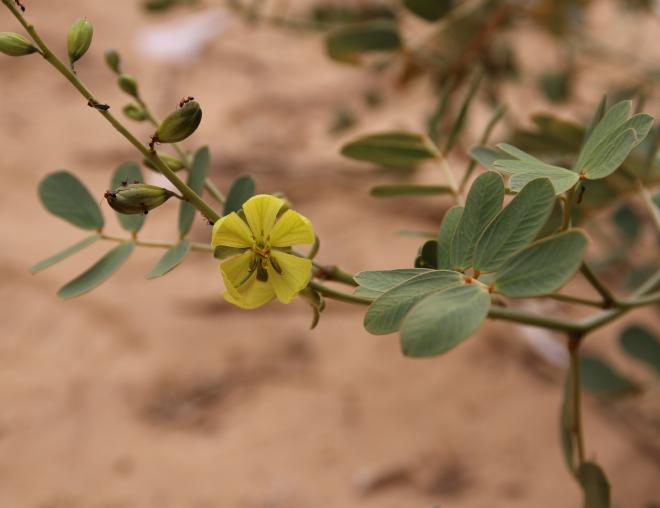
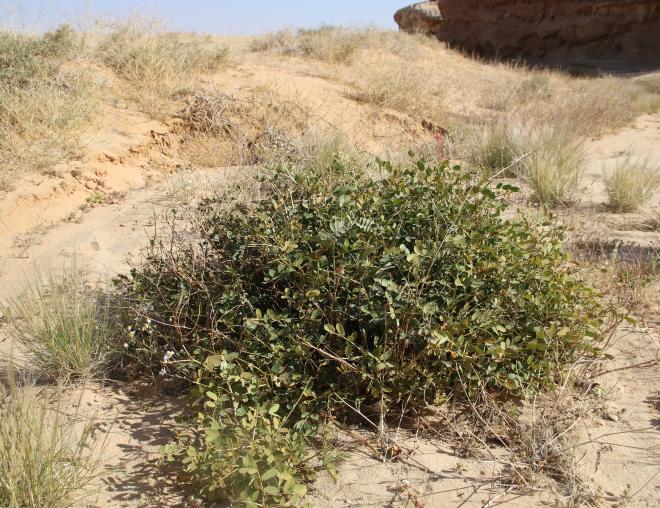
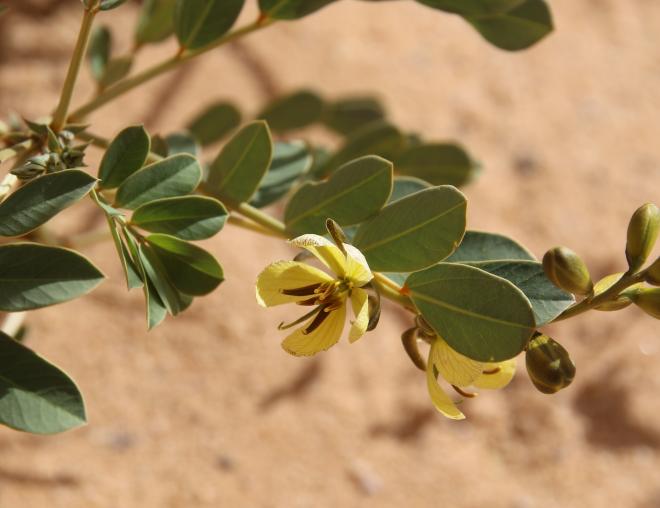
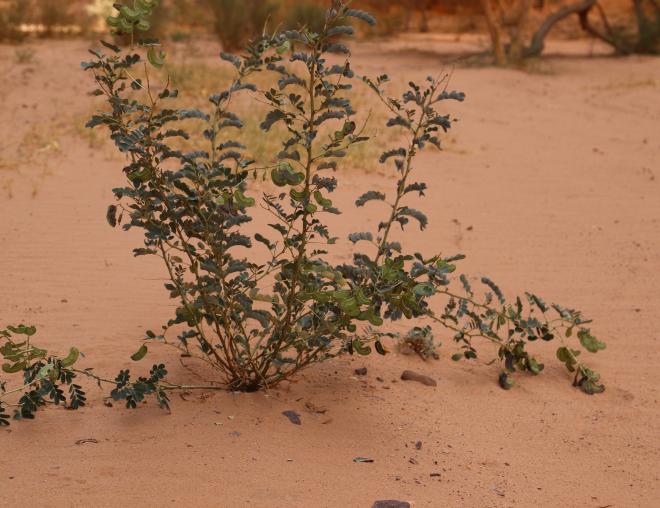
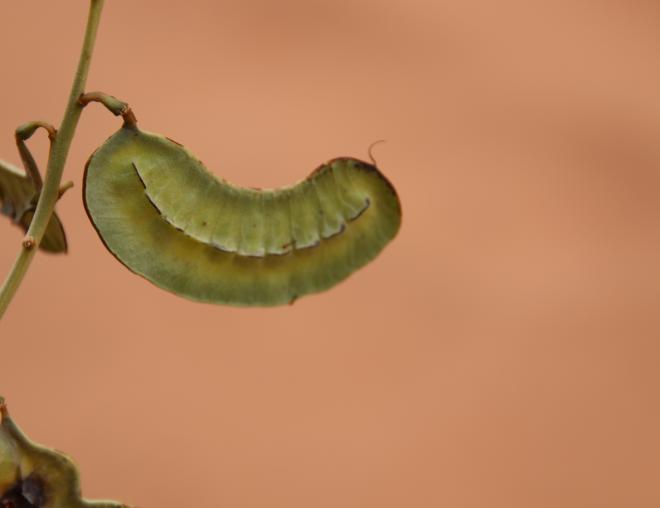
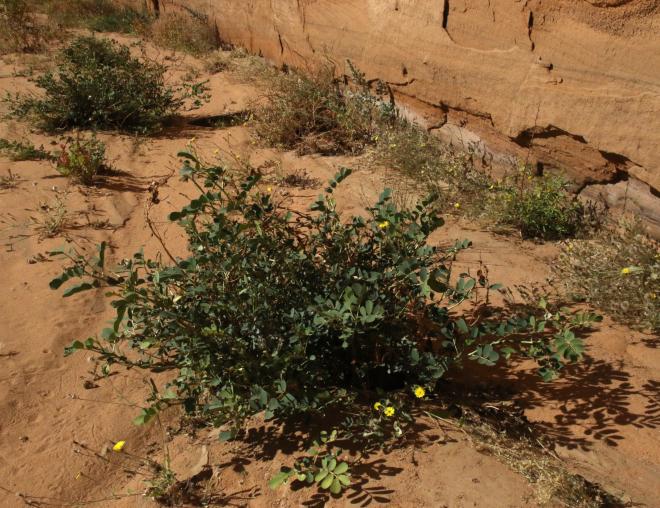
Perennial, herbaceous shrub up to 1.5 m tall. Leaves up to 10 cm long ; leaflets up to 6 pairs, obovate to obovate-oblong, 2.5 cm x 11 mm, symmetrically or asymmetrically cuneate at the base, obtuse but mucronate at the tip. Racemes many-flowered. Flowers medium-sized. Sepals yellow, up to 12 mm long. Petals usually yellow with darker veins, up to 1.75 cm long, obovate. Two or 3 lower stamens longest, 5 medium sized, 2 upper much shorter. Pods up to 5 cm x 18 mm, compressed flat, oblong, curved, with a longitudinal flap-like crest above each seed. Seeds compressed, subquadrate to rectangular, reticulated ridged, up to 7 mm x 4 mm.
- Growth Form
-
Description
-
Habitat and Distribution
- Habitat
-
Geographical Distribution Range
This Sudanian species is distributed across Africa, the Arabian Peninsula, Pakistan, and India. For the Arabian Peninsula, it is native to Jordan, Saudi Arabia, Qatar, Gulf States, Oman and Yemen and has been recorded as extinct on Socotra. This species has also been introduced to several regions outside of its native range including islands of the Antilles, Colombia, Venezuela, Myanmar and Uzbekistan.
-
Ecology
-
Phenology
JanFebMarAprMayJunJulAugSepOctNovDecFloweringFructification
- Origin
-
IUCN Red List Category
 Not Evaluated
-
Phenology
-
Uses and Values
-
Aromatic and Medicinal Use
Medicinal use
-
Other Usages
Palatable; Melliferous
-
Description of Traditional Uses
Traditionally used as a purgative and for skin-related preparations. It may also provide browse, fuel, and nectar.
-
Aromatic and Medicinal Use
Gallery