Searsia tripartita (Ucria) Moffett
العَرن
Syn. Rhus tripartita (Ucria) Grande, Rhamnus tripartita Ucria
Tripartite Sumac
Anacardiaceae
1 / 6

-
Morphological Description
-
Description
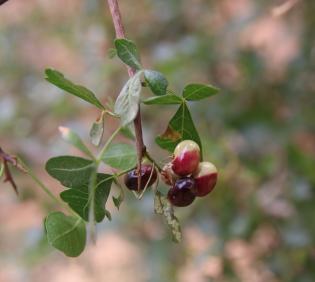
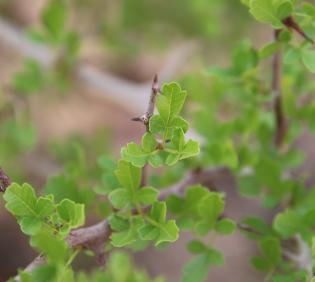
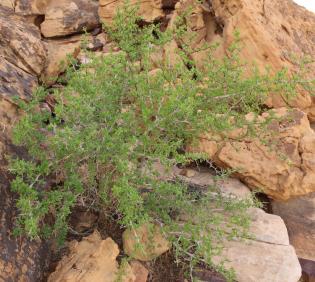
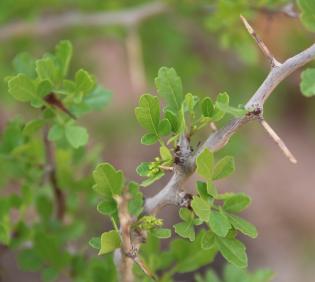
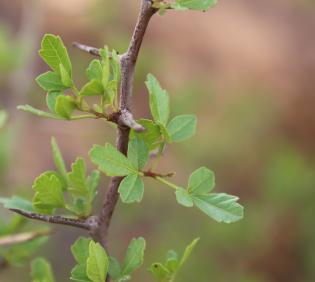
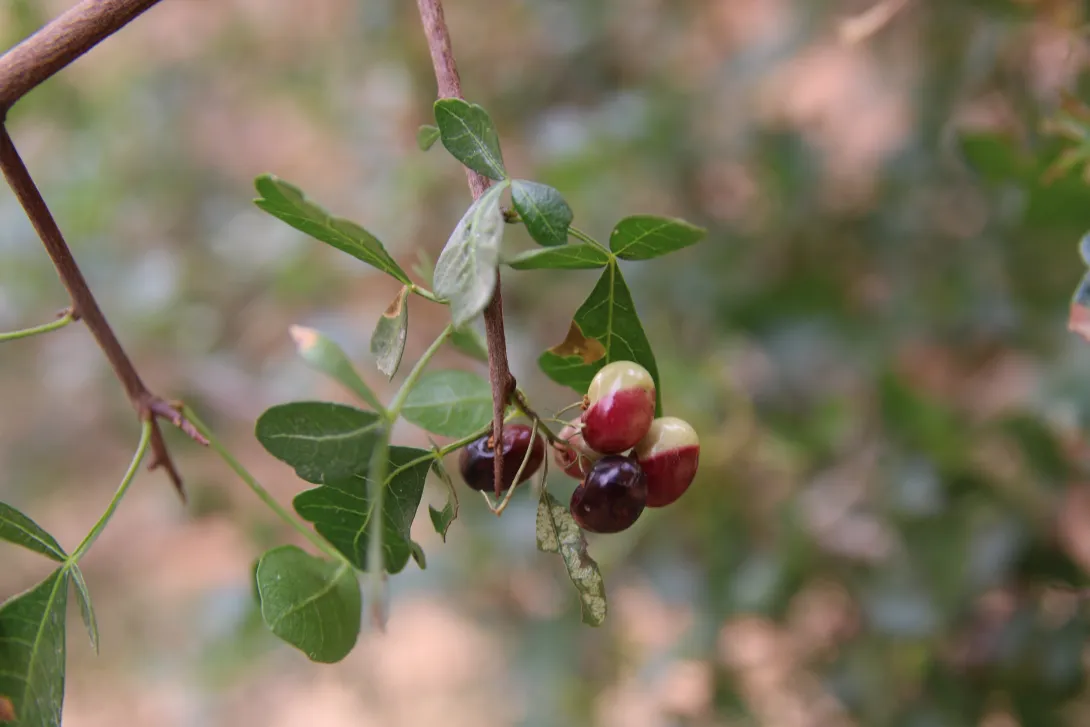
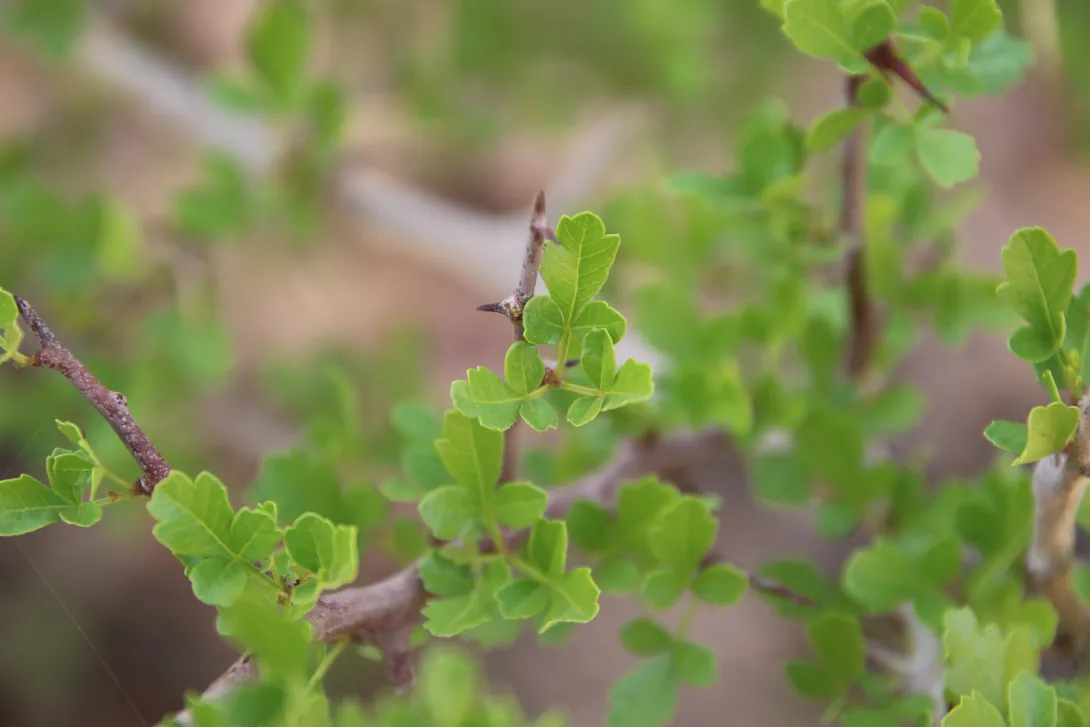
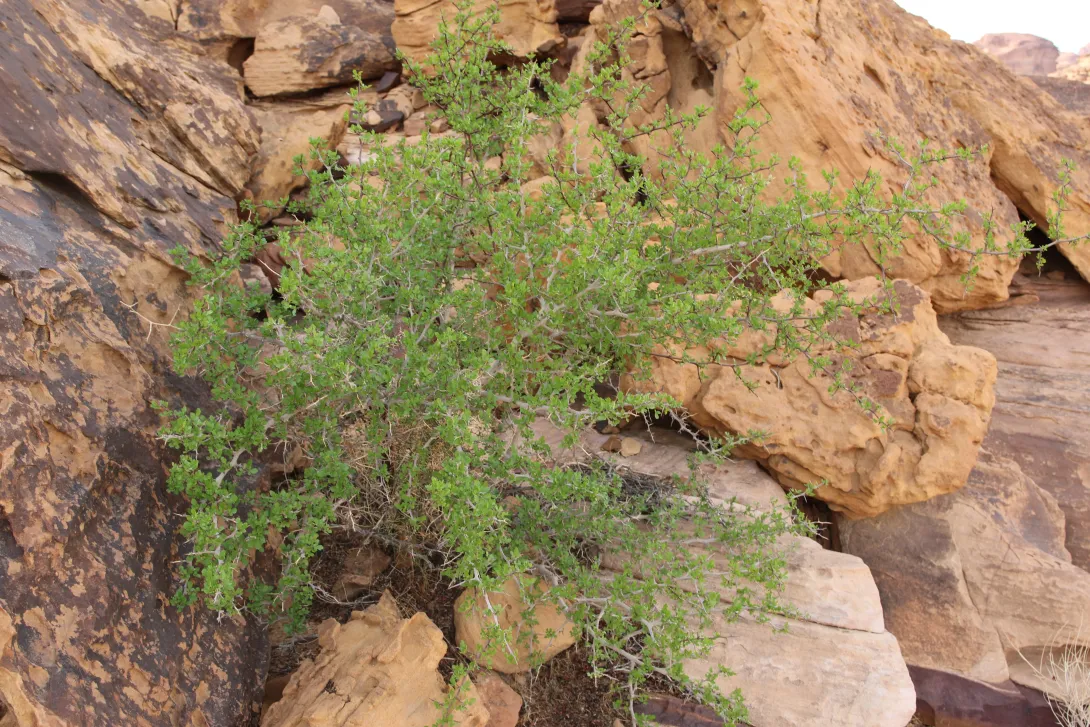
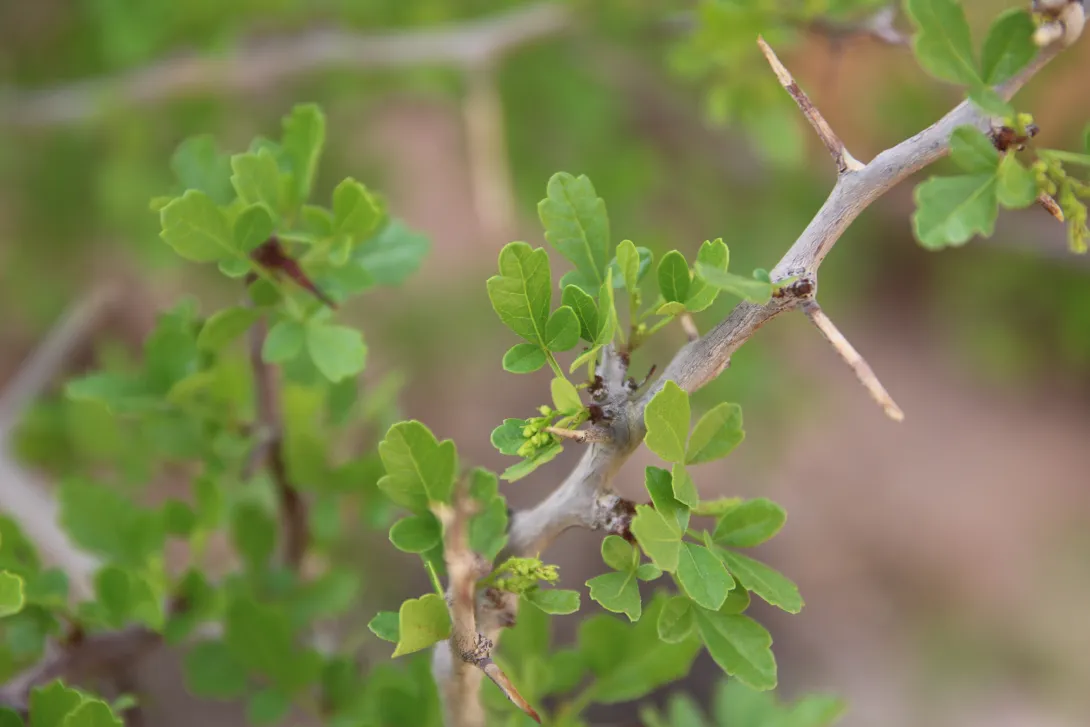
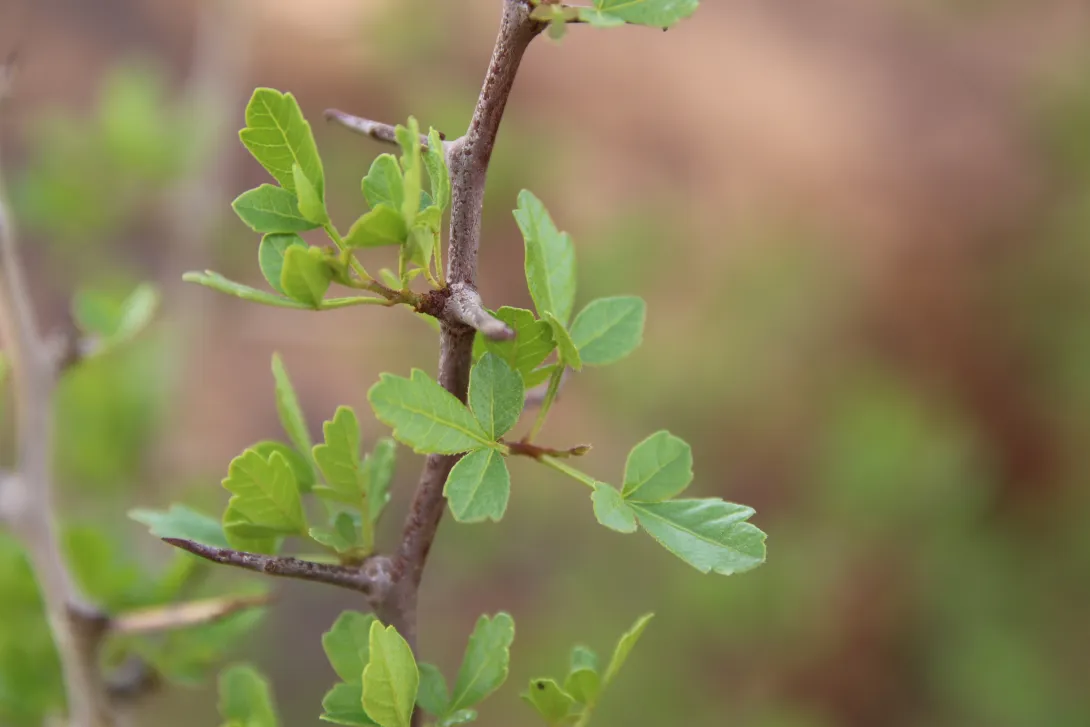
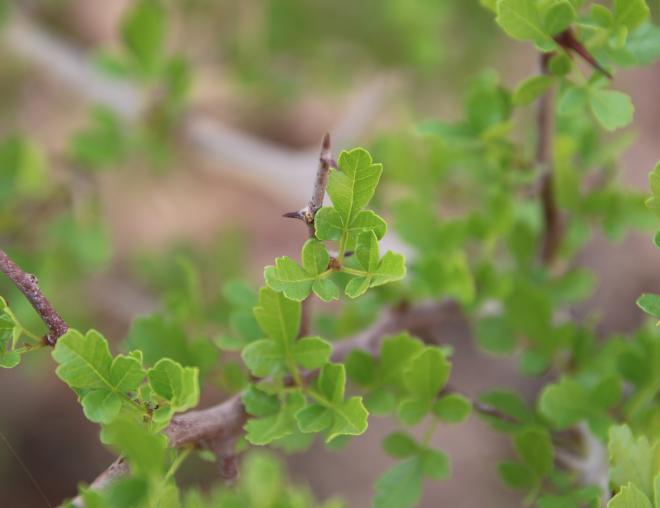
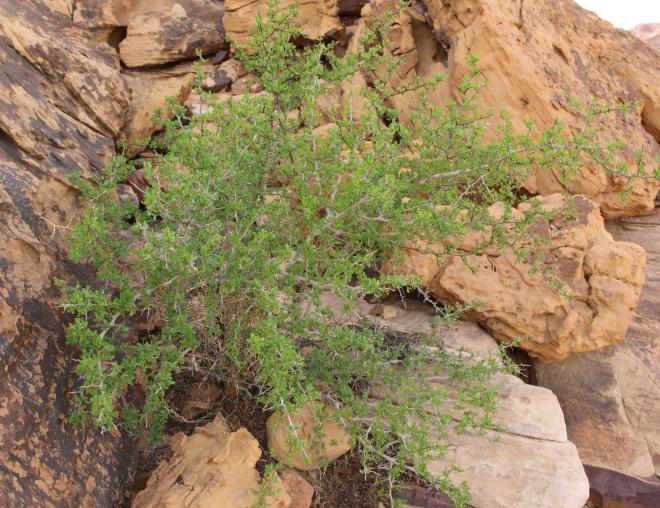
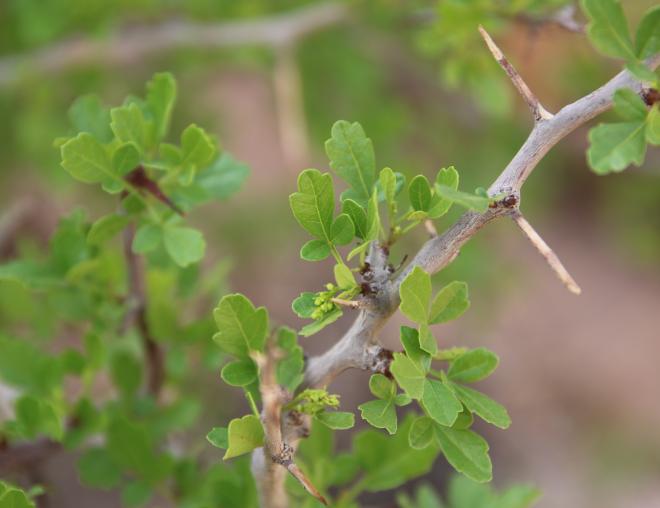
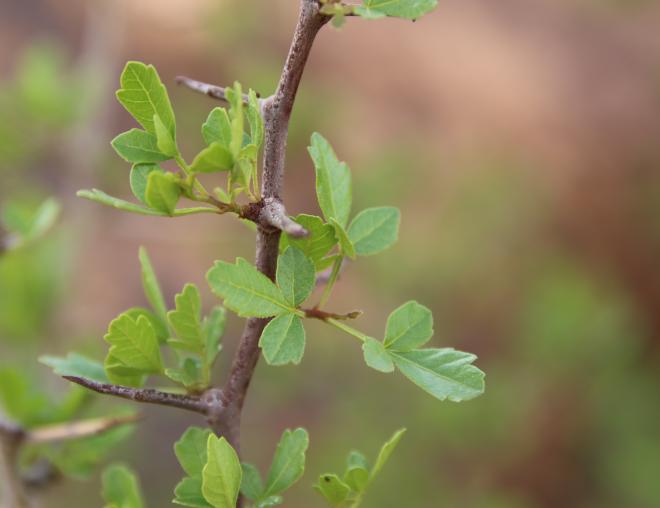
Glabrous, thorny shrub reaching up to 3 meters in height, with reddish, spinescent, and often twisted branchlets. This species is typically deciduous, shedding its leaves in response to climatic conditions, and frequently appears leafless or sparsely foliated. Leaves are trifoliate or pinnate, 1.5–3 cm long, with hairy, cuneate-lobed leaflets that are usually dentate and sessile. Flowers are tiny and greenish, arranged in short axillary or terminal panicles measuring 2–3 cm. Each flower has five ovate-lanceolate petals about 2 mm long, blunt-tipped, and five stamens. The fruit is a glossy red drupe, glabrous, flattened on the sides, and up to 7 mm in length.
- Growth Form
-
Description
-
Habitat and Distribution
- Habitat
-
Geographical Distribution Range
This Mediterranean and Saharo-Arabian species is distributed in North Africa and Arabian Peninsula, occuring in Morocco, Western Sahara, Algeria, Tunisia, Libya, Sudan, South Sudan, Niger, Mauritania, Mali, Sinai, Egypt, Saudi Arabia, Lebanon, Syria and Jordan.
-
Ecology
-
Phenology
JanFebMarAprMayJunJulAugSepOctNovDecFloweringFructification
- Origin
-
IUCN Red List Category
 Least Concern
-
Remarks
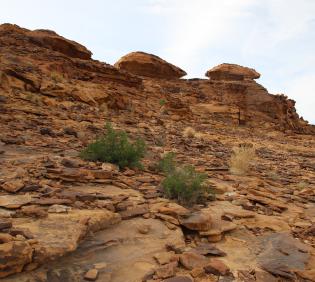
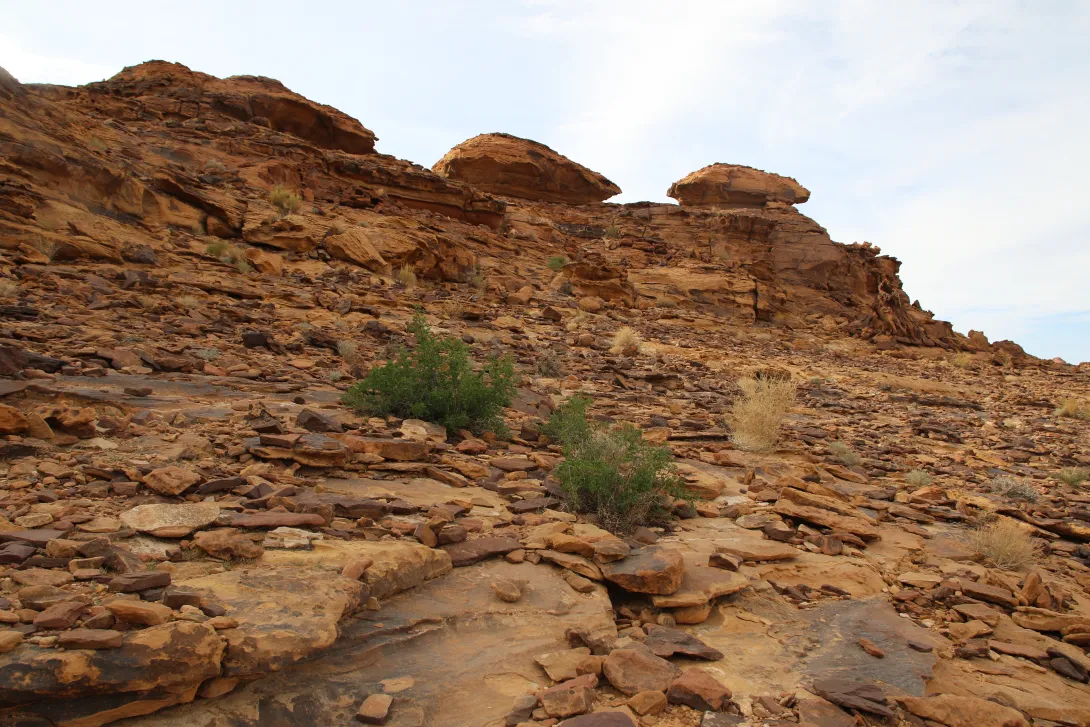
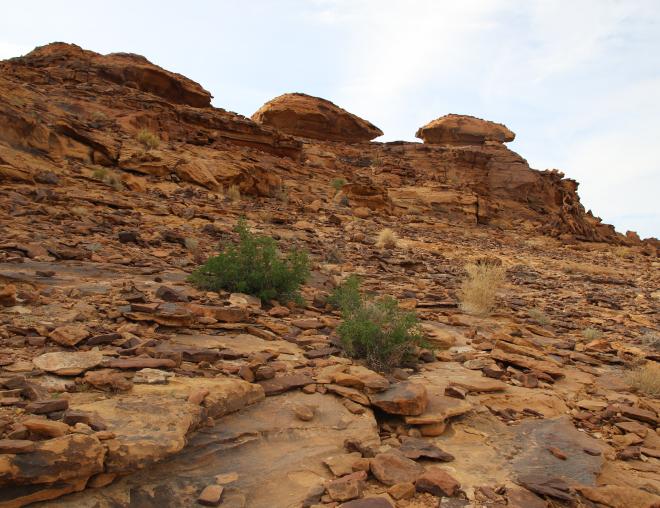
This species remains relatively uncommon in AlUla County and grow only in montain cliffs and outcrops. This species is from the same Family as Mango, Cashew and Pistachio. It is also from the same genus as Rhus coriaria L., called Sumac summaq (سمّاق) and it is a plant that is well-know as it is widely used as species for cooking in the Middle east.
-
Phenology
-
Uses and Values
-
Aromatic and Medicinal Use
Medicinal use
-
Other Usages
Palatable; Edible for birds; Melliferous
-
Description of Traditional Uses
Used as browse, for food and fuel, and in traditional remedies; fruits and foliage may be used by wildlife and livestock.
-
Aromatic and Medicinal Use
Gallery