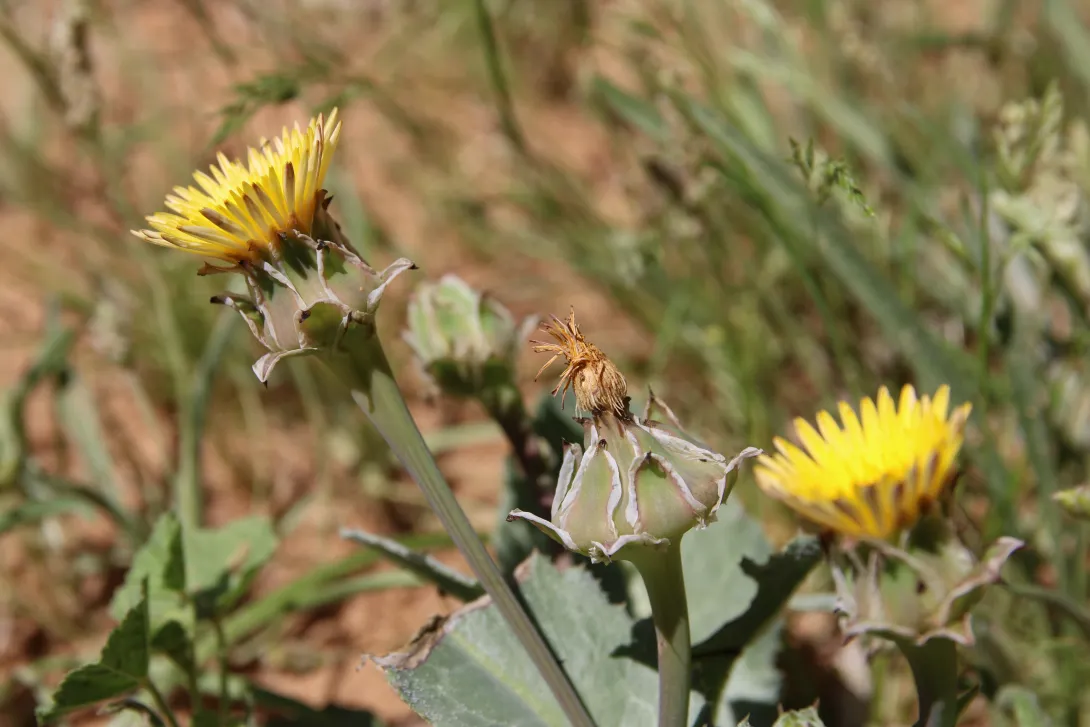
Reichardia tingitana (L.) Roth
الُمرة
Syn. Scorzonera tingitana L. (1753)
False Sowthistle, Poppy-leaved Reichardia
Asteraceae
1 / 7
-
Morphological Description
-
Description
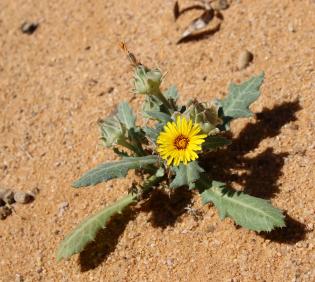
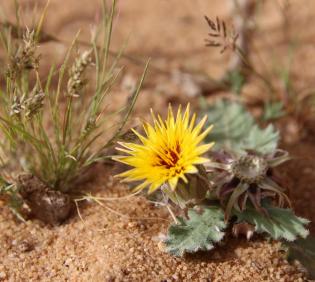
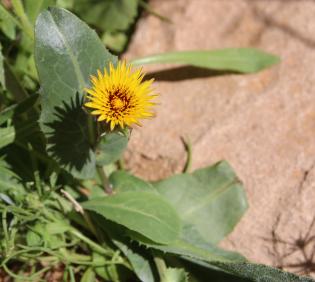
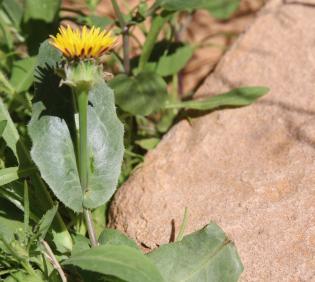
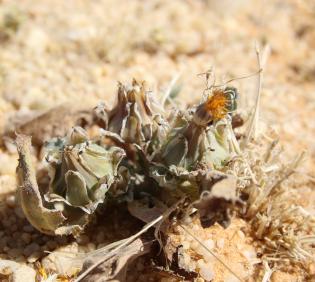
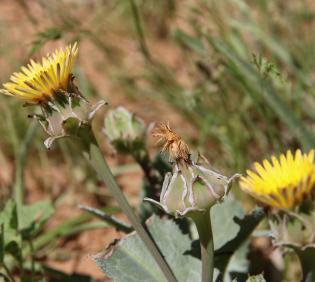
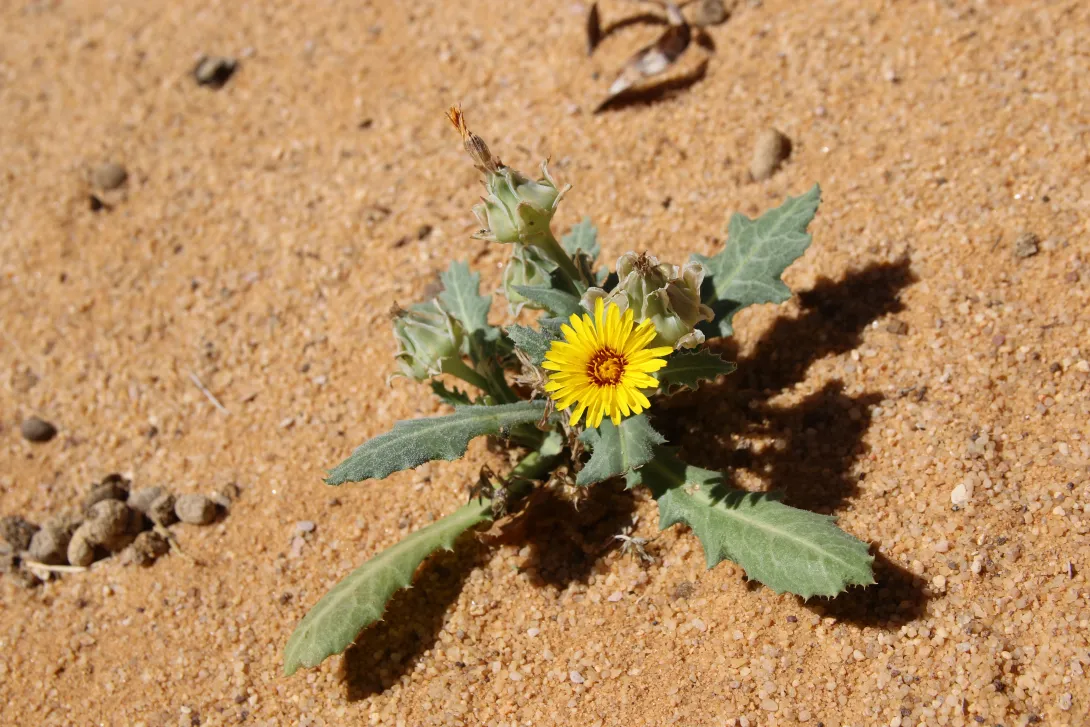
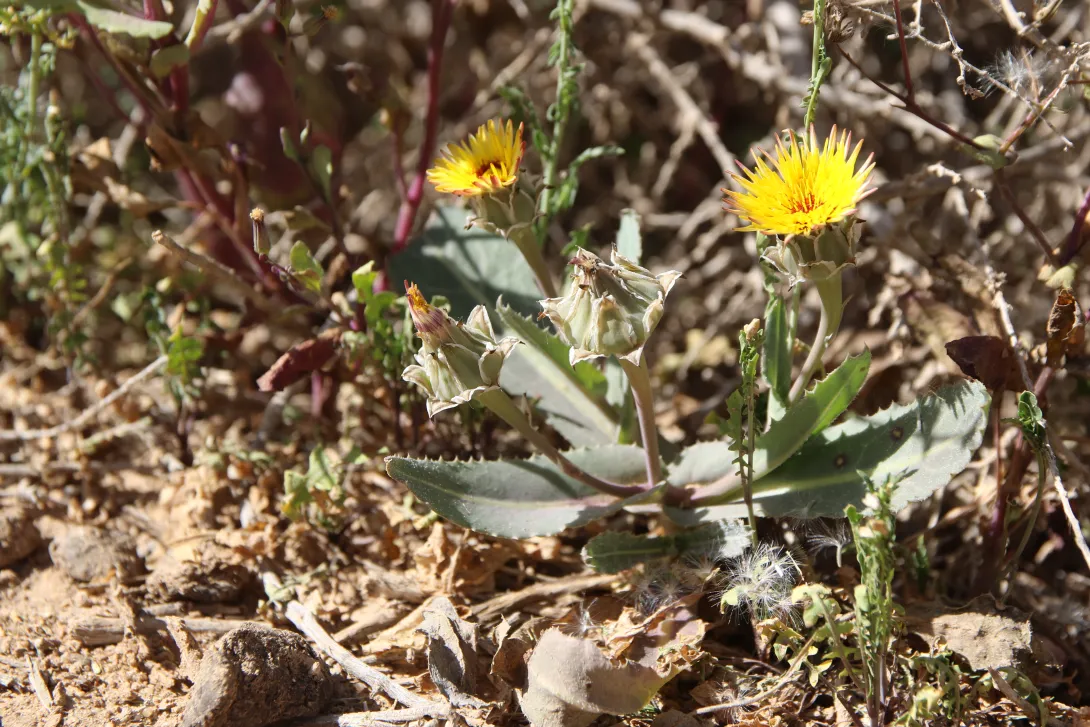
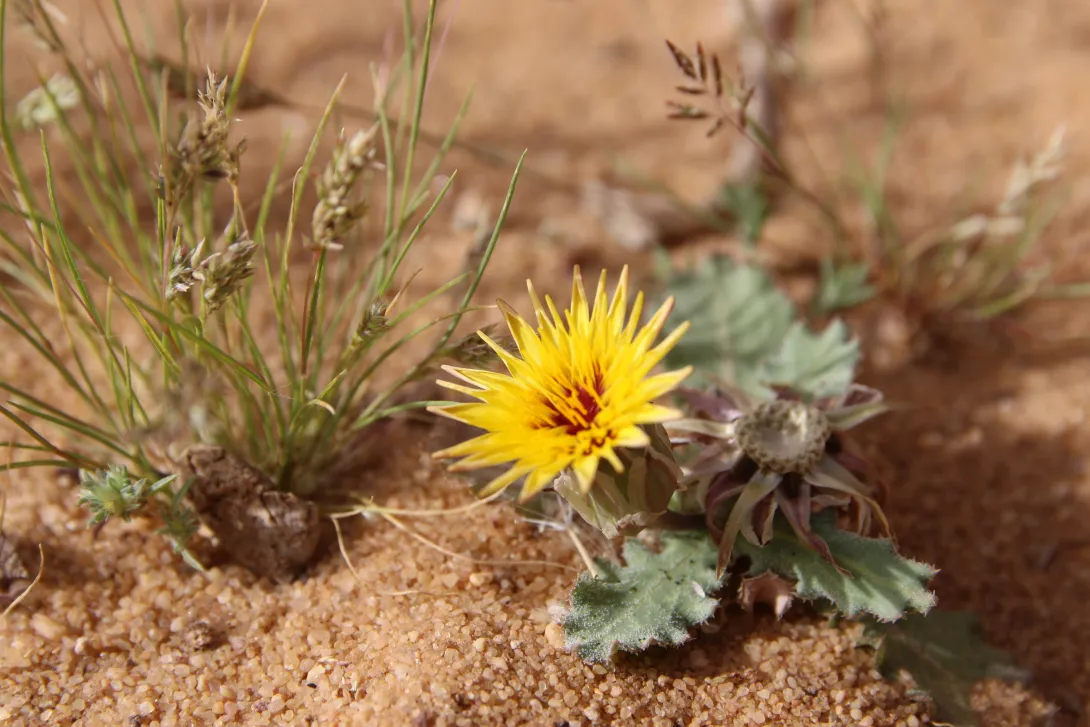
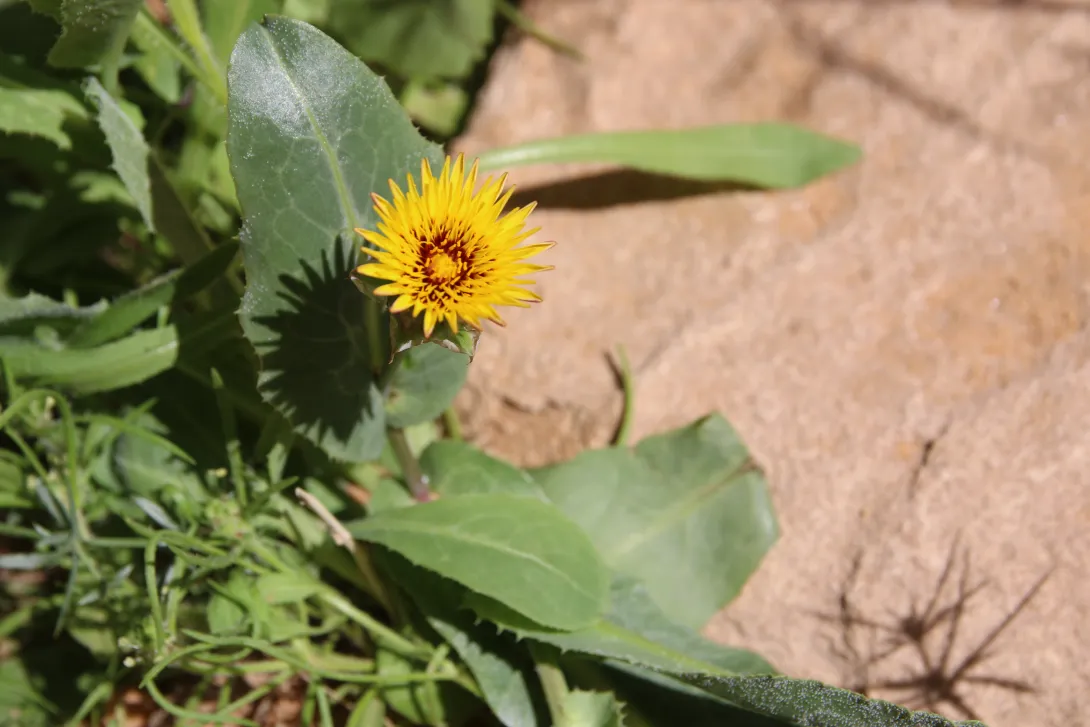
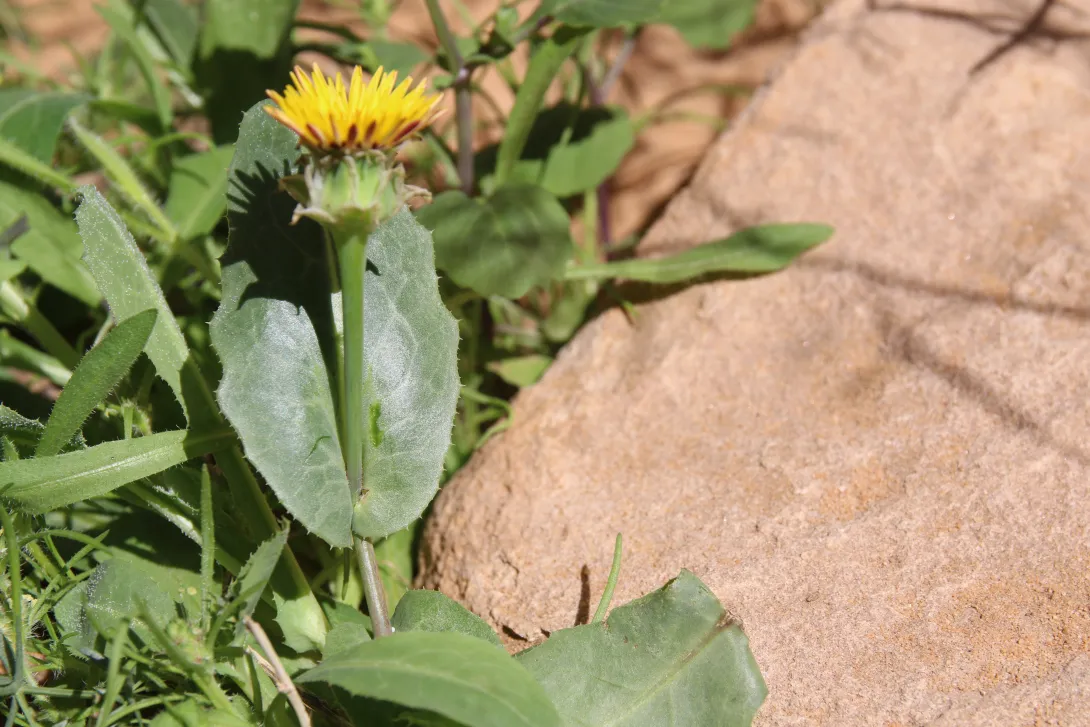
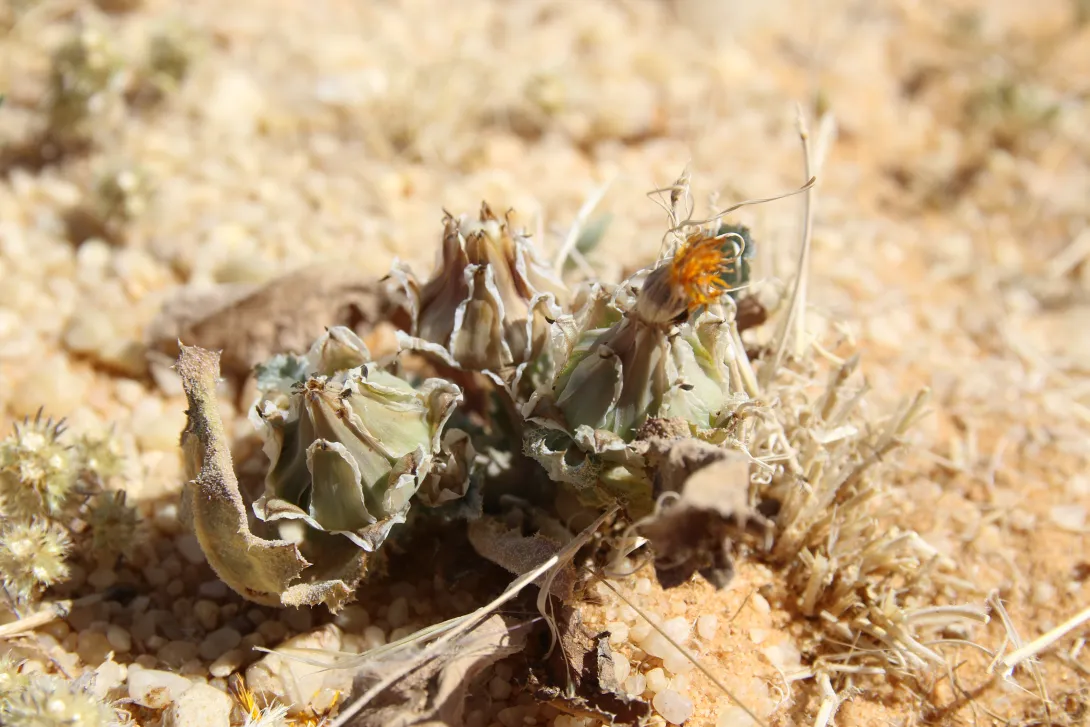
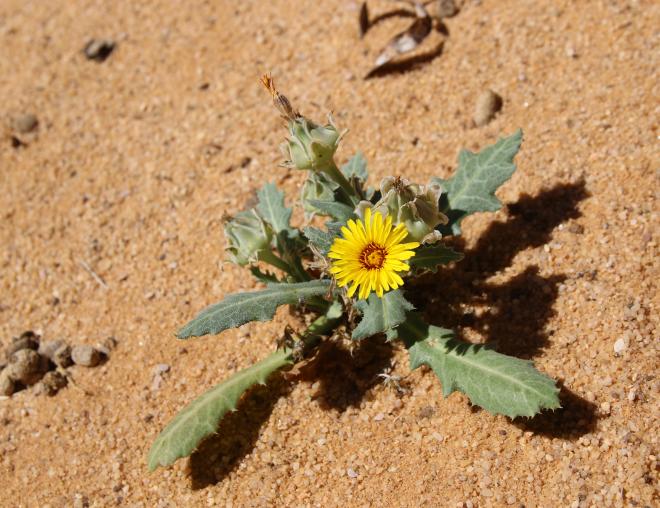
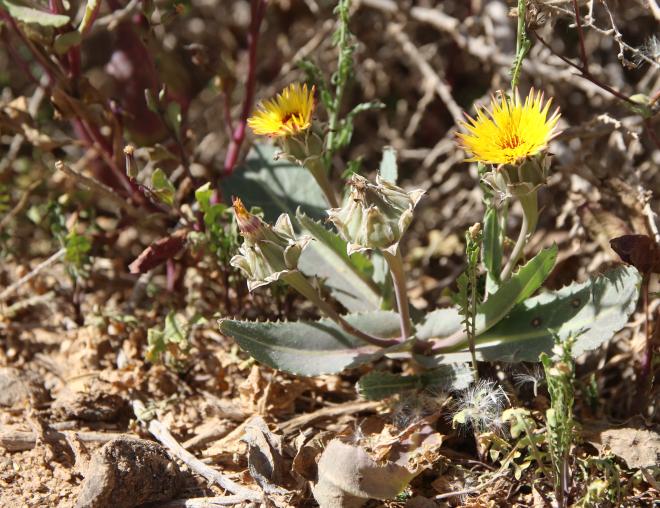
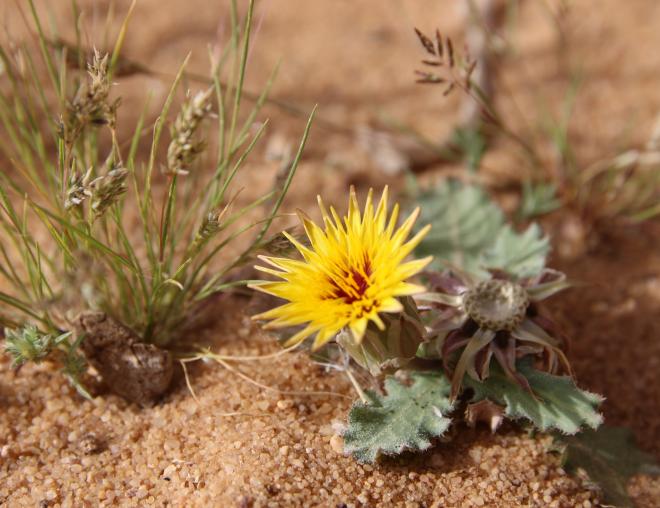
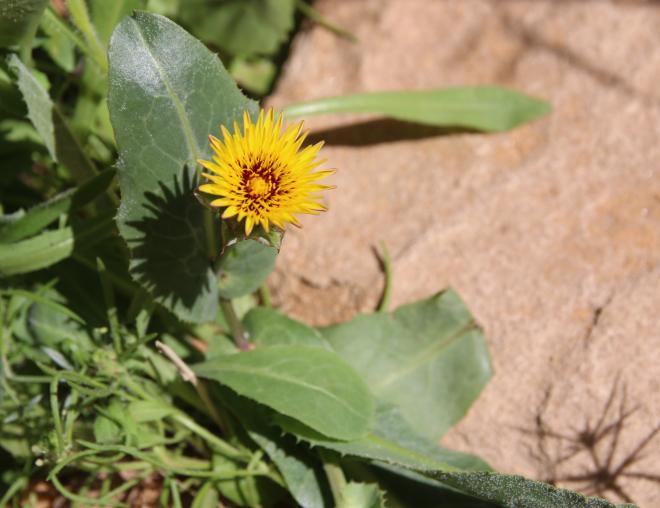
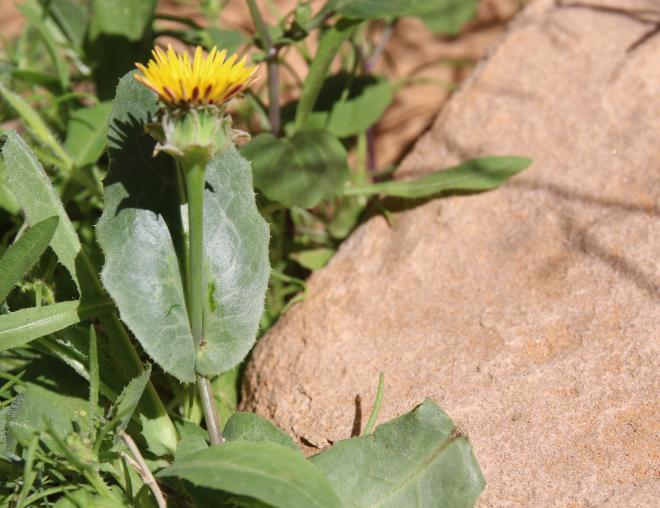
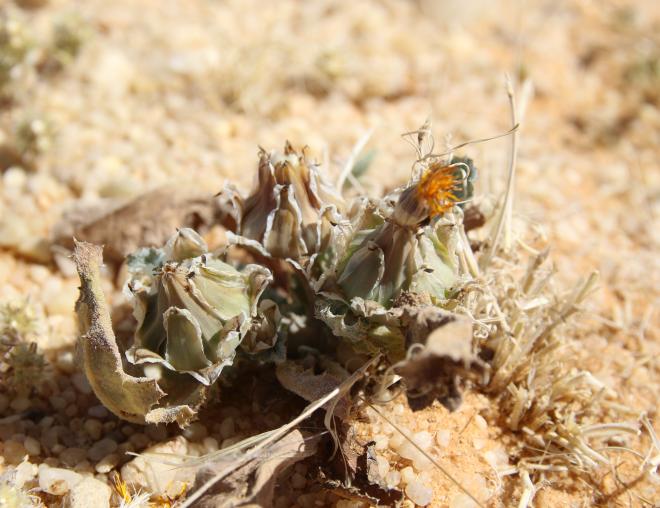
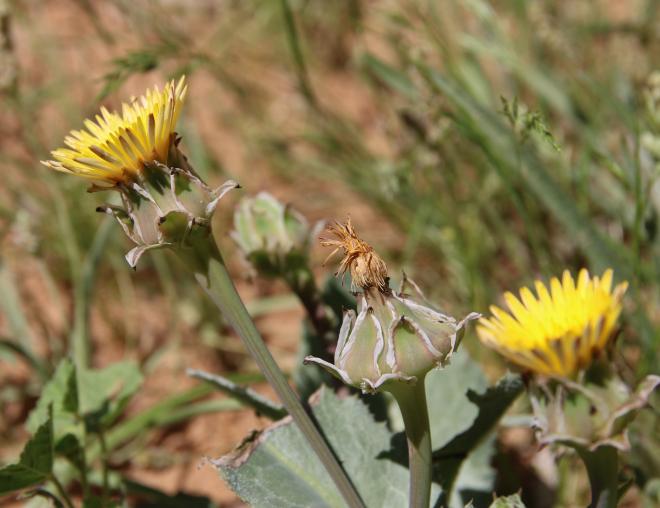
Annual, glabrous, laticiferous herb, dwarf to erect and branched, 5–40 cm tall. Leaves are usually glaucous, with basal leaves arranged in a rosette, obovate to oblanceolate, undivided to pinnately lobed, 3–15 cm long and 1–4 cm wide, tapering to the petiole and with spinulose-dentate margins. Caulines are sessile and semi-amplexicaul to auriculate. Heads are yellow, solitary, and borne on peduncles in branched stems, or appearing sessile in dwarf rosetted plants. Fruits are achenes, strongly tetragonal-furrowed, truncate to slightly tapering at the apex; outer achenes are dark brown and about 2.5 mm long, while inner achenes are white and up to 4 mm long.
- Growth Form
-
Description
-
Habitat and Distribution
- Habitat
-
Geographical Distribution Range
This Mediterranean and Irano-Turanian species is distributed from Morocco and Spain across the entire Arabian Peninsula to Afghanistan, Pakistan, and India. It has also been introduced in parts of Australia and Germany.
-
Ecology
-
Phenology
JanFebMarAprMayJunJulAugSepOctNovDecFloweringFructification
- Origin
-
IUCN Red List Category
 Not Evaluated
-
Phenology
-
Uses and Values
-
Aromatic and Medicinal Use
Medicinal use
-
Other Usages
Palatable
-
Description of Traditional Uses
Traditionally consumed as a wild vegetable (leafy green); also utilized in folk medicine for various ailments.
-
Aromatic and Medicinal Use
Gallery