Lavandula coronopifolia Poir.
زيتة / لافند / الشَّيْعة
Syn. Lavandula stricta Del. (1813)
Stagshorn Lavender
Lamiaceae
1 / 5
-
Morphological Description
-
Description
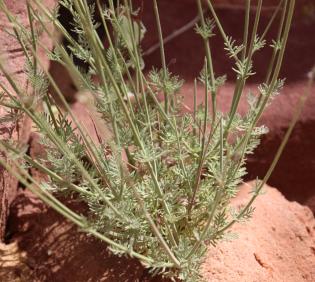
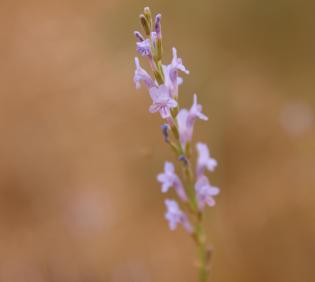
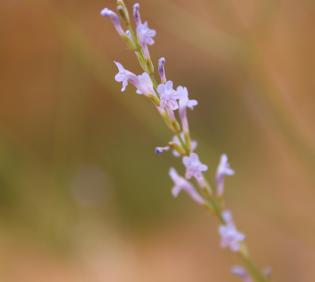
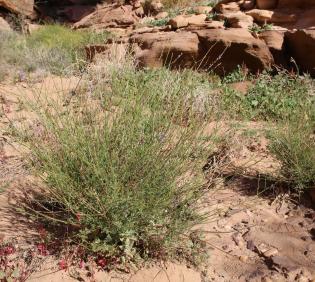
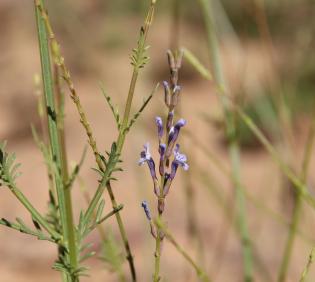
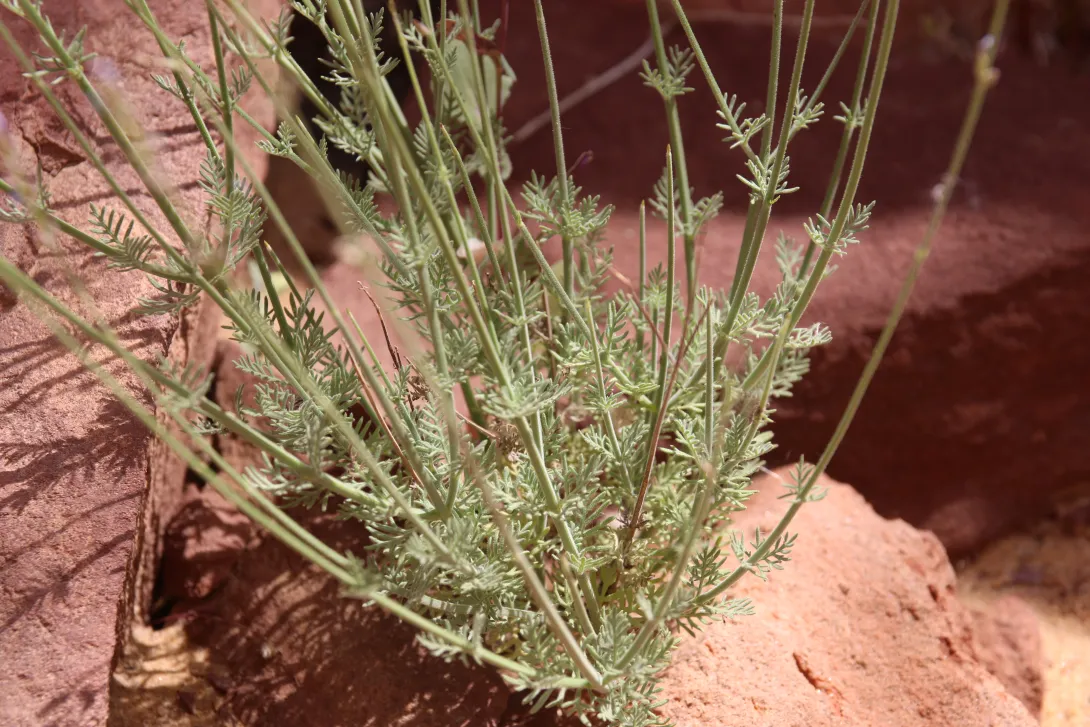
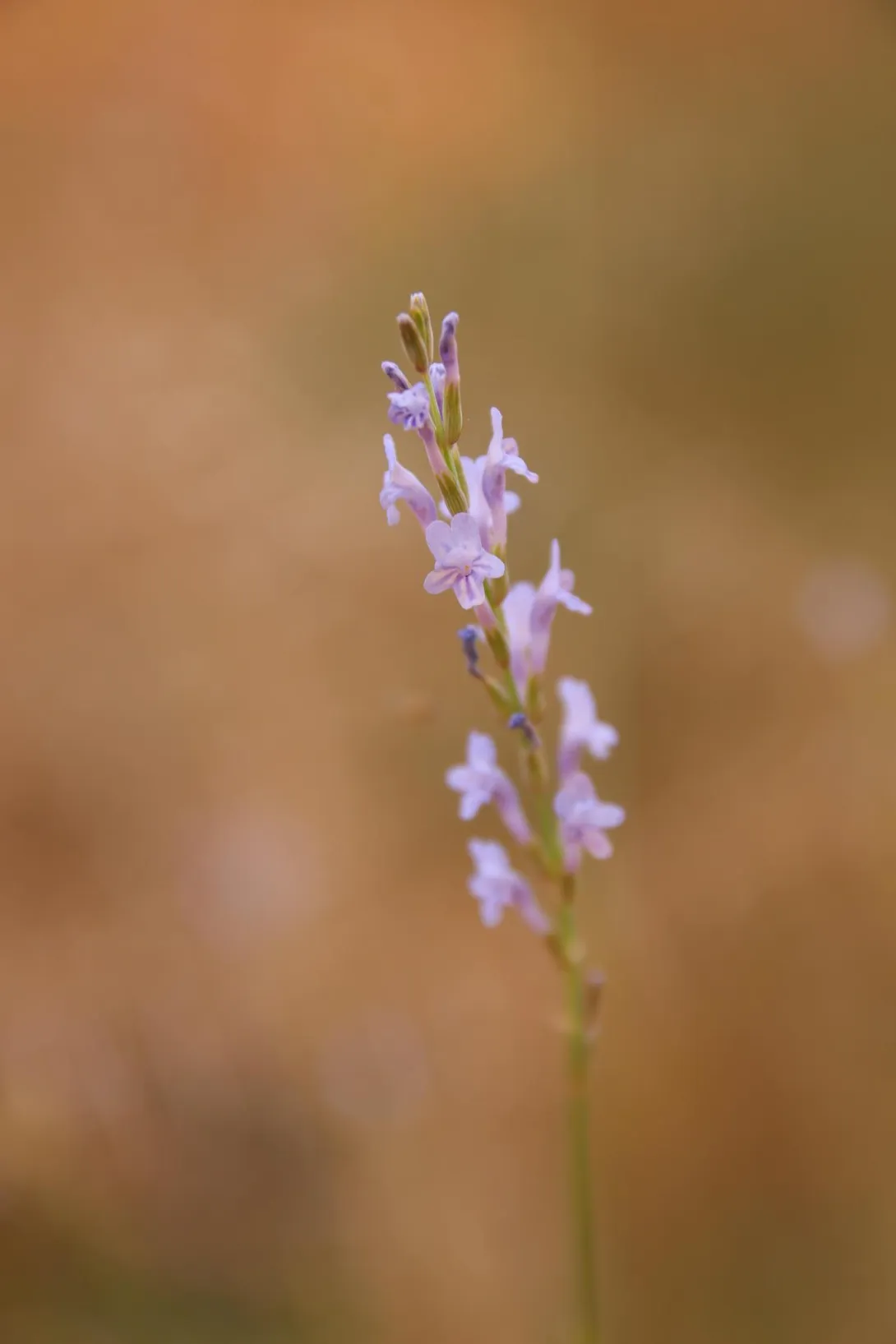
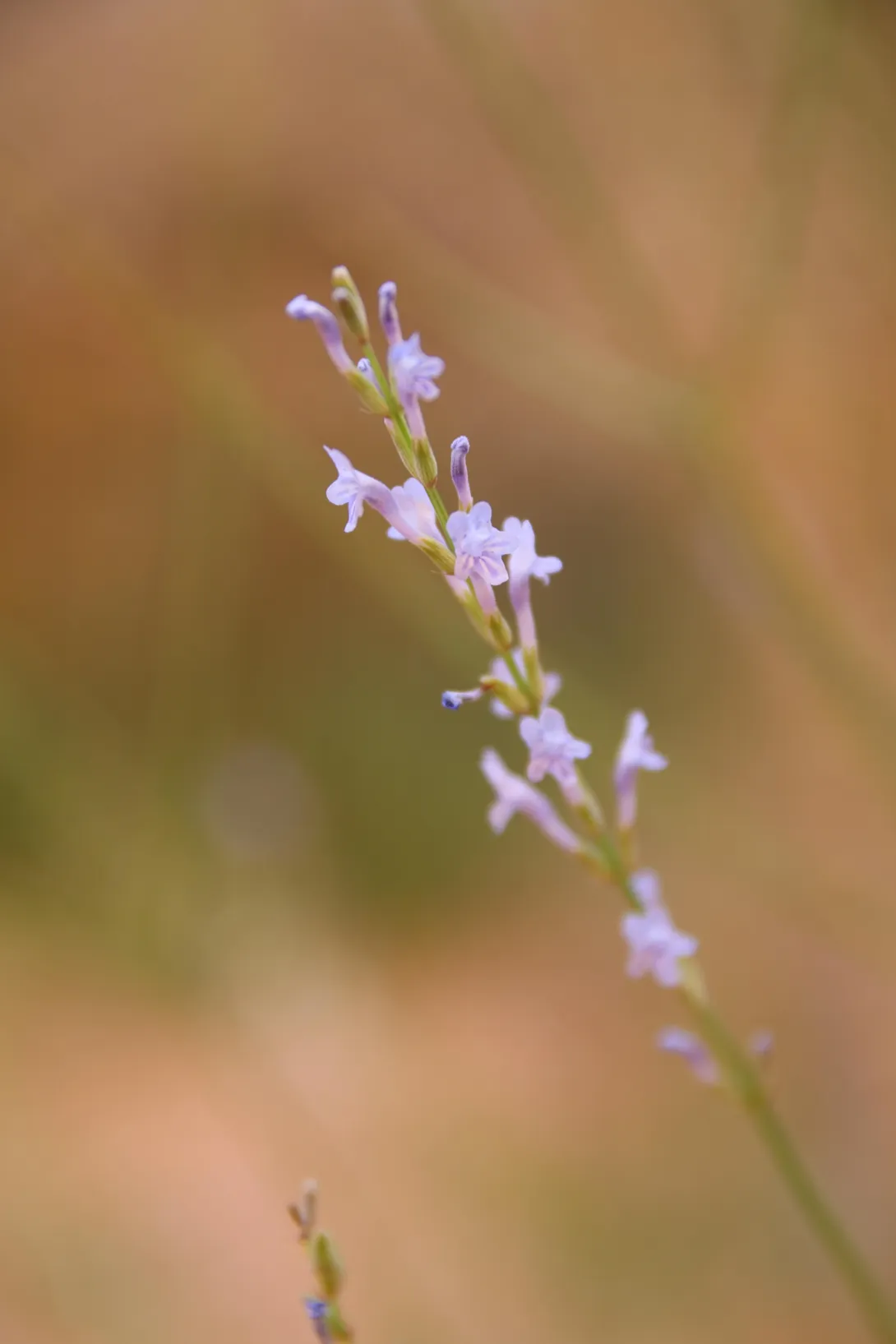
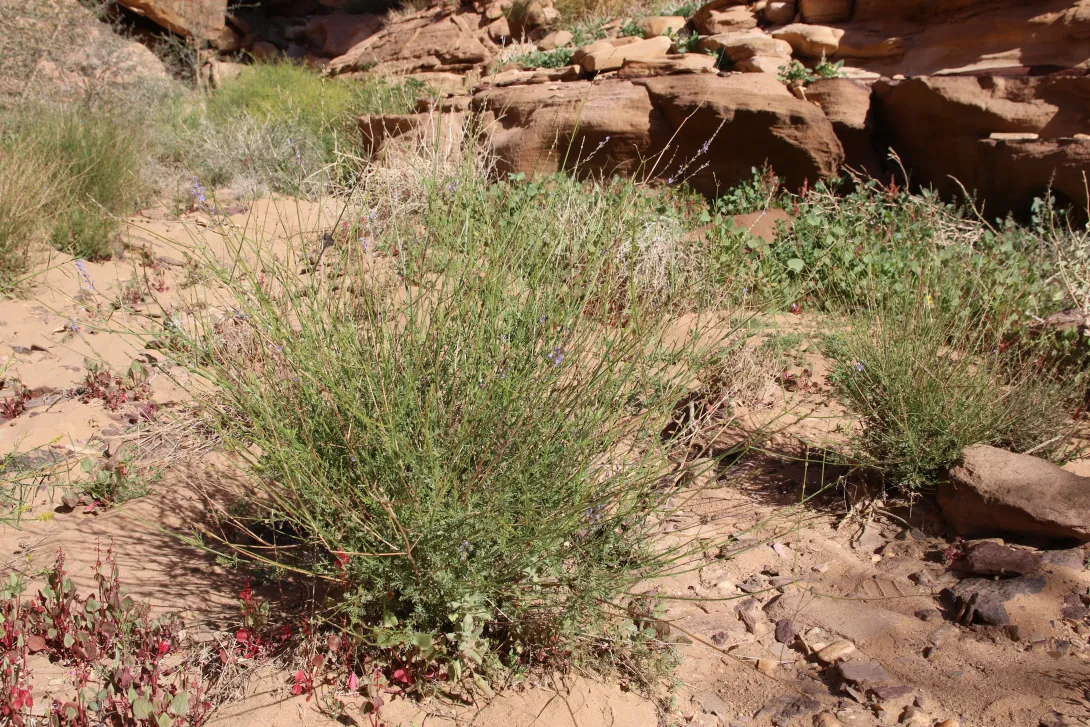
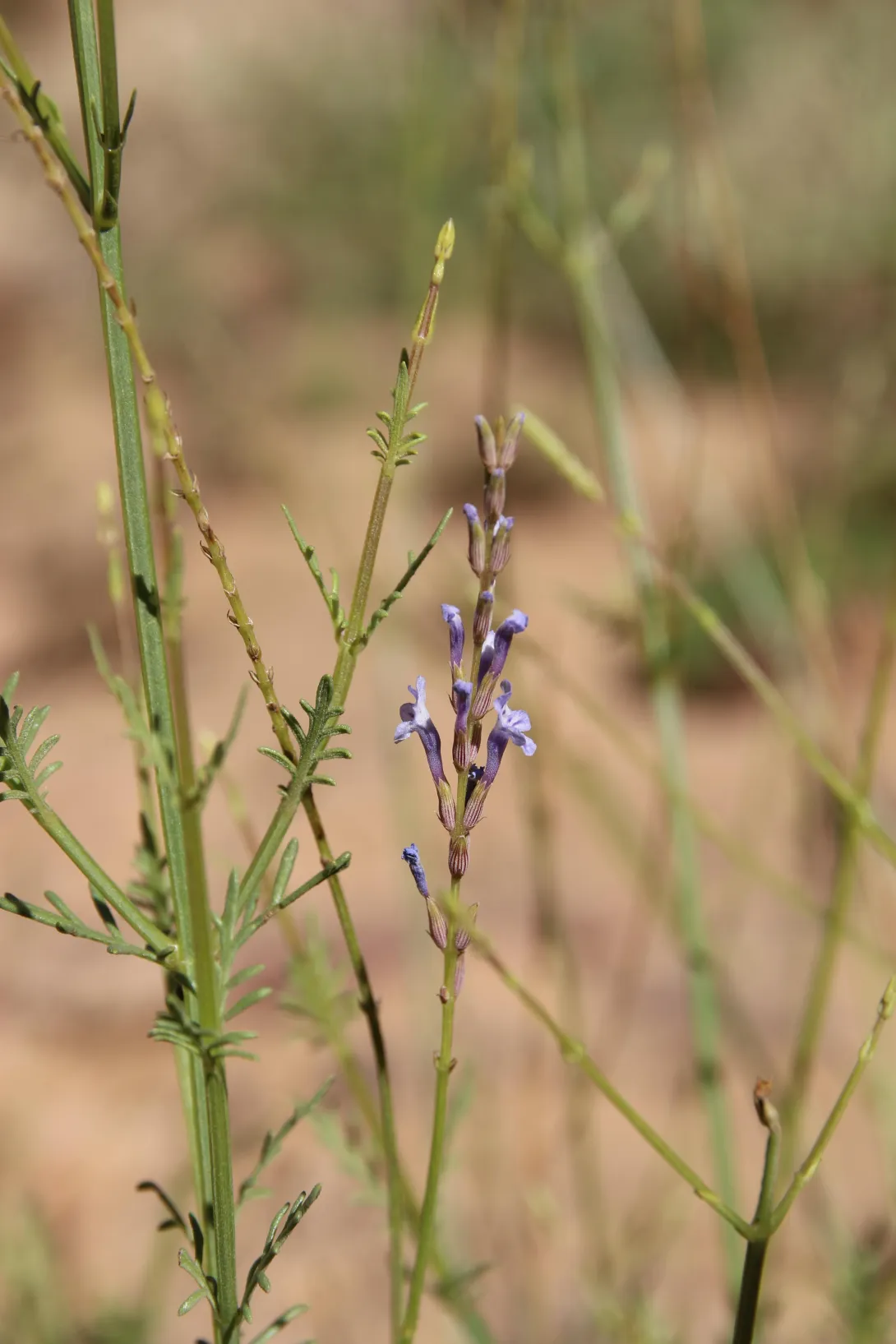
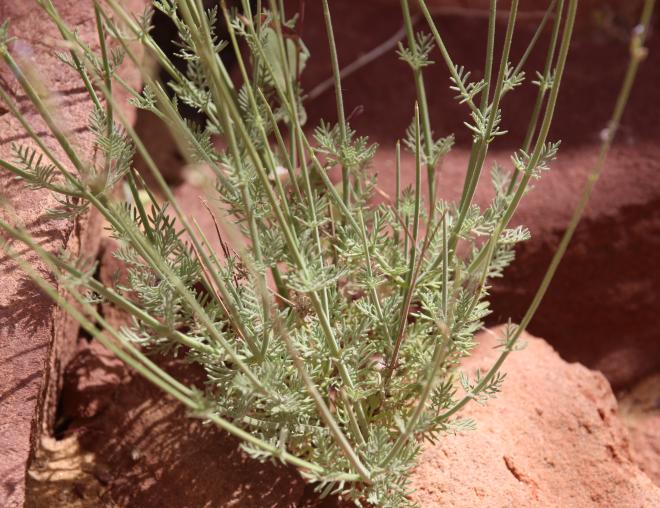
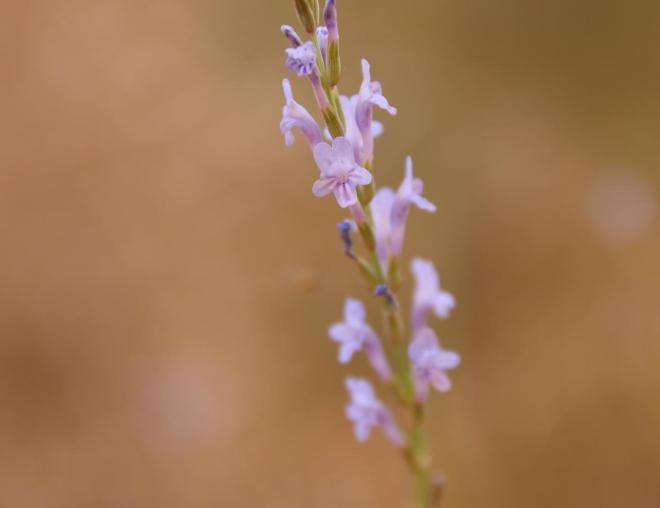
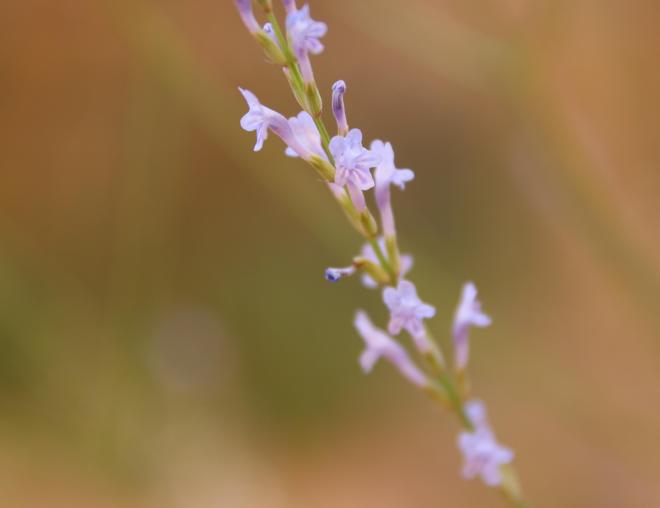
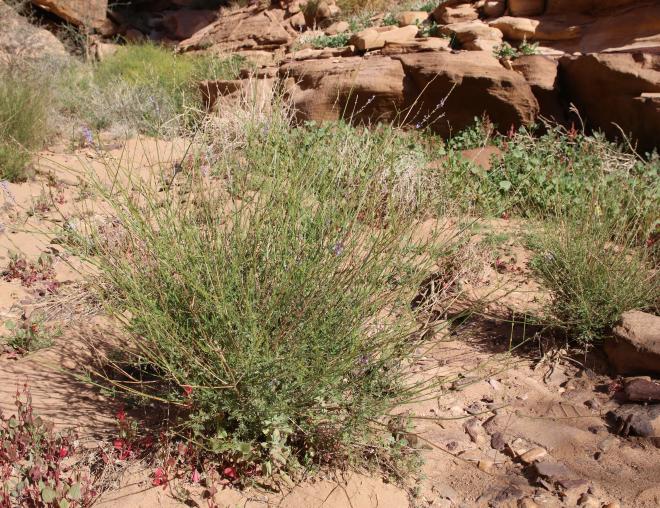
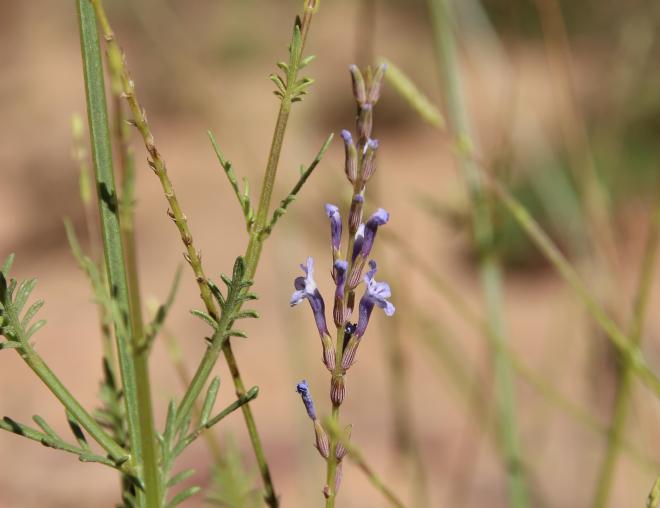
Perennial, much-branched, subglabrous shrubby herb, 30–100 cm tall, with a pleasant or sometimes acrid aroma and quadrangular branches that are glabrous in the upper parts. Leaves are pinnately and deeply divided, with short lobules that are rarely denticulate. Flowers are slender and lax, borne on terminal spikes composed of distant, two-flowered verticillasters. Bracts are narrowly lanceolate, acuminate, and much smaller than the calyx. Corolla is pale blue, with the tube exserted up to twice the length of the calyx and bent outward below the limb. Flowers have two pairs of unequal-length stamens and style branches flat. Fruits are ovoid nutlets, about 1.5 mm long and 1 mm wide, mucilaginous when wet.
- Growth Form
-
Description
-
Habitat and Distribution
- Habitat
-
Geographical Distribution Range
This Saharo-Arabian and Sudanian species is distributed from Morocco and Mauritania to Iran. For the Arabian Peninsula, it is native to Jordan, Saudi Arabia and Yemen.
-
Ecology
-
Phenology
JanFebMarAprMayJunJulAugSepOctNovDecFloweringFructification
- Origin
-
IUCN Red List Category
 Not Evaluated
-
Remarks
The species name coronopifolia comes from Latin, combining Coronopus (a plant genus whose name means ‘crow’s foot’, referring to divided leaves) and -folia (‘leaves’). It refers to the deeply lobed leaves, which resemble stag’s horns, and this resemblance also gave rise to the English common name ‘Stagshorn Lavender’.
-
Phenology
-
Uses and Values
-
Aromatic and Medicinal Use
Aromatic usages; Medicinal use
-
Description of Traditional Uses
Valued traditionally for its aromatic properties and use in traditional medicine, often utilized in preparations to address common digestive or inflammatory complaints.
-
Aromatic and Medicinal Use
Gallery