Launaea mucronata (Forssk.) Muschl.
العضيد
Syn. Leontodon mucronatum Forssk. (1775)
Asteraceae
1 / 7


-
Morphological Description
-
Description
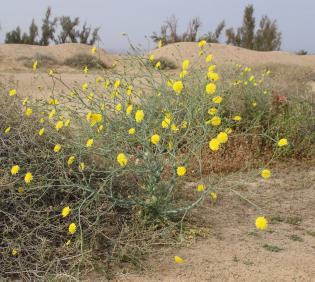
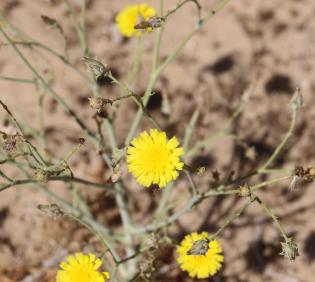
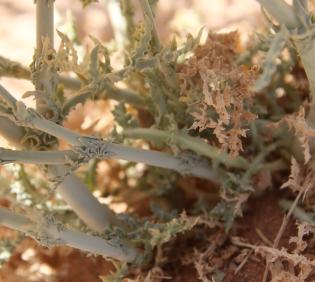
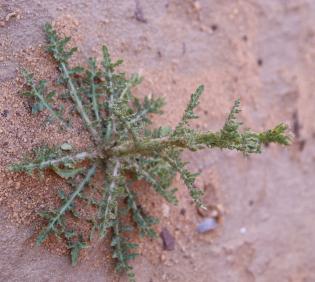
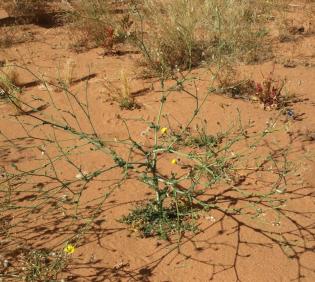
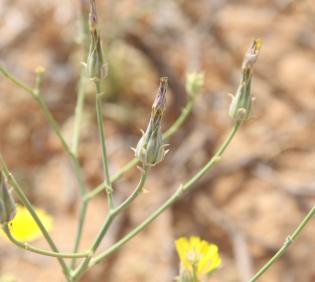
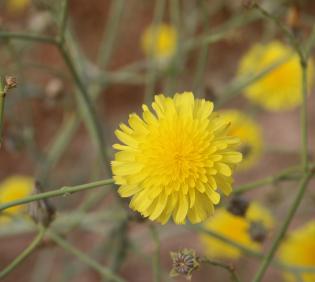
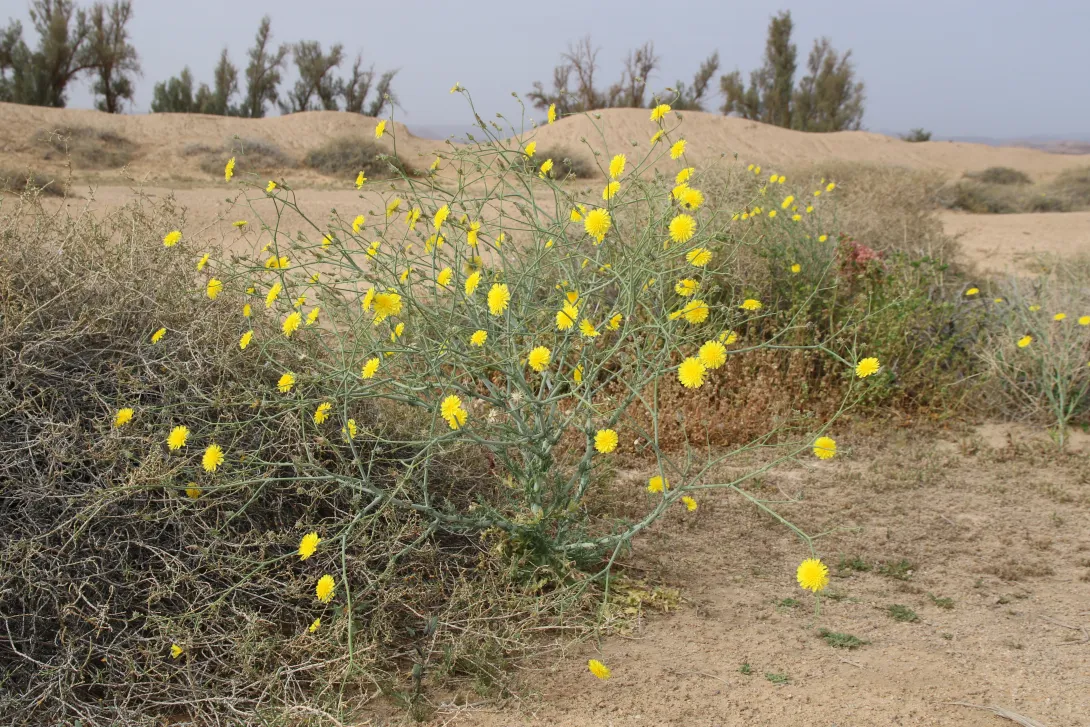
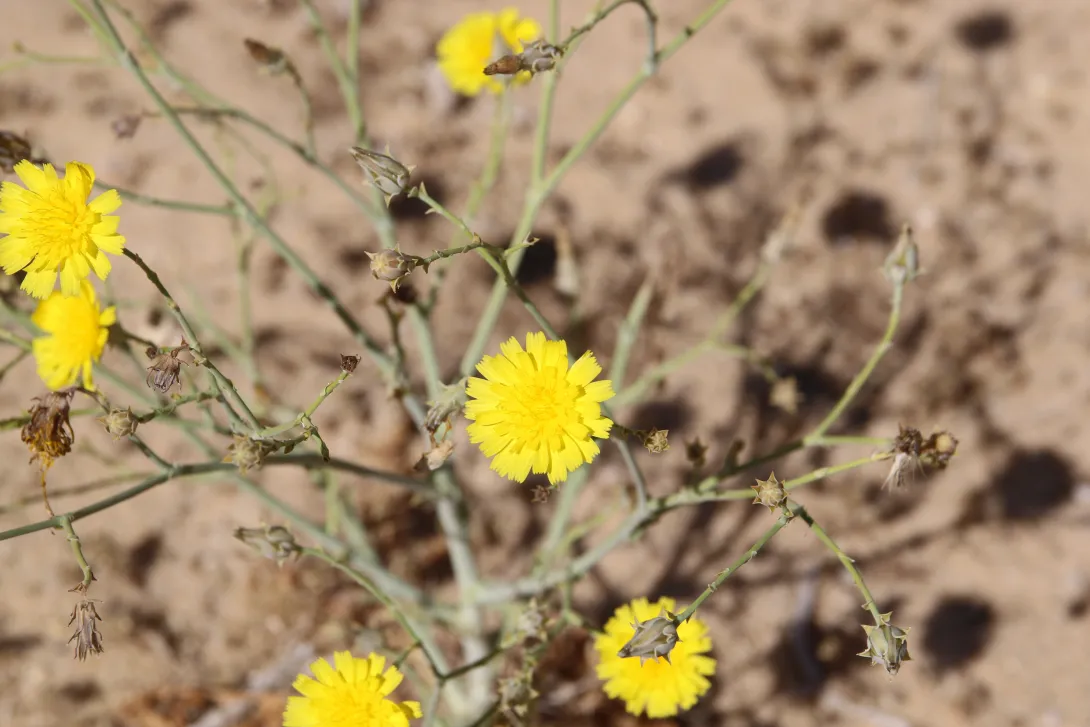
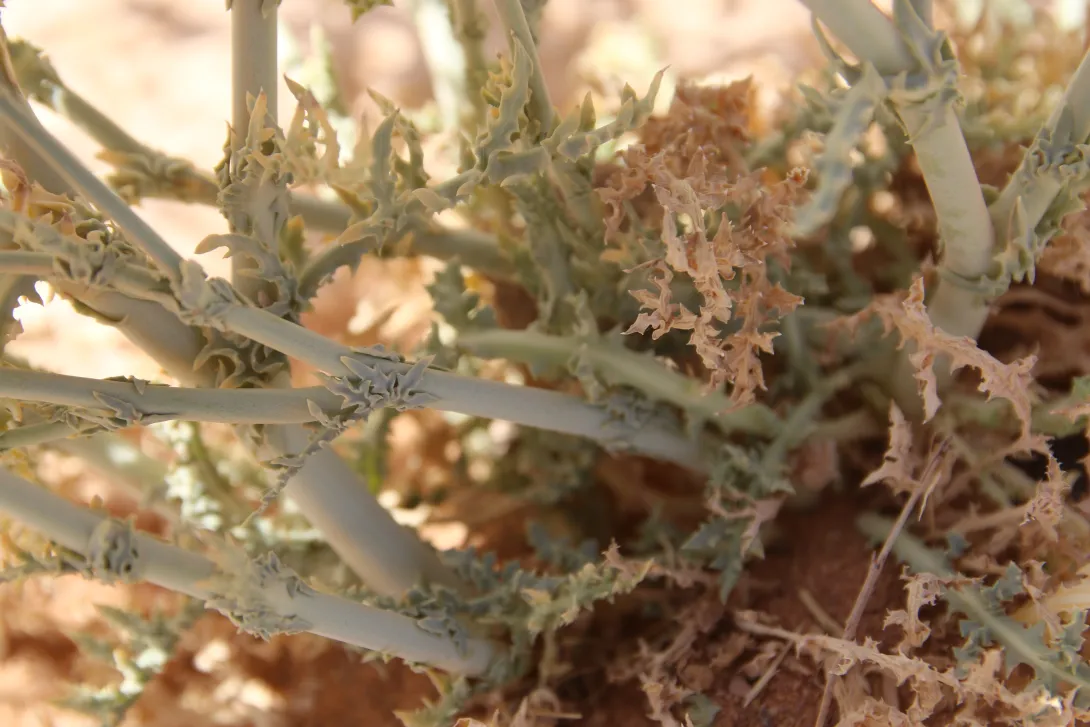
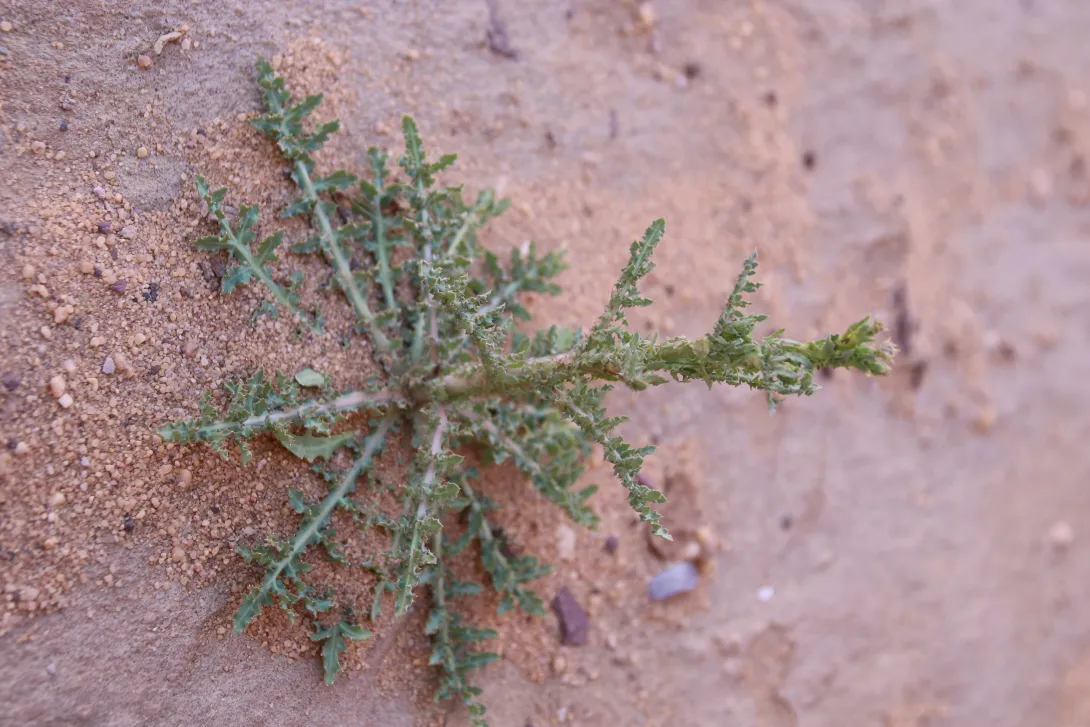
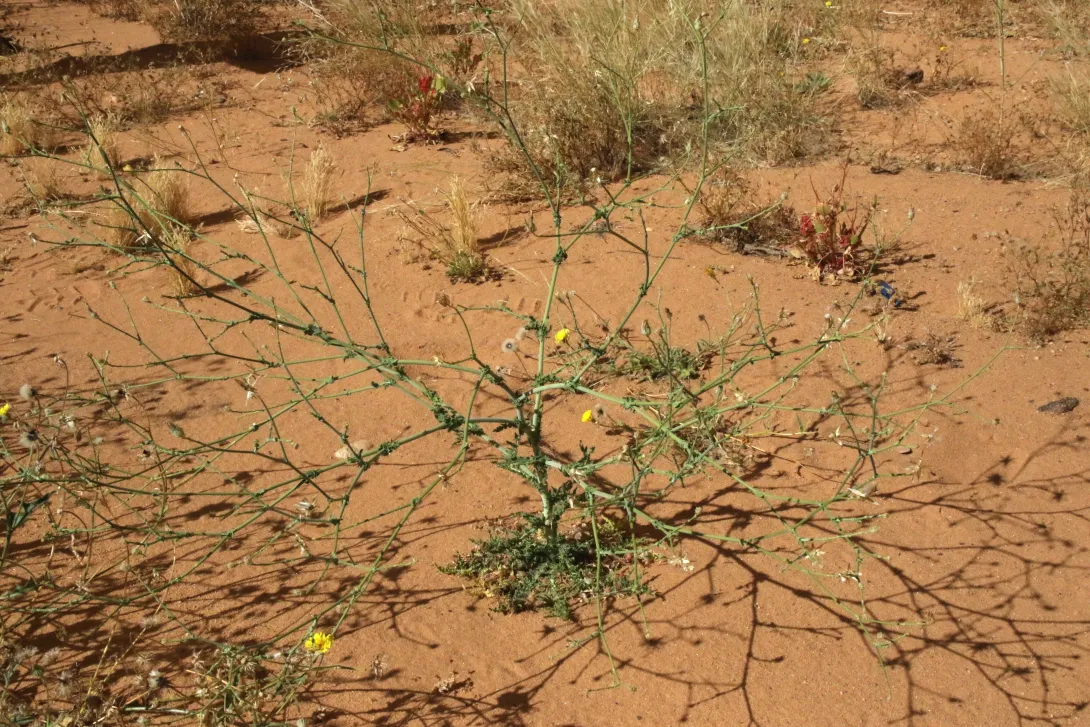
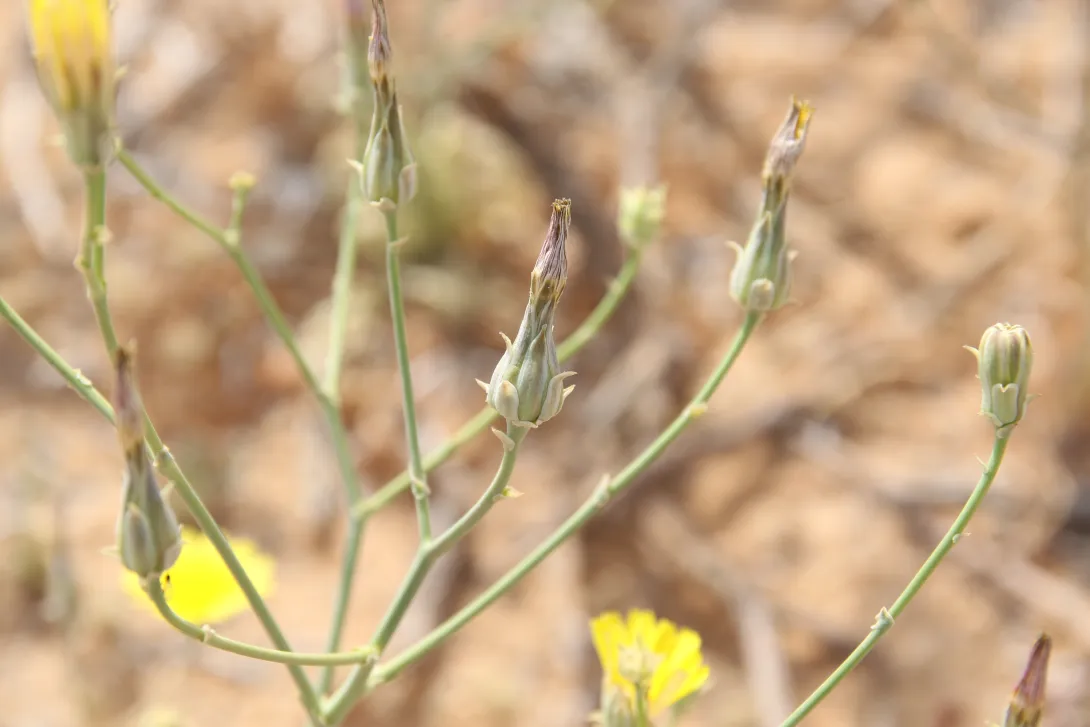
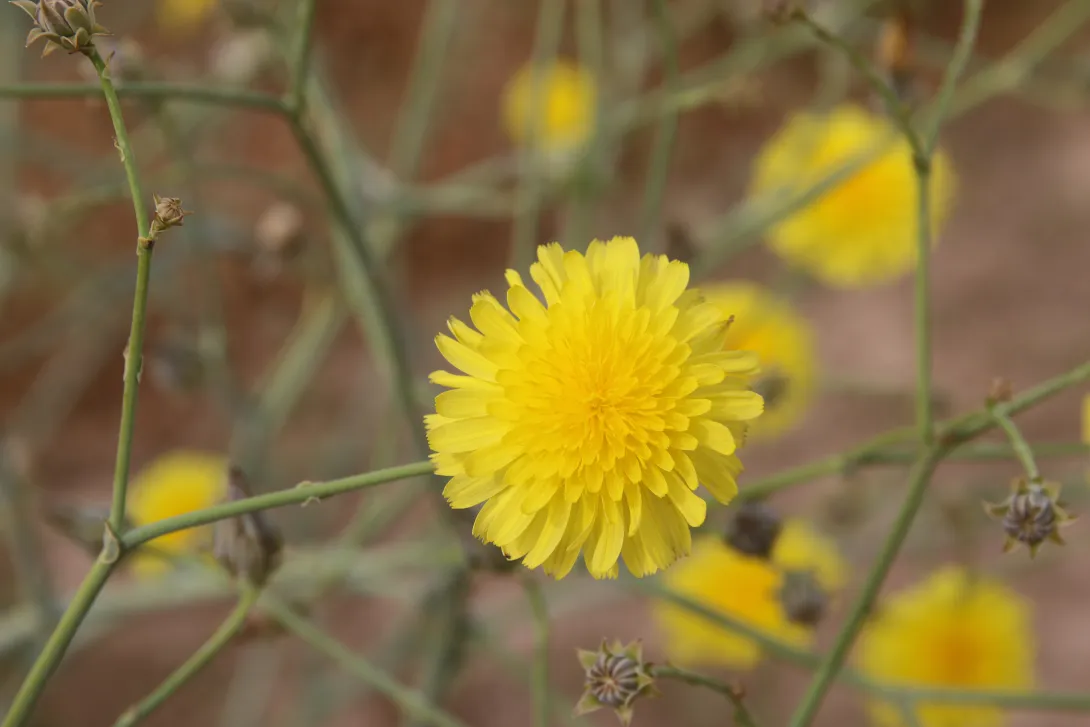
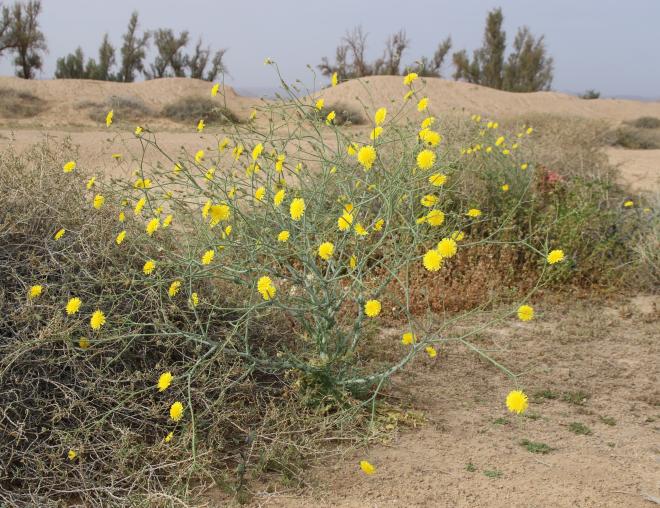
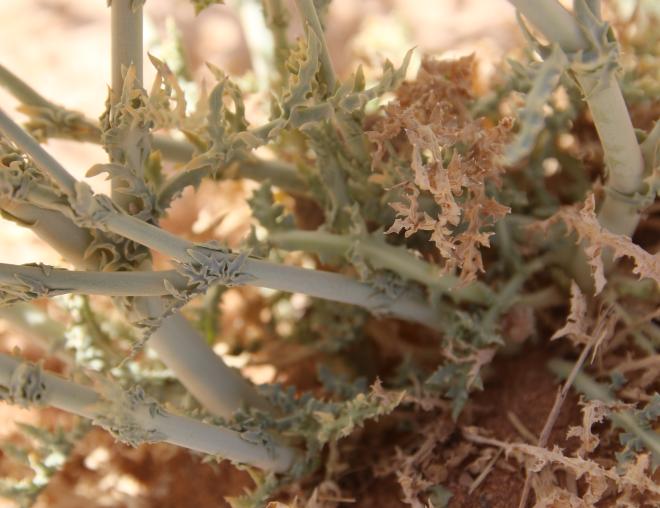
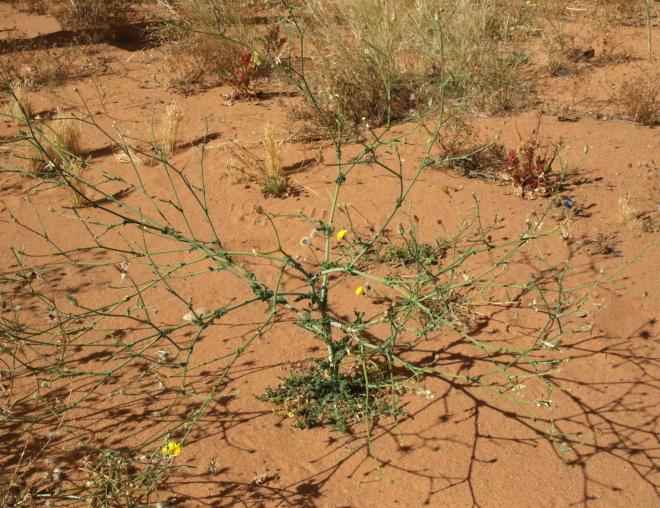
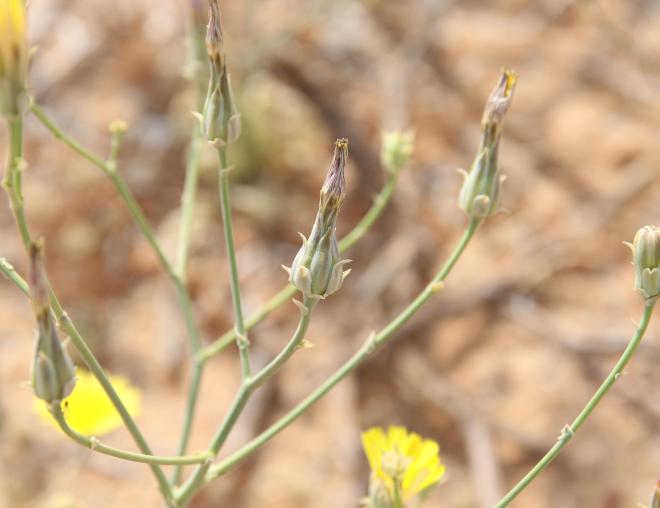
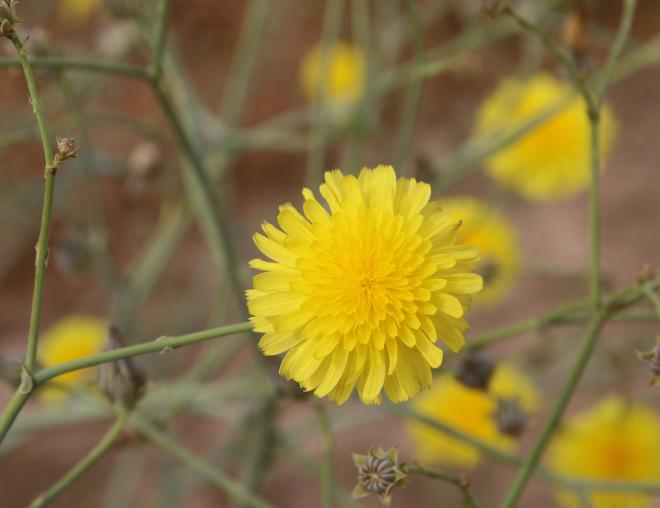
Annual or short-lived perennial, glabrous, glaucous, lactiferous herb, 10–50 cm tall and occasionally up to 100 cm, usually with a single stem corymbosely branched in the upper part of the plant. Leaves form are pinnately to bipinnately and irregularly lobed, 2–10 cm long and 0.5–3 cm wide, with white cartilaginous margins and form a basal rosette. Cauline leaves are sessile, smaller, and similar in shape to the basal leaves but amplexicaul and prominently auriculate. Fruits are heteromorphic achenes: the outer achenes are 5-ribbed, rather compressed yet columnar, and densely papillose-pubescent, whereas the inner achenes are glabrous, columnar, greyish-white, and a not 4-lobed base.
- Growth Form
-
Description
-
Habitat and Distribution
- Habitat
-
Geographical Distribution Range
This Saharo-Arabian species is distributed from Morocco and Mauritania to Pakistan and Afghanistan. It is also native to the whole Arabian Peninsula.
-
Ecology
-
Phenology
JanFebMarAprMayJunJulAugSepOctNovDecFloweringFructification
- Origin
-
IUCN Red List Category
 Not Evaluated
-
Phenology
-
Uses and Values
-
Description of Traditional Uses
No specific documented uses were identified in accessible literature.
-
Description of Traditional Uses
Gallery