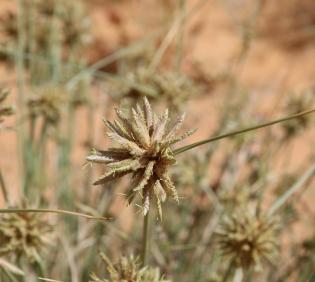
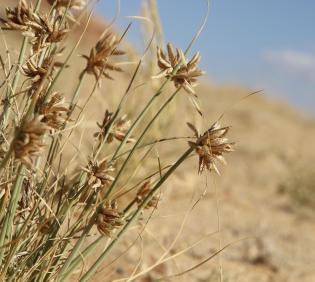
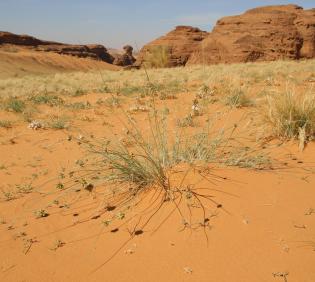
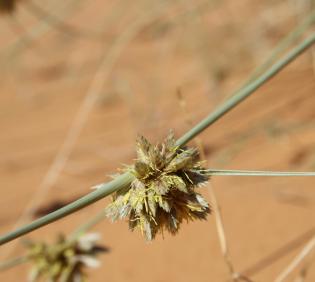
Cyperus conglomeratus Rottb.
الثداء
Syn. Cyperus macrorrhizus Nees
Cyperaceae
1 / 6


-
Morphological Description
-
Description
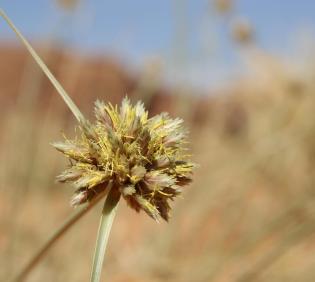
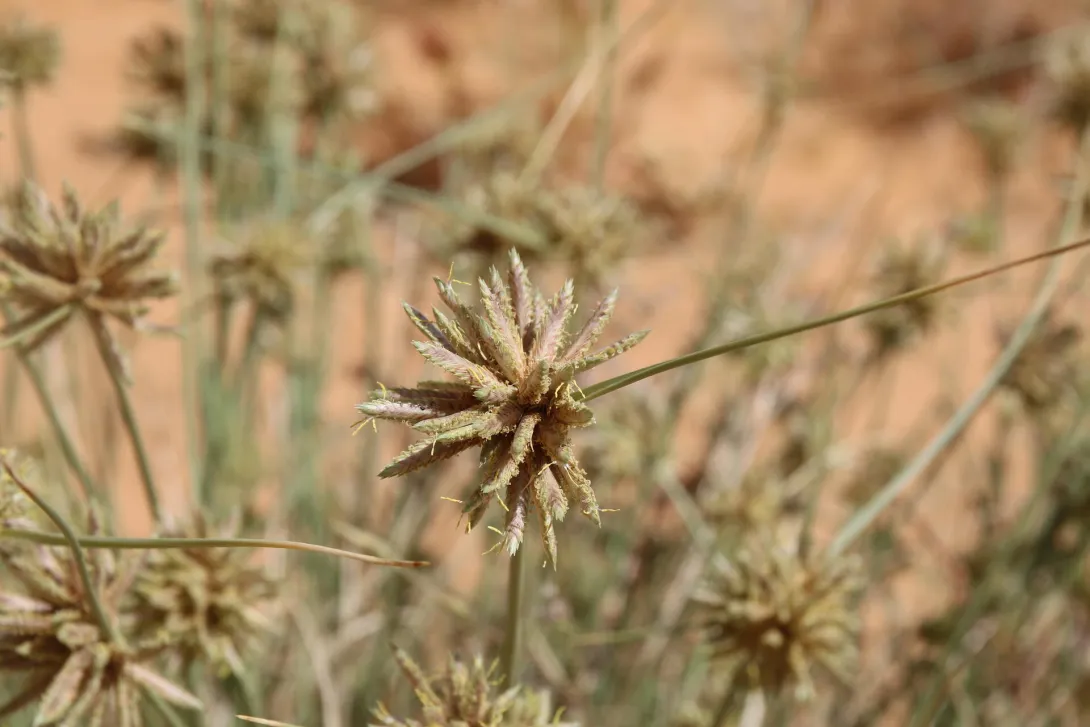
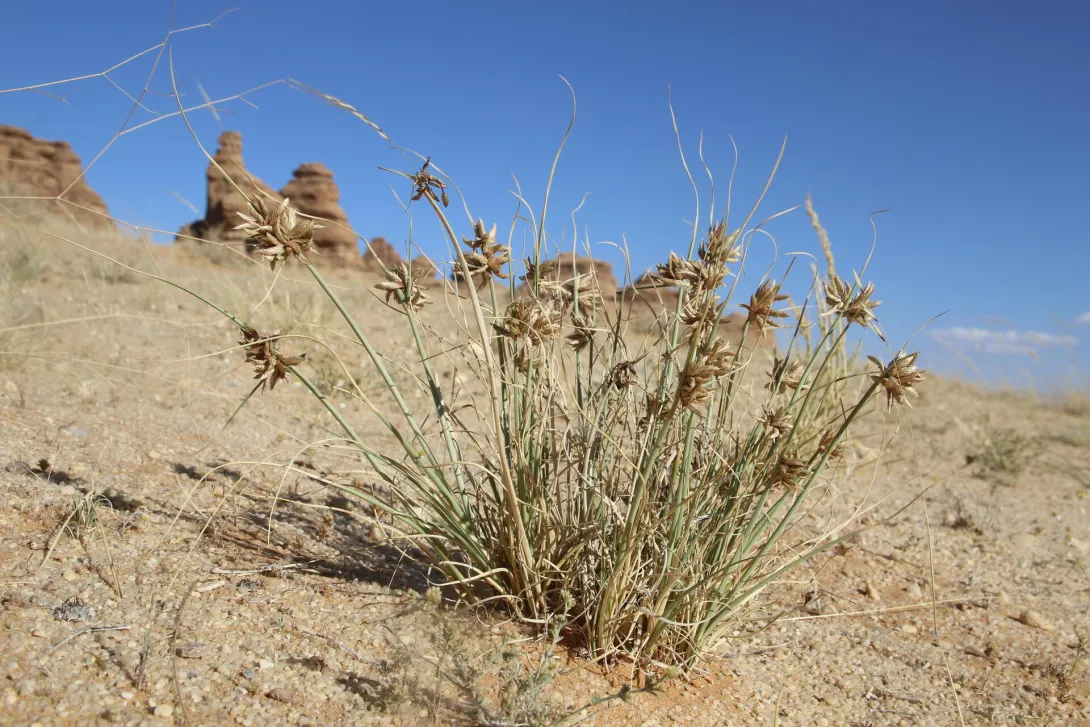
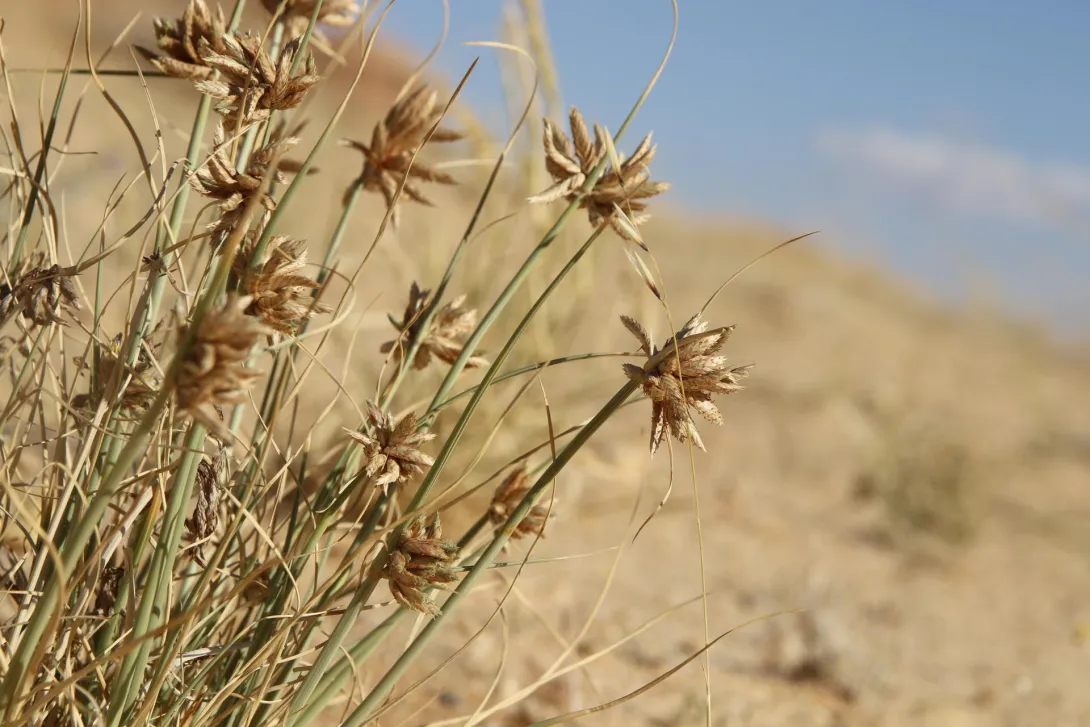
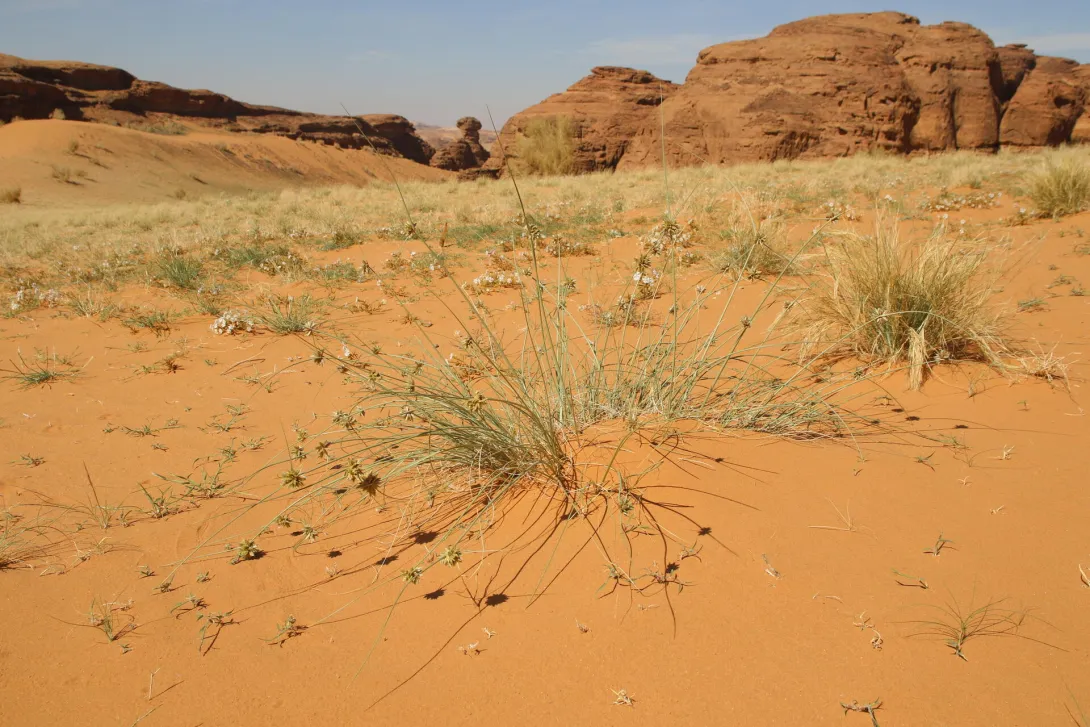
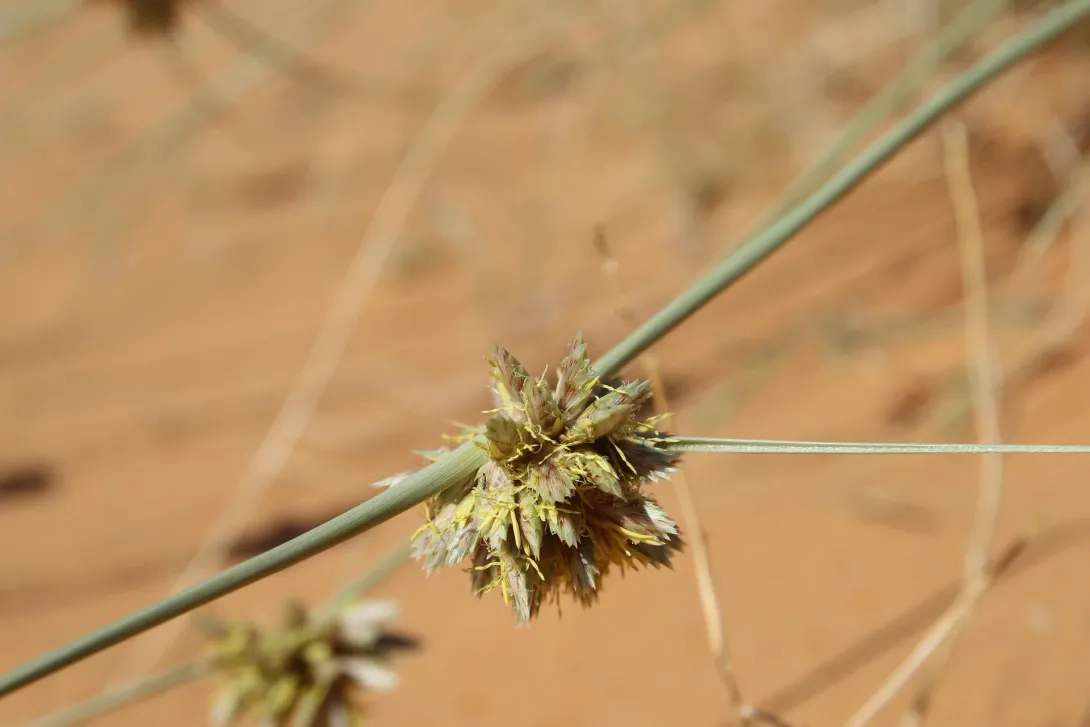
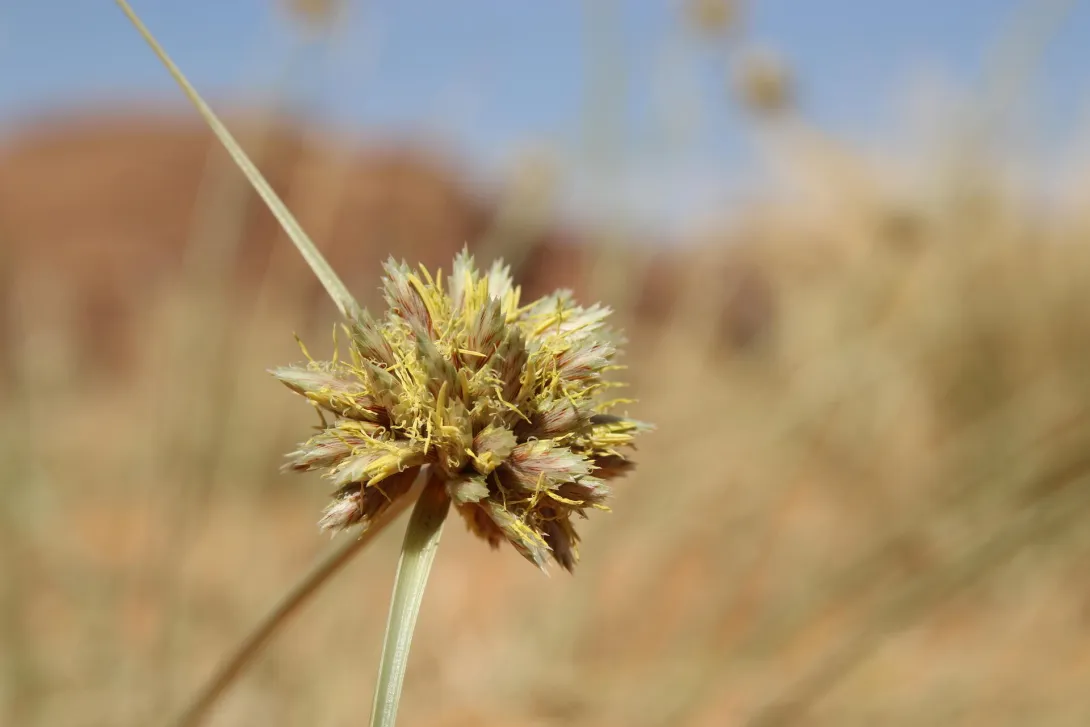
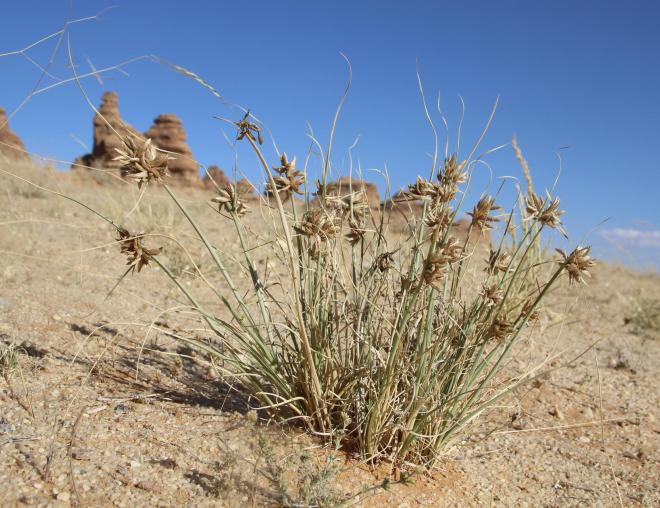
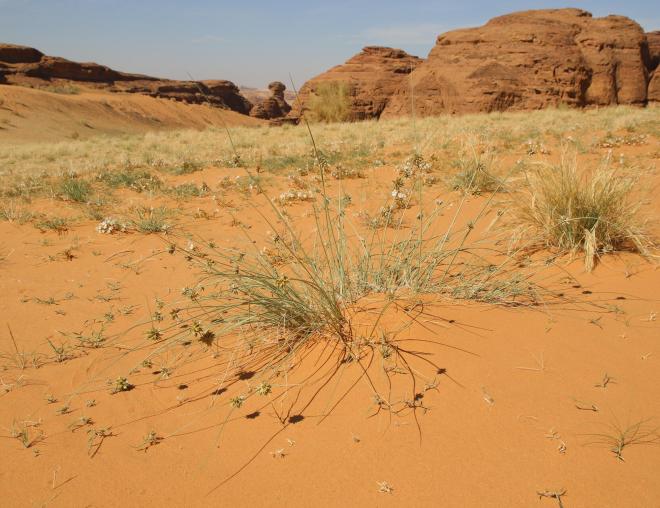
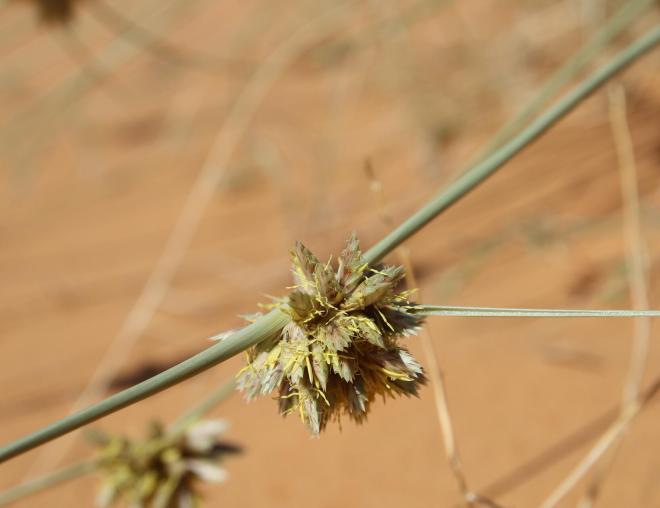
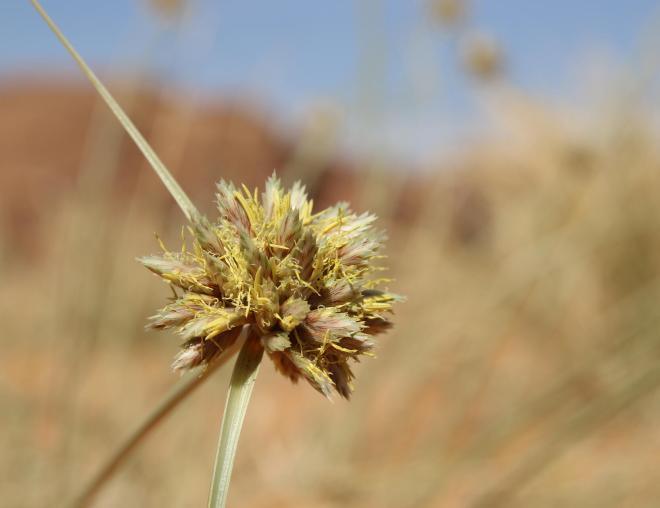
Perennial, tussocky, rhizomatous herb, 4-40 cm tall. Clums terete or triangular, covered at the bases with red to reddish leaf-sheath. Leaves as long as the stem, channeled on the upper surface, more or less rigid. Leaf-sheath 1-12 cm long. Inflorescence usually a small anthelidium of sessile spikelets or sometimes with some peduncled spikelet cluster. Involucral bracts leafy, 1-5, usually longer than inflorescence. Spikelets compressed narrow and more or less terete, many-flowered, gryish to reddish brown. Glumes boat-shaped, reddish on the outside. Stamens 3. Stigmas 3.
- Growth Form
-
Description
-
Habitat and Distribution
- Habitat
-
Geographical Distribution Range
This Saharo-Arabian species is distributed in Sahara, Sahel, Middle East and Indian subcontinent from Morocco to India, including Madagascar. Within the Arabian Peninsula, it is native to Jordan, Saudi Arabia, Kuwait, Gulf States, Oman, Yemen, and Socotra.
-
Ecology
-
Phenology
JanFebMarAprMayJunJulAugSepOctNovDecFloweringFructification
- Origin
-
IUCN Red List Category
 Not Evaluated
-
Remarks
There are two accepted subspecies that can grow in Saudi Arabia: Cyperus conglomeratus subsp. conglomeratus and Cyperus conglomeratus subsp. curvulus (Boeckeler) Kukkonen.
-
Phenology
-
Uses and Values
-
Other Usages
Palatable
-
Description of Traditional Uses
It is an important fodder source for camels in desert regions.
-
Other Usages
Gallery