Chrozophora oblongifolia (Delile) A.Juss. ex Spreng.
تنوم – حديقان تنوم , نيلة - رين
Syn. Croton oblongifolius Delile
Woolly turnasole, Mullein Turn-sole
Euphorbiaceae
1 / 5
-
Morphological Description
-
Description
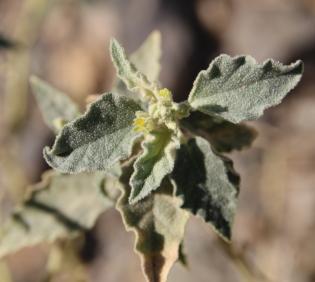
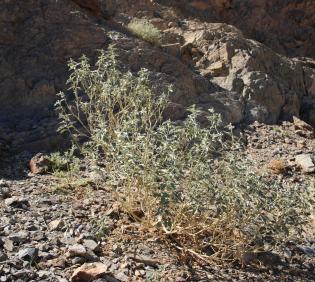
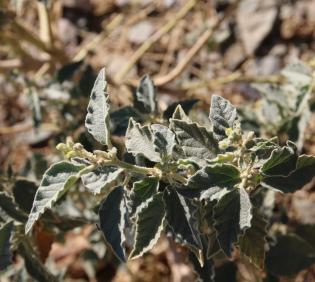
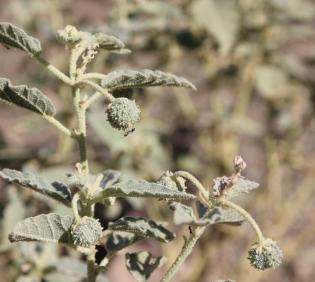
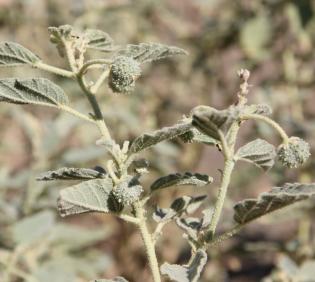
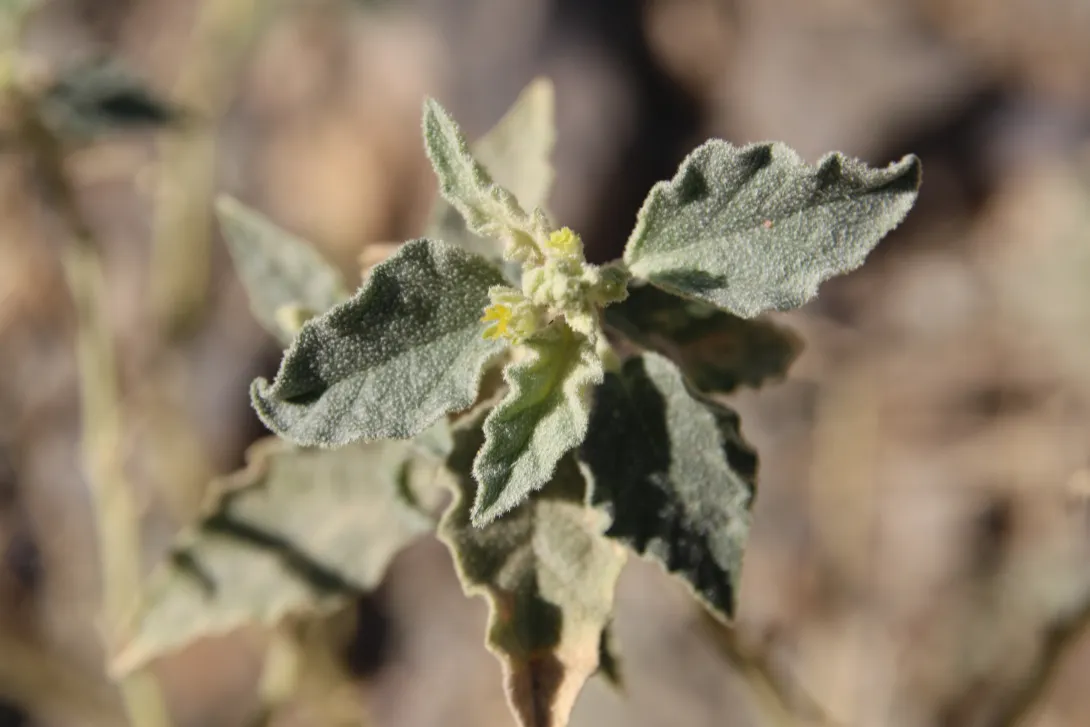
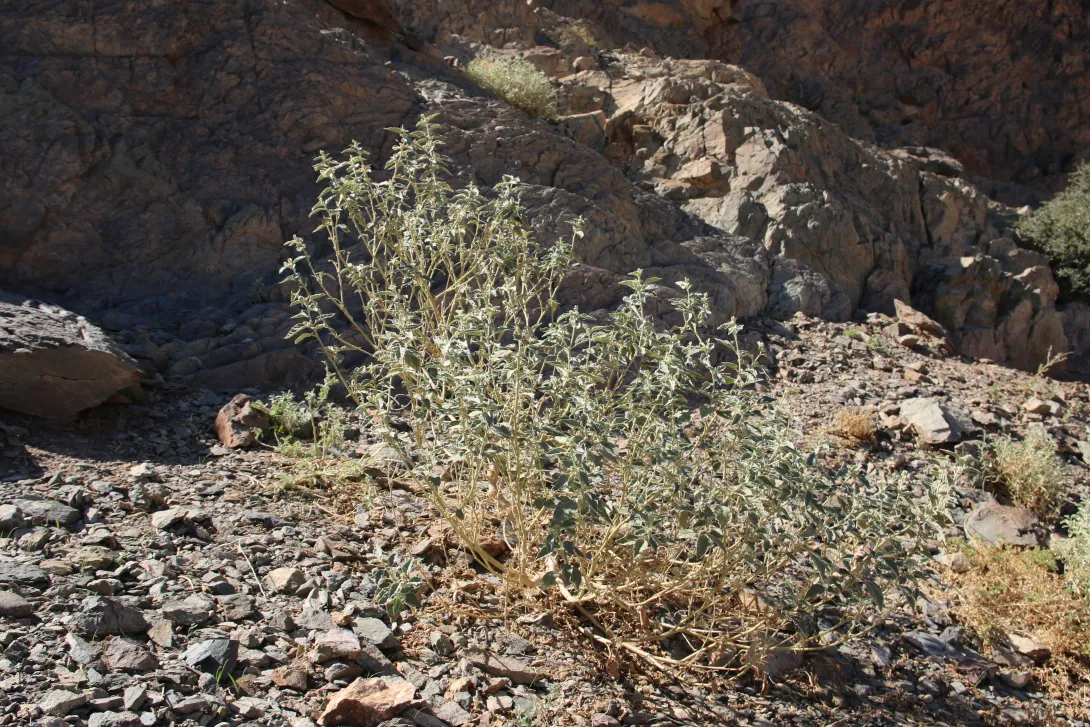
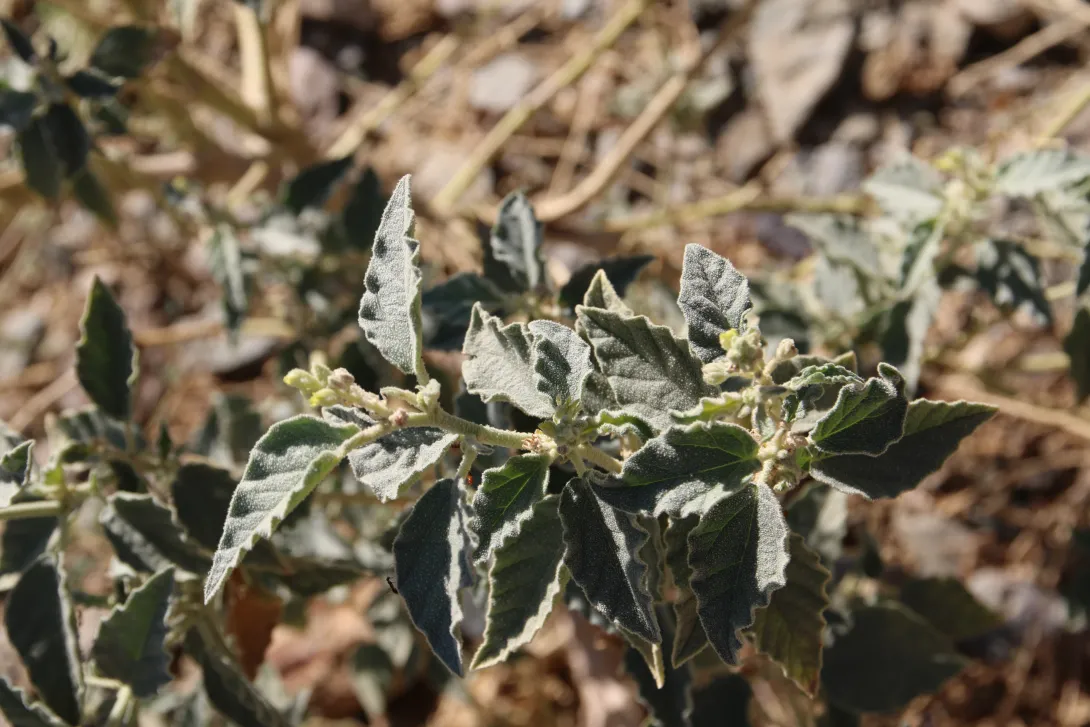
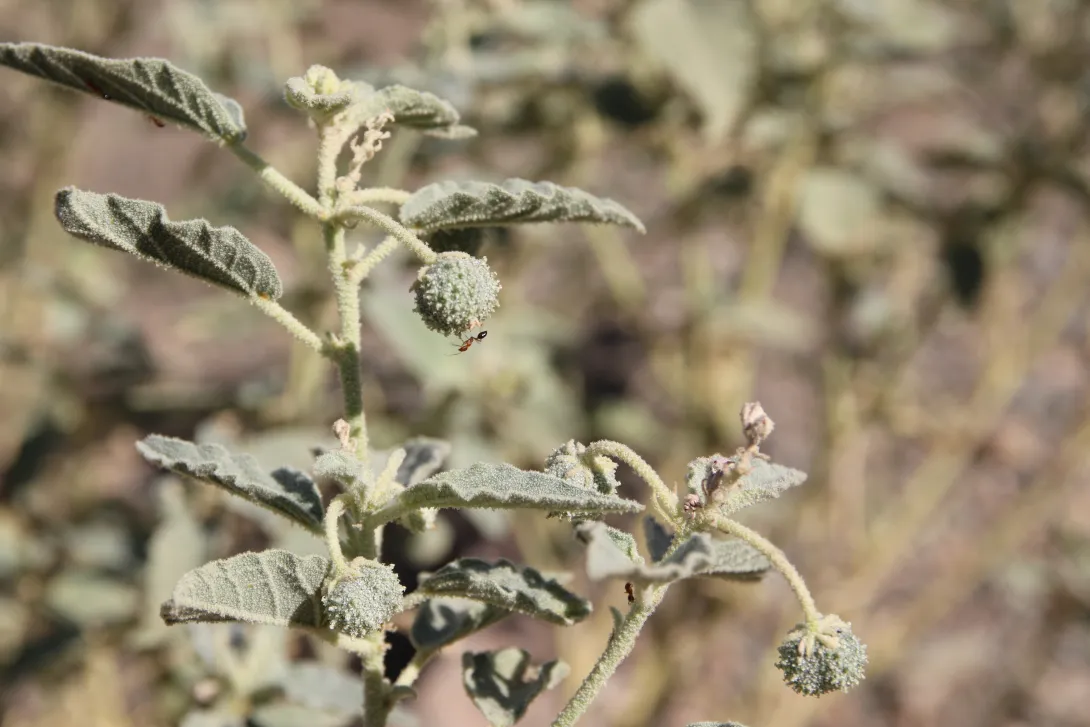
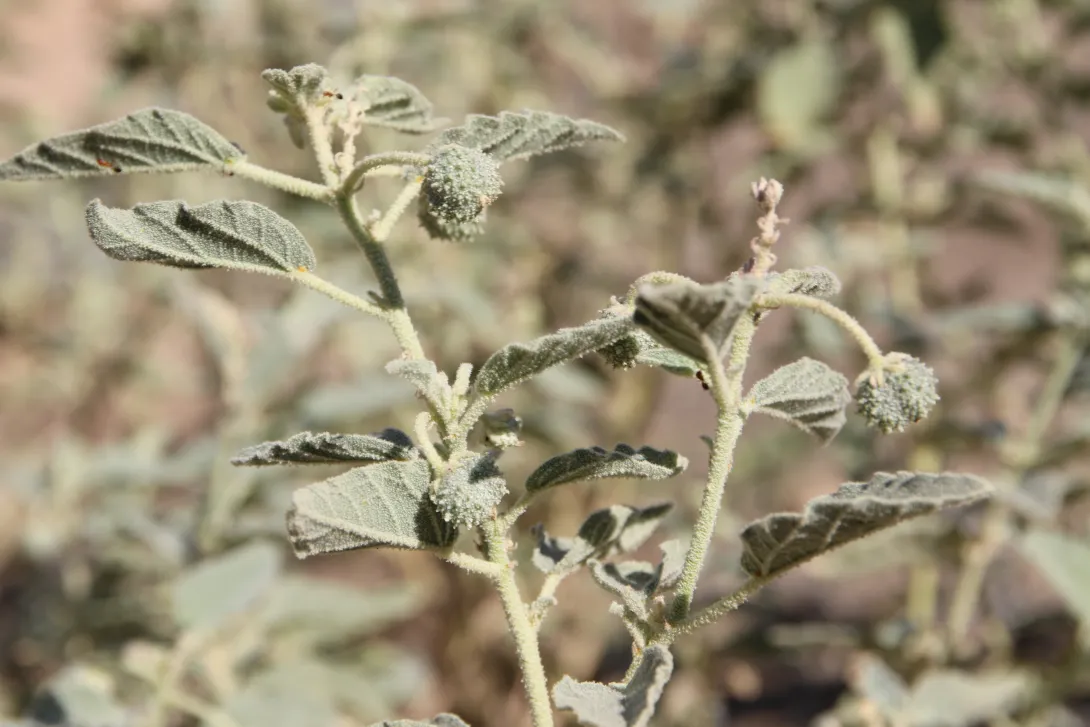
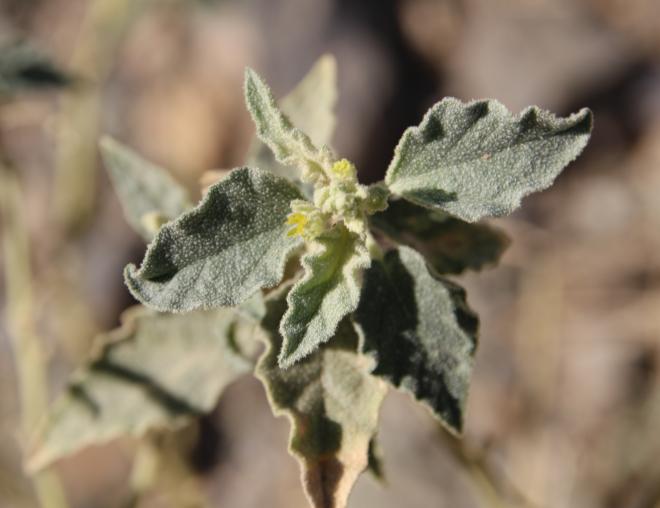
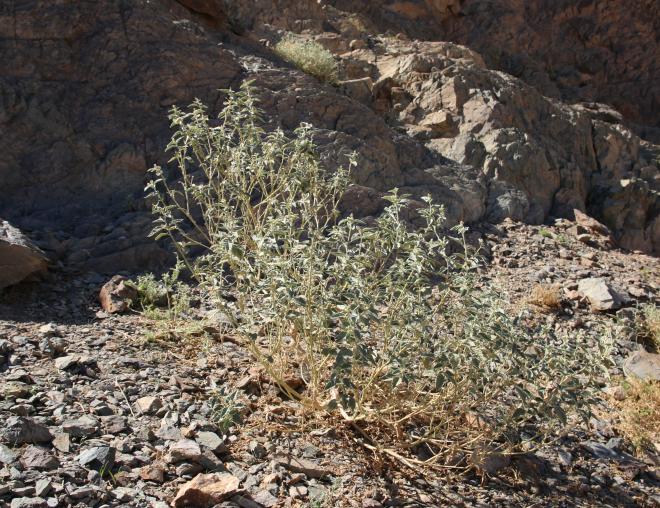
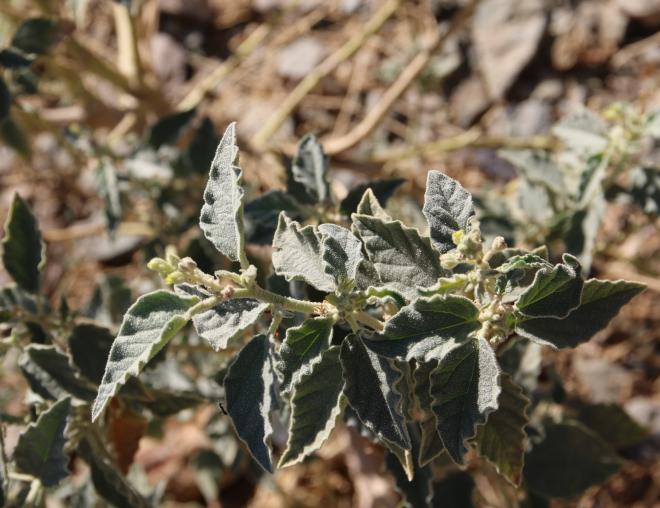
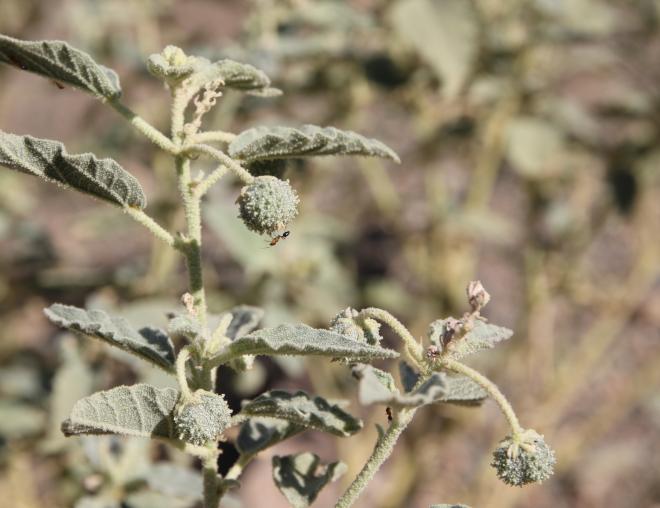
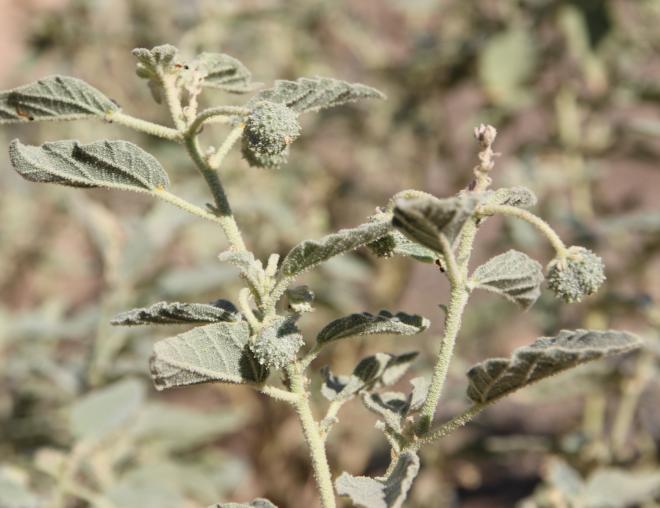
Perennial herb to shrublet, 0.4-1 m tall. All parts evenly stellate-hairy except petals, ovary and seeds. Leaves with filiform to subulate, 2-3 mm long stipules, and 0.5-3.5 cm long petioles; blades 2-7 x 0.8-3 cm, more than 2 times longer than broad, ovate-lanceolate, sharply serrate, acute, cuneate to rounded at base. Inflorescence an axillary or rarely leaf-opposed raceme, 1-1.5 cm long. Male flowers: subsessile; sepals linear-lanceolate, about 2.5-3.5 cm long; petals lanceolate to ovate-lanceolate, scale-covered outside; yellowish stamens 4-7. Female flowers: pedicel accrescent in fruit up to 2-3 cm, deflexed; sepals and petals as in males; ovary covered with dense, silvery scales; styles 3, each 2-branched. Capsule 4-6 x 6-8 mm, obtusely 3-lobed, conical tubercled, purplish-blue, densely scale-covered.
- Growth Form
-
Description
-
Habitat and Distribution
- Habitat
-
Geographical Distribution Range
This Sudanian species is distributed across African horn, Middle East and Indian subcontinent from Sudan to India. Within the Arabian Peninsula, it is native to Jordan, Saudi Arabia, Gulf States, Oman, Yemen, and Socotra.
-
Ecology
-
Phenology
JanFebMarAprMayJunJulAugSepOctNovDecFloweringFructification
- Origin
-
IUCN Red List Category
 Not Evaluated
-
Phenology
-
Uses and Values
-
Aromatic and Medicinal Use
Medicinal use
-
Description of Traditional Uses
The plant has been used traditionally for its dye properties (extracting colorants) and in some folk medicinal practices for topical applications.
-
Aromatic and Medicinal Use
Gallery