Calotropis procera (Aiton) W.T.Aiton
عشر
Syn. Asclepias procera Aiton
Apple of Sodom, French-cotton, Giant Milkweed
Apocynaceae
1 / 7

-
Morphological Description
-
Description
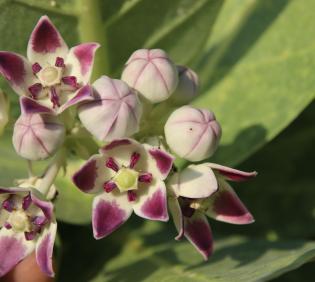
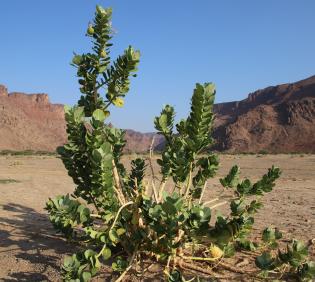
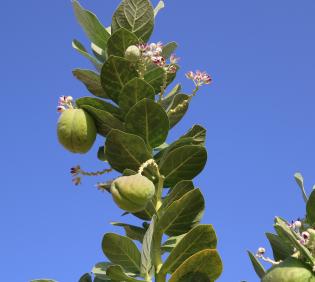
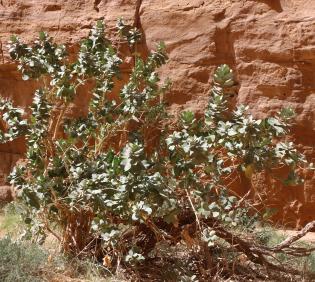
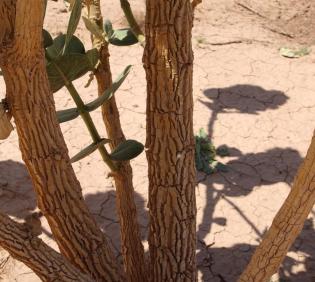
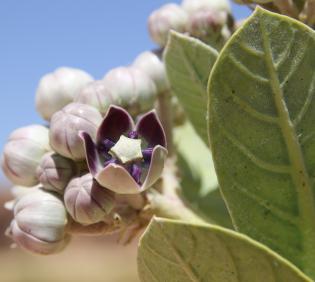
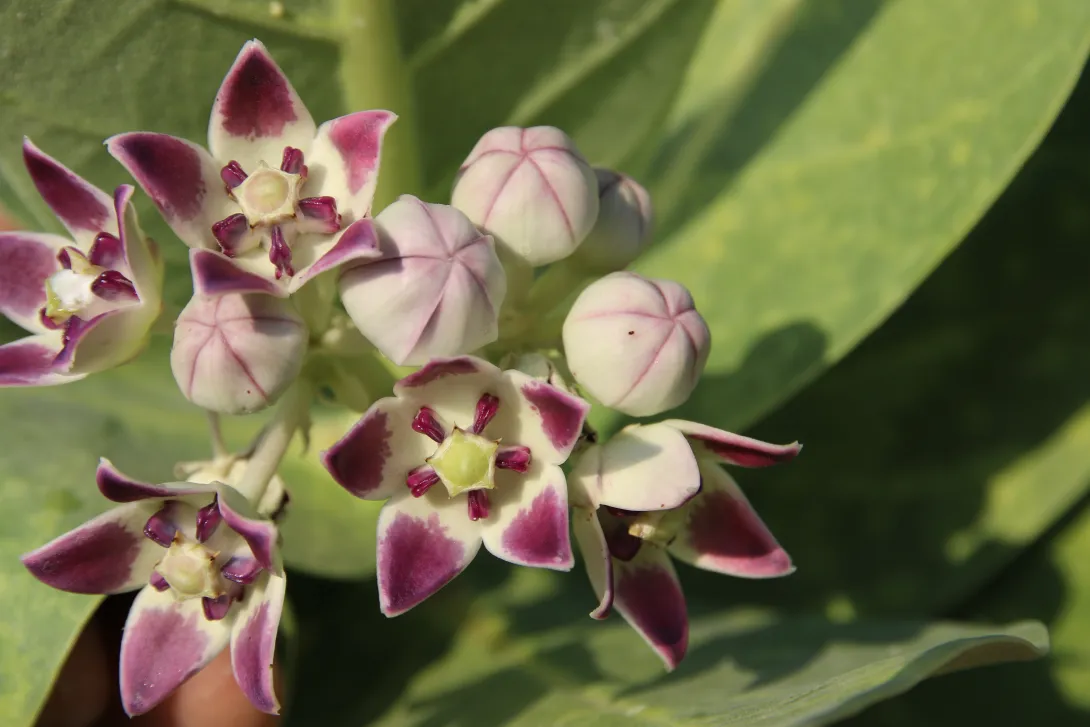
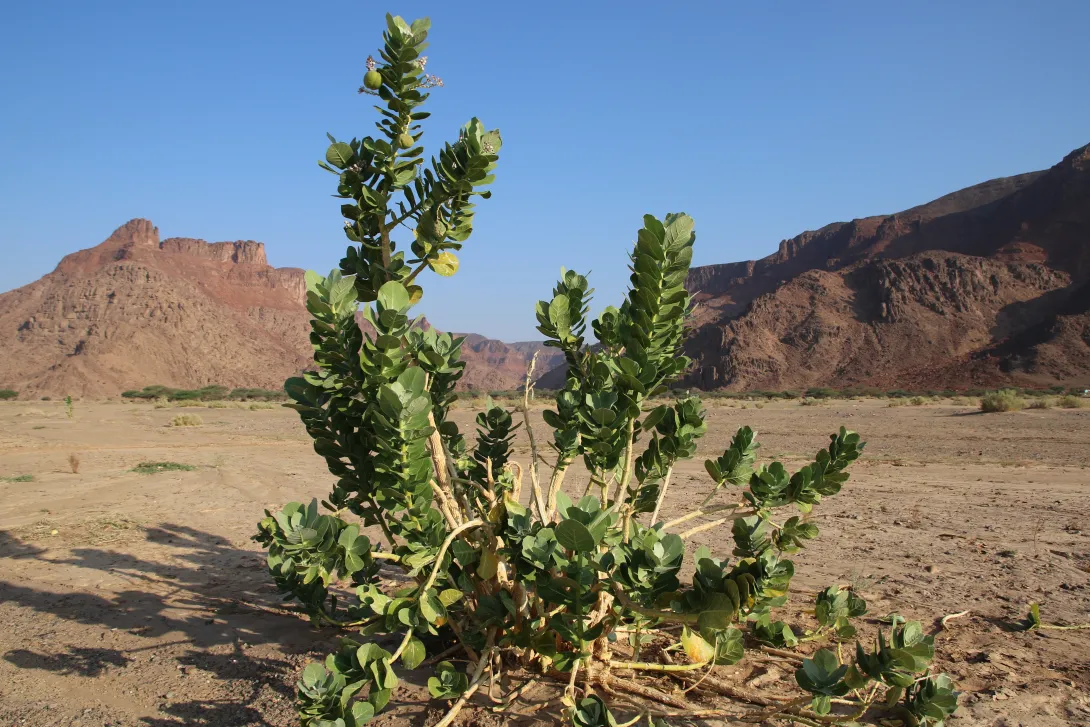
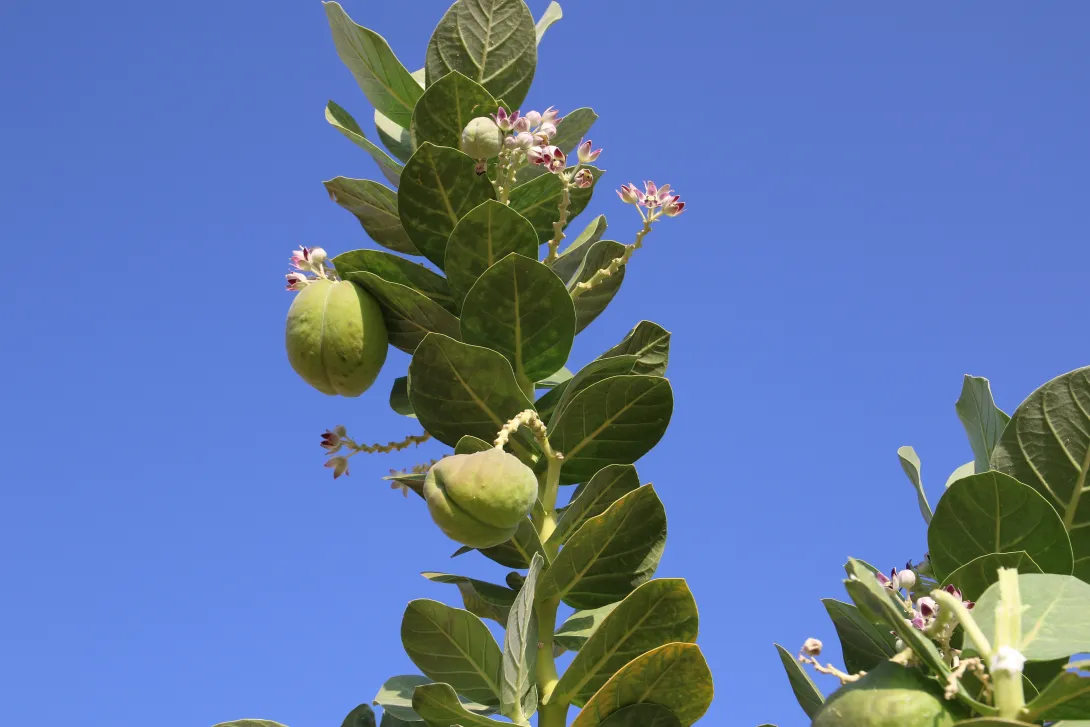
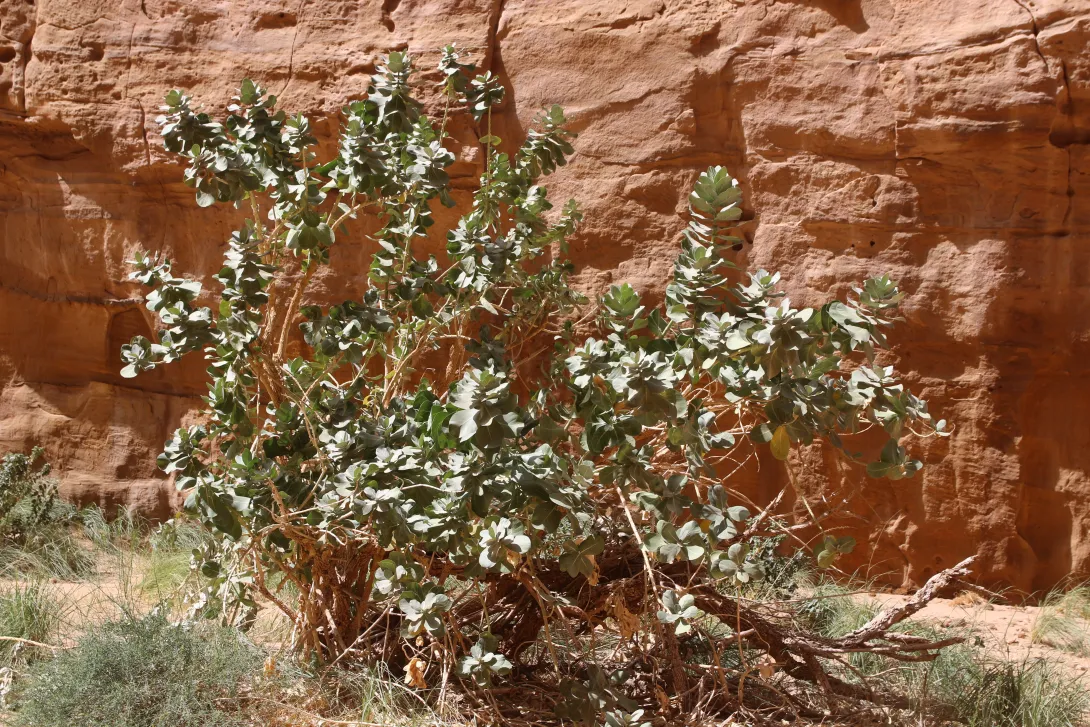
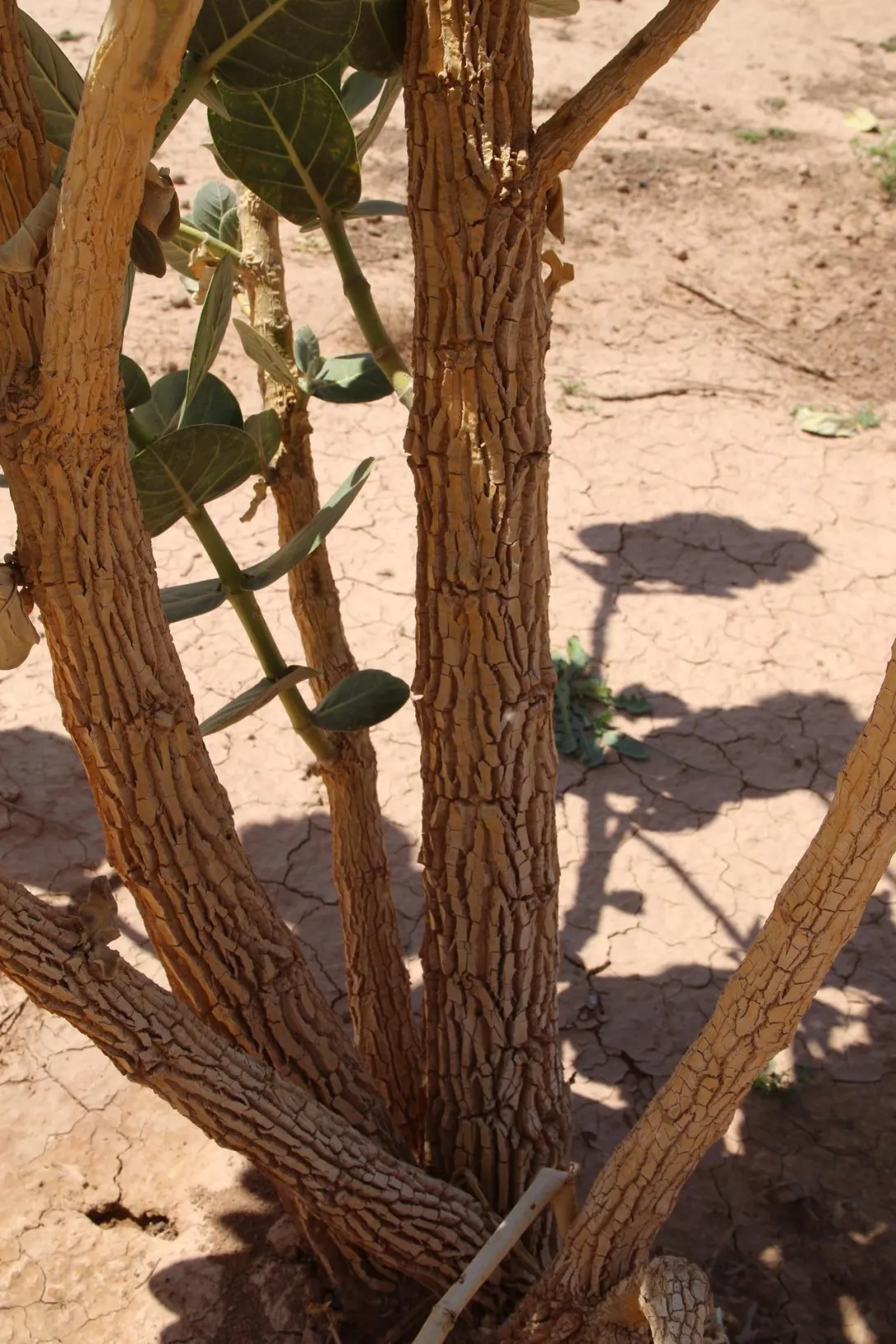
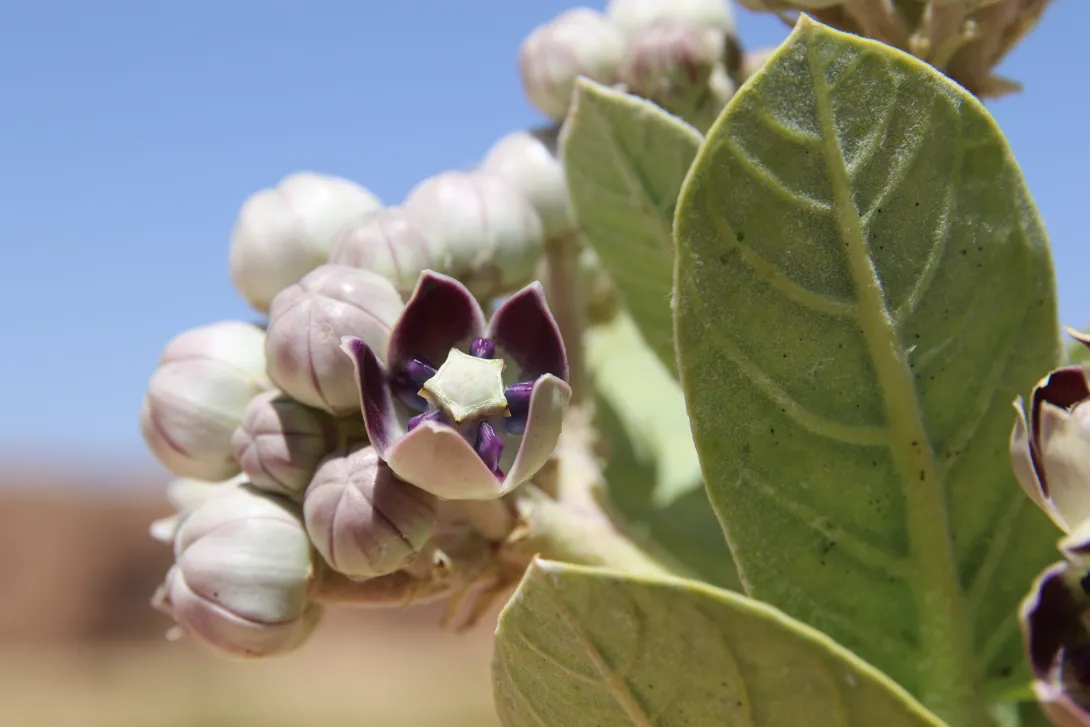
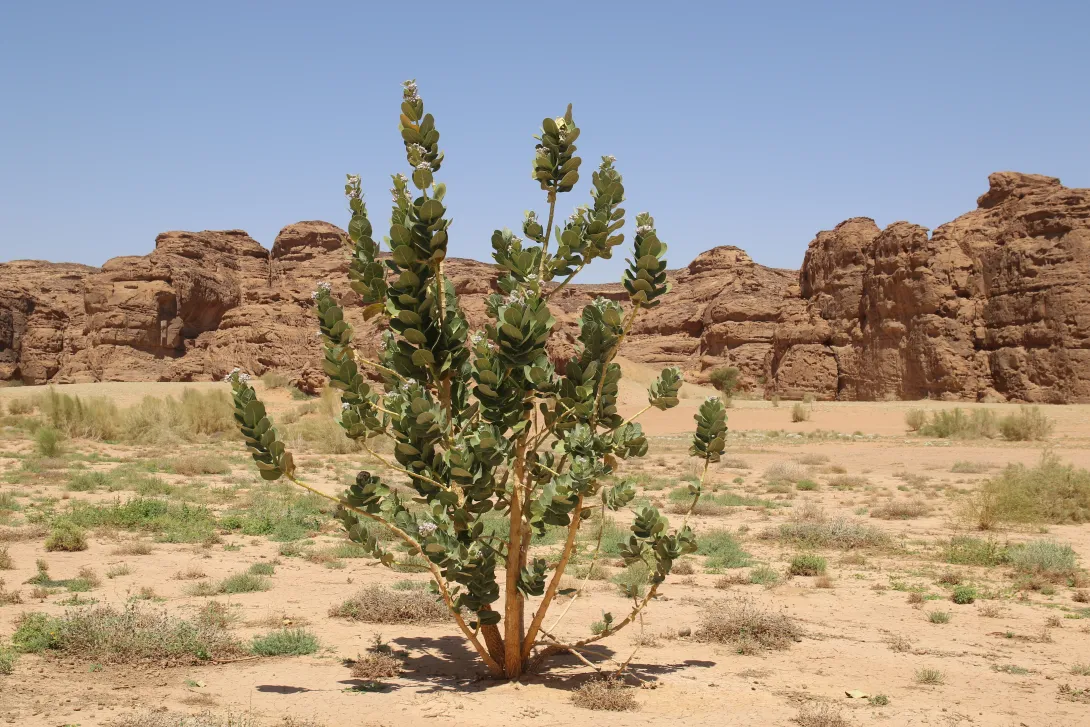
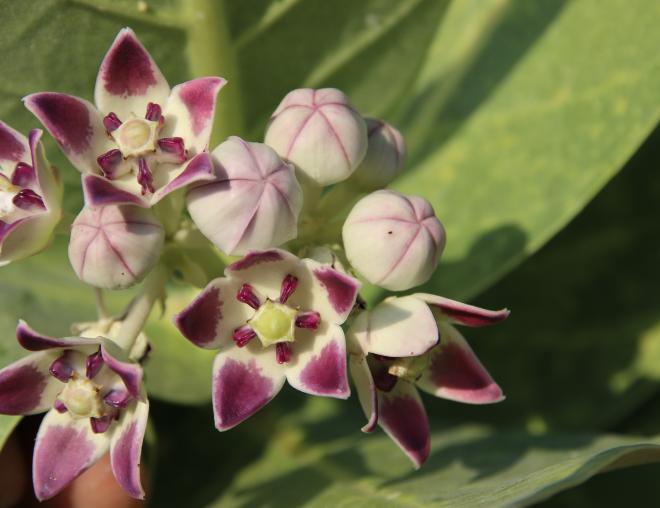
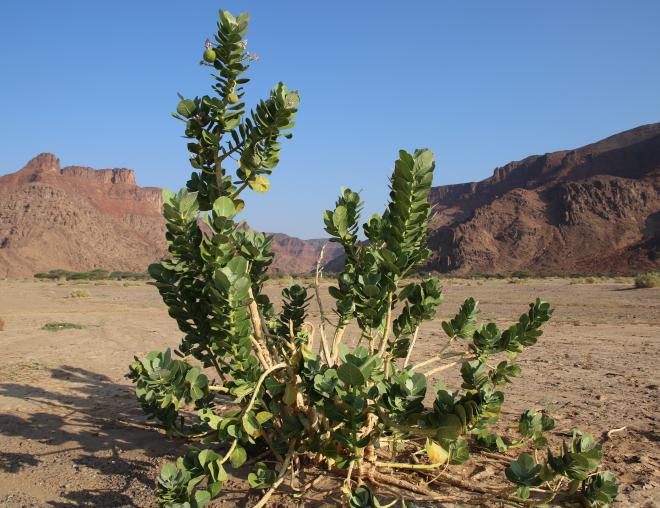
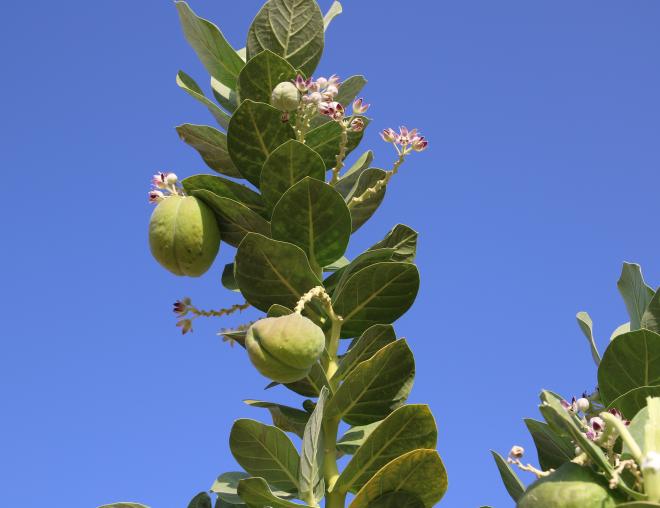
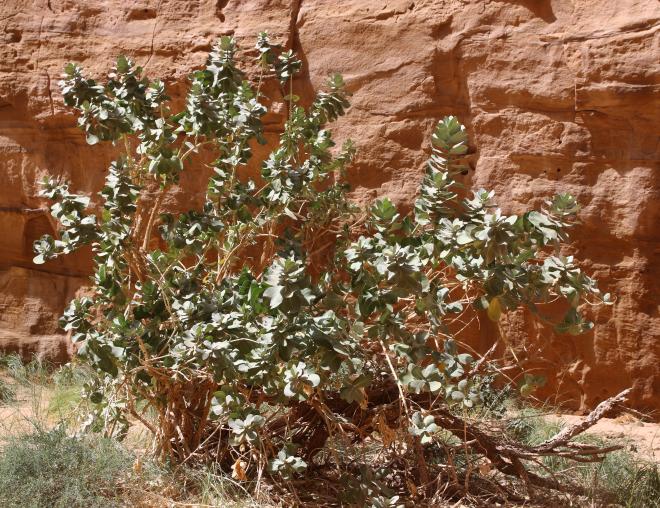
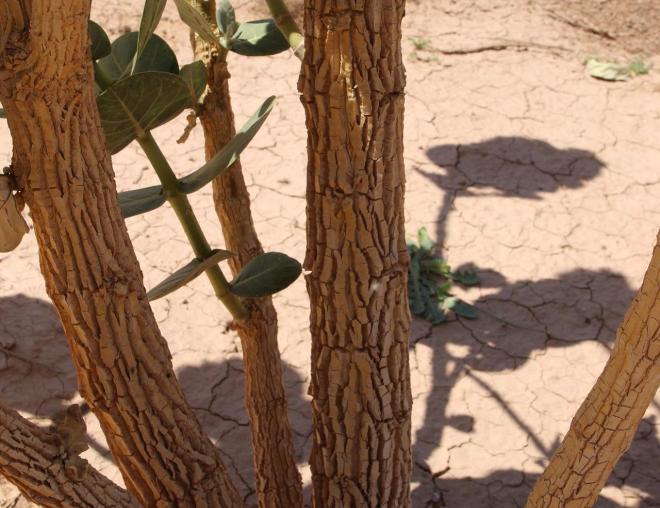
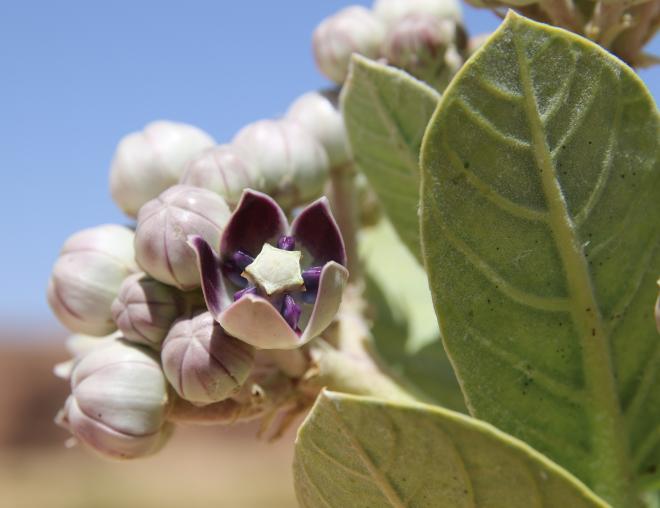
Large perennial shrub or small tree, up to 4 m, with thick, glaucous, latex-bearing stems. Leaves opposite, large, sessile, ovate-oblong, leathery, up to 15 × 8 cm, with rounded apex. Inflorescences umbelliform cymes, bearing fleshy, waxy flowers 2–4 cm wide, with pale lilac to purple corolla and a conspicuous corona. Fruit a large inflated follicle (8–10 cm), green then brown, splitting to release numerous silky-haired seeds dispersed by wind.
- Growth Form
-
Description
-
Habitat and Distribution
- Habitat
-
Geographical Distribution Range
This Sudanian species is widely distributed across Africa and the Middle East, extending eastward to Indochina. In the Arabian Peninsula, it is native to Jordan, Saudi Arabia, Kuwait, the Gulf States, Oman, Yemen, and Socotra. It has also been introduced to the Americas, Australia, and China.
-
Ecology
-
Phenology
JanFebMarAprMayJunJulAugSepOctNovDecFloweringFructification
- Origin
-
IUCN Red List Category
 Least Concern
-
Remarks
This species is essential for the development of the butterfly Danaus chrysippus, also known as the plain tiger or African Monarch Butterfly that is only feeding on plant from the Apocynaceae family.
-
Phenology
-
Uses and Values
-
Aromatic and Medicinal Use
Medicinal use
-
Other Usages
Melliferous
-
Description of Traditional Uses
Calotropis procera is recognized for the production of strong bast fibers used in making ropes, cords, and fishing nets, while the soft, silky floss from its seeds has been traditionally used as a stuffing material. In traditional medicine, the plant's latex is widely cited in folk practices; it is commonly applied externally to treat skin conditions, including ringworm, eczema, and warts, and is occasionally utilized in the treatment of swellings or minor injuries.
-
Aromatic and Medicinal Use
Gallery