Calligonum comosum L'Hér.
أرطى
Syn. Calligonum polygonoides subsp. comosus (L'Hér.) Soskov
Fire bush
Polygonaceae
1 / 7

-
Morphological Description
-
Description
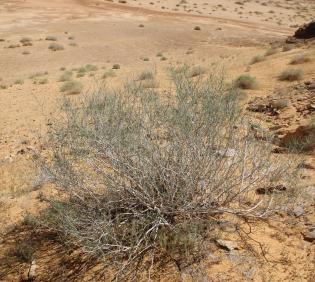
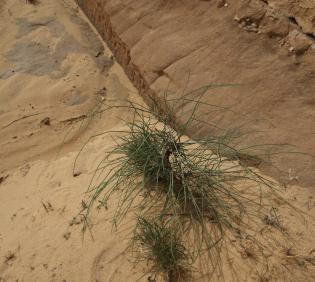
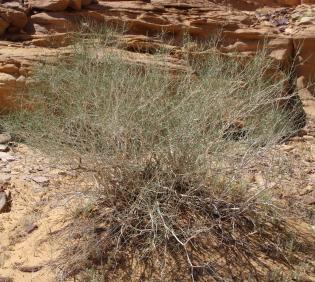
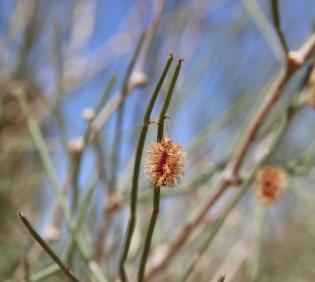
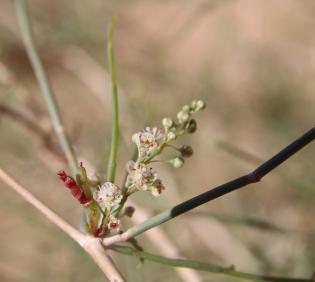
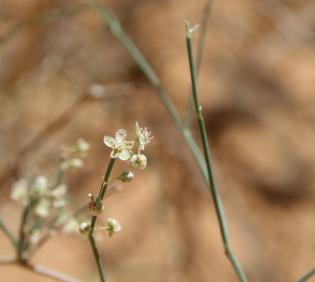
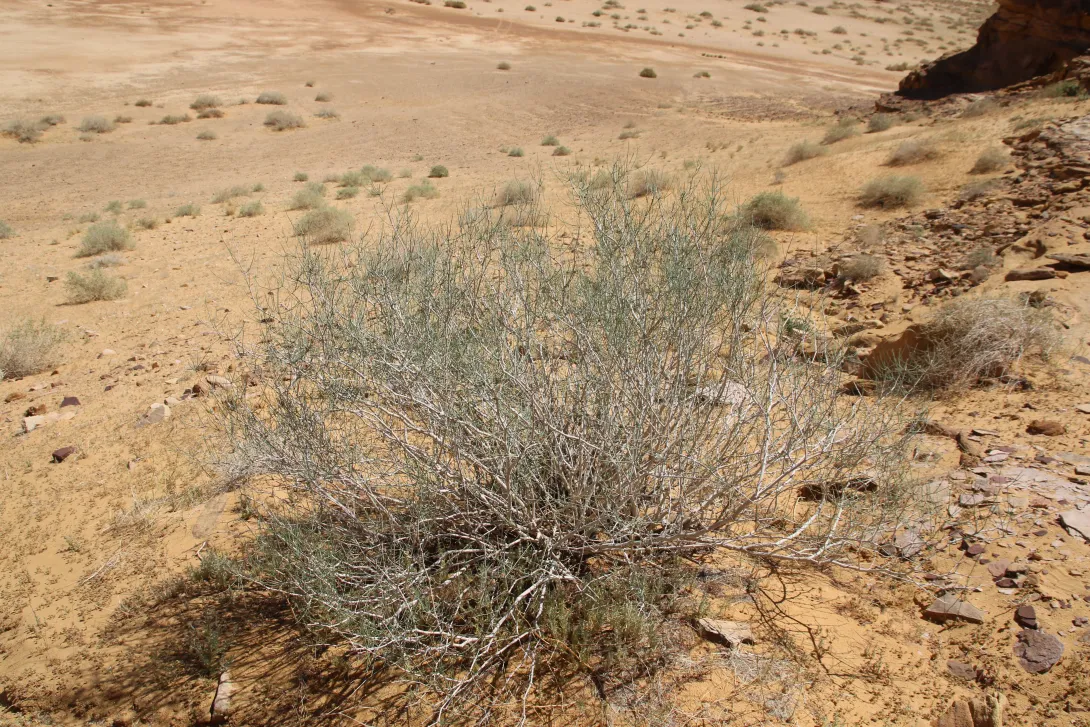
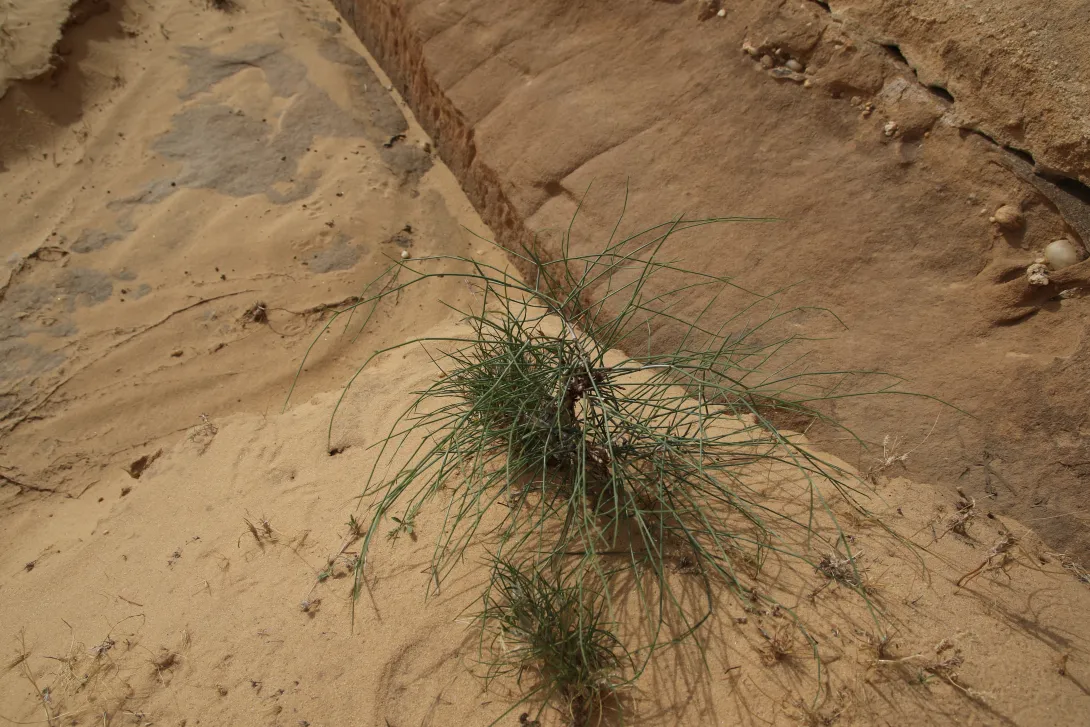
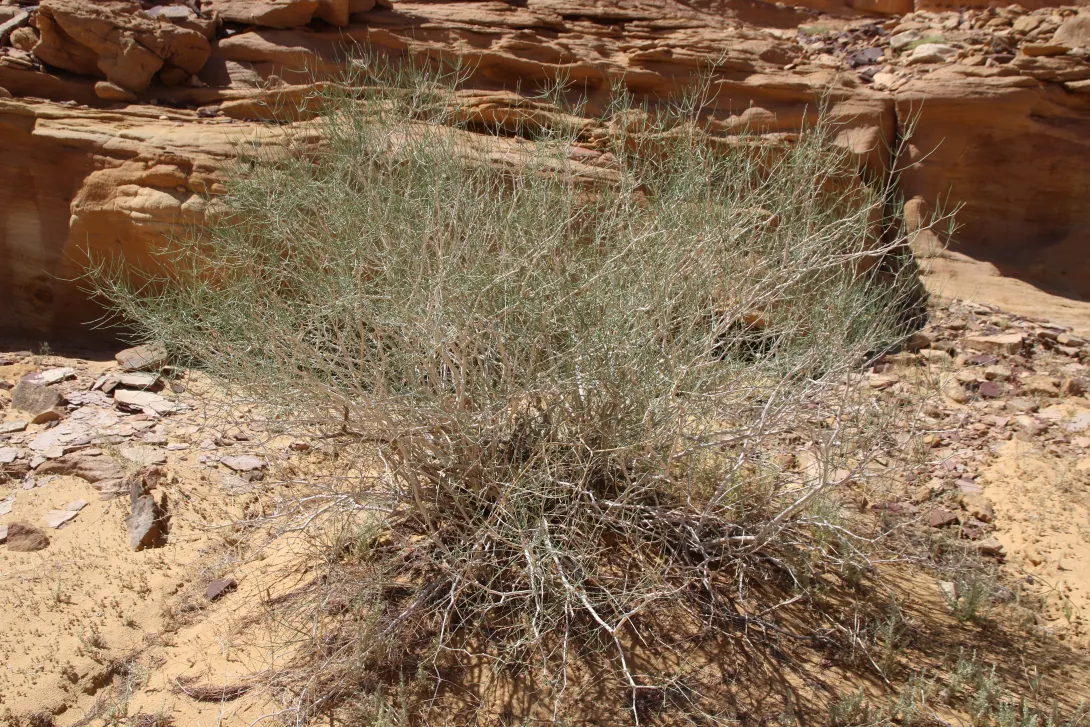
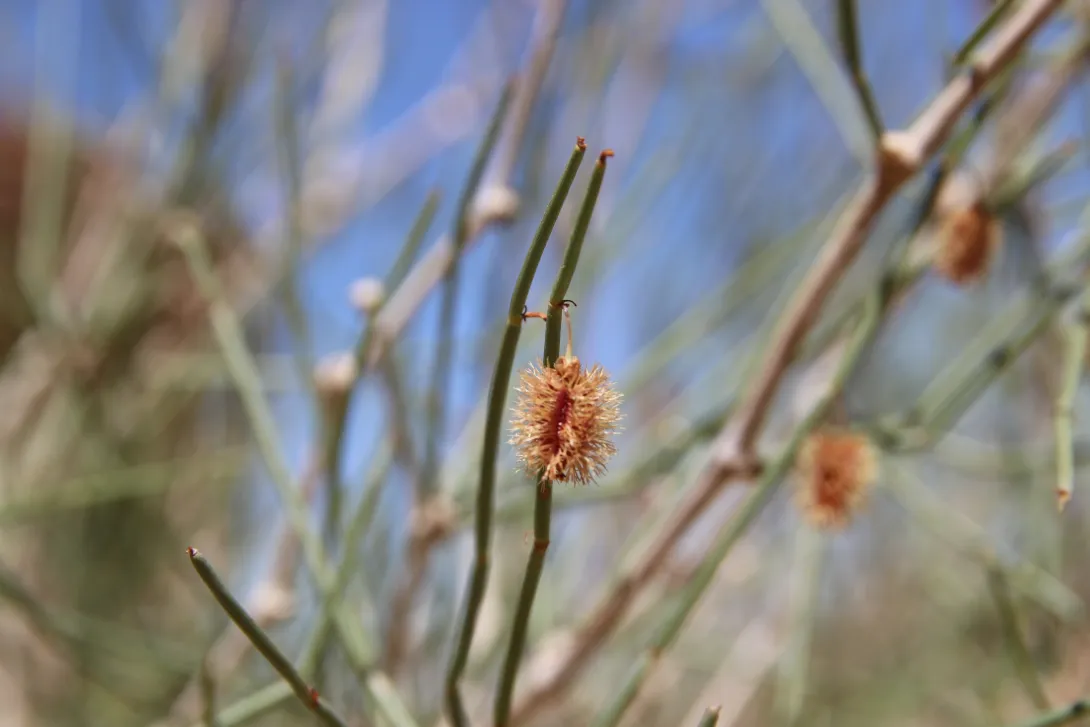
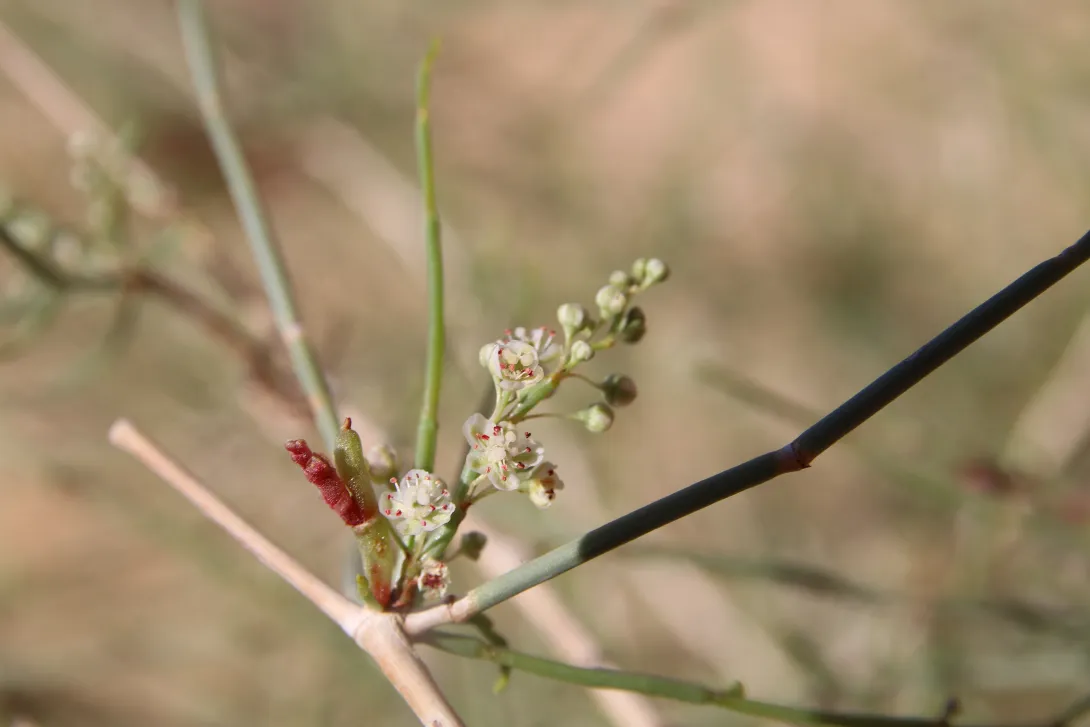
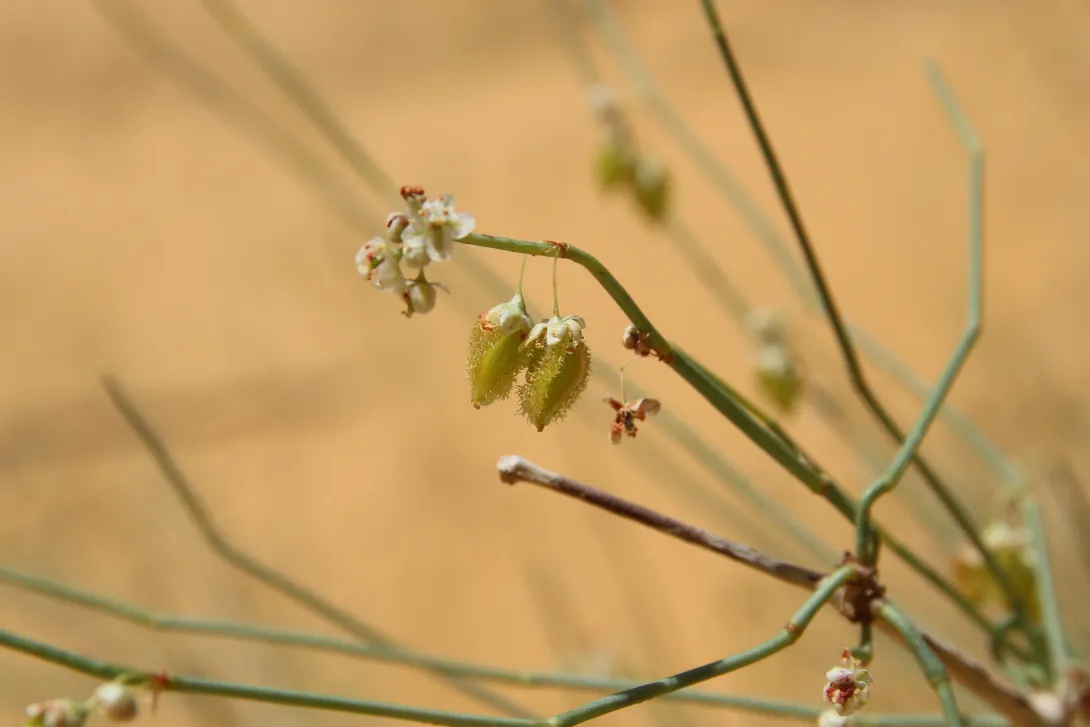
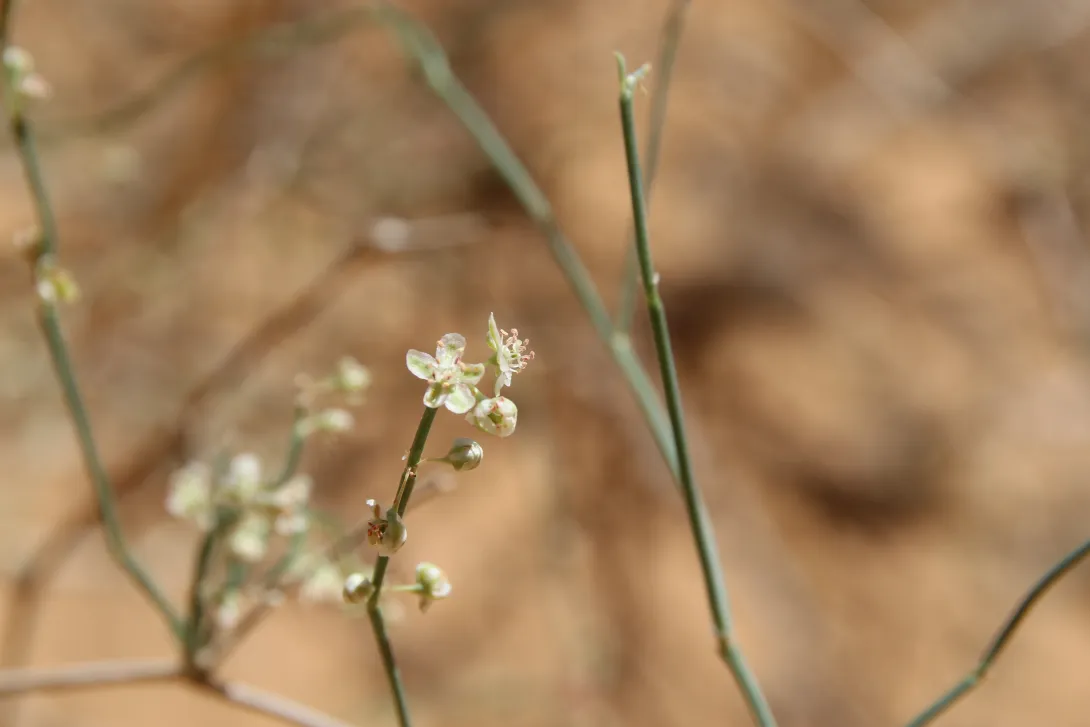
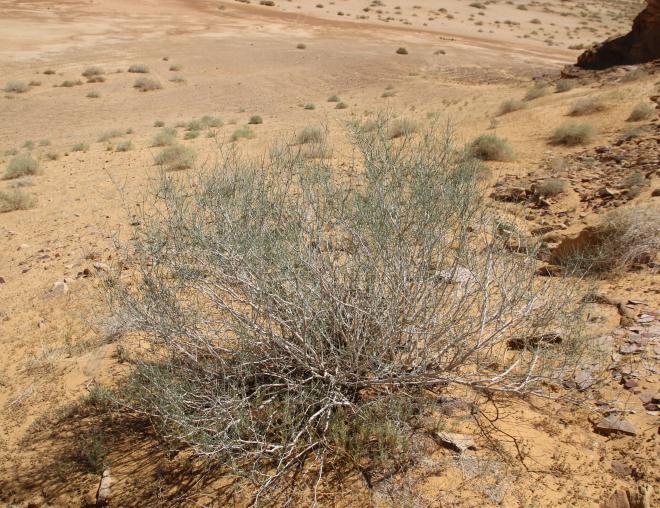
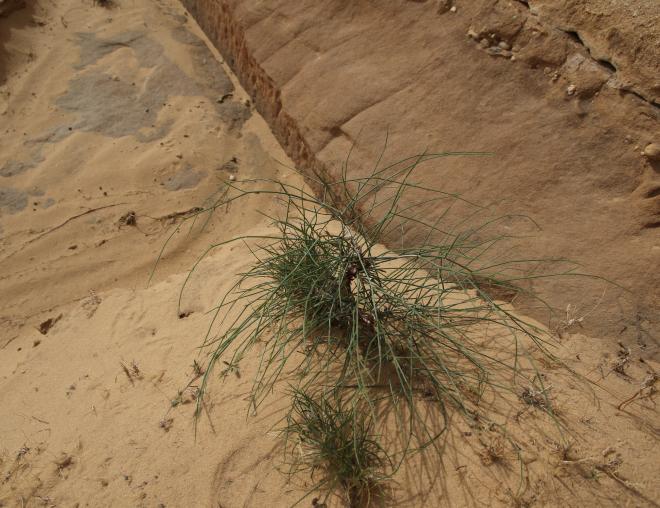
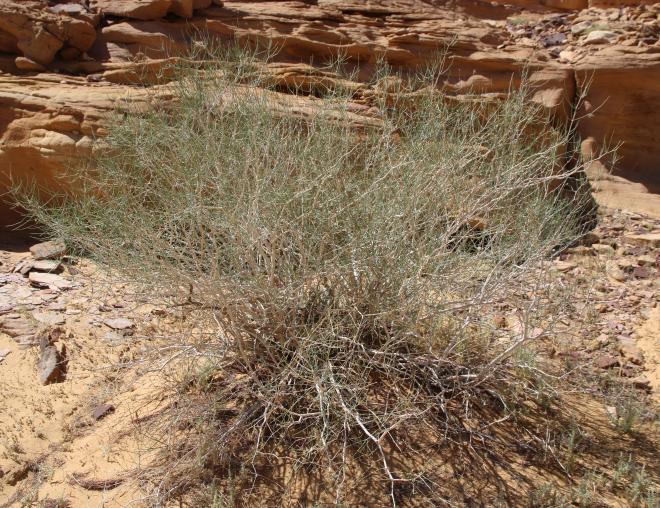
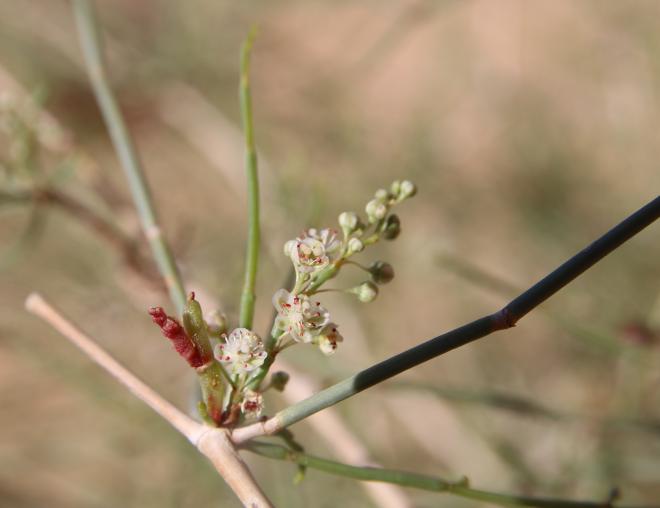
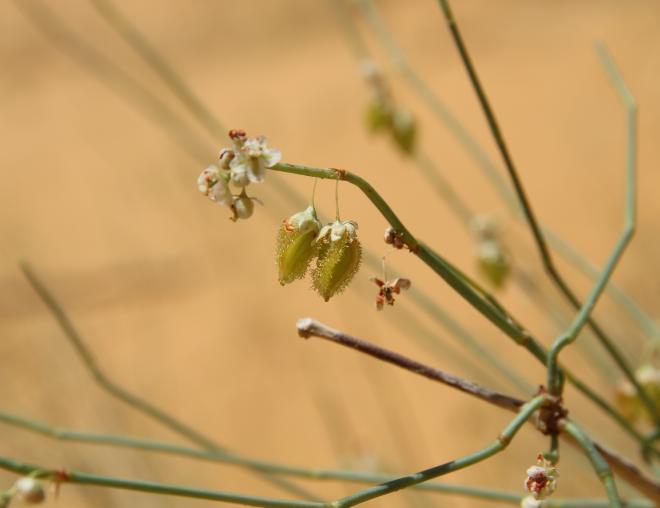
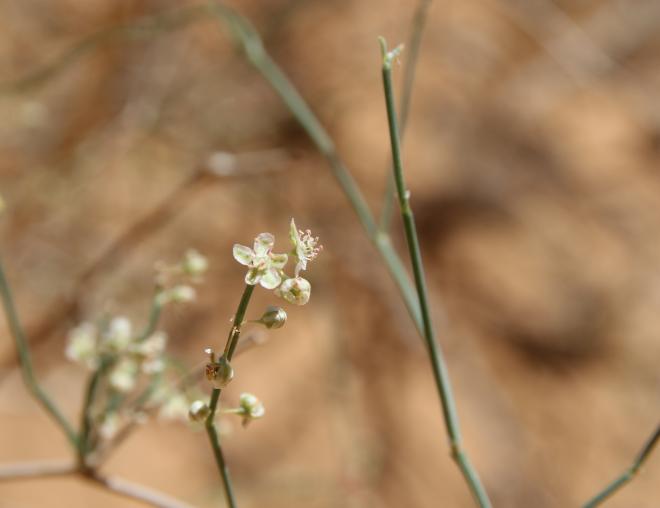
Much-branched perennial shrub, up to 2 m, forming open clumps on sandy dunes. Branches slender, green, photosynthetic, leafless or with minute caducous scales. Flowers solitary or clustered on young shoots, pink to purple anthers, 5-tepaled, showy. Fruit winged, with long silky hairs aiding wind dispersal, turning reddish when mature.
- Growth Form
-
Description
-
Habitat and Distribution
- Habitat
-
Geographical Distribution Range
Saharo-Arabian-Irano-Turanian species is distributed from Sahel and the Middle East, extending eastward to Pakistan. Within the Arabian Peninsula, it is native to Jordan, Saudi Arabia, Kuwait, Oman and Socotra.
-
Ecology
-
Phenology
JanFebMarAprMayJunJulAugSepOctNovDecFloweringFructification
- Origin
-
IUCN Red List Category
 Not Evaluated
-
Remarks
Not common in AlUla County, structuring species in mobile sand.
-
Phenology
-
Uses and Values
-
Aromatic and Medicinal Use
Medicinal use
-
Other Usages
Palatable; Melliferous
-
Description of Traditional Uses
Calligonum comosum has long been utilized by desert-dwelling communities for its structural properties and utility. It is extensively used in the production of high-quality charcoal and serves as a reliable source of firewood. Its robust root systems are traditionally recognized for their capacity to stabilize shifting sand dunes, preventing desert encroachment. In folk medicine, preparations derived from the plant have been traditionally employed to treat gastrointestinal ailments, such as diarrhea. Furthermore, it is a significant source of forage for livestock, particularly camels, and is valued as an important plant for honey production.
-
Aromatic and Medicinal Use
Gallery