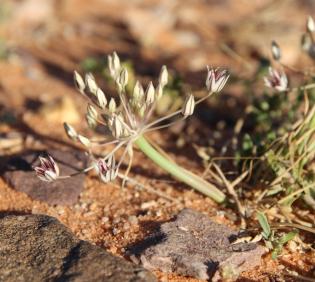
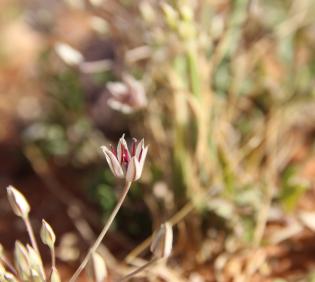
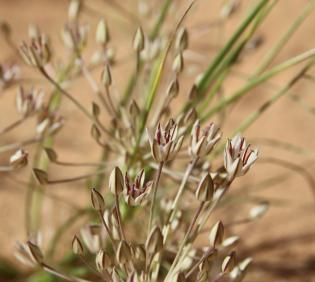
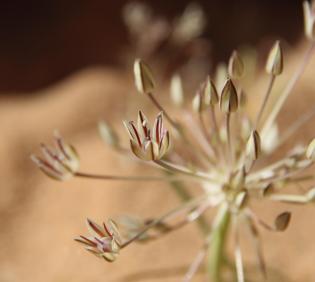
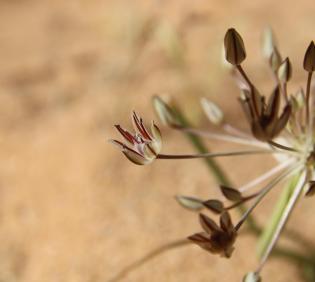
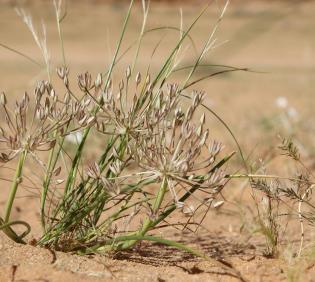
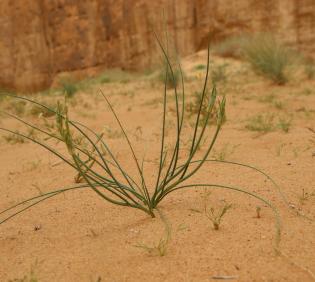
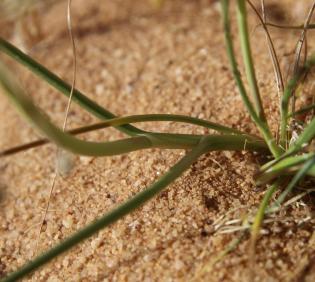
Allium sindjarense Boiss. & Hausskn. ex Regel
الطيطا / الطيطان
Syn. Allium desertorum Forssk.
Desert Garlic
Amaryllidaceae
1 / 9


-
Morphological Description
- Description
- Growth Form
-
Habitat and Distribution
- Habitat
-
Geographical Distribution Range
This Irano-Turanian–Saharo-Arabian species is distributed across the Middle East and adjacent regions, with a range extending from Turkey and Iraq through the Arabian Peninsula, including Kuwait, Lebanon–Syria, Jordan, and Saudi Arabia.
-
Ecology
-
Phenology
JanFebMarAprMayJunJulAugSepOctNovDecFloweringFructification
- Origin
-
IUCN Red List Category
 Not Evaluated
-
Remarks
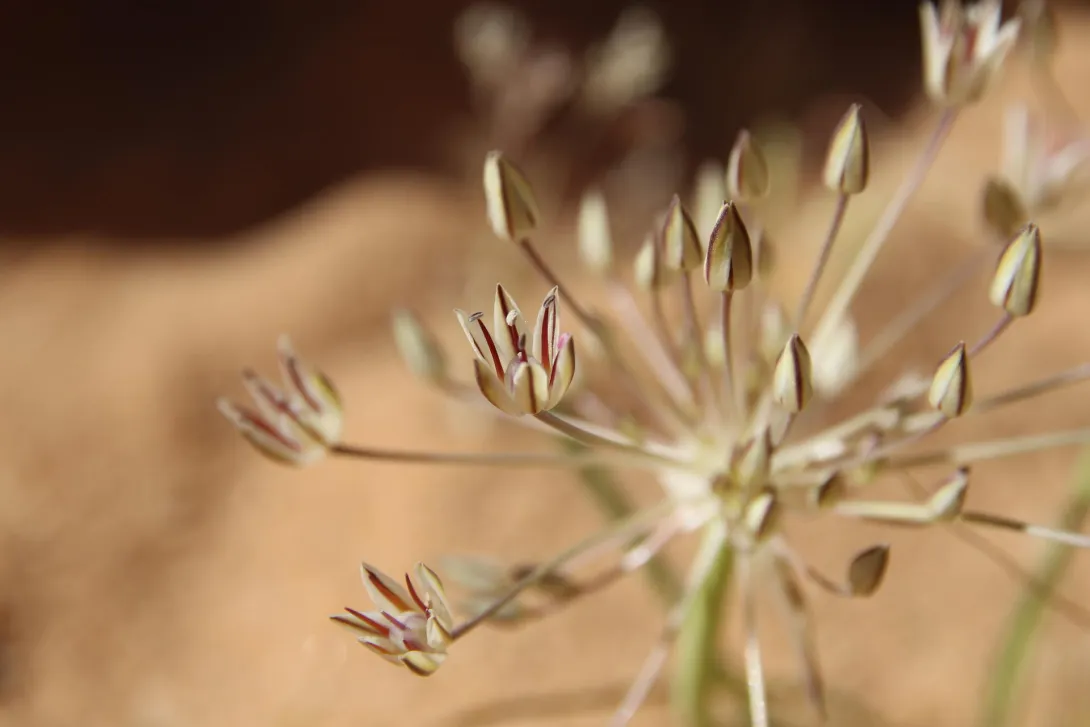
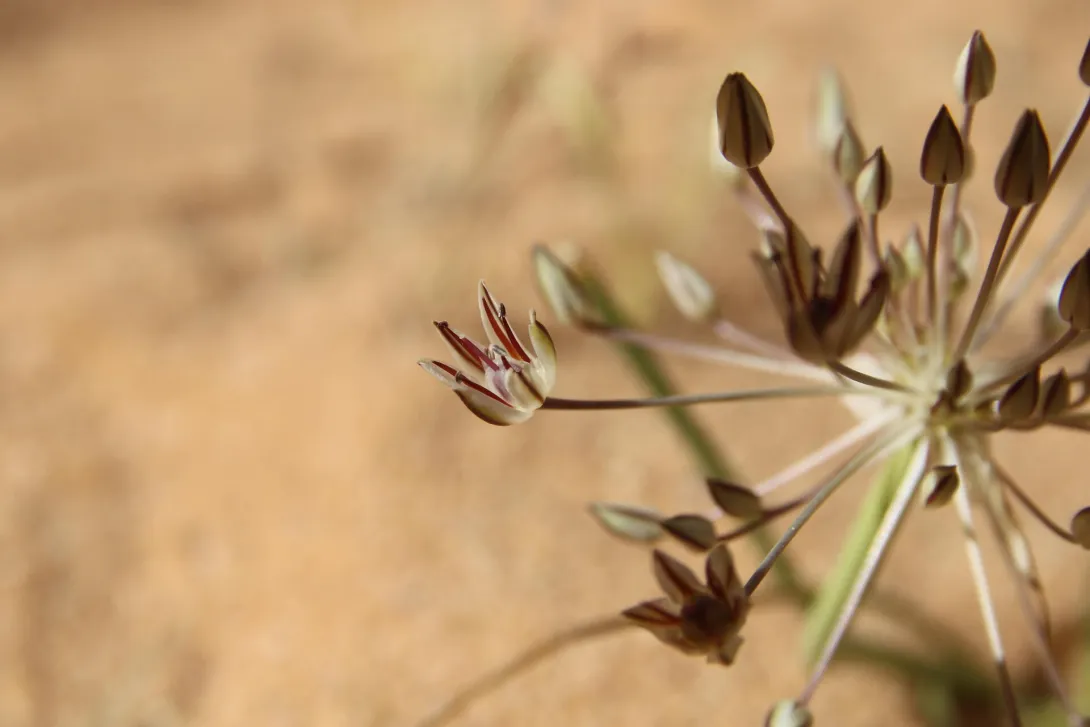
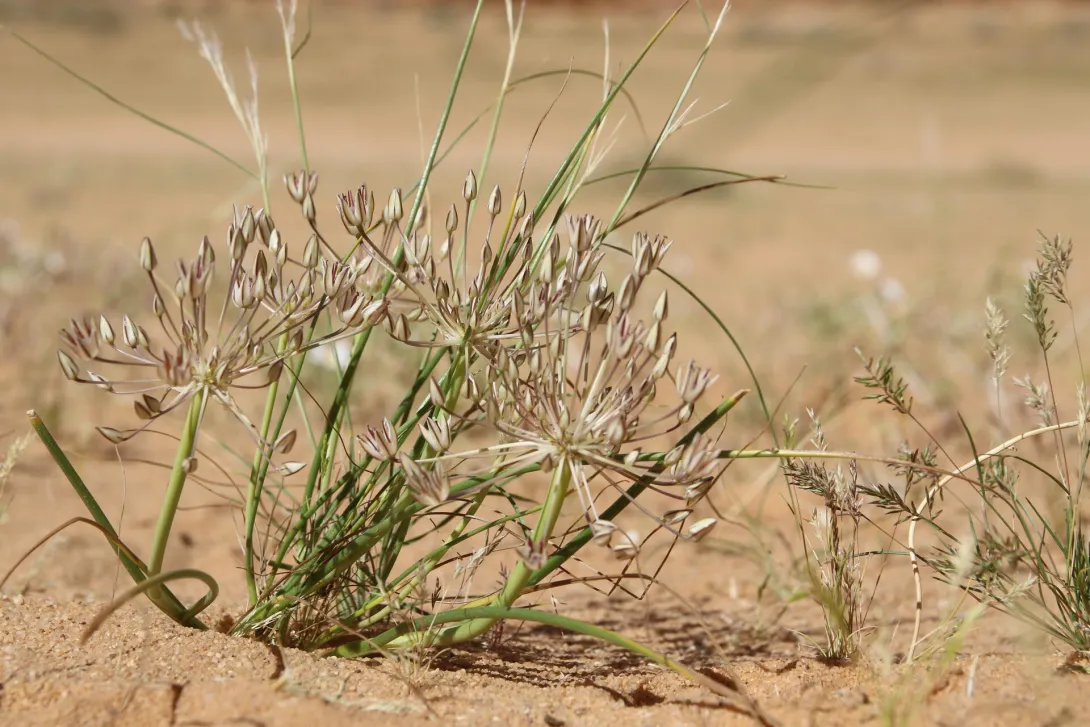
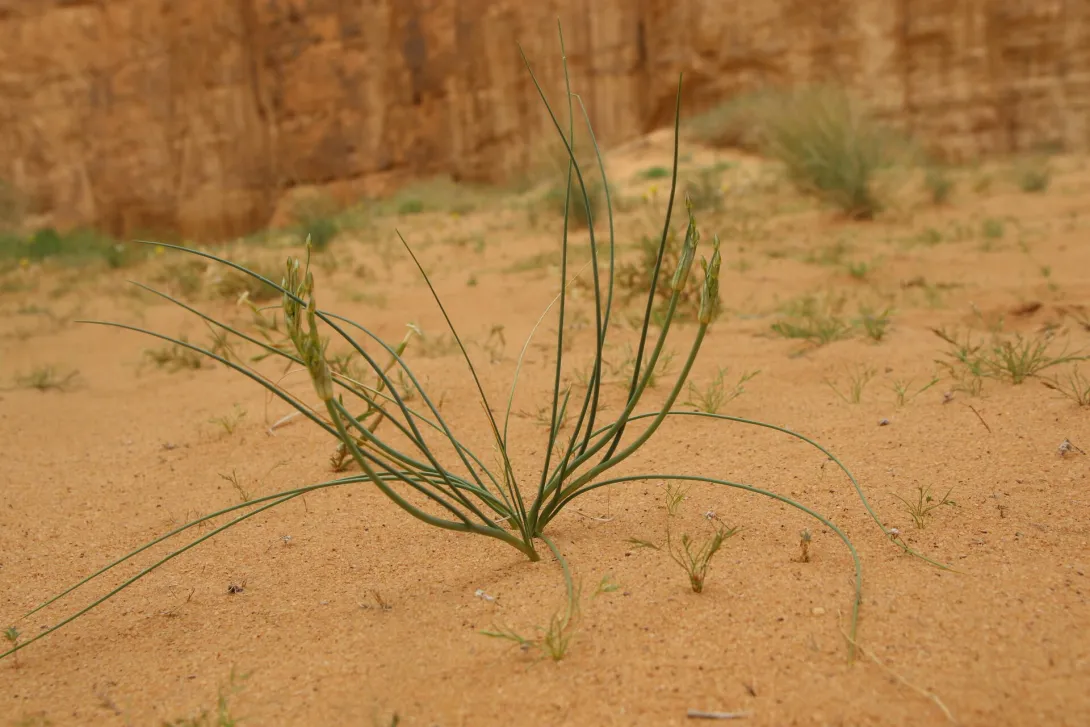
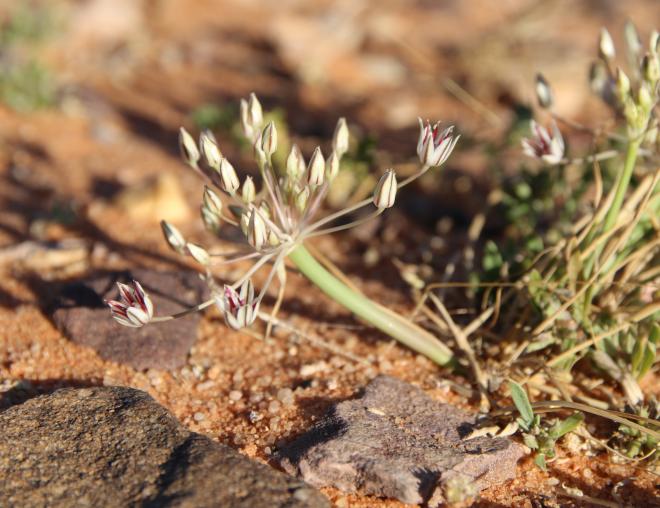
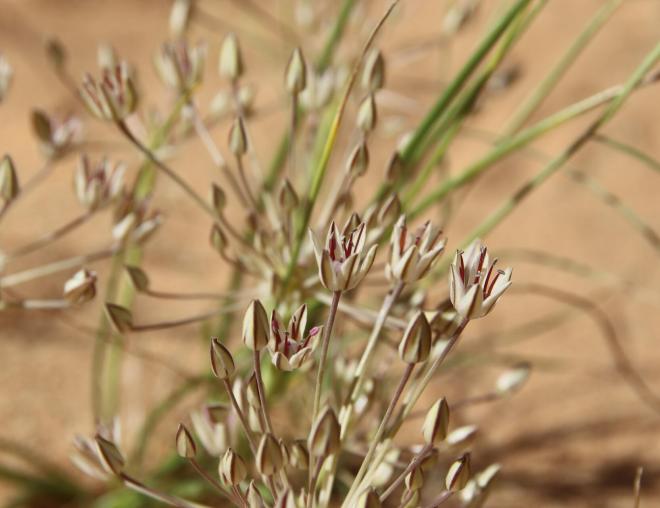
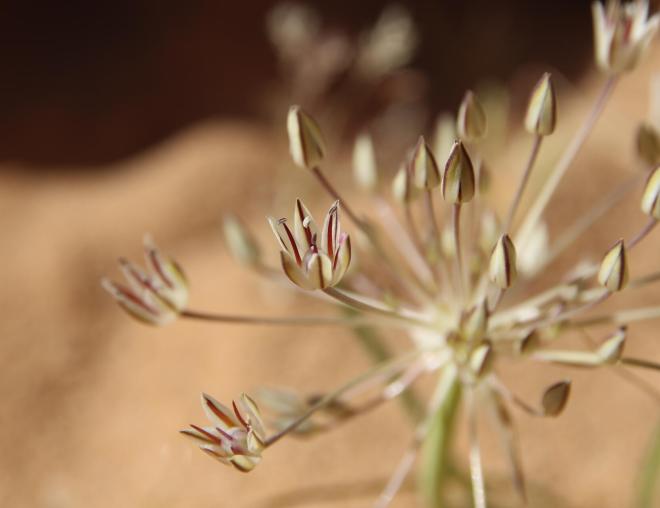
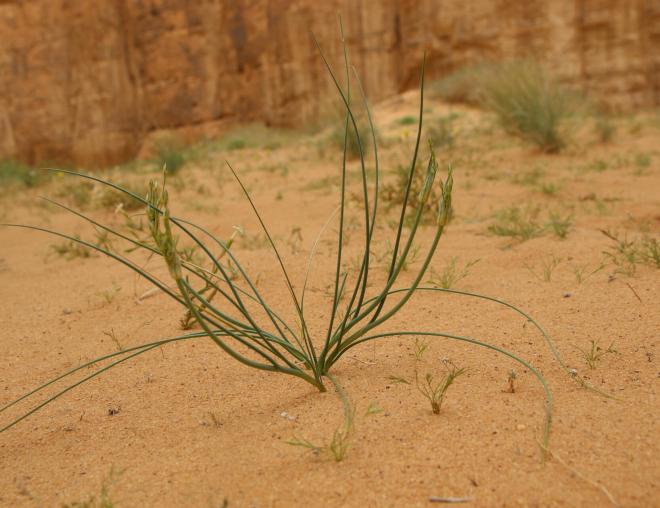
This small Desert Garlic is not common in AlUla County and can be observed in sandy dunes in well-preserved areas.
-
Phenology
-
Uses and Values
-
Aromatic and Medicinal Use
Medicinal use
-
Other Usages
Palatable
-
Description of Traditional Uses
This small wild onion is well documented in Bedouin ethnobotany as an edible plant, particularly for its bulbs. Furthermore, it has been noted in regional assessments for its extensive use in traditional medicinal practices.
-
Aromatic and Medicinal Use
Gallery