Capparis decidua (Forssk.) Edgew.
التنضُب
Syn. Sodada decidua Forssk.
Leafless Caper
Capparaceae
1 / 8





-
Morphological Description
-
Description
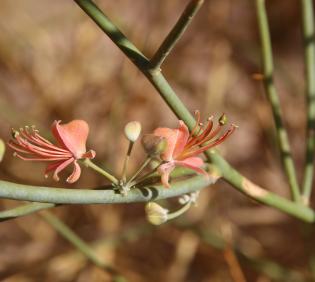
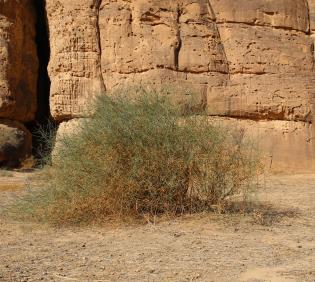
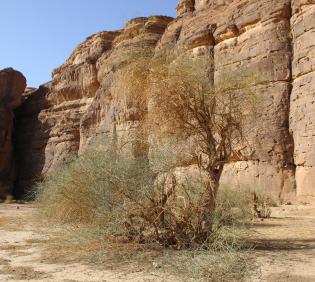
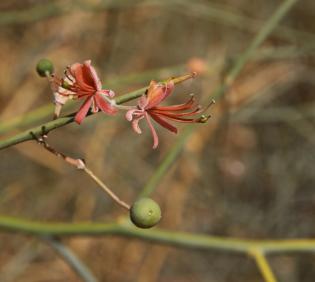
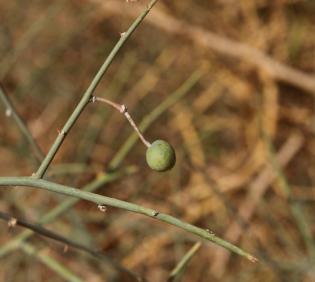
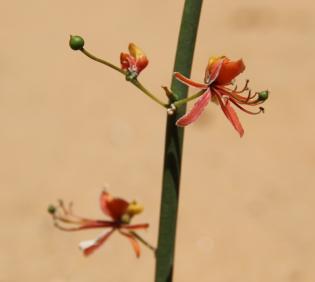
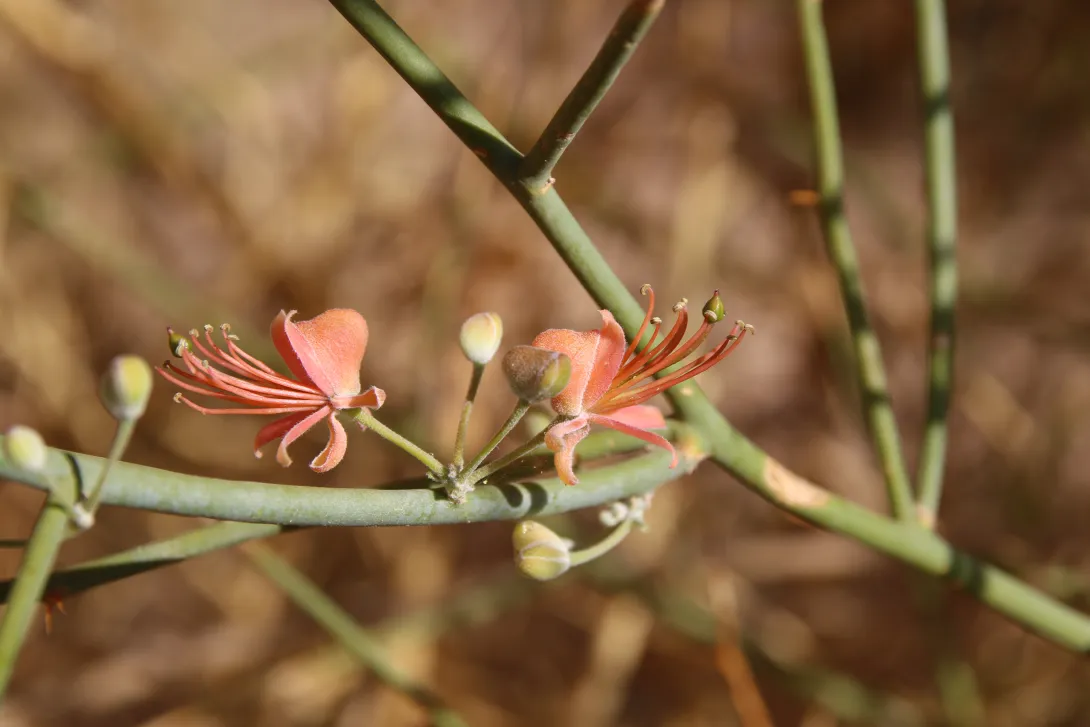
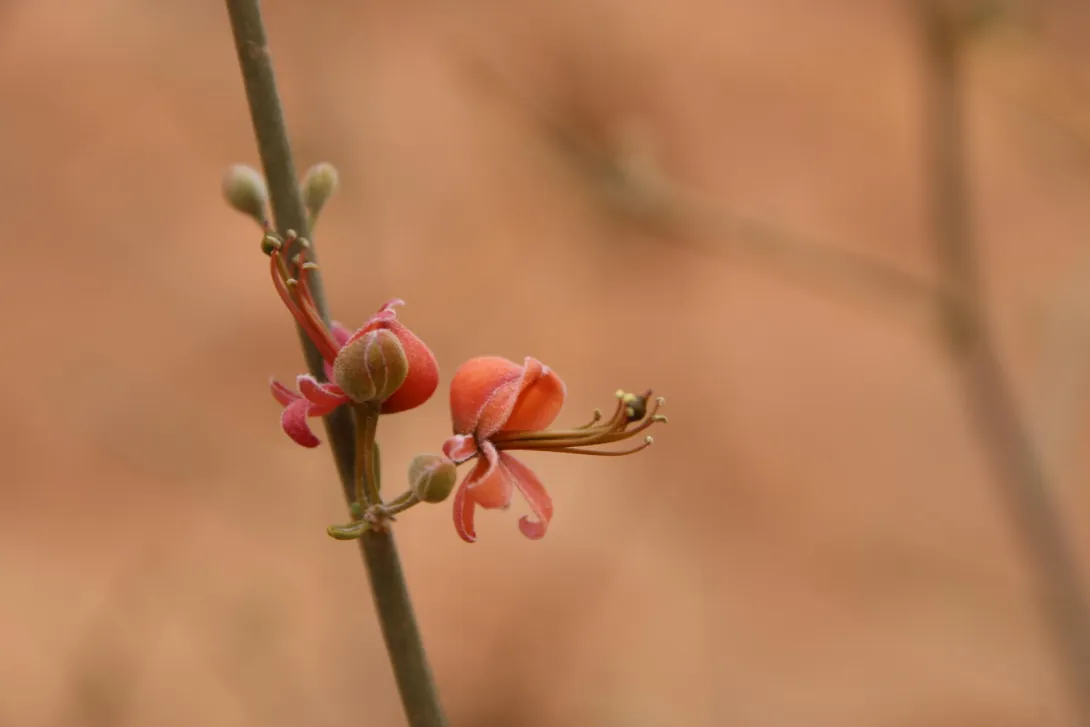
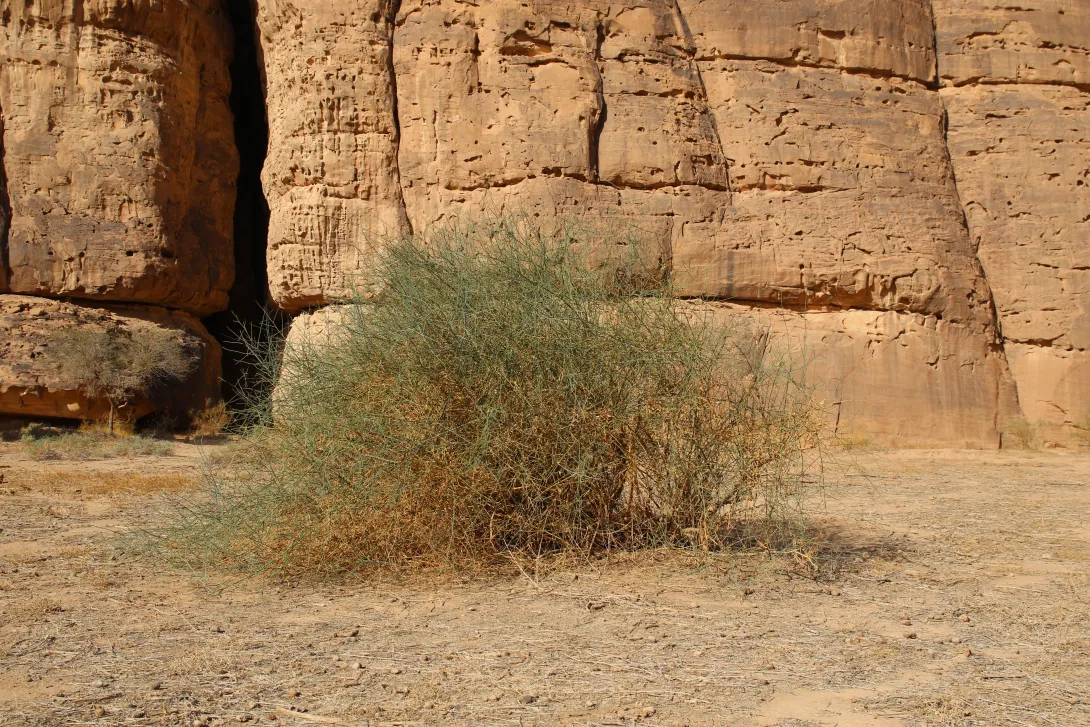
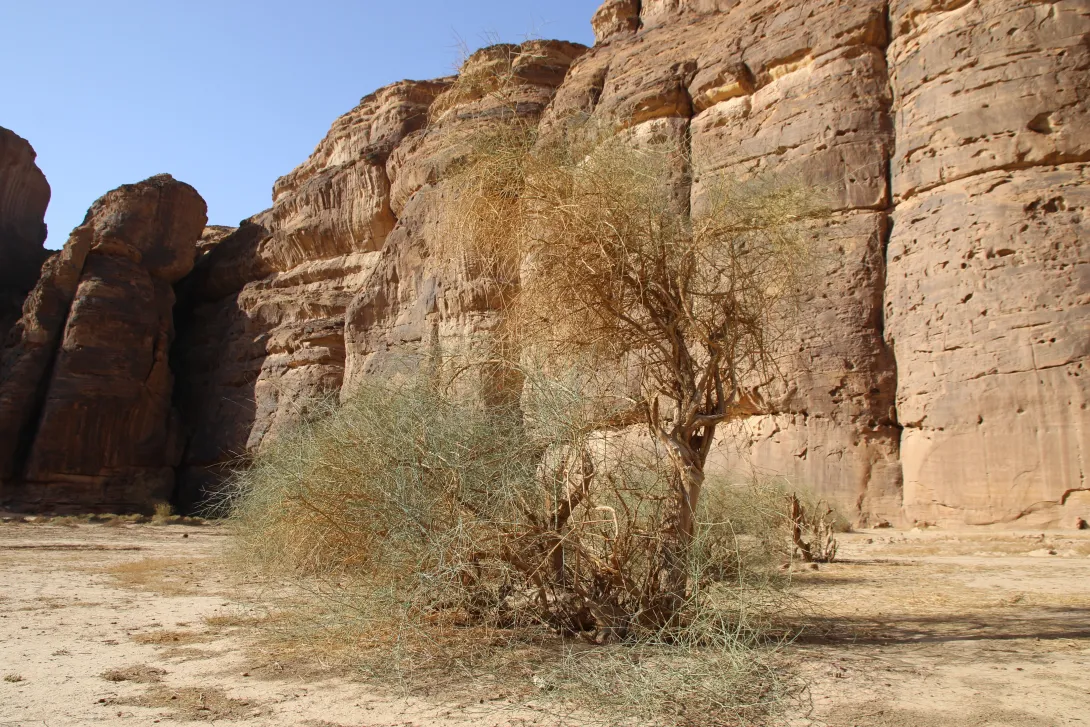
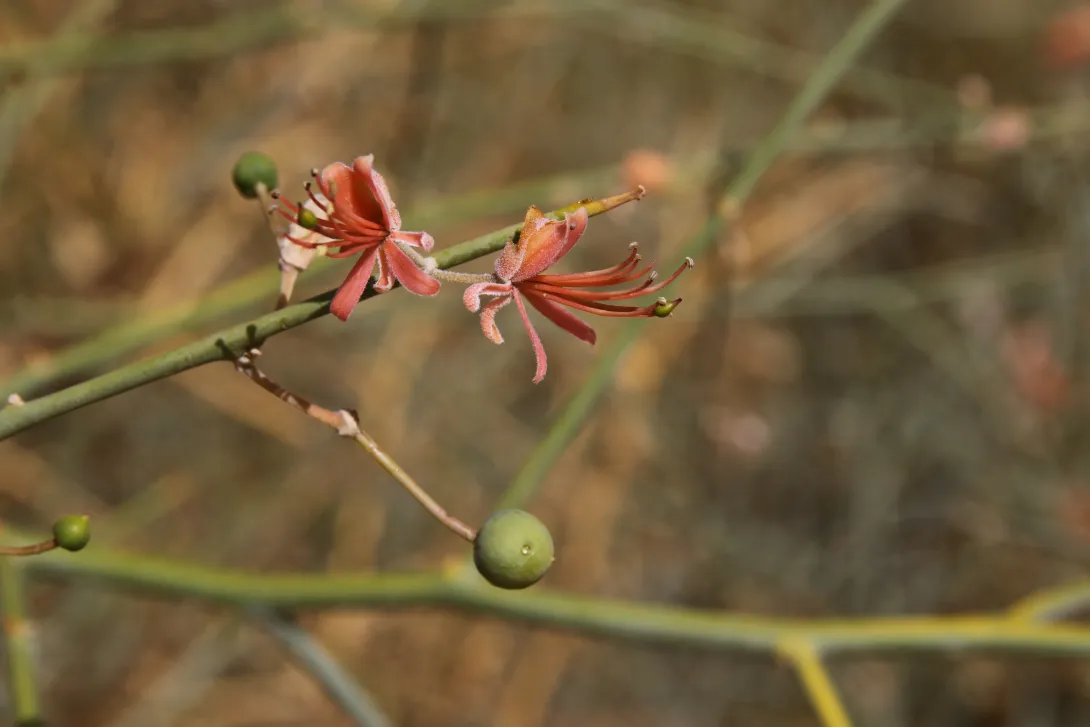
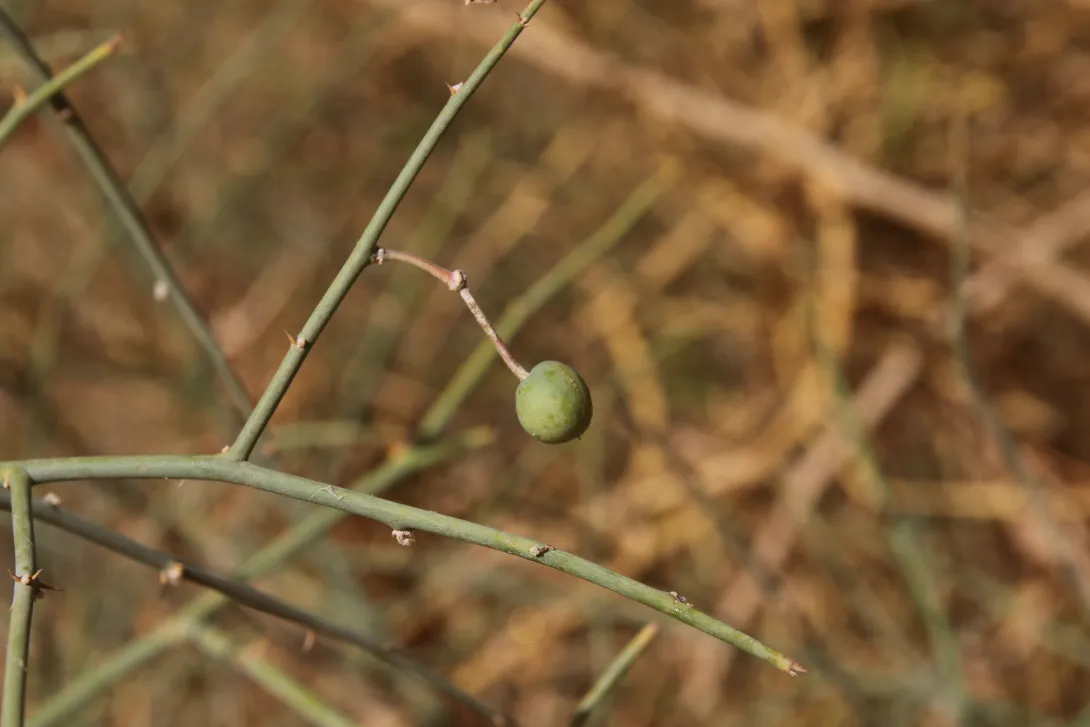
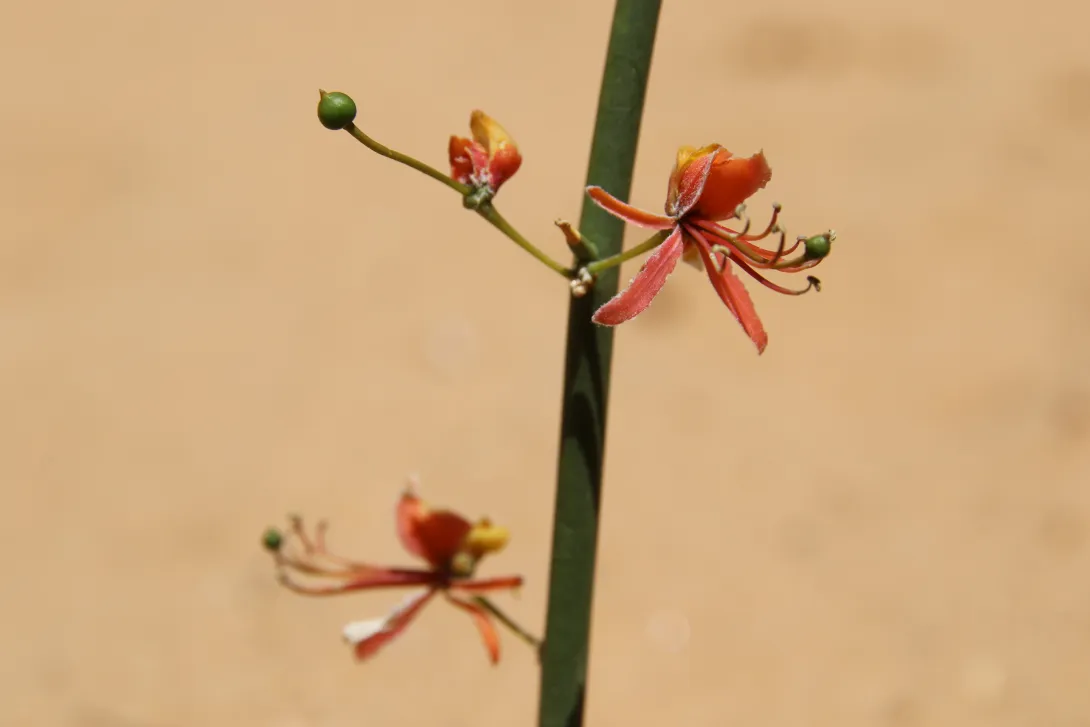
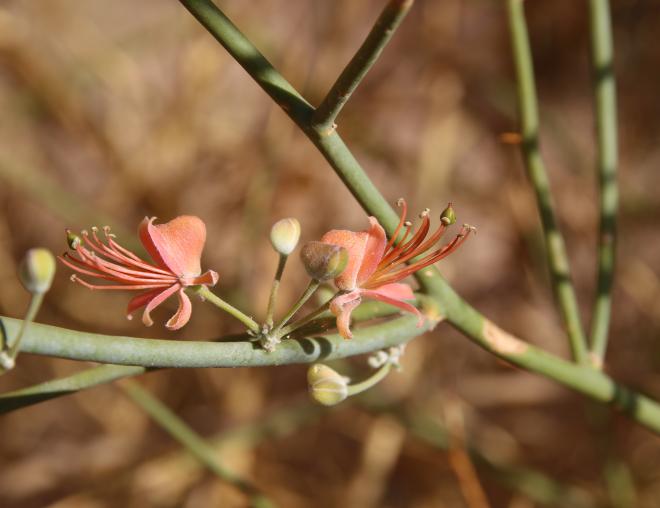
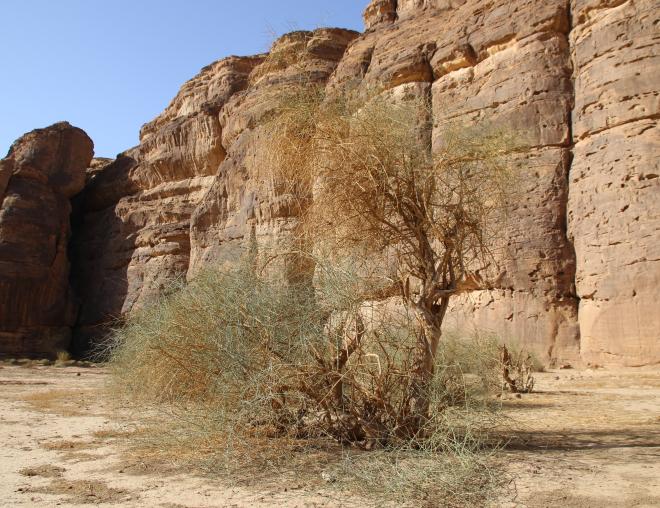
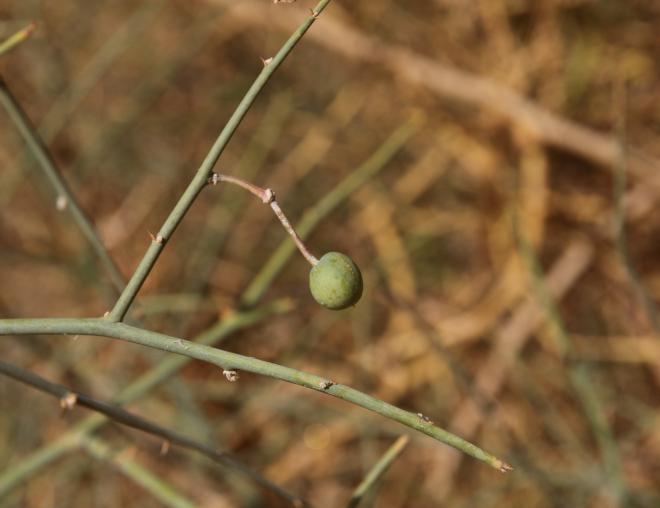
Large shrub to small tree, up to 4 m tall, with distinct trunks and a much-branched habit. Green stems are tangled and bear short, recurved spiny stipules. This species is typically deciduous, shedding its leaves in response to climatic conditions, and often appears leafless or sparsely foliated with linear-oblong leaves (1–2 cm long). Flowers are orange-red with red-veined petals and orange to brick-colored petaloid sepals, floccose on the outer surface and forming a hood-like structure. The fruit is subglobular, pubescent, and long-stipitate, turning from green to yellow or scarlet red at maturity (ca. 1 cm in diameter), and contains few to many hard seeds.
- Growth Form
-
Description
-
Habitat and Distribution
- Habitat
-
Geographical Distribution Range
This Sudanian species distributed across tropical regions from Sahara and Sahel to Ethiopia, extending eastward to Iran, Pakistan, and India. For Arabian Peninsula, it is native to Jordan, Saudi Arabia, Oman, Yemen, and Socotra.
-
Ecology
-
Phenology
JanFebMarAprMayJunJulAugSepOctNovDecFloweringFructification
- Origin
-
IUCN Red List Category
 Least Concern
-
Remarks
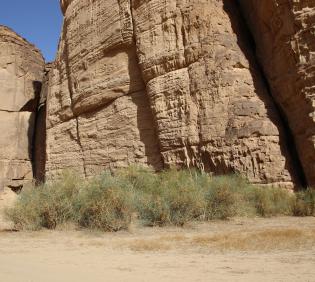
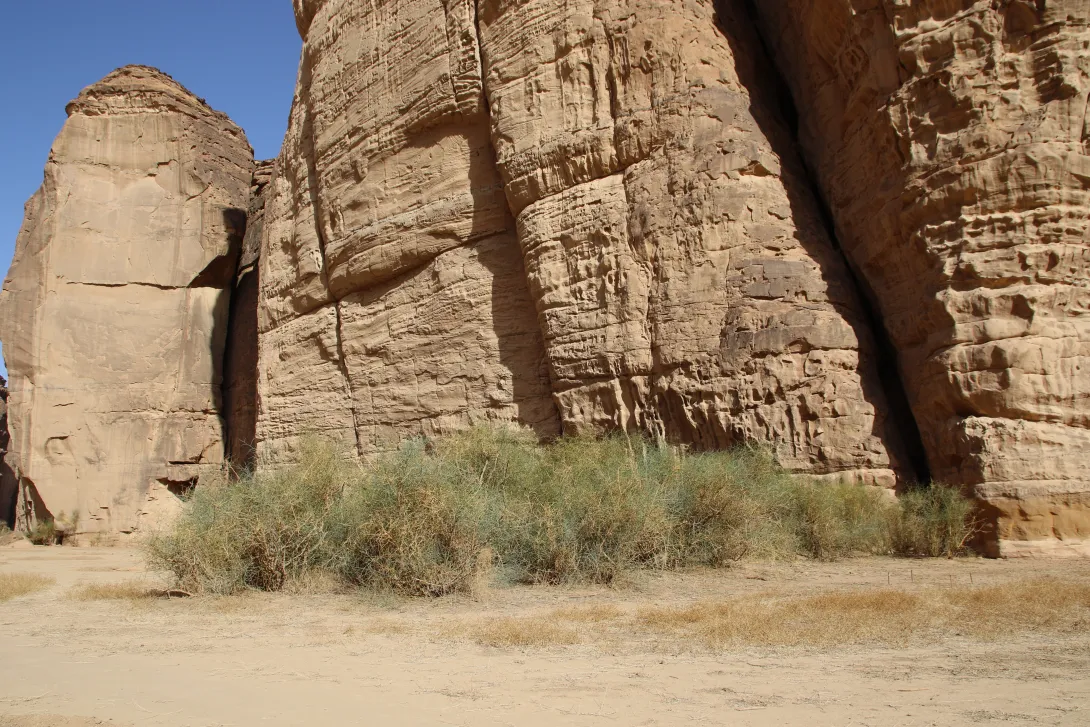
The Leafless Caper typically grows in ephemerally flooded areas such as wadis and drainage lines. Well adapted to arid environments, it is particularly valuable in ecological restoration for controlling soil and wind erosion. Despite its resilience, it remains relatively uncommon in AlUla County.
-
Phenology
-
Uses and Values
-
Aromatic and Medicinal Use
Medicinal use
-
Description of Traditional Uses
The plant is used as a carminative, tonic, emmenagogue, aphrodisiac, alexipharmic; improves the appetite; good for rheumatism, lumbago, hiccough, cough and asthma. It is given in phthisis, heart diseases and scurvy. The plant is a wholesome fodder for camels, and used for its medicinal value in diabetes, rheumatism, hypertension and various stomach problems.
-
Aromatic and Medicinal Use
Gallery