Teucrium oliverianum Ging. ex Benth.
قصبا
Lamiaceae
1 / 7
-
Morphological Description
-
Description
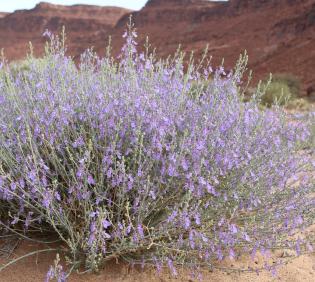
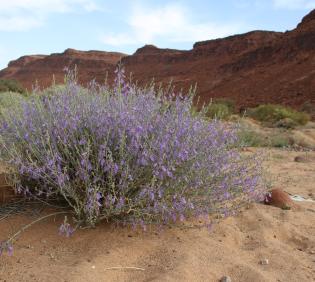
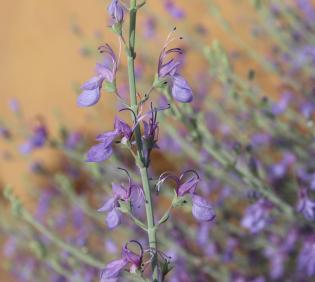
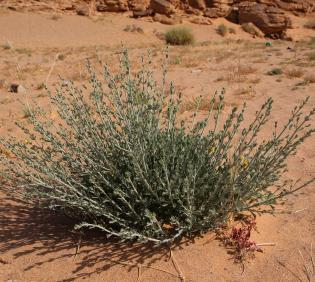
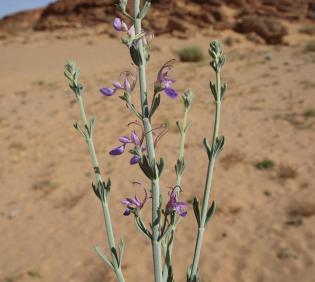
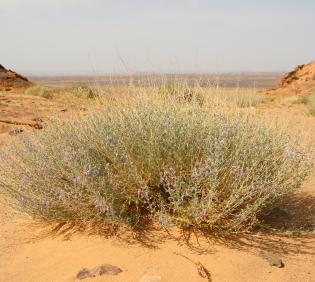
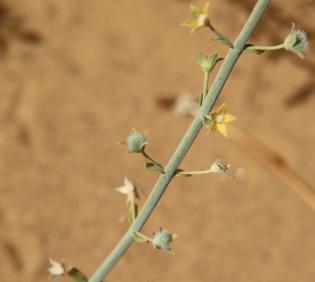
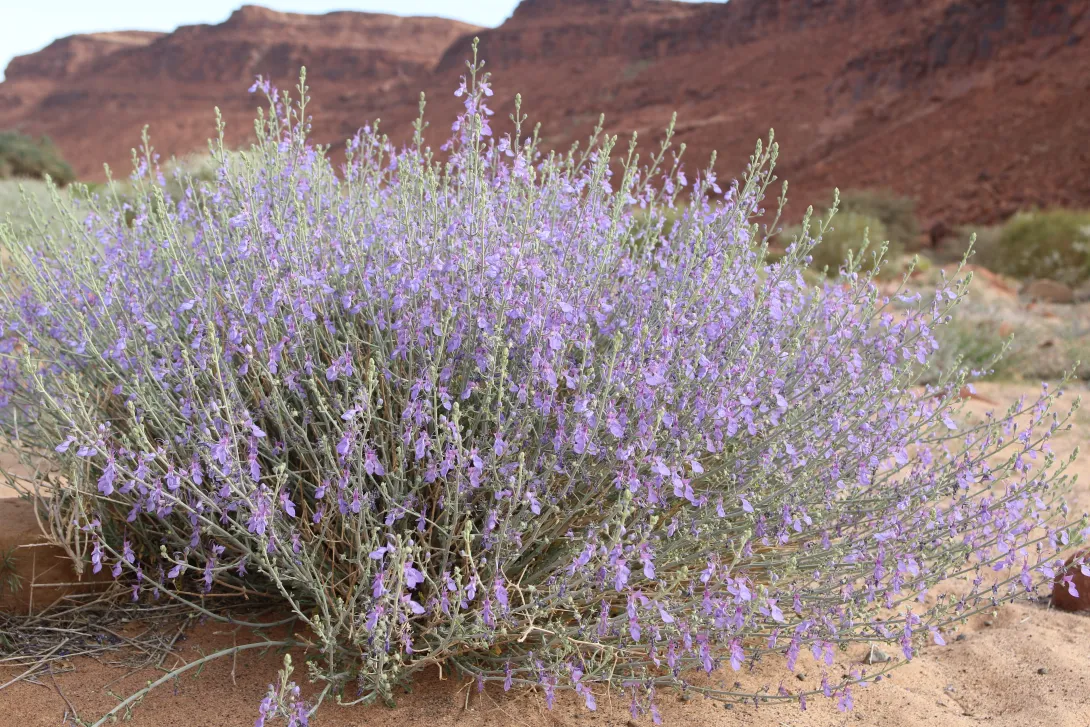
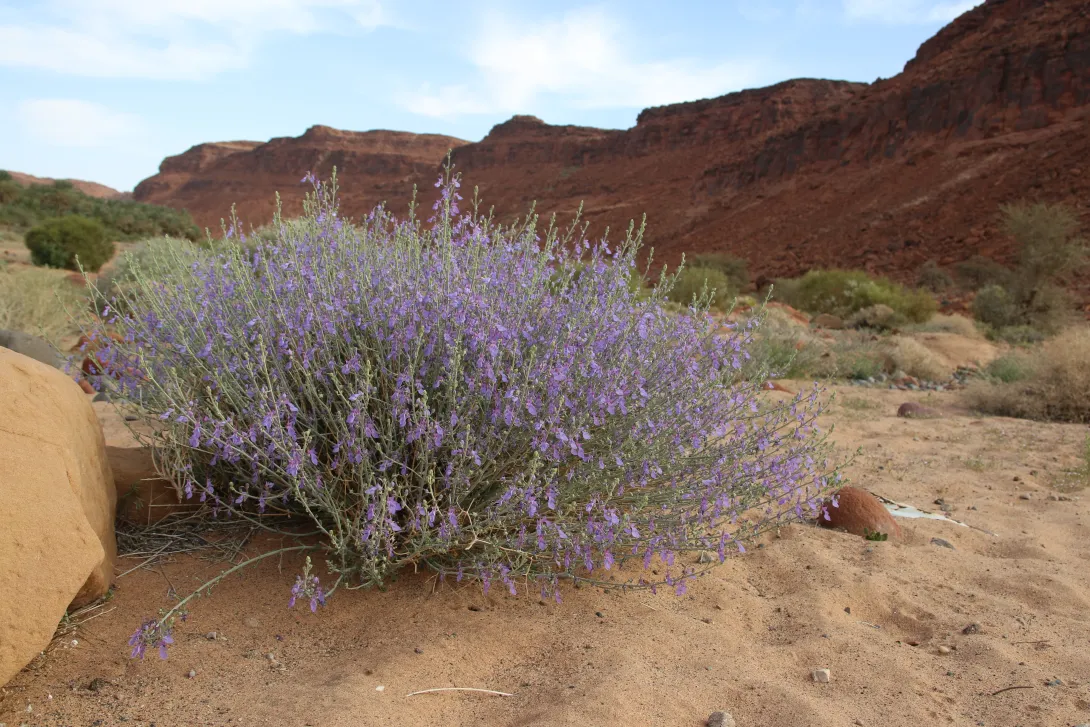
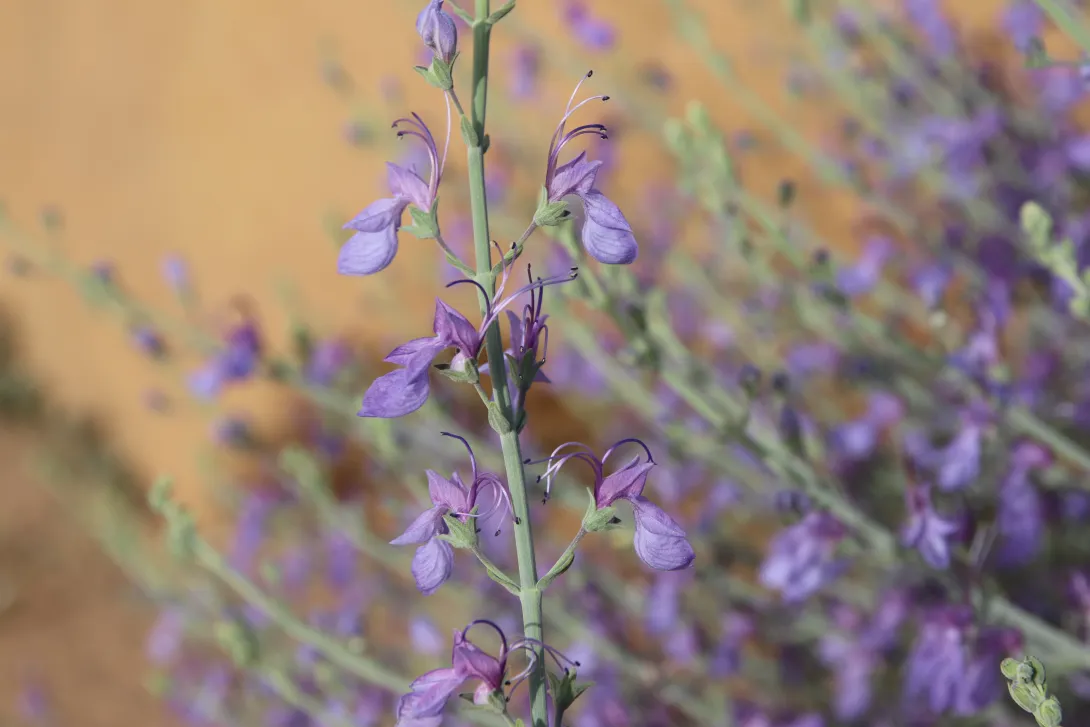
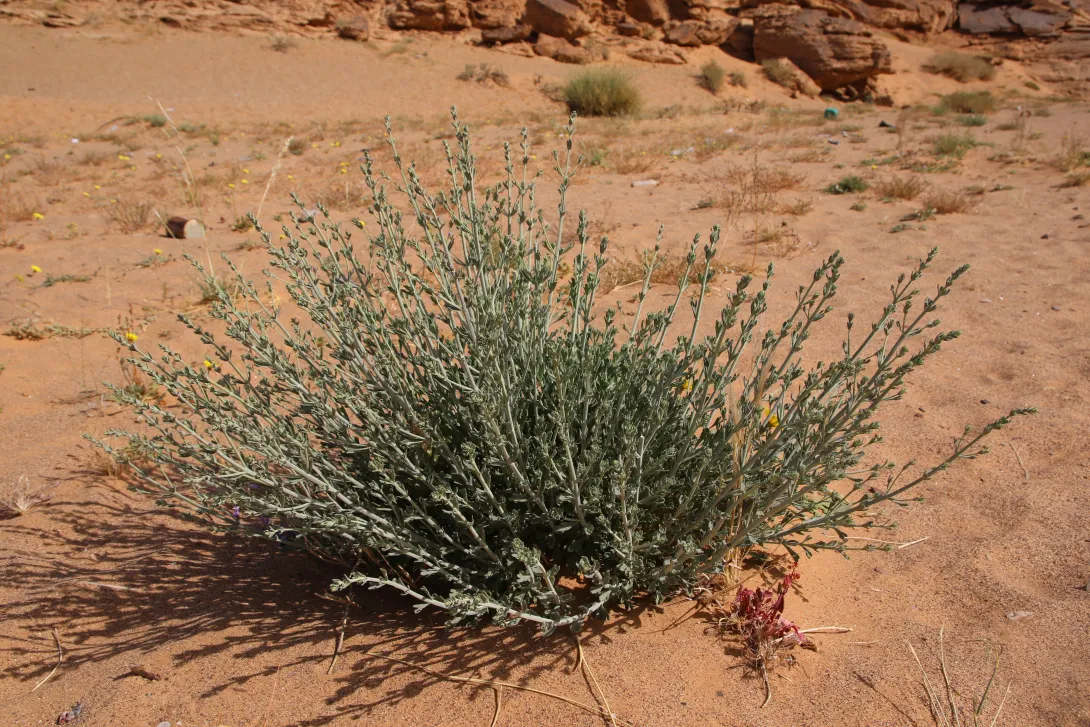
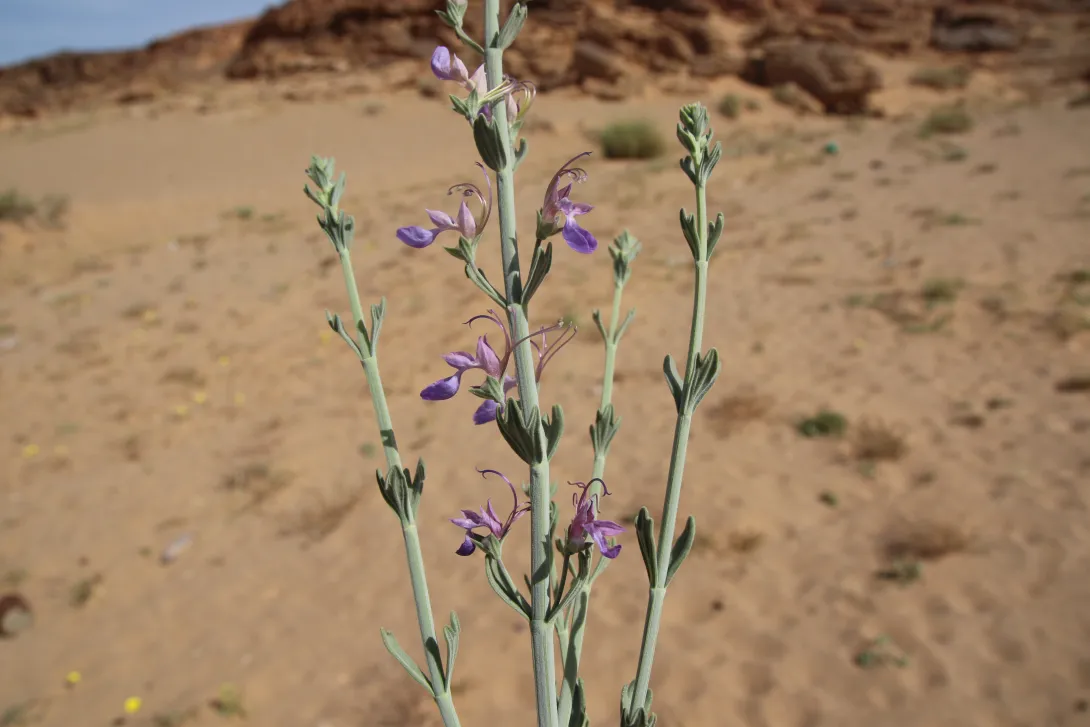
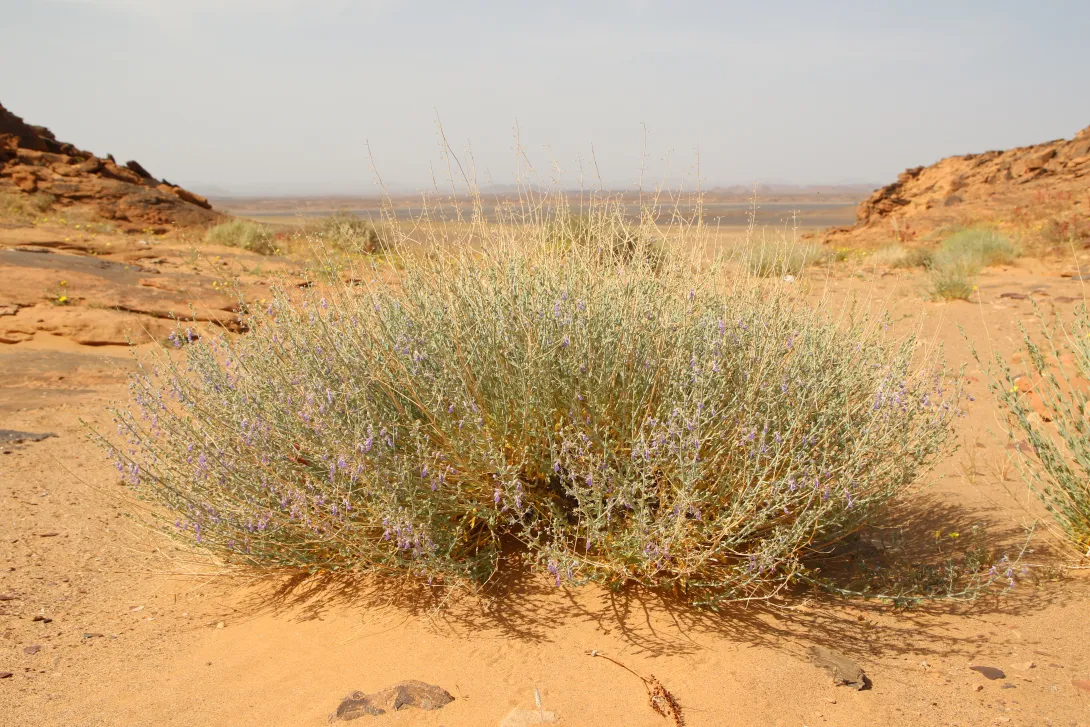
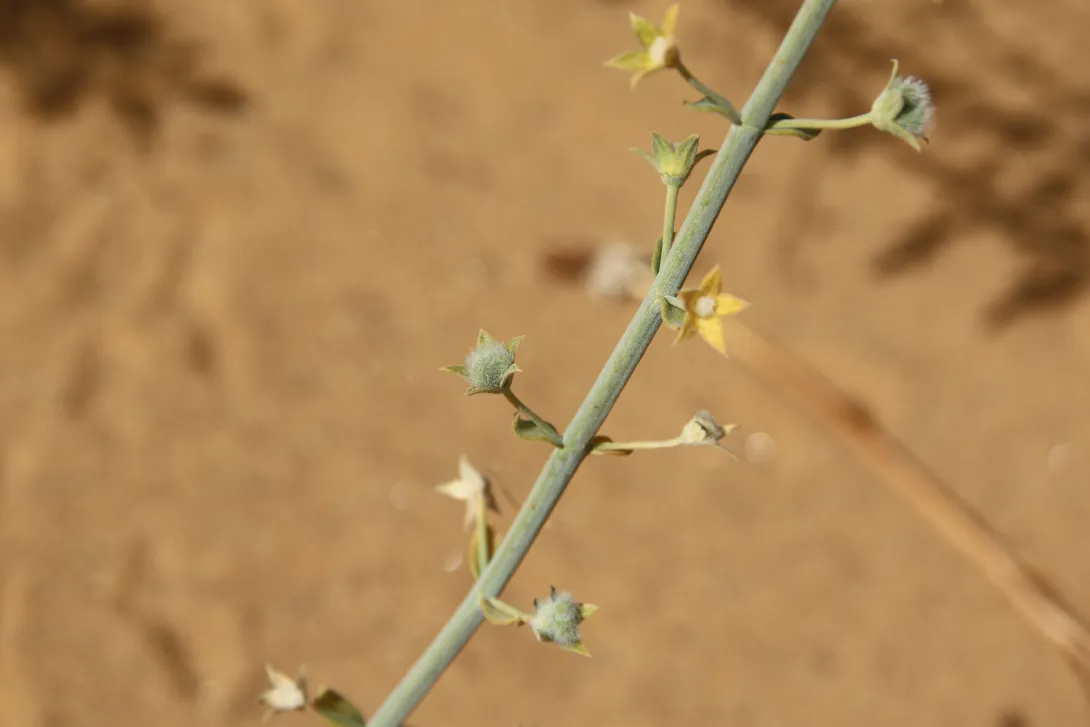
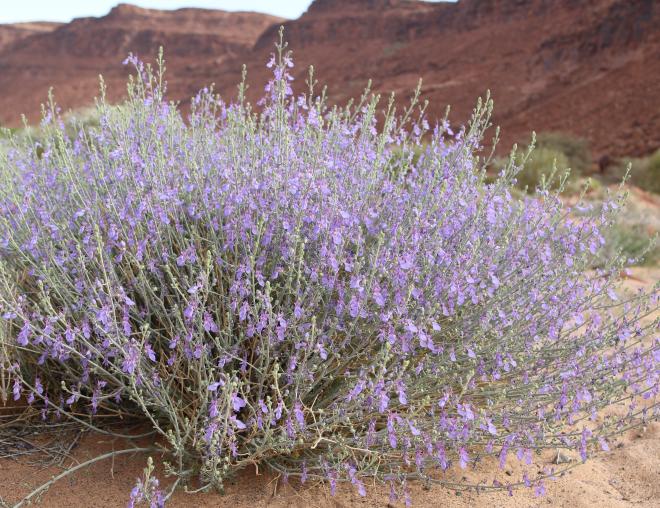
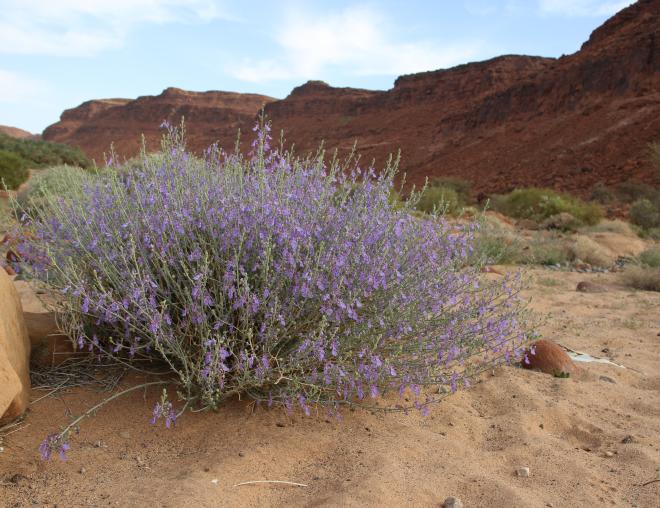
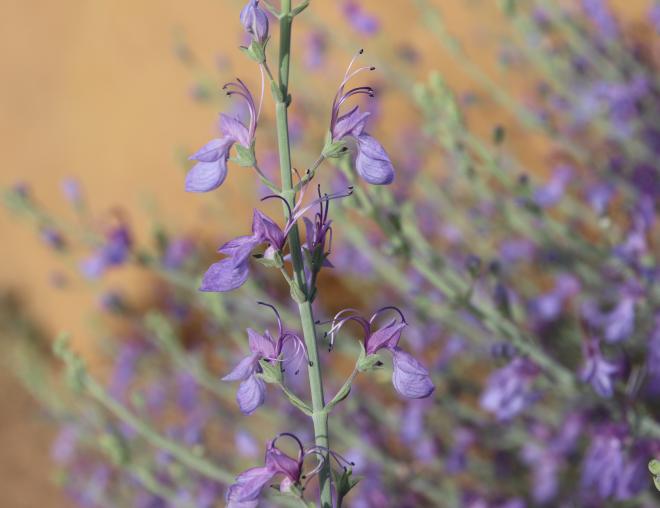
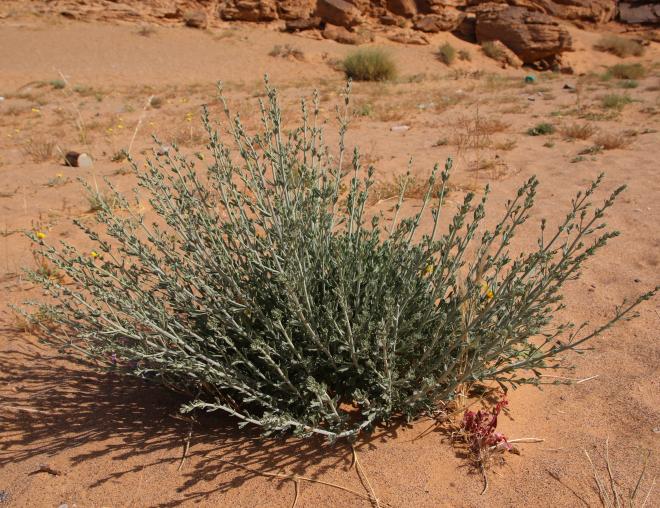
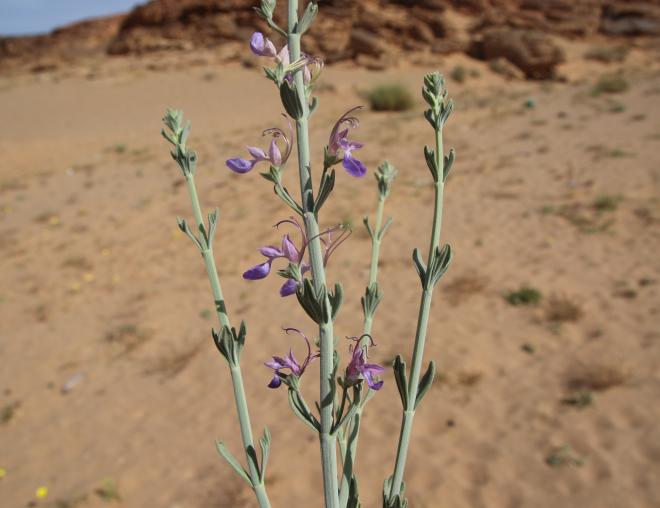
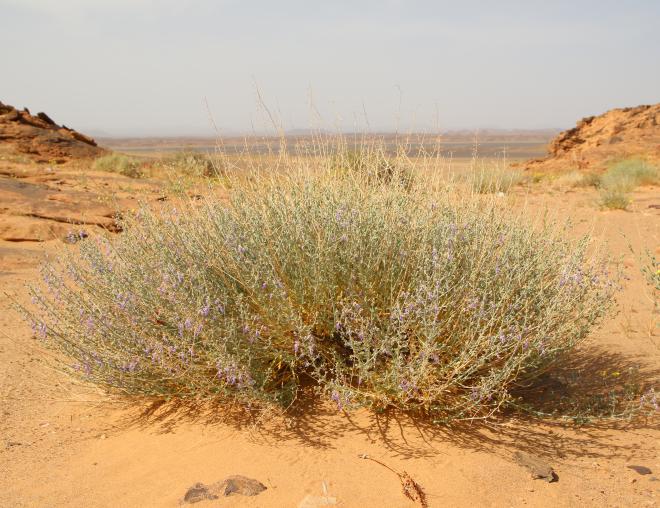
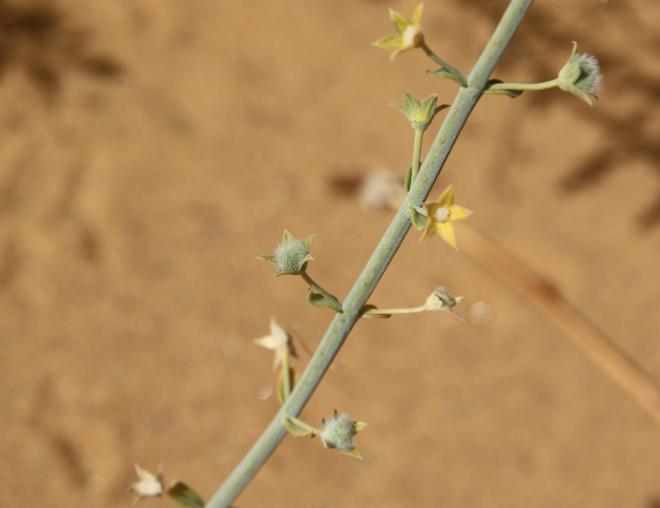
Perrenial, velvety-canescent, herbaceous shrublet up to 75 cm tall, with erect to ascending branches arising from a woody base. Leaves are sessile to subsessile, cuneate, 3–5-lobed at the apex, tapering at the base, up to 30 mm long, with revolute margins; upper leaves become smaller and elliptic. Flowers are deep blue to violet, solitary and axillary, borne on a prominent pedicel (>6 mm) and arranged in long, lax, terminal racemes of paired flowers. Calyx is velvety, campanulate, about 5 mm long and divided into five triangular lobes. Corolla is up to 18 mm long. Flowers have two pairs of unequal-length, exerted stamens soloured like the corolla and excerted not gynobasic styles. Fruits are elliptic nutlets, densely hairy, about 2.5 mm long.
- Growth Form
-
Description
-
Habitat and Distribution
- Habitat
-
Geographical Distribution Range
This Saharo-Arabian species is restricted to the Gulf States, Iran, Iraq, Kuwait, Oman and Saudi Arabia.
-
Ecology
-
Phenology
JanFebMarAprMayJunJulAugSepOctNovDecFloweringFructification
- Origin
-
IUCN Red List Category
 Not Evaluated
-
Phenology
-
Uses and Values
-
Aromatic and Medicinal Use
Aromatic usages; Medicinal use
-
Other Usages
Melliferous
-
Description of Traditional Uses
An aromatic herb used traditionally as a tea or infusion for digestive complaints and other minor ailments; it may also be visited by bees.
-
Aromatic and Medicinal Use
Gallery