Plantago albicans L.
الرِّبلة
Silvery plantain
Plantaginaceae
1 / 6
-
Morphological Description
-
Description
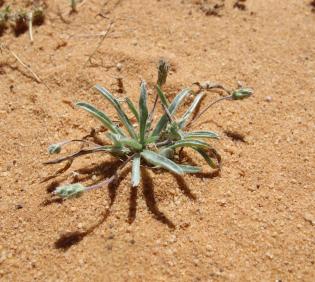
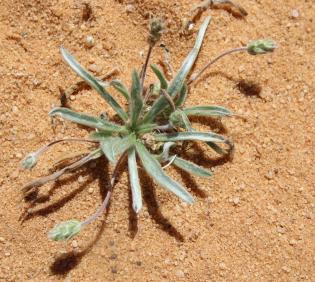
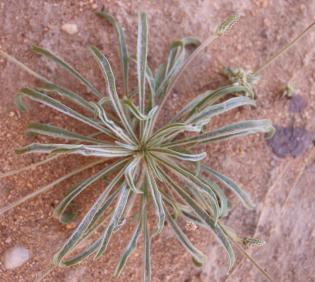
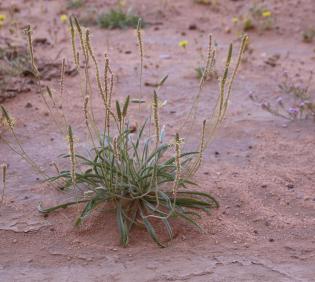
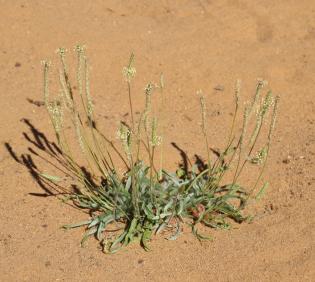
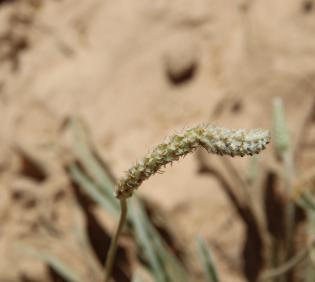
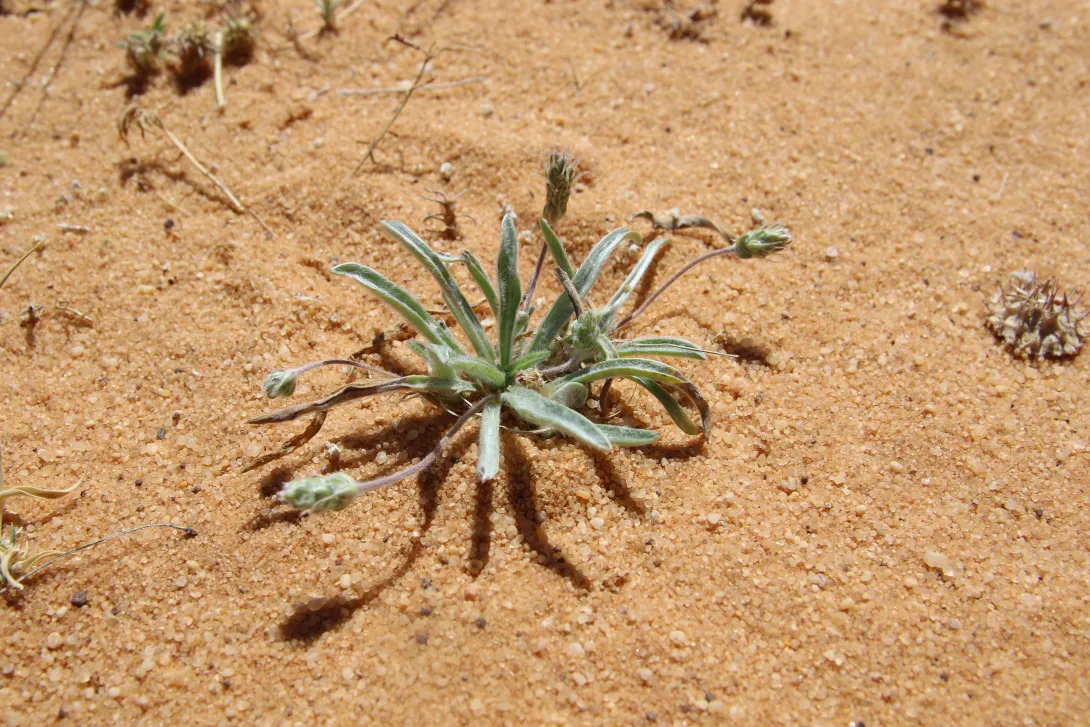
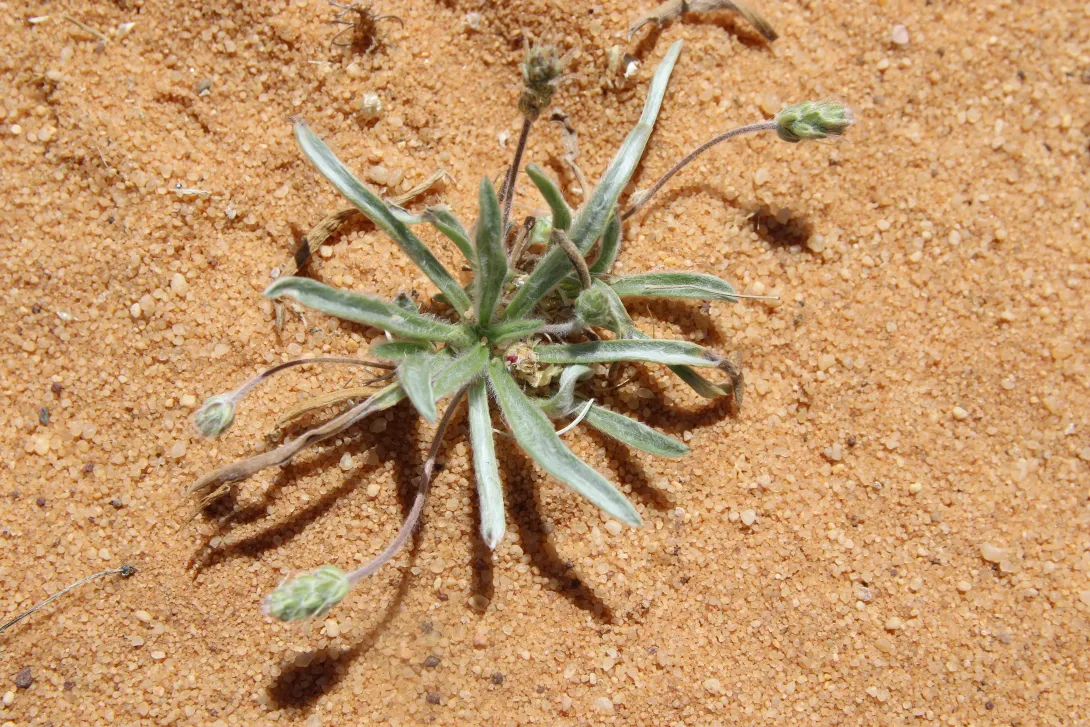
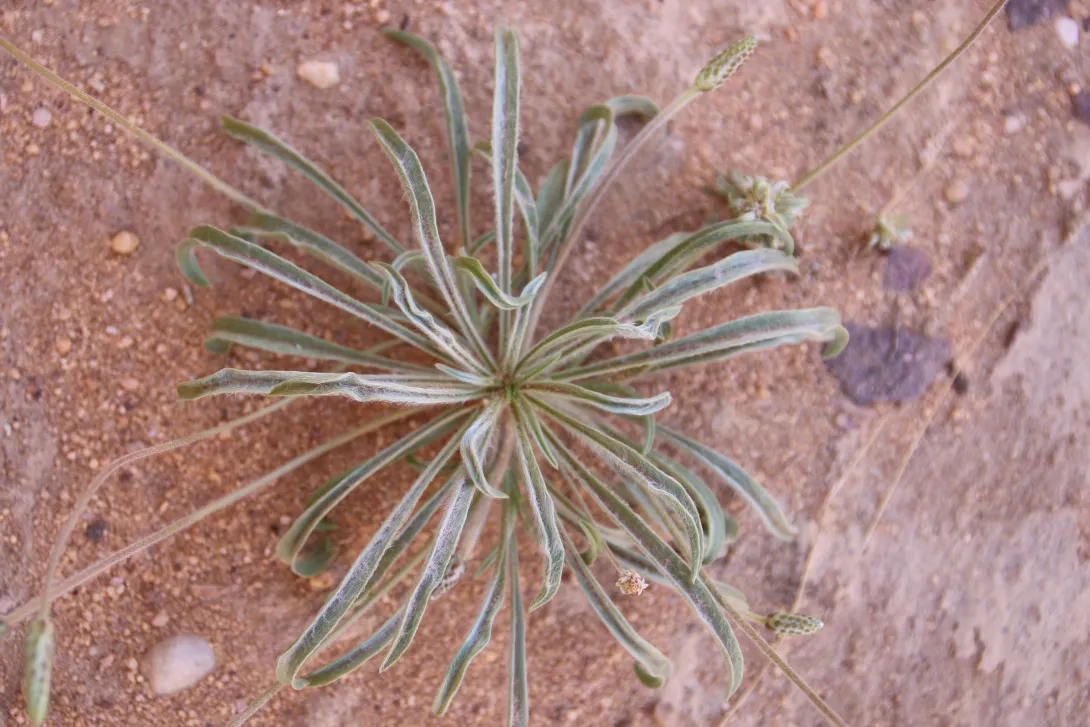
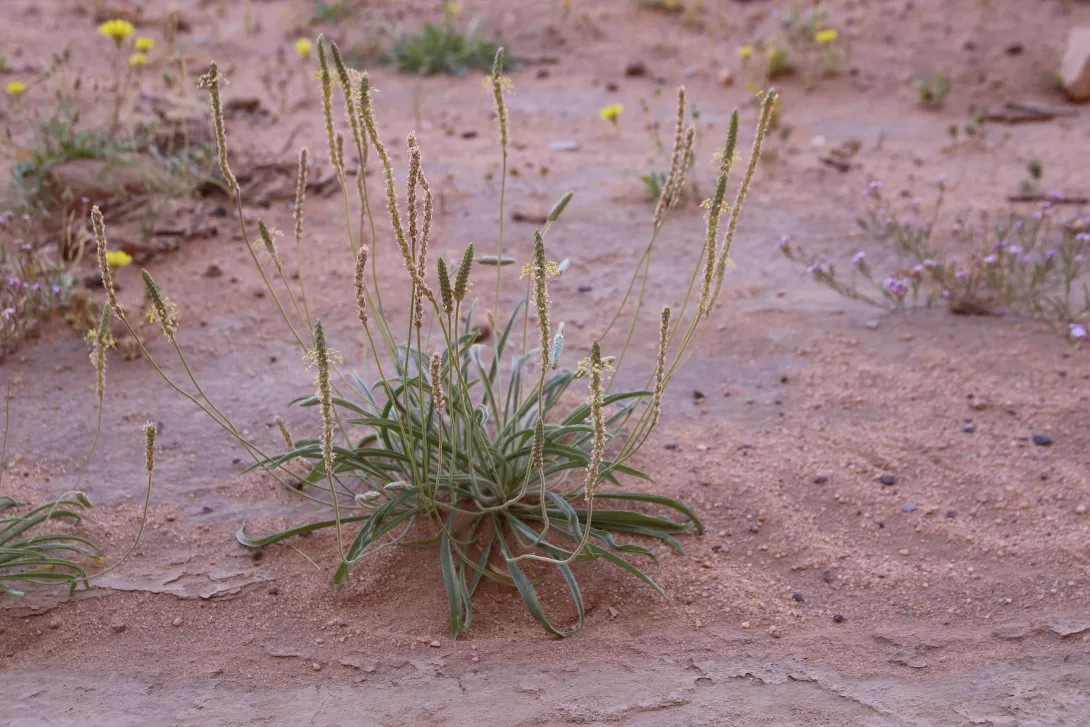
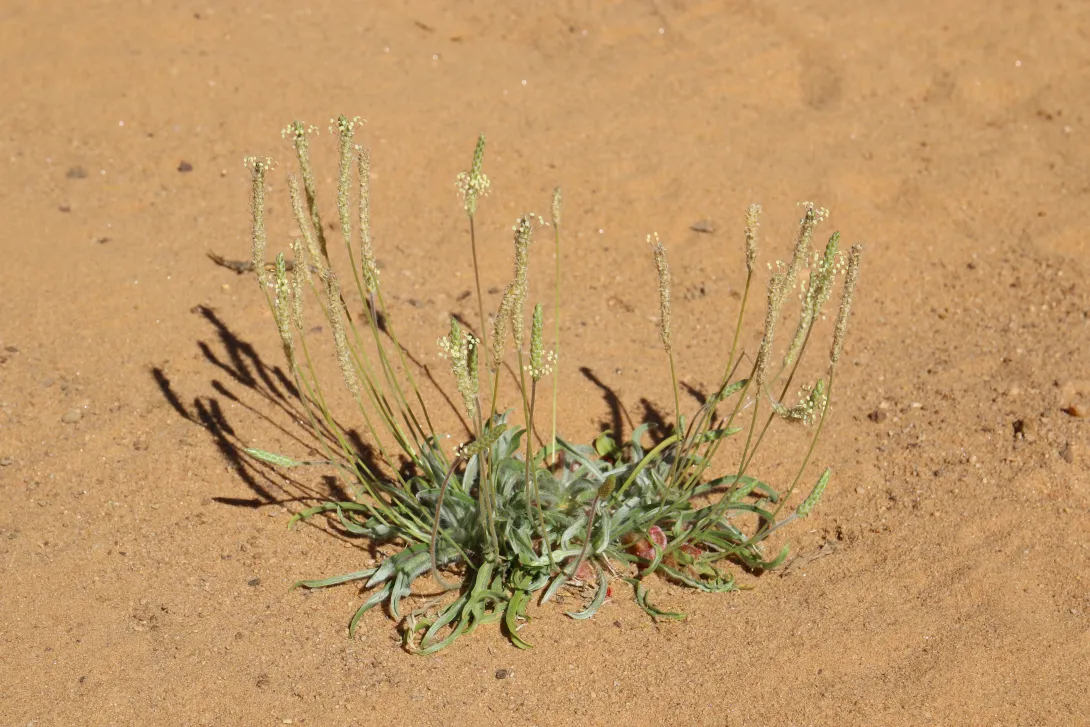
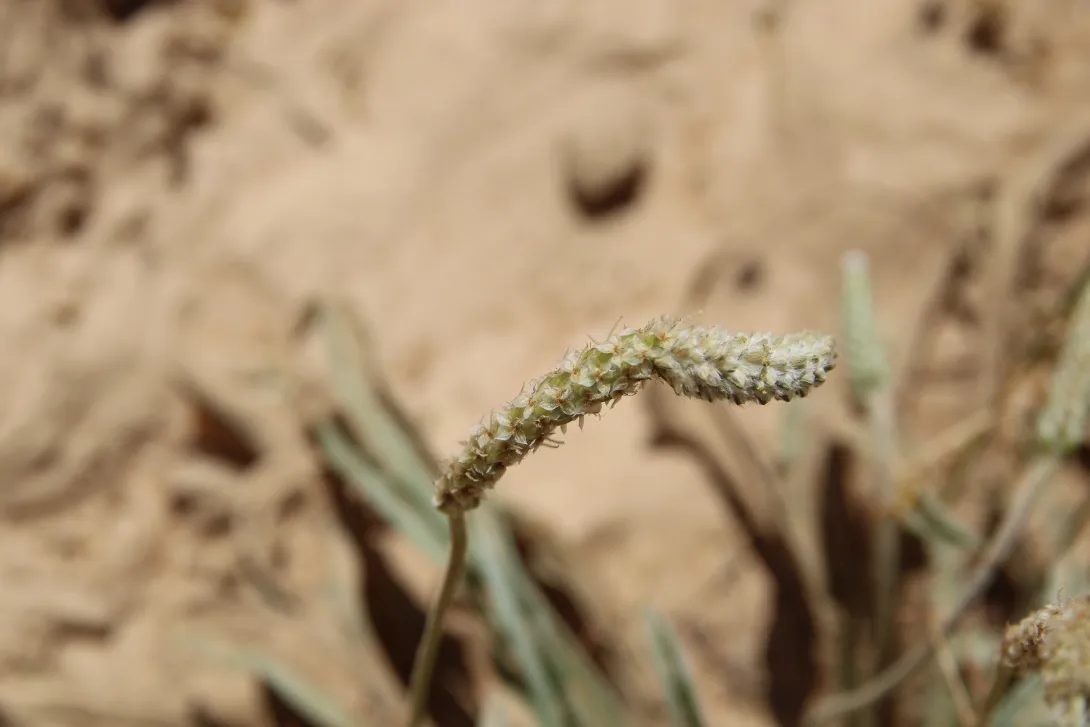
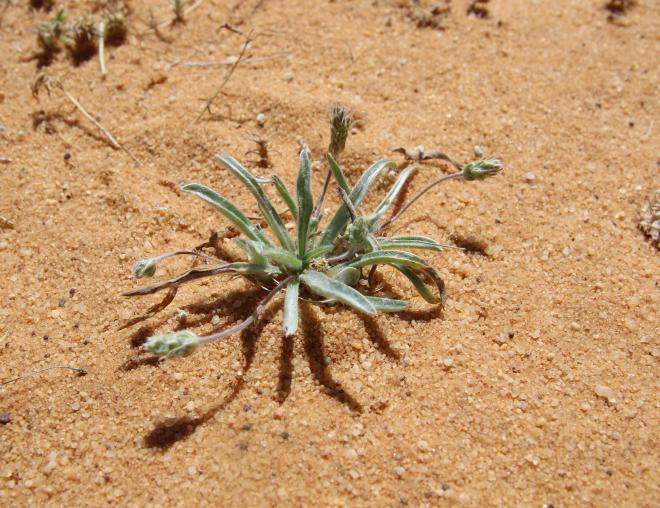
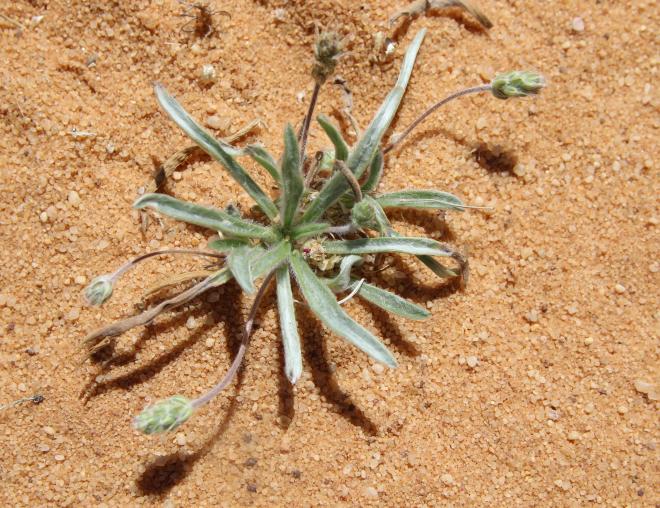
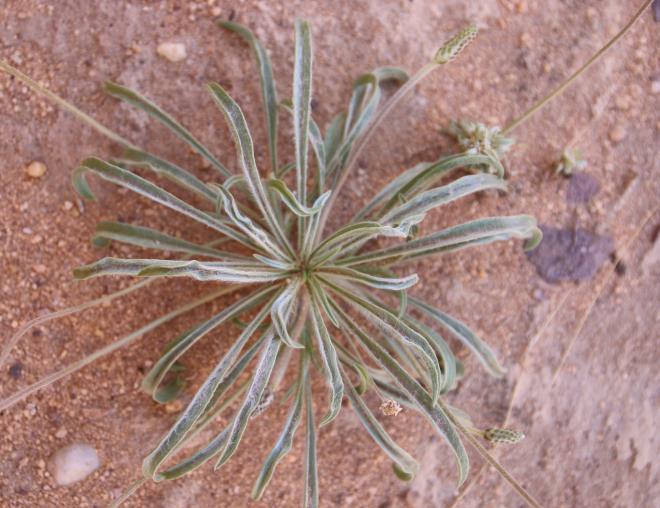
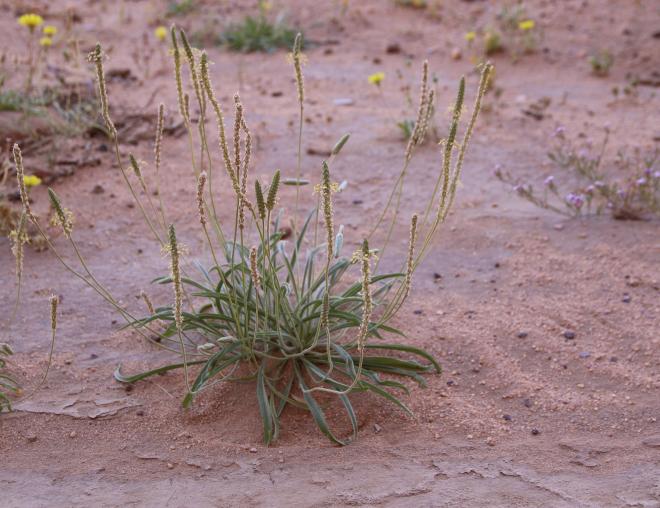
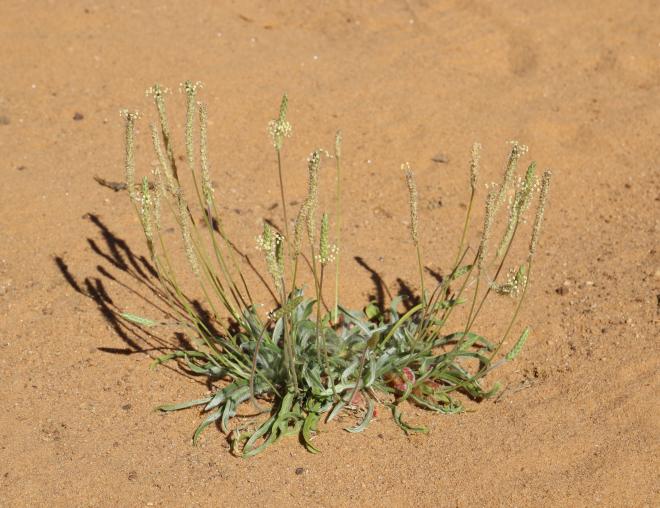
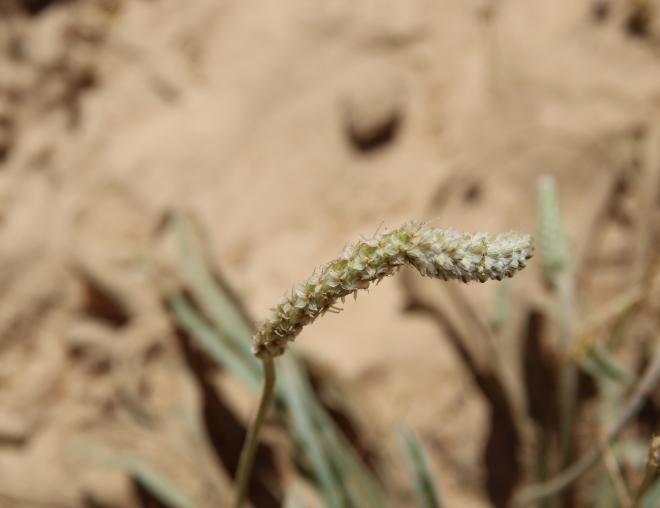
Perennial, densely soft-hairy herb, 15–35 cm tall, with a thin, branched, woody rhizome. Leaves are linear to linear-lanceolate, up to 12 cm long and 6 mm wide and gradually tapering into a petiole, acute. Spikes are cylindrical, interrupted, and up to 16 cm long. Bracts are ovate, 3 mm long and 2 mm wide, with a prominent, wide, pubescent green band that becomes long-hairy at the tip; the margins are glabrous except in the apical region. Sepals are 3 mm long, with the two anterior sepals asymmetric and bearing unequal scarious margins on either side of a prominent pubescent green band. Corolla tube is about 4 mm long; corolla lobes are ovate-lanceolate, acute, 2 mm long and 1 mm wide. Stigmas are several times longer than the corolla lobes. Seeds are borne in pairs, elliptical, shallowly concave, 2 mm long and 1 mm wide.
- Growth Form
-
Description
-
Habitat and Distribution
- Habitat
-
Geographical Distribution Range
This Mediterranean and Saharo-Arabian species is widely distributed across the Mediterranean Basin, occurring from Morocco, Mauritania, and Portugal to Iran and the Arabian Peninsula, where it is native throughout the entire region.
-
Ecology
-
Phenology
JanFebMarAprMayJunJulAugSepOctNovDecFloweringFructification
- Origin
-
IUCN Red List Category
 Not Evaluated
-
Phenology
-
Uses and Values
-
Aromatic and Medicinal Use
Medicinal use
-
Other Usages
Palatable
-
Description of Traditional Uses
Traditionally used as forage and in some medicinal preparations for local ailments.
-
Aromatic and Medicinal Use
Gallery