Ziziphus nummularia (Burm.f.) Wight & Arn.
سِدر بري
Syn. Rhamnus nummularia Burm.f.
Wild jujube
Rhamnaceae
1 / 8

-
Morphological Description
-
Description
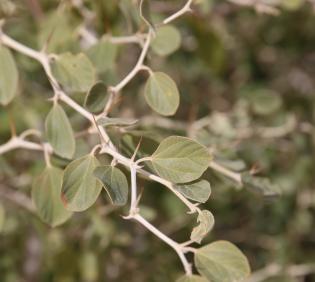
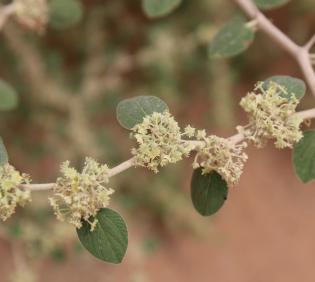
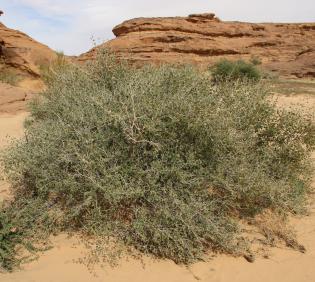
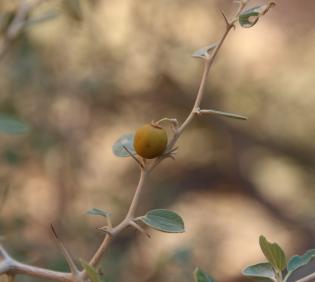
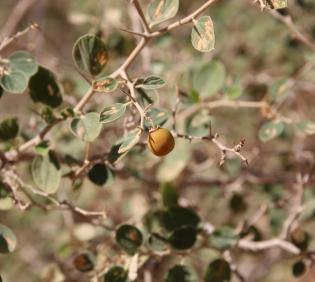
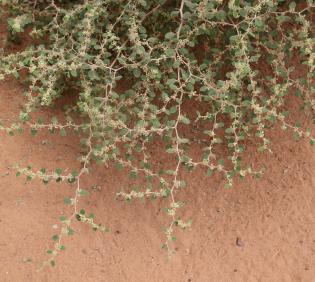
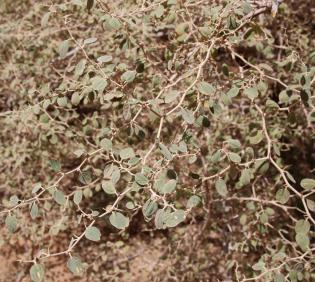
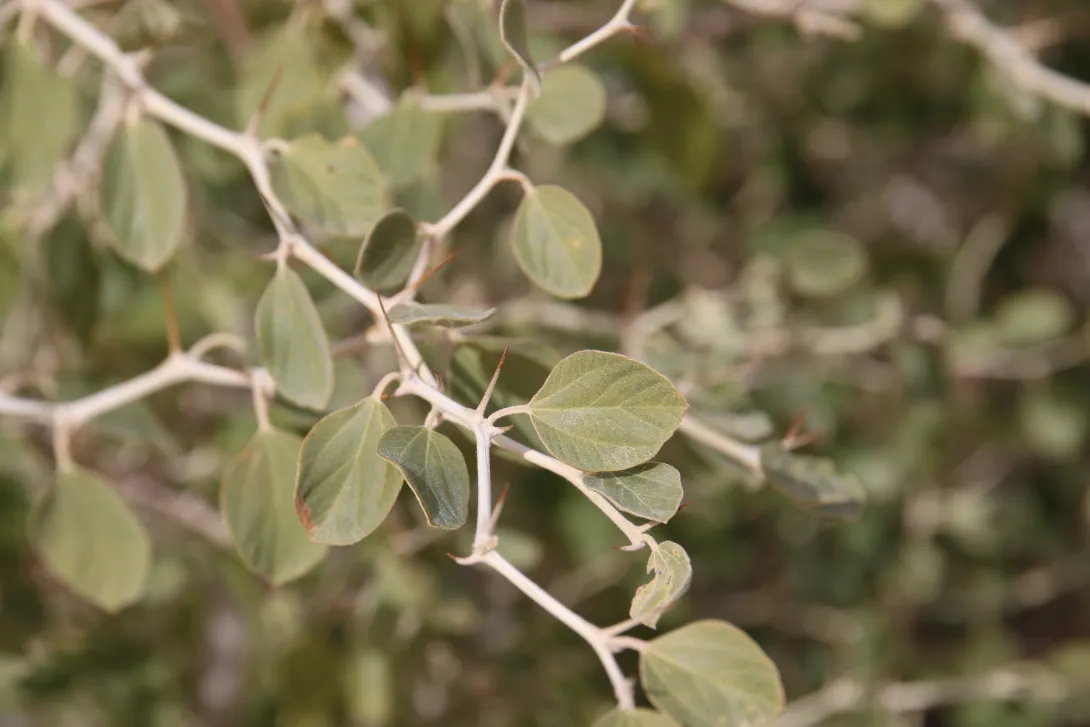
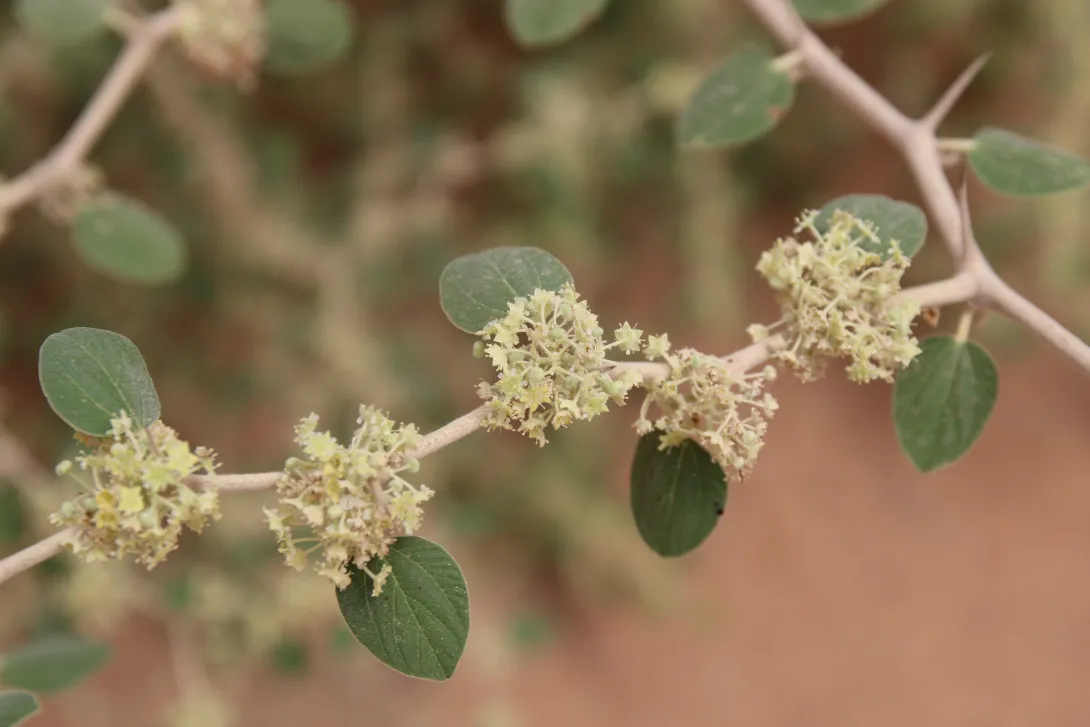
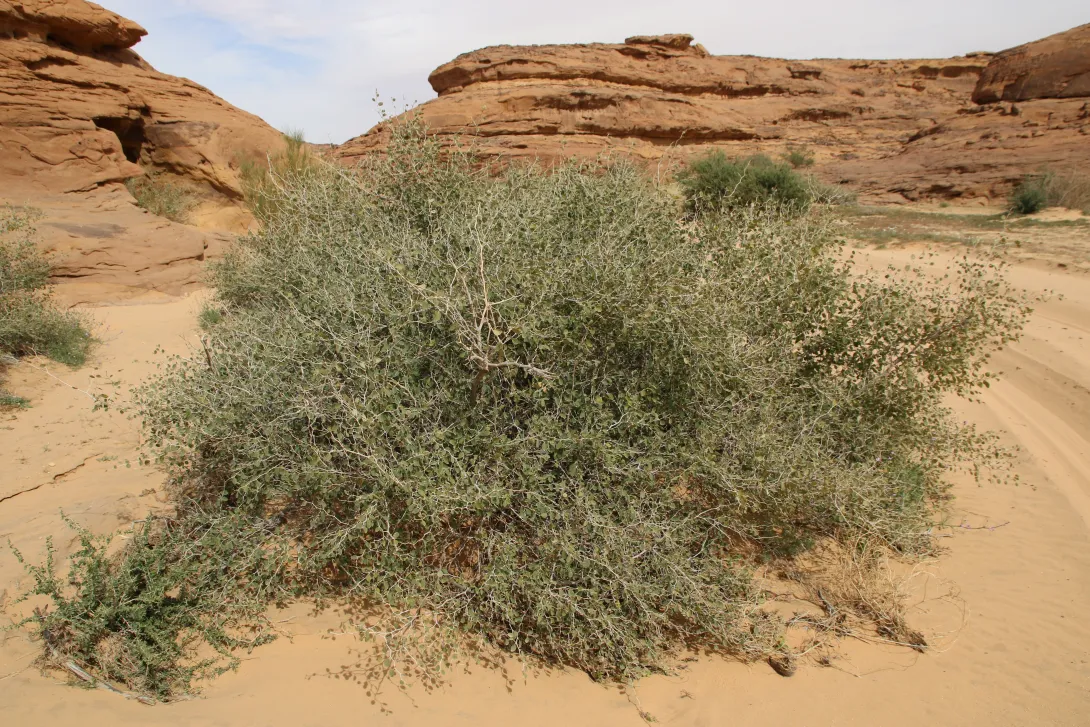
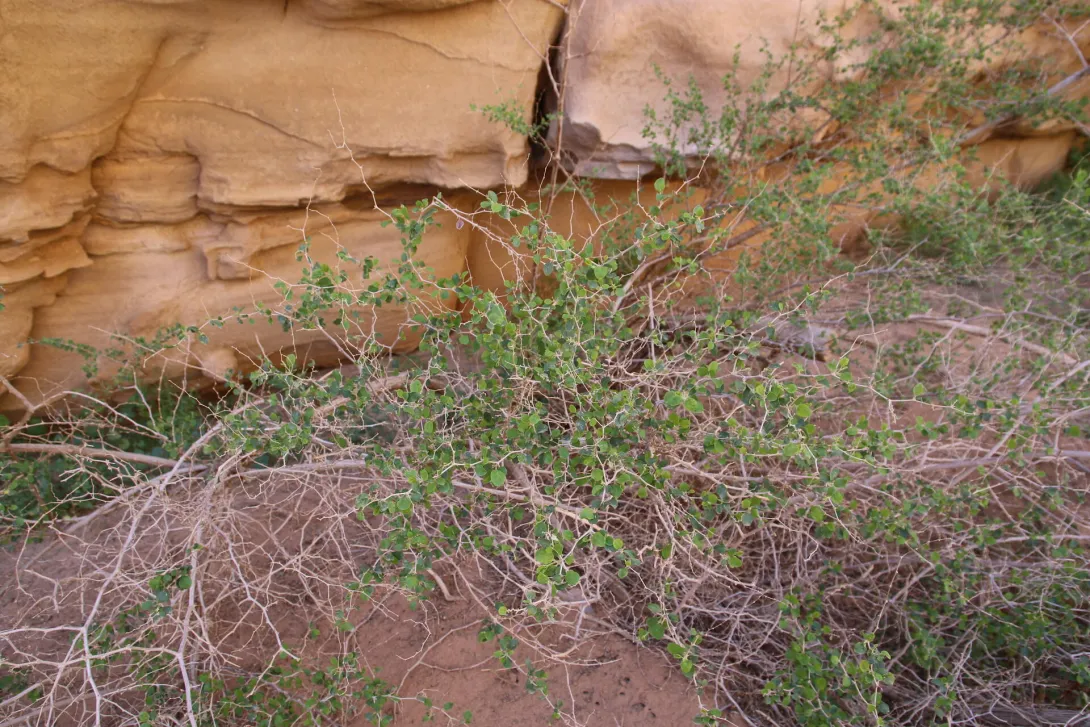
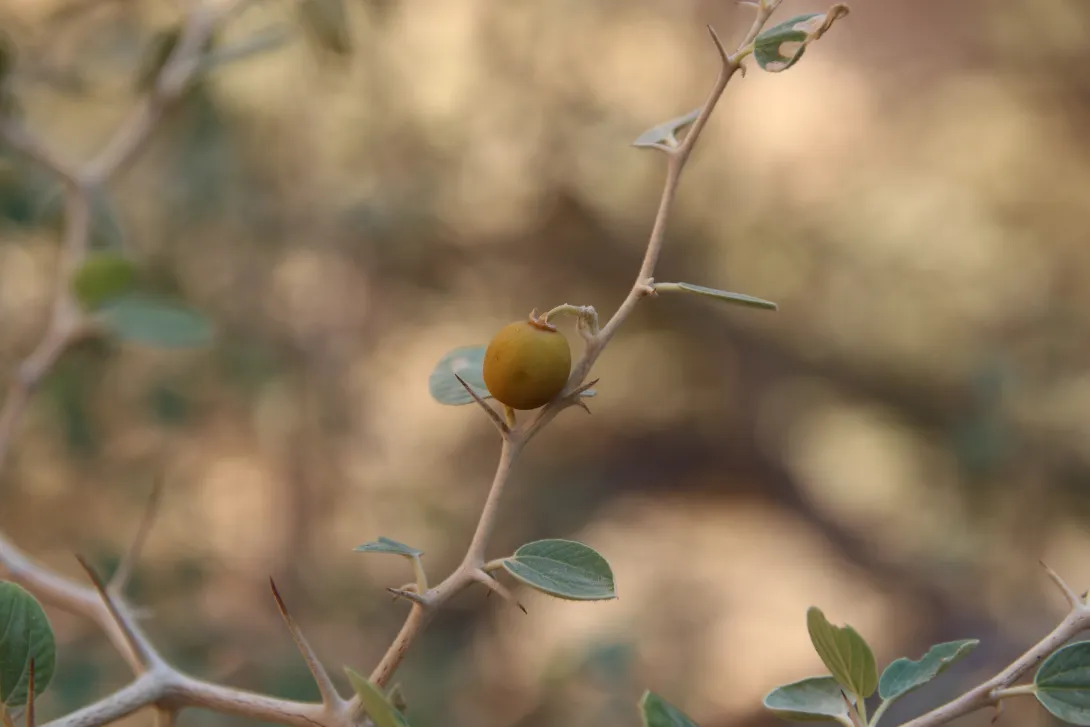
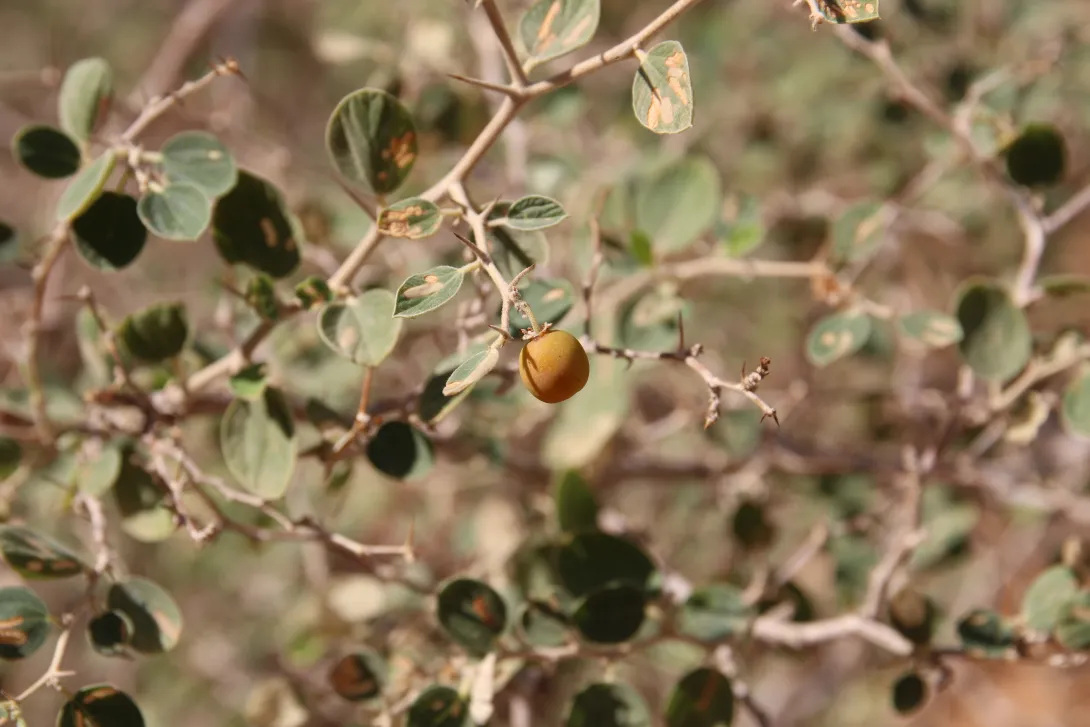
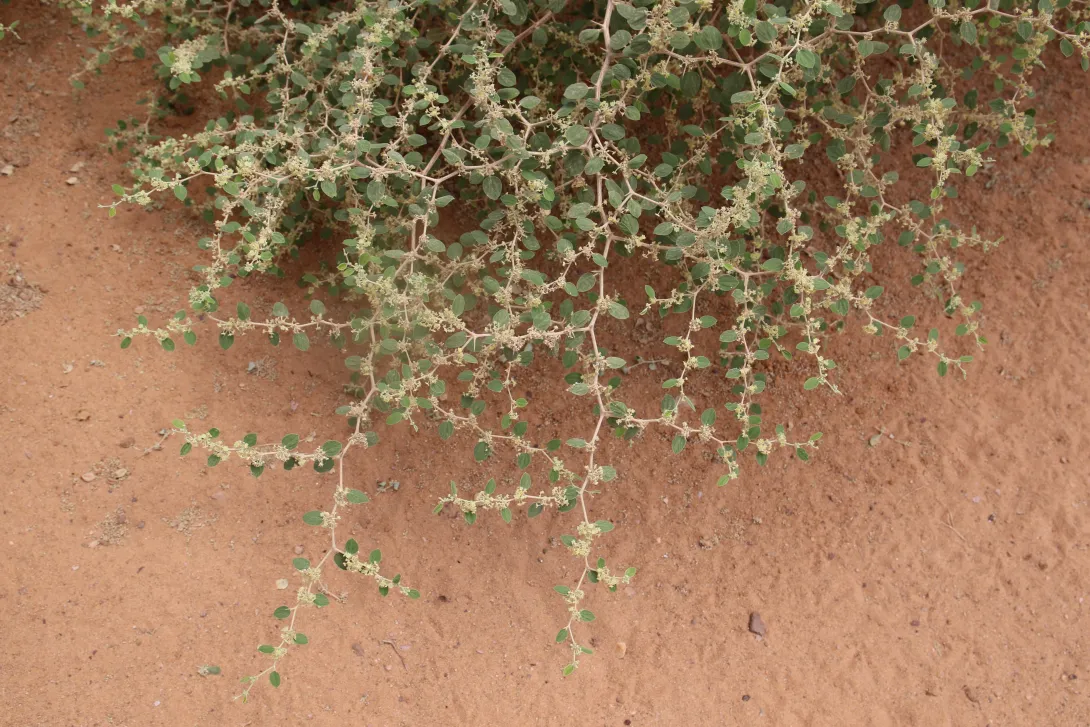
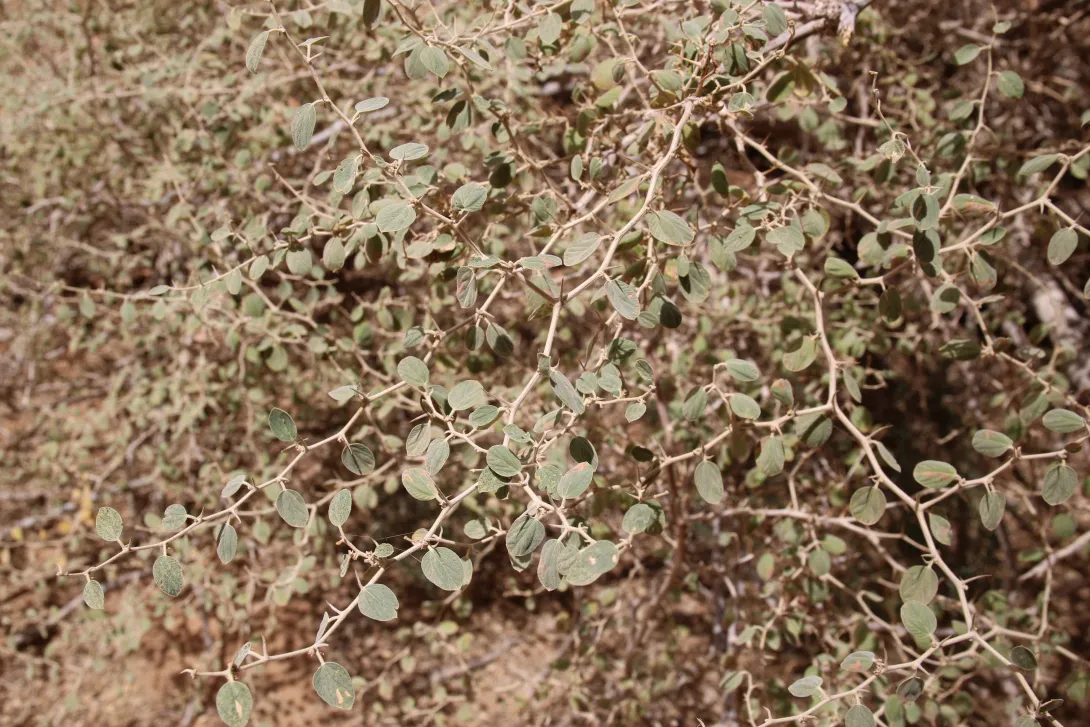
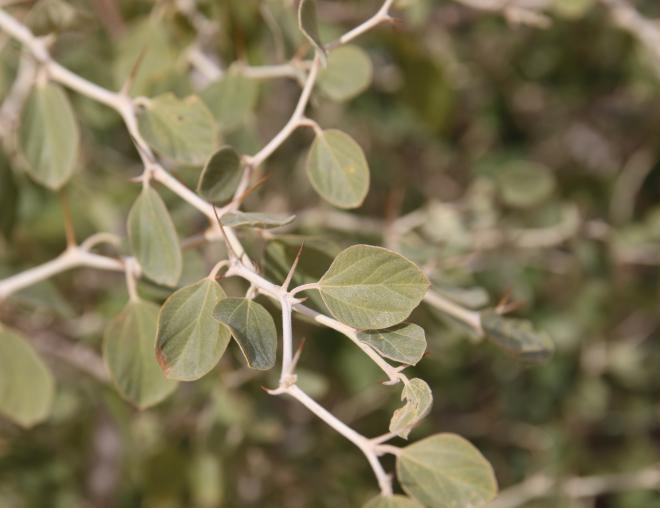
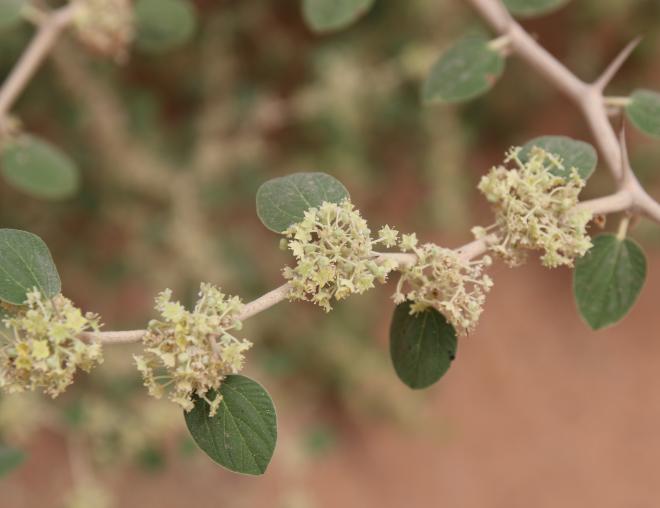
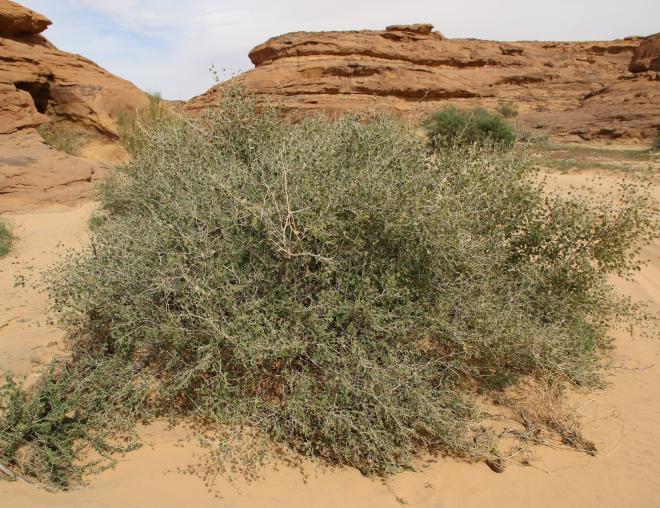
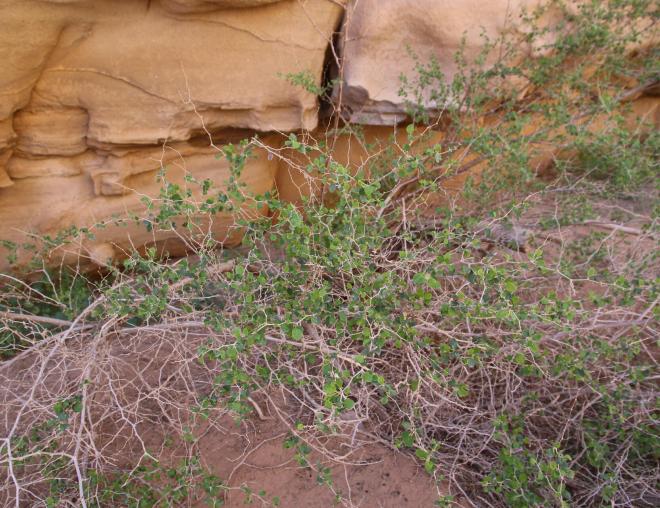
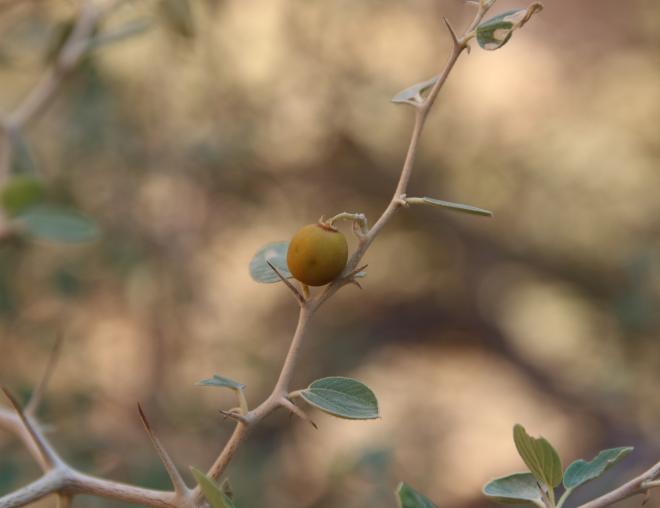
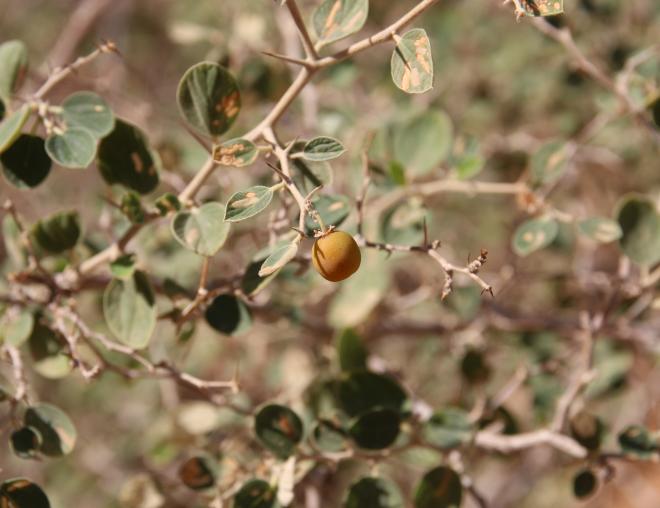
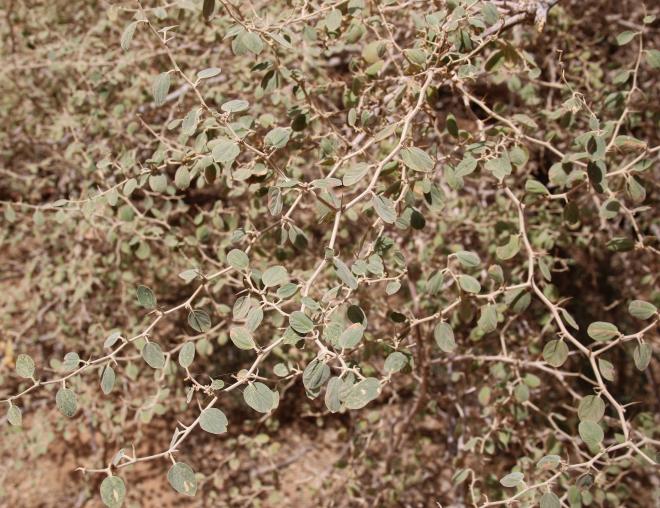
Intricately much-branched, mostly impenetrable thorny shrub up to 3 meters with tomentose zigzag (divaricate) branches. This species is deciduous, shedding its leaves in response to climatic conditions, and often appears leafless or sparsely foliated. Leaves are entire, ovate-orbicular, alternate, measuring up to 2 cm, tomentose finely pubescent on both surfaces, 3-5-nerved from the base with a pair of stipular spines, one straight, 10 mm long and the other hooked and smaller. Flowers yellowish-green measuring 3-4 mm and organised in dense axilliary tomentose cymes with sepals triangular, tomentose; petals equalling the sepals, obovate and a 10-lobed disc. Small globose fruit yellow to reddish-brown measuring up to 15 mm with dark brown seeds of 4 mm.
- Growth Form
-
Description
-
Habitat and Distribution
- Habitat
-
Geographical Distribution Range
This Irano-Turanian - Saharo-Arabian species is distributed from Sinai to Middle East until Indian subcontinent from Sinai to Nepal. Within the Arabian Peninsula, it is native to Jordan, Saudi Arabia and Gulf States.
-
Ecology
-
Phenology
JanFebMarAprMayJunJulAugSepOctNovDecFloweringFructification
- Origin
-
IUCN Red List Category
 Least Concern
-
Remarks
This species remains relatively uncommon in AlUla County. Wild Jujube is well known in AlUla County for its melliferous flowers, which produce high-value honey with a distinctive flavor. It used for erosion control, reducing wind damage, and allowing deposited material to stabilise, forming a microhabitat that enables other plants such as grasses to grow. The timber is used in building construction and it also makes good fuel and charcoal. The leaves can provide forage for livestock. The fruits are edible, sweet, and acidic. They can be eaten raw, pickled, dried, or used to make confectionery. The fruits are also essential food for wildlife in arid ecosystems.
-
Phenology
-
Uses and Values
-
Aromatic and Medicinal Use
Medicinal use
-
Other Usages
Palatable; Edible for birds; Melliferous
-
Description of Traditional Uses
Provides edible fruits, browse for livestock, and wood for construction or fuel. It is also used in folk medicine for various health complaints and acts as a valuable plant for bees.
-
Aromatic and Medicinal Use
Gallery