Salvadora persica L.
الأراك، مسواك
Syn. Salvadora wightiana Planch. ex Thwaites
Toothbrush Tree
Salvadoraceae
1 / 6
-
Morphological Description
-
Description
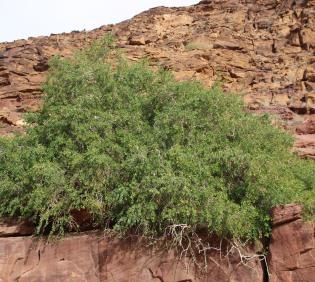
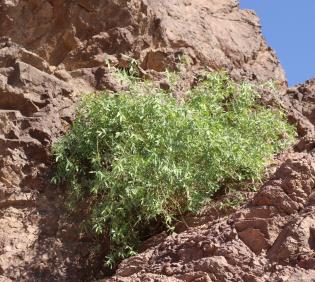
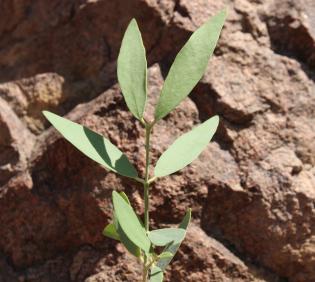
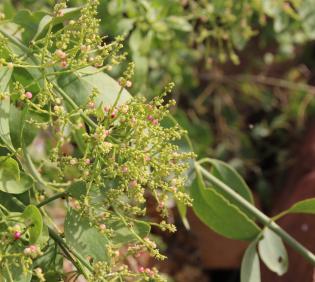
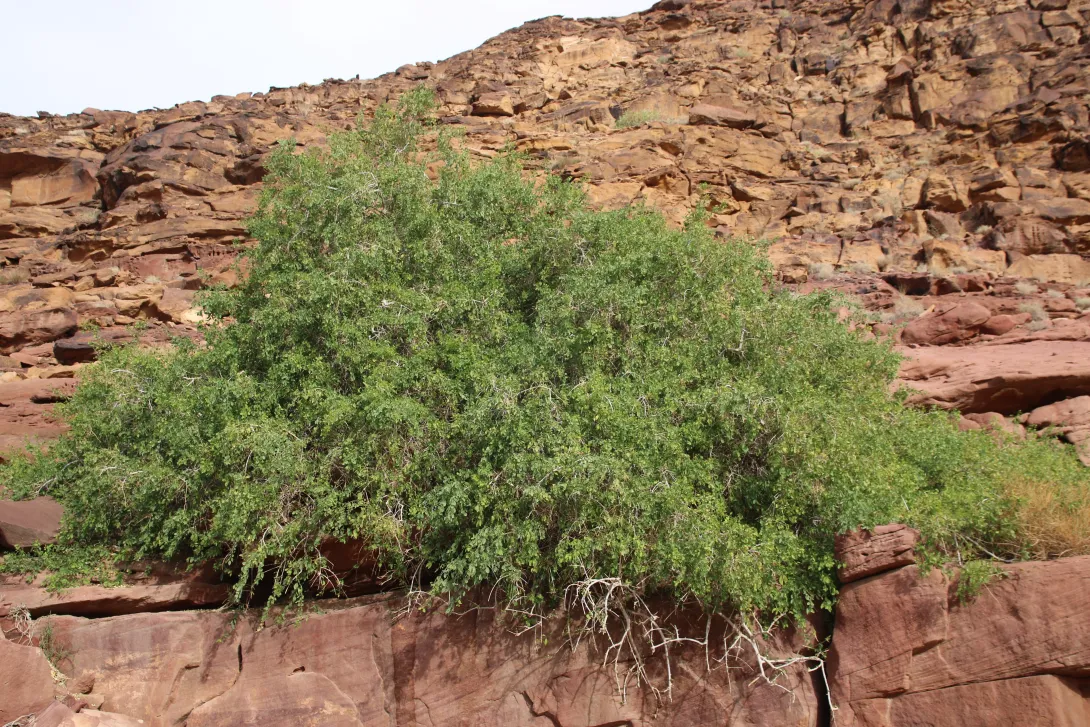
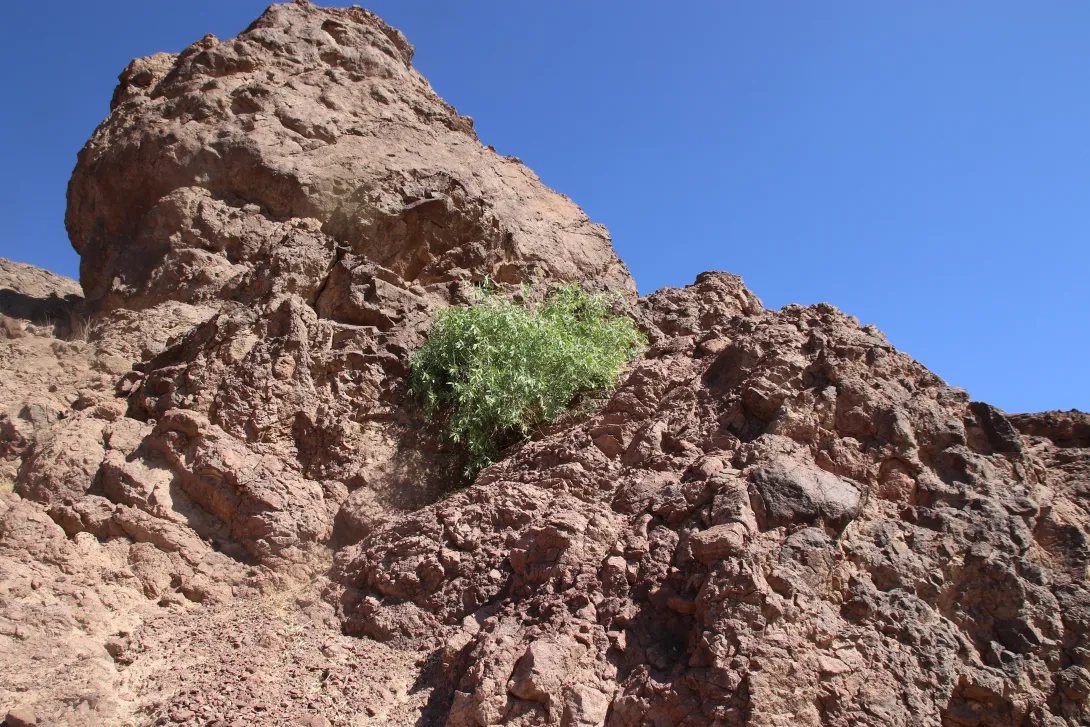
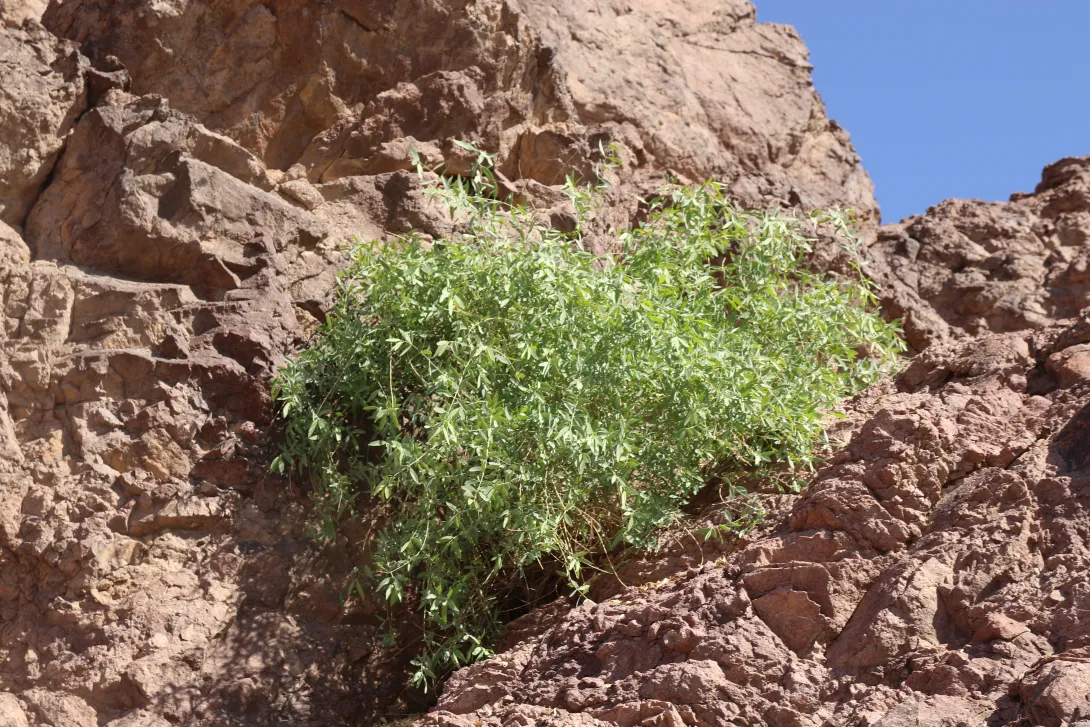
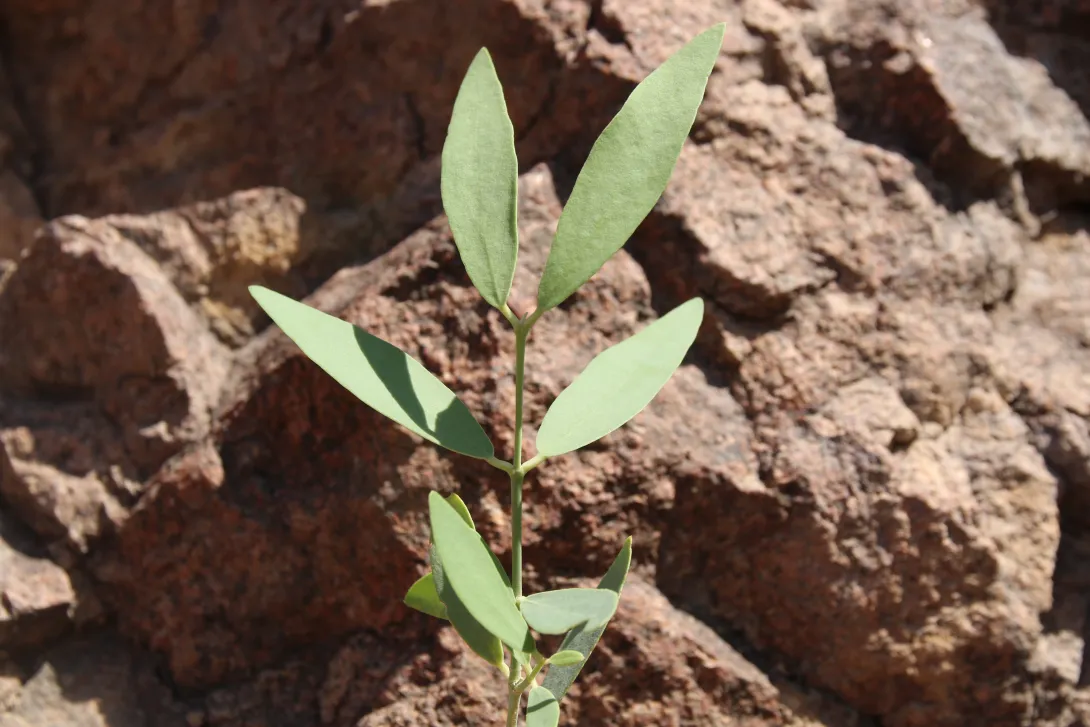
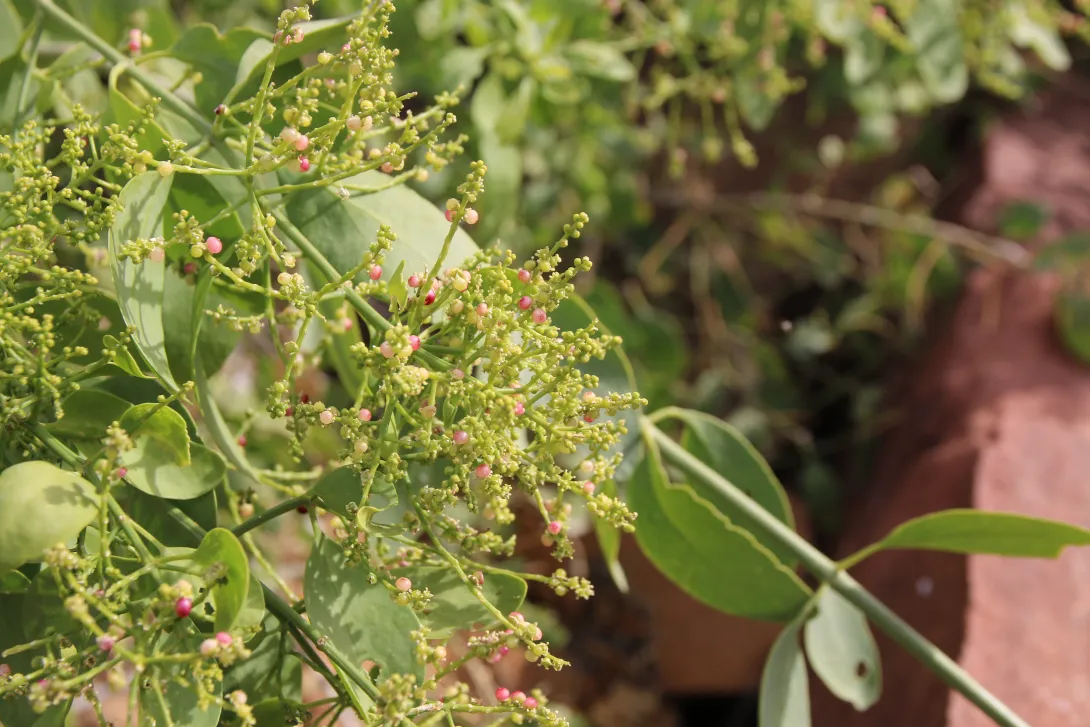
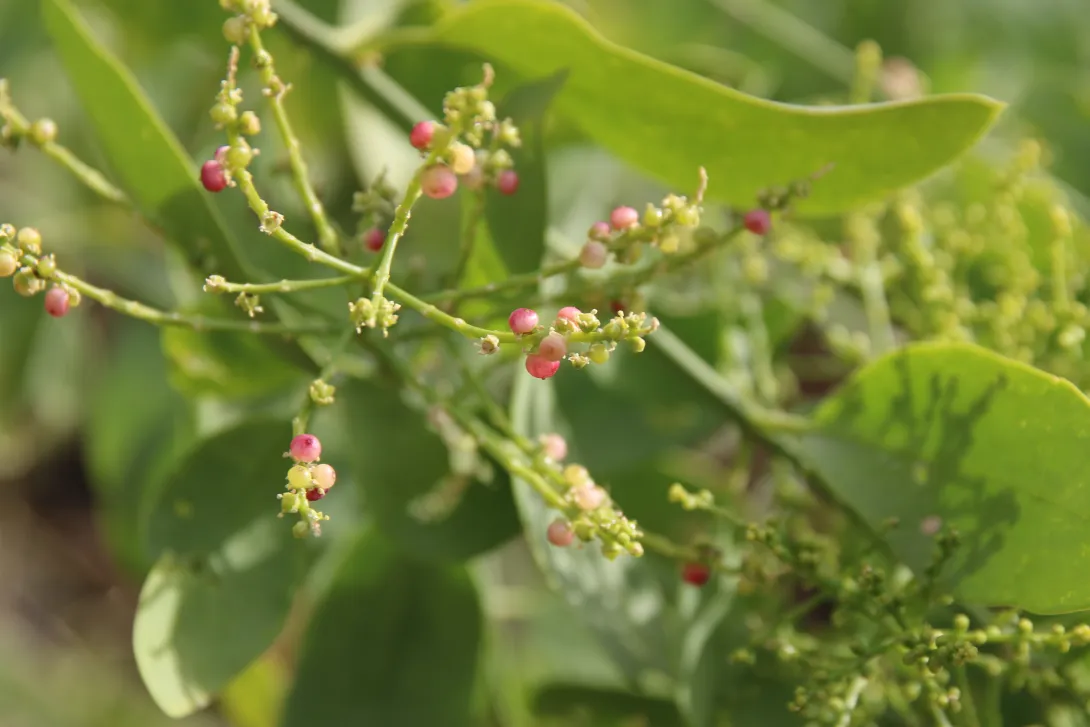
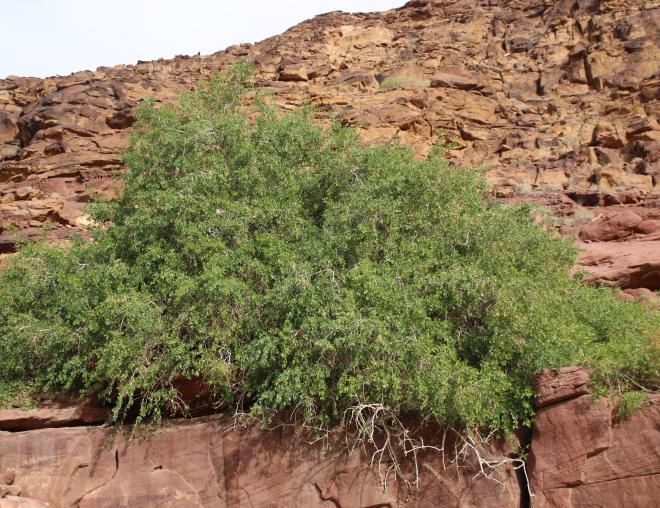
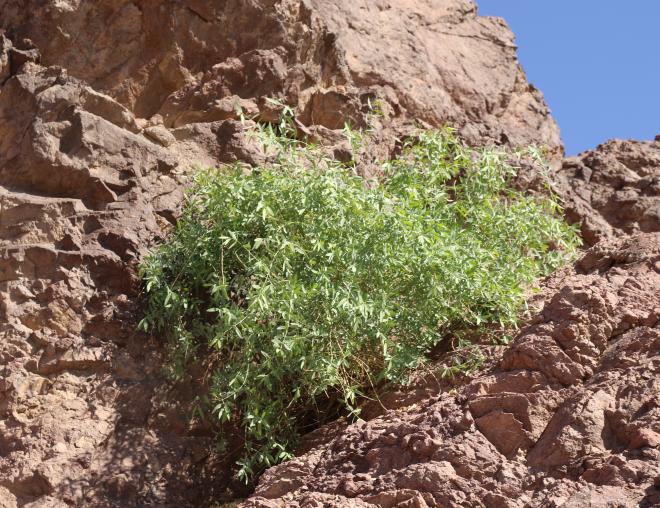
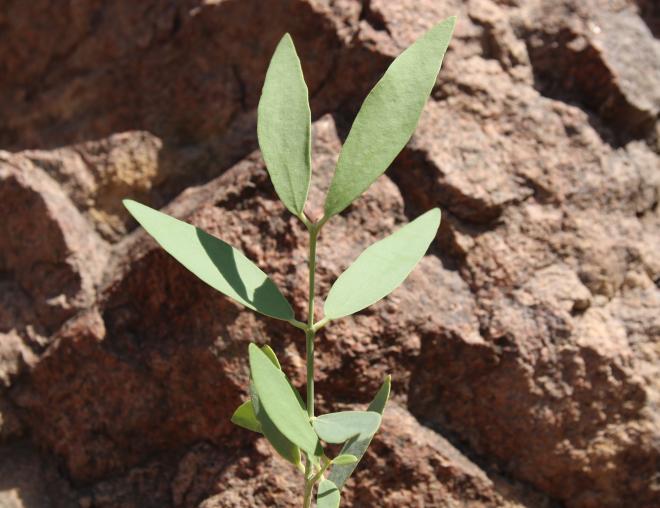
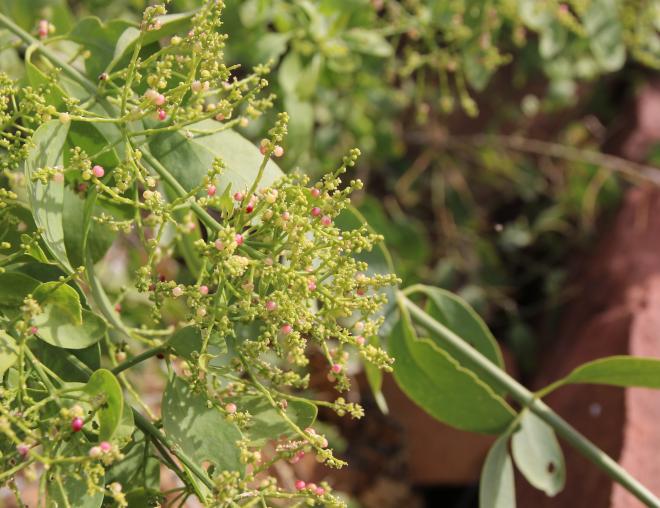
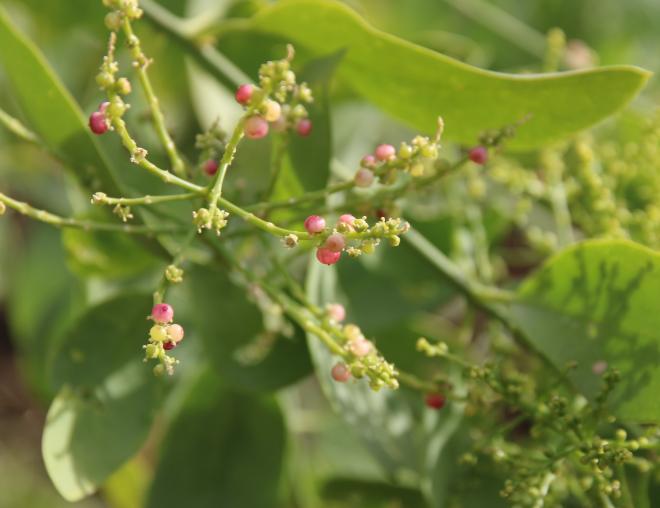
Evergreen shrub or tree up to 5 meter tall, glabrous, profusely branched with almost whitish drooping stems. Leaves are entire opposite up to 5 cm, elliptic-ovate, with long petiole up to 2.5 cm, pale green, generally succulent, coriaceous, the apex acute to rounded, with 5-6 pairs of disctinct nerves. Inflorescence is a drooping lax axilliary and terminal panicle up to 30 cm long and longer than the leaves. Flower greenish-white 1.5 mm, pedicellate with petals shortly united at the base, stamens attached to the petals (epipetalous), sepal less than a half the length of the completly recurved petals. The fruit is a globose translucent drupe white ripening red and measuring between 2.5 and 5 mm.
- Growth Form
-
Description
-
Habitat and Distribution
- Habitat
-
Geographical Distribution Range
This Sudanian species is distributed from Africa to Middle East and until India. Within the Arabian Peninsula, it is native to Saudi Arabia, Oman, Yemen and Socotra.
-
Ecology
-
Phenology
JanFebMarAprMayJunJulAugSepOctNovDecFloweringFructification
- Origin
-
IUCN Red List Category
 Least Concern
-
Remarks
This species includes nine accepted varieties, but only one present in Saudi Arabia: Salvadora persica var. persica L. The plant can bear at the same time, mature fruits, flowers and flower buds in the same inflorescence. Commonly called Miswak, the toothbrush made with the roots of this bush is considered to be beneficial for teeth and oral hygiene. This plant carries cultural and spiritual importance in Islam, as it is referenced in the Quran.
-
Phenology
-
Uses and Values
-
Aromatic and Medicinal Use
Medicinal use
-
Other Usages
Palatable; Edible for birds; Melliferous
-
Description of Traditional Uses
The plant is deeply integrated into traditional hygiene and medicinal practices.
-
Aromatic and Medicinal Use
Gallery