Ricinus communis L.
خروع
Castor Oil Plant
Euphorbiaceae
1 / 5
-
Morphological Description
-
Description
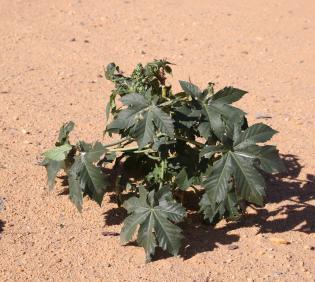
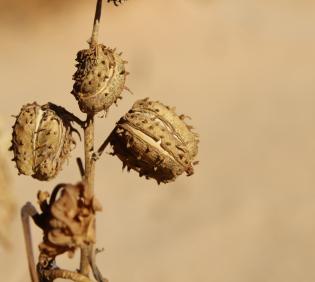
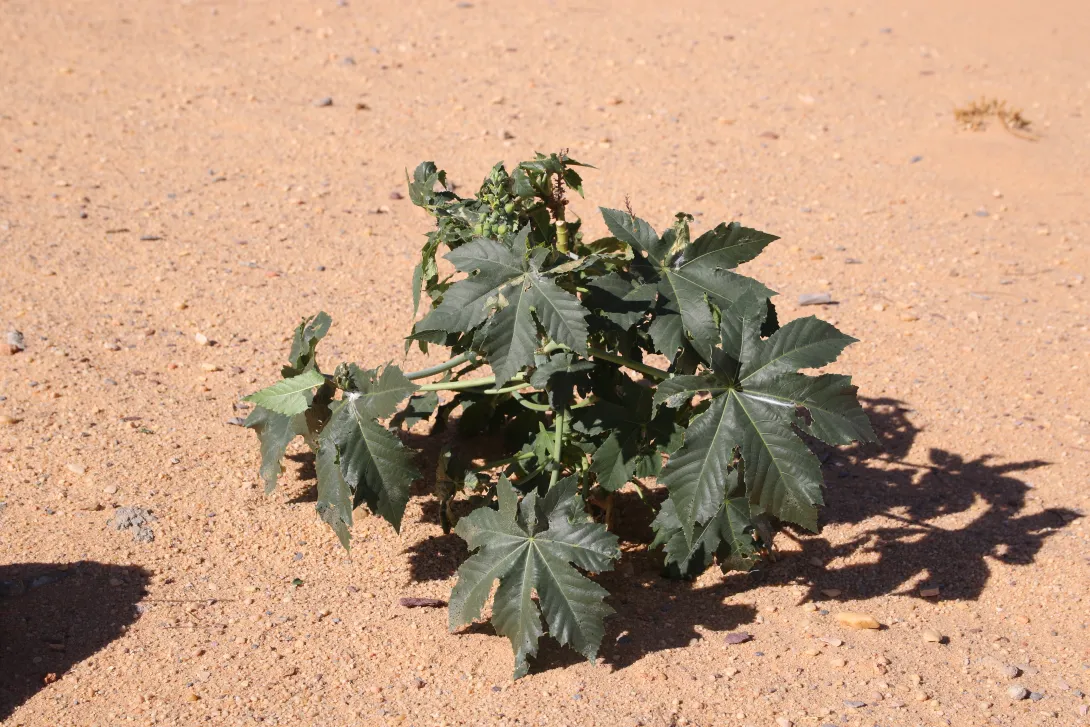
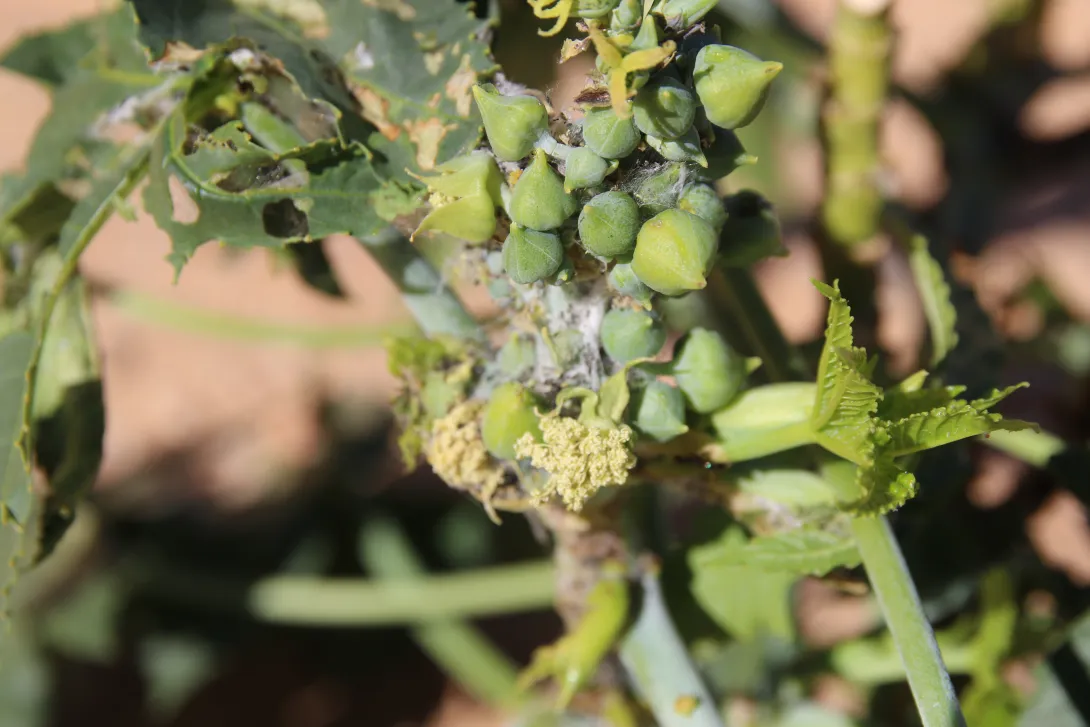
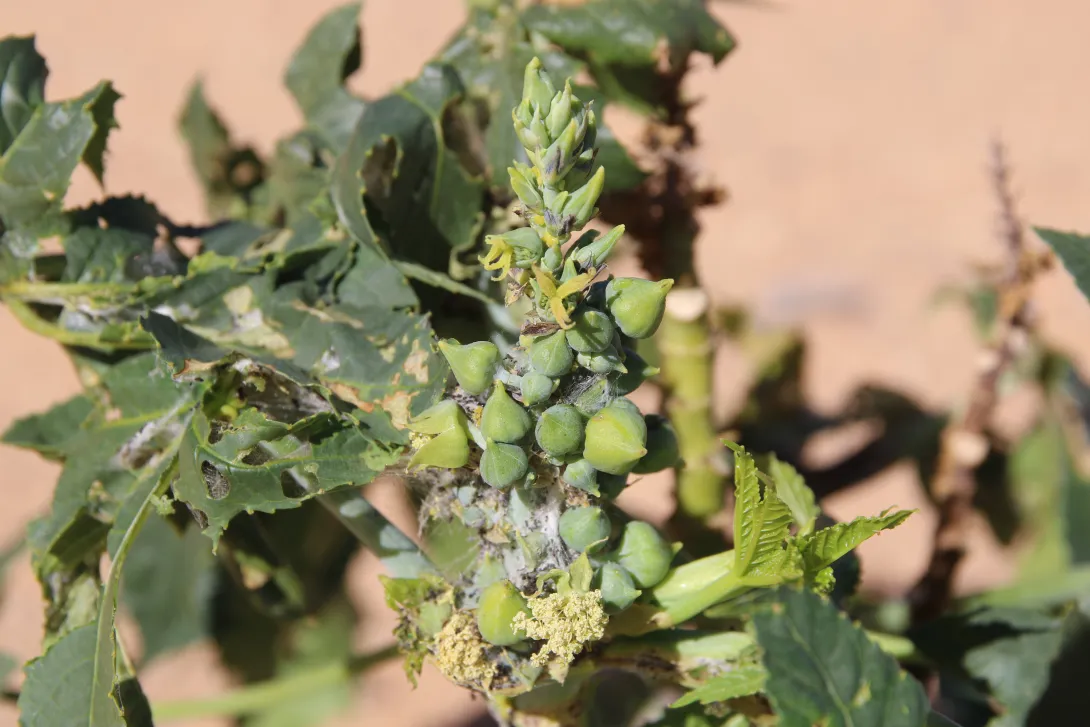
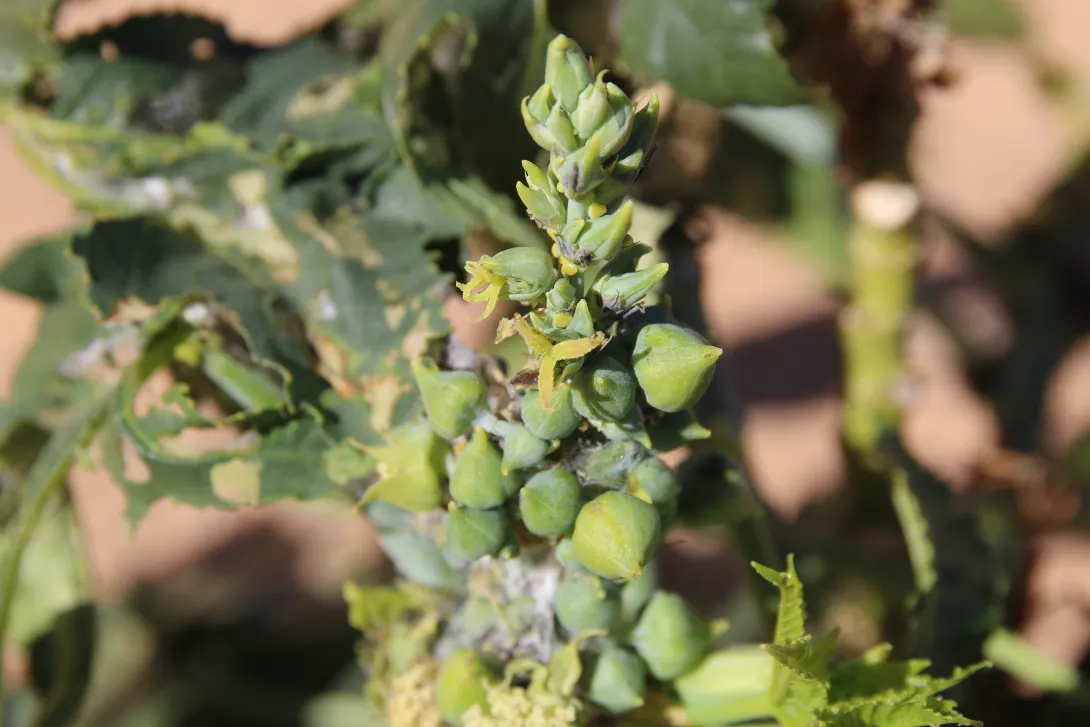
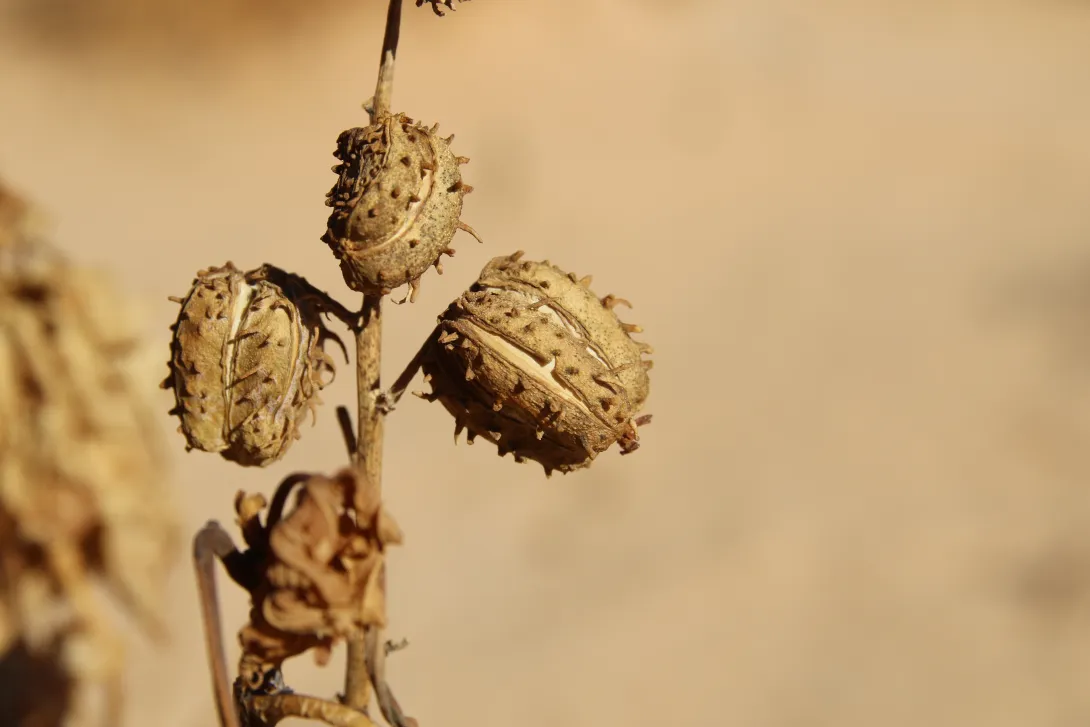
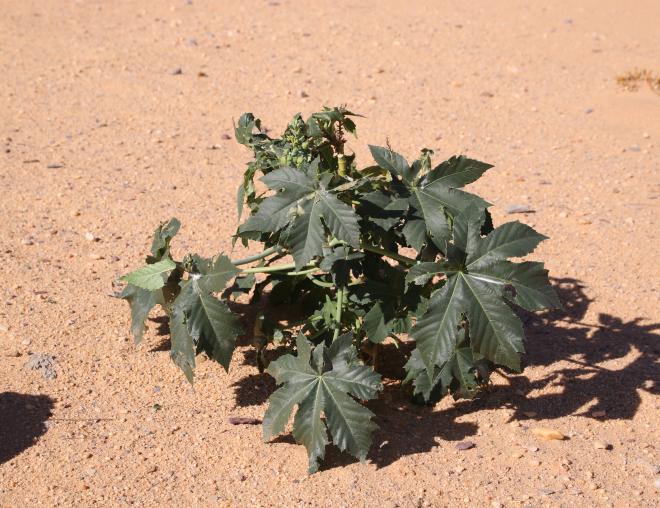
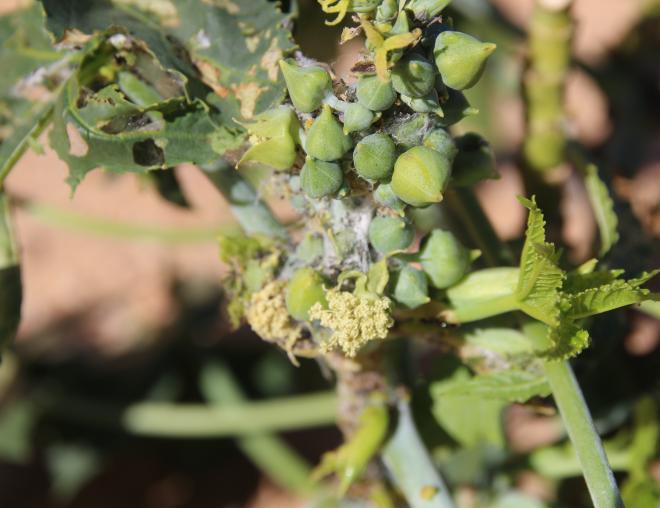
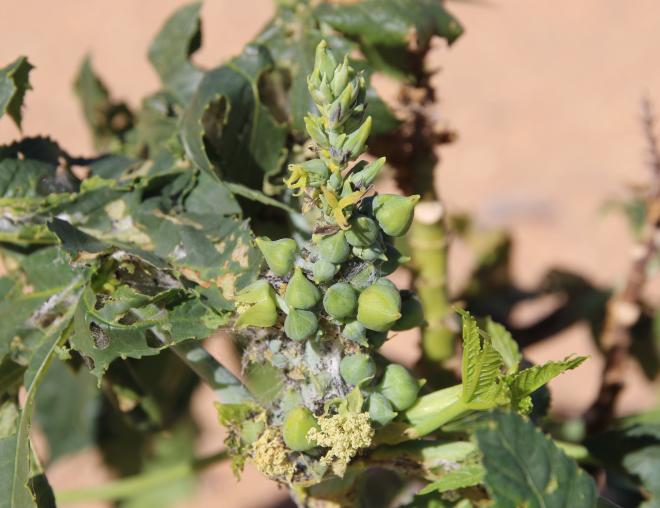
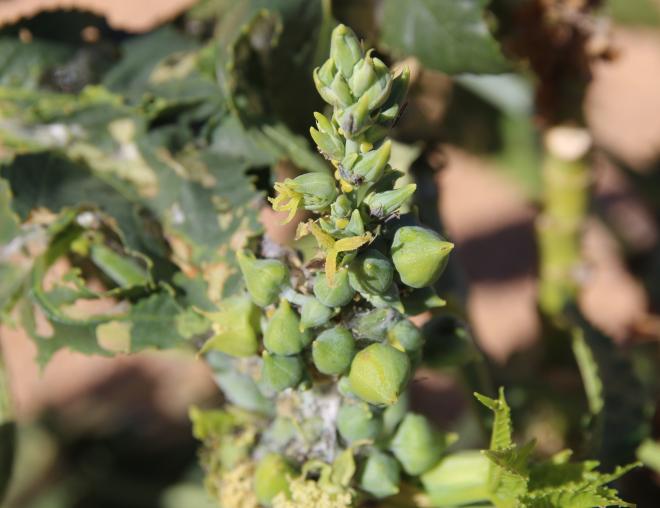
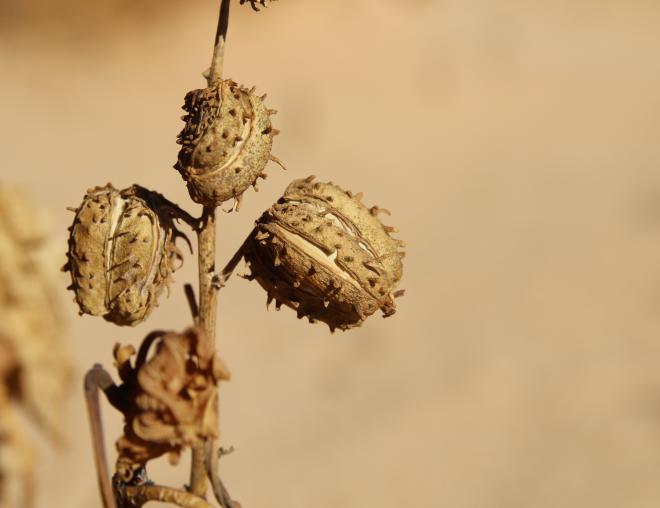
A large shrub or tree-like, 3-8 m tall with hollow stem and pruinose young branches. Leaves with 5-20 cm long petiole; stipules connate, forming on ovate, up to 2 cm long sheath, caducous, leaving a circular scar; blades 5-11-lobed, about 20-50 cm across, glabrous; lobes glandular, serrate, 10-20 x 2-5 cm, lanceolate to ovate. Inflorescence 10-30 cm long. Male flowers: pedicels about 1 cm long, articulate; calyx about 2 cm across, connate, lobes 6-8 x 3-4 mm, elliptic-ovate, acute; stamens numerous, filaments branched, anthers bithecous. Female flowers: pedicels 3-5 mm long, accresent in fruit to 1.5 cm; calyx purpulish, sepals about 5 mm long, lanceolate, acute to acuminate; styles 3, red. Capsule 3-lobed, 1-2 x 0.8-1.5 cm, echinate or sometimes smooth. Seeds greyish, speckled brown, 7-15 x 4-8 mm, shiny; caruncle depressed-coniabout
- Growth Form
-
Description
-
Habitat and Distribution
- Habitat
-
Geographical Distribution Range
This Subtropical and Tropical species’ native range is restricted to Eritrea, Ethiopia, and Somalia. However, it has been introduced in many regions across the world, including the Americas, Europe, the rest of Africa, Asia, and Oceania.
-
Ecology
-
Phenology
JanFebMarAprMayJunJulAugSepOctNovDecFloweringFructification
- Origin
-
IUCN Red List Category
 Least Concern
-
Phenology
-
Uses and Values
-
Aromatic and Medicinal Use
Medicinal use
-
Description of Traditional Uses
Traditionally utilized for its oil and in various topical medicinal applications.
-
Aromatic and Medicinal Use
Gallery