Pancratium sickenbergeri Asch. & Schweinf.
بَطن الحيّة
Syn. Pancratium sickenbergeri Asch. and Schweinf. ex Barb.-Boiss.and Barbey
Desert Pancratium, Desert Daffodil
Amaryllidaceae
1 / 6

-
Morphological Description
-
Description
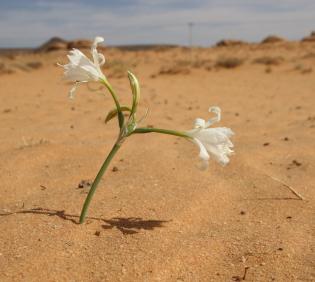
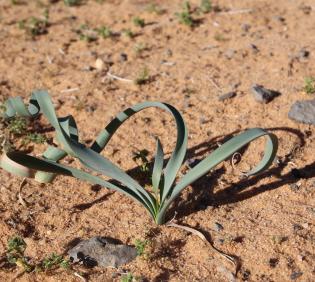
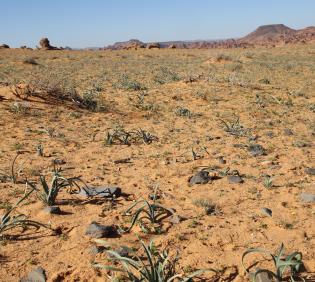
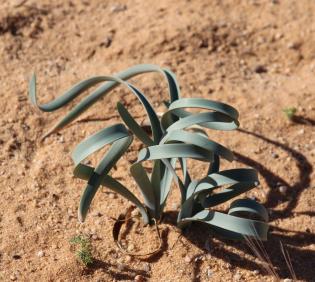
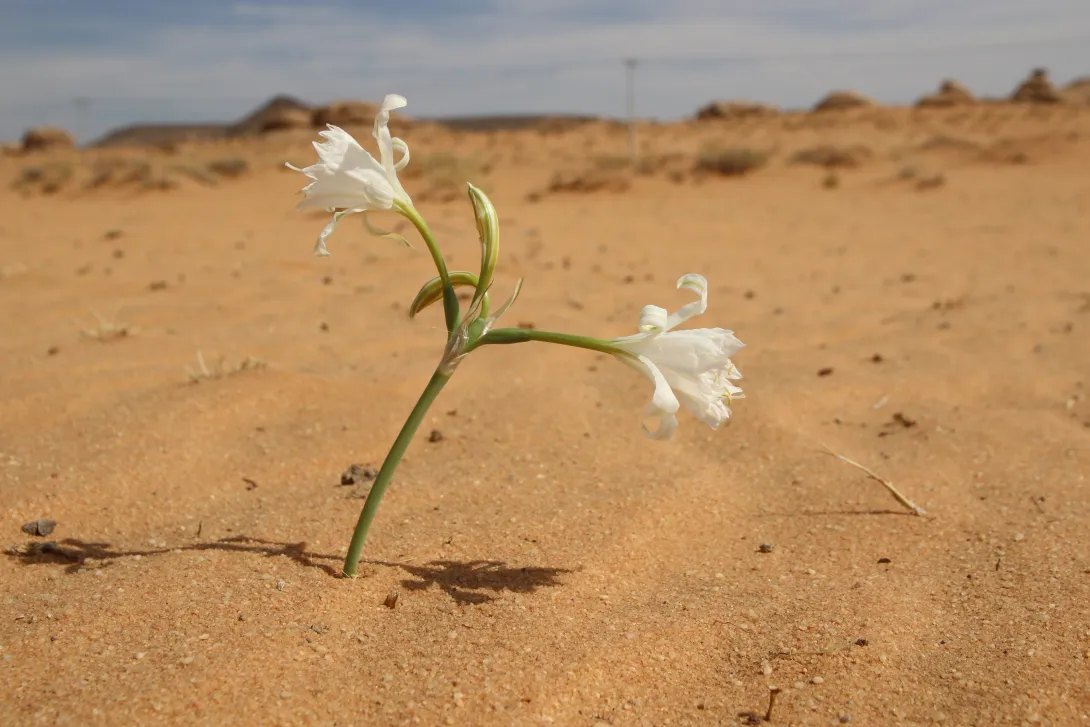
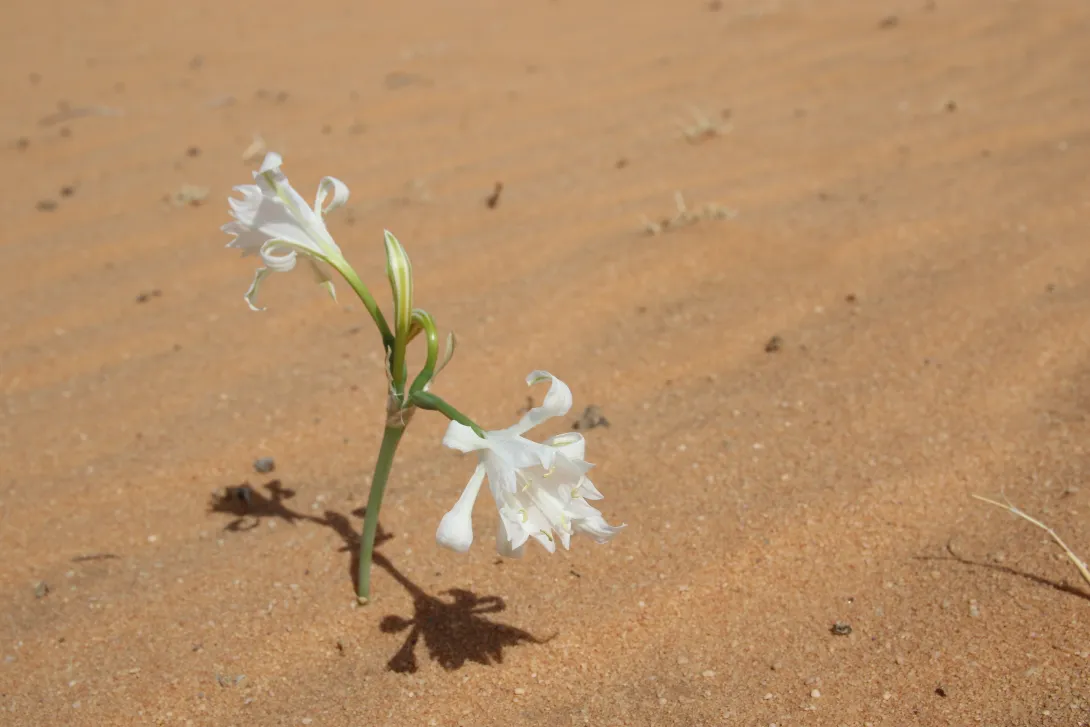
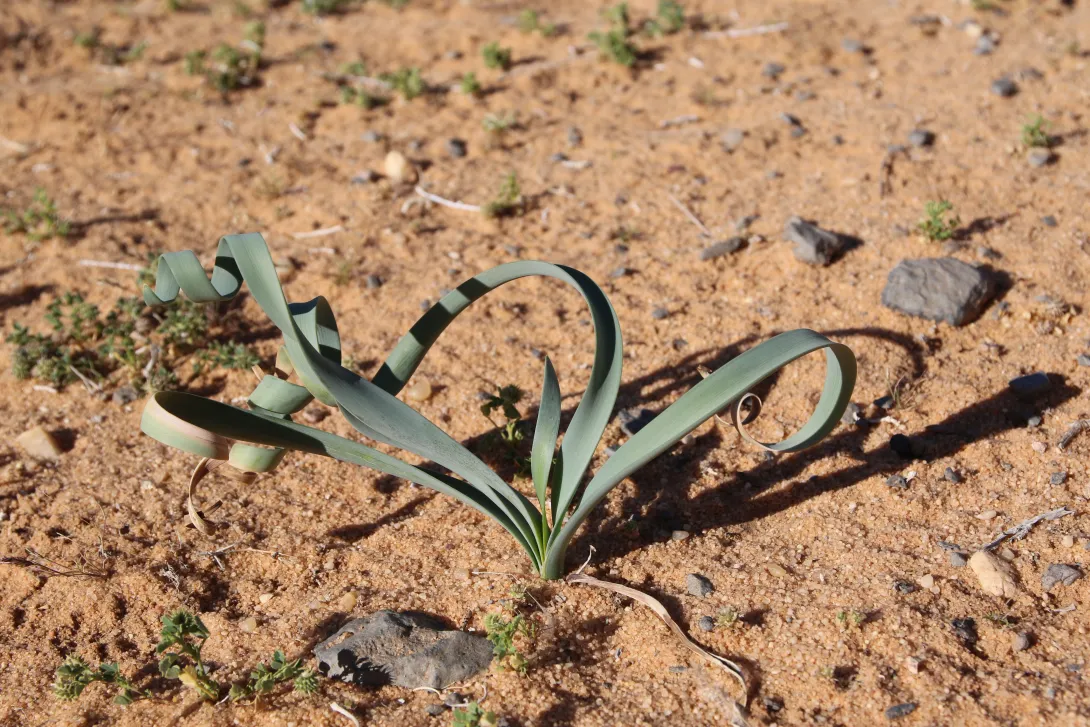
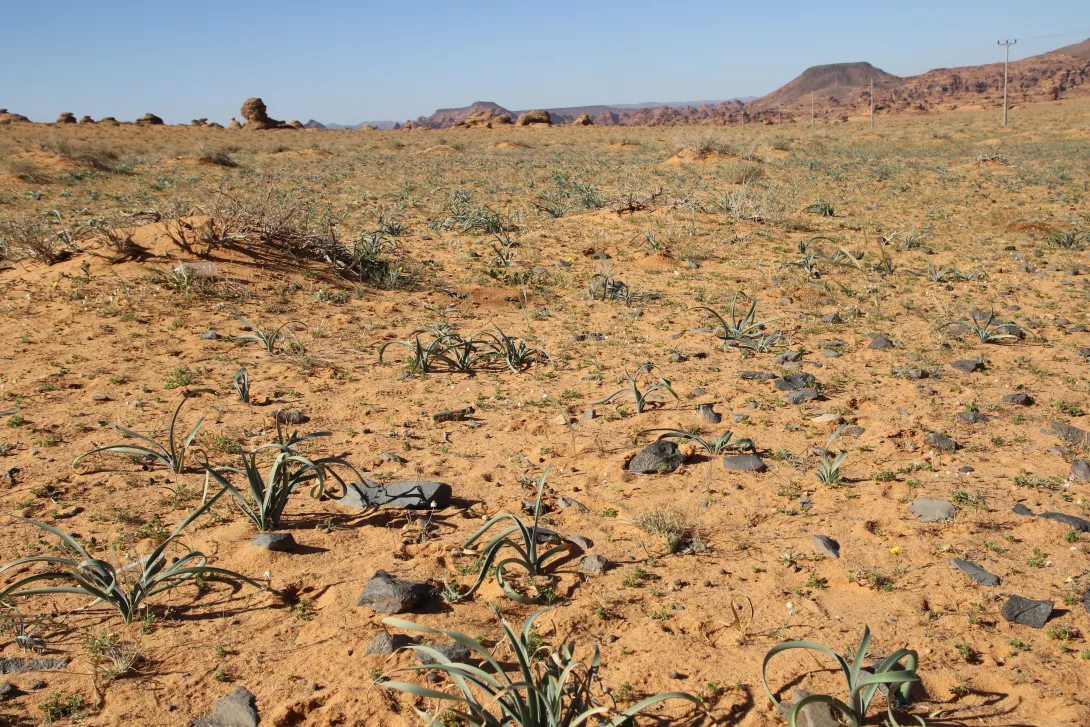
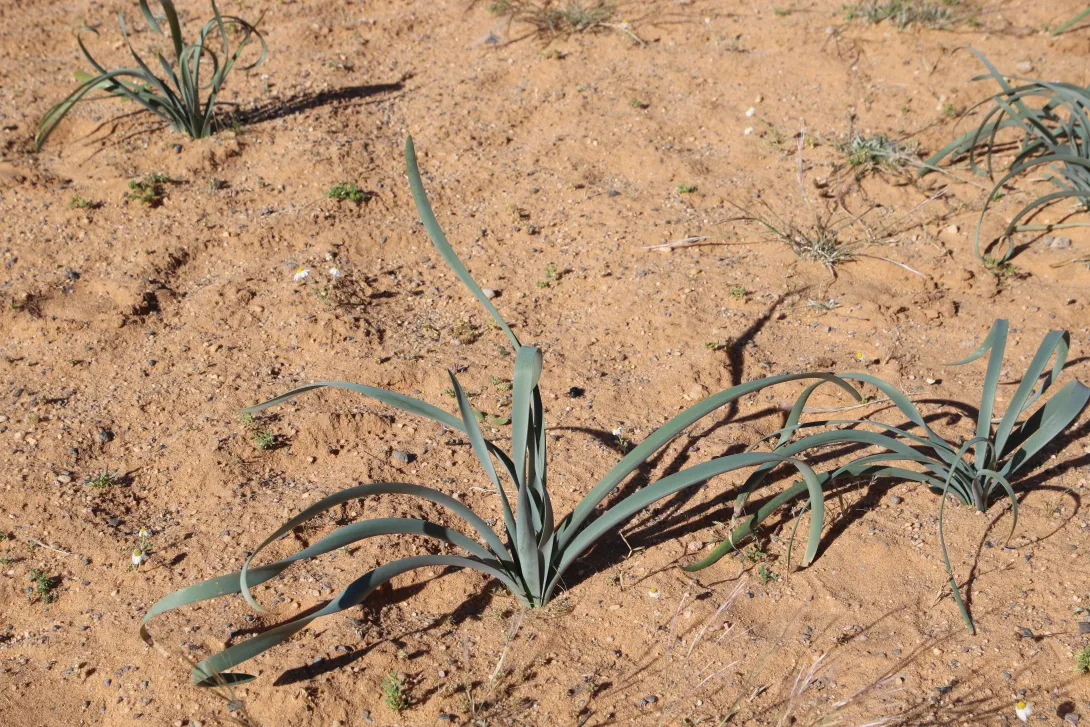
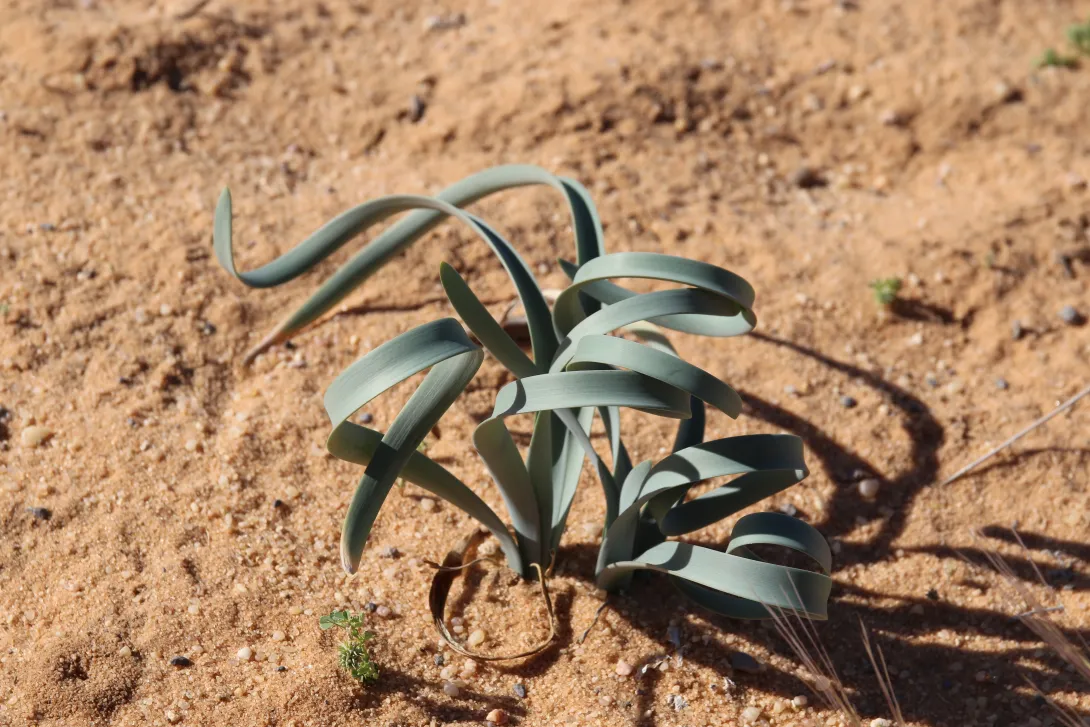
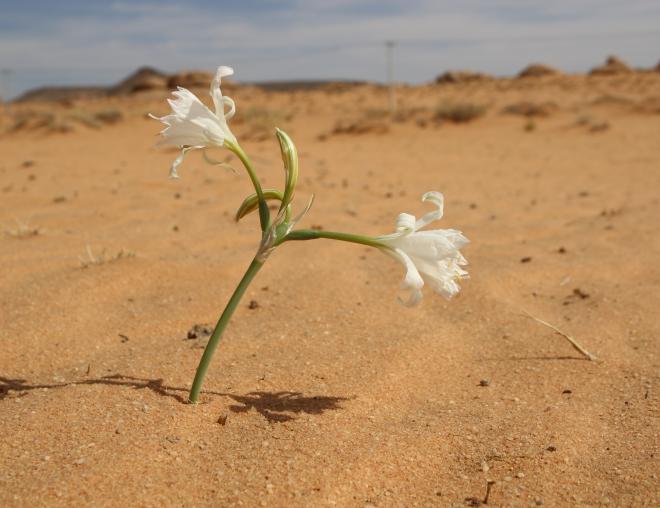
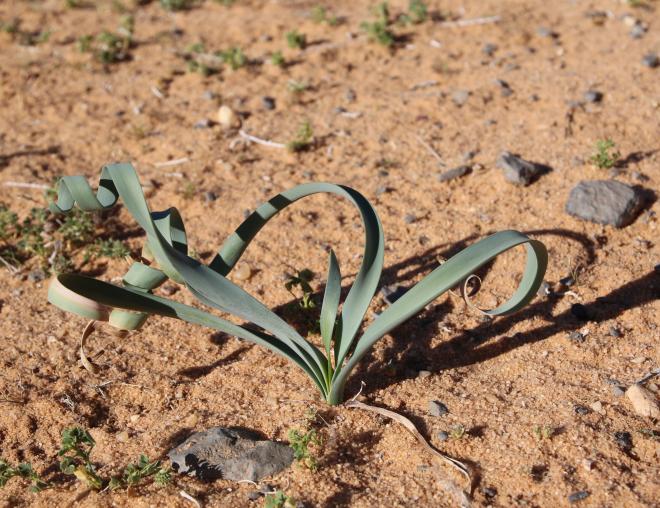
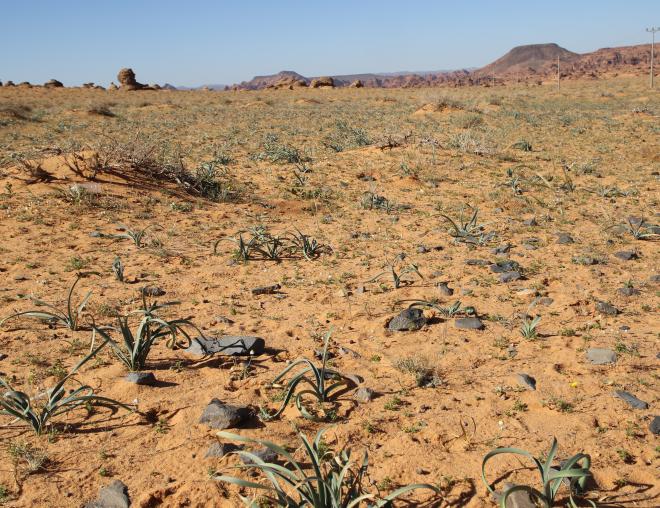
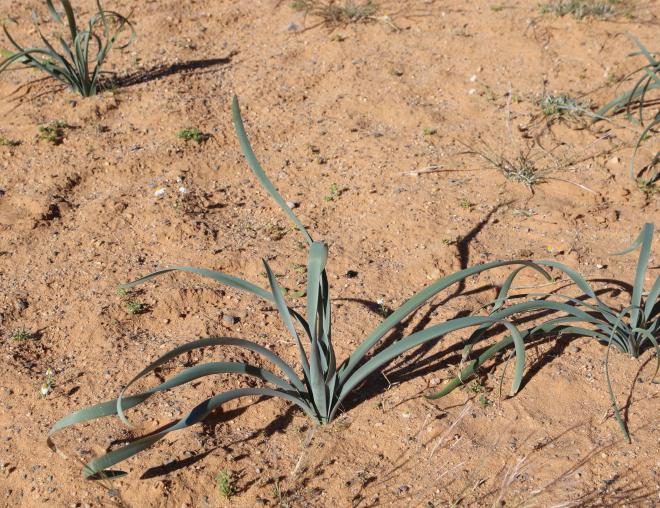
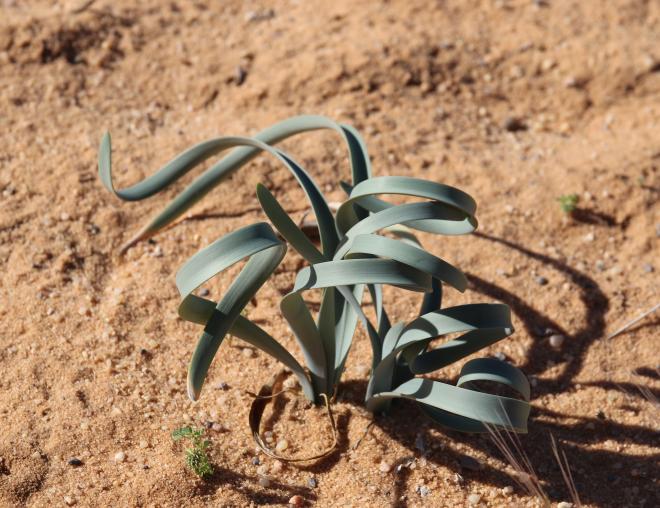
Glabrous, bulbous perennial (geophyte) up to 40 cm tall, with a deep pear-shaped bulb (up to 10 cm) covered in dark brown, crusty tunics. Leaves emerge after flowering in late autumn, 3–13 in number, glaucous, strap-shaped, up to 20 cm long and less than 1 cm wide, lying flat on the soil surface. The inflorescence bears 2–6 fragrant white flowers, 7–10 cm long, with a membranous spathe and short pedicels. Flowers are 6–7 cm in diameter, with six tepals marked by a green central vein, a 12-toothed corona, and six stamens inserted at the sinuses. The fruit is a rounded capsule (2–3 cm) containing numerous light, black, triangular seeds.
- Growth Form
-
Description
-
Habitat and Distribution
- Habitat
-
Geographical Distribution Range
This Saharo-Arabian species is distributed from Libya to Syria, occuring in Egypt, Sinai, Saudi Arabia, Lebanon and Jordan.
-
Ecology
-
Phenology
JanFebMarAprMayJunJulAugSepOctNovDecFloweringFructification
- Origin
-
IUCN Red List Category
 Not Evaluated
-
Remarks
This geophyte is not visible year-round, as its flowers bloom in early autumn (September–October), while the leaves appear later, between November and April. As a result, flowers and leaves are never seen at the same time. In arid years whole populations do not bloom. This phenomenon is especially conspicuous in populations of the extreme desert. Previously, it was divided into two varieties, now considered part of the same species: Pancratium sickenbergeri var. littorale Sickenb. and Pancratium sickenbergeri var. desertorum Sickenb. Pancratium sickenbergeri was named in honor of the German botanist Charles Sickenberger, who studied desert flora. This species is not common and was observed in only one area at the extreme North of AlUla County.
-
Phenology
-
Uses and Values
-
Description of Traditional Uses
No specific documented uses were identified in accessible literature.
-
Description of Traditional Uses
Gallery