Orobanche cernua Loefl.
الغُملج
Nodding broomrape
Orobanchaceae
1 / 3

-
Morphological Description
-
Description
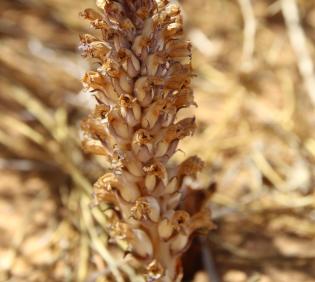
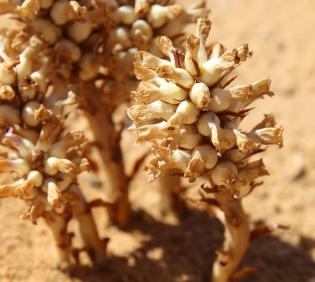
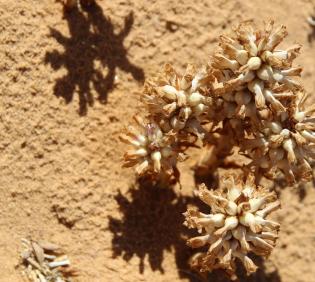
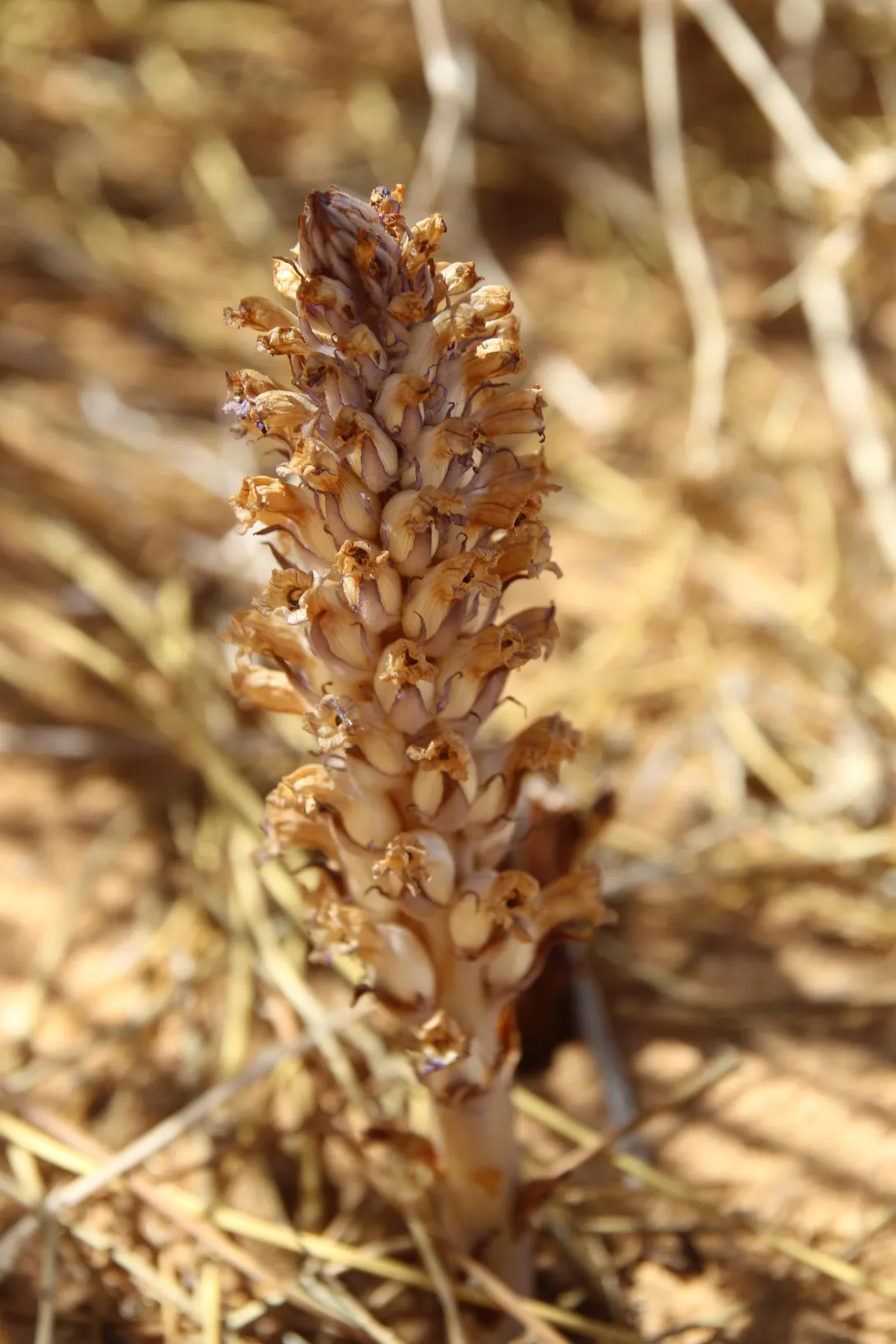
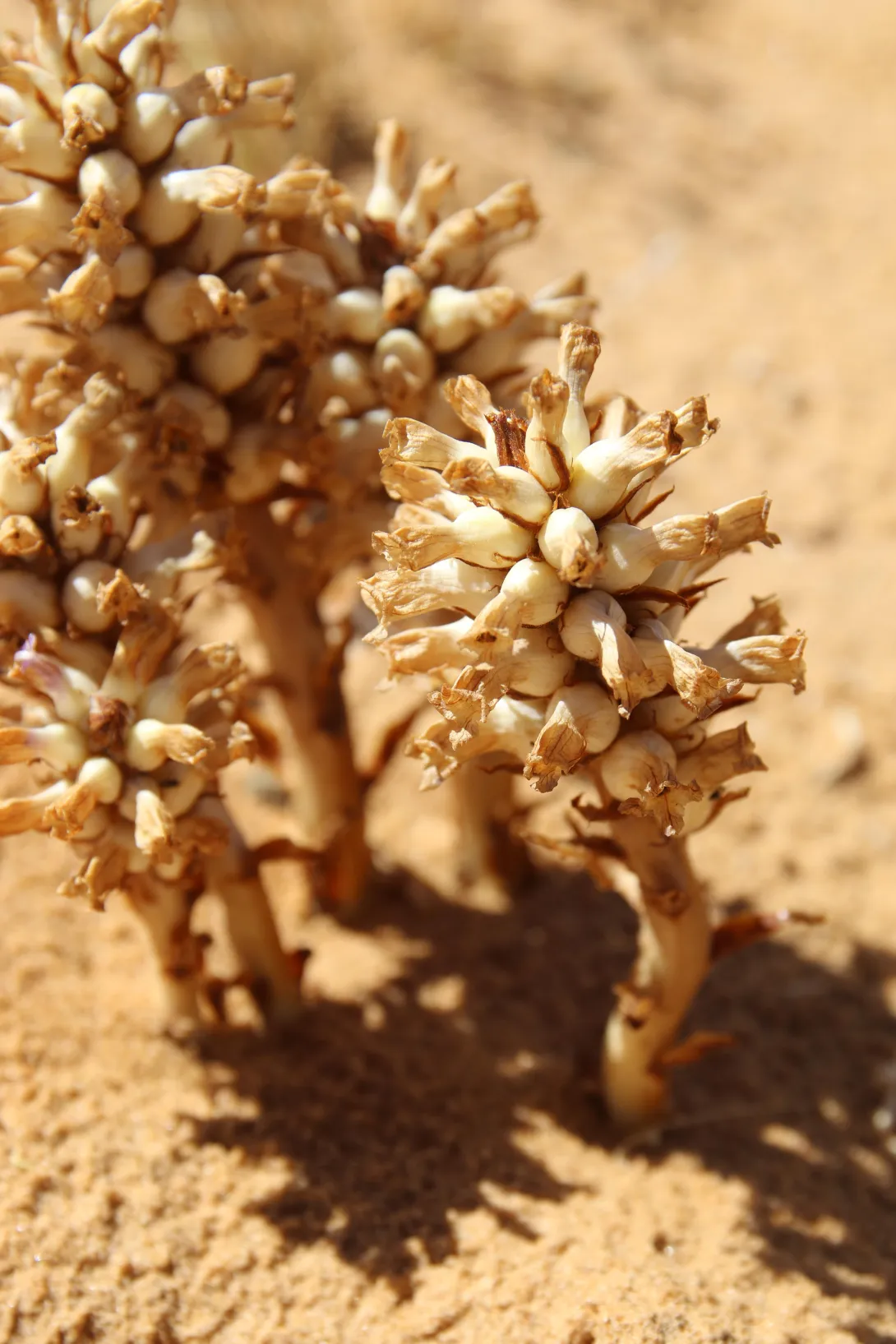
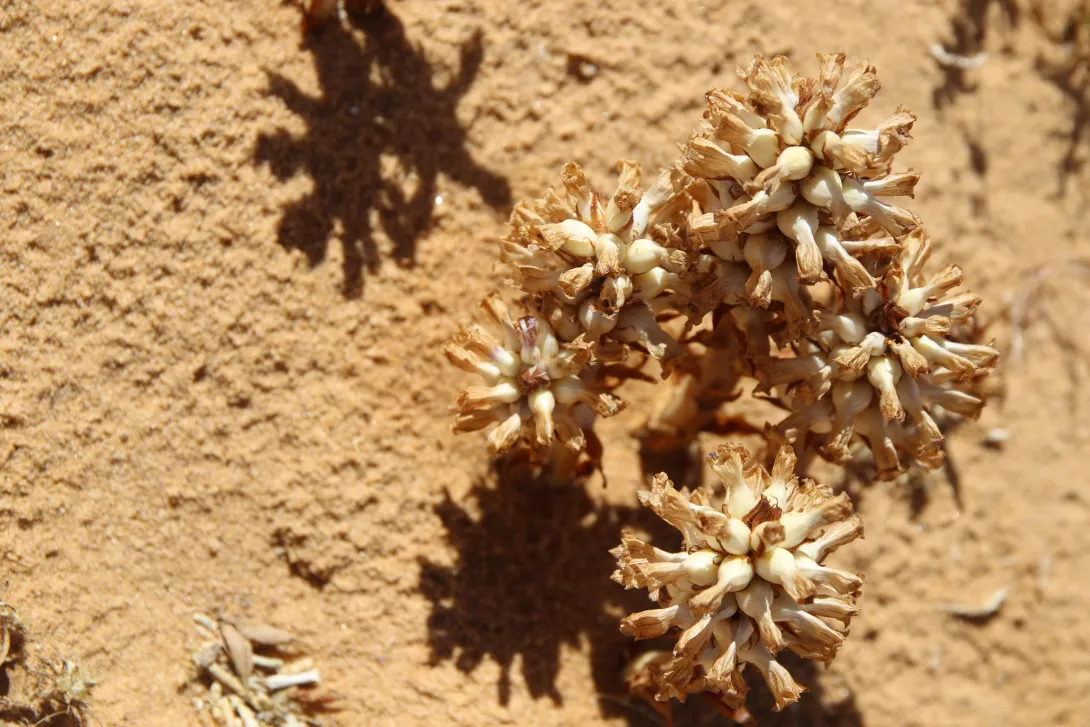
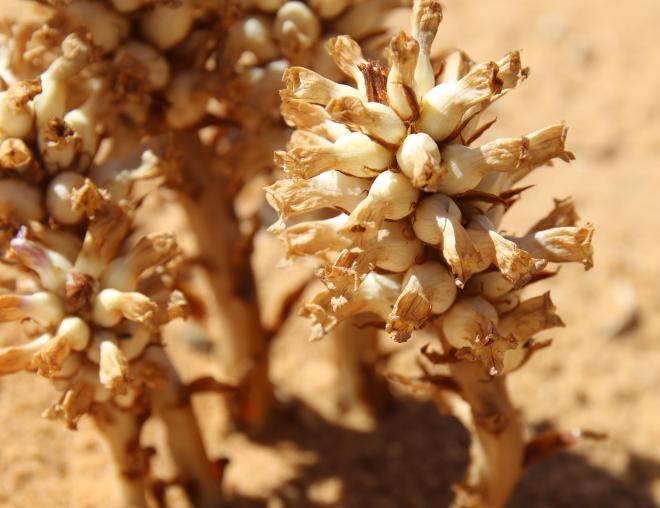
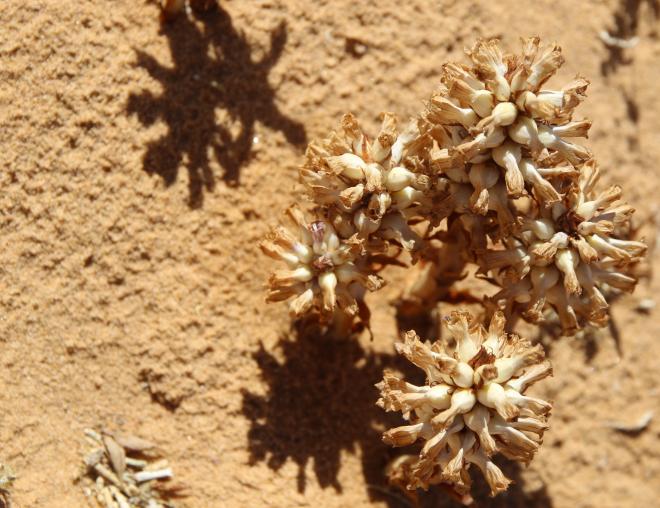
Biennial or perennial pubescent herb, 15–20 cm tall, sometimes reaching up to 40 cm. Stems are simple, thick, solitary or clustered and yellowish to purplish in color. Scales are ovate-lanceolate. Inflorescence is dense, with bracts ovate to lanceolate, acute, and lacking bracteoles. Calyx is campanulate, entire or with two segments and about half the length of the corolla. Corolla is white, becoming creamish to pale violet distally; it is tubular, constricted at the base, outwardly curved and pubescent to glabrous, 15–20 mm long. Flowers have two pairs of unequal-length, included stamens with filaments glabrous or pubescent. Fruits are subglobose, about 5–7 mm in diameter.
- Growth Form
-
Description
-
Habitat and Distribution
- Habitat
-
Geographical Distribution Range
This Mediterranean, Irano-Turanian, and Saharo-Arabian species is distributed across northern and eastern Africa, the entire Arabian Peninsula, Pakistan, India, parts of China, and southern Europe.
-
Ecology
-
Phenology
JanFebMarAprMayJunJulAugSepOctNovDecFloweringFructification
- Origin
-
IUCN Red List Category
 Not Evaluated
-
Phenology
-
Uses and Values
-
Description of Traditional Uses
No specific documented uses were identified in accessible literature.
-
Description of Traditional Uses
Gallery