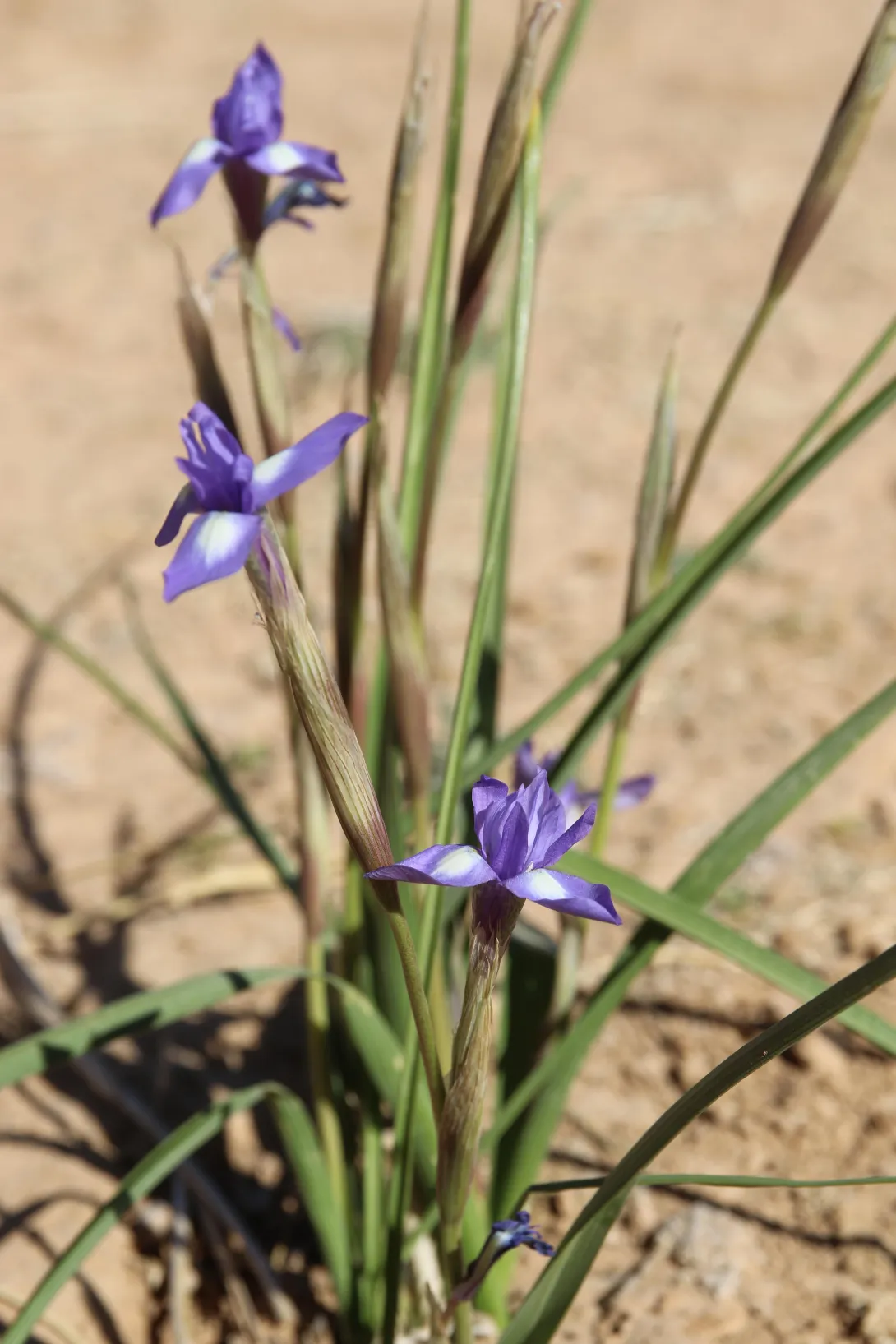
Moraea sisyrinchium (L.) Ker Gawl.
السوسن / العنصل
Syn. Iris sisyrinchium L. (1753)
Spanish nut-iris
Iridaceae
1 / 3

-
Morphological Description
-
Description
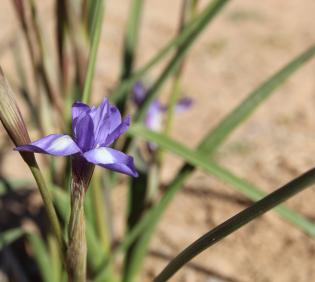
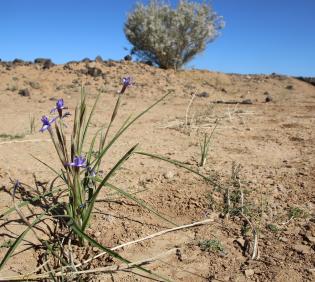
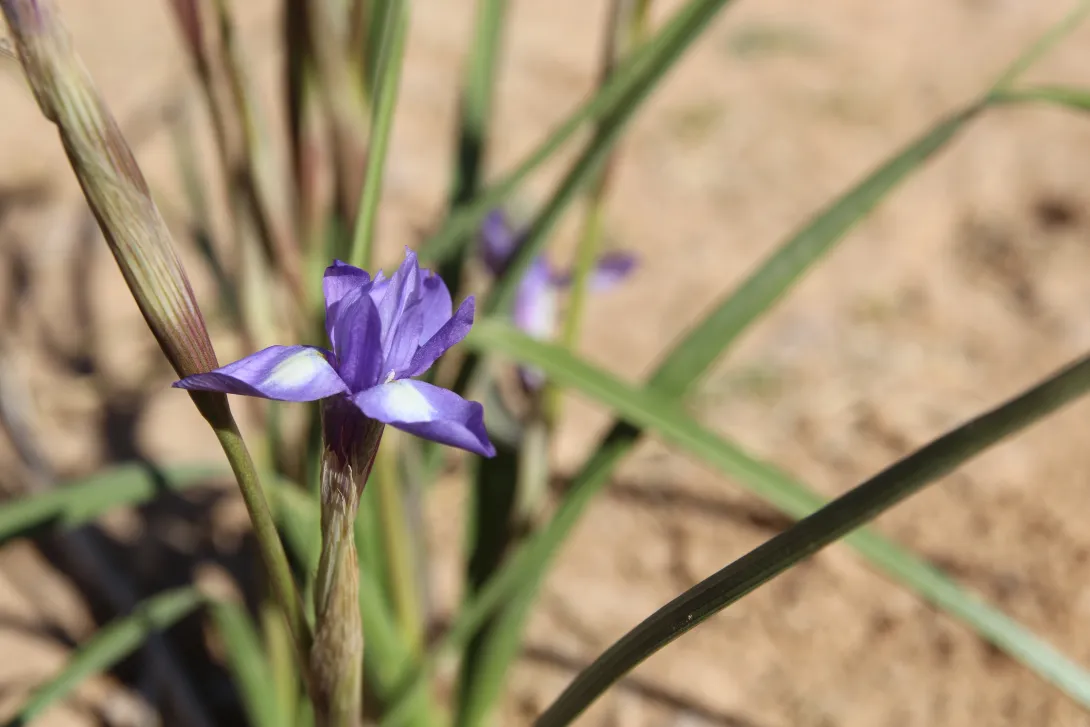
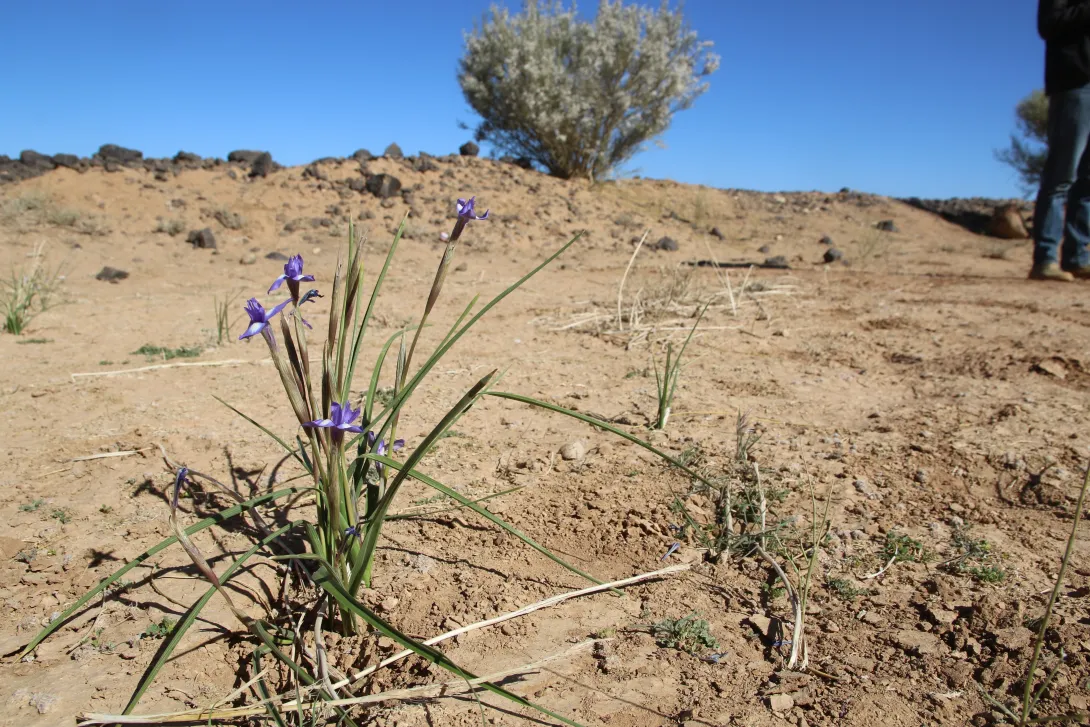
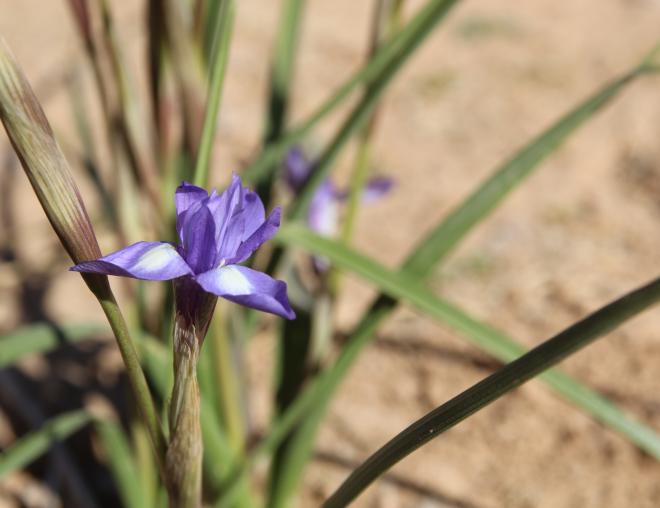
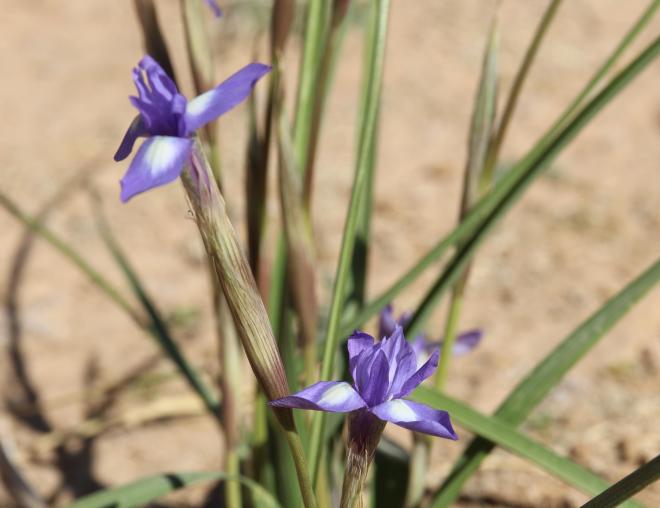
Perennial, corm-bearing herb up to 45 cm tall. Corm subglobose, about 2 cm across enclosed by fibrous, coarsely reticulate tuniabout Leaves basal, usually 2, narrow-linear, chanelled, arcuate, usually longer than the inflorescence. Stem simple or sparsely branched, each terminating in 2-4-flowered inflorescence and more or less enclosed by bracts. Bracts and bracteoles thin, membranous. Flowers blue to violet. Outer perianth, the falls, broader, dark-spotted, with a central, white or yellowish signal patch; inner perianth narrower, erect or recurved-spreading. Capsule cylindrical to ellipsoid, long-beaked.
- Growth Form
-
Description
-
Habitat and Distribution
- Habitat
-
Geographical Distribution Range
This Mediterranean and Irano-Turanian species is mainly distributed around the Mediterranean Sea, from Morocco, Mauritania, and Spain to Iran, the whol Arabian Peninsula and Pakistan.
-
Ecology
-
Phenology
JanFebMarAprMayJunJulAugSepOctNovDecFloweringFructification
- Origin
-
IUCN Red List Category
 Not Evaluated
-
Phenology
-
Uses and Values
-
Aromatic and Medicinal Use
Medicinal use
-
Description of Traditional Uses
The corms (bulbs) are occasionally consumed as food in traditional settings, and preparations have been used in folk medicine.
-
Aromatic and Medicinal Use
Gallery