Linaria simplex Desf.
-
Syn. Antirrhinum simplex Willd. (1800)
Plantaginaceae
1 / 6

-
Morphological Description
-
Description
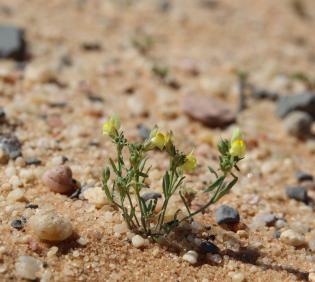
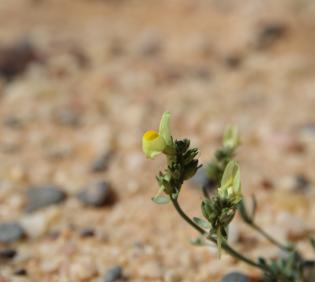
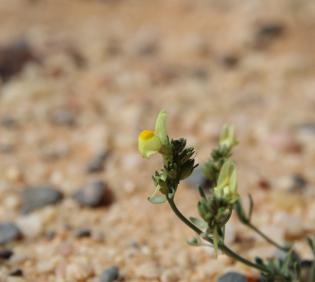
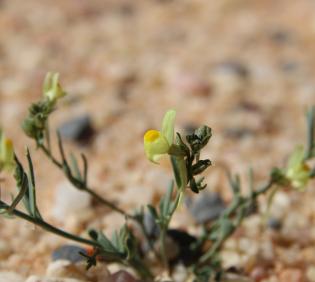
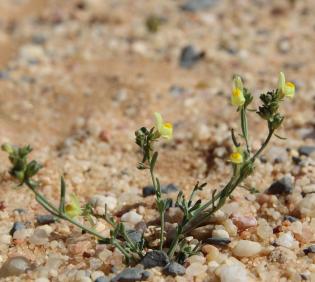
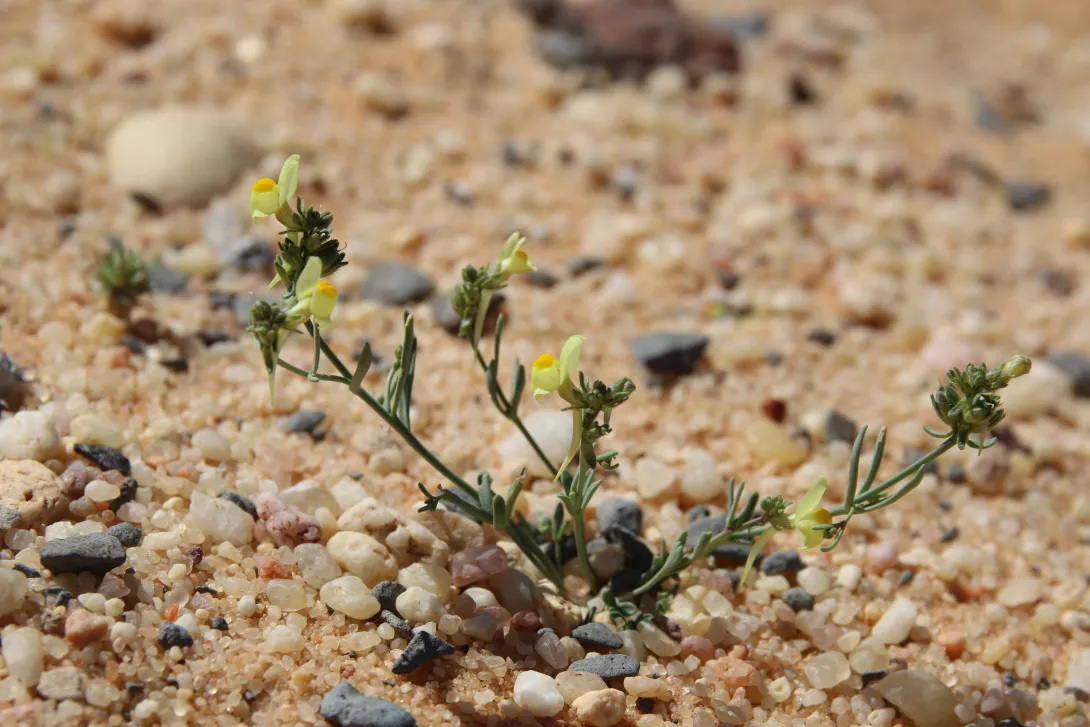
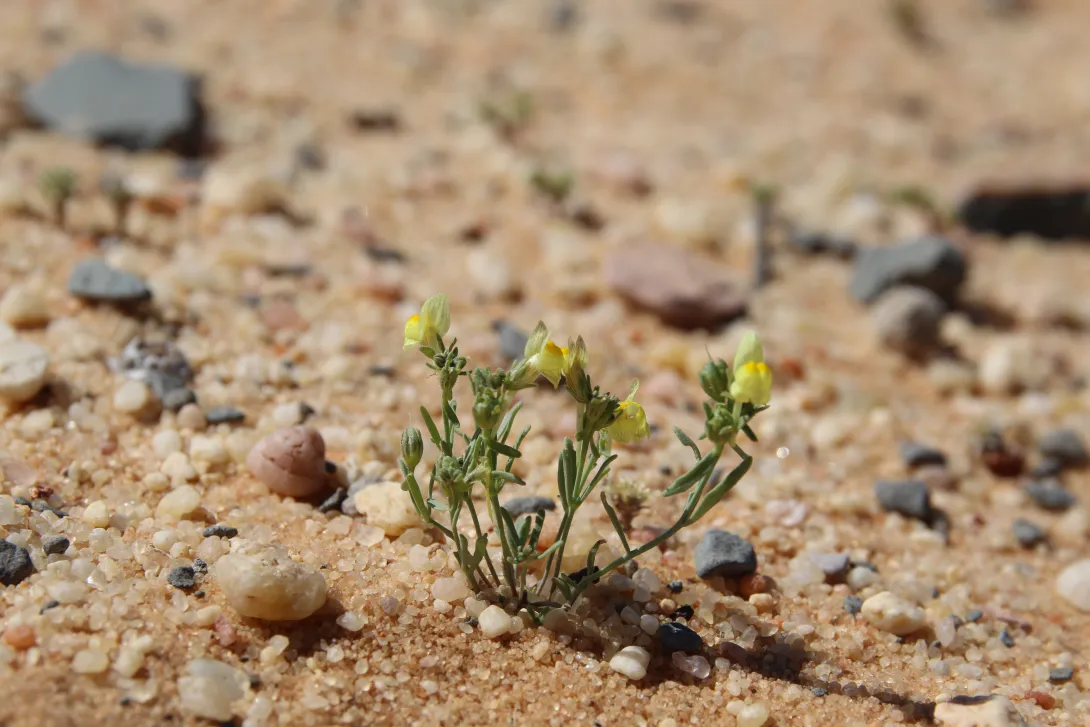
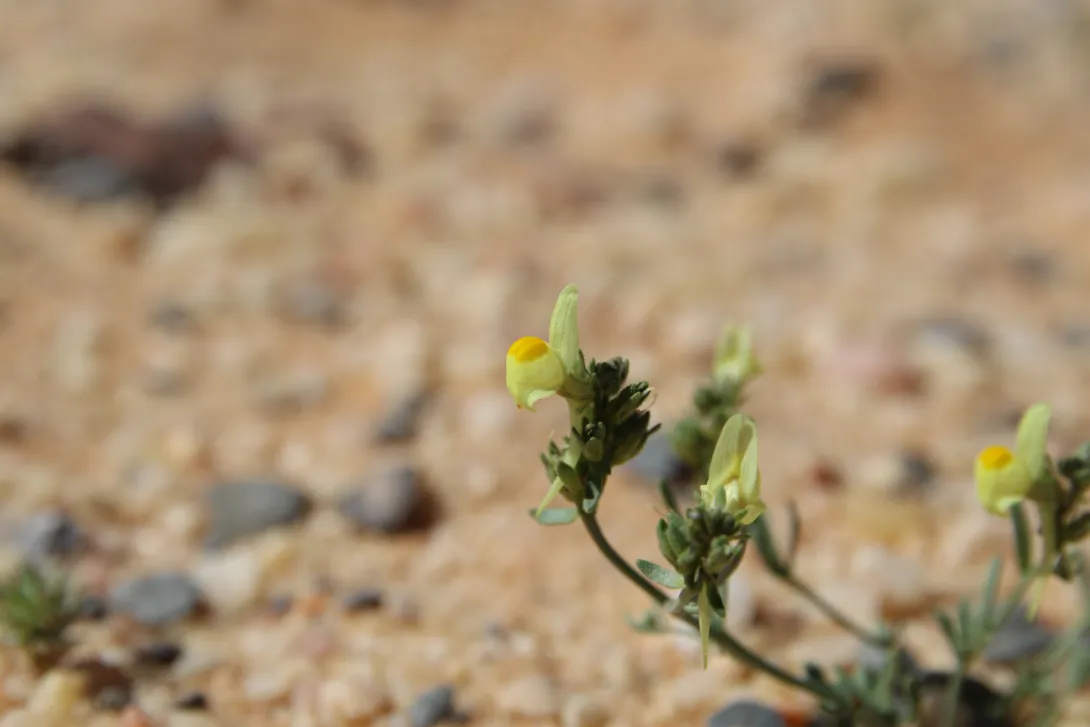
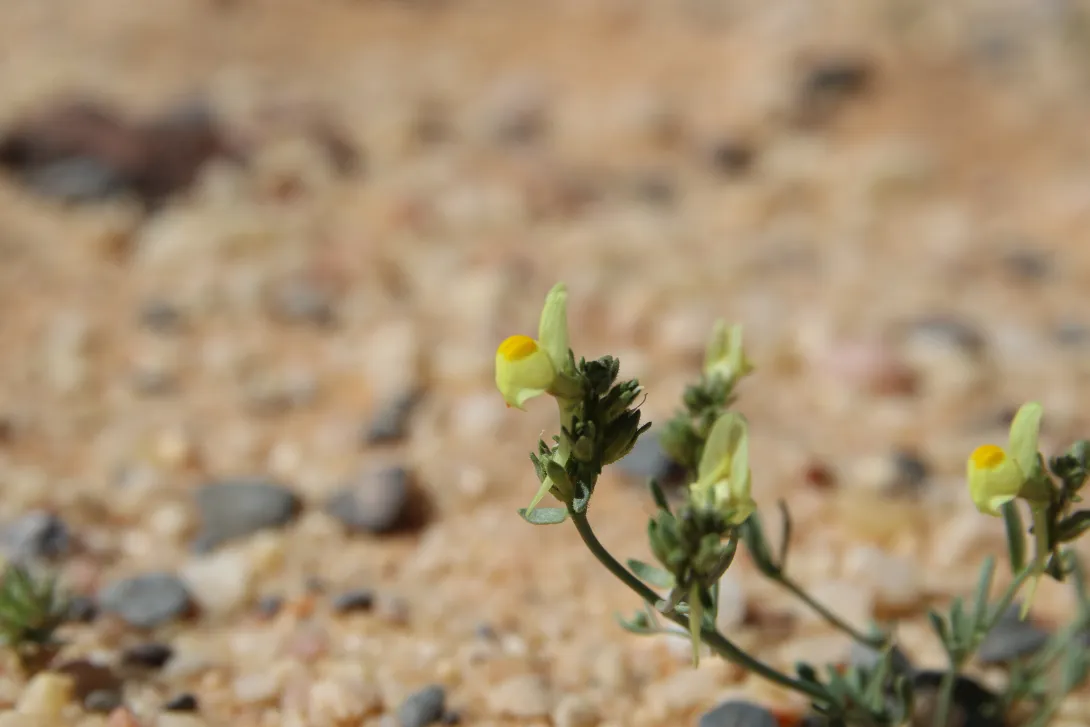
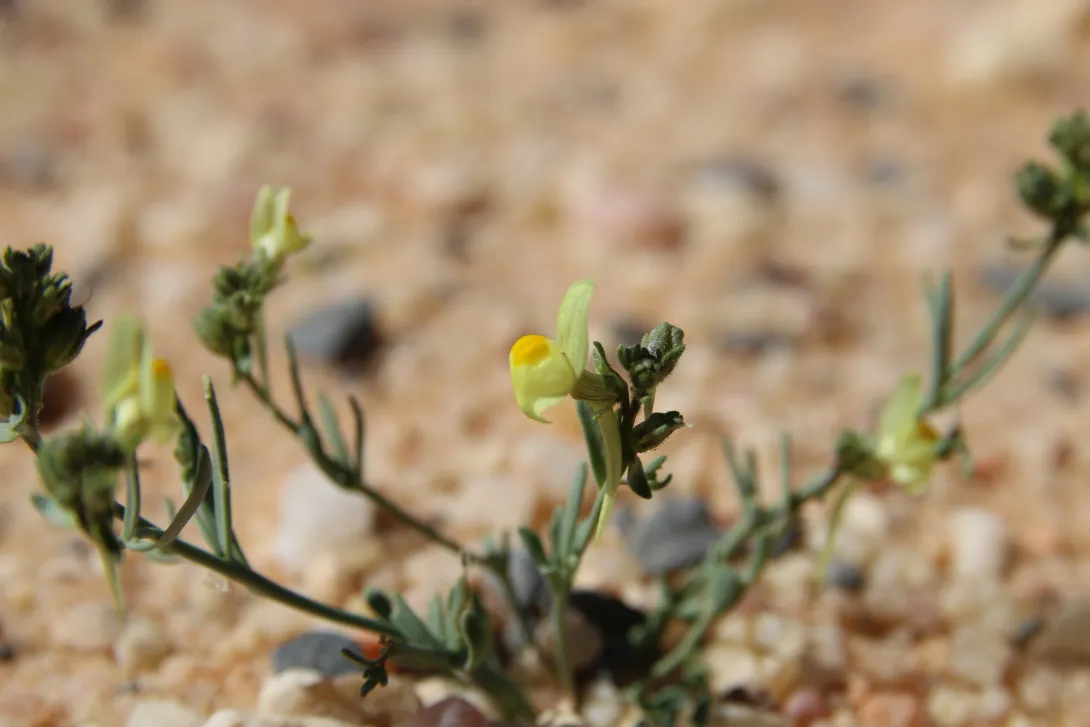
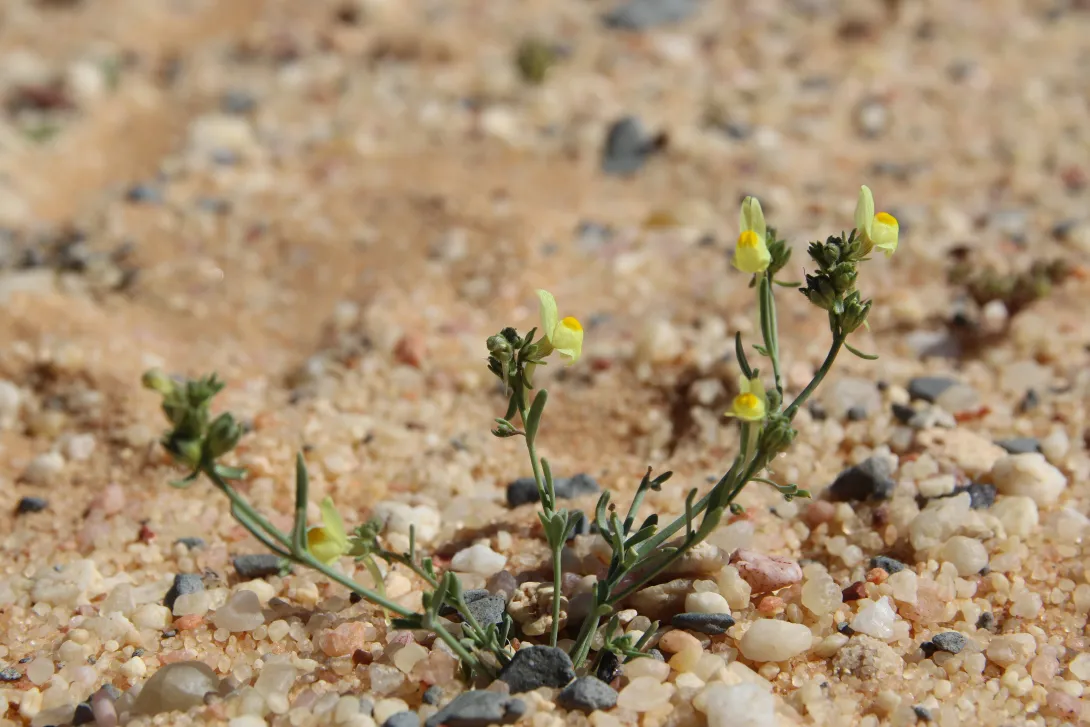
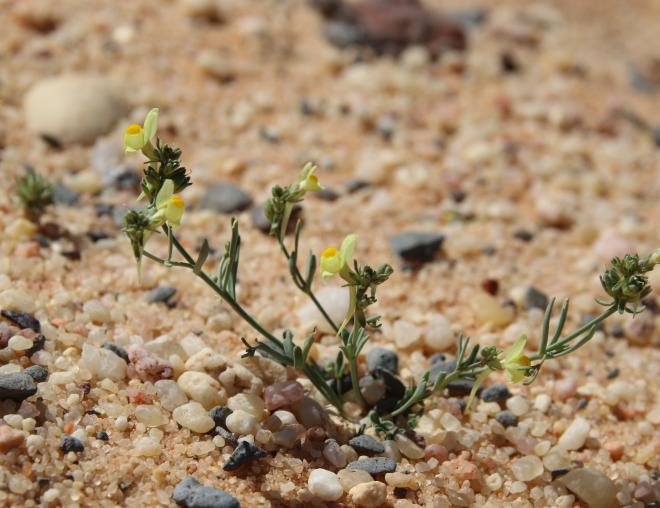
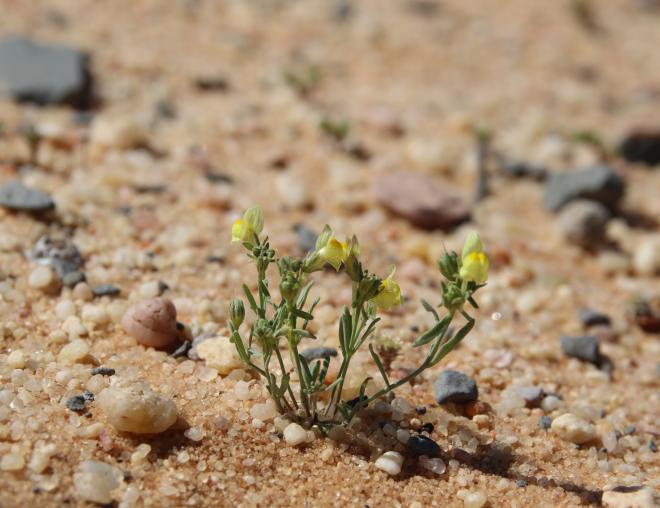
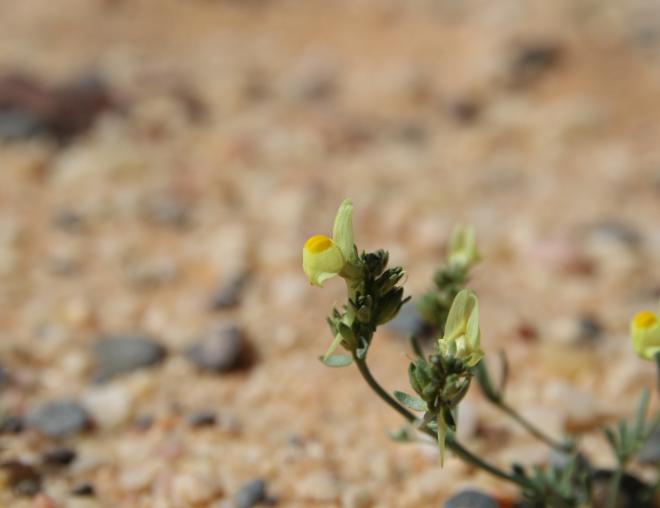
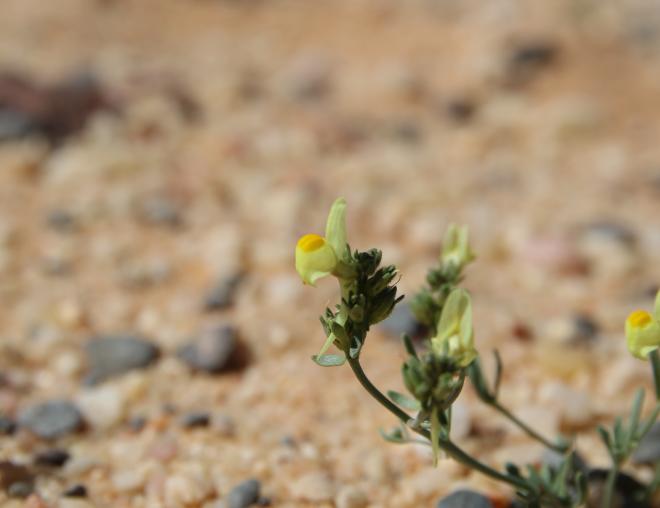
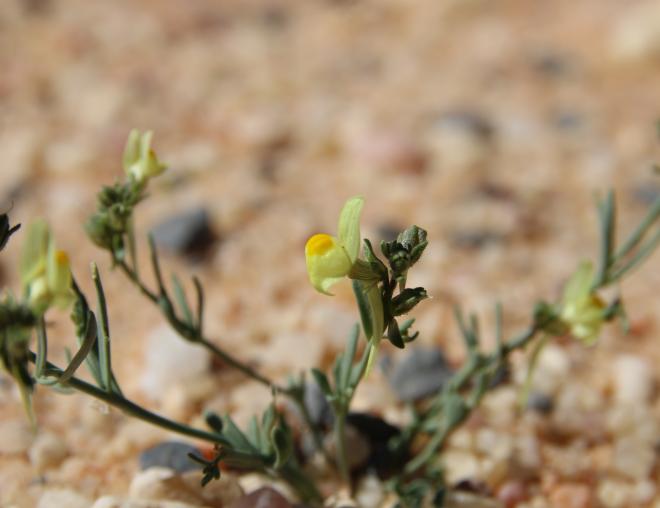
Annual, slender, glabrous, glaucescent herb, 10–20 cm tall, sometimes reaching 30 cm, with a single, erect, simple or branched stem. Leaves are linear, arranged in whorls of three in the lower part of the plant and alternate in the upper parts. Inflorescence consists of dense, capitate racemes that become laxer with age. Flowers are bright yellow, borne on short pedicels, 5 mm or longer. Calyx is glandular-hairy, 3–4 mm long, with linear-oblong lobes. Corolla is bright yellow, with the tube sometimes marked by violet streaks. Flowers have two pairs of unequal-length, included stamens. Fruits are globose capsules, 4–5 mm across, containing discoid, tuberculate seeds.
- Growth Form
-
Description
-
Habitat and Distribution
- Habitat
-
Geographical Distribution Range
This Med-Irano-Turanian species is distributed across countries surrounding the Mediterranean Sea and the western part of Asia. In the Arabian Peninsula, it is native to Jordan, Kuwait, Saudi Arabia, and Oman. It has also been introduced in Germany and Switzerland.
-
Ecology
-
Phenology
JanFebMarAprMayJunJulAugSepOctNovDecFloweringFructification
- Origin
-
IUCN Red List Category
 Not Evaluated
-
Phenology
-
Uses and Values
-
Description of Traditional Uses
No specific documented uses were identified in accessible literature.
-
Description of Traditional Uses
Gallery