Heliotropium digynum (Forssk.) Asch. ex C.Chr.
رمرام
Syn. Heliotropium luteum Poir.(1813)
Twinflower Heliotrope
Boraginaceae
1 / 6
-
Morphological Description
-
Description
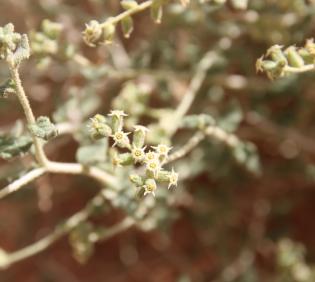
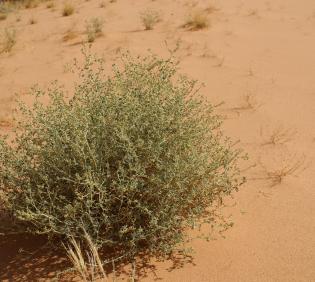
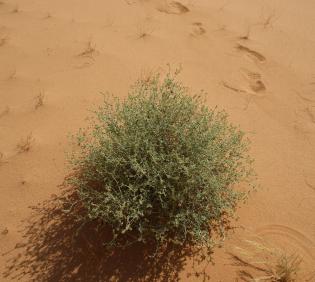
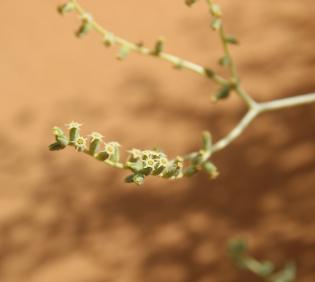
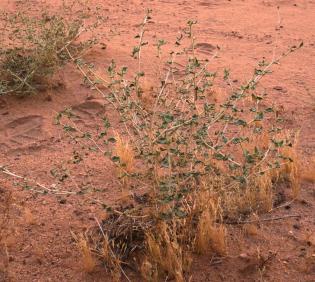
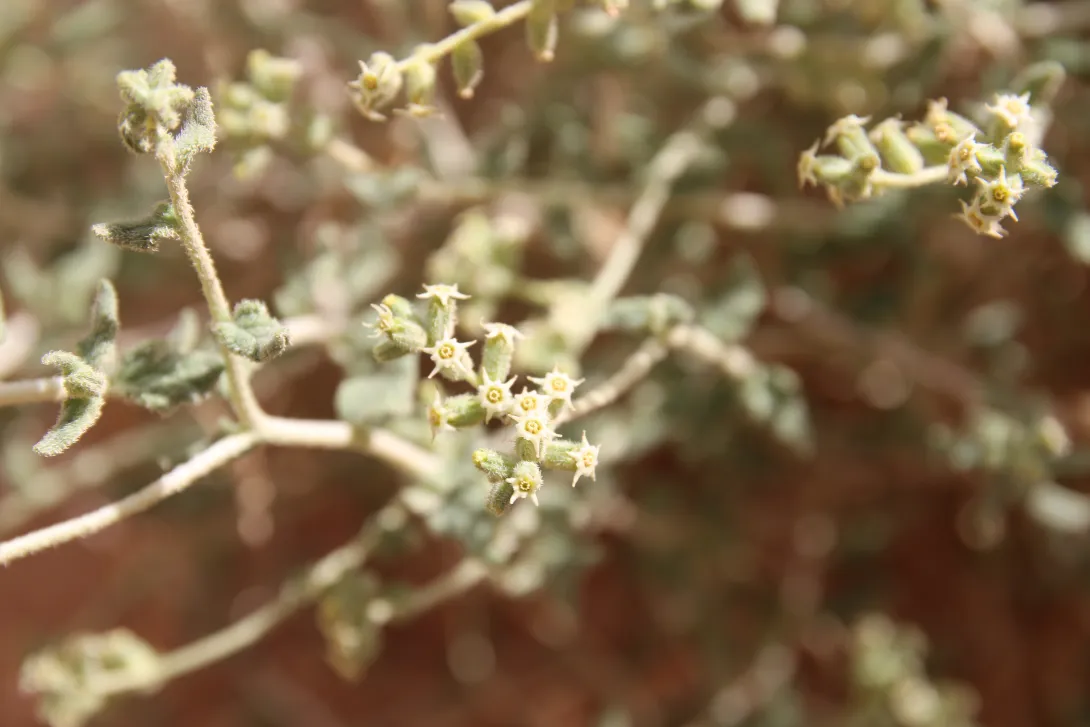
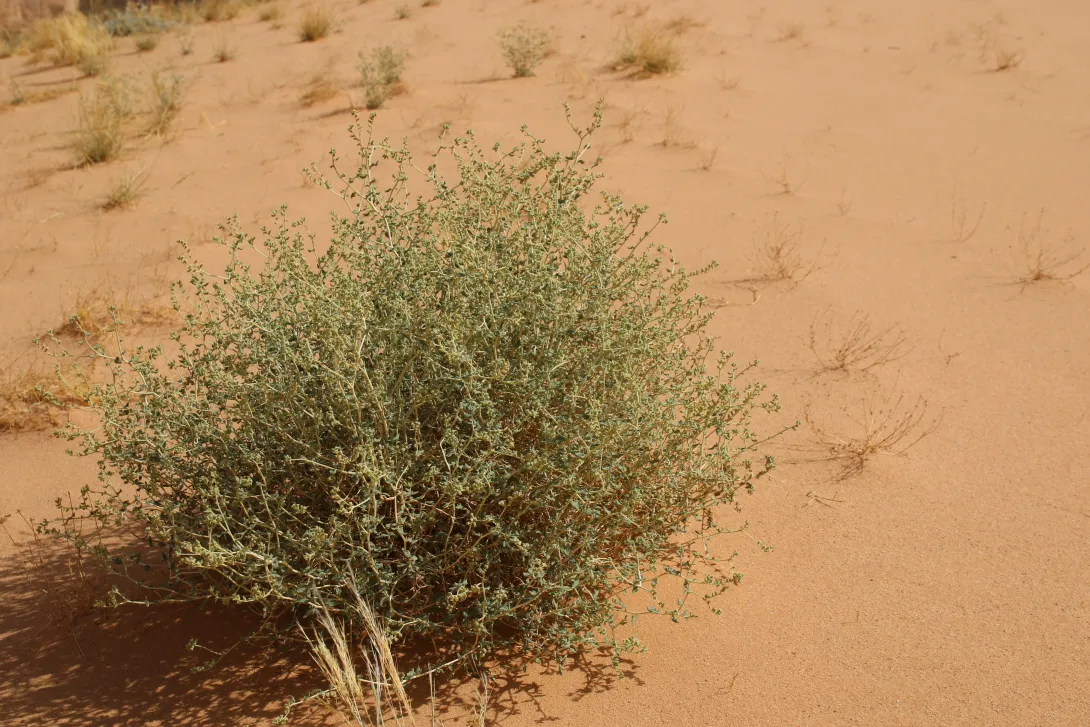
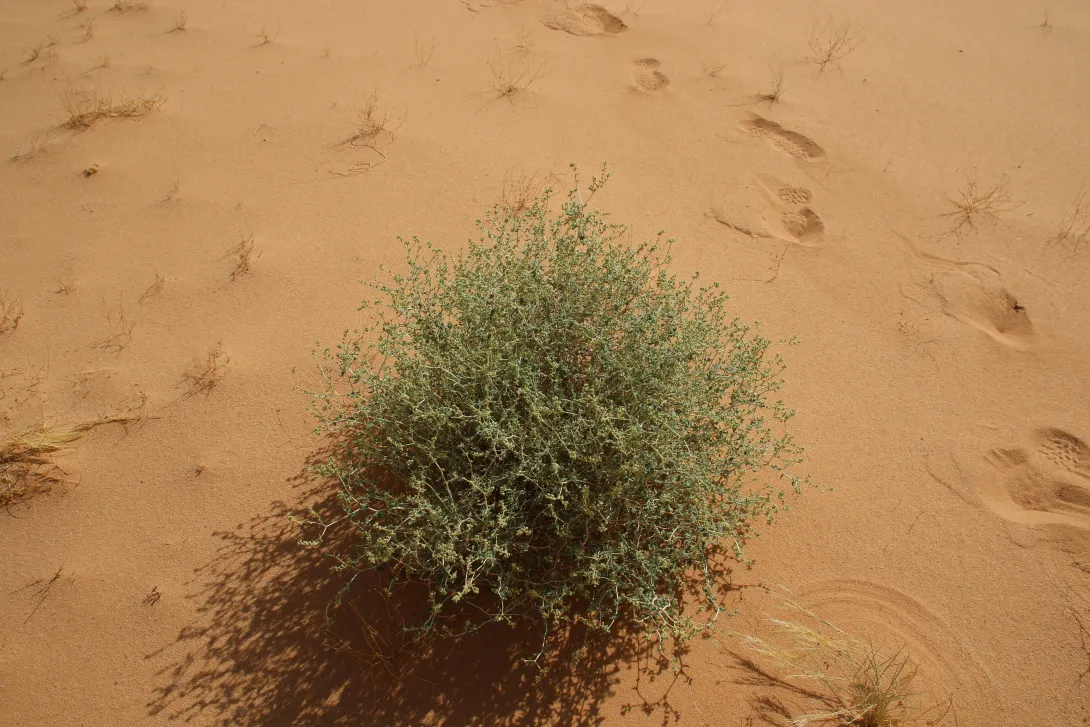
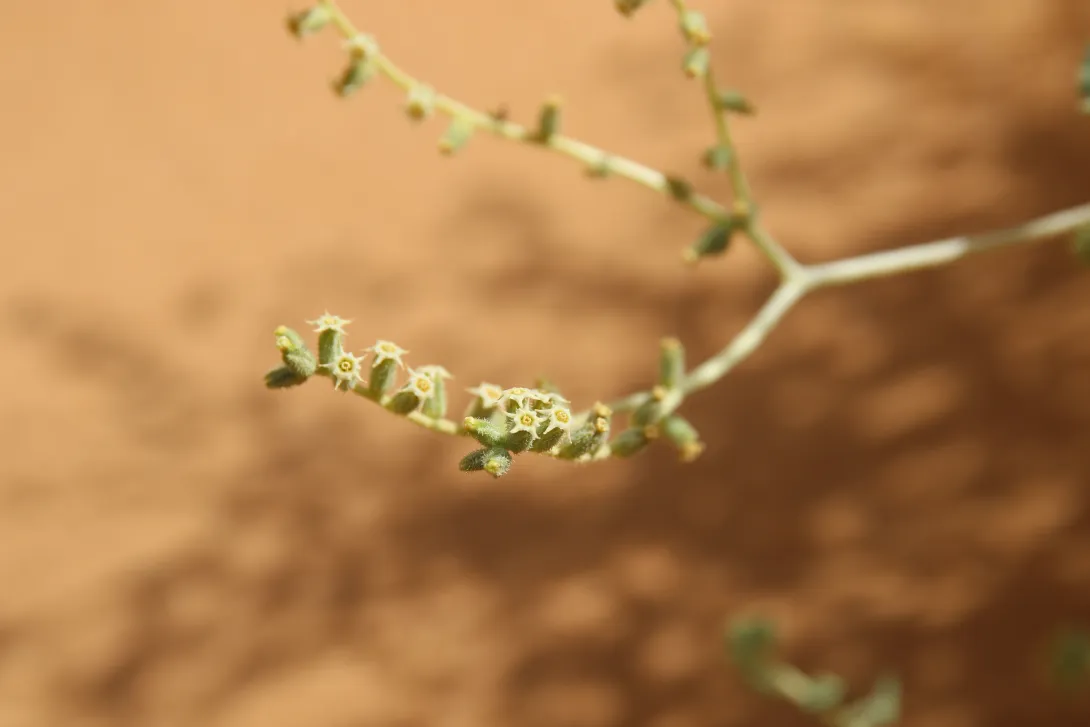
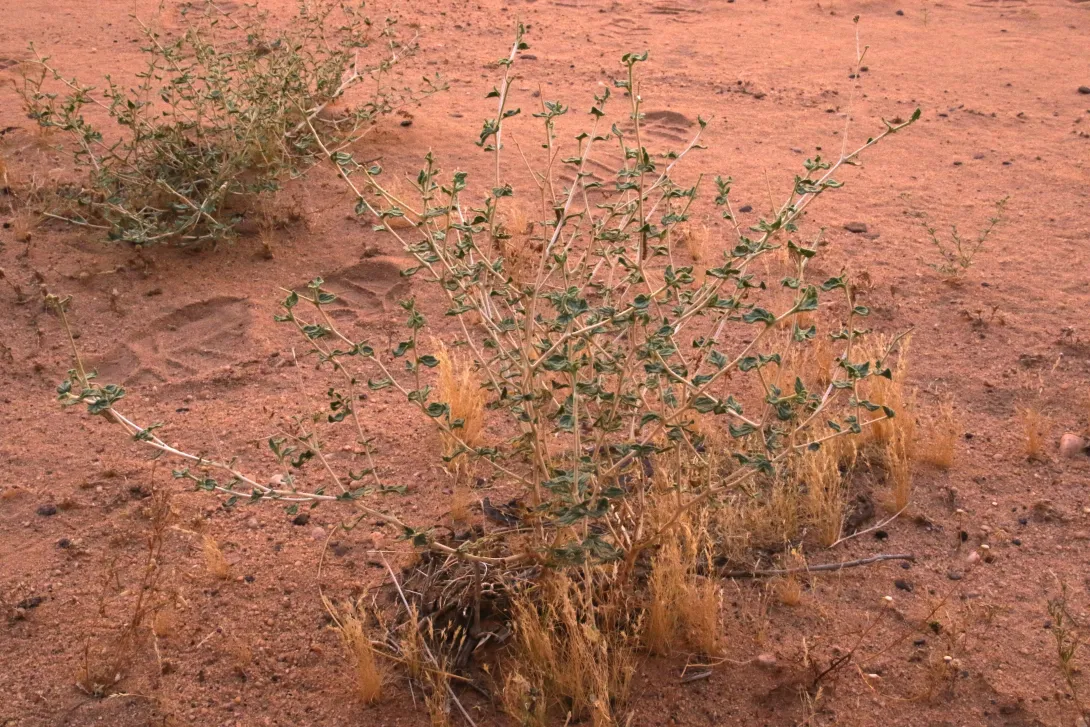
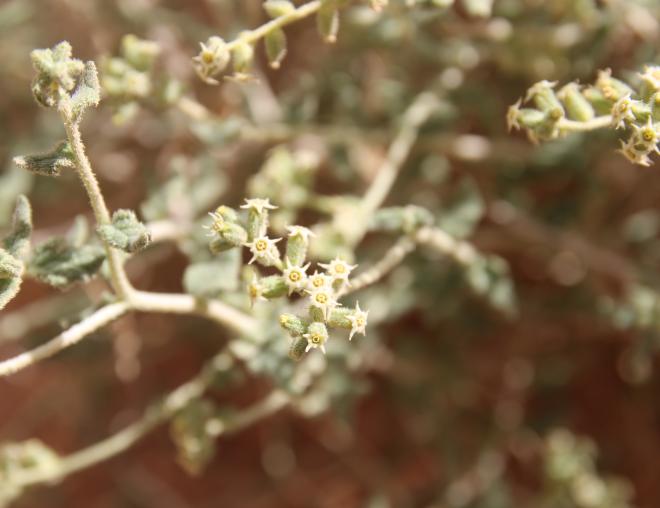
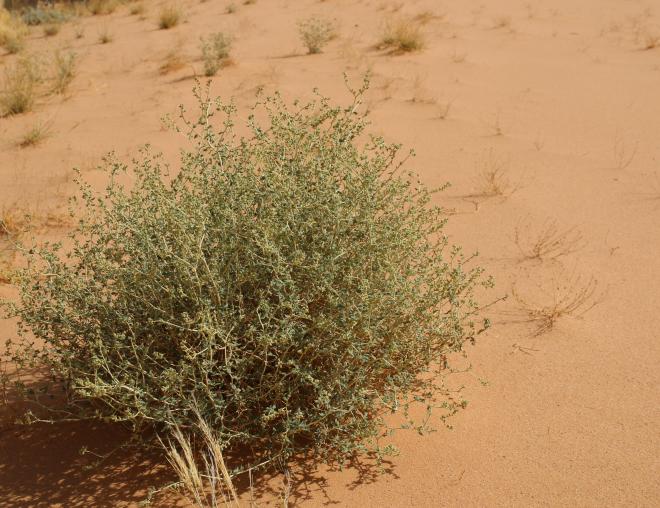
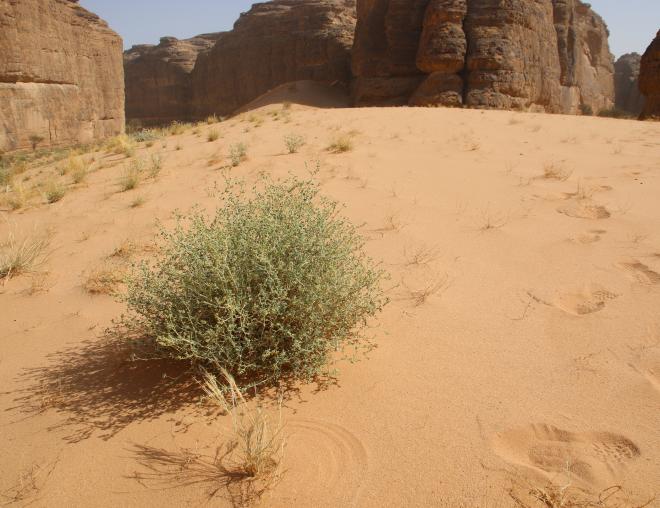
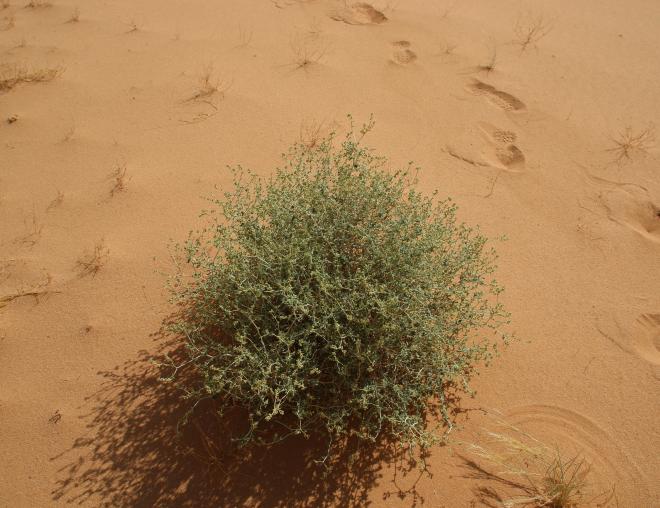
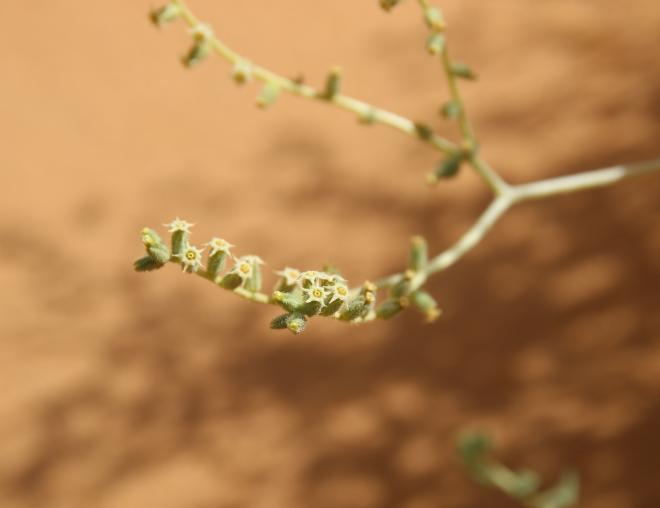
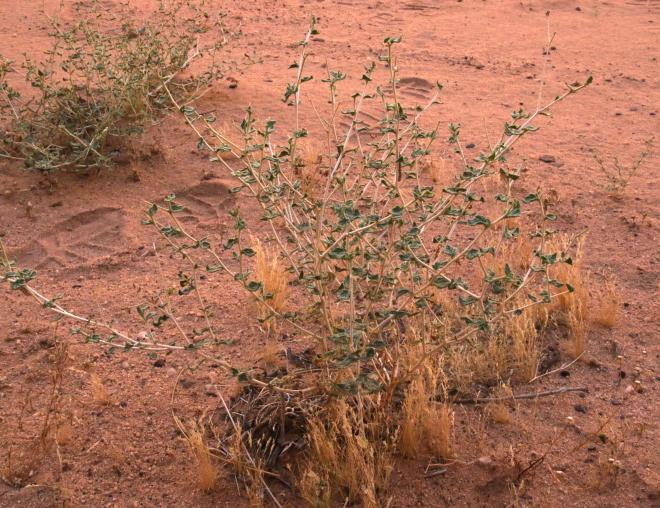
Perennial, much-branched shrublet, 20–50 cm tall, with a woody base and rigid, silvery-white branches bearing a dense white indumentum on young growth. Leaves are bright green, mostly petiolate, with upper leaves subsessile to sessile, ovate-lanceolate to orbiculate, entire, with revolute margins. Inflorescences are terminal, short, dense cymes with few flowers, becoming lax at fruiting. Flowers are yellow and almost sessile. Calyx is composed of five lobes, about 3 mm long. Corolla is about 7 mm long, with a tubular tube and is composed of five narrow, linear lobes. Flowers have included stamens with truncate anthers about 1 mm long, a densely hairy ovary, and a bifid, hairy, conical stigma. Fruits are hirsute nutlets, about 6 mm long.
- Growth Form
-
Description
-
Habitat and Distribution
- Habitat
-
Geographical Distribution Range
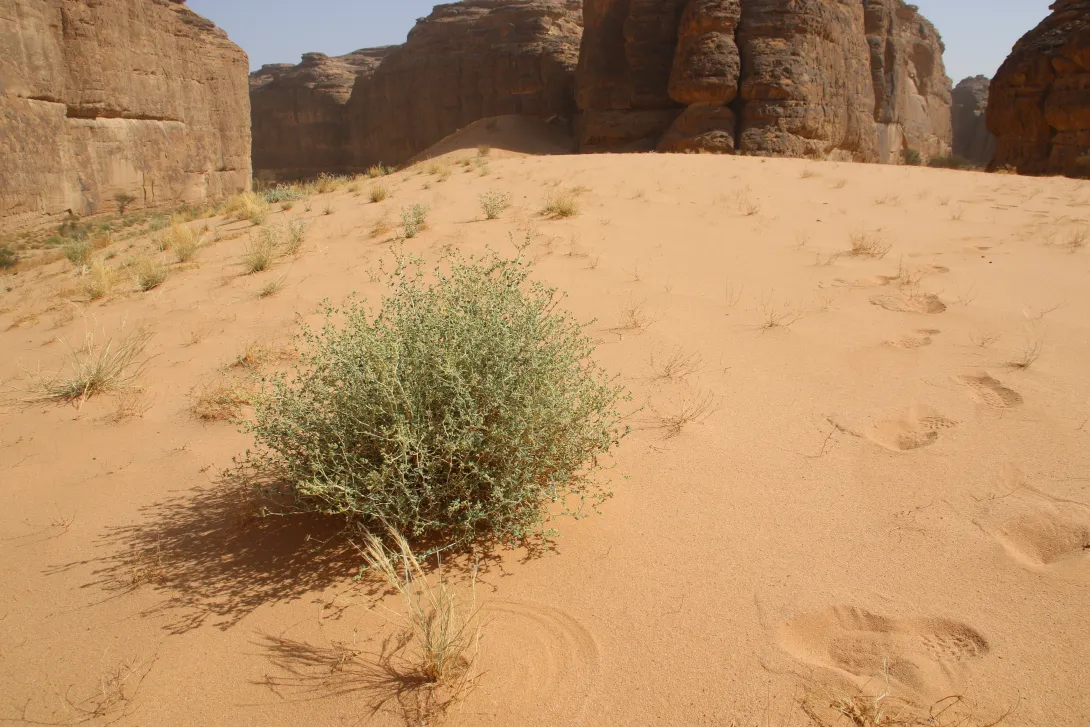
This Saharo-Arabian species is distributed from Algeria and Egypt to India. It is native to the whole Arabian Peninsula.
-
Ecology
-
Phenology
JanFebMarAprMayJunJulAugSepOctNovDecFloweringFructification
- Origin
-
IUCN Red List Category
 Not Evaluated
-
Remarks
This species is the host plant for the caerpillar of Crimson-speckled Flunkey (Utetheisa pulchella)
-
Phenology
-
Uses and Values
-
Aromatic and Medicinal Use
Medicinal use
-
Description of Traditional Uses
The species has been used in traditional practices for addressing various inflammatory issues.
-
Aromatic and Medicinal Use
Gallery