Haloxylon persicum Bunge
غضا
Syn. Arthrophytum persicum (Bunge) Sav.-Rycz.
White Saxaul
Amaranthaceae
1 / 9



-
Morphological Description
-
Description
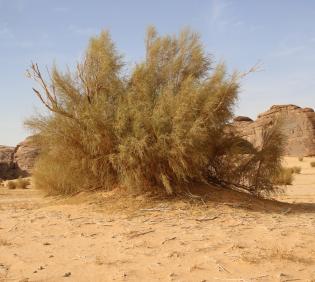
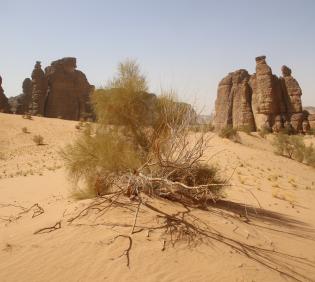
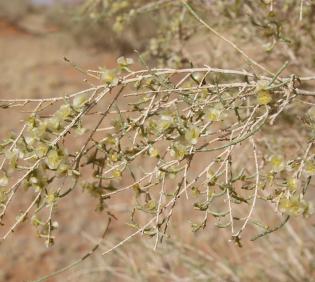
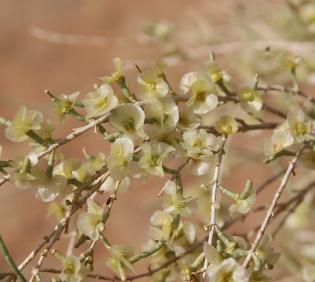
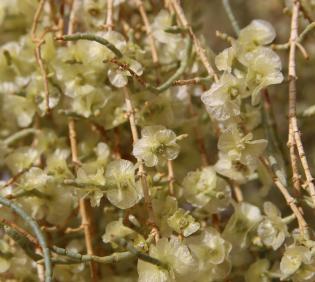
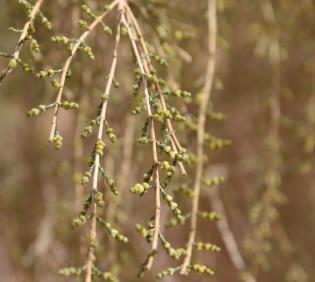
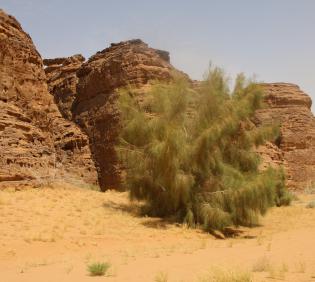
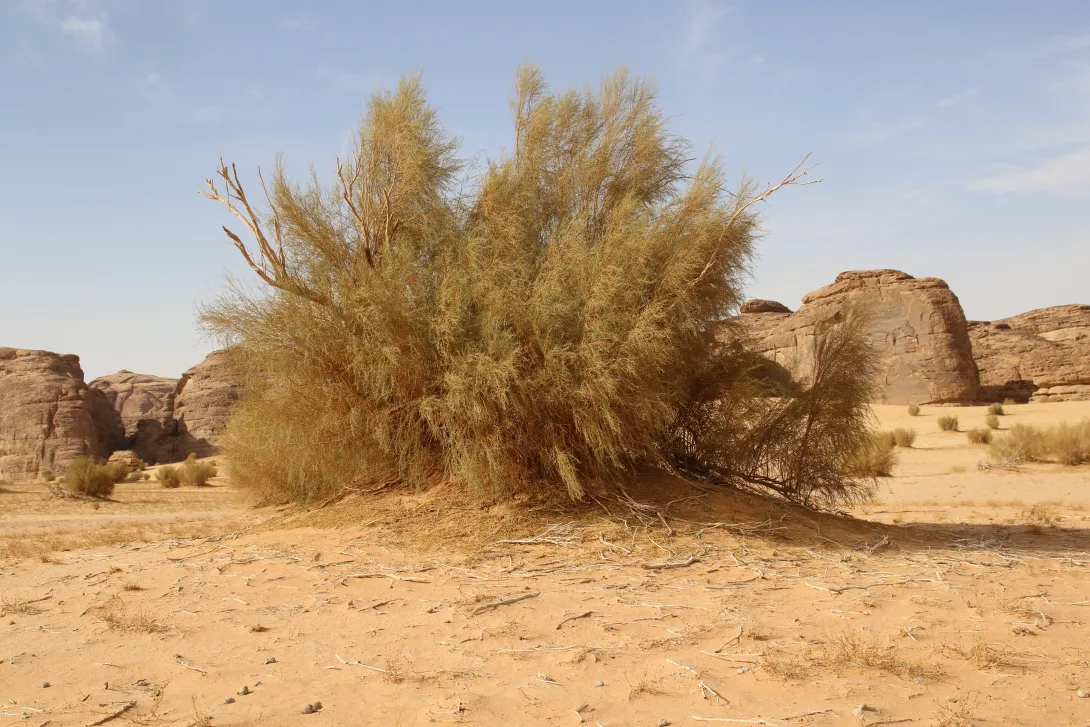
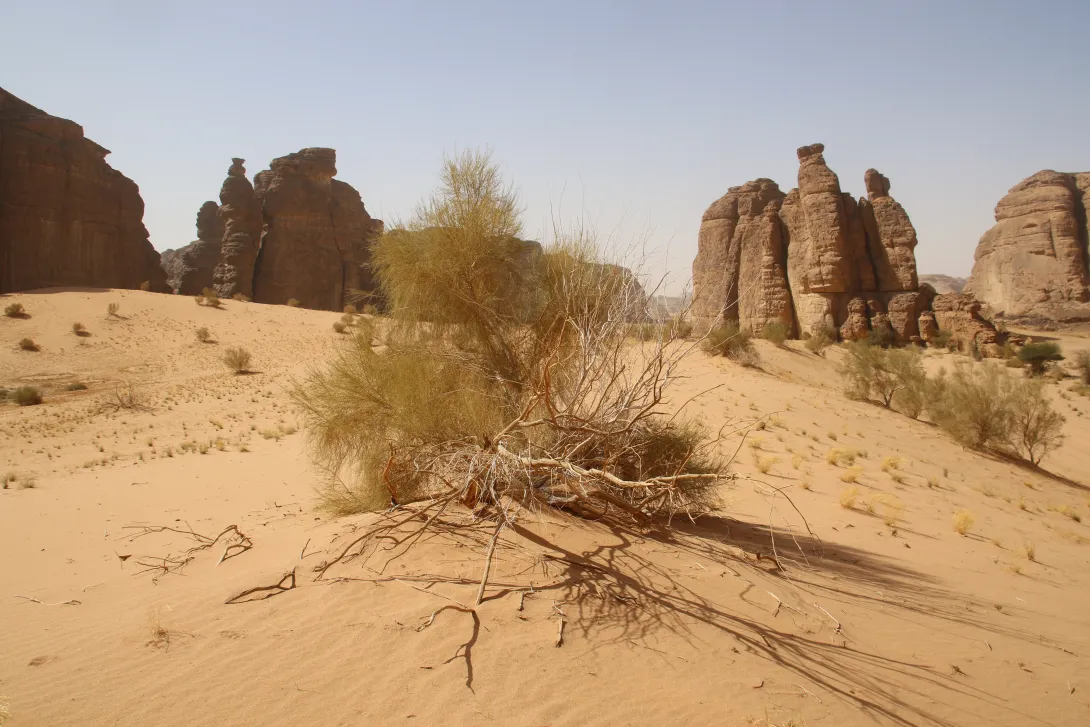
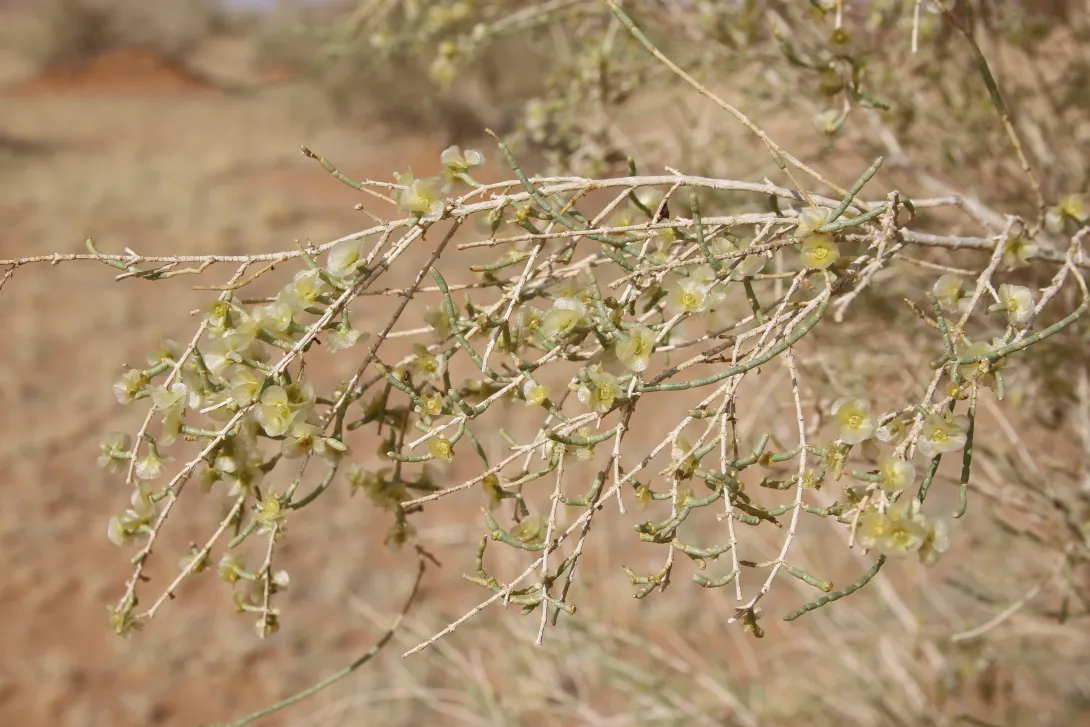
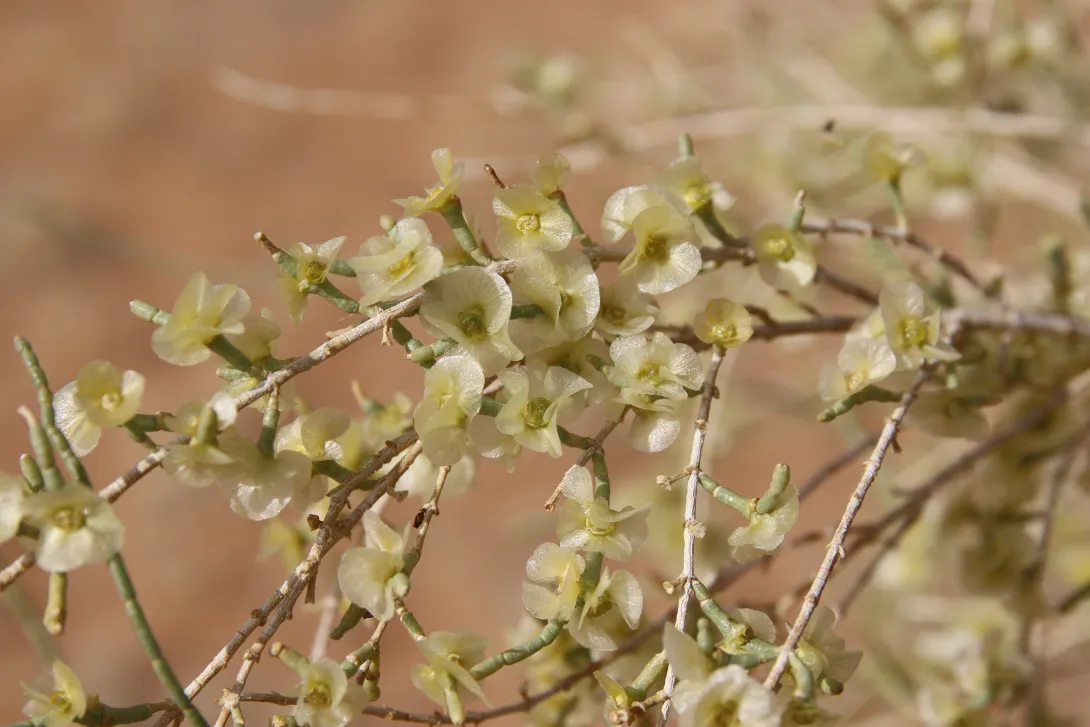
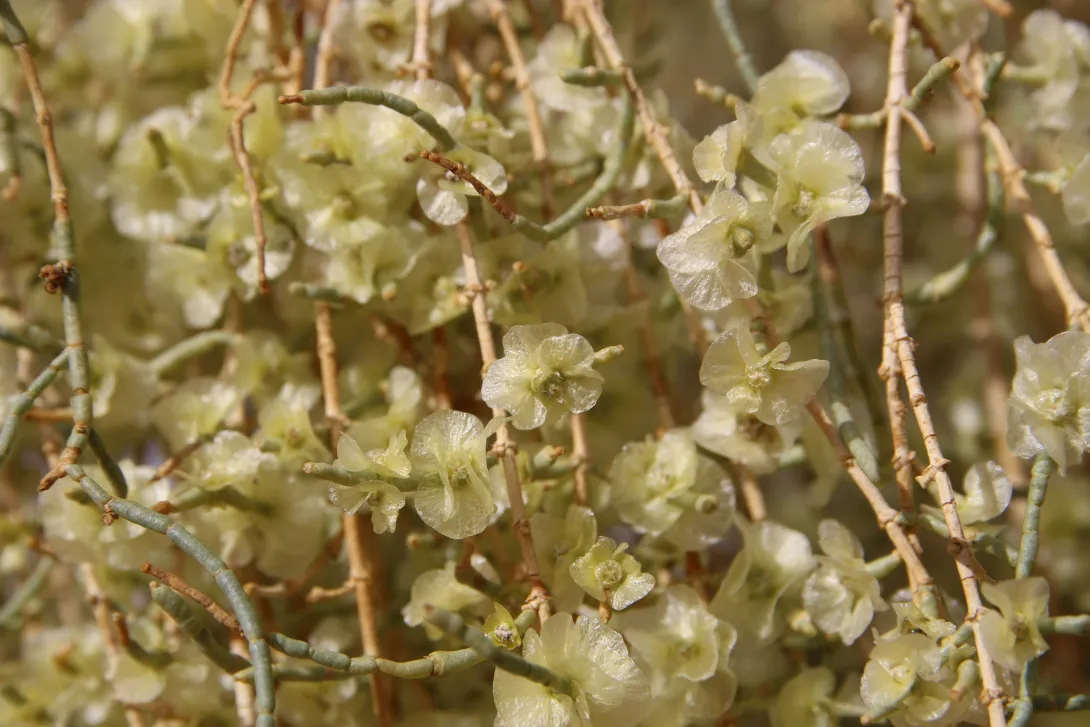
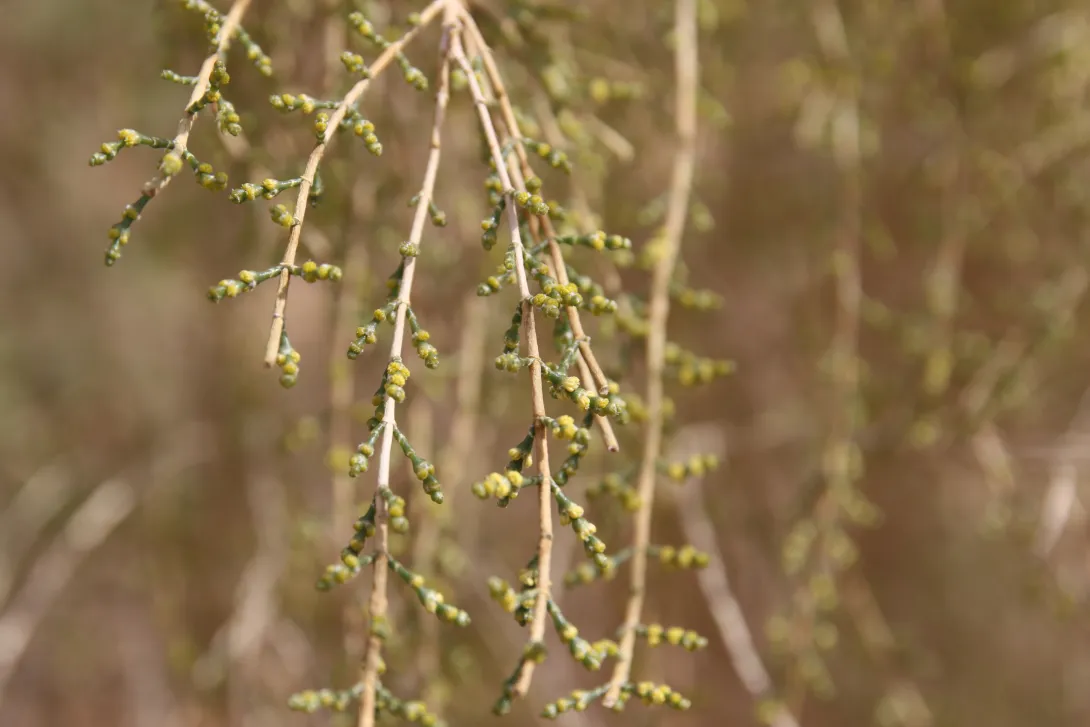
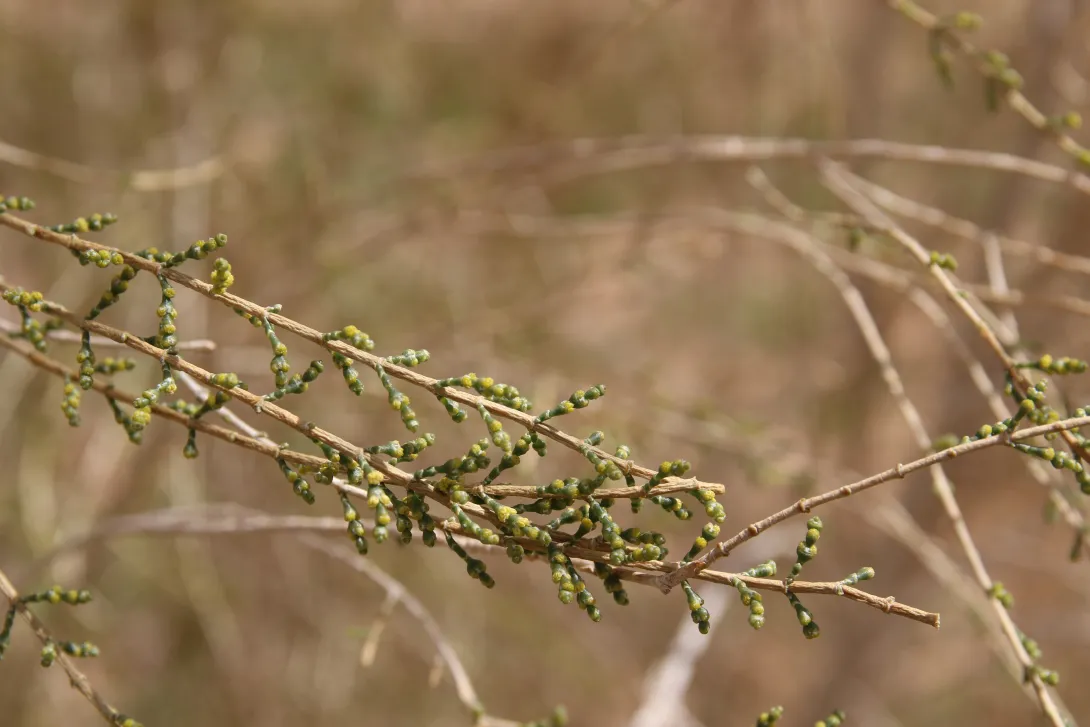
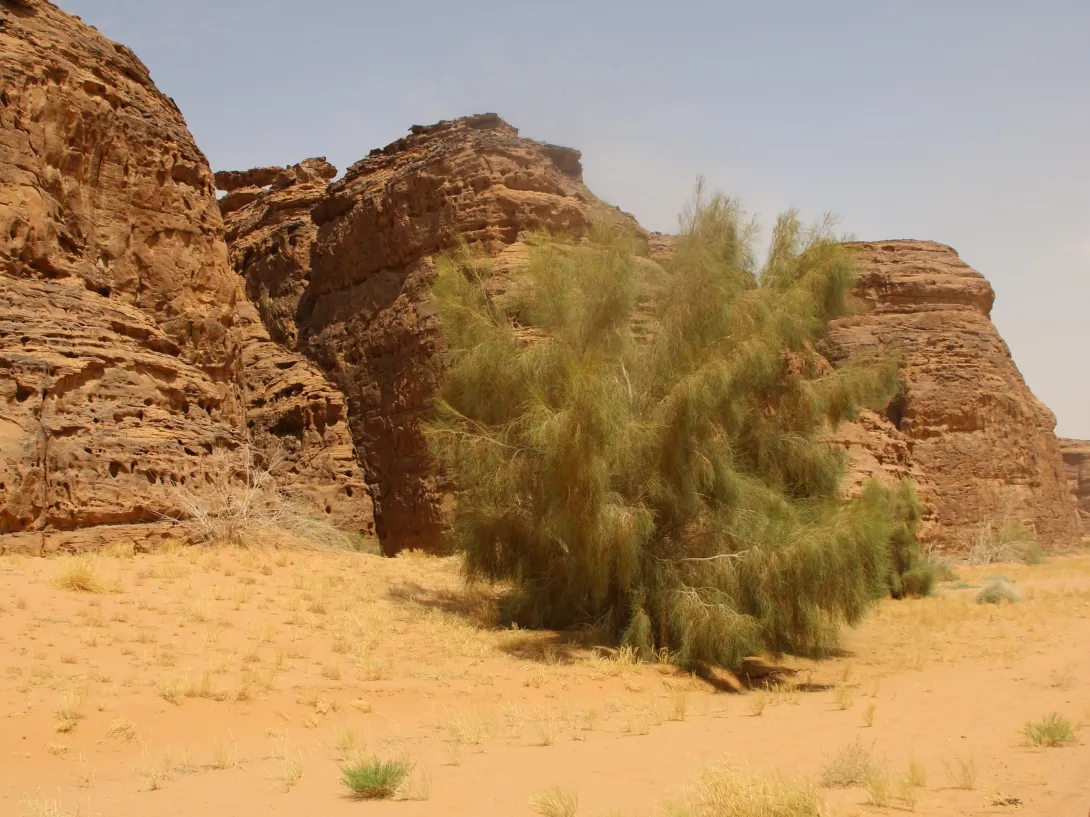
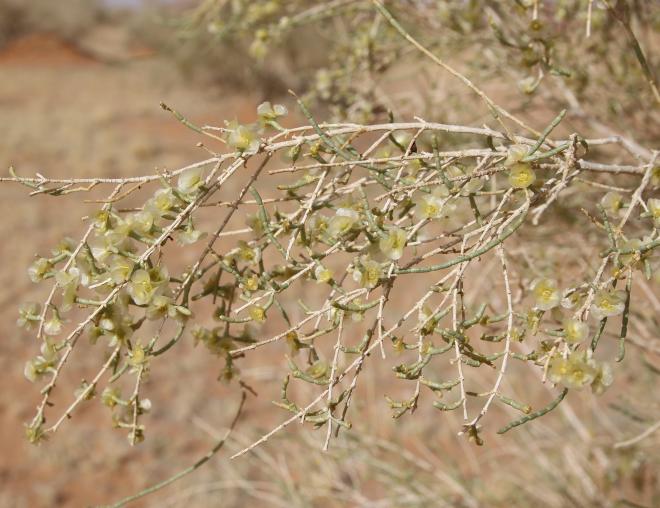
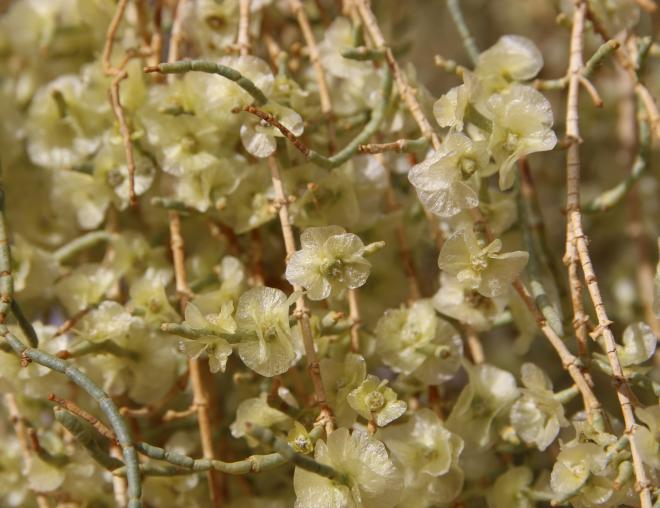
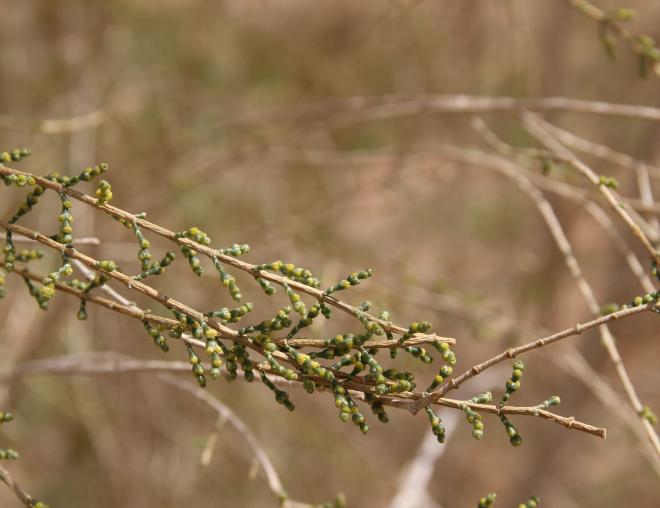
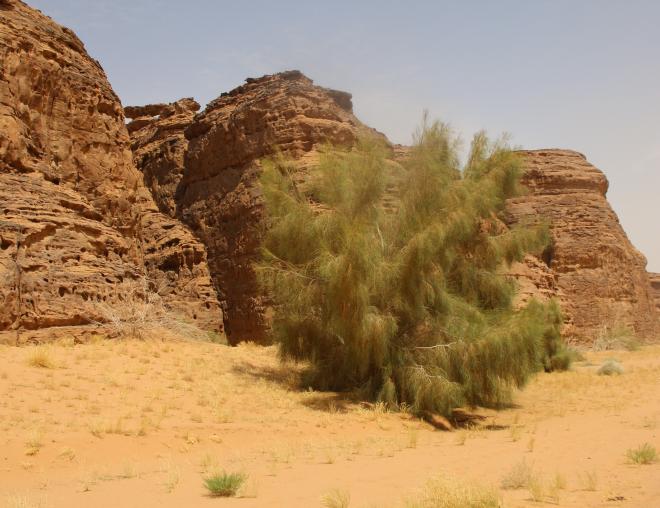
Large shrub or small tree up to 3 m tall, 10-25 cm in girth. Stems are richly branched and glabrous with ultimate young branches generally pendulous, green, succulent and thin (1-1.5 mm), older branches silvery-whithe to yellowish-white. Leaf are scale-like, pairs, opposite, connate into a cup with a tuft of short hairs in the axil. Flowers are 2-bracteolate, bisexual, born on very thin (1-1.5mm thick) lateral or terminal branchlet with thin, membranous, glabrous staminodes and 5 stigmas. Horizontal membranaceous wings of fruiting perianth more or less equal (7-9 mm) with horizontal seeds.
- Growth Form
-
Description
-
Habitat and Distribution
- Habitat
-
Geographical Distribution Range
This Irano-Turanian species is distributed from Egypt to China and Kazakhstan. For Arabian Peninsula, it is native to Jordan, Saudi Arabia and Gulf States.
-
Ecology
-
Phenology
JanFebMarAprMayJunJulAugSepOctNovDecFloweringFructification
- Origin
-
IUCN Red List Category
 Least Concern
-
Remarks
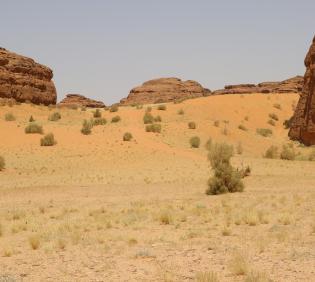
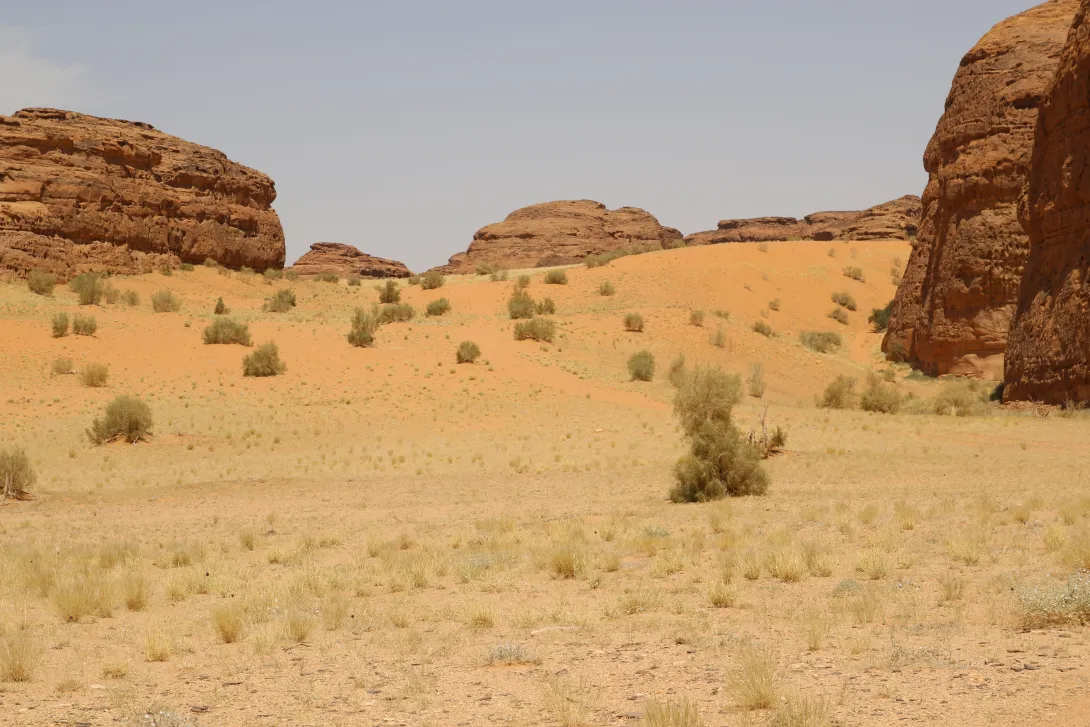
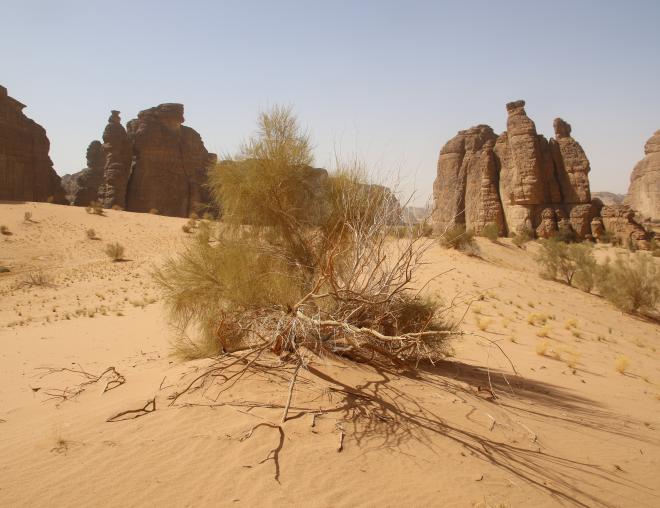
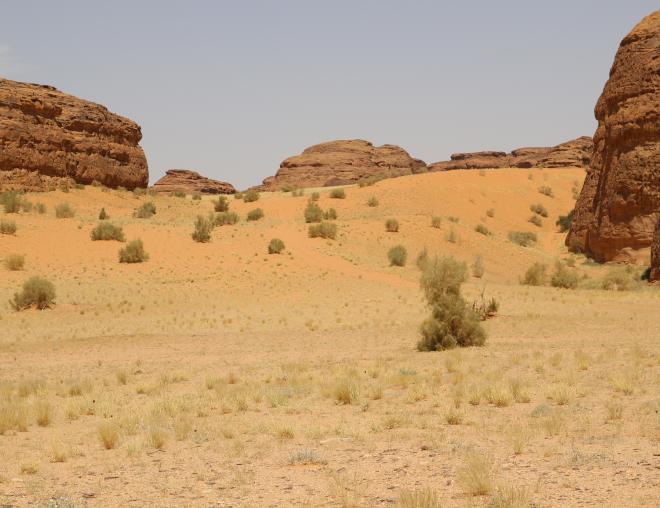
White Saxaul is an emblematic species in the arid land and the only tree growing in dunes deep mobile sand. Even after its death, a dense ring of annual plants often persists around it, supported by enriched soil organic matter, accumulated nutrients, and wind-blown seeds that enhance the local seed bank. This species plays a key ecological role by trapping sand at its base, forming small dune-like mounds (hummocks) that serve as important microhabitats and shelter for various desert wildlife, including rodents, snakes, and scorpions. This species is often paratized by an insect-gall, making the branches shorter with generally a few hypertrophied leaf-pairs.
-
Phenology
-
Uses and Values
-
Other Usages
Palatable
-
Description of Traditional Uses
No specific documented uses were identified in accessible literature.
-
Other Usages
Gallery