Cynomorium coccineum L.
الطرثوث
Maltese Mushroom, Scarlet Synomorium
Cynomoriaceae
1 / 4


-
Morphological Description
-
Description
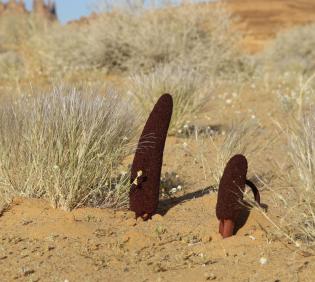
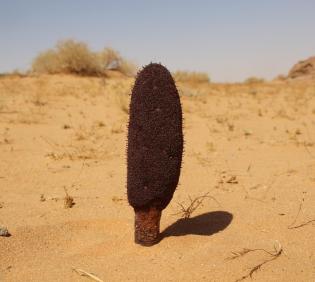
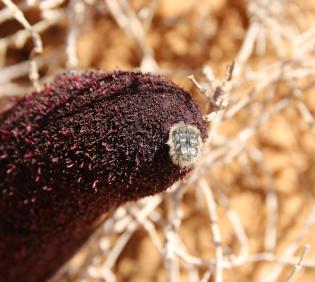
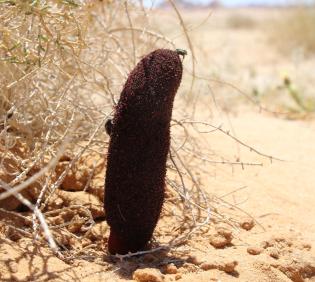
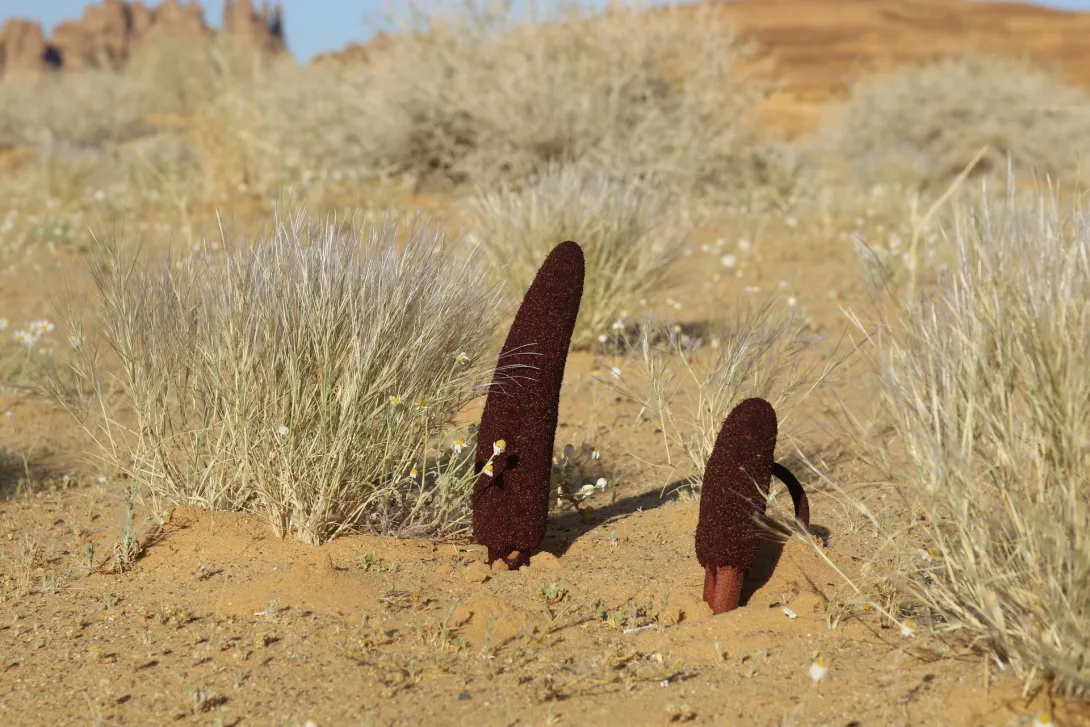
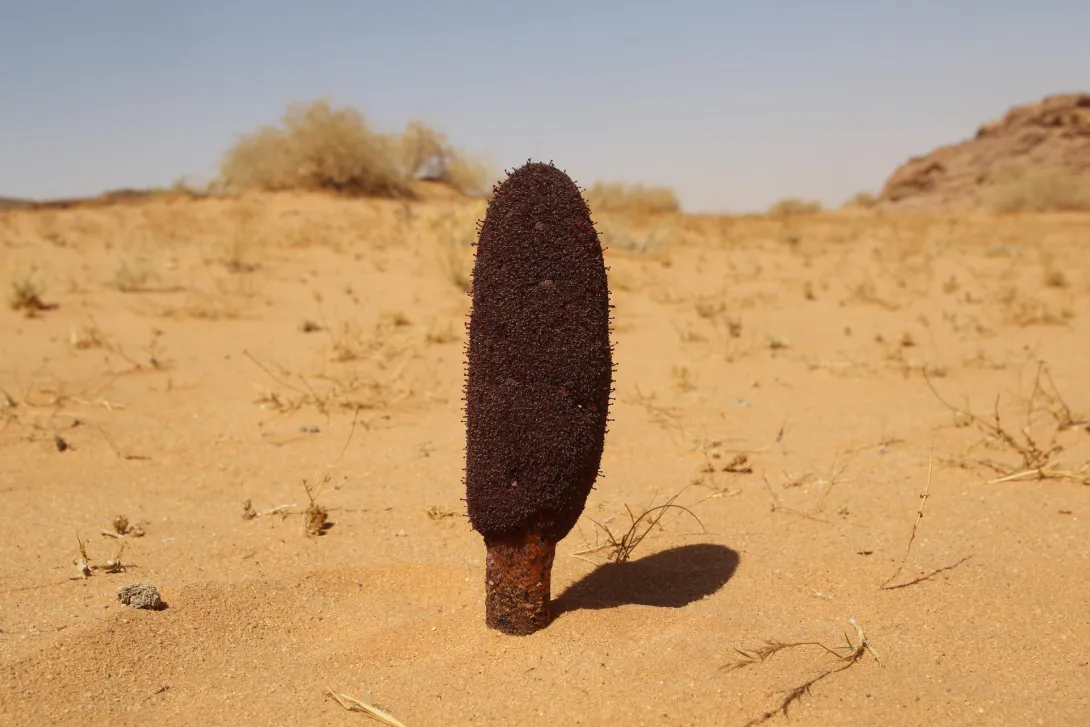
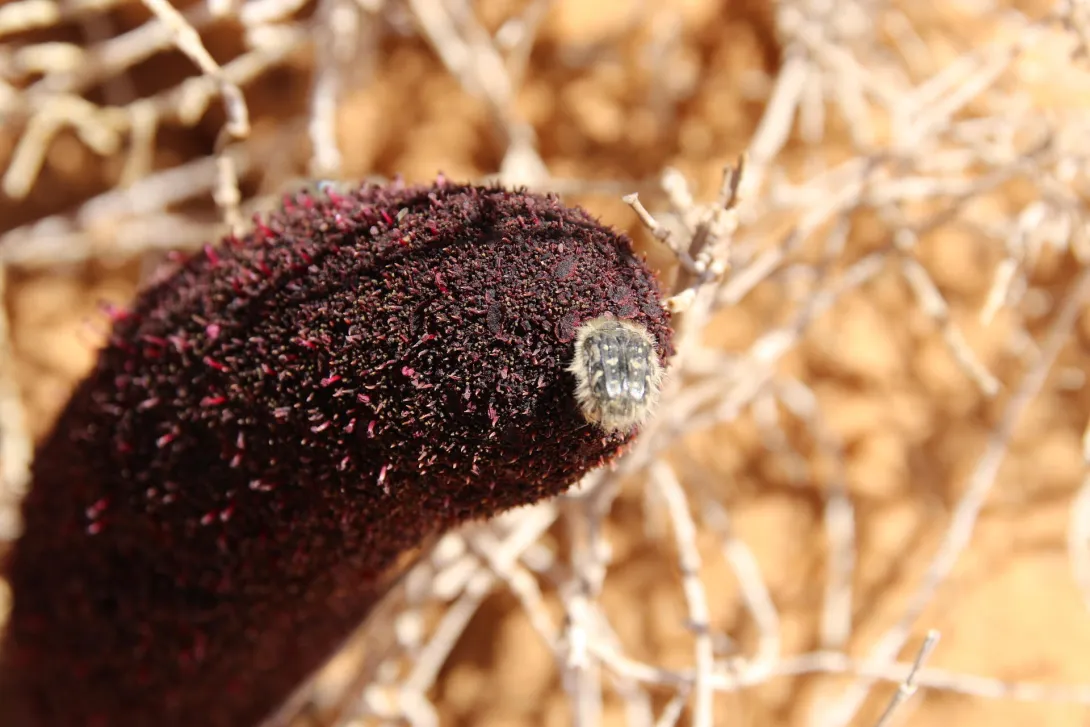
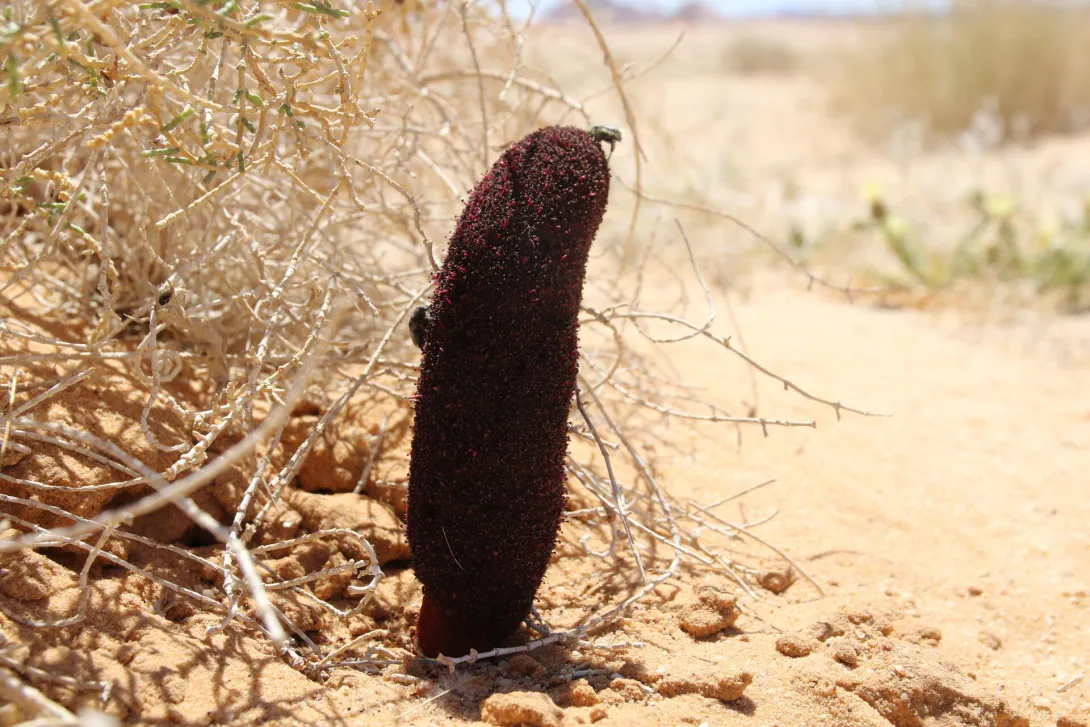
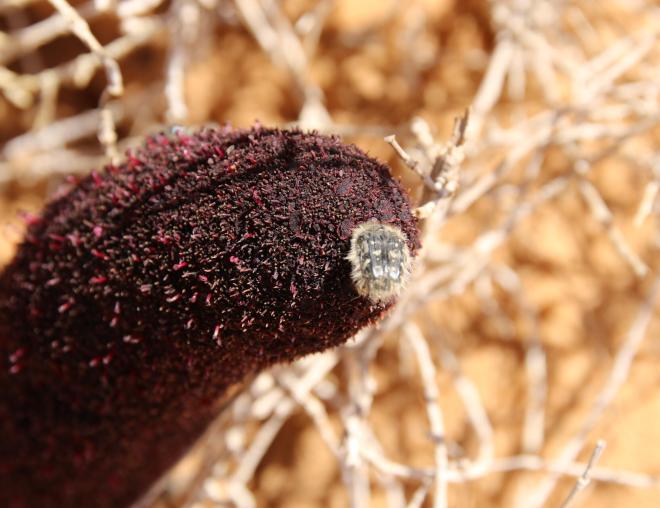
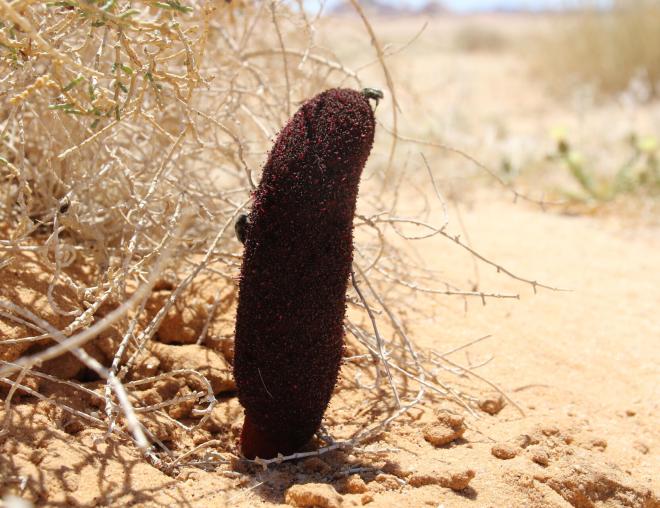
Thick-fleshy, club-shaped, leafless, dark red-purple, perennial parazintic herb, up to 30 cm tall. Parasitize roots of desert host-plants, often appearing in rings, only in the spring at flowering time. Stem closely covered with scales below, becoming distant above, deciduous. Inflorescence part a thick continuation of the succulent stem as a spike wider than stem, about 3-6 cm thick, densely packed with minute male, female and bisexual flowers, with a faint, foetid smell. Staminate flowers with 1-5 perianth segments, a single stamen. Pistillate flowers without perianth or with 3-6-lobed perianth, ovary superior or half inferior, ending in a grooved style. Bisexual flowers fewer. Nut with persistent perianth and style.
- Growth Form
-
Description
-
Habitat and Distribution
- Habitat
-
Geographical Distribution Range
This Med - Irano-Turanian - Saharo-Arabian species is distributed in Sahara, Middle East to Central Asia and Southern Europe including Canary Islands and Spain to Mauritania and Mongolia. Within the Arabian Peninsula, it is native to Jordan, Saudi Arabia, Kuwait, Gulf States, Oman, Yemen, and Socotra.
-
Ecology
-
Phenology
JanFebMarAprMayJunJulAugSepOctNovDecFloweringFructification
- Origin
-
IUCN Red List Category
 Not Evaluated
-
Remarks
This species has two accepted subspecies, with the one found in Saudi Arabia being Cynomorium coccineum subsp. coccineum L. This species is parasitic: it has no clorophyll and cannot photosynthetise. It lives most of its life underground as a rhizome, feeding on an host plant for suger.
-
Phenology
-
Uses and Values
-
Aromatic and Medicinal Use
Medicinal use
-
Description of Traditional Uses
A historically significant medicinal plant often used as a tonic or aphrodisiac in traditional Arabian and North African medicine. It has also been used for its astringent qualities in treating wounds.
-
Aromatic and Medicinal Use
Gallery